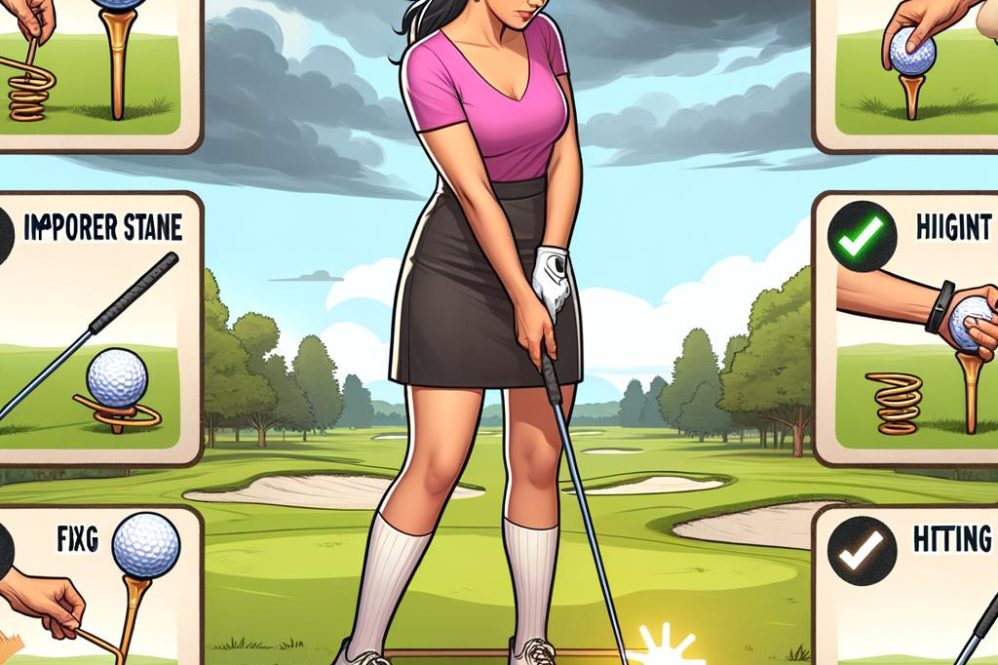
Novice golfers – commonly defined in dictionaries as people beginning a new skill or pastime with limited practical experience - frequently display a set of predictable technical and tactical shortcomings that hinder performance and can raise the likelihood of injury. Understanding these early-stage tendencies and how to correct them is vital for coaches,clinicians,and learners who want faster,safer progress without ingraining inefficient movement patterns.This piece pulls together findings from biomechanics, motor‑learning science, and practical coaching to address eight frequent beginner faults: grip, stance, alignment, posture, swing path, tempo, ball position, and short‑game technique. For each area we describe characteristic beginner behaviours, summarize effective, research‑informed remedies, and offer clear coaching cues and practice progressions designed to produce lasting change.
Beyond improving scores, the review explicitly covers safety – common sources of musculoskeletal strain and overuse caused by poor technique – and suggests teaching sequences that reduce injury risk. Where experimental data are sparse, recommendations are based on converging evidence from related fields and the limits of current knowledge are highlighted to guide future studies and applied practice.
Below is a structured, evidence‑informed playbook for addressing each error, with implementation tips suitable for instructors, therapists, and recreational players.
Grip Mechanics, Pressure Regulation, and Evidence Based Corrective Drills
The interface between the hands and the clubface largely determines where the ball starts and how it curves.A neutral grip – where the V formed by thumb and forefinger points toward the right shoulder/chin region for a right‑handed player – helps square the face through impact while allowing a natural release. Grips that are to strong or too weak consistently bias face angle at impact,producing predictable lateral misses and exaggerated curvature. Kinematic research shows even minor adjustments in grip rotation alter clubface orientation at impact,so an initial evaluation shoudl include photos or video from address and impact frames to measure grip geometry. Emphasize grip symmetry between address and takeaway as a simple consistency indicator during retraining.
How firm a player holds the club influences muscle tone and swing timing. Using a subjective 1-10 scale (1 = barely touching, 10 = crushing), motor‑control literature supports a practical working zone near 4-6/10 for most full shots: firm enough to control the club but light enough to allow elastic wrist and forearm movement. Excessive pressure elevates co‑contraction, stifles fluid release timing, and can create a jerky tempo; too light a hold increases face instability. When available, pressure sensors or biofeedback tools validate subjective ratings and speed up learning by providing immediate, objective cues.
Choose corrective drills that are simple, repeatable, and anchored in sensorimotor principles. Proven, easy‑to‑apply exercises include:
- Towel Grip Drill: tuck a small towel under both armpits and perform half‑swings to promote forearm connection and discourage squeezing; 3×10 reps with smooth rythm.
- Split‑Grip Pause: Hold the club with hands separated by 1-2 inches and pause 1-2 seconds at the top to train wrist hinge and curb overactive hands; 5-8 reps.
- Pressure Ladder (8-5-3): Swing at decreasing perceived pressures - 8/10 (firm),5/10 (target),3/10 (light) – to recalibrate proprioception and reduce tension.
- Impact Awareness: Combine impact tape or a washable marker with slow‑motion video so players link grip changes to contact location; visual feedback shortens the correction cycle.
Each drill targets a single sensorimotor element (orientation, tension, timing, or impact) so small, measurable improvements transfer to full swings.
Rapid reference – pressure bands, signs, and practical fixes:
| Pressure Zone | Observable Signs | Recommended drill / Dosage |
|---|---|---|
| Light (1-3) | Loose feel, inconsistent contact | Towel Grip – 2×10 slow swings |
| Optimal (4-6) | Stable face control, predictable dispersion | Maintain; pressure ladder weekly |
| Heavy (7-10) | Rigid tempo, pulled/sliced shots | split‑Grip Pause + video, 5-8 reps |
For progress, perform the chosen drill about 3× weekly, reassess perceived pressure after two weeks, and adjust. Short, focused practice that ties tactile sensations to visual outcomes yields steady gains; aim to keep grip pressure within the 4-6/10 band as a core target.

Stance Width, Weight Distribution, and Stability Training for Consistent Ball Striking
Stance width is a foundational constraint on repeatable movement and solid contact. Too narrow a stance allows excessive lateral sway and limits torque generation; too wide a stance can inhibit hip rotation and blunt clubhead speed. Although ideal width varies with club selection and shot purpose, the objective is consistent: create a base that supports controlled axial rotation without unnecessary lateral motion.
How weight is balanced across the feet matters equally.At setup most players fall into a range between 50:50 and 60:40 (lead:trail) depending on club and shot; during transition and the downswing the mass should progressively shift toward the lead foot to create a stable impact platform. Poor timing or incomplete transfer produces fat or thin strikes and wider dispersion. Motor‑learning cues that encourage a centred,mobile trunk and hip‑led transfer generally outperform instructions that focus on “hitting” with the hands.
Train stability with balance and strength exercises that improve proprioception under dynamic load. Useful, evidence‑backed options include single‑leg holds, resisted rotational medicine‑ball throws, and tempo‑controlled step‑downs. Integrate these practical drills:
- Single‑leg hold (eyes open → closed, 30-60 s) for proprioception.
- Slow half‑swings to practice preserving pelvis position and correct sequencing.
- Medicine‑ball rotational throws to build power without sacrificing spinal control.
- Tempo ladder drills (e.g., 3:1 backswing:downswing) to co‑ordinate weight shift and timing.
These activities build both endurance and neuromuscular control required for consistent ball striking across changing conditions.
apply incremental progressions on the range and in the gym and track outcomes objectively (impact tape, ball flight, dispersion). Use the table below as a baseline guideline and tailor it to individual body size and shot intent.
| Club | Stance Width | Address weight |
|---|---|---|
| Wedge | Narrow (~shoulder width − 10%) | 55:45 lead:trail |
| Mid‑iron (6-8) | Shoulder width | 50:50 → 55:45 |
| Driver | Wide (~shoulder width + 10-20%) | 45:55 (slightly trail‑biased) |
Alignment Principles,Targeting Methodologies,and Objective Assessment Techniques
Accurate aiming starts with the clubface: both coaching experience and empirical work show clubface orientation at address and at impact is the primary determinant of initial ball direction. body alignment (feet, hips, shoulders) should sit roughly parallel to the intended target line, and not be biased toward distant landmarks. Misalignment between face and body is a common systematic source of directional error; adopt a “face first, body second” routine to set pre‑shot geometry. Using a close, verifiable intermediate target (a spot 1-3 metres ahead of the ball) reduces parallax and makes setup more repeatable.
Targeting is best organised as a hierarchy of proximal cues and straightforward procedures that players can repeat under pressure. Practical techniques include:
- Intermediate target – pick a point 1-3 m ahead along the intended line to refine aim.
- Clubface checklist - confirm the face points at the intermediate target before setting feet.
- Two‑ball drill – place a second ball on the line to visually verify face and path alignment.
These strategies prioritise verifiable, local cues and align with motor‑control findings that chunking tasks into perceptible subgoals improves retention.
Turn feel into data by using standard tools and metrics. Typical instruments and what they measure:
| Tool | Measured Parameter | Actionable Adjustment |
|---|---|---|
| Launch monitor | Face angle, launch direction | Adjust grip/aim by X° |
| High‑frame video | Body alignment, shoulder plane | change stance/shoulder alignment |
| Laser alignment rod | Line accuracy (cm) | Reposition feet/clubface |
Setting quantitative thresholds (for example, face‑angle errors that predict outsized lateral misses at fixed distances) helps coaches prioritise the corrections most likely to reduce dispersion and increase accuracy.
To convert assessment into advancement,follow a cyclical,data‑driven workflow: (1) record a 20-30 swing baseline with the same conditions; (2) identify weather mean bias or variability is the dominant issue; (3) apply one focused correction (e.g., face alignment drill) and retest; (4) iterate until bias and variability improve. report mean, standard deviation, and confidence intervals for directional error to evidence progress and avoid overreacting to short‑term feel. Emphasise repeatable pre‑shot routines, measurable short‑term goals, and consistent testing conditions so alignment gains carry over to competition.
Posture Maintenance, Spinal Angle Preservation, and Safety Considerations for Injury Prevention
Posture underpins both reliable performance and reduced injury risk. Keeping a neutral spine and preserving the same spinal angle through address and rotation improves mechanical efficiency, limits compensatory motions, and aids consistent contact. Current guidance stresses keeping the center of mass over the base of support to limit lateral sway and to optimise force transfer from the ground through the hips and torso to the club. Coaches and therapists should prioritise consistent setup geometry as a core motor‑control goal for novice golfers.
Posture strategies combine mobility, strength, and motor patterning to protect the spine while enhancing swing mechanics. Useful practice elements include:
- Wall slides for thoracic extension and scapular control to free up rotation.
- Hip‑hinge with a dowel to reinforce lumbar neutrality while allowing pelvic rotation.
- Plank progressions to build anterior core endurance and resist excessive lumbar flexion during the transition.
- Thoracic rotations for segmental mobility and safer torso twist.
- Micro‑breaks and graded loading to prevent fatigue‑related posture collapse by slowly increasing volume and intensity.
Incorporate these movements into warm‑ups and daily short sessions, always prioritising movement quality over sheer volume.
| Exercise | Duration/Reps | Primary Target |
|---|---|---|
| Wall slide | 2 × 8-12 | Upper thoracic extension |
| Broomstick hinge | 3 × 6 slow | Pelvic control / lumbar neutrality |
| Side plank (modified) | 3 × 20-40 s | Lateral core endurance |
Safety is integral. Use a progressive loading model, watch for sharp or persistent pain (which requires clinical assessment), and avoid attempting multiple big technical changes concurrently - fatigue compounded with poor technique increases spinal shear and compressive forces. Short‑term aids and cues can speed learning but avoid long‑term dependence. Ensure equipment fits (club length and grip) and include a structured warm‑up to protect spinal alignment patterns that support efficient, safe performance.
Swing Path Analysis, Common Deviations, and Prescriptive Motor Pattern Interventions
Objective measurement of club trajectory and face orientation is central to focused corrections. Combine multi‑plane video with launch‑monitor metrics to quantify path angle, face‑to‑path relationships, and attack angle; translate qualitative impressions into magnitudes of error and document baseline variability so you can evaluate mean changes and noise reduction.Use kinematic checkpoints - hip rotation, shoulder tilt, wrist set – to connect path faults with segmental timing faults rather than relying on global descriptors alone.
frequent path faults have distinctive signatures and predictable ball‑flight results. common patterns include:
- Outside‑in – steep downswing with late release, frequently enough creating a slice; common contributors include a lateral takeaway or early lateral weight shift.
- Inside‑out – in‑to‑out path producing draws or hooks when excessive; often related to an early lateral hip move or an over‑inside takeaway.
- Over‑the‑top – casting or steep motion that reduces lag and weakens contact.
- Too flat / rounded – insufficient shoulder turn and blocked lower‑body rotation, producing pushes or thin strikes.
Describe each fault in terms of clubhead vector, segment timing, and typical compensations so prescribed drills address the root cause rather than superficially masking symptoms.
| Deviation | Short Prescriptive drill | Key Motor Cue |
|---|---|---|
| Outside‑in | Gate drill: two tees outside line, swing between | “Sweep the clubhead inside the near tee” |
| Over‑the‑top | Pause at the top → slow transition swings | “Delay the lower‑body bump; start with the torso” |
| Excessive inside‑out | Closed‑stance gate | “Keep hands slightly behind clubhead through impact” |
| Too flat | Full‑turn with pole under arms | “Create width: rotate shoulders over hips” |
Structure learning from low to high contextual interference: begin with blocked practice and augmented feedback (video + outcome knowledge), progress to variable targets, and finish with on‑course simulations to encourage transfer. use short, external cues (e.g., “sweep through the gate”), limit technical instructions to two key points per session, and monitor path angle and dispersion metrics. Include a retention check 48-72 hours later to ensure consolidation, not just transient on‑range improvements.
Tempo Control, Rhythmic Training Protocols, and Retention Strategies for Skill Acquisition
Tempo and rhythm are control variables in the motor system: they establish relative timing across segments and the club. Consistent temporal patterns constrain unnecessary degrees of freedom at impact, improving repeatability and reducing face variability. From an ecological view, stabilising tempo nudges the motor system toward attractor states that are more reliable under pressure. Practically, set explicit temporal targets (backswing:downswing ratios, beats per minute) so tempo becomes a measurable training variable rather than a vague aim.
Progressive, rhythm‑based training programmes work well. Scalable options include:
- Metronome entrainment – set BPM to match a backswing:downswing ratio and practice 5-10 minutes, 3×/week.
- Subdivision sequencing – break the swing into timed segments (address → takeaway → top → downswing) and rehearse each subunit before reintegration.
- Slow‑to‑fast transfer – 10-15 swings at 50-70% speed focused on rhythm, then 4-6 full‑speed reps to promote scaling.
- Reduced‑amplitude rhythm – short swings maintaining identical timing to build tempo invariance across amplitudes.
Attach explicit metrics (BPM, ratio, or cycle time) so progress is replicable and measurable.
Retention and transfer depend on practice structure and feedback schedules. Use distributed practice, include contextual interference (vary clubs and lies), and fade external feedback over time (high early, reduced later) to foster self‑monitoring. Schedule retention tests at 24-72 hours and again at 7-14 days, and measure on‑course transfer under representative constraints.Mental rehearsal and good sleep also support consolidation: imagery and rest after practice enhance offline learning.
Operationalise these ideas with objective KPIs (tempo SD, BPM variability, dispersion of impact points) and progression rules (e.g., tempo SD < 5% across 30 swings triggers next load). The table below maps drills to retention checks for lesson planning and progression.
| Drill | Primary Cue | Retention Check |
|---|---|---|
| Metronome warm‑up | 72 BPM, 3:1 ratio | 24‑hr tempo SD |
| Subdivision sequencing | 4 timed subunits | 72‑hr transfer on short iron |
| Slow→Fast scaling | 50% → 100% speed | 7‑day on‑course accuracy |
Note: if KPIs plateau, reintroduce variability or ease tempo constraints to restore adaptability.
Ball Positioning and Short Game Technique Adjustments for Varied Clubs and Course conditions
- Tight or frosty fairways: move the ball 1-2 cm back for cleaner contact.
- Soft or plugged lies: move the ball forward and bias weight toward the front foot to avoid fat shots.
- Long approaches into greens: ball slightly forward + a narrower stance to square the face and reduce slice bias.
| Club | Relative Ball Position | Tactical Use |
|---|---|---|
| PW / SW | Centered → slightly back | Controlled pitch; lower spin on firmer greens |
| Gap / 9‑iron | Center | Medium‑trajectory chip/pitch |
| LW / Flop | Slightly forward | High, soft landing shots; useful in deep or wet lies |
- Alignment stick or tee line to verify where the club meets the turf relative to the leading edge.
- Yardage ladder: hit 5 balls from identical stances while moving the ball 1 cm forward/back to feel trajectory differences.
- Bounce awareness in bunkers: practice half‑swings with marked sole contact to learn how bounce changes ball‑position needs.
These evidence‑informed practices reduce setup variability and improve short‑game repeatability on different surfaces.
Q&A
Introduction: The Q&A below distils practical, evidence‑based fixes and safety advice for eight common beginner faults – grip, stance, alignment, posture, swing path, tempo, ball position, and short game – and places those fixes in the context of assessment, practice design, equipment, and injury prevention. Answers draw on motor‑learning theory, biomechanics, and coaching practice.
1) Q: What eight beginner errors are covered here?
A: The focus is on (1) grip, (2) stance, (3) alignment, (4) posture, (5) swing path, (6) tempo, (7) ball position, and (8) short‑game technique.Each can reduce consistency,accuracy,or distance and increase injury risk.
2) Q: How do grip faults show up and how should they be corrected?
A: Presentation: overly strong/weak hand rotation, too much pressure, misplaced thumbs/knuckles, and inconsistent hand relationships. Corrections: teach a neutral grip (V’s toward the right shoulder for right‑handed players), use pressure drills (towel under the armpits, aim for ~4-5/10), employ the base‑knuckle check and mirror feedback, and select overlap/interlock based on hand size.Progress from static grip checks → short chips with intentional grip feel → full swings with tempo focus. Safety: avoid extreme wrist deviations during changes and stop if there’s numbness or sharp pain; refer to a clinician if symptoms persist.
3) Q: Which stance problems do novices have and what are effective remedies?
A: Issues include stance too narrow/wide, knees locked or overbent, and weight too far back/forward. Remedies: adopt an athletic stance (≈ shoulder width for irons, slightly wider for woods), slight knee flex, weight on mid‑foot/ball of foot, and balance checks like single‑leg holds. Use alignment sticks to standardise foot spacing. Progress with static holds → half‑swings → full swings. Safety: avoid knee hyperextension and start with supported balance work if stability is limited.
4) Q: How does misalignment affect shots and how is it fixed?
A: Misalignment leads to compensatory swing patterns and directional misses. Fix it with a consistent pre‑shot routine, two‑club or alignment‑rod drills, and video or mirror checks to confirm shoulder‑hip‑foot orientation. Train aiming at intermediate targets (landing areas) rather than distant flags. Safety: avoid forced neck or torso twists when checking alignment; keep checks within normal pre‑shot motions.
5) Q: What posture faults are common and how can beginners adopt safe, effective posture?
A: Typical faults: rounded upper back, bending from the shoulders, or standing too upright. Teach a hip hinge with neutral spine, slight knee flex, and relaxed shoulders; preserve spine angle through the swing. Drills: chair drill, dowel feedback, and video analysis. Conditioning: core and hip mobility work. Safety: players with low‑back issues should progress slowly, include dynamic warm‑ups, and consult professionals if pain continues.
6) Q: How do swing path errors appear and what fixes work best?
A: Symptoms: outside‑in paths (slices/pulls), inside‑out paths (hooks/pushes), over‑the‑top casting, and overly flat swings. Diagnosis: slow‑motion video, launch‑monitor and impact feedback. Use gate drills,impact bag/towel drills,and one‑piece takeaway exercises to reprogramme the plane. Progress from slow,feedback‑rich reps to faster,contextual practice. Safety: avoid forceful,rapid corrections that stress shoulders or low back.
7) Q: What tempo problems do novices face and how should tempo be trained?
A: problems: rushed transitions, abrupt accelerations, or inconsistent rhythms that destroy timing. Training: metronome work, counted tempos (e.g.,”one‑two”),step‑and‑go drills,and slow→fast scaling. Practice slow reps and then build to full speed. Safety: ramp up intensity gradually; avoid sudden maximal swings that increase acute injury risk.
8) Q: How does ball position affect outcomes and what are corrective measures?
A: Ball too far back → fat/top shots; too far forward → thin strikes or slices. Use standard positioning guidelines (slightly forward of center for mid‑irons, centered for short irons, progressively forward for longer clubs), verify with alignment sticks, and practice ladder drills and half‑swing compression work. Safety: repetitive mis‑hit practice can stress wrists; adjust volume and technique if pain occurs.
9) Q: What short‑game faults do beginners make and how are they remedied?
A: Errors: poor contact in chips, inconsistent pitching distances, and unstable putting setup/stroke. Remedies: chipping – bump‑and‑run practice,hands‑forward at impact,landing‑spot drills; pitching – partial‑swing tempo with variable landing targets; putting – gate and clock drills,distance‑control ladder. High‑repetition, goal‑directed short‑game practice pays large scoring dividends. Safety: keep wrists neutral and avoid heavy wrist action to reduce tendinopathy risk.10) Q: How should errors be assessed and prioritised?
A: Combine objective measures (video kinematics, ball‑flight tendencies, dispersion stats, up‑and‑down %) with observation (grip, stance, balance). Prioritise fundamentals that constrain other skills first (grip, posture, stance, alignment), then address swing path and tempo, and finally ball position and short‑game details. Use a “three‑shot rule” (identify the three most frequent errors in a 20-30 ball session) and target the one most likely to yield the largest performance gain. Reassess every 4-6 weeks.
11) Q: Which practice and motor‑learning principles should novices use?
A: Start with blocked practice for initial acquisition, move toward variable/random practice to build adaptability, give frequent feedback early then fade it, and structure deliberate practice cycles (clear goal, focused reps, immediate feedback, measurable outcome). Keep sessions short and frequent (20-40 minutes), focus on a single correction per session, and include short‑game and warm‑up time. Distributed, goal‑specific, and variable practice enhances long‑term retention.12) Q: What equipment issues matter for beginners?
A: Poorly fitted clubs (wrong length, lie, grip size, loft) can amplify technical faults. Do a basic fit for grip size, shaft length relative to posture, and lie angle for square impact. Avoid switching equipment too often while technique is unstable – fit after basic swing faults are addressed. Safety: properly sized clubs reduce compensatory motions and chronic strain.
13) Q: What injury‑prevention steps should novices follow when correcting technique?
A: Always perform dynamic warm‑ups and mobility work for hips, thoracic spine, shoulders, and wrists. Progress changes gradually, limit high‑speed reps early in correction phases, add low‑load core and glute strengthening, and schedule recovery days. Stop and seek medical advice for sharp or persistent pain. Tailor drills for pre‑existing conditions under professional supervision.14) Q: When should a novice get professional coaching or medical assessment?
A: See a coach when progress stalls after structured practice (several weeks),when multiple interacting faults exist,or when diagnostic tech is needed. See a medical professional for acute injuries, persistent pain (>1-2 weeks), numbness, or when clearance is recommended before starting corrective exercises.15) Q: Which measurable outcomes show successful correction?
A: Reduced shot dispersion, higher percentage of solid strikes (fewer fat/thin shots), improved up‑and‑down rates, decreased round‑to‑round score variance, and subjective gains in balance and confidence. Use baseline metrics (video, dispersion, up‑and‑down %) and retest every 4-8 weeks to document change.
16) Q: Practical next steps for a reader?
A: Run a baseline assessment (video + basic range session), prioritise fundamentals (grip, posture, stance, alignment), design short practice blocks that focus on one correction at a time, use targeted drills and feedback tools, monitor outcomes, and maintain conditioning and safety habits. Consult a qualified coach if progress stalls or pain develops.
Conclusion: Start corrective work by securing repeatable fundamentals, follow structured, evidence‑backed progressions, and integrate conditioning and safety. Iterative assessment and focused feedback maximise efficiency while reducing injury risk. This review identified the eight recurring technical gaps common among novice golfers and evaluated practical, evidence‑oriented strategies and safety considerations for addressing each. Because novices are especially prone to embedding suboptimal motor patterns and to overuse injuries, recommendations stress progressive, coach‑guided interventions, task‑specific drills, and objective feedback (visual, video, or sensor‑based) to speed motor learning while protecting health.
In practice, prioritise safe, neutral grip and posture, clear alignment and ball setup, tempo control and simplified swing‑path drills to limit compensations, and dedicate focused time to short‑game skills that most directly lower scores. Safety measures – thorough warm‑ups, graded practice volume, attention to pain, and early referral to medical professionals when symptoms arise – should accompany every corrective plan.
While current guidance rests on biomechanical and coaching literature, more controlled intervention trials and long‑term, individualized biomechanics work would clarify dose-response relationships and optimise prescriptions for diverse beginner groups. Until then, a conservative, evidence‑informed approach implemented under qualified supervision strikes the best balance between performance gains and injury prevention.

Fix Your Swing: 8 Rookie Golf Mistakes and How to Cure Them
Pick a title / pick a tone
Choose the headline that fits your audience – SEO-focused, playful, or serious. Each option targets a slightly different search intent and click behavior:
- SEO / Neutral: “Fix your Swing: 8 Rookie Golf Mistakes and How to Cure Them”
- Playful / Relatable: “From Slice to Success: 8 Common Beginner Golf Errors (and Easy Fixes)”
- practical / Direct: “Stop the Bogeys: 8 Beginner Golf flaws and Practical Remedies”
- Encouraging / Aspirational: “Turn Amateur into Ace: 8 Beginner Golf Mistakes and Quick Fixes”
Tip: For blog SEO,use a headline that contains primary keywords like “beginner golf mistakes,” “fix your swing,” or “golf tips.” For social shareability, pick the more playful option.
The 8 Most Common Beginner Golf Mistakes (and Simple Fixes)
| Mistake | Symptom | Quick Fix |
|---|---|---|
| Poor Grip | Club twists at impact; inconsistent strikes | Neutral overlap or interlock; 10° grip pressure |
| Incorrect Setup | Fat or thin shots; poor alignment | Square shoulders, balanced stance |
| Slicing the Ball | Left-to-right flight (for RH players) | Stronger grip, inside-out path drill |
| Hooking | ball curves severely right-to-left | Weaker grip, check clubface at impact |
| Over-swinging | Loss of balance; inconsistent contact | Shorten backswing; tempo drills |
| Poor Putting Stroke | Missed short putts, inconsistent pace | Square arc, pendulum motion, aim & read green |
| Ignoring Course Management | Unnecessary risk, higher scores | Play to safe targets; think 2-3 shots ahead |
| Practice Without Purpose | Little enhancement despite time at range | Structured drills with measurable goals |
1.Poor Grip – foundation of a repeatable swing
Symptoms: The clubface twists,shots fade or hook unpredictably,and you feel you need extra effort to control the club.
Fixes and drills:
- Adopt a neutral grip: place the club in the fingers (not the palm); left-hand V pointing to right shoulder (for right-handed players).
- Grip pressure: hold at 4-6/10 – firm enough to control but loose enough to allow wrist hinge.
- Check with a mirror or record video; small adjustments (a quarter-turn) can eliminate a chronic slice or hook.
2. Incorrect Setup & Alignment – save strokes before the swing
Symptoms: Repeated fat or thin shots, poor start direction, or compensations mid-swing.
Fixes and drills:
- Feet: shoulder-width for mid-irons,slightly wider for driver. Weight balanced on the balls of your feet.
- Ball position: center for short irons, slightly forward for long clubs and driver.
- Alignment drill: lay two clubs on the ground – one aimed at the target, the other at your feet – and practice setting up square to the club line.
3. Slicing the Ball – the most common error for beginners
Symptoms: Ball starts left and curves violently to the right (for right-handers). Distance and accuracy suffer.
Fixes and drills:
- Check your grip: rotate hands slightly to the right (stronger) to close the face at impact.
- Focus on an inside-out swing path: put a headcover outside the ball and swing to avoid hitting it.
- Drill: Tee two balls in a line and swing between them to promote an inside path.
4. Hooking the Ball – too much clubface closure
Symptoms: ball curves strongly left for right-handed players; frequently enough accompanied by an overly strong grip.
Fixes and drills:
- Weaken your grip slightly (rotate hands a quarter-turn to the left).
- Ensure the clubface is neutral at address and track wrist action through impact.
- Drill: swing with a slightly open clubface target and monitor shot shape until it straightens.
5. Over-swinging - less is often more
Symptoms: Loss of balance, rushed tempo, inconsistent contact, and increased slice/hook tendencies.
Fixes and drills:
- Simplify: limit the backswing to maintain control – feel like you’re 75-85% effort.
- Tempo drill: count ”one-two” with transition at “two” (backswing “one”, downswing “two”).
- balance drill: practice slow swings stopping at the top and holding balanced finish.
6. Poor Putting Mechanics & Green Reading
Symptoms: Missing short putts, inconsistent pace, or poor break reads.
Fixes and drills:
- Pendulum stroke: shoulders move the putter, wrists quiet, short follow-through.
- Distance control: ladders drill – putt to 10, 20, 30 feet targets focusing on pace.
- Green reading habit: walk around to see the putt from multiple lines; use grain,slope,and wind cues.
7. Ignoring Course Management – smart play lowers scores
Symptoms: Going for risky shots, repeating penalty strokes, or leaving long recovery shots.
Fixes and guidelines:
- Pick targets,not hazards. aim for safe landing areas that leave comfortable approach shots.
- Play to your strengths: if your wedge game is strong, play short and attack the green; if not, lay up smartly.
- Use a yardage book or GPS to select clubs conservatively; par is a great score on tough holes.
8.Practicing Without Purpose – time at the range must be intentional
Symptoms: Hours of range balls with minimal on-course improvement.
Fixes and practice structure:
- Use the “30-minute focused session” method: warm-up 5 minutes, 20 minutes on a specific drill, 5 minutes cool-down / reflection.
- Rotate focus days: one day short game (chipping, pitching, putting), one day full swing, one day bunker and creativity.
- Track progress: record shot dispersion, miss patterns, and make micro-adjustments.
Benefits & Practical Tips – what you’ll gain by fixing these errors
- Lower scores: fewer penalty strokes and missed greens means immediate improvement in scoring.
- Greater consistency: repeatable setup and swing mechanics translate to reliability under pressure.
- Faster on-course decision-making: better alignment and course management reduce second-guessing.
- Enjoyment and confidence: less frustration and more birdie opportunities create momentum.
Quick practice kit (what to bring to the range)
- Alignment sticks or spare clubs
- putting mat or two tees for gate drills
- Notebook or phone app to record practice goals
- Short game tools: low-loft wedge, practice chipping net
Simple Drills to Build Muscle Memory
Gate drill for putting
Place two tees just wider than your putter head and stroke through without hitting the tees. Improves face control and path.
Headcover path drill for slice correction
Put a headcover just outside the ball and swing to miss it - forces an inside path and helps create a straighter ball flight.
One-handed chipping
Use your lead hand only for short chips to feel proper wrist stability and clean contact.
First-hand case: Turning a 105-round into an 88
Summary: An eager beginner reduced four strokes per nine by addressing three “big rocks”: setup alignment, grip, and short-game routine. Key steps:
- Ten lessons focused on neutral grip and setup – led to straighter drives.
- 20-minute daily putting routine for two weeks – improved three-putt frequency fell dramatically.
- Simple course-management plan – avoided high-risk second shots and saved strokes around hazards.
Lesson: Targeted, measurable improvements (not random repetitions) produce the fastest and most lasting gains.
SEO Tips for Publishing This Article on Your Golf Blog
- Primary keyword: include “beginner golf mistakes” in the URL, H1 (used), and once more in the first 100 words.
- Secondary keywords: “fix your swing,” “golf tips for beginners,” “how to stop slicing” – use these naturally in H2s and body copy.
- use schema: add Article schema and FAQ schema if you create a Q&A section to increase chances of rich results.
- Internal linking: link to pages on club selection, short game tutorials, and tee-time booking to reduce bounce rate.
- Images & alt text: include action photos or swing frames with alt text like ”beginner golf swing fix – grip and alignment.”
FAQ (for snippet-friendly content)
How long before I see improvement?
With focused practice, many players notice measurable gains in 2-6 weeks. Consistency beats intensity – short, daily practice sessions are highly effective.
Are lessons worth the money?
Yes. A coach accelerates the learning curve by identifying the exact cause of a mistake and prescribing drills tailored to you. Even a few lessons focused on grip, setup, and short game can produce big score drops.
Should I buy new clubs?
Not immediately. Many beginners benefit more from swing fundamentals than equipment upgrades. Get fitted when your swing is repeatable to maximize value.