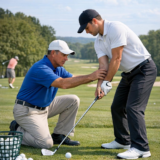
Contemporary competitive and recreational golf increasingly demands an integrated approach that transcends conventional swing instruction: optimal performance and long-term athlete availability require the systematic alignment of biomechanics,physiological capacity,and structured training. A growing body of evidence indicates that improvements in clubhead speed, shot consistency, and injury resilience are most reliably achieved when mechanical analyses of the swing are coupled with individualized physiological profiling and periodized conditioning. Yet practice remains heterogeneous, with variable assessment methods and training prescriptions across coaches, clinicians, and strength professionals.
This article articulates an evidence-based framework that synthesizes biomechanical principles (segmental sequencing, joint kinetics, and movement variability), physiological profiling (strength, power, range of motion, metabolic and neuromuscular characteristics), and periodized training strategies (task-specific phases, load management, and tapering) into a coherent model for golf-specific fitness. Emphasis is placed on validated assessment protocols, objective monitoring tools (e.g., force plates, inertial sensors, and standardized performance tests), and decision rules for tailoring interventions across developmental stages and skill levels. Injury prevention and return-too-play considerations are integrated throughout, linking identified deficits to targeted corrective and performance-focused programming.
By consolidating current empirical findings and translating them into practical assessment algorithms and progressive training templates, the framework aims to support practitioners in delivering reproducible, measurable improvements in golf performance while minimizing injury risk. The final sections identify methodological limitations in the existing literature and propose priorities for future research to refine and validate sport-specific conditioning strategies.
Theoretical Foundations: integrating Biomechanics, Motor Control, and Movement Variability in the golf Swing
Contemporary biomechanical models frame the golf swing as a coordinated, multi-segmental task in which energy transfer across the kinetic chain underpins clubhead speed and directional control. Key determinants-pelvic and thoracic rotation sequencing,proximal-to-distal segmental timing,and ground reaction force modulation-are best understood as interacting constraints rather than isolated variables.translating these models to fitness practice requires recognizing the difference between producing peak joint moments in a laboratory and enabling reproducible, robust force application in dynamic, context-rich play.
Motor control theory emphasizes that skilled performance emerges from the interaction of goals, organismic constraints, and environmental context. From a training outlook this implies that strength, power and mobility work must be integrated with task-specific perceptual and decision-making demands. Practical implications include:
- Constraint-led practice to shape preferred movement solutions under varying conditions;
- Variable practice schedules to enhance transfer and resilience across shot types;
- Augmented feedback (augmented, faded, and summary) to accelerate implicit learning without over-reliance on external cues.
Movement variability should be reframed not as error but as an adaptive feature: a certain degree of variability supports redundancy and error-tolerance when perturbations occur (e.g., uneven lies, gusts of wind).The table below synthesizes core theoretical concepts and succinct applications for golf-specific conditioning programs.
| Concept | Short Application |
|---|---|
| Kinetic chain sequencing | Segmental drills progressing to full swings |
| Degrees of freedom | Constraint-led variability in practice |
| Optimal variability | Conditioning for adaptable movement under perturbation |
Comprehensive Assessment Protocols: Objective Measures of mobility, stability, Strength and Power for Golfers
Standardized, objective measurement is essential to translate biomechanical and physiological principles into individualized golf conditioning. A comprehensive battery should quantify range of motion (ROM), segmental mobility, dynamic stability, and neuromuscular capacity using validated instruments – for example, digital inclinometers or smartphone goniometry for thoracic rotation and hip ROM, weight-bearing lunge for ankle dorsiflexion, and 3D motion capture or inertial measurement units (IMUs) to characterize pelvis-to-torso sequencing. Each measure must be recorded with clear procedure, position, and metric (degrees, centimetres, Newtons, milliseconds) so that intra-athlete change can be distinguished from measurement error.
Stability and motor-control assessment should combine static and dynamic challenges that replicate golf-specific demands. Recommended elements include:
- single-leg balance with eyes open/closed (force-plate sway or timed hold)
- Y-Balance Test for reach asymmetry and composite normalization to limb length
- Trunk endurance battery (prone and side plank time) to assess anti-rotation capacity
- Reactive and perturbation tests (unexpected platform tilt or ball-catching tasks) to assess feedforward control relevant to variable turf and swing perturbations
Interpretation should use both absolute values and bilateral symmetry indices; asymmetries >10-15% or decline beyond MDC (minimal detectable change) warrant targeted intervention.
Strength and power quantification requires both maximal and rate-based metrics. Use reliable, sport-appropriate tests such as isometric mid-thigh pull (peak force and RFD), handheld dynamometry for rotational strength, countermovement jump (CMJ) and drop jump (reactive strength index) on a force platform, and seated/standing medicine-ball rotational throws for horizontal power specific to the golf swing. Submaximal 3-5RM testing with velocity-based monitoring is an evidence-based option when 1RM is impractical.
| Test | Primary Metric | Practical Thresholds* |
|---|---|---|
| CMJ (force plate) | Jump height / RFD | Elite: >40 cm; Recreational: 20-30 cm |
| Isometric mid-thigh pull | Peak force (N) | Relative to body mass; track % change |
| Med-ball rotational throw | Distance / velocity (m) | Use for asymmetry screening |
*Thresholds are illustrative; use population-specific norms and test-retest MDC for decisions.
Integration, reliability and monitoring are critical for actionable profiles. Report test-retest reliability (ICC), MDC, and typical error for each metric; establish athlete-specific baselines during a low-fatigue window and re-test at pre-defined phases of periodization (pre-season, mid-season, post-season) or after important training blocks. Use criterion measures (force plates,dynamometry,motion capture) for primary outcomes and validated screening tools for frequent monitoring. embed objective thresholds into return-to-play and progression criteria-improvements above MDC and restoration of symmetry should guide increases in swing load, rotational power work, and on-course exposure.
Physiological Profiling and Risk Stratification: Using Aerobic Capacity, Body Composition and Tissue Quality to Inform Interventions
Physiological profiling offers an objective scaffold for tailoring golf-specific conditioning by characterizing the functional state of the athlete across cardiopulmonary, somatic and soft-tissue domains. by invoking the conventional meaning of physiological-as attributes that reflect normal organismal function (Cambridge English Dictionary)-clinicians and coaches can situate modifiable performance determinants within a clinical-risk context. Translating these measures into stratified risk bands allows teams to prioritize interventions that are both performance-enhancing and injury-mitigating, rather than relying on anecdote or one-size-fits-all programs.
Cardiorespiratory fitness is a primary discriminator of on-course endurance and recovery between shots, and it should be quantified with reproducible indices such as VO2max, ventilatory thresholds and validated submaximal walk/run tests when lab resources are limited. Field-friendly assessments and their interpretive value include:
- Standardized submaximal step or walk tests for estimated VO2 and recovery kinetics;
- 6-minute walk or interval shuttle protocols to gauge sustained work capacity relevant to long rounds;
- Heart-rate variability and recovery metrics for autonomic balance and training-load modulation.
These measures inform aerobic conditioning volume, intensity prescription, and return-to-play pacing strategies for golfers with deconditioning or cardiovascular comorbidity.
Body composition and tissue quality are equally consequential: regional lean mass, relative adiposity and soft-tissue integrity (e.g., muscle echogenicity, tendon thickness and stiffness) mediate force transmission, rotation control and injury susceptibility. Routine profiling should thus include dual-energy absorptiometry or validated anthropometric protocols for composition, plus targeted ultrasound or shear-wave elastography where available to document tendon and muscle quality. Practical translation of those data can be summarized as:
- Lean mass deficits: progressive hypertrophy and neuromuscular-strength phases emphasizing hip and core torque;
- Excess adiposity: combined caloric/conditioning strategies to reduce load and improve swing efficiency;
- Altered tissue quality: graded tendon loading, mobility optimization and load management to lower reinjury risk.
Integrating aerobic, compositional and tissue metrics into a unified risk-stratification matrix enables prioritized, evidence-aligned interventions. The table below provides a concise template for categorizing common findings and linking them to targeted prescriptions:
| Metric | Low-Risk Indicator | High-Risk Action |
|---|---|---|
| VO2 or submax estimate | > 40th percentile for age/sex | Structured aerobic periodization + interval training |
| Body composition | Healthy lean mass / acceptable body fat% | Nutrition counseling + progressive resistance |
| Tissue quality | Normal tendon stiffness & muscle echo | Imaging-guided loading program & mobility work |
Use these stratifications to set measurable outcomes, monitor adaptation with repeat profiling, and escalate or de-escalate interventions based on objective change rather than subjective perception alone.
Movement specific Training Principles: Translating Kinematic Sequencing into Progressive Strength and Power Development
Translating the kinematic sequencing observed in efficient swings into a structured training continuum requires deconstruction of the swing into phase-specific motor demands. Exercises should be selected to emulate segmental timing (pelvis initiation, trunk dissociation, distal acceleration) and to reinforce coupling across the kinetic chain. Assessments such as functional movement screens, 3D motion capture, or targeted mobility tests inform which segmental links are rate-limiting: for example, limited hip internal rotation will bias compensatory lumbar motion, whereas inadequate scapular stability will disrupt proximal force transfer. Programming decisions derive from these diagnostic insights and prioritize restoring the ideal proximal-to-distal torque gradient through controlled, repeatable movement patterns.
Progressive strength and power development follows a staged hierarchy that preserves the kinematic pattern while increasing magnitude and speed of force production. Begin with a foundation of mobility and multi-planar stability, then advance to capacity-focused strength work, and finally integrate velocity-dominant power training. Typical progression elements include:
- Mobility & Stability: tissue extensibility, joint centration, anti-rotation control
- Strength: slower, higher-load multi-joint lifts emphasizing pelvic and thoracic control
- Power: Olympic derivatives, medicine ball throws, and ballistic unilateral work at high velocities
Manipulate load, intent, and volume to shift adaptation from hypertrophy and maximal strength toward rate of force development (RFD) and intersegmental timing.
Neuromuscular specificity demands that transfer be cultivated via speed- and orientation-specific drills that replicate the temporal sequencing of the swing.Velocity-Based Training (VBT), contrast sets, and eccentric-overload protocols can accelerate RFD while preserving motor pattern fidelity. Emphasize unilateral and anti-rotational exercises to reproduce the asymmetrical demands of the golf swing and to strengthen the ability to generate and arrest rotational momentum. The concise table below links swing phases to training emphases and exemplar drills to clarify translation from kinematics to exercise prescription.
| swing phase | Training Emphasis | Example Exercises |
|---|---|---|
| Early Rotation (Pelvic Initiation) | explosive hip drive, sequencing | Band-resisted hip turns, kettlebell swings |
| Mid-Swing (Thoracic Dissociation) | Segmental separation, anti-extension | Med ball side toss, prone T-raises |
| Late acceleration (Wrist/Club Release) | Distal velocity, timing | Speed medicine ball throws, plyo push-ups |
Implementation requires periodized blocks with objective monitoring and autoregulatory adjustments to ensure progressive overload without technique degradation. Use metrics such as peak velocity (clubhead or segmental), RFD from force plates, and movement quality scores to guide progression and deloading. Practical on-course transfer is facilitated by integrating sport-specific constraints (club mass, stance width, tempo drills) once laboratory markers indicate readiness. Recommended monitoring items include:
- Peak segmental angular velocity (IMU/VBT)
- Rate of force development (force plate)
- Symmetry and unilateral strength ratios
- Movement quality scores (video or kinematic criteria)
Adopt an evidence-driven, iterative approach that privileges preservation of kinematic sequencing as load and velocity increase to maximize transfer and minimize injury risk.
Periodization Strategies for Golf Performance: Macrocycle to Microcycle planning with On Course and Off Season Considerations
A year-long training architecture should align physiological adaptations with the competitive calendar through a purposeful progression from broad preparatory work to precise performance tuning. At the highest level, the **macrocycle** articulates annual priorities-hypertrophy/strength development, power conversion, skill integration, and peak maintenance-timed to support key tournaments. Effective annual planning balances progressive overload with strategic de-loading windows and scheduled assessment points (e.g., 4-8 week test blocks) to quantify transfer from gym-based improvements to on-course metrics.
Mesocycles translate macro-level aims into focused 4-12 week blocks that emphasize specific attributes (e.g., strength, power, endurance, or swing tempo). Weekly microcycles are then constructed to manage acute fatigue while preserving technical practice. A representative microcycle for a competitive week often includes:
- One heavy strength session (lower frequency during peak competition phases),
- Two power/ballistics sessions timed early in the week to avoid tournament fatigue,
- Two technical on-course or simulated practice days with a taper in volume before competition,
- One active recovery session focused on mobility and aerobic maintenance.
Autoregulation (e.g., RPE, readiness scores) should guide acute adjustments to preserve quality and reduce injury risk.
Seasonal context requires different emphases. During the off-season prioritize tissue resilience, eccentric control, baseline strength, and motor learning under low time-pressure conditions to build capacity. In-season focus shifts toward **power expression**, swing-specific endurance, and recovery optimization so that adaptations are expressed on the course with minimal cumulative fatigue. Practical monitoring tools that inform these shifts include:
- Session RPE and objective volume (practice swings, shots played),
- Sleep and HRV trends to detect accumulated stress,
- Simple strength-power screens (e.g., countermovement jump, medicine-ball throw) at weekly or biweekly intervals.
These measures enable evidence-based reductions in load before travel and competition and guide targeted microcycle dosing.
Implementation requires measurable checkpoints, clear progression rules, and contingency plans for travel, competition density, or injury. Use short testing windows to assess transfer (e.g., ball speed, clubhead velocity, shot dispersion) and adjust subsequent mesocycles accordingly. The following table summarizes a concise macrocycle template with primary objectives and typical durations for a competitive golfer:
| Phase | Primary Objective | Typical Duration |
|---|---|---|
| Off‑Season | Capacity & injury prevention | 8-16 weeks |
| Pre‑Season | Strength → power conversion | 6-10 weeks |
| In‑season | Performance maintenance & peaking | Variable (competition window) |
| Transition | Active recovery & reset | 2-4 weeks |
Adopt an iterative, data-informed approach-combine objective testing, subjective readiness, and coach-athlete communication-to ensure periodization produces both measurable fitness gains and reliable on-course performance.
Injury Prevention and Rehabilitation: Evidence Based Interventions for Common Golf related Pathologies
Golfers most commonly present with low back pain, shoulder dysfunction, and tendinopathies of the elbow and wrist; **low back pain** is particularly prevalent and widely reviewed in clinical guidance such as NIAMS. An evidence-based approach begins with structured screening that integrates clinical red-flag identification, movement-pattern assessment, and sport-specific exposure profiling. Key screening domains include:
- Red-flag assessment: progressive neurological deficit, severe night pain, recent major trauma, systemic symptoms.
- Movement quality: thoracic rotation, hip internal/external rotation, lumbopelvic control during loaded rotation.
- Load history: swing volume,practice/competition spikes,equipment changes.
Interventions for spinal and hip-related presentations emphasize motor-control restoration and graded mechanical loading rather than passive-only strategies. Core components supported by the literature include targeted transversus abdominis and multifidus retraining, progressive multiplanar resistance to improve rotational capacity, and education on load management and pain neuroscience. Complementary modalities (manual therapy, soft-tissue techniques) can be adjuncts to facilitate movement but should not replace progressive exercise prescription. Example clinical priorities are summarized below.
| Pathology | Primary Evidence-Based Interventions | Objective Focus |
|---|---|---|
| Chronic low back pain | Motor control training, graded loading, education | Stability + load tolerance |
| Hip ROM deficit | Progressive hip strength, dynamic mobility drills | Rotational capacity |
| Medial epicondylalgia | Eccentric/loaded strengthening, activity modification | Tendon load tolerance |
Upper-quarter pathologies warrant an integrated strategy targeting scapular kinematics, rotator cuff capacity, and neural mobility. Evidence supports scapular stabilization and progressive rotator cuff strengthening for impingement and partial-thickness tears, and specific **eccentric** or heavy-slow resistance programs for tendinopathy of the elbow and wrist.Rehabilitation progressions commonly follow this sequence:
- Restore pain-guided range of motion and neural desensitization
- Re-establish scapulothoracic and lumbopelvic control
- Introduce progressive, sport-specific rotational and deceleration strength
- Return-to-swing with graded exposure and objective criteria
Safe return-to-play and long-term prevention are achieved through criterion-driven progression, periodized conditioning, and ongoing load monitoring. Use objective markers (strength symmetry, pain-free swing velocity, loaded rotational tolerance) rather than time-alone to advance phases. Incorporate multidisciplinary input when red flags or nonresponsive symptoms occur, and maintain a maintenance program that emphasizes mobility, eccentric tendon work, posterior-chain strength, and swing-specific conditioning. Core implementation principles: progressive overload, task-specificity, regular reassessment, and athlete education.
Monitoring feedback and Outcome Measures: Implementing Objective Metrics and Technology to Guide Adaptive Training
Selection of objective metrics should be hypothesis-driven and mapped directly to performance and injury-risk constructs relevant to the golf swing. prioritize measures with demonstrated reliability and ecological validity (e.g., clubhead speed, ball launch dispersion, trunk rotation velocity, and force-time characteristics from ground reaction data). Complement biomechanical indices with physiological and wellness markers – heart-rate variability (HRV), sleep quality, and sessional-rated perceived exertion (sRPE) – so that monitoring captures both capacity and recovery. Establishing an a priori metric hierarchy ensures analytic parsimony and reduces false discovery when large sensor data streams are available.
Contemporary instrumentation enables continuous, high-resolution monitoring; however, technology is only useful when integrated within a decision framework. Key tools include:
- Inertial measurement units (IMUs) and wearable gyroscopes for segmental kinematics;
- Launch monitors for ball/club outcome metrics;
- Pressure mats and force plates for ground-reaction and weight-shift analysis;
- Physiological sensors for HRV, sleep, and load (sRPE).
When selecting devices, evaluate validity, sampling rate, and ease of integration with coach-friendly dashboards so that outputs are both interpretable and actionable.
Implement a structured monitoring cadence with predefined decision thresholds and escalation rules. A simple operational table facilitates translation of data into training prescriptions and can be embedded in athlete management systems for real-time tracking:
| Metric | Frequency | Decision Rule |
|---|---|---|
| Clubhead speed | Weekly | ↓ >5% → technique/power session |
| Trunk rotation velocity | Biweekly | Asymmetry >10% → mobility/GTN |
| HRV | Daily | ↓ sustained → reduce load 20% |
These rules should be evidence-based,tested during a baseline phase,and iteratively refined using athlete-specific responses.
To close the loop between measurement and adaptation, adopt an iterative adaptive training loop that synthesizes objective data, athlete-reported outcomes, and coach observation. Visualizations that combine trend-lines, normative bands, and event annotations enhance pattern recognition and support shared decision-making. Equally vital is athlete engagement: transparent feedback about what is measured and why improves compliance and the validity of subjective reports. embed periodic validation checks (reliability testing,device recalibration) to maintain data integrity and ensure that monitoring continues to inform safe,performance-focused modifications to the training plan.
Q&A
Q: What is the scope and purpose of an “Evidence‑Based Framework for Golf‑Specific Fitness”?
A: The framework synthesizes biomechanical principles, physiological profiling, and periodized training strategies to improve golf performance (e.g., clubhead and ball speed, consistency) while reducing injury risk. Its purpose is to translate peer‑reviewed evidence and best practice into structured assessment,prescription,and monitoring pathways that are adaptable across skill levels and age groups.
Q: Which biomechanical features of the golf swing are prioritized in the framework and why?
A: The framework emphasizes (1) segmental sequencing/kinematic sequence (pelvis → thorax → upper extremity → club) to maximize energy transfer, (2) rotational range and velocity (hip and thoracic rotation) for torque generation, and (3) stable base and lower‑extremity force production for force generation and balance.These features are prioritized as they consistently correlate with clubhead speed and shot dispersion in biomechanical studies and practical performance analyses.
Q: How does the framework define a physiological profile for golfers?
A: The profile includes mobility (thoracic rotation, hip internal/external rotation), stability and motor control (core endurance, single‑leg balance), strength (relative maximal strength of lower body and trunk), power (rotational and vertical power), and metabolic conditioning (short‑duration anaerobic capacity and general aerobic base for recovery). Profiling quantifies deficits that constrain the biomechanical drivers of the swing.
Q: What assessment tools and metrics does the framework recommend?
A: Recommended tools include clinical range‑of‑motion tests (goniometry), functional screens (Y‑Balance, single‑leg squat), isometric/1RM strength estimates, countermovement jump and medicine‑ball rotational throw for power, and validated swing measures (clubhead/ball speed, smash factor, dispersion) with launch monitor data.Where available, 3D motion analysis or high‑speed video can quantify kinematic sequencing; force‑plate data can assess ground reaction forces and weight transfer.
Q: How should assessments be integrated into programming?
A: Baseline assessments inform prioritized training targets and risk mitigation.Reassessments should occur at planned intervals-commonly every 6-12 weeks-to quantify adaptations, refine load prescriptions, and adjust periodization. Use both objective performance metrics (clubhead speed, jump/power tests) and subjective measures (RPE, pain scores).
Q: What periodization model does the framework favor for golf?
A: A staged, hybrid periodization is recommended: general planning (mobility, foundational strength), specific preparation (strength to power conversion, swing integration), pre‑competition (power/pitch stability, tapering), and competition/maintenance (reduced volume, high‑quality power and mobility sessions).Microcycles (weekly) balance skill practice with physiological work; mesocycles (4-12 weeks) target progressive overload and specific adaptations.
Q: What are typical prescription parameters (frequency, intensity, focus) for different training components?
A: Mobility/stability: daily to 4-6×/week, low intensity, high specificity. Strength: 2-3×/week, moderate to high intensity (e.g., 3-6 sets of 4-8 reps for compound lifts). Power: 1-3×/week, high velocity, low volume (e.g., 3-6 sets of 3-6 reps or throws/jumps). Conditioning: 1-3×/week depending on athlete profile. Skill practice: daily, with sessions prioritized around power/strength days to manage fatigue.Q: How does the framework address injury prevention?
A: Injury mitigation is prioritized via targeted mobility and motor control work (thoracic mobility, hip control), progressive loading of posterior chain and rotator cuff, and monitoring of swing and training load to avoid acute spikes.Screening identifies asymmetries and deficiencies (e.g., lumbar hyperextension, shoulder instability) that are addressed through corrective exercise, technique modification, and load management.
Q: How is training individualized across skill levels (novice → elite)?
A: Novice golfers: emphasize foundational mobility, stability, and motor control; introduce general strength. Intermediate: increase strength and begin power development; integrate swing‑specific drills. Elite: fine‑tune power outputs and transfer to the swing, use advanced profiling (force‑velocity testing), and implement individualized recovery and periodization strategies. Progression is evidence‑guided and constrained by assessment findings.
Q: What objective markers indicate successful transfer of fitness to golf performance?
A: Increases in clubhead and ball speed, improved carry and dispersion consistency, improved smash factor, and better tournament/handicap outcomes indicate transfer. Physiological markers include improved medicine‑ball rotational throw distance, higher countermovement jump/power, and reductions in asymmetry or movement compensations identified on reassessment.
Q: What monitoring strategies ensure safe and effective load progression?
A: Combine external load (sets, reps, velocity, jump height, clubhead speed) with internal load (RPE, session duration, heart rate variability when available). Use acute:chronic workload ratios to avoid abrupt increases, and implement planned deloads and in‑season volume reduction. Regular pain/function questionnaires help identify emerging problems.
Q: Are there evidence limitations or research gaps within the framework?
A: Yes. while many component principles are supported (biomechanics,strength/power training),there is limited high‑quality randomized controlled trial evidence specific to comprehensive golf‑tailored programs,especially long‑term outcomes,female‑specific adaptations,youth development,and optimal dosing for power transfer. The framework advocates iterative refinement as new evidence emerges.
Q: How should clinicians and coaches collaborate under this framework?
A: Multidisciplinary collaboration-medical professionals, physical therapists, strength and conditioning coaches, and swing coaches-is essential. the framework supports shared assessment data, coordinated goal setting (performance vs.injury reduction),and aligned periodization so technical practice and physiological training are complementary rather than in competition.
Q: Provide a concise 8-12 week sample mesocycle for an intermediate golfer aiming to increase power and reduce low‑back strain.
A: Weeks 1-4 (General preparation): 2-3 strength sessions/week (compound lower‑body and posterior chain; 4-6 reps,3-4 sets),daily mobility (thoracic rotation,hip mobility),stability work (single‑leg balance,anti‑rotation core). Weeks 5-8 (Specific preparation): convert strength to power-2 power sessions/week (medicine‑ball rotational throws, Olympic‑derivative jumps; 3-5 sets of 3-6 reps), maintain 1 strength session/week, ongoing mobility. Weeks 9-12 (Pre‑competition): reduce volume, emphasize high‑velocity swings and power drills (1-2 sessions/week), technical integration on course, deload in final week.Monitor pain and adjust load promptly.
Q: linguistic note: is it correct to wriet “an evidence”?
A: No.In academic English, “evidence” is a non‑count (mass) noun. Use “evidence” without an indefinite article (e.g., “the evidence suggests”) or use countable phrases like “a piece of evidence,” “types of evidence,” or “multiple lines of evidence.”
Q: What are practical takeaways for coaches implementing this framework?
A: (1) Start with objective profiling to identify constraints.(2) Prioritize interventions that improve rotational mobility,lower‑body strength,and power transfer. (3) Use periodized plans that integrate technical practice and physiological training. (4) Monitor both performance outcomes and internal load to individualize and safeguard training. (5) Remain evidence‑informed and update programs as new research becomes available.
If you would like, I can convert this Q&A into a one‑page practitioner checklist, a 12‑week sample program tailored to a specific handicap, or a bibliography of key research topics to support each component of the framework. which would you prefer?
the evidence-based framework for golf-specific fitness presented here synthesizes contemporary biomechanical and physiological insights with principles of periodized training to offer a coherent pathway for enhancing performance and mitigating injury risk across playing populations. Central to the framework are systematic screening and objective assessment, individualized goal-setting, progressive overload within rotationally specific movement patterns, and integration of mobility, stability, strength, power, and conditioning priorities that align with the unique temporal and kinematic demands of the golf swing.When applied iteratively and responsively, these elements permit practitioners to translate laboratory findings into practically meaningful interventions on the driving range and course.
For applied professionals-coaches, strength and conditioning specialists, physiotherapists, and sports scientists-the framework emphasizes interprofessional collaboration, standardized outcome metrics, and routine monitoring to inform dose-response decisions and return-to-play progressions. Technology (e.g., motion capture, force platforms, wearable sensors) and validated field tests can enhance diagnostic precision and training fidelity, but must be used in service of individualized programming rather than as prescriptive ends in themselves.
Limitations of the current evidence base should temper overgeneralization: longitudinal randomized trials, standardized outcome measures, and more inclusive sampling across age, sex, competitive level, and comorbidity profiles remain priorities for research.future investigations should also clarify optimal sequencing, intensity, and maintenance strategies that maximize transfer to on-course performance while minimizing injury susceptibility.
Ultimately,adopting an evidence-based,athlete-centered approach-grounded in rigorous assessment,targeted intervention,and ongoing evaluation-offers the most promising route to sustained performance gains and durable musculoskeletal health in golfers. Continued dialog between researchers and practitioners will be essential to refine the framework and ensure its relevance across the diverse contexts in which golf is played.