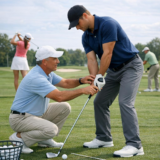
Performance in golf is determined not only by technique adn equipment but by the interaction between physiological capacity, motor control, and the mechanical properties of clubs and greens. Drawing on biomechanics, exercise physiology, and quantitative analyses of clubhead geometry, shaft dynamics, and grip ergonomics, this article evaluates how targeted fitness interventions influence key performance outcomes-swing mechanics, driving distance, and putting consistency.Emphasis is placed on objective metrics (e.g., clubhead speed, launch conditions, stroke stability, and variability measures), validated assessment protocols, and intervention studies that connect training adaptations to on-course performance.
The subsequent synthesis translates empirical findings into practical, evidence-based recommendations for assessment and training. it delineates how strength, power, mobility, and neuromuscular control support an efficient kinetic chain for the full swing, how fine motor control and postural stability underpin repeatable putting strokes, and how conditioning priorities differ between driving and putting demands. By integrating laboratory measures with field-relevant outcomes and proposing standardized monitoring strategies, the discussion aims to equip coaches, practitioners, and players with reproducible approaches to optimize performance through fitness interventions grounded in scientific evidence.
Comprehensive Physical Assessment Protocols for Golf Performance Including Mobility Strength Power Endurance Benchmarks and Objective Testing Recommendations
Begin by establishing a structured, objective mobility screen that directly maps to swing mechanics. Measure thoracic rotation with a seated rotation test using an inclinometer or smartphone app; aim for ≥45° of rotation each direction as a functional benchmark for a full shoulder turn without compensatory lumbar movement. Assess lead hip internal rotation at 90° hip flexion with a goniometer – ≥25° is a practical minimum for most golfers to clear the pelvis through impact. Include ankle dorsiflexion (weight‑bearing lunge) with a target of ≥35° to preserve spine angle through the swing, and a single‑leg balance hold (eyes open) for ≥30 seconds to indicate basic stability. To translate findings into practice, use the following rapid checkpoints and corrective drills:
- Setup checkpoint: maintain neutral spine and 30-35° forward tilt from the hips; if dorsiflexion is limited, reduce shaft length or widen stance temporarily while improving mobility.
- Mobility drills: 90/90 hip switches, thoracic windmills, ankle dorsiflexion band stretches.
- Common fault & correction: limited T‑spine → early arm lift; correct with partner‑assisted seated rotations and 3×30s isometric extension holds.
Thes measures feed directly into shot shape capability and consistency: improved rotation reduces overuse of the arms, producing more reliable sequencing and lower shot dispersion.
Next, quantify strength and rotational power because these underpin ball speed and repeatable impact. Use objective, golf‑specific tests such as a medicine‑ball rotational throw (MBT) with an 8-10 kg ball from a standing rotational stance – record distance or velocity and categorize performance (beginner: lower quartile, intermediate: mid‑range, advanced: upper quartile). Complement this with a countermovement jump (CMJ) for lower‑body power (CMJ: <25 cm beginner, 25-35 cm intermediate, >35 cm advanced) and a relative strength test like a trap‑bar or deadlift 1RM normalized to bodyweight (target ~1.0-1.25× bodyweight for low‑handicap players).to improve these qualities, implement progressive, periodized drills:
- Rotational power: standing medicine‑ball throws (3 sets × 6-8 reps each side), cable woodchops with explosive intent.
- Strength: hinge patterns (romanian deadlifts), single‑leg RDLs for stability (3 sets × 6-8 reps).
- Power transfer: jump squats and kettlebell swings for rate of force development, then integrate into swing‑specific overspeed swings with a launch monitor to monitor clubhead speed gains.
Importantly, monitor sequencing: if power improves but shaft‑lean at impact is reduced, add impact‑position drills (half‑swings focusing on forward shaft lean) to preserve compression and control spin.
Then, evaluate endurance and fatigue resistance as scoring frequently enough collapses late in rounds. Implement a functional fatigue protocol such as 36 consecutive 7‑iron swings (three sets of 12) while monitoring clubhead speed and dispersion; a drop of ≤5% in average clubhead speed and stable lateral dispersion indicate adequate swing endurance. For aerobic baseline, use a 3‑minute step test and heart‑rate recovery to guide walk‑based conditioning; golfers who can sustain a brisk 5-6 mile walk with minimal tempo change are better set up for 18‑hole performance. Translate test outcomes into on‑course strategies and drills:
- On‑course scenario: when speed or balance degrades on holes 16-18, favor clubs with higher loft and more margin (e.g., 7‑iron rather of 6‑iron) to reduce error amplification.
- Endurance drills: tempo‑preservation sets (10 minutes of alternating 7‑iron swings and putting practice with fixed rests) and pressure putting sequences that mimic late‑round conditions (e.g., 20 putts from 6-10 feet with scoring).
Additionally, incorporate environmental factors: in wind or wet conditions, prioritize controlled trajectories and lower clubhead speeds to maintain accuracy under fatigue.
integrate assessment data into individualized programming, practice structure, and equipment decisions so that objective gains become lower scores. Establish measurable short‑ and medium‑term goals (for example, increase MBT distance by 10% in 8 weeks, or reduce clubhead‑speed variance to ±2% across 36 swings) and schedule retesting every 6-8 weeks. build weekly microcycles that pair technical sessions (lane‑work on impact,short‑game target drills) with physical sessions (mobility circuits,strength/power sets) and deliberate on‑course strategy rounds. use multiple teaching modalities to suit learning styles: video swing analysis for visual learners, kinesthetic drills (impact tape, alignment rods) for feel‑based players, and simple cueing for beginners (e.g., “wide arc then rotate through” to correct over‑use of the arms). link mental skills with physical readiness by rehearsing a concise pre‑shot routine, breathing cues to reduce tension, and fatigue‑management rules (when to play conservatively).Regularly review equipment fit-shaft flex, loft and lie-and adjust as mobility or speed changes to maintain consistent launch and spin characteristics, thereby converting physical improvements into tangible, lower scores.
Rotational Core and Hip Strength Training to Increase Clubhead Speed with exercise Selection Sets Repetitions Loading Parameters and Progression Strategies
Effective development of rotational power begins with an understanding of angular or rotational motion as it applies to the golf swing: the body must accelerate around a central axis while maintaining balance, sequencing, and clubface control. In practical terms, this means training the hips and trunk to create a controlled hip-shoulder separation (X‑factor)-typically in the range of 20°-45° for most golfers-to store elastic energy during the backswing and release it in a proximal‑to‑distal sequence through the pelvis, torso, arms, and club. Therefore, the training emphasis should be on producing high rotational velocity while preserving spinal angle and lower‑body stability; this converts increased torque into added clubhead speed rather than compensatory movements (slide, early extension, or casting). To measure progress and keep instruction objective, use a launch monitor or radar device to record baseline clubhead speed and set incremental targets (for example, a realistic short‑term goal of +1-3 mph in an 8-12 week cycle, corresponding to approximately 3-8 yards of carry when contact quality is maintained).
Exercise selection should follow the force‑velocity continuum: include both strength and power movements with specific sets, repetitions, and loading parameters for each ability. For beginners, emphasize technique and neuromuscular coordination with lighter resistance: medicine ball rotational throws (2-4 kg), cable Pallof presses at light resistance, and bodyweight anti‑rotation holds-perform 3 sets of 6-8 explosive throws or 10-15 anti‑rotation seconds with 60-90 s rest. Intermediate golfers progress to mixed strength/power work: single‑leg romanian deadlifs (3×6-8 each leg at 60-75% perceived max), weighted Russian twists (3×8-12, 10-20% bodyweight), and hip thrusts (3-5×4-6 at 70-85% 1RM) to build torque and posterior chain strength. Advanced players should add high‑velocity, sport‑specific loads: heavier med‑ball throws (4-6 kg) with step‑through mechanics (3-5×4-6), Olympic‑style hip explosive work, and heavier rotational cable chops at 3-5 RM to challenge force output. Progression strategy: first improve technique and tempo, then increase velocity, then gradually increase external load (≈2-10% increments) while monitoring swing coordination and clubface control.
Transfer of gym gains to the course requires drills that replicate swing timing, weight transfer, and impact orientation; incorporate these practice tasks into range sessions and short‑game work.Suggested drills and setup checkpoints include:
- Step‑through med‑ball throw – simulate the weight shift and rotation in the downswing; perform 3-5 sets of 4-6 explosive repetitions to ingrain proximal‑to‑distal sequencing.
- Cable rotational punch – emphasize late release and torso deceleration; 3×6-8 per side at controlled tempo.
- Pallof press to single‑leg balance – improves anti‑rotation and stance leg stiffness; 3×8-12 each side.
Additionally,use simple setup checkpoints at address: neutral spine,knee flexion ~15°-25°,shoulder tilt matching ball position,and base width approximately shoulder width (wider for driver). Common mistakes include opening the hips too early, collapsing the lead knee, or relying on arm casting; correct these by slowing the downswing in practice, using mirror or video feedback to ensure the pelvis initiates rotation, and performing targeted drills that bias sequencing (e.g.,half‑swings with pause at top,then explosive transition into med‑ball throw).
translate physical improvements into scoring gains through structured practice routines and on‑course strategy that take environmental and equipment factors into account. Such as, in windy or cold conditions, prioritize controlled tempo and lower launch by shortening the arc and reducing maximal rotation on full swings; warm up with dynamic rotational exercises to restore clubhead velocity lost to cold muscles. Plan weekly practice as 30 minutes rotational gym work + 30-40 minutes range focusing on ball flight, followed by 20-30 minutes short‑game and 9 holes of strategic play where you purposely engage the renovated sequence (e.g., choose targeted tee shots to test accuracy under power). Equipment considerations such as shaft flex and clubhead mass influence perceived rotational load and timing; thus, incorporate club fitting into your progression so that increased power is matched by proper shaft kick and loft selection. Mentally, use simple cues-“lead hip first,” “hold spine angle,” “smooth acceleration”-and retest objective metrics (clubhead speed, carry distance, dispersion) every 6-8 weeks to validate progression and adjust training loads or on‑course tactics accordingly.
Plyometric Power Development for Driving Distance Emphasizing Rate of Force Development Jump Variations and Frequency Intensity Guidelines
developing explosive driving distance begins with a focused emphasis on rate of force development (RFD), the speed at wich the golfer can produce force through the ground to accelerate the clubhead. In practical terms,improving RFD improves the lower-body-to-upper-body sequencing that creates the modern driving swing: rapid unilateral push-off from the trail leg,timely hip rotation,and maintained spine angle through impact. For instruction, begin by measuring baseline metrics with a launch monitor: record clubhead speed, ball speed, and carry distance across five full-driver swings to establish a median. Then pair specific plyometric exercises with technical swing checkpoints-maintain a stable base at address with 50-55% of weight on the trail footX‑factor separation of 20-30°
To train the neuromuscular qualities that transfer directly to the golf swing, use jump variations that challenge horizontal and rotational power as well as vertical explosiveness. Begin with foundational movements such as squat jumps and countermovement jumps to develop general power; progress to sport-specific drills like lateral bounds, single‑leg hops, and rotational medicine‑ball throws to mimic the lateral and rotational vectors of the golf swing. For safety and effectiveness,follow these equipment and measurement guidelines: use a stable landing surface or sprung turf,select box heights of 30-45 cm (12-18 in) for beginners and 45-60 cm (18-24 in) for advanced athletes during depth jumps,and aim for ground contact times under 250 ms on reactive drills to emphasize RFD. Transition drills progressively-start bilateral vertical work, then unilateral hops, then horizontal/rotational power-so technical improvements such as reduced early extension and improved hip clearance translate onto the course. programming must balance intensity, frequency, and recovery to prevent overload and promote performance gains.For most golfers, implement 2 sessions per week of targeted plyometrics during an 8-12 week cycle; beginners may start at 1-2 sessions/week and advanced players can use 2-3 sessions/week with careful volume control. Use low‑rep,high‑quality sets to prioritize speed: for example,3-5 sets of 3-6 reps for depth jumps or single‑leg bounds,and 2-3 sets of 6-8 reps for bilateral vertical jumps. Allow 48-72 hours of recovery between sessions and avoid combining maximal plyometrics with maximal strength lifts on the same day; instead, use contrast training (heavy strength set followed by explosive jump) on alternating days to exploit post‑activation potentiation. Monitor fatigue through objective measures-reduced jump height,slower ground contact,or lowered clubhead speed on test swings-and adjust intensity accordingly. translate gym improvements into measurable on‑course gains via integrated practice and tactical adjustments. After a 6-12 week plyometric block, reassess with launch monitor targets (for example, aim for a 2-4 mph increase in clubhead speed or a commensurate 4-10 yard increase in carry, noting that each golfer’s transfer varies) and incorporate these gains into course management: if carry increases, re-evaluate driver use on tight holes or favor aggressive lines with shorter approaches.Use the following practical drills and troubleshooting checkpoints during practice sessions: Common mistakes include excessive volume (leading to deceleration and injury), poor landing mechanics (knee valgus or stiff knees), and lack of technical integration into the swing. Correct these by reducing reps, cueing soft knees and hip hinge on landing, and pairing every plyometric session with 10-15 minutes of technical swing work that reinforces proper sequencing. By combining measured plyometric progression with deliberate on‑course strategy and consistent monitoring, golfers of all levels can convert increased RFD into reliable driving distance and lower scores. Begin with a systematic assessment that links joint range-of-motion and dynamic stability to specific swing faults. Use simple clinical tests you can reproduce on the practice tee: a seated thoracic rotation measurement with a goniometer or inclinometer (target: ≥45° of thoracic rotation each side for free shoulder turn), hip internal rotation at 90° hip flexion (target: ≥35° lead-hip internal rotation), and a single-leg balance test (hold for 10 seconds with eyes open) to screen lower‑limb control. These objective measures map directly into swing metrics such as shoulder turn, hip turn and the X‑factor (typical desirable X‑factor range: 20°-40° between shoulder and pelvis at the top). In addition, quantify ankle dorsiflexion (~10°-12°) to ensure stable weight transfer and evaluate lumbar extension tolerance to guard against early extension. Set measurable short‑term goals (for example, increase thoracic rotation by 10° within 8 weeks) and document baseline values with video or a launch monitor so progress can be objectively tracked and correlated with ball flight and dispersion changes on course. Progress from mobility to stability to motor control with targeted drills that carry direct transference to the swing.Begin each session with mobility work, then load stability and finally practice dynamic control in swing‑specific patterns. Useful drills include: For motor control, include tempo and pause drills such as slow backswing‑pause‑accelerate to train the sequencing of hip clearance, shoulder unwind and wrist release. Progress load and speed gradually: start at 50% effort for technical groove work, then build to 75% and near‑maximal speed for power, maintaining the desired sequencing and contact quality. Translate physical gains into technical improvements across full swing and short game by incorporating measurable technique cues and equipment considerations. Work to preserve a consistent spine angle (approximately 20° of forward tilt from the vertical at address for many players) and to achieve a controlled X‑factor at the top rather than forcing rotation through the lumbar spine. to improve impact, target a slight forward shaft lean with the hands ahead of the ball at contact for irons and wedges (lead wrist in neutral to slightly bowed), and practice with an impact bag or alignment rod to ingrain the feel. For short game, use hinge‑and‑hold drills and low‑trajectory bump‑and‑runs to adjust to firm or windy conditions; select wedges with appropriate bounce and loft for sand and tight lies and practice varying ball position by 1-2 cm to modulate trajectory. Common mistakes-such as casting (loss of lag), early extension, and lateral slide-are corrected through targeted motor control cues: feel a stable trail‑leg base, initiate downswing with hip rotation not arm pull, and maintain the shoulder‑pelvis relationship through impact. These technical corrections should be measured by improved strike consistency, reduced shot dispersion and lower scores on approach distances under simulated course pressure. design practice and on‑course routines that incorporate motor learning principles and mental strategies to consolidate gains and reduce injury risk.Structure a typical session as follows: dynamic warm‑up and mobility (6-8 minutes), 2 stability exercises (2-3 sets each), technique progressions with reduced speed (3 sets of 8-10), and transition to full‑speed impact work (3-5 sets of 5). Use variable practice (randomization of clubs and targets) to enhance transfer to the course, and include blocked practice for initial motor acquisition. Employ objective feedback tools-video, launch monitor numbers (carry, spin, launch angle) and impact tape-to refine technique; set process goals (e.g., maintain a 3:1 backswing to downswing tempo or reduce lateral pelvis displacement by 25%) rather than only outcome goals. Integrate a concise pre‑shot routine and breathing cue to manage arousal and focus during gusty or wet conditions,and modify swing length or club selection when faced with adverse lies or strong wind. By combining targeted mobility/stability interventions, measurable practice progressions and sound on‑course decision‑making, golfers from beginners to low handicappers can improve swing mechanics, reduce injury risk and produce more reliable scoring results. Begin by establishing a repeatable, balanced setup that allows precise, small-muscle control of the stroke. Place the feet roughly shoulder-width or slightly narrower-approximately 8-12 inches between the insteps-to provide a stable base without locking the hips. Position the ball center to slightly forward of center in your stance and set your eyes directly over or just inside the ball when looking down (verify by dropping a putter vertically along the shaft to see if the shaft appears vertical). Maintain a slight knee flex and a spine angle that permits the shoulders to rotate freely (approximately 10-20° of forward tilt); this promotes a pendulum stroke driven by the shoulders rather than the wrists.For setup checkpoints and common corrections, use the following: These fundamentals reduce variability and create the neuromuscular conditions for consistent roll and aim. With setup established, cultivate visual-motor integration and tempo through structured rhythm drills that train exact distance control and face control through the impact window. Adopt a metronome-based approach to develop a reproducible timing pattern: for short putts (<6 ft) use equal backswing and follow-through (1:1); for mid range (6-20 ft) practice a 1:2 rhythm to emphasize acceleration into the ball and maintain forward roll. Drill examples include: Progression should follow blocked practice for motor pattern acquisition (e.g., 3 sets of 20 repetitions on 6-ft putts) and then shift to random practice to transfer skills under variability found on course situations. Fine motor control and balance are closely tied to golf-specific fitness; integrate simple stability exercises that transfer directly to putting. Improve postural steadiness and proprioception with single-leg balance holds (30-45 seconds), standing hip hinge and shoulder-turn repetitions with a light resistance band, and short-core bracing routines to minimize unwanted upper-body sway. When practicing on the range or green, simulate real-course perturbations-wind, uneven stance on a slight slope, or a firmer green-to train adaptability. Equipment considerations also affect roll: confirm putter loft (typically 3-4° for blade and mid-mallet designs) and shaft length to ensure your eyes and hands fall into the same consistent geometry. Useful on-green drills include: These fitness-linked routines reduce micro-movements that cause face rotation and speed errors, especially under pressure. implement a measurable practice prescription and on-course request that ties technique to scoring. set weekly and monthly benchmarks such as 90% make rate from 3 ft, 70% from 6 ft, and a target of reducing three-putts by 50% within six weeks. A sample weekly plan blends technical repetition and situational play: Troubleshooting common problems-pushes due to open face at impact, pulls from early wrist release, inconsistent distance from variable tempo-should be addressed with targeted drills above and by adjusting equipment (loft/length) as needed. Remember to follow the Rules of Golf during practice rounds by marking, lifting, and replacing the ball on the green when necessary, and to factor green speed (stimp) and wind when planning pace and aim. By combining biomechanical precision, deliberate tempo work, fitness-based balance training, and a quantified practice plan, players of all levels can produce measurable gains in putting consistency and lower scores. Establish a coherent training cycle using a structured macro- and mesocycle approach that balances technical practice, physical conditioning, and recovery. Begin with a preparation mesocycle (3-6 weeks) that emphasizes fundamentals: set up checkpoints such as neutral spine angle (~15° forward tilt), shoulder turn ~90° for men, 80-100° for advanced players, and a consistent clubface alignment at address. Progress into an intensity-focused mesocycle where you introduce high-pressure simulations (tournament-style putting and approach shots) and power work (medicine-ball rotational throws, band-resisted swings). Monitor adaptation with objective metrics: clubhead speed (mph), ball speed (mph), shot dispersion (yards), greens in regulation (%), and subjective ratings such as RPE (1-10). Use transition metrics weekly to guide load: if shot dispersion increases >10% or RPE averages above 7 for three consecutive sessions, decrease practice volume by 10-20% and reintroduce technical repetition and motor control drills. Prioritize sleep and nutrition as central recovery levers that directly influence decision-making and motor control on the golf course. Aim for 7-9 hours of nocturnal sleep with consistent sleep-wake timing ±30 minutes; implement a pre-sleep routine of light stretching and blue-light reduction 60-90 minutes before bedtime. For intra-day recovery, schedule a 20-30 minute nap after an intense morning session if total sleep is insufficient. Nutrition should be periodized alongside training load: consume 1-2 g/kg of carbohydrates 2-3 hours pre-round for sustained energy, sip 150-300 ml of fluid every 15-20 minutes during play, and take 20-30 g of high-quality protein within 60 minutes post-session to support tissue repair. Consider evidence-based supplements (creatine monohydrate 3-5 g/day for power retention; caffeine 3 mg/kg 30-60 minutes pre-round for alertness) while adhering to competition regulations and individual tolerance. Translate recovery and load management into practice routines and on-course strategy with clear, actionable drills. Sequence sessions so that high-cognitive work (e.g., green reading, pressure putting) occurs when rested, and higher-volume ballistic work (full-swing distance, speed training) follows adequate fueling. Use these drills and checkpoints to build measurable improvements: When fatigue induces common errors-such as casting or early extension-use targeted corrections (half-swings with impact tape, wall-posture drill, or reduced-length practice swings) and monitor progress with distance and dispersion targets (such as, reduce average dispersion by 15% in 4 weeks). implement monitoring and adaptive decision rules that tie physiological data to on-course tactics and tournament tapering. Track HRV, resting heart rate, sleep duration, and practice load daily; adopt a conservative intervention if HRV drops >10% or resting HR rises >5 bpm-shift to recovery modalities (active mobility, contrast baths, low-intensity putting practice) until baseline returns.Employ a taper before competition by reducing volume 40-60% over the final 7-10 days while maintaining intensity with short, neuromuscularly specific sessions (full-swing speed work: 6-8 reps at 90-95% maximum speed).Use analytics (strokes gained,fairways hit %,proximity to hole) to individualize the final week’s focus-if strokes gained: approach is low,prioritize wedge distance control and green-smoothing routines; if putting is weak,prioritize short putt pressure drills. Integrate mental skills-consistent pre-shot routine, breathing control, and visualization-particularly when sleep or travel disrupts physiology, and adjust strategy on course by favoring risk-averse lines when physiological markers indicate impaired decision-making. Integrating radar-derived clubhead speed and launch monitor metrics with force-plate outputs begins with a structured baseline assessment that is reproducible on the range and in the lab. Start by recording five maximal-effort driver swings with a launch monitor or radar to obtain mean and standard deviation for clubhead speed (mph), ball speed, launch angle, and spin rate (rpm). Concurrently capture ground reaction data from a force plate across those same swings to quantify peak vertical ground reaction force (vGRF), peak horizontal shear, time-to-peak force (msec), and center-of-pressure (COP) displacement (cm). For field tests, include functional measures that correlate to swing demands: a 3-kg rotational medicine ball throw (best of three) for power, a single-leg balance test (eyes open, 30 sec) for stability, and a 10-20 m sprint or lateral hop test to assess rate-of-force development. From these measures create specific,measurable goals-for example,increase mean clubhead speed by 2-4 mph in 12 weeks,raise peak vGRF by 8-12%,or reduce lateral COP excursion to under 5 cm-so subsequent training and technical interventions are evidence-based and time-lined. once baselines are established, translate objective data into targeted swing mechanics and short-game adjustments. Use force-plate timing to verify the desired sequence: force initiation from the trail foot to lead foot producing a ground-to-club kinetic sequence (legs → hips → torso → arms → club). If force-plate data show delayed RFD or excessive lateral COP drift, cue technical corrections that emphasize compact rotation and stable axis control. For example, if a player’s shoulder turn at top is measured at less than 60° while lower-body torque is high, emphasize increased thoracic rotation through a guarded reverse-pivot drill and a towel-under-arms drill to maintain connection. Conversely, if excessive shoulder turn (>>90°) creates sequencing breakdown, prescribe a partial-turn drill with target shoulder-turn angles of 70°-85° and use alignment sticks to provide a visual reference. Practical drills and checkpoints include: These drills should be repeated with objective feedback-clubhead speed and vGRF readings-to confirm the intended mechanical changes are producing measurable outputs that align with on-course goals. designing individualized training plans requires connecting laboratory outputs to gym progressions and on-course practice. Use force-plate metrics to prescribe phases: an initial stability and mobility phase (weeks 1-4) that targets single-leg balance and thoracic rotation mobility, followed by a strength phase (weeks 5-8) focusing on bilateral and unilateral lifts (e.g., goblet squats, single-leg Romanian deadlifts) with strength loads at 70-85% 1RM, and concluding with a power/transfer phase (weeks 9-12) that emphasizes plyometrics, medicine-ball throws, and overspeed swings. Prescribe specific progressions tied to metrics: if vGRF increases by >8% and RFD improves, progress to more sport-specific power work; if COP variability remains high, regress to balance-focused loading. Equipment considerations should be integrated: use launch monitor data to confirm whether shaft flex or loft changes reduce dispersion or correct a tendency to lose distance (for example, a driver loft change of ±1-2° may materially change launch-angle/ spin outcomes). Always verify that equipment conforms to the Rules of Golf before competition use and keep training devices off the course during play unless allowed by local competition rules. ensure objective training transfers to strategic on-course performance through scenario-based practice and ongoing field testing. Translate metrics into course strategy: when mean clubhead speed variability exceeds ±2 mph, adopt conservative club selection and emphasize target zones rather than flag-hunting; conversely, consistent increases in clubhead speed and controlled dispersion support aggressive play and sackable shot-making (e.g., go-for-green decisions). Incorporate these practice elements: Address common faults pragmatically-early extension corrected with wall-tap or chair-butt drills, sway reduced by narrow-stance single-leg balances, and casting fixed with delayed release drills-and set weekly measurable targets (e.g., reduce mean lateral dispersion by 2-4 yards, lower short-game proximity to hole by 20%). By coupling objective technology with tailored gym plans, mapped technical drills, and on-course strategy sessions, instructors can create evidence-based programs that yield measurable improvements for beginners through low handicappers while accounting for individual anatomy, learning style, and situational play. Below is a structured academic Q&A designed to accompany an article titled “Evidence‑Based Golf Fitness: Master Swing, Putting, Driving.” The questions address conceptual framing, methods, key findings, practical prescriptions, equipment considerations, assessment methods, limitations, and stylistic notes for reporting evidence. Tone is professional and language is precise to suit an academic readership. 1) Q: What does “evidence‑based” mean in the context of golf fitness and equipment selection? 2) Q: What primary domains of physical function most strongly influence swing mechanics, driving distance, and putting consistency? 3) Q: which objective measurements should researchers and clinicians prioritize when evaluating golfers? 4) Q: How does clubhead geometry affect performance and what metrics should be considered? 5) Q: What evidence guides shaft selection (length,flex,kick point) for optimizing swing and driving? 6) Q: How does grip size and ergonomics influence swing mechanics and putting? 7) Q: What fitness interventions have the strongest evidence for increasing driving distance? 8) Q: which interventions are most effective for improving putting consistency? 9) Q: How should practitioners integrate equipment fitting with physical training? 10) Q: What testing protocol ensures reliable before/after comparisons in intervention studies? 12) Q: What are common methodological limitations in golf fitness/equipment studies? 13) Q: How should clinicians balance performance gains versus injury risk in program design? 14) Q: What practical on‑course or practice drills are evidence‑aligned for improving the swing and driving distance? 15) Q: How should authors and practitioners use language when reporting “evidence” in publications? 16) Q: What are the priority areas for future research? 17) Q: What is the bottom‑line, actionable summary for coaches and clinicians? If you would like, I can: Conclusion This review has synthesized current quantitative evidence linking targeted fitness interventions to improvements in swing mechanics, driving distance, and putting consistency.convergent data indicate that structured programs emphasizing mobility, strength (particularly rotational and lower‑body), and neuromuscular control produce measurable enhancements in kinematic sequencing, clubhead speed, and stroke repeatability when integrated with technique- and equipment-specific adjustments. Objective assessment-using motion analysis, launch‑monitor metrics, and validated strength/mobility tests-emerged as a critical mediator of transfer from the gym to on‑course performance. For practitioners and players, the principal implication is that individualized, evidence‑based fitness prescriptions should form an integral component of performance planning rather than an adjunct. Program design should be informed by baseline movement screening, targeted remediation of identified deficits (e.g., hip internal rotation, trunk power, fine motor control for putting), and progressive overload principles adapted to golf‑specific tasks. Regular monitoring and iterative adjustment-aligned with coaching feedback and equipment considerations-maximize the likelihood of durable performance gains while reducing injury risk. Limitations of the current evidence base include heterogeneity in study designs,small sample sizes in some experimental trials,and relatively short follow‑up intervals. Future research should prioritize adequately powered, longitudinal trials that evaluate dose-response relationships, interactions between fitness and equipment variables, and outcome measures that combine biomechanical fidelity with on‑course relevance. Until such data are more definitive, practitioners should apply the best available evidence pragmatically, documenting outcomes and contributing to the growing empirical foundation. In sum,evidence‑based golf fitness offers a rigorous framework for optimizing the physical determinants of swing,driving,and putting performance. When applied systematically and tailored to the individual, it enhances the probability of meaningful, sustainable betterment on the course.
Mobility Stability and Motor Control Interventions to Optimize Swing Mechanics and Reduce Injury Risk with Targeted Drills and Range of Motion Criteria
Fine Motor Control Balance and Visual Motor Integration for Putting Consistency Including tempo Rhythm Drills Stroke Repetition Structures and Practice Prescription
Periodization Recovery Nutrition and Sleep Strategies to Sustain Peak Performance Across Practice and Tournament Cycles with Monitoring and Adaptation metrics
Integration of Technology and Objective Metrics for Evidence Based Program Design Incorporating clubhead Speed Radar Force Plate Outputs and Field Test Driven Individualized Training Plans
Q&A
A: ”Evidence‑based” denotes decision making grounded in systematically collected quantitative and qualitative data – e.g., biomechanical measurement (3D kinematics, kinetics), ball‑flight metrics (launch monitors), performance outcomes (strokes‑gained, accuracy), and controlled intervention studies – rather than anecdote or tradition. Note the distinction between “evidence” and “proof”: evidence helps form and weigh conclusions, whereas proof is the argument or data that compels acceptance of an assertion.(Conceptual distinction adapted from sources on the usage of “evidence.”)
A: Three domains show consistent influence in the literature and measurement studies:
– Rotational power and coordinated transfer of angular momentum (thorax-pelvis dissociation) – critical for maximal and repeatable clubhead speed.- Lower‑limb stability and force transfer (ground reaction force production and timing) – critically important for consistent strike and directional control.- Fine motor control and postural stability (upper extremity and core control, ocular-motor integration) – essential for putting accuracy and short‑game repeatability.
A: Recommended core measurements:
– Clubhead speed, ball speed, smash factor, launch angle, and spin (launch monitor).
– 3D kinematics of pelvis, thorax, shoulder, elbow, and wrist; sequencing/timing metrics (motion capture or inertial measurement units).
- Ground reaction forces and center‑of‑pressure during swing and putting (force plates/pressure mats).
– Strength/power tests: rotational medicine‑ball throw, isometric mid‑thigh pull/dynamometry, countermovement jump for lower‑limb power.
– Mobility and screening: thoracic rotation, lead hip internal rotation, ankle dorsiflexion; balance tests (single‑leg stance, Y‑balance).
– Putting performance metrics: putt speed dispersion, launch direction, roll correlation, strokes‑gained putting.
A: Key geometry parameters with measurable performance impact include center of gravity (CG) location, moment of inertia (MOI), face loft and roll characteristics, and face curvature. Effects:
– Lower/back CG promotes higher launch and increased forgiveness.
– Higher MOI reduces dispersion on off‑center hits, improving directional consistency.
– Face design (loft and roll) influences launch/spin and roll‑out, affecting both distance control and accuracy.
These effects are quantifiable via ball‑flight measures and dispersion analyses using launch monitors and controlled impact tests.
A: Empirical findings indicate:
– Shaft length: longer shafts typically increase clubhead speed but may reduce repeatability (greater dispersion). Optimal length balances speed gains with control, individualized by skill level and swing repeatability.
– Flex/stiffness: mismatched stiffness alters timing and effective loft at impact; stiffer shafts often favor faster, more consistent swings but can reduce feel for some players.
– Kick point/launch characteristics: shaft bending profile interacts with swing tempo to modify launch angle and spin; select shafts to achieve desired launch/spin envelope.
Objective fitting should use launch‑monitor testing across representative swings rather than purely static measures.
A: Grip circumference and tactile design alter wrist hinge, forearm torque, and perceived control:
– Oversized grips can reduce wrist break and hand action, frequently enough stabilizing the putter stroke but potentially reducing clubhead speed in the full swing.
– Undersized grips may permit excessive wrist motion and variability.Fit should consider hand anthropometry, swing type, and desired wrist mechanics. Pressure distribution and grip pressure variability are measurable predictors of control and fatigue.
A: Interventions with replicable effects include:
– Rotational power training (medicine‑ball throws, cable chops) that improve torso‑pelvis separation and angular velocity transfer.
– Lower‑body and hip extension power work (loaded jump variations, hip‑dominant resistance training) to augment ground reaction capabilities.
– Whole‑body power sequencing and high‑velocity resistance training focused on rate of force development.
Program design should be periodized and integrated with technical training; measured outcomes should include clubhead speed and ball‑flight metrics.
A: Effective approaches are multimodal:
– Motor‑control training emphasizing tempo,stroke length reproducibility,and visual/perceptual drills.
– Specificity drills under varied green speeds and slopes to improve calibration of force and alignment.- Low‑load proprioceptive and postural control work (balance, neck/trunk posture drills) to reduce variability.
Objective outcome measures include putt start‑direction dispersion,speed control (holing probability over varied lengths),and strokes‑gained putting.
A: Integration principles:
– Sequence: baseline assessment (biomechanical,strength,mobility),then provisional equipment fitting to address gross mismatches,simultaneous targeted training to address modifiable physical constraints,and iterative re‑fitting as swing mechanics adapt.
– Use objective feedback (launch monitor, kinematics) to test equipment changes across representative swings pre‑ and post‑training.
– Individualize: elite and high‑handicap players will require different tradeoffs between forgiveness and workability.
A: Protocol elements to maximize reliability:
– Standardize warm‑up and ball type/green conditions.
– Collect a sufficient number of trials per condition (e.g., 10-20 swings or putts) and report measures of central tendency and dispersion.
– Use repeated measures and intra‑session reliability statistics (ICC, coefficient of variation).
– Control for fatigue, time of day, and environmental variables.11) Q: What statistical and practical criteria should be used to interpret changes?
A: Use both inferential statistics and practical importance:
– Report effect sizes, confidence intervals, and smallest worthwhile change (based on performance metrics such as strokes‑gained or clubhead speed increments tied to shot outcomes).
– Consider intra‑individual variability: an intervention that exceeds typical within‑player variation is more likely to be meaningful.
– Where possible, translate metric changes to on‑course outcomes (e.g., X m increase in carry relates to Y% increase in hole pars avoided).
A: Frequent limitations include small sample sizes, heterogeneous participant skill levels (mixing amateurs and professionals), short intervention durations, lack of blinded assessments, and failure to control for technical coaching interventions concurrent with strength/mobility training. Ecological validity (transfer to on‑course performance) is often limited.
A: Adopt a risk‑managed progression:
– Prioritize screening to identify tissue irritability and movement deficits.
– Progress load and velocity systematically (linear or undulating periodization) with monitoring of pain, movement quality, and fatigue.
– Include recovery strategies and maintain movement variability to reduce overuse risk.
– Emphasize technique cues that distribute load appropriately across joints and tissues.
A: Examples:
– Medicine‑ball rotational throws for explosive torso separation (3-4 sets of 6-8 reps).
– tempo‑controlled net‑yardage practice using a launch monitor with pre‑set swing goals to enhance repeatability.
– Single‑leg stabilization and resisted hip extension drills to improve force transfer timing.Combine these with specific feedback (video, launch data) and progressive overload.
A: Precision in terminology matters. Use “evidence” to indicate data that supports an inference rather than implying absolute proof; reserve terms like “demonstrates” or “shows” for measured effects and avoid overusing “evidenced” as a verb – prefer “demonstrated,” “indicated,” or “was associated with.” Also, treat “evidence” as an uncountable noun in formal writing (e.g., “the evidence suggests…”). (Stylistic guidance informed by usage discussions on evidence/proof and verbing of “evidence.”)
A: High‑priority topics:
– Large‑scale randomized controlled trials comparing integrated training + equipment fitting versus standard coaching.
– Longitudinal studies linking laboratory metrics to on‑course performance and injury incidence.
– Individualized dose‑response relationships for power versus control tradeoffs across handicap strata.
– Deeper investigation of perceptual and cognitive contributors to putting under pressure.
A: Employ objective assessment (kinematics, launch monitors, strength/power tests) to identify modifiable constraints, fit equipment iteratively with representative swings, prescribe individualized, periodized training that targets rotational power, lower‑limb force transfer, and fine motor control for putting, and evaluate outcomes with both statistical and practical significance measures. Maintain cautious language about causality and generalize recommendations only within the tested populations.
– Convert these Q&As into an annotated FAQ for publication.
– Provide sample testing batteries with normative reference values by handicap bracket.
– Draft an evidence‑synthesis methods appendix that details recommended measurement devices and reliability thresholds.