Optimising golf performance demands a coordinated, research-informed strategy that fuses biomechanics, physiological profiling, and bespoke conditioning. The contemporary golf swing is a highly coordinated, multi-segment movement that requires timely power production, sufficient joint range, postural control and endurance. Shortcomings in any of these areas can reduce clubhead speed, widen shot dispersion, undermine consistency and raise injury likelihood. Recent studies-using motion-capture biomechanics, neuromuscular testing and randomized training trials-show that interventions tailored from objective assessment outperform one-size-fits-all conditioning plans.
This rewritten synthesis condenses high-quality evidence into a field-ready framework for coaches, clinicians and researchers. Core elements are systematic screening and quantitative movement analysis to uncover individual constraints; physiological testing to map strength, power and metabolic capacity; and progressive, task-specific programming that blends mobility, kinetic‑chain strength and motor‑control training. Special attention is given to individualisation,dose-response planning and objective monitoring tools (for example,force-velocity profiles and wearable IMUs) to inform adaptation,competition preparation and return‑to‑play decisions.
By converting biomechanical and clinical findings into practical protocols, the sections below aim to shorten the pathway from lab revelation to on-course improvement-helping recreational and competitive golfers raise performance while reducing injury exposure.
Comprehensive biomechanical evaluation to sharpen swing mechanics and reduce injury exposure
A cross-disciplinary assessment combines three-dimensional motion capture, synchronized force platform data, surface electromyography (EMG) and clinical screening to map a golfer’s movement pattern and tissue loading profile. A useful testing battery should include:
- sequenced kinematic capture of pelvis, thorax and upper‑limb segments
- Ground reaction force analysis and rate‑of‑force development profiling
- Timing of muscle activation for trunk rotators and scapular stabilisers
- Clinical measures of joint range-hip internal/external rotation and thoracic rotation
Taken together, these measures allow objective identification of factors that limit performance or drive compensatory strategies linked to lower clubhead velocity and higher injury risk.
Rather than focusing on single joint positions, quantitative analysis should prioritise intersegmental timing and peak segmental velocities. Principal performance markers include X‑factor separation, proximal‑to‑distal sequencing of peak velocities and lead‑hip extension speed; inefficiencies in sequencing correlate with lower ball speed and larger lumbar shear loads. For clinicians and coaches, practical target ranges help interpret findings:
| Metric | Target Range | Clinical rationale |
|---|---|---|
| X‑factor | 40°-50° (elite benchmark) | Optimises elastic energy storage between pelvis and thorax |
| Pelvis → Thorax timing | Pelvis peak → Thorax peak: ~20-30 ms | Facilitates efficient proximal‑to‑distal power transfer |
| Lead hip extension | >15° at impact | Supports power transmission while protecting the lumbar spine |
Risk stratification should combine asymmetry indices, periods of high loading and mobility shortfalls to prioritise interventions.Typical red flags include sustained lumbar extension during high rotational velocity, restricted thoracic rotation combined with excessive lumbar twist, and marked bilateral strength imbalances. Assessment‑driven mitigations commonly include:
- Targeted mobility (thoracic rotational mobilisations; hip internal rotation drills)
- Segmental stability and deceleration training (eccentric control for trunk rotators; progressive anti‑rotation work)
- Load management guidance (adjustments to practise volume and swing intensity)
Embed these strategies into a periodised plan with scheduled re‑assessments to track kinematic changes and tissue tolerance, thereby improving performance while limiting cumulative injury risk.

Individualised physiological profiling to direct conditioning and energy‑system work
Meaningful physiological profiling converts inter‑individual differences into concrete training priorities. A baseline battery should quantify cardiovascular capacity, anaerobic contribution, neuromuscular power and metabolic thresholds using validated tests: VO₂peak/VO₂max, lactate or ventilatory threshold, maximal sprint/power assessments and force-velocity profiling. Body composition and mobility screens add context for load tolerance and movement economy.Collectively, this information clarifies whether a golfer needs greater endurance for long rounds and recovery, or short‑burst power for improved clubhead speed.
- Cardiorespiratory assessment – graded tests and submaximal heart‑rate responses
- Metabolic thresholds – lactate or ventilatory markers to define training intensities
- Neuromuscular profiling - countermovement jump, short sprint tests and isometric strength measures
- movement and load tolerance – functional screening and fatigue‑resistance tasks
Use profile outputs to apportion training emphasis across aerobic, anaerobic‑lactic and anaerobic‑alactic systems to match the athlete’s deficits and competition phase. As a notable example, golfers with limited sustained power should increase low‑to‑moderate intensity aerobic volume to speed recovery across rounds; those with an adequate aerobic base but constrained rotational power should prioritise high‑intensity intervals and ballistic strength work to boost short‑duration outputs that drive swing speed improvements.
- aerobic: longer intervals,tempo sessions and frequent easy days to improve recovery kinetics
- Anaerobic‑lactic: repeated threshold efforts to elevate lactate tolerance and buffering
- Anaerobic‑alactic: maximal sprints,short‑rest plyometrics and explosive Olympic/ballistic lifts
Programming should be anchored to individual thresholds rather than arbitrary zones; combine objective measures with perceived exertion and readiness data. The table below connects common profile metrics to concise interventions that fit into weekly microcycles.
| Metric | Recommended intervention | Typical frequency |
|---|---|---|
| VO₂peak | 4×4‑minute high‑intensity intervals | ~2×/week |
| Lactate threshold | 20-30 minute tempo sessions at threshold pace | 1-2×/week |
| Peak power | 3-5 sets of ballistic lifts or plyometrics | ~2×/week |
Progression must respect test-retest variability and injury risk: apply periodised overload, schedule regular re‑testing and use auto‑regulation (HR, RPE, readiness) to tune workloads. Always integrate conditioning with technical and tactical sessions to preserve movement patterns and reduce interference. Note: the term is written as “individualized” in US English and “individualised” in British English-both refer to the same tailored approach to assessment and prescription.
Mobility and stability sequencing to maximise pelvis-shoulder separation and force transmission
Improving intersegmental timing requires coordinated mobility and stability work that increases the magnitude and speed of pelvic‑to‑shoulder separation while maintaining control through the transfer phase. Modern biomechanical evidence links larger transverse‑plane separation (the X‑factor) to greater clubhead speed-provided the pelvis decelerates appropriately and the torso accelerates in a controlled manner. However, adding passive range without neuromuscular control elevates injury risk. Therefore, protocols should enhance selective tissue compliance (thoracic rotation, hip IR/ER) and concurrently build dynamic stability (lumbopelvic control, scapular positioning) so larger separations are safer and more effective.Practical physiological targets include functional thoracic rotation (>45° for many golfers), hip rotational symmetry (<10° side‑to‑side difference) and controlled pelvic control during single‑leg stance.
Exercise selection should match the direction, rate and timing of forces experienced during the swing.Core and hip stability work must be performed in ranges and speeds that mimic transverse demands. Typical categories and examples are:
- Thoracic mobility - open‑book progressions, active thoracic rotations (2-3× daily, 8-12 reps)
- Hip rotational mobility - 90/90 transitions, banded IR/ER stretches (3×/week, 30-60s holds)
- Anti‑rotation core – Pallof press progressions, half‑knee anti‑rotations (3-4 sets, 6-10 reps each side)
- Single‑leg stability – single‑leg RDLs, banded step‑downs, balance tasks (2-3×/week, 6-12 reps)
- Scapular control – Y/T/W raises, serratus punches (2-3×/week)
Advance from controlled isometrics to dynamic, loaded rotational tasks that emphasise sequencing rather than simply chasing maximal range.
Design programmes in phases (mobility → isolated stability → loaded rotational integration) and give explicit tempo and intensity cues to train force transfer. Progress load only when technical criteria-smooth separation and deceleration control-are met,not solely on increased weight. Use multimodal feedback (auditory, tactile, video) to reinforce sequencing and reduce compensations. Prioritise frequent low‑load rehearsal of high‑quality patterns before introducing heavy rotational medicine‑ball throws or high‑velocity implements.
| Phase | Focus | Typical session |
|---|---|---|
| Mobility | Thoracic and hip ROM | Daily, 10-15 min |
| Stability | Lumbopelvic and scapular control | 3×/week, 20-30 min |
| Integration | loaded rotational power | 2×/week, progressive intensity |
Objective monitoring and assessing return‑on‑investment are vital. Quantifiable measures-transverse rotation range, single‑leg balance time, Pallof press capacity and increases in pelvis-torso peak separation during swing analysis-should guide progression and de‑load decisions. Regular pain and movement‑quality screens help detect early compensations; prioritise reducing aberrant shear or lateral flexion during the downswing. when asymmetry or pain exists, clinical decision rules should favour preserving technique fidelity over chasing short‑term power gains.
Strength and power programming built on functional movement patterns for longer,more repeatable drives
Modern strength plans favour integrated,multiplanar development that mirrors the swing’s kinetic‑chain demands. The focus is coordinated lower‑body force production, sequenced trunk rotation and distal acceleration rather than isolated hypertrophy. Strength training provides broad health and performance advantages-including greater force capacity and durability-which supports its inclusion for golfers. Interventions that increase rate of force development (RFD) and improve intersegmental timing commonly translate into higher clubhead speed and more consistent energy transfer at impact.
Programmes should progress through phases that respect movement competence and tissue tolerance: an initial phase to restore mobility and anti‑rotation control, a maximal strength phase to raise force capacity, followed by a power phase emphasising velocity and transfer. Key principles include:
- Movement fidelity: establish squat, hinge, lunge, anti‑rotation and rotational patterns before adding ballistic variations
- Force→velocity sequencing: develop maximal strength (e.g., 3-6 RM or 4-8 RM schemes) before emphasising high‑velocity work to maximise RFD
- Single‑leg and asymmetry focus: prioritise unilateral stability and load acceptance to balance force submission
- Load management: apply autoregulation (RPE/velocity) and planned deloads to reduce injury risk while progressing power
| Functional pattern | Representative exercise | Programming cue |
|---|---|---|
| Hip hinge / posterior chain | Romanian deadlift (single‑leg variations) | 3-5 sets × 4-6 reps, emphasise controlled eccentric |
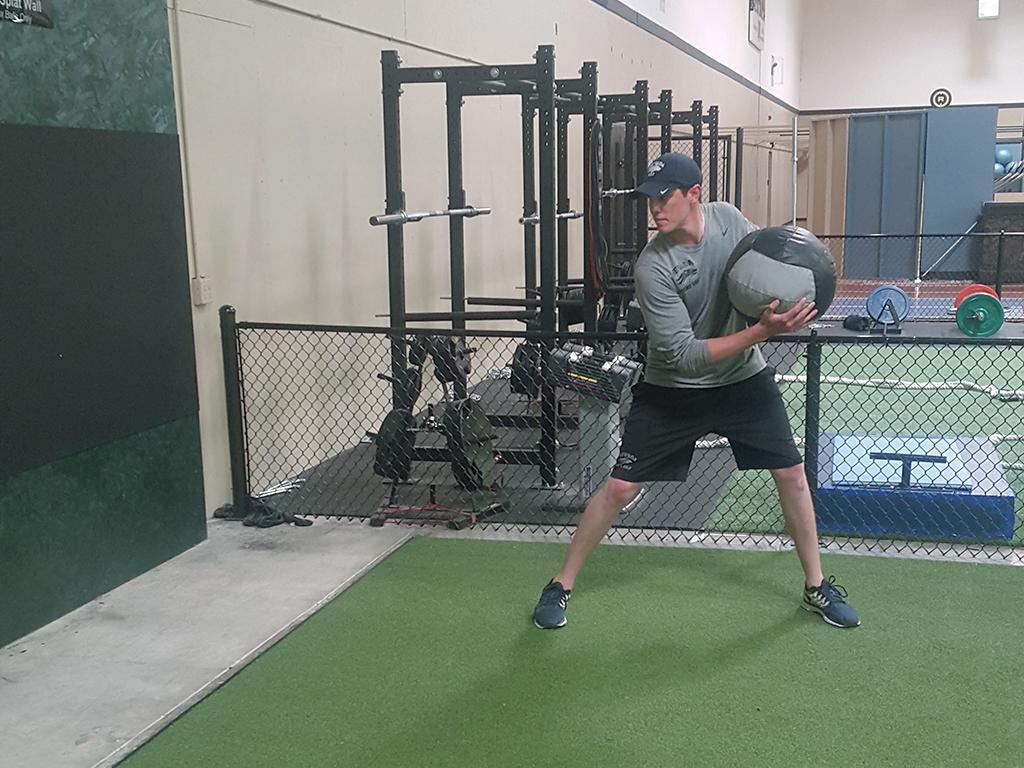
| Rotational power | Medicine‑ball side toss / rotational slam | 2-6 sets × 3-6 explosive reps |
| Single‑leg stability | Split squat / lateral step‑down | 3-4 sets × 6-10 reps |
Track objective outcomes and adapt progressions to the individual: measure clubhead speed, countermovement jump or reactive strength index, bar/throw velocities and movement‑quality/pain indicators to inform load decisions. Short, focused power sessions (2-3/week) combined with 1-2 strength sessions and consistent mobility and soft‑tissue work will foster adaptation while limiting fatigue. When these elements-functional movement patterns, evidence‑led progression and objective monitoring-are integrated, golfers can achieve measurable improvements in driving distance and repeatability without sacrificing injury resilience.
Motor control and task‑specific neuromuscular work to maintain consistency under pressure
From a motor‑control standpoint, consistency in competition emerges from a performer’s ability to organize goal‑directed movement under changing constraints. Drawing on ecological dynamics and dynamical‑systems perspectives, training should emphasise perception‑action coupling, the constructive use of functional variability and the creation of robust movement solutions rather than rigid movement templates. Research shows that athletes who develop adaptable coordination-stable outcomes with flexible kinematics-are better at maintaining performance when arousal or task conditions shift.Therefore, practice should be representative and include graded exposure to perturbations (for example, uneven lies, reduced vision, or time pressure) to encourage transfer to competition.
Skill‑specific neuromuscular training must marry physiological and informational constraints so that strength,RFD and sensorimotor integration underpin golf‑specific coordination. Effective programmes blend:
- Specific strength/power work (hip rotation torque, adjustable trunk stiffness);
- reactive stability and perturbation training to preserve sequencing under load;
- Proprioceptive and visual‑motor drills to recalibrate club‑head control; and
- Contextualised practice that introduces graded cognitive and emotional load to simulate competition.
Periodise these elements so neuromuscular qualities are trained alongside variability sessions, maximising transfer and avoiding the separation of strength from coordination.
Design drills by manipulating variability, feedback and pressure deliberately. The table below gives example practice formats with empirical support for improving consistency under stress; coaches can scale intensity and complexity across a microcycle.
| Drill | Primary target | Key variable |
|---|---|---|
| Variable‑distance approach sequence | Perception-action coupling & accuracy | range of variability |
| Timed short‑game pressure circuit | Execution under arousal | Decision latency |
| Perturbation‑challenged rotational swings | Neuromuscular resilience | Trunk/pelvis coupling |
Apply randomized practice schedules with faded or self‑controlled feedback to foster internal error detection,then progressively layer stressors (timed conditions,scoring,spectators) to build robustness.
Monitoring and progression should tie neuromuscular capacities to on‑course performance using objective and observational metrics: RFD, intersegmental timing (club acceleration profiles), impact‑location variability and validated pressure/anxiety scales. Suggested implementation tactics include:
- Baseline field or lab assessments every 4-8 weeks;
- Microcycles alternating high‑representativeness variability sessions with targeted neuromuscular loading;
- Pre‑competition tapers that emphasise reactive stability and low‑volume, high‑specificity practice.
Maintain ecological validity across the athlete pathway: advance complexity when movement solutions remain functionally stable under perturbations,and regress when neuromuscular fatigue or attentional breakdowns impair technique in simulated pressure.
Periodisation and recovery strategies for season‑long performance sustainability
Structure periodisation across macro, meso and micro cycles aligned to the competitive calendar and the golfer’s training age. The seasonal scaffold below outlines typical priorities for each phase and supports planned peaks for key tournaments alongside scheduled deloads to preserve longevity.
| Phase | Primary focus | Typical intensity |
|---|---|---|
| Preseason (6-12 wks) | Strength, hip stability, eccentric control | Moderate-High |
| Early season (4-8 wks) | Power transfer, swing‑specific conditioning | High |
| Peak / competition | Tapering, technical sharpening, recovery | Low-Moderate |
| Transition (2-4 wks) | Active recovery, corrective work | Low |
Recovery interventions should be planned elements of the program rather than ad‑hoc additions. Core components include:
- Sleep optimisation - consistent sleep timing and a 7-9 hour target to support neural recovery and hormonal balance;
- Nutrition and hydration – timing intake around training and competition to aid glycogen repletion and repair;
- Active recovery – low‑intensity aerobic sessions or mobility circuits to increase circulation without mechanical overload;
- Targeted soft‑tissue and manual therapy – to address restrictions that impair swing mechanics.
Monitoring tools such as HRV, resting heart rate, sleep tracking and daily RPE provide quantitative signals to trigger acute recovery actions or modify planned intensity.
To sustain performance, embed adaptive decision rules in the periodisation plan: schedule deload weeks, apply taper protocols before priority events, and use criterion‑based return‑to‑play rules after injury rather than arbitrary timelines. Coaches and clinicians should base progressions on movement quality, pain‑free load tolerance and power benchmarks, and remain sensitive to travel, competition density and psychosocial stressors. Longitudinal monitoring and iterative plan adjustments convert periodisation from a fixed template into a resilient, athlete‑centred system that protects performance and reduces cumulative injury risk.
Using technology and data‑driven feedback to inform objective monitoring and coaching choices
Contemporary coaching complements observational judgement with objective measurement systems to create reproducible assessments of physical and motor outcomes. Devices such as optical motion capture, inertial measurement units (IMUs), launch monitors and force platforms should be vetted for reliability and validity prior to integration.standardised calibration, testing protocols and consistent environmental settings reduce measurement error and make longitudinal comparisons meaningful.
Raw signals require principled preprocessing and features extraction to yield actionable information. Steps such as filtering, drift correction, event detection (backswing onset, impact) and calculation of derived metrics (angular velocity, RFD) form a obvious analytic pipeline. Prefer simple, interpretable models over opaque black‑box outputs. Typical metrics and sampling considerations include:
- Clubhead speed: high‑sample launch monitors with session‑level aggregation
- Ball spin/launch: validated radar systems capturing per‑shot data
- Ground reaction forces: force‑plate bursts for pre/post intervention comparisons
- Torso/pelvic kinematics: IMUs or optical trackers with repeated standardised swings
Attach confidence intervals and measurement‑error estimates to observed changes to avoid over‑interpreting noise.
Data are most useful when linked to decision rules grounded in measurement science. Coaches should determine the minimal detectable change (MDC) and smallest worthwhile change (SWC) for each metric and set individual baselines to avoid mistaking variability for true adaptation. The table below maps common technologies to practical coaching uses:
| Technology | Representative metric | Primary coaching use |
|---|---|---|
| Launch monitor | Ball speed / spin | Equipment fitting; ball‑flight diagnostics |
| Force platform | Peak force / RFD | Weight‑transfer assessment; strength profiling |
| IMU sensor | Angular velocity | Technique profiling; portable on‑course monitoring |
| Motion capture | Segment kinematics | detailed swing mechanics; research‑grade analysis |
Turn data into coaching actions via a structured workflow: triangulate multiple sources to corroborate findings, tailor intervention thresholds to the athlete’s stage of development and iterate with frequent, low‑stakes tests to monitor transfer and retention. Provide layered feedback-immediate, concise cues for acute correction and aggregated reports for periodised planning-while preserving ecological validity so that technical gains generalise to on‑course performance.
Q&A
Note: the web search results supplied with the query were unrelated to the topic and were not used in preparing this Q&A.
Q1. What defines an “evidence‑based” approach to golf fitness and performance?
A1. An evidence‑based strategy combines the best available scientific evidence with practitioner expertise and athlete preferences to shape assessment, intervention and monitoring. For golf this means using biomechanical analysis,validated physiological and movement tests,and interventions with demonstrated transfer to performance metrics (such as,clubhead speed,ball speed and accuracy),plus ongoing outcome measurement and iterative plan adjustments.
Q2. Which physical capacities most affect golf performance?
A2. Key,interrelated capacities include mobility (thoracic rotation,hip IR/ER,ankle dorsiflexion),lumbopelvic stability and core control,lower‑body and posterior‑chain strength,rotational power and RFD,single‑leg balance and aerobic/anaerobic conditioning to sustain practice and tournament demands. The relative importance depends on the player’s level and individual deficits.
Q3. How should a golfer be assessed before prescribing a fitness plan?
A3. Assessments should be multimodal and personalised:
– Medical screening (history, contraindications, pain).
– Movement screening (single‑leg squat, hinge patterns, thoracic rotation).- Joint mobility testing (hip, thoracic, shoulder).
– Strength and power tests (submaximal/maximal squats or deadlifts, vertical jump, medicine‑ball rotational throw).
– Balance and proprioception tests (single‑leg stance, dynamic balance).- On‑course or swing metrics (clubhead speed, ball speed, launch monitor dispersion).- Workload and recovery measures (training history, sleep, nutrition, RPE).
Use objective, repeatable measures to track change.
Q4. What biomechanical principles should training target to improve the swing?
A4. Priorities include:
– Efficient proximal‑to‑distal sequencing (timing of pelvis, thorax, arms and club).
– Generation and transmission of ground reaction forces through the lower limbs and trunk.
– Stability of the lumbopelvic region while permitting thoracic rotation (X‑factor separation).
– Controlled deceleration and sound follow‑through mechanics to protect tissues.
Focus training on the capacities that support these kinematic behaviours, not only on technical swing repetition.
Q5. How should strength training be sequenced relative to mobility and motor control?
A5. Order according to assessment. A typical progression:
1) Address pain and mobility limitations that restrict technique.
2) Establish motor control and lumbopelvic stability for safe movement.
3) Build foundational strength (lower body, posterior chain, scapular control).
4) Transition to power work (medicine‑ball throws,Olympic lifts,sprints) with maximal intent.
This sequence supports transfer and mitigates injury risk.
Q6. Which strength and power exercises are most transfer‑relevant to golf?
A6. Exercises that mirror golf demands include bilateral and unilateral hip‑dominant lifts (deadlifts, RDLs, single‑leg RDL), squats and split squats for force and stability, anti‑rotation/anti‑extension core work (Pallof presses, planks), medicine‑ball rotational throws and chops for rotational power and RFD, plyometrics for lower‑body explosiveness and resisted rotational work with cables or bands for sport‑specific strength. Emphasise multi‑joint, force‑producing movements that reflect swing patterns.
Q7. How should power training be organised to transfer to clubhead speed?
A7.Power work should be high intensity, low‑to‑moderate volume and executed with maximal intent. Common parameters: 3-6 sets of 3-6 explosive reps (e.g., medicine‑ball rotational throws, jump squats), 1-3 times per week based on athlete level and total program load. Provide ample rest between sets to preserve power output, schedule power sessions after a full warm‑up and on less metabolically fatiguing days, and track transfer via clubhead speed, ball speed and rotational medicine‑ball metrics.Q8. What practical mobility targets should golfers aim for?
A8.Typical mobility priorities:
– Thoracic rotation: sufficient motion to permit pelvis-thorax separation without compensatory lumbar rotation.
– Hip internal/external rotation: to support hip turn and weight shift.
– Ankle dorsiflexion: to enable stable lower‑body mechanics.Targets should be individualised and interpreted via side‑to‑side comparisons and functional tests rather than strict degree cutoffs.
Q9. How can training reduce common golf injuries (low back pain, elbow issues)?
A9.Risk reduction strategies:
– Correct modifiable biomechanical and physical deficits (hip mobility, posterior‑chain strength, pelvic control).
– Improve scapular stability and rotator cuff endurance to protect the shoulder and elbow.
– Integrate progressive loading with adequate recovery to prevent overuse.
– Include eccentric strength work for tendinopathy prevention and management.
– Monitor swing load and practice volume, notably during changes in training or technique.
Q10. How should annual periodisation be structured for competitive golfers?
A10.A periodised framework typically includes:
– Off‑season (foundation): hypertrophy, strength, mobility and corrective work (higher volume).- Preseason (transition): shift toward strength‑power and sport specificity (moderate volume, higher intensity).- In‑season (maintenance): preserve strength/power with reduced volume and strategic sessions (1-3 sessions/week).
– Tapering: lower volume while maintaining intensity leading into key events.
Individualise periodisation based on competition calendar and athlete readiness.
Q11. Which monitoring strategies assess training effectiveness and readiness?
A11. Combine:
– Objective performance metrics: clubhead and ball speed, launch monitor outputs, medicine‑ball distances, jump height.
– Strength/power testing: periodic PR or submax tests.
- Session and weekly load: session RPE × duration.
– Wellness metrics: sleep quality, subjective fatigue, HRV if available.
- Injury and pain tracking.
frequent, simple checks enable early detection of maladaptation.
Q12. What role do nutrition and recovery play in golf performance?
A12.Nutrition and recovery underpin adaptation and on‑course output. Priorities include:
– Sufficient energy and protein for strength and repair.
– Hydration and electrolyte strategies for prolonged rounds.
– Carbohydrate planning for tournaments requiring extended cognitive and physical performance.
– Sleep optimisation to aid recovery and motor learning consolidation.
- Structured recovery (active recovery, soft‑tissue work, planned rest) to manage cumulative fatigue.Q13. How should programmes be adjusted across skill levels and ages?
A13.Adaptations:
– Novices/younger players: emphasise movement quality, motor control and gradual strength development with supervision.
– Advanced/competitive players: target power, specificity and fine‑tuning based on detailed assessments.
– Older golfers: focus on preserving muscle mass and power with joint‑friendly exercises, longer recovery and balance/fall‑prevention work.
Modify for comorbidities and individual goals.
Q14. Which tests best correlate with on‑course outcomes?
A14. No single test predicts performance fully. Useful complementary tests include:
– Clubhead and ball speed via launch monitor (direct performance metrics).
– Rotational medicine‑ball throw for rotational power.- Vertical jump and RFD measures for lower‑body power.
– Strength tests (deadlift, squat) for force capacity.
– Single‑leg stability tests for balance and weight transfer.A battery of measures gives the best picture of transfer potential.
Q15. How long to expect meaningful gains in golf‑specific performance?
A15. Timeframes vary: neuromuscular control and some power gains can appear in 4-8 weeks; meaningful strength increases typically require 8-12 weeks; sustained body composition and long‑term transfer often take several months of consistent training alongside technical practice. On‑course transfer depends on concurrent swing work and baseline status.
Q16. How should coaches and clinicians collaborate on golf fitness services?
A16. effective multidisciplinary teamwork involves:
– Shared assessment data and clear goal alignment.
– Coordinated programming linking physical training with technical coaching.
– Clear referral routes for medical issues.
– Joint monitoring of workload and athlete readiness.
This collaboration enhances safety,compliance and transfer to performance.
Q17. What common mistakes occur when applying fitness programmes to golfers?
A17. Typical pitfalls:
– Implementing large technical changes while applying heavy physical loads, increasing injury risk.
- Prescribing generic programmes that ignore individual deficits.
– Over‑relying on isolated “core” exercises without addressing integrated force transfer and lower‑body strength.
– Poor load monitoring and insufficient recovery.
– Expecting instant on‑course gains without simultaneous skill practice.
Q18. Practical, evidence‑based starter recommendations for a golf fitness plan
A18. Getting started:
- Conduct a comprehensive assessment first.
– Train 2-4 sessions per week combining strength, mobility and power; begin with foundational strength and progress to power.
– Prioritise unilateral lower‑body work, posterior‑chain strengthening, thoracic mobility and anti‑rotation core training.
– Use periodised overload and monitor outcomes (clubhead speed, medicine‑ball throws, readiness).
– Coordinate with the swing coach and health professionals; respect recovery and nutrition.
Closing note. Evidence in this area continues to evolve. Practitioners should use validated assessments,document outcomes and stay current with sport‑science literature to refine individual programmes and improve transfer from training to on‑course performance.Integrating biomechanical insight,physiological testing and targeted training methods provides a robust,evidence‑based approach for golf‑specific conditioning. individualised programmes that emphasise spinal and hip mobility and stability, progressive development of rotational power and strength, appropriate metabolic conditioning and systematic load management show the greatest potential to raise performance while reducing injury risk.Objective monitoring-quantified movement analysis, validated strength and power tests and longitudinal tracking of load and recovery-should guide periodisation and intervention adjustments.
Cross‑disciplinary collaboration among coaches, strength and conditioning specialists, biomechanists, physiotherapists and sports scientists is essential to translate research into practice. Clinicians should apply evidence hierarchically-prioritising high‑quality experimental data alongside individual assessment and context.Future research priorities include long‑term randomized and longitudinal trials comparing training modalities for on‑course outcomes and injury incidence,and further validation of portable field technologies.
Adopting an evidence‑based, interdisciplinary and athlete‑centred model will promote sustainable performance gains and health across the golfing population.
Choose a Tone & Title for Your Evidence-Based Golf Fitness Content
Title Options – Pick a Tone
Below are the 10 engaging title options you provided. Pick a tone (performance, scientific, playful, or SEO) and I’ll refine the chosen title and tailor the article for club pros, weekend golfers, or search-amiable copy.
- Drive Further, Play Stronger: Science-Backed Fitness for Golfers
- Swing Smarter: Evidence-Based Fitness to Boost Your golf Game
- The Golf Fitness Blueprint: Proven Strength, Mobility & Conditioning
- power, Precision, Prevention: Research-Driven Golf Fitness Strategies
- From Biomechanics to birdies: Training That Improves Distance and Durability
- Hit Longer, Hurt less: Evidence-Based Workouts for Better Golf
- Peak Performance on the course: A Science-Backed Guide to Golf Fitness
- Transform Your Swing: Targeted Fitness Protocols Backed by research
- Play Better, Stay Healthy: The Research-Proven Golf Fitness Plan
- Body+Swing: The Ultimate Evidence-Based Approach to Golf Performance
Tone Guide & Title Variations (Quick Pick)
Choose a tone and use the matching title style below. Each tone emphasizes different search keywords and reader expectations.
Performance Tone
- Focus: speed, distance, power, tournament-ready results.
- Example: “Drive further, Play Stronger: Performance Golf Fitness for More Yardage”
- Keywords to emphasize: golf fitness, drive distance, swing speed, power training
Scientific Tone
- Focus: biomechanics, evidence, physiological profiling, research citations.
- Example: “From Biomechanics to Birdies: A Research-Driven Golf Fitness Blueprint”
- Keywords to emphasize: biomechanics, evidence-based, physiological profiling, injury prevention
Playful Tone
- Focus: approachable, fun, engaging for recreational golfers.
- Example: “Hit Longer, Hurt Less: Fun Workouts That Boost your Golf Game”
- Keywords to emphasize: weekend golfer, fun golf workouts, easy golf exercises
SEO Tone
- Focus: high-value keywords, meta optimization, structured content for organic traffic.
- Example: “Golf Fitness Blueprint: Strength, mobility & Conditioning to Improve Swing Speed”
- Keywords to emphasize: golf fitness plan, golf training program, improve swing speed, golf versatility
Who is Each Title Best For?
| Title (Short) | Best Audience | Primary Focus |
|---|---|---|
| Drive Further, Play Stronger | Competitive golfers & club pros | Power & swing speed |
| Swing Smarter | Coaches & data-focused players | Technique + conditioning |
| Golf Fitness Blueprint | All audiences | Complete program |
| Hit Longer, Hurt less | Weekend golfers | Pain reduction & playability |
Evidence-Based Golf Fitness: Key Concepts (H2)
Biomechanics & The Golf Swing (H3)
Golf performance is rooted in efficient biomechanics: coordinated rotational power transfer from the lower body through the core to the clubhead. key principles include:
- Sequencing (proximal-to-distal) – hips initiate rotation, torso follows, arms and club last.
- Segmental stability – pelvic and thoracic control stabilizes energy transfer.
- Ground reaction forces – effective use of the legs and ground improves drive distance.
Physiological Profiling (H3)
Assessments that inform individualized programs:
- Mobility screens: hip rotation, thoracic rotation, ankle dorsiflexion.
- Strength tests: single-leg stability, glute strength, anti-rotation core strength.
- Power & speed: medicine ball throw, rotational power tests, clubhead speed radar readings.
- Conditioning/energy systems: intermittent aerobic capacity for walking 18 holes and anaerobic bursts for short-game intensity.
Targeted Training protocols (H2)
Strength & Power (H3)
Goals: build force production, improve ground reaction force utilization, support explosive rotation.
- Exercises: single-leg Romanian deadlifts, split squats, barbell hip thrusts, rotational medicine ball throws.
- Programming: 2-3 sessions/week; strength phase (6-12 reps, 3-5 sets), power phase (2-6 reps explosive, 3-6 sets).
- Progressions: load then speed – increase weight for strength, reduce weight and move faster for power.
Mobility & Flexibility (H3)
goals: maximize thoracic rotation, maintain hip internal/external rotation, ensure ankle mobility for stable base.
- Daily mobility routine (10-15 minutes): thoracic extensions on foam roller, 90/90 hip switches, ankle mobilizations.
- active flexibility: dynamic rotational lunges, banded thoracic rotations prior to practice.
Core Stability & Anti-Rotation (H3)
Golf requires a stable central link that resists unwanted motion while allowing explosive rotation.
- Exercises: Pallof press, single-arm farmer carry, anti-rotation plank variations, half-kneeling chops/lifts.
- Programming: integrate 2-4 core exercises per session, 2-3x/week, with 30-60 second holds or 8-15 reps.
Conditioning & durability (H3)
Balance cardiorespiratory fitness with golf-specific endurance.
- Low-impact aerobic: cycling,brisk walking 2-3x/week for 20-45 minutes to support 18-hole stamina.
- High-intensity interval work: short bursts (20-40s) mimicking high-focus shots or pressure moments-1-2x/week.
Practical Programs: Club Pros vs Weekend Golfers
Club Pro / Competitive Golfer Sample Week (H3)
- Monday - Strength (Lower focused): squats, single-leg RDLs, hip thrusts. 60-75 minutes.
- Tuesday – On-course session + mobility routine.
- Wednesday – Power & Rotational Speed: med ball throws, Olympic lift variations, short sprints.
- Thursday – Technique + recovery: swing practice with tempo work, massage/foam rolling.
- Friday – Strength (Upper/core): rows, anti-rotation core, loaded carries.
- Saturday - Competitive practice (simulated rounds) + mobility warm-up.
- Sunday - Active recovery: walk, yoga, light mobility.
Weekend Golfer sample Week (H3)
- 2 sessions/week (45-60 minutes) focusing on strength + mobility.
- Session A – Lower & Core (squats or goblet squats, split squats, Pallof presses)
- Session B – Power & Mobility (med ball rotational throws, thoracic mobility drills, single-leg balance)
- Daily 10-minute pre-round warm-up: dynamic hip and thoracic rotations, banded swings, light cardio.
Exercise Library (Quick Reference)
- Rotational Power: Seated or standing medicine ball throws (3-4 sets,4-8 reps each side)
- Single-leg strength: Bulgarian split squat (3-4 sets,6-10 reps)
- Core Anti-Rotation: Pallof press (3 sets,8-12 reps each side)
- Thoracic Mobility: Foam roller t-spine extensions (2-3 sets,8-12 reps)
- Grip & Forearm: Farmer carries or towel hangs (2-3 sets,30-60s)
Injury Prevention & Common Problem Areas
Common golf injuries: low back pain,lateral epicondylitis (golfer’s or tennis elbow),knee and hip issues.Prevention strategies:
- Maintain thoracic rotation to offload the lumbar spine.
- Improve glute strength to stabilize pelvis and control rotation.
- Address shoulder and scapular mobility to reduce compensatory patterns.
- Use graded return-to-play protocols after injury with load management and technique review.
Case Study – Weekend Golfer gains 15 Yards in 12 Weeks
Profile: 45-year-old weekend golfer; baseline driver speed 92 mph; limited thoracic rotation and single-leg stability deficits.
- Intervention: Twice-weekly 45-minute program integrating glute strengthening,thoracic mobility,medicine ball rotational power,and targeted core anti-rotation work.
- Outcome: Improved thoracic rotation range by 14 degrees,single-leg hold time doubled,clubhead speed increased to 97 mph,+12-15 yards off the tee.
- Key takeaway: Small improvements in mobility and power transfer produce meaningful on-course distance gains.
Practical Tips & On-Course Warm-Up
- warm-up sequence: 5-7 minutes light cardio → dynamic mobility (thoracic rotations, hip swings) → progressive range swings → 5-10 full-speed practice swings.
- Consistency beats intensity: 10-20 minutes of targeted work 3-4x/week outperforms sporadic long sessions.
- Measure progress: track clubhead speed, driving distance, and mobility metrics every 4-6 weeks.
- Periodize: off-season focus on strength, pre-season on power, in-season on maintenance and recovery.
SEO Checklist for the Final Article (If You Want an SEO-Tailored Version)
- Primary keyword examples: “golf fitness”,”golf training program”,”improve swing speed”,”golf mobility exercises”.
- Include LSI keywords naturally: “rotational power”, “thoracic mobility”, “core stability for golf”, “injury prevention golf”.
- Use H1 for the title, H2/H3 for sections; keep paragraphs short and use bullet lists like this one.
- Include a table, images with alt text (e.g., “rotational medicine ball throw for golf”), and internal links to related pages.
- Meta title under 60 characters and meta description under 160 characters (examples included above).
What I Can Deliver Next
Pick one title and a tone (performance, scientific, playful, or SEO). Also tell me the target audience (club pros, weekend golfers, or both) and I will:
- Produce a refined H1 meta-optimized title and meta description tailored to your audience.
- Write a full long-form article in that tone (ready for WordPress), including internal link suggestions, image alt-tags, and a downloadable program table.
- Provide 8-12 social captions and an email subject line that drive clicks.
Ready to pick a tone and audience? Tell me your preference and I’ll refine the title and create the tailored article (or full WordPress-ready post) that targets the right golf fitness keywords and reader needs.