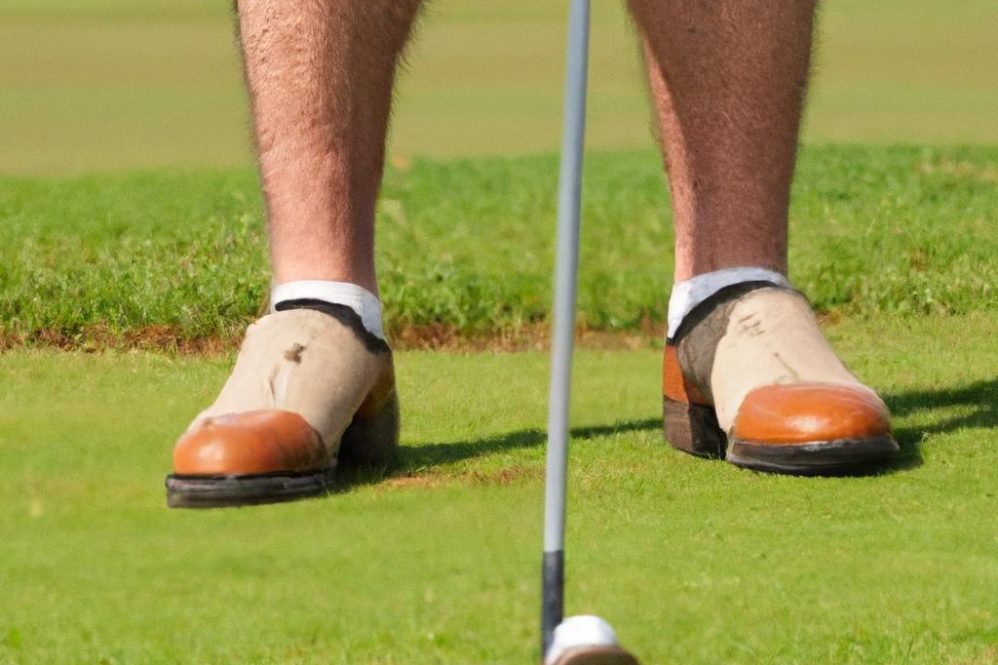
Golf instructors and club-fitters are championing a simple, repeatable tweak that could change how amateurs control ball flight: fix the palm.coaches say the verb’s everyday meaning-to make something fasten or secure-captures the intent behind the advice: set your lead hand so the clubface behaves predictably through impact, enabling deliberate draws, fades and trajectory control. The technique is gaining traction on lesson platforms and practice ranges alike as players seek pro-level shot-shaping without overhauling their entire swing. This report examines why one small adjustment to the palm is proving to be a big win for ball-striking consistency.
Palm Alignment Defines Shot Shape as Coaches Explain How Slight Rotation Alters Spin
Coaches report that subtle changes in palm alignment at address and through impact are among the most reliable levers to alter spin and curvature without wholesale swing changes. Start with a simple diagnostic: with the clubhead square to your intended target line, place your hands on the grip and note the orientation of the lead palm (left palm for right-handed golfers). If the palm faces slightly toward the target, the clubface tends to close at impact and promote draw-producing sidespin; if the palm faces slightly away, it tends to open the face and produce a fade. For measurable feedback, use an alignment stick on the ground and an impact tape on the clubface: a face rotation of about 2°-4° from neutral will typically create a discernible draw or fade with mid-irons, while larger changes increase curvature and side spin exponentially. Transitioning from this diagnosis, beginners should practice with a neutral set-up and small palm shifts, while low handicappers can apply precise degree changes to target green contours and wind conditions.
Practical technique adjustments start with setup fundamentals and a reproducible grip. Coaches emphasize a stepwise routine: establish stance and ball position, set the clubface square, then place the hands so the lead palm is neutral to slightly cupped (approximately 5°-10°) for a controlled draw or slightly bowed (about 5°) for a controlled fade. To translate this into the swing, focus on the last 18-24 inches of the stroke-where palm orientation most affects face rotation and loft. Use these drills to ingrain the feel:
- Alignment-stick gate drill: Place two sticks to form a narrow channel and make half-swings to feel the palm maintaining its set angle through impact.
- Towel-under-armpit drill: Keeps body rotation connected so the hands don’t compensate and flip at impact.
- Impact-tape repetitions: Hit 20 shots checking contact location and face rotation-aim for consistent center-face strikes with face-to-path differences within ±3°.
these exercises link setup to impact and help players of all levels produce predictable curvature.
Short-game specialists will find palm alignment especially effective for trajectory control and spin on chips and pitches. For chips inside 30 yards, a slightly forward-leaning palm with a minimal wrist hinge reduces dynamic loft and increases roll; for higher, spinning pitches, a slightly cupped lead palm combined with a firmer lower hand creates additional loft and backspin. Practice a progressive loft series on the practice green: hit 10 chips where the lead palm is neutral, 10 where it is indeed slightly cupped, and 10 slightly bowed, recording carry and roll distances. Set measurable goals-such as carry variance under 3 yards and roll variance under 5 yards-and use these figures to choose shots in course management scenarios, for example when a front pin demands a higher check or a back pin favors a bump-and-run.
On-course request requires integrating palm alignment into strategic decision-making. In crosswinds, adjust palm alignment by small increments: for a right-to-left wind on a dogleg-left hole, intentionally set the lead palm a few degrees more closed to counteract lateral drift and keep the approach on the green; conversely, open the palm in headwinds to lower spin and keep the ball from ballooning. Coaches advise that players quantify these adjustments: on a 150-yard mid-iron into a 15 mph crosswind,a 3° face-to-path correction can be the difference between hitting the green or missing short. Additionally, factor in equipment-shaft torque, loft, and groove condition effect how much palm rotation changes spin-so confirm your feel with a club fitting or ball-flight monitor before committing to a new technique under tournament pressure.
address common errors and a structured practice plan to produce lasting improvement. Common mistakes include flipping the wrists at impact (loss of loft and inconsistent spin), an overly strong grip that produces hooks, or attempting large palm rotations that destabilize face control. To correct these issues, adopt a progressive routine: warm up with 10 minutes of short-game palm-awareness drills, spend 20 minutes on the range hitting shaped shots with a target landing zone and track dispersion, then finish with 10 minutes of simulated course play-choosing lies and wind conditions and applying the palm adjustments. Measurable improvement benchmarks might include a 15-25% reduction in lateral dispersion and a consistent ability to produce a required shape on demand 8 out of 10 times. Beyond mechanics, coaches underscore the mental element: commit to a single palm setting pre-shot, visualize the spin axis and landing pattern, and trust the routine to translate practice into lower scores under pressure.
Grip Pressure and Palm Placement Provide Practical Drills to Correct Overactive Wrists
Coaches report that many shot dispersion issues trace back to two simple variables: how tightly a player grips the club and where the palms sit on the handle. Overactive wrists typically manifest as a premature release, toe-first contact or inconsistency in face angle through impact. To diagnose quickly on the range, use two checks: a visual of the clubface at impact (seek a square face) and a subjective scale of grip pressure.Aim for grip pressure of about 4-6 on a 1-10 scale – light enough to allow natural forearm rotation but firm enough to maintain control.Equally important is palm placement: setting the lead palm slightly rotated behind the shaft and the trail palm more into the fingers promotes lag and limits wrist flipping, a foundational tip from Fix your palm to shape shots like a pro insights.
Fundamentals matter before advanced drills. Start with setup: feet shoulder-width apart for mid-irons, ball position centered to slightly forward for longer clubs, and a neutral to slightly strong grip for most players. At address,the lead wrist should be flat or only slightly cupped (0°-5°),and at the top of the backswing a lead wrist hinge near 90° provides a repeatable lever for power without overactive wrists. Equipment considerations include grip size – too large forces the hands into the palms and can suppress wrist action, while too small invites excess manipulation. Checkpoints to confirm a sound setup include:
- club rests primarily in the fingers, not deep in the palm
- a small V formed by thumb and forefinger pointing to the trail shoulder
- shaft lean of about 5°-8° at impact for irons to promote compression
Practical drills for beginners create neuromuscular habits that curb wrist overactivity. Begin with the Pressure Ladder: hit 20 short swings with grip pressure at 3, then 5, then 7 – note consistency and distance spread; the goal is control at the 4-6 level. Next, use the Towel-under-armpit drill to keep the arms connected and reduce autonomous wrist action, and the Half-Swing Impact Bag to feel a square face at impact without flicking wrists. For step-by-step repetition:
- set up with a towel under your trail armpit,
- make a controlled half backswing holding the set wrist,
- accelerate through impact feeling the clubhead compress the bag while keeping palms steady.
Practice routine: 15-20 minutes, three times weekly, record carry distance variance and aim to reduce dispersion by 20-30% within four weeks.
Advanced players use palm fixation strategically to shape shots and control spin on the course. To play a controlled draw, slightly rotate the lead palm more behind the shaft at address and maintain that palm orientation through the downswing to close the face subtly; to play a fade, present a slightly weaker lead palm and allow the forearms to open just through impact. Drills that translate to on-course play include:
- the Impact-Alignment drill - place alignment sticks to encourage an in-to-out or out-to-in path while fixing palm angle,
- the Weighted-Handle drill - swing a short, weighted club to reinforce a firm but relaxed palm under load,
- video-replay sessions focusing on face angle at 50, 30 and 10 milliseconds before impact.
Apply these in situations such as a wind-affected approach (lower the ball by holding a flatter lead wrist and less hand action) or a tight fairway where low-spin, controlled trajectory improves scoring odds.
Troubleshooting combines technical fixes, physical work and mental cues. Common mistakes include gripping too hard in tense situations, excessive forearm supination or a deep palm placement that kills wrist hinge. Remedy these with measurable interventions:
- use a grip-pressure sensor or simple coin-under-grip test to confirm 4-6 pressure,
- perform daily wrist mobility and forearm-strength exercises (wrist curls, pronation/supination with 1-3 kg weights) to support consistent mechanics,
- employ pre-shot breathing and a three-count tempo to prevent hurried releases.
For players with physical limits, adopt one-handed drills or slower tempos; for visual learners, use mirror and video feedback. set objective tracking: record fairways hit, GIR proximity and number of recovery shots over an 8-week block – combine these statistics with drill adherence to convert technical gains in grip and palm placement into lower scores and smarter course management.
Wrist Angle at Impact Identified as the Key to Consistent Draws and Fades
Coaches across the game now single out wrist position at impact as the decisive variable that separates repeatable draws and fades from accidental hooks and slices.recent instructional practice frames the issue in measurable terms: aim for a lead wrist angle of approximately 5-10° bowed (closed) for a draw and 5-10° cupped (open) for a fade, with a recommended forward shaft lean of 10-20° at impact to provide consistent launch and spin. In practical terms, this means the relationship of the clubface to the swing path – not just hand rotation through the ball – determines curvature. For health-conscious players, wrist anatomy and comfort matter; if you feel pain while practicing these positions, reduce repetition and consult a medical professional before changing technique to avoid overuse injury.
Breaking the motion down step-by-step makes the change accessible at any skill level. First, set up with a neutral spine angle, ball positioned slightly forward for longer clubs and centered for wedges, and a grip pressure between 4-6/10 to allow controlled hinge. Next, “fix your palm to shape shots like a pro”: rotate the lead palm slightly toward your target (stronger grip) to encourage the bowed impact for a draw, or rotate it slightly away (weaker grip) to promote a cupped impact for a fade. Then rehearse a quarter-speed takeaway to feel the wrist angles and finish with a full-speed impact check – using an alignment stick on the range will show whether your clubface is closing or opening relative to the target line.measure results with carry distance and lateral dispersion; aim to reduce dispersion by 50% over a 4-week practice cycle as a concrete improvement target.
To accelerate learning, incorporate these focused drills into structured practice sessions:
- Towel-under-arm drill: Tuck a towel under the lead armpit to promote synchronized arm-wrist rotation and prevent independent hand flipping.
- Impact-bag or half-swing drill: Strike an impact bag with intent to feel the bowed or cupped wrist at the moment of contact; pause and assess wrist angle with video.
- gate drill with alignment sticks: Set two sticks slightly wider than the clubhead to enforce swing path and replicate face-to-path relationships for draws and fades.
- Slow-motion video analysis: Record 60 fps or higher and freeze the frame at impact to measure the lead wrist angle - repeat until 8 out of 10 swings match your target angle range.
Each practice set should be short and focused: 4 sets of 10 reps alternating draw and fade work, with immediate video feedback and one objective metric per set (direction bias, distance variance, or spin rate).
On-course application matters as much as range mechanics.Use the draw when you need extra roll on firm fairways or to curve around an obstacle at the dogleg; use the fade when you need a steeper descent to hold a firm green or to play the ball up into a wind that will carry it farther.For example, on a par-4 with a right-side bunker guarding the landing area, select a tee position and shape a controlled draw by targeting left of the fairway, setting up the ball forward in stance and applying a 5-10° bowed wrist at impact to bring the ball back toward the center. Remember the Rules of Golf: you are permitted to intentionally shape shots, but you must play the ball as it lies and not improve your line in a way that breaches the rules (e.g., grounding the club in a hazard).
Troubleshooting is essential for lasting change; common mistakes include over-tensioned grips, excessive wrist flipping, and inconsistent shaft lean. if your ball still slices when you intend a draw, check these fixes:
- Loosen grip pressure and repeat the towel drill to restore arm-body connection.
- Use impact-bag feedback to increase forward shaft lean toward 10-20°.
- Check ball position – too far back promotes an open face at impact.
- If pain or stiffness arises, reduce volume and incorporate wrist mobility exercises before returning to full swing work.
For different learning styles, offer varied approaches: visual learners should use video and alignment sticks, kinesthetic learners should use impact-feel drills, and analytical players should track dispersion numbers and spin rates. Mentally, practice intentional cues - “fix the palm, feel the lean” – to build a reliable routine under pressure. Over time, these measures combine to produce lower scores through better shot control, smarter course management, and more predictable scoring opportunities.
Hands-First Training Routines Tour Pros Use to reprogram Palm Habits
In recent coaching briefs from tour-level instructors, the emphasis has shifted from purely body-centered mechanics to a deliberate, hands-first methodology that reprograms ingrained palm habits. At address begin with a neutral grip-thumbs running down the shaft-and set the ball position relative to club: mid-stance for short irons, one ball left of center for mid-irons, and inside the left heel for driver. Grip pressure should be measured and consistent: aim for a 4-6 out of 10 on the tension scale to allow wrist hinge without collapse. Next, establish a wrist plane that supports desired trajectory: for iron play use a slight forward shaft lean (≈5-10°) at impactFix your palm to shape shots like a pro.
To convert concepts into repeatable ball flight, apply a suite of hands-first drills that scale from beginner to tour-caliber practice. Start with the basic toe-up drill (swing to halfway up and check toe of club points at target), progressing to the pump drill that rehearses a delayed release with hands leading through impact. Practice sets should be structured and measurable: 3 sets of 10 reps per drill with a 60-90 second rest between sets. Use the following list during a 20-30 minute practice block:
- One-handed swings (10 per side) to feel palm orientation through impact;
- impact bag hits (15-20) focusing on a flat left wrist and bowing slightly to confirm hands-first impact;
- Towel-under-arm drills (2×30 seconds per arm) to coordinate body and hand movement;
- Shape-shot ladder (5 shots each: neutral, fade, draw) from 50-150 yards to quantify lateral movement.
These drills help golfers make the palm the primary shaping tool,with measurable outcomes such as reduced dispersion and more consistent spin rates.
Short-game application demands subtler palm work but follows the same principles. For pitch and chip shots, set up with the ball slightly back of center and hands just ahead of the ball at address to encourage crisp contact and predictable spin. When you need a controlled draw around a hazard, close your lead palm slightly-rotate the forearm so the palm faces more toward the target at impact-to square the face relative to swing path; conversely, open the lead palm for a soft fade.For bunker and flop shots, allow the palm to be more passive with an open face and a steeper attack angle (club enters sand at a 45°-60° descent for high flop shots). Common mistakes include early wrist release (flipping) and excessive grip tension; correct these with slow-motion rehearsal and a focus on maintaining a neutral to slightly bowed lead wrist through impact for consistent spin and trajectory control.
On-course strategy changes when palm habits are intentionally trained. In crosswinds, as a notable example, a slightly cupped trailing palm at impact reduces spin and produces a lower, more penetrating punch that helps keep the ball under gusts-useful when the hole is guarded by a fronting hazard. Simultaneously occurring, when shaping a recovery from an uneven lie, adjust your palm orientation to compensate for body tilt: a downhill lie typically requires a more bowed lead palm to promote a lower ball flight and avoid thin strikes. Measurable goals during play include reducing lateral dispersion to within 10-15 yards off the tee and shaving 1-2 strokes per round by converting 20% more up-and-downs inside 30 feet. Transitioning practice into performance requires simulated pressure-play competitive practice holes where the shot selection must incorporate your new palm-based shaping options.
integrate equipment tuning, monitoring, and mental routines to lock in gains. Check grip size and glove fit: a grip too large hides wrist action while too small encourages overactive hands; fit grips to maintain a natural palm alignment. Use a launch monitor or app to track launch angle, spin rate, face-to-path, and carry distance as objective feedback-set targets like a consistent launch angle within ±1.5° and a spin window of ±250 rpm for a given club. For mental readiness, practice visualization coupled with a simple pre-shot routine that cues palm intention (for example, “palm closed for draw” or “palm open for fade”). To support diverse learners and physical abilities, offer multiple approaches-visual learners should video-record swings, kinesthetic learners should use impact-bag feedback, and players with limited wrist mobility can emphasize body rotation to compensate. By combining measured drills, on-course application, and data-driven targets, golfers at every level can reprogram palm habits and reliably shape shots like touring professionals.
Ball Position and Palm Orientation offer Minor Adjustments for Immediate Distance and Accuracy Gains
in a focused instructional update, coaches emphasize that small adjustments to ball position and palm orientation produce immediate gains in both distance and accuracy. Start with setup fundamentals: for right-handed players, position the ball progressively from off the inside of the front heel (driver) to 2-3 inches back of center (wedges), with long irons slightly forward of center and mid-irons near center. At address, aim for hands ahead of the ball by about 1-2 inches for short- and mid-irons to promote compression; for the driver the ball should be forward while the hands remain neutral at address and move slightly ahead by impact. These measured checkpoints create repeatable geometry: consistent shaft lean at impact and predictable launch conditions, which are essential for lower scores and reliable course management.
Next, coaches break down how palm orientation - the rotation and tilt of both palms at address and through impact – directly controls face angle and shot shape. A slightly stronger grip (rotating the lead palm so more knuckles show) tends to close the face relative to path and promote draws,while a weaker/neutral palm orientation opens the face and facilitates fades.To put this into practice, Fix your palm to shape shots like a pro by using controlled drills that isolate hand rotation without changing body alignment. Try these drills to train feel and precision:
- Grip-coin drill: place a coin under the trail palm and make half-swings to keep the coin stable; this promotes consistent palm tilt and prevents early cupping.
- impact-bag feed: strike a soft bag with varied palm orientations to feel how face angle changes ball direction and compression.
- Gate-to-target: set alignment sticks as a narrow gate and hit 10 balls with a slightly stronger or weaker palm to observe lateral change.
building on setup and hand orientation, integrate these elements into swing mechanics for controlled distance and shaping. At takeaway keep the wrists relaxed with a gradual hinge toward about 45° on the backswing for most players, then return the shaft through the impact zone with a target shaft lean of 5-10° forward for iron compression. For advanced shaping, deliberately rotate the trail palm across the shot at the hands-forward moment to close the face for a draw; conversely, maintain a flatter trail palm to promote an open face and fade. Common mistakes include over-rotating the forearms (leading to hooks/slices) and moving the ball in the stance without compensating body alignment. Correct these by slow-motion swings with an alignment mirror and measuring dispersion: record your baseline (10-ball group size) and aim to reduce it by 20% within four weeks using the drills above.
Instruction extends beyond the range to real-course scenarios where these marginal adjustments save strokes. For example, into a right-to-left crosswind on a tight fairway, move the ball one grip width forward and slightly strengthen the lead palm to produce a controlled draw that holds the wind.Conversely, when facing a forced carry over water, move the ball back a couple of inches, open the face with a neutral palm to add loft and height, and accept reduced roll. In the short game, palm orientation and ball position control spin: for a low-runner bump-and-run, place the ball 2-3 inches back in your stance and flatten your palms to deloft the club; for a high, spinning flop use a more cupped trail palm and more forward ball position. These adjustments can be practiced on course during warm-ups to reinforce situational decision-making and course management.
equipment and mental approach complete the instruction. Shaft length and lie angle change effective ball position – longer shafts push the contact point forward, so compensate by moving the ball back if needed – and grip thickness may require incremental palm-rotation adjustments. For measurable practice, adopt a weekly routine: 3 range sessions of 30 minutes focusing on ball-position laddering (driver to wedge), 2 short-game sessions of 20 minutes emphasizing palm orientation, and one on-course session to apply decisions under pressure. Troubleshooting checkpoints include:
- Check grip: ensure lead thumb placement allows rotation without tension.
- Video impact: confirm hands ahead and shaft lean on iron strikes.
- Mental cue: use a single word (e.g.,tilt or square) to trigger the desired palm orientation under pressure.
By combining measured setup changes, targeted hand-orientation drills, and on-course application, players from beginners to low handicappers can see rapid, trackable improvements in both distance control and shot shaping – a practical path to lower scores grounded in repeatable technique.
Troubleshooting Common Palm Errors With a Step-by-Step Correction Plan
Coaches frequently begin troubleshooting by isolating the palm as the primary variable in faulty ball flight, because palm orientation directly controls clubface rotation and release. Start by diagnosing symptoms: a persistent slice frequently enough indicates an open palm at impact (clubface open relative to swing path), while a hook points to a closed palm or early supination. To assess objectively, use video from down-the-line and face-on angles, or an impact-bag test; quantify the problem by noting the face angle at impact (a deviation of more than ±3° typically produces a noticeable curve). In addition, check setup markers: at address the hands should be neutral, not excessively cupped or bowed, and hands ahead of the ball by about 1-2 inches for mid-irons; deviations here flag setup-based palm errors. Transitioning from diagnosis to correction,record a baseline over 20-30 shots so progress is measurable and repeatable.
Next, correct the grip and setup with simple, repeatable checkpoints that benefit golfers at every level.Adopt a neutral grip where the lead hand’s lifeline runs roughly along the top of the grip and the trail palm wraps so the club sits mainly in the fingers, not the palm; this reduces unwanted palm-roll at impact. Emphasize grip pressure of 4-6/10 to preserve wrist mobility and prevent tension-induced cupping. For shaping shots-what many pros call “Fix your palm to shape shots like a pro” insights-train the palms to set the face: a very slight lead-palm bow produces a cleaner, lower-spin fade, while a controlled trailing-palm rotation through impact encourages a draw. Use these practical drills to ingrain setup and palm feel:
- Grip-check drill: hold club at address,remove trailing hand and simulate swings to feel lead palm control;
- Towel-under-armpit to stabilize the body and prohibit flipping;
- Alignment-stick gate at impact to enforce a square face through the zone.
these checkpoints are visual and kinesthetic, helping beginners build fundamentals while letting low-handicappers fine-tune nuances.
With the setup secured, address the swing sequence that commonly produces palm errors. Many players cast (early release) as they lack wrist hinge or delay in forearm rotation; aim for a controlled hinge of approximately 90° at the top of the backswing on half-to-three-quarter practice swings to establish lag. Then rehearse a shallow,rotating release where the forearms pronate/supinate in sequence-trail forearm rotation followed by lead forearm rotation-rather than letting the palms flip independently.At impact, strive for shaft lean and hands ahead 1-2 inches with the lead wrist slightly bowed; this promotes compression and consistent spin. Progress with a step-by-step plan: half-swings with an emphasis on hinge (week 1),three-quarter swings focusing on maintaining lag (week 2-3),then full swings with target dispersion goals such as reducing lateral miss by 25% within six weeks.
Short-game and putting demand refined palm control and are excellent arenas to accelerate improvement under pressure. For chips and pitches,keep the palms neutral and hands slightly forward to deloft the club and compress the ball,which enhances spin control and proximity to the hole. In bunkers, avoid excessive palm cupping that adds unwanted loft; instead, use an open clubface with a neutral trail palm to let the sand carry the ball. On the greens, a consistent palm orientation reduces face rotation-practice a putting drill where you set a piece of tape on the shaft and keep it aligned to the target line through the stroke for 30 consecutive putts. In real-course scenarios, choose the palm technique that matches conditions: use a flatter, stronger palm for low punches under wind, and a slightly open palm to add loft and stop on soft, receptive greens.
tailor corrections to the individual by considering equipment, physical ability, and learning style, and embed mental-game cues into the routine. Evaluate grip size, shaft torque, and lie angle-oversized grips can restrict wrist action and promote palm flattening, while shafts with excessive torque exaggerate face rotation; consult a fitter and aim for clubs that produce a face-angle variance within ±3° of target during testing on a launch monitor. Offer multiple coaching modes: visual learners use mirrors and video side-by-side, kinesthetic learners do the towel and impact-bag drills, and auditory learners use a coach’s cue such as “lead palm forward” on the downswing. Set measurable milestones (reduce miss bias, improve proximity by 20-30%, or achieve consistent face-angle range) and schedule short, focused practice blocks-3×20 minutes per week-so improvements transfer to course strategy and scoring. Ultimately, combining technical fixes with course-aware shot selection and the “Fix your palm to shape shots like a pro” mindset produces reliable ball flight, better short-game control, and lower scores across skill levels.
Q&A
Lead: In a practical update for golfers seeking more control,instructors emphasize that a small adjustment - fixing the palm - can be the difference between a wandering shot and a deliberately shaped tee or approach. The following Q&A breaks down the technique,benefits and drills that promise a pro-like ability to curve the ball on demand.
Q1: What do coaches mean by “fix your palm” when teaching shot shaping?
A1: In instruction, “fix your palm” refers to consciously setting the palm orientation of the lead hand (left hand for right-handed golfers) at address and maintaining that orientation through impact. The position influences clubface rotation and loft,key determinants of draw,fade and trajectory.
Q2: Why does palm position matter for shaping shots?
A2: Palm orientation controls the relationship between the forearm and clubface. A neutral-to-closed lead palm encourages a clubface that squares or closes through impact-helpful for draws-while a more open palm can produce an open face and a fade. Small changes can translate into meaningful lateral ball movement.
Q3: How should the palm be positioned for a draw versus a fade?
A3: For a draw, set the lead palm slightly rotated toward the target (promotes a closed clubface through impact) and encourage a stronger grip. For a fade, orient the palm marginally away from the target (encourages an open face) and adopt a lighter grip. Neutral palms produce straighter shots.
Q4: What simple drill can golfers use to “fix” their palm?
A4: The glove-drill: place a glove under the lead palm at address and make half swings, focusing on keeping the glove in contact with the palm through impact. If the glove slips or the hand rolls excessively, the golfer knows the palm orientation isn’t fixed.
Q5: Are there common mistakes to avoid when adjusting palm position?
A5: Yes. Over-rotating the wrist, squeezing the club too tightly, or changing palms mid-swing often causes inconsistency. Another error is making large grip changes that alter shaft lean and timing rather than just palm orientation.Q6: How quickly can players expect results after changing palm position?
A6: Results vary. Some players notice immediate directional change on short shots; consistent control typically requires weeks of deliberate practice and validation on the course. coaches advise gradual adjustment rather than overnight overhaul.
Q7: Will changing palm position affect distance or trajectory?
A7: It can. Closing the palm (stronger grip) often lowers spin and promotes a draw with added roll, potentially increasing distance. Opening the palm can increase spin and height, sometimes reducing roll. Players should balance shape with distance goals.
Q8: Does equipment or grip size play a role?
A8: Yes. Grip size and club grip texture influence how easily a palm position can be held. Too-large or slippery grips make it harder to maintain a fixed palm. Golfers should ensure grip size and condition support the intended hand placement.
Q9: When should golfers seek professional help?
A9: Seek a coach if adjustments produce increased mishits, pain, or inconsistent ball flight. A professional can diagnose whether issues stem from palm position, swing path, clubface control, or other fundamentals.
Q10: Any final advice from instructors for shaping shots like a pro?
A10: Start with small, repeatable changes; use short-game practice to build feel; track outcomes on the range before applying changes under pressure on the course. Consistency in setup and a fixed lead palm through impact are foundational to reliable shot shaping.
Read more: Practical drills and coach commentary in the full how-to article.
In sum, the key to shaping shots consistently lies in one simple adjustment: fix your palm into a stable, repeatable position. Here, “fix” is used in the literal sense – to make something stay firmly in place – underscoring the technique’s emphasis on a secure grip and controlled clubface rotation. Golf instructors say that with focused practice and attention to wrist and palm alignment, players can convert occasional draws and fades into reliable tools on the course.For players seeking measurable improvement, this adjustment offers a straightforward, evidence-backed step toward shaping shots like a pro.