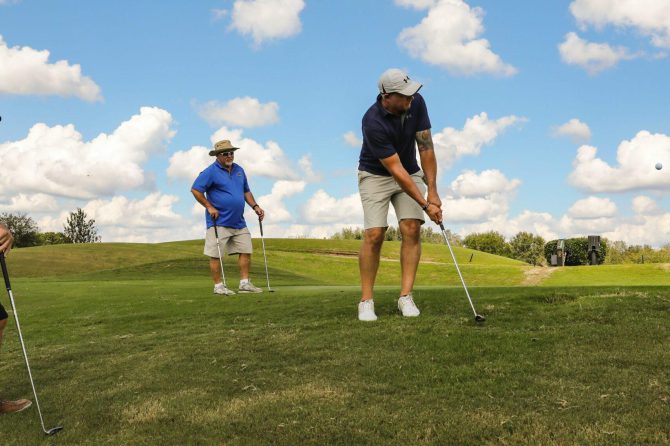
Optimizing golf performance requires a synthesis of mechanical precision and physiological capacity: movement patterns must be both technically efficient and supported by the strength, power, mobility, and metabolic resilience necessary to execute them consistently under variable competitive conditions. This article examines how contemporary biomechanical analyses of the golf swing-kinematics, kinetics, and segmental sequencing-intersect with physiological determinants such as neuromuscular power, muscular endurance, adaptability, and tissue tolerance to inform evidence‑based training strategies. by bridging these domains, practitioners can move beyond isolated skill coaching or generic fitness programs to design interventions that directly enhance functional transfer to on‑course performance and reduce injury incidence.The review first delineates key biomechanical characteristics associated with effective ball striking and distance generation, with attention to intersegmental coordination, ground reaction forces, and clubhead kinematics. It then interrogates the physiological substrates that enable those mechanics-muscle strength and rate of force development, joint range of motion, motor control, and energy system support-highlighting assessment approaches that quantify limitations relevant to golfers.Translational sections synthesize assessment findings into targeted strength, mobility, and motor‑learning interventions, and discuss periodization principles and monitoring strategies suited to different playing levels.
gaps in the literature and future research priorities are identified, including longitudinal intervention trials, individualized load‑management protocols, and integration of wearable technologies for real‑time biomechanical and physiological feedback. The goal is to provide a coherent framework for clinicians, coaches, and researchers to align biomechanical insight with physiological conditioning in pursuit of measurable performance gains and sustainable athlete health.
Principles of Golf Specific Biomechanics: Kinematic Sequencing, Ground Reaction Forces, and Swing Efficiency
Effective swing mechanics depend on a precise temporal ordering of segmental motion-the classic proximal‑to‑distal cascade-where the pelvis initiates rotation, the torso follows, and the distal segments (arms and club) produce peak velocities later in the sequence. When the timing of segmental angular velocity peaks is optimized, mechanical energy is transmitted efficiently from the larger, slower proximal segments to the smaller, faster distal segments, reducing the need for excessive muscular compensation. In biomechanical terms, this reduces internal work and the magnitude of impulsive loads at joints, thereby supporting both performance and tissue health. Key observable markers of an optimal sequence include a distinct lag between pelvic and torso peak angular velocity and a late peak in clubhead speed just prior to impact.
Ground reaction forces provide the external foundation for rotational power and directional control: vertical force components support vertical stiffness and launch conditions, while horizontal shear and mediolateral forces drive weight shift and rotational torque. Practically, coaches and athletes should attend to the force‑time profile during transition and early downswing-rapid, well‑directed force submission facilitates a strong impulse into the ground that is converted into rotational momentum. Training should thus integrate force generation and timing drills that mirror on‑course demands, including:
- Split‑stance medicine ball throws for coordinated hip drive and trunk rotation;
- Short‑range plyometric lateral pushes emphasizing rapid COP (center of pressure) transfer;
- Loaded rotational marches to reinforce force application during axial rotation under load.
Minimizing energy leakage-through uncontrolled joint motion,early extension,or poor postural control-is central to swing efficiency. Stability in the lumbopelvic complex permits high angular velocities without dissipative motion, while segmental mobility (thoracic rotation, hip internal/external rotation) enables the geometric relationships necessary for effective lever arm mechanics. The table below summarizes primary swing phases with their dominant biomechanical focus and a concise performance indicator used in applied assessment.
| Phase | Dominant Biomechanical Focus | Performance Indicator |
|---|---|---|
| Backswing | Sequential loading, hip turn | Pelvic‑to‑thoracic separation angle |
| Transition/Downswing | Rapid GRF application, proximal drive | Force‑time impulse into lead leg |
| Impact/Follow‑through | Energy transfer, deceleration control | Peak clubhead speed & COP trajectory |
Translating biomechanical principles into conditioning requires targeted assessment and progressive overload.Use a combination of objective measures-3‑D kinematic sequencing, force‑plate GRF profiles, and clubhead velocity-with functional screens for mobility and tolerance. Conditioning goals should prioritize improvements in rate of force development, rotational power, and lumbopelvic control, each trained with sport‑specific progressions that reproduce timing demands. Monitoring tools that inform ongoing prescription include:
- Force‑plate impulse metrics (synchronized to swing phase)
- High‑speed kinematic markers for sequencing analysis
- Clubhead speed and smash factor for external performance validation
These data guide individualized programming to enhance efficiency while reducing biomechanical risk.
Physiological Determinants of Performance: Aerobic Capacity, Muscular Power, and Neuromuscular Coordination
Aerobic capacity underpins prolonged on-course performance by supporting sustained attention, thermoregulation, and recovery between high-intensity efforts (e.g., long drives, uphill walks, or bunker play). While golf is predominantly anaerobic during individual swings, cumulative metabolic demands across 4-5 hours of play make submaximal endurance crucial for maintaining swing consistency late in rounds. Objective metrics such as VO2max, ventilatory threshold, and heart rate recovery provide clinically useful indices of aerobic reserve and readiness, and should be interpreted relative to age- and sex-based norms when informing conditioning priorities.
Muscular power is the principal physiological driver of ball speed and effective distance control.Power expression in golf depends on rapid force development in the hips, trunk, and shoulders organized through effective proximal-to-distal sequencing and elastic energy utilisation (stretch-shortening cycles). Training emphases include:
- Rate of force development: short-interval plyometrics and ballistic lifts
- Rotational power: medicine-ball throws, rotational sleds, and anti-rotation resistance
- Transfer strength: hip hinge and unilateral lower-limb drills to preserve stability at high angular velocities
Neuromuscular coordination determines how physiological capacity translates into repeatable technique. High-level coordination integrates proprioception,intermuscular timing,and adaptive motor programs to maintain swing kinematics under perturbation (fatigue,variable lie,or stress). Practical assessment and monitoring combine objective measures and field-based tests; a concise set of assessments can guide targeted interventions:
| Determinant | Simple Assessment | Training Focus |
|---|---|---|
| Aerobic reserve | Submaximal step test | low‑intensity steady‑state; interval recovery |
| Rotational power | Med‑ball rotational throw | Explosive rotations; proximal‑to‑distal drills |
| Coordination | Reactive swing drills | Complex skill repetitions under fatigue |
Integrative programming requires periodized sequencing so that improvements in aerobic capacity and muscular power are compatible with motor learning and injury prevention.early mesocycles can emphasise volume and technical stability with moderate aerobic conditioning, progressing to power‑dominant blocks with targeted neuromuscular drills as technique stabilises. Regular monitoring-session RPE, movement quality screens, and objective performance tests-permits evidence‑based adjustments and ensures that gains in capacity are expressed as consistent, robust on‑course performance.
Assessment Protocols for Screening Movement Dysfunction and Injury Risk in Golfers: Functional Tests and Instrumented Measures
A staged, evidence-informed approach improves sensitivity and specificity when screening golfers for movement dysfunction and injury susceptibility.Begin with a standardized clinical triage that documents history, pain patterns, previous injuries and play demands, then proceed to a structured battery of field-based functional tests followed by targeted instrumented assessments as indicated. Emphasize test reliability and construct validity when selecting measures, and use consistent protocols so intra- and inter-session comparisons are meaningful.Integrating principles from contemporary testing and measurement frameworks ensures that findings translate into actionable recommendations for coaching and rehabilitation.
Field tests should prioritize movement patterns central to the golf swing-rotational mobility, single-leg stability, hip-knee-ankle alignment, and thoracic extension/rotation-while remaining time-efficient. commonly used and clinically practical options include:
- Single-Leg Balance / Y-Balance Test – assesses dynamic stability and asymmetries.
- Overhead Deep Squat - screens global mobility and kinetic chain sequencing.
- Prone Hip Extension / Single-Leg Bridge – evaluates posterior chain activation and endurance.
- Seated/Standing Thoracic Rotation - quantifies rotational range relevant to swing X-factor.
When laboratory-level precision is necessary, instrumented tools add biomechanics-rich metrics that refine risk profiling and training targets.Typical measures and primary uses are summarized below:
| Instrumented Measure | Primary Purpose | key Metric |
|---|---|---|
| 3D Motion Capture | Detailed kinematic sequencing | Pelvis-thorax separation, clubhead speed |
| Force Plate | Ground reaction and weight transfer | Peak vertical/horizontal force, timing |
| IMUs / Wearables | field-friendly swing dynamics | Angular velocity, tempo ratios |
| Surface EMG | Muscle activation patterns | Onset timing, activation amplitude |
For practical implementation, adopt pre-defined thresholds for concern, a decision tree for referral, and a repeat-testing cadence (baseline, post-intervention, in-season monitoring).Reports should synthesize quantitative findings with clinical observation and provide prioritized, measurable interventions-strength, mobility, motor control-aligned with the athlete’s goals. Maintain secure, standardized data capture and use visualizations to communicate change; this both improves clinician-coach collaboration and supports ongoing risk stratification through reliable measurement principles.
Training Interventions to enhance Power Transfer: Periodized strength, Plyometrics, and Velocity Based Approaches
A logical, phase-based strength progression underpins efficient transfer of force from the ground through the torso into the clubhead. Beginning with a preparatory hypertrophy and structural strength phase, coaches should prioritize increased tissue capacity and intermuscular coordination, advancing to maximal strength and then to specific power-oriented training. Emphasizing the development of **rate of force development (RFD)** and intermuscular sequencing in later phases accelerates the athlete’s ability to produce high peak forces within the very short time window of the golf swing. Periodization here is not purely chronological but micro‑periodized around technical practise and competition, ensuring that neuromuscular qualities are fresh and transferable to the swing when it matters most.
Plyometric and ballistic exercises serve as the bridge between strength and sport-specific speed.Exercises should be selected and progressed based on vector specificity (horizontal and rotational emphasis for golf) and joint-reaction characteristics.Effective progressions begin with low-amplitude reactive drills and advance to high-velocity, multi-planar throws and jumps that replicate the elastic and stretch‑shortening demands of the downswing. Core categories to program include:
- Rotational medicine ball work (short-range, high-velocity throws);
- Unilateral horizontal hops to bias force transfer through the lead leg;
- Reactive deceleration drills to enhance eccentric control and sequencing).
These plyometric modes must be paired with intentional technique work so that enhanced power expresses as improved clubhead acceleration rather than compensatory movement patterns.
Velocity-based training (VBT) provides an objective framework to dose power work and to maintain training intent. By using linear position transducers or inertial measurement units, practitioners can prescribe and autoregulate training bands (e.g., 0.6-0.8 m·s⁻¹ for explosive intent in rotational medicine-ball throws versus 0.9-1.1 m·s⁻¹ for ballistic upper-body movements). VBT also enables real-time feedback to sustain maximal concentric intent and reduce detrimental velocity loss.The simple table below demonstrates a concise VBT prescription template suitable for weekly mesocycles:
| Phase | Primary Metric | Example target |
|---|---|---|
| Power Development | Peak velocity / RFD | Velocity loss <10% |
| Speed Maintenance | Movement velocity | 1-2 sets @ 90-95% peak vel |
| Peaking | Explosive intent | Low volume, high intent |
Integrated programming reconciles mechanical specificity with athlete capacity: heavy strength days should be scheduled away from high‑volume technical practice, while plyometric and VBT sessions should be proximal to on-course or swing‑speed work to maximize transfer. Monitoring tools (force plates, velocity devices, subjective readiness scales) permit evidence‑based adjustments that preserve progression while mitigating overload. prioritizing symmetry in transverse stiffness, developing eccentric braking for follow‑through, and embedding movement variability within power drills enhances durability; in short, the most successful interventions combine periodized strength foundations, targeted plyometric progressions, and velocity-informed dosing to optimize both performance and resilience.
Mobility and Stability Integration: Joint Specific Recommendations for Improved Range of motion and Trunk control
Effective performance gains in golf require integrating joint mobility with segmental stability to preserve swing kinematics while minimizing injury risk. Emphasize the biomechanical principle of proximal stability enabling distal mobility: a controlled thorax and pelvis provide a stable platform for high-velocity distal rotation of the arms and club. Targeted joint priorities include the thoracic spine (rotation and extension), hips (rotation and axial dissociation), glenohumeral complex (controlled external rotation and scapular stability), and ankles (dorsiflexion for weight transfer). Interventions should aim to restore physiologic range while preserving dynamic stiffness where needed for force transfer through the kinematic chain.
Exercise selection should be specific, graded, and measurable. Examples that balance mobility with stability include:
- Thoracic mobility with control: half-kneeling thoracic rotations with banded feedback and slow eccentrics to integrate rotation into stance.
- Hip axial dissociation: resisted split-stance windmills that emphasize pelvic separation from thorax while maintaining femoral stability.
- Scapulothoracic stability: prone Y/T progressions with progressive load and tempo control to preserve upward rotation during late follow-through.
- Ankle-load tolerance: single-leg dorsiflexion control with counter-rotation to simulate push-off while stabilizing the subtalar complex.
Each selection pairs a mobility target with a stability demand so improved range is functional, not merely passive.
| Joint | Rapid Assessment | Practical Target |
|---|---|---|
| Thoracic Spine | Seated rotation with inclinometer | 30-40° rotation per side with extension |
| hip | Supine hip IR/ER with goniometer | > 35° combined rotation without lumbopelvic drift |
| Ankle | Knee-to-wall dorsiflexion test | > 10-12 cm with knee forward |
Program integration should emphasize specificity and progression: begin with mobility-plus-control drills performed 3-5 times/week, progress to loaded axial-dissociation and reactive stability drills twice weekly, and integrate swing-specific sequencing during on-course or simulated practice. Use objective markers (ROM, single-leg hold time, rotational power output) to guide progression and ensure adaptations are transfer-oriented. Coach cues should stress breath-brace coordination, lead-side load tolerance, and synchronized pelvis-thorax timing; treat persistent asymmetries or pain as criteria for regression and clinical referral rather than forced range attainment.
recovery, Load Management, and Injury Prevention Strategies: Evidence Based Guidelines for Practice and Competition
Controlling training and competitive exposure requires systematic load monitoring and periodized planning that aligns with the golfer’s technical demands and competitive calendar.Key metrics include session RPE, objective session duration, number of full-effort swings, and self-reported soreness and sleep quality. evidence-informed frameworks such as an acute:chronic workload approach can guide safe progression; practically, maintain progressive increases in full-effort swing volume of no more than ~10% per week and avoid sustained spikes in intense range or practice-play combinations. In practice,integrate microcycles (2-4 days),mesocycles (3-6 weeks) and planned deload weeks,and ensure dialog between coach,strength staff and medical providers when changes to technique or volume are implemented.
Optimizing recovery requires prioritizing foundational biological processes before adjunctive modalities. Emphasize sleep hygiene (7-9 hours nightly), individualized energy availability and timely post-session protein intake (20-40 g within 1-2 hours) to support tissue remodeling. Adjunct interventions have variable support: cold-water immersion reliably reduces perceptual fatigue after intense practice but may blunt long-term strength adaptations if used chronically; compression and active recovery show modest short-term benefits for soreness and function. A concise practical matrix is shown below.
| Intervention | Evidence | Practical Dose |
|---|---|---|
| Sleep optimization | High | 7-9 h/night; consistent schedule |
| Post-session protein | Moderate-High | 20-40 g within 1-2 h |
| Cold-water immersion | Moderate | 10 min at 10-15°C after high-load sessions |
| Active recovery | Moderate | 10-30 min low-intensity mobility/walk |
Prehabilitation and targeted conditioning reduce incidence of overuse and acute injuries by addressing the kinetic chain demands of the swing. Prioritize thoracic rotation, hip internal/external rotation, lumbopelvic control and scapular stability through progressive, load-managed programs. Key emphases: eccentric and deceleration training for posterior chain resilience, rotator cuff and periscapular strengthening for shoulder health, and single-leg stability to tolerate asymmetrical loading. Use criteria-based progression (pain-free movement, strength symmetry ≥90%, sport-specific velocity drills) rather than arbitrary timelines to advance exercises toward power and plyometric phases.
Return-to-play and competition strategies should be multidisciplinary, criteria-driven and flexible to context. Establish objective functional tests (club-head speed symmetry, single-leg hop/stability, timed rotational medicine-ball throw) and patient-reported outcomes (pain, confidence, readiness) to determine progression. On competition days, implement conservative acute load tactics: limit pre-round range volume, maintain controlled warm-up sequences, schedule intra-round nutrition/hydration breaks and employ active recovery between rounds. embed regular surveillance (weekly RPE, soreness, sleep logs) and use these data to adjust training prescriptions: prevention is dynamic and requires continuous feedback between golfer, coach, and medical team.
Translating Research to Practice: Designing Individualized Golf Fitness programs and Measuring Outcomes
Effective translation of laboratory findings into individualized training begins with a **rigorous, multi-dimensional assessment** that bridges biomechanics and physiology. Baseline testing should combine instrumented swing analysis (3D kinematics, inertial sensors), neuromuscular profiling (force plate or jump testing), and physiological measures (strength, power, and submaximal endurance). Equally critically important are clinical screens for joint mobility,motor control,and pain history to identify constraints that limit transfer of training to the swing. These data form the foundation for prioritized, evidence-based targets rather than generic prescriptions.
Program prescription must reflect principles of specificity, progression, and periodization while remaining adaptable to intra-seasonal demands. Emphasize interventions that map directly onto swing determinants: rotational mobility and control, lower-limb force generation, rate of force development (RFD), and trunk-limb sequencing.Combine technical sessions with targeted conditioning blocks and use **progressive overload, movement variability, and task specificity** to enhance transfer. Key training emphases include:
- Mobility and motor control (thoracic rotation, hip internal/external rotation)
- Reactive and concentric power (medicine ball throws, loaded jump variants)
- Asymmetry management (unilateral strength and stability work)
- Endurance and recovery (low-moderate intensity conditioning, autoregulation)
Outcome measurement requires both objective performance metrics and clinical indicators to support iterative program refinement. Use instrumented measures (e.g., clubhead speed, launch monitor data, ground reaction force profiles) alongside functional tests and athlete-reported outcomes (RPE, pain/function scales). The table below presents a concise monitoring framework that balances feasibility and sensitivity:
| Outcome | Tool | Monitoring Frequency |
|---|---|---|
| Clubhead speed & ball metrics | Launch monitor / radar | Weekly |
| Rotational power | Med ball throw / dynamometer | Biweekly |
| Ground reaction force symmetry | Force plate / pressure mat | Monthly or pre/post block |
| Pain & function | PROs (VAS, sport-specific questionnaire) | Weekly |
implement a structured decision-making loop where data drive modification: set predefined thresholds for progression or regression, schedule regular multidisciplinary reviews, and document responses to loading changes. Communication among coach, strength-and-conditioning professional, and clinician is essential to reconcile performance goals with injury risk management. Embrace a hypothesis-driven, iterative model-test an intervention, quantify change, and adjust-so that each athlete’s program evolves from evidence to practice with measurable, sport-specific outcomes.
Q&A
Note on sources: The supplied web search results did not contain peer‑reviewed or technical material directly relevant to golf biomechanics or exercise physiology (they referenced commercial golf facilities and general golf news). The following Q&A is thus based on current scientific and clinical knowledge in sports biomechanics and exercise physiology as applied to golf.
Q1: What is meant by “integrating biomechanics and physiology” in the context of golf fitness?
A1: Integration means designing assessment and training that explicitly link the mechanical demands of the golf swing (kinematics, kinetics, sequencing) with the physiological determinants (muscle strength, power, mobility, neuromuscular control, metabolic and recovery capacity). It involves using biomechanical analysis to identify performance-limiting factors and physiologic principles to prescribe targeted, progressive interventions that transfer to on‑course performance and reduce injury risk.
Q2: What are the primary biomechanical determinants of golf performance?
A2: Key biomechanical determinants include (1) effective proximal‑to‑distal sequencing (pelvis → thorax → arms → club), (2) X‑factor and X‑factor stretch (relative separation between pelvis and thorax at the top of the backswing), (3) ground reaction force generation and efficient force transfer through the lower limb/ground, (4) rotational angular velocity and segmental timing, (5) clubhead linear velocity at impact, and (6) launch conditions (angle, spin, smash factor). These factors interact to determine ball speed, launch, and accuracy.
Q3: Which physiological qualities most strongly influence those biomechanical determinants?
A3: Primary physiological qualities are:
– Maximal and relative strength (especially lower limb, hip extensors, posterior chain, and trunk/anti‑rotation musculature) for force production and stability.
– Power and rate of force development (RFD) for producing high clubhead speeds.
– Mobility and flexibility (thoracic rotation, hip internal/external rotation, ankle dorsiflexion, shoulder ROM) to attain optimal swing positions safely.- Motor control and intersegmental coordination for precise timing and sequencing.
- Muscular endurance and recovery capacity to maintain technique under fatigue and through tournament play.Q4: How does the stretch‑shortening cycle (SSC) apply to the golf swing?
A4: the SSC contributes to rapid force production during the transition from backswing to downswing. Rapid pre‑stretch (stretch of trunk and hip musculature during coil) followed by explosive concentric action increases power transfer to the club. Training that enhances eccentric strength, reactive strength, and rapid concentric contraction (e.g., medicine ball rotational throws, plyometrics) improves SSC efficiency.
Q5: What assessments should be used to link biomechanical limitations to physiological deficits?
A5: A complete assessment battery includes:
– On‑swing objective measures: launch monitor data (clubhead/ball speed, smash factor, spin, launch angle), and if available, 3D motion capture or inertial sensors for kinematics and sequencing.
– Force measures: force plate assessment for ground reaction forces and weight transfer; countermovement jump, squat jump.
– strength/power tests: 1RM or estimated 1RM lower‑body strength (squat/deadlift), isometric mid‑thigh pull, RFD measurements, and medicine ball rotational throw distance.
- Mobility/screening: thoracic rotation, hip internal/external rotation, straight‑leg raise, ankle dorsiflexion, shoulder ROM, and clinical tests for scapular and rotator cuff function.
– Motor control and balance: single‑leg balance, Y‑Balance test, single‑leg hop.
– Movement quality screens: functional movement screen (with caveats), golf‑specific swing video analysis to identify sequencing faults.
Q6: How should training be prioritized for a golfer seeking to increase clubhead speed?
A6: Priorities:
1. Establish adequate foundational strength (lower body, posterior chain, trunk).
2. Develop explosive power and RFD through ballistic and plyometric exercises (hip hinge power, jump training, rotational medicine ball throws).
3. Emphasize skill‑specific high‑velocity training-practice swings and swing drills with intent to increase speed, varied loads (light and near‑max), and monitored progression.
4. Ensure mobility and thoracic rotation to allow optimal swing mechanics.
5. Integrate motor control drills that reinforce proximal-to-distal sequencing and timing.Typical programming: 2-3 strength sessions/week (one heavy strength, one power/velocity), plus on‑course or range practice that includes speed training.
Q7: What are evidence‑based training parameters for strength and power transfer to swing speed?
A7: General guidelines:
– Strength phase: 6-12 weeks, 2-3 sessions/week, multi‑joint lifts (squat, deadlift, split squat) at 3-6 sets of 3-6 reps at 80-90% 1RM to increase maximal strength.
– Power phase: 6-8 weeks, 2 sessions/week, ballistic/plyometric and Olympic lift variations (or jump and med‑ball throws) at 3-6 sets of 3-6 reps at 30-60% 1RM or body weight for jumps, focusing on velocity.
– Med‑ball rotational throws: 2-4 sets of 6-10 reps per side,progressing speed and complexity.
– RFD development: include heavy isometrics and explosive intentional efforts.
Progression must respect individual training age, injury history, and recovery.
Q8: How specific should resistance exercises be to the golf swing?
A8: Specificity is important across several dimensions-movement pattern, force, velocity, and unilateral/rotational demands. Exercises that mimic the rotational,unilateral,and sequential nature of the swing (e.g.,anti‑rotation cable chops,split‑stance landmine rotations,single‑leg Romanian deadlifts,med‑ball throws) have better transfer than purely bilateral sagittal lifts. However, non‑specific compound strength lifts (squats, deadlifts) are essential for foundational force capacity; they should be combined with sport‑specific drills.
Q9: What role does mobility, especially thoracic and hip mobility, play in performance and injury prevention?
A9: Adequate thoracic rotation allows greater torso rotation without compensatory lumbar extension, supporting a larger X‑factor and safer swing mechanics. Hip internal/external rotation and extension enable weight shift and lower‑body sequencing. Restricted mobility frequently enough leads to compensatory stresses in the lumbar spine, shoulders, and elbow, increasing injury risk. Mobility work should be dynamic and integrated into warm‑ups, and deficits should be addressed with joint‑specific interventions and motor control training.Q10: Which injuries are most common in golfers and what are the primary modifiable risk factors?
A10: Common injuries: low back pain, medial and lateral epicondylitis, rotator cuff tendinopathy, and knee/hip overuse or acute strains. Modifiable risk factors include poor thoracic mobility leading to lumbar overload, inadequate trunk and hip strength, poor sequencing or swing mechanics, sudden increases in swing load or practice volume, and insufficient recovery.Targeted strengthening, mobility, technique adjustment, and load management reduce risk.
Q11: How should conditioning be adapted for older golfers or those with preexisting musculoskeletal conditions?
A11: Principles: prioritize pain‑free range of motion,emphasize multijoint strength (at lower intensities initially),increase relative strength to preserve power,use slower progressions,and include balance and fall‑risk reduction exercises. Frequency may be reduced but consistency is critical. Monitor tolerance closely and collaborate with medical professionals for return‑to‑play guidance.
Q12: How can coaches and clinicians monitor training transfer and readiness?
A12: Use objective metrics:
– Performance metrics: clubhead speed, ball speed, carry distance, and launch monitor outputs.
– Physiological metrics: countermovement jump power, med‑ball throw distances, isometric strength tests, RFD.- Biomechanical monitoring: periodic swing kinematics for sequencing and X‑factor.
– Wellness and recovery: session RPE, sleep, soreness, and HR variability if available.
Implement progressive overload with regular re‑testing every 6-12 weeks to evaluate transfer and adjust training.Q13: What is the role of neuromuscular control and motor learning in golf fitness?
A13: Neuromuscular control underpins precise timing and intersegmental coordination critical for efficient energy transfer. Motor learning strategies-external focus cues, variable practice, differential learning, and deliberate practice of speed/accuracy tradeoffs-improve retention and transfer.Integrating perceptual and decision‑making elements of play further enhances real‑world applicability.
Q14: Are there nutritional or metabolic considerations specific to golf conditioning?
A14: Golf requires prolonged low‑intensity activity with intermittent high‑intensity efforts. Appropriate nutrition focuses on:
- Adequate protein for muscle repair (1.2-1.7 g/kg/day depending on training load).
– Carbohydrate management for sustained energy during long rounds.
– Hydration and electrolyte replacement to maintain performance and cognitive function.
– Timing of protein and carbohydrates around training for recovery.
Individualization based on body composition goals and session demands is necessary.
Q15: How should a typical periodized microcycle look for an intermediate golfer balancing practice and strength work?
A15: Example weekly layout:
– Day 1: Heavy strength (lower‑body dominant), mobility warm‑up, light range practice focusing on mechanics.
– Day 2: On‑course or simulated practice (skill endurance), light activation work.
– Day 3: Power/plyometric session + med‑ball rotational work + thoracic mobility.
– Day 4: Recovery/active mobility or low‑intensity aerobic work.- day 5: Strength (upper/lower mix, unilateral emphasis), core anti‑rotation work.
– Day 6: Range session focusing on speed drills and tempo.
– Day 7: Rest or active recovery.Adjust volume and intensity relative to competition schedule, and taper before events.
Q16: Which exercises are recommended as a core set for golf fitness programs?
A16: Core set (foundational, adaptable):
– Hip hinge: Romanian deadlift or single‑leg RDL.
– horizontal/vertical push and pull: push‑ups, rows.
– Unilateral strength: split squats or lunges.
– Rotational power: medicine ball rotational throws (standing and lift variations).- Anti‑rotation/core stability: Pallof press, side plank variations.
– Plyometrics: bilateral and single‑leg hops, countermovement jumps.
– mobility drills: thoracic rotations, hip internal/external rotation stretches, ankle dorsiflexion mobilization.
Progress specificity, load, and velocity over time.
Q17: How can swing coaches and strength coaches collaborate effectively?
A17: Collaboration requires shared goals, objective data exchange, and coordinated periodization.Strength coaches should understand swing mechanics and practice schedules; swing coaches should integrate physical recommendations into technical work. joint assessment sessions, agreed performance metrics (clubhead speed, launch conditions), and regular communication ensure training supports technical objectives and avoids conflicting demands.
Q18: What are common misconceptions about golf fitness?
A18: Common misconceptions:
– “More strength always equals more swing speed.” Strength is necessary but must be combined with power, mobility, and technique for transfer.
– “Rotational machines are the best way to train golf.” Isolated rotational strength has limited transfer unless integrated with explosive, functional patterns.
- “Stretching alone fixes mobility problems.” Mobility must be paired with motor control and strength in the new range.
– “Endurance training improves swing.” Long aerobic work has limited direct effect on swing power; focus should be on strength/power and sport‑specific stamina.
Q19: What metrics best indicate likelihood of improved on‑course performance after a fitness intervention?
A19: Most predictive metrics include:
– Increases in clubhead and ball speed under controlled conditions.
– Improvements in RFD, countermovement jump power, and med‑ball rotational throw.
– Improved kinematic sequencing (measured via motion analysis): earlier pelvis initiation, greater trunk angular velocity, reduced timing lag.
– Improved launch monitor outputs (carry distance, smash factor) and reduced variability under fatigue.
Q20: Where are the primary research gaps and future directions in golf fitness science?
A20: Key gaps:
– High‑quality randomized controlled trials examining specific training modalities and direct effects on on‑course performance and injury rates.
– Longitudinal studies on aging golfers and optimal maintenance strategies.
– Individual response variability studies to better personalize programs.
– Integration of wearable sensor data with training prescription to optimize transfer.
– Mechanistic research linking specific neuromuscular adaptations to swing kinematic changes.
Practical summary (brief):
– Assess both swing biomechanics and physiological capacities.
– Build foundational strength, then emphasize power/RFD and velocity‑specific training.
– Address thoracic and hip mobility, and train trunk anti‑rotation and sequencing.
– Use objective metrics (launch monitor,med‑ball,jump tests) for monitoring.
– Individualize programming, manage load and recovery, and foster collaboration between technical and conditioning coaches.
If you would like, I can convert this Q&A into a printed handout, add citations to primary literature, or produce a sample 12‑week periodized program tailored to a specific skill level, age, or injury history.
In closing, the integration of biomechanics and physiology provides a coherent, evidence-based framework for understanding and enhancing golf performance. By situating kinematic and kinetic analyses of the swing within the context of neuromuscular control, energy system demands, and tissue capacity, practitioners can move beyond one-size-fits-all prescriptions toward targeted interventions that concurrently promote performance and reduce injury risk.
Practically, this synthesis advocates for multimodal assessment (e.g., movement screening, wearable kinematics, force and EMG measures, and metabolic profiling) and individualized periodized programs that address strength-power, mobility, endurance, and motor learning in a coordinated manner. Implementation is best achieved through interdisciplinary collaboration among researchers, clinicians, and coaches, with an emphasis on monitoring, progressive loading, and task-specific transfer to the course.
Future advances will depend on rigorous, ecologically valid research-longitudinal trials, sex- and age-specific investigations, and the application of real-world sensing and machine-learning methods to define dose-response relationships and predictive markers of performance and injury. Ultimately, the judicious integration of biomechanical and physiological principles promises a more scientific, person-centered approach to golf fitness; sustained progress will require continued translational efforts to move robust laboratory findings into scalable, on-course practice.