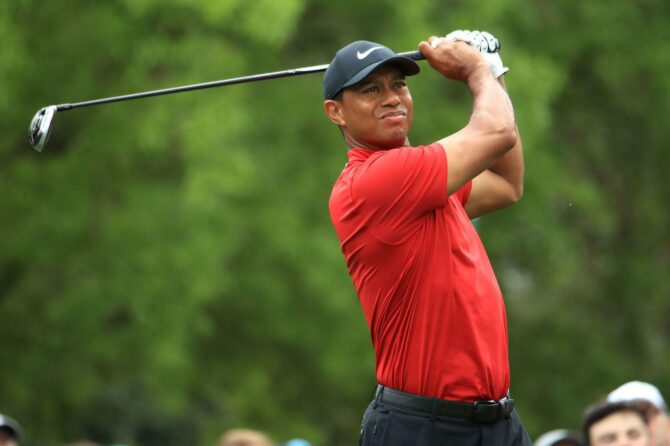
Elite performance in golf emerges from the confluence of cognitive mastery, biomechanical efficiency, and contextual strategy, mediated increasingly by advanced equipment and data-driven practice.This article examines the defining attributes of legendary golfers by integrating psychological constructs-such as attentional control, stress tolerance, and decision-making under uncertainty-with detailed analyses of swing mechanics, neuromuscular coordination, and the physical conditioning that supports repeatable execution. Emphasis is placed on how sustained excellence depends not only on isolated skills but on the adaptive coupling of perception, motor control, and strategy across the variable conditions of competitive play.
Contemporary advances in club and ball technology, shaft design, and practice aids have expanded the performance envelope available to elite players, while also complicating attributional claims about talent versus technology. Recent iterations of drivers and shafts, evolving ball constructions, and targeted training implements exemplify the equipment-mediated gains that today’s professionals and aspirants exploit. Simultaneously, the proliferation of analytic platforms and practitioner forums has accelerated iterative learning, enabling granular feedback on launch conditions, spin dynamics, and shot-shape tendencies. This study situates technological developments-both commercial products and community-driven knowledge exchange-within a framework that foregrounds how equipment interacts with human capabilities.
Drawing on interdisciplinary literature from sports psychology, biomechanics, and performance analytics, as well as applied observations of equipment trends and training methodologies, the analysis aims to elucidate the multi-level mechanisms that produce golfing legends. by synthesizing empirical findings and contemporary practice, the paper seeks to clarify which factors are necessary and which are facilitative for elite achievement, thereby offering a rigorous account of the anatomy of elite performance in golf.
Cognitive Foundations of Elite Golf Performance: Mental Resilience, Focus, and Decision Making with Targeted Psychological Interventions and Training Recommendations
Cognitive performance in elite golf is organized around a network of limited-capacity systems-working memory, attentional control, and metacognitive monitoring-that interact with emotion-regulation circuits to determine adaptive behavior on the course. Empirical models suggest that sustained success depends less on single-trial brilliance and more on the stability of these systems under perturbation: stressors (noise, spectators, score pressure) degrade working-memory bandwidth and push athletes toward heuristics unless compensated by practiced regulatory strategies. Training programs that scaffold metacognitive awareness (e.g., thought sampling, performance journaling) and incremental stress inoculation produce more robust decision architectures, enabling players to maintain process-focused control when outcome pressure rises.
Focus and concentration are not unitary constructs but a constellation of processes-selective attention, sustained vigilance, and the ability to flexibly shift between global and local task sets. Techniques grounded in cognitive science (e.g., attentional cueing, dual-task training, and the “quiet eye” protocol) strengthen selective gating and reduce susceptibility to transient distractors. Importantly, interventions should target both the attentional system and its contextual triggers: pre-shot routines and environmental anchoring (consistent visual and kinesthetic checkpoints) create external scaffolds that offload executive demand and conserve working-memory resources for shot execution.
decision making under competitive pressure reflects a dynamic interplay between normative strategy selection and bias-prone heuristics. Common cognitive distortions in golf-overweighting recent outcomes, anchoring on prior club choices, and loss-aversion tendencies near par/green-can be mitigated through structured debiasing: explicit pre-shot options analysis, probabilistic cueing, and implementation intentions that specify when to accept conservative versus aggressive lines. Training interventions that simulate constrained time horizons and fluctuating payoff structures (e.g., variable-stakes practice holes) accelerate the calibration of risk sensitivity and strengthen pattern recognition for course-specific contingencies.
Operational recommendations emphasize purposeful, measurable mental training integrated into physical practice. Implement a periodized mental-skill block (2-3 microcycles per season) that alternates capacity-building (working-memory and attention drills) with applied-context sessions (pressure simulations, decision rehearsals). Complement these with short daily practices: brief mindfulness primers, imagery scripts tied to kinematic cues, and post-round reflective scoring on process markers. Below is a compact reference mapping cognitive targets to interventions and proximate outcomes.
- Mental microcycles: 3-4 weeks focused on one cognitive domain.
- Measurement: objective KPIs (reaction time, quiet-eye duration, decision consistency).
- integration: couple technical drills with cognitive load to ensure transfer.
| Cognitive Skill | Intervention | Proximate Outcome |
|---|---|---|
| Selective Attention | Quiet-eye + attentional cueing | Increased shot consistency |
| Decision Making | pre-shot decision script | Reduced bias-driven errors |
| Emotional Regulation | Stress inoculation + breathing | Faster recovery after setbacks |

Biomechanical Determinants of power and Precision: Strength, Flexibility, and Neuromuscular Coordination with Evidence-Based Conditioning protocols
Biomechanical analysis frames elite golf performance as the coordinated exploitation of the body’s mechanical advantage: a sequenced transfer of energy through the limbs and trunk often termed the kinetic chain. Ground reaction forces, segmental angular velocities, and joint moments together determine the capacity for both clubhead speed and shot repeatability. Contemporary definitions of biomechanics-underlining the application of mechanical principles to living movement-clarify why small alterations in pelvis rotation, thoracic tilt, or wrist hinge can produce outsized effects on shot dispersion and ball velocity. Quantifying these determinants through motion capture, force plates, and high-speed video allows practitioners to link observed deficiencies to targeted conditioning interventions.
Maximizing the dual goals of power and precision requires a balanced development of muscular capacity and soft‑tissue pliability.Emphasis must be placed on multi-planar strength across the hips, core, and posterior chain while preserving thoracic rotation and shoulder girdle mobility.Evidence‑guided modalities include:
- Rotational medicine‑ball throws (3-5 sets of 6-10 reps) to train explosive transverse-plane force transfer;
- Loaded carries and unilateral deadlift variations to build anti‑rotation strength and hip stability;
- Thoracic mobility drills and PNF‑assisted stretching to optimize segmental sequencing and reduce compensatory lumbar motion.
These elements should be periodized to avoid strength-flexibility antagonism and to preserve the fine motor control necessary for shot shaping.
Neuromuscular coordination is the linchpin that converts physiological capacity into on‑course performance. Metrics such as rate of force development (RFD), intersegmental timing, and co‑contraction patterns predict how efficiently an athlete turns strength and mobility into consistent clubhead delivery.Training strategies that improve neuromuscular timing include ballistic and plyometric work (e.g., short‑duration med‑ball series), perturbation and balance tasks conducted under sport‑specific postures, and high‑velocity low‑load skill sessions that reinforce desirable movement patterns. Objective monitoring-velocity tracking, electromyography, or brief RFD tests-enables progressive overload while safeguarding motor pattern integrity.
| Target | Practical Protocol | Outcome Metric |
|---|---|---|
| Transverse power | Med‑ball rotational throws,3×8,twice weekly | Clubhead speed (m/s) |
| Core stability | Loaded carries + Pallof press,3×30-60s | Hip/torso separation angle |
| Mobility | Thoracic rotations + PNF,daily | Thoracic rotation (deg) |
A structured,evidence‑informed program combines these elements into microcycles that prioritize motor learning,progressive overload,and objective testing to preserve both power and precision across a competitive season.
Shotmaking Mechanics and Skill Acquisition: Motor Learning Principles, Drill Designs, and Practice Structures for Consistent Execution
foundational motor-learning concepts frame elite shotmaking as an adaptive, feedback-driven process rather than a fixed set of mechanical positions. Contemporary theory emphasizes specificity (practice that replicates perceptual and kinematic demands of competition), variability (structured variation to build robust movement schemas), and a constraints-led approach that manipulates task, environmental, and organismic constraints to elicit functional solutions. Practitioners should conceive the swing as a coordination problem of redundant degrees of freedom: skilled performers harness variability to stabilize task-relevant outcomes while allowing exploitable movement flexibility for differing lie, wind, and shot shapes.
Effective practice architecture balances augmented feedback, cognitive load, and error experience to promote retention and transfer. Use faded and summary feedback schedules (reduced frequency of external KR/KP) to encourage intrinsic error detection, and incorporate self-controlled feedback moments to increase learner autonomy. Schedule practice to exploit contextual-interference effects: combine blocked segments for early error reduction with random/variable blocks for long-term adaptability. Key session elements typically include:
- Dynamic warm-up emphasizing movement quality and tempo
- Focused technical drills with immediate, reduced feedback
- Variable target practice to build perceptual-motor schemas
- Pressure simulation and decision-making tasks for transfer
- Reflective debrief with objective metrics and self-assessment
Drill design should follow principled progressions: begin with representative constraint manipulations that reduce complexity, then reintegrate perceptual and contextual demands as stability emerges. Examples include tempo-limited swings to control sequencing, scaled target-distances to shape dispersion, and dual-task overlays (e.g., pre-shot routines, visual search tasks) to develop resilient attention control. The table below offers concise drill prescriptions aligned to specific learning objectives and simple repetition structures that are promptly actionable in coaching environments.
| Drill | Objective | Rep Structure |
|---|---|---|
| Tempo Ladder | Sequencing & timing | 4×3 swings (slow→fast) |
| variable Target Grid | Adaptive control & dispersion | 5 targets × 5 balls each |
| Pressure Points | Decision-making under stress | 3 rounds, score-based |
measurement and progression are essential for translating practice into consistent execution. Track both process (tempo, sequencing, face-to-path) and outcome metrics (carry distance, lateral dispersion, contact quality) and use retention and transfer tests (>24-72 hours and novel conditions) to evaluate learning rather than immediate performance gains alone. Implement microcycles (3-6 sessions) that alternate high-variation adaptive blocks with targeted consolidation sessions, and prioritize drills with demonstrable transfer to on-course tasks. By integrating theory-driven practice design with objective monitoring and progressive constraint manipulation,coaches and players can systematically increase the probability of consistent,competitive shotmaking.
Tactical Course Management and Risk Assessment: Analytical Frameworks and Prescriptive Strategies for Tournament Decision Making
Elite tournament decision making is best framed through formal analytical constructs that translate course architecture and match states into probabilistic outcomes. Models grounded in expected value, variance decomposition and Bayesian updating enable players and caddies to quantify the trade-offs of a conservative versus aggressive line on any given hole. Incorporating shot-level distributions (distance, miss bias, dispersion) and external vectors (wind, firmness, pin location) produces a modular portrayal of a hole that can be aggregated into a round-level policy. Such a representation allows for the computation of threshold probabilities-e.g., the minimum likelihood of birdie required to justify a high-risk approach-to guide repeatable decisions under uncertainty.
Prescriptive strategies derived from these frameworks emphasize adaptation to tournament context and player-specific utility functions. Key tactics include:
- Match-state conditioning: shift strategy with respect to leaderboard position and remaining holes;
- Risk pooling: allocate aggression across cluster holes to minimize variance on any single hole;
- Margin management: prioritize shots that preserve pars on high-penalty holes.
These interventions are operationalized through concrete rules-of-thumb (e.g., when wind exceeds X mph do not target tucked front pins from the fairway) and calibrated decision thresholds that reflect a player’s stroke-gain profile and tournament objectives.
A concise decision table supports rapid in-play assessment by translating complex inputs into three actionable postures: conservative, balanced, and aggressive. The following WordPress-styled table is a practical template for caddie-player communication during competition:
| Situation | Trigger Condition | Recommended Posture |
|---|---|---|
| late round, leading | Par-5 next; ≤2 strokes ahead | Conservative |
| Middle round, chasing | Short par-4 with accessible green | Aggressive |
| Windy conditions | Crosswind >15 mph | Balanced |
This schema is intentionally minimal to allow for rapid cognitive processing while leveraging pre-shot probabilities and real-time telemetry (rangefinder, wind read, lie assessment).
Operationalizing these strategies requires disciplined measurement and continuous learning loops. Implement a standardized KPI dashboard that includes strokes gained by segment (tee-to-green, approach, short game), up-and-down conversion, and distributional measures of shot dispersion. Regular scenario-based simulation practice-were players rehearse decisions under constrained time and altered utility weights-improves fidelity of in-tournament choices. codify a succinct decision script for the player-caddie dyad (e.g., three inputs, one recommended posture) to reduce cognitive load and ensure that analytical prescriptions translate into consistent on-course behavior.
Technology Integration and Performance Analytics: Utilizing Tracking Data, Equipment Optimization, and statistical Models to Inform Practice and Play
High-resolution capture systems, radar-based launch monitors, and inertial measurement units have converged to create a rich multimodal evidence base for elite golf performance. When instrumenting a golfer, emphasis must be placed on **data fidelity**-sensor calibration, sampling frequency, and environmental control-to ensure that kinematic and ball-flight measures are commensurate. Integrated data pipelines that perform sensor fusion (synchronizing clubhead kinematics with ball-flight parameters) convert raw streams into interpretable features,enabling cross-session comparability and longitudinal tracking of technical change.
Translating measurements into practice requires a taxonomy of actionable metrics and corresponding interventions. Key indicators include:
- club path & face angle – informs shot shape correction and targeted swing drills.
- Launch conditions (angle, spin) - guides loft selection and ball/shaft pairing.
- Impact location & dispersion – drives center-of-gravity adjustments and alignment work.
- Kinematic sequence - underpins coordinated tempo training and motor learning protocols.
These elements form the operational vocabulary coaches use to convert analytic outputs into practice prescriptions and equipment decisions.
Structured summaries of analytics facilitate rapid decision-making for both coach and player. A concise decision matrix synthesizes metrics, recommended action, and expected performance change, making analytic guidance usable on the range and course:
| Metric | Decision | Expected Outcome |
|---|---|---|
| High spin with low launch | Lower-lofted club / adjust attack angle | Increased carry, reduced side spin |
| Toe-impact dispersion | Shaft/lie fitting, impact-location drills | Tighter groupings, improved distance control |
| Inconsistent kinematic sequence | Tempo training, biofeedback sessions | Stable ball-striking under pressure |
Advanced analytics extend beyond descriptive summaries to predictive and inferential modeling: **mixed-effects models** quantify within-player change while controlling for course/context factors; **Bayesian updating** supports real-time belief revision about intervention efficacy; and **machine learning classifiers** can flag high-risk technical regimes associated with performance drop-offs. Experimental design-A/B testing of equipment or drills-and attention to overfitting and external validity are essential; statistically meaningful model performance in the lab must be validated on-course to ensure ecological relevance. ultimately, analytic sophistication should serve individualized periodization plans that balance technical modification, equipment optimization, and competitive readiness.
Recovery, Nutrition, and Injury Prevention: Evidence-Based Protocols to Sustain Peak Performance and longevity
Sleep and strategic recovery interventions form the physiological backbone of sustained elite performance.Meta-analytic evidence links consistent 7-9 hour sleep windows with improved motor learning, reduced reaction time variability, and lower injury rates; thus, sleep hygiene (fixed sleep-wake times, blue-light reduction, temperature control) should be non-negotiable. When acute load spikes occur-tournament rounds, long practice days-implement evidence-based modalities: active recovery (low-intensity aerobic work 10-20 minutes), short-duration cold-water immersion (8-12 minutes at ~10-15°C for symptomatic recovery), and targeted myofascial techniques (foam rolling 5-10 minutes per region). Use these selectively and temporally (post-exertion) rather than chronically to avoid blunting long-term adaptations.
- Daily targets: 1.6-2.2 g/kg protein; 30-60 g high-quality protein within 0-2 hours post-session; 25-45 kcal/kg/day depending on phase and body composition goals.
- Hydration: individualized plan with pre-round urine color baseline and 150-300 mL carbohydrate-electrolyte beverage every 45-60 minutes in warm conditions.
- anti-inflammatory nutrition: emphasize omega-3s, polyphenol-rich fruits/vegetables, and limit chronic NSAID reliance; consider vitamin D repletion when deficient.
Injury prevention is a systems-level process integrating screening, targeted conditioning, and load management. Pre-season and quarterly movement screens should include thoracic rotation, hip internal/external rotation, single-leg balance, and scapulothoracic control; when deficits are identified, prescribe focused interventions: eccentric posterior-chain work (2-3x/week), rotator-cuff and serratus anterior endurance training (3 sets × 12-20 reps), and progressive hip mobility drills. Load management for golfers centers on session-duration and repetition density (e.g., range-ball counts, practice swing volume); apply progressive overload principles with deload weeks every 3-6 weeks and acute:chronic workload ratios monitored to mitigate soft-tissue overload.
The applied framework requires integrated monitoring and multidisciplinary communication to preserve longevity. Use simple, objective markers-session RPE × minutes (sRPE), sleep quality scores, and pain-rating scales-to inform daily adjustments and return-to-play decisions. Entrench a collaborative workflow: coach-driven periodization, physiotherapist-led rehabilitation protocols, dietitian-managed fueling/recovery plans, and sport scientist oversight of load analytics. Below is a concise protocol matrix suitable for implementation in elite golf programs.
| Protocol | Frequency | Key Metric |
|---|---|---|
| Sleep Optimization | Nightly | 7-9 h; sleep efficiency >85% |
| Protein Timing | Post-session & daily | 0.3-0.4 g/kg post-session |
| mobility/Prehab | 3-5×/week | Thoracic rotation, hip ROM benchmarks |
| Load Monitoring | Daily | sRPE, practice minutes, symptom score |
Talent Development and Coaching Methodologies: Longitudinal Pathways, Assessment Metrics, and Practical Recommendations for Coaching elite Golfers
| Domain | Representative Metric | Monitoring Cadence |
|---|---|---|
| Technical | Clubface/shaft kinematics (video/IMU) | Weekly |
| Physical | Rotational power & mobility tests | Monthly |
| Tactical | Shot selection consistency (strokes gained) | Per event |
| Psychological | Stress-resilience & focus scales | Bi-monthly |
These metrics should be triangulated-objective sensors, structured observation and athlete self-report-to increase reliability and to guide individualized intervention.
Implementation requires concrete methodological choices. Adopt an evidence-based blend of approaches: deliberate practice with progressive overload, constraint-led learning for adaptability, and structured feedback loops (augmented feedback faded over time). Practical recommendations include:
- Use microcycles that target specific technical faults while preserving competition readiness.
- Integrate dual-task and pressure simulations to transfer practice fidelity to tournament contexts.
- Employ mixed-method assessment (sensor data + qualitative debriefs) to triangulate progress and modify plans.
Coaches should document interventions in a shared athlete-development plan to enable continuity and cumulative learning.
governance and coach-athlete process variables determine longitudinal success: adherence to ethical coaching standards (aligned with ICF/EMCC principles), explicit goal hierarchies, and regular review using pre-specified key performance indicators. Build modular decision rules for when to escalate interventions (e.g., technical re-model, load reduction, or sports psychology referral) and schedule formal review meetings every competitive block. Emphasize the relational dimension-trust, autonomy support and co-construction of goals-so that data-driven prescriptions are received, internalized and sustained in the athlete’s practice ecology.
Q&A
Q: What is meant by “elite” or “legendary” performance in golf within an academic framework?
A: Elite or legendary performance is operationalized as consistent superiority on objective performance metrics (e.g.,tournament wins,strokes gained,scoring average relative to field),sustained across multiple seasons,and accompanied by demonstrable dominance in high-pressure situations (major championships,elite fields). An academic definition emphasizes measurable outcomes, longitudinal stability, and contextual factors (competition strength, course difficulty) rather than anecdotal reputation alone.
Q: What psychological characteristics reliably distinguish golf legends from other high-level players?
A: Empirical and theoretical work identifies several recurrent psychological attributes: superior stress regulation (cognitive and physiological), adaptive attention control (task-focused versus externally distracted), robust goal-setting and process orientation, effective use of pre-shot routines, and rapid recovery from errors (resilience). These traits interact with experience and situational factors; for instance, champions display both proactive planning and in-the-moment flexibility under variable course conditions.
Q: How is psychological resilience assessed and trained in elite golfers?
A: Assessment uses mixed methods: standardized instruments (e.g., sport-specific mental toughness scales), behavioral indicators (e.g., error-recovery time, performance under induced pressure), and psychophysiological markers (heart rate variability, cortisol responses). Training approaches combine cognitive-behavioral interventions (goal-setting, imagery, cognitive reappraisal), biofeedback, pressure-exposure practice, and simulation of tournament conditions. Longitudinal monitoring and individualized protocols are essential.
Q: Which biomechanical factors are most critical to world-class golf performance?
A: Key biomechanical determinants include efficient sequencing of the kinematic chain (pelvis → thorax → arms → club),optimal angular velocities and timing (peak X-factor separation and its dissipation),ground reaction force generation and transfer,and repeatable impact kinematics (clubhead speed,attack angle,face orientation). Minimization of deleterious compensation patterns that reduce repeatability or increase injury risk is also crucial.
Q: What technologies and methods are used to quantify elite biomechanics?
A: Researchers and practitioners use motion-capture systems (optical and inertial), force plates (to measure ground reaction forces), instrumented clubs and launch monitors (e.g., Doppler radar, photonics) to measure club and ball metrics, and musculoskeletal modeling to estimate internal loads. High-speed video and wearable IMUs facilitate field-based measurement. Integration of multimodal data (kinematics, kinetics, ball flight) gives the most complete picture.
Q: How do analytics and performance metrics (e.g., Strokes Gained) change our understanding of elite performance?
A: Modern analytics reframe performance from raw scoring to context-sensitive contributions (strokes gained across facets: tee-to-green, putting, approach).This allows decomposition of strengths/weaknesses, evaluation of risk-reward strategies, and objective comparison across courses and eras.Analytics also enable data-driven practice prioritization and inform equipment and shot-selection decisions.
Q: In what ways have equipment advances influenced elite-level outcomes?
A: Advances in clubhead design, shaft materials, and ball aerodynamics have expanded the performance envelope (greater ball speeds, optimized launch/spin profiles). Though, equipment effects interact with a player’s biomechanics-technological gains are realized only when matched to swing characteristics and strategy. Practitioner discourse (e.g., equipment threads on GolfWRX) reflects both adoption and critique of new offerings and trade-offs in cost, feel, and control [see practitioner discussions: results 1-4].
Q: How should coaches integrate biomechanics, psychology, and analytics into a coherent training plan?
A: Integration requires interdisciplinary assessment: baseline profiling (technical, physical, psychological, analytic performance metrics), prioritized objectives (based on competitive demands and athlete constraints), and periodized interventions. Coaches should adopt iterative testing (pre-post measures), cross-domain communication (biomechanists, sports psychologists, data analysts), and translate analytic insights into specific practice tasks that replicate competitive constraints.
Q: What strategic skills differentiate legends in course management and shot selection?
A: Legends demonstrate superior probabilistic reasoning (estimating expected value of shot options), situational flexibility (adapting to wind, lie, and pin positions), and psychological calibration (balancing aggression and conservatism according to tournament context). Their decision processes integrate personal performance distributions, opponent dynamics, and scoring contingencies, often under time pressure.Q: Are there identifiable training protocols that produce elite-level improvements?
A: Evidence favors specificity-driven, high-quality deliberate practice with variability and pressure elements. Protocols that combine targeted technical drills informed by biomechanical diagnostics, strategic simulations, and pressure-exposure sessions show the largest transfer to competition. Physical conditioning (strength, mobility, endurance) and periodized mental training are necessary complements.Robust experimental evidence in elite populations is limited by small samples; thus individualized optimization is emphasized.Q: What are the principal research gaps and methodological challenges in studying golf legends?
A: Challenges include small-N issues (few truly elite subjects), longitudinal data scarcity, difficulty in simulating competitive pressure, and separating causation from selection effects (did certain traits produce greatness or did elite experiences shape those traits?). There is need for more longitudinal cohorts, multimodal data fusion, real-world competition sampling, and transparent reporting of effect sizes and practical importance.
Q: How do ethical and equity considerations shape research and practice in elite golf performance?
A: Ethical concerns include data privacy for athlete biometric and performance records, informed consent for interventions, and equitable access to high-cost technologies that can amplify competitive disparities. Researchers and practitioners should adopt transparent data governance, consider socioeconomic inequities in equipment/training access, and evaluate how interventions affect long-term athlete well-being.
Q: How can findings about legends be translated for developing players without causing overfitting to exceptional cases?
A: Translational strategies should focus on principles (e.g., consistent routine, efficient sequencing, decision frameworks) rather than wholesale imitation of idiosyncratic techniques. Use normative ranges informed by elite data,emphasize progressive skill development,and personalize interventions. Coaches should avoid forcing juniors into extreme biomechanical patterns optimized for specific body types or strengths of particular legends.Q: Where can practitioners find ongoing, practical discussions about equipment and field-level experience that complement academic findings?
A: Practitioner forums and community platforms (such as, GolfWRX discussions such as WITB threads, Tour Talk, and equipment-specific threads) provide real-world perspectives on equipment choices, shaft and clubhead experiences, and perceived product performance [examples: Gabby Golf Girl WITB – 2025 Creator Classic (Tour Championship) (result 1); Tour Talk forum overview (result 2); debates on Performance Golf 357 hybrid (result 3); Denali Charcoal Shaft in Callaway Elyte X Drivers (result 4)]. Such sources are useful for hypothesis generation and understanding user priorities, but their anecdotal content should be integrated cautiously with empirical data.
Suggested further reading and next steps:
– Review longitudinal studies of elite players that combine psychological, biomechanical, and performance analytics.
– Develop interdisciplinary case studies that link micro-level mechanics to macro-level competitive outcomes.
– Promote collaborative platforms where researchers and practitioners share anonymized datasets under robust ethical frameworks.If you woudl like, I can convert this Q&A into a formatted FAQ for publication, expand any answer with citations from peer-reviewed literature, or produce a short annotated bibliography matching each Q to key studies.
In sum, this examination of elite golf performance underscores that the distinction of legendary golfers arises from an integrated architecture of capacities: robust psychological resilience, refined strategic cognition, and highly developed physical attributes (strength, flexibility, coordination), all scaffolded by precise biomechanics and informed by modern analytics and equipment. rather than privileging any single dimension, the evidence reviewed hear highlights the synergistic interplay among mental skills, motor control, tactical decision-making, and technological support as the principal determinant of sustained excellence.
For practitioners and researchers alike, these findings suggest concrete pathways. Coaches and performance teams should pursue multidisciplinary interventions that combine periodized physical conditioning, individualized swing- and shot-specific technical training, cognitive skills training, and data-driven decision frameworks. Researchers should prioritize longitudinal, intervention-based, and ecologically valid studies that integrate biomechanical, physiological, and neurocognitive measures to clarify causal mechanisms and transfer to competition. attention to ethical and practical considerations surrounding equipment innovation and data use is likewise essential.
Ultimately, understanding the anatomy of elite performance in golf requires both depth-rigorous measurement of constituent processes-and breadth-synthesis across domains and contexts. By embracing a holistic, evidence-informed approach, the sport can continue to advance both the science of performance and the legacy of its legends.

Golf Legends: The Anatomy of Elite Performance
Defining Elite Performance in Golf
Elite performance in golf is the intersection of technical mastery, strategic course management, psychological resilience, and equipment optimization.While raw talent and athleticism matter, what separates golf legends from weekend champions are consistent processes – repeatable swing mechanics, elite short game precision, smart tee shot placement, and a mental blueprint for high-pressure situations. Below we break down each element and provide practical tips for golfers aiming to raise their game.
The Four Pillars of Legendary Golf
1.Swing Mechanics: Foundation of Consistency
World-class players exhibit efficient, repeatable swing mechanics that balance power, accuracy, and feel.Key components include:
- Posture and setup: Athletic stance, proper spine angle, correct ball position for each club.
- Sequencing and tempo: Legs and hips initiate, torso follows, and arms/hands release – smooth tempo beats forced speed.
- Impact position: Square clubface, centered contact, and controlled shaft lean generate consistent launch and spin.
- Shot shaping capability: Ability to curve the ball intentionally (draw/fade) to navigate hazards and shape shots around greens.
Practical drills for swing mechanics
- Slow-motion backswing to impact at 50% speed to engrain sequencing.
- Impact bag drill to train centered, square contact and proper shaft lean.
- Alignment stick drills for swing path and body alignment.
2.Short Game & putting: Strokes Gained Champions
Elite golfers win tournaments on the greens. Short game and putting separate good scores from great scores.
- chipping proficiency: Mastering different trajectories and bounce-to-roll ratios for tight lies, rough, and downhill shots.
- Pitching versatility: Controlling distance with tempo and varying loft exposure.
- Putting fundamentals: Consistent setup, green-reading, distance control, and pre-shot routine.
Putting drills and routines
- Gate drill for stroke path and face control.
- Lag putting practice from 30-60 yards to improve distance control.
- Three-hole test focusing on speed more than line (hit the center of the hole target).
3. Course Management & Strategy
Elite players approach each hole with a strategy that minimizes risk and maximizes scoring opportunity. Course management includes smart tee shot placement, hole-by-hole risk assessment, and adapting to conditions (wind, pin locations, turf).
key course-management tactics
- Prioritize target lines over maximum yardage; an extra 10-20 yards that leaves a challenging approach is often a higher-risk play.
- Use shot shaping to avoid hazards – a controlled fade or draw can open safer landing zones.
- Adapt club selection based on wind and lie rather than distance alone.
4. Mental Game & Competition Strategy
Champions think differently under pressure. Mental toughness, focus, and decision-making are trainable skills.
- Pre-shot routines: Repetition reduces variability and calms the nervous system during pressure shots.
- Focus on process over outcome: Concentrate on controllable elements (setup, tempo) rather of results.
- Emotional regulation: Use breathing, visualization, and micro-routines to manage tournament stress.
Training, Fitness & Recovery for Peak Performance
Modern legends invest in fitness and recovery as much as technique. Golf-specific strength, mobility, and endurance translate into greater consistency and injury resilience.
Essential fitness components
- Rotational power: Strengthen core and hips for efficient torque and controlled speed.
- Mobility: Thoracic rotation and hip versatility to achieve a full turn without compensations.
- Stability: Single-leg balance and anti-rotation exercises to maintain impact positions.
- Cardiovascular stamina: low-intensity cardio to maintain focus on back nine and through tournament rounds.
recovery & injury prevention
- Daily mobility flows and targeted soft-tissue work.
- Load management – alternate high-intensity sessions with technique-focused or active-recovery days.
- Sleep, nutrition, and hydration strategies tailored to practice and tournament schedules.
Equipment & Technology: Fine-Tuning Performance
Equipment is the final multiplier – not the substitution – for skill. Modern drivers,irons,and balls offer more forgiveness and tailored launch/spin windows. Staying current on fitting and tech can yield measurable gains.
recent equipment trends show the importance of fit and choice:
- Driver technology evolution (such as, new driver models released in 2025) emphasizes adjustable weighting, aerodynamics, and shaft pairing for optimal launch conditions.
- Golf ball advances (updated tour-level ball lines) provide different spin/feel characteristics that suit elite short-game control.
Tip: Book a professional club-fitting session rather than guessing lofts and shafts – small changes in launch and spin can translate directly to strokes gained.
Shot-Shaping & Advanced Ball Flight Control
Top players intentionally shape shots to navigate course architecture. Shot shaping is not just about curving the ball – it’s about predicting trajectory, spin, and rollout relative to green contours and hazards.
How to practice shot-shaping
- Work with alignment and path drills to create controlled in-to-out (draw) and out-to-in (fade) paths.
- Vary ball position and clubface angle at setup to learn predictable shot responses.
- Practice low-trajectory punch shots and high-soft pitch shots to expand your shot repertoire.
Data & Analytics: Using Metrics to Create Champions
Sports science and shot-tracking tools give objective metrics that guide practice. Focus on the few metrics that move the needle:
- Strokes gained: Where do you gain/lose strokes? Driving, approach, around the green, or putting?
- Proximity to Hole: Average distance from the hole on approach shots.
- Greens in Regulation (GIR): How often you hit the green in the expected number of strokes.
Use these metrics to prioritize practice time: if data shows weak short-game performance, reallocate practice from full-swing hours to chipping and putting.
Case Studies: Habits of Legendary Players
Examining elite players shows recurring habits that produce results:
- Relentless short-game practice – deliberate reps with specific goals and measurable outcomes.
- Pre-shot routines and visualization used before every notable putt or approach.
- Course planning – playing to strengths and avoiding layout-specific risks.
Equipment and media coverage (for example, community reviews of 2025 driver releases and new tour balls) highlight how top players combine fit equipment with rigorous routines.
Practice Structure & Weekly Plan for serious Improvement
Elite improvement comes from purposeful practice rather than mindless repetition. Use a weekly microcycle that balances technique,simulation,and recovery.
| Day | Focus | Session Length |
|---|---|---|
| Monday | Technique: swing drills & video analysis | 60-90 min |
| Tuesday | Short game: chips, pitches & bunker work | 60 min |
| Wednesday | On-course simulation & course management | 18 holes or 2-3 hours |
| Thursday | putting routine & distance control | 45-60 min |
| Friday | Power & fitness: rotational work & conditioning | 45-60 min |
| Saturday | Competition or pressure drills | 2-4 hours |
| Sunday | Active recovery & mobility | 30-45 min |
Mental Skills Program: 6-Step Routine for Tournament Play
- Pre-round visualization of key holes and desired shots.
- Goal-setting: process goals (targeted routines), not outcome goals.
- Breathing and anchor cue for emotional control between shots.
- Micro-goals for every hole (e.g., “play the middle of the green”).
- Post-shot reflection (1-2 minutes max) to avoid ruminating on mistakes.
- Recovery rituals: nutrition, hydration, and short mobility work between rounds.
Benefits & Practical Tips
- Benefit: Fewer strokes through improved short game and putting – this often delivers the fastest handicap reduction.
- Tip: Practice with purpose – use a stopwatch, data log, and measurable targets for each session.
- Benefit: Better course management translates to lower variance – more pars and fewer bogey spikes.
- Tip: Schedule periodic club fittings and ball trials; small equipment gains compound over time.
First-hand Experience & Coaching Insights
Coaches emphasize the power of micro-habits – small, repeatable actions (a pre-shot breath, a check of posture, a 60-second visual) that, over thousands of repetitions, build championship-level consistency. Accountability tools like coach-led video review, swing-tracking sensors, and performance journals accelerate improvement.
SEO & Content Tips for Golf Sites (if you’re publishing this article)
- Use long-tail keywords naturally: “elite golf performance drills,” “how to improve short game consistency,” and “course management tips for amateurs.”
- Include structured data (schema) for articles and FAQs to improve SERP visibility.
- Optimize images with descriptive alt text (e.g., “golfer practicing impact position drill”) and compress for fast loading.
- Link to reputable sources for equipment reviews and research – for example, recent forum and review discussions about new drivers and balls can inform readers about gear trends.
Quick Reference: Performance Checklist
- Have a consistent pre-shot routine.
- Track key metrics weekly (Strokes Gained, GIR, proximity).
- Schedule quarterly club fittings and ball comparisons.
- Build a balanced weekly practice plan including on-course simulation.
- Invest in mobility and rotational power training.
Further Reading & Resources
- Professional fitting centers and certified coaches for club and ball selection.
- Data platforms that provide Strokes Gained analytics for amateurs.
- Training protocols from golf fitness specialists to customize mobility and strength work.