
Introduction
Achieving consistent results in golf-whether with the full swing, the tee shot, or putts-depends on an integrated strategy that blends biomechanical understanding, motor learning principles, and smart on-course choices. Full-swing technique that produces repeatable clubhead motion, driving methods that manage launch and dispersion, and putting approaches that prioritize tempo and distance control together determine scoring across skill levels. Framing these elements with measurable performance outcomes (for example, consistency metrics, strokes-gained, and score variance) highlights interventions that reliably transfer from practice to tournament conditions.
This piece combines modern biomechanical models of the golf swing with evidence-based skill-acquisition concepts to isolate the mechanical and neural attributes of high performers. In the driving section we break down the factors that set ball speed, launch angle, spin and lateral dispersion and translate them into teachable setup, sequencing and ground‑reaction strategies. For putting we concentrate on stroke reproducibility, perceptual calibration for pace, and green‑reading approaches that reduce variability and cut three‑putt frequency. Examples from elite players are distilled into concise coaching cues and progressive drill sequences.
Our focus is pragmatic and data-driven: deliver diagnostic benchmarks, drill plans, and practice prescriptions that produce observable improvements in consistency and scoring. We marry kinematic and kinetic assessment with purposeful-practice frameworks and on-course tactics,and recommend objective thresholds for assessing skill transfer from training into play. The article continues with a primer on biomechanical foundations, followed by focused sections on the swing, driving and putting mechanics, diagnostic tests and training progressions, and a practical framework to measure on-course impact.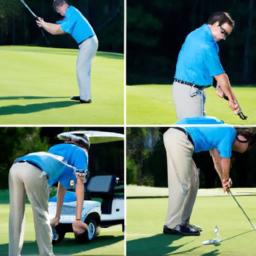
A Unified Biomechanics Model for the Golf Swing: Sequencing, Joint Loads and Injury Risk
Begin by defining a biomechanical baseline that connects efficient kinematic sequencing to consistent contact and lower injury likelihood. Efficient swings follow a proximal‑to‑distal timing: the hips begin the downswing, the torso and shoulders follow, then the arms and finally the clubhead-this order produces peak velocity while minimizing compensatory stresses. Aim for a typical shoulder rotation near 90° from address and a pelvic turn roughly 40-50° for mid- to low-handicappers; novices may adopt smaller rotations to prioritize coordination. To ingrain sequencing, practice slow‑motion swings and dynamic medicine‑ball throws that emphasize hip‑first initiation; on video, target a perceptible lead of the hips over the shoulders on the order of 0.08-0.12 seconds. Common errors include starting the downswing with the upper body (casting) or the hands, wich raises wrist and forearm loading and causes premature release-fixes include lower‑body‑lead drills and objective feedback (e.g., mirror checks, launch‑monitor metrics) to verify clubface behavior thru impact.
Convert that timing into universal setup and swing checkpoints that apply across clubs.Start from a neutral address with roughly 12-18° spine tilt (a touch more upright for long clubs), knees flexed about 15-20°, and weight approximately 50/50 over the balls of the feet. Ball position should move forward with club length-mid‑stance for short irons, a bit forward for mid‑irons, and just inside the lead heel for driver. At transition, keep the lead leg braced with mild flex (avoid locking out) and present a flat or slightly bowed lead wrist at impact to encourage compressive, ball‑first contact. Useful practice checkpoints include:
- Grip pressure: light to moderate, around 4-5/10, to enable a natural release;
- Shaft plane: hands roughly on plane at half‑back and half‑through positions;
- Impact check: observe divots for irons to confirm a downward attack angle.
These checks are measurable-for example,monitor divot depth and launch angles with a launch monitor to verify consistent compression and descent angles.
Apply the same sequencing concepts to the short game where smaller amplitudes and repeatability are paramount. Putting benefits from a shoulder‑driven pendulum with minimal wrist break-use a metronome or counting rythm and aim to keep the putter face square within about ±3° at impact to promote true roll. For chipping, adopt a hands‑ahead posture with roughly 60-70% of weight on the lead foot and restricted wrist hinge so the body rotation, not the hands, drives the stroke; for delicate pitch shots increase wrist hinge and lengthen the arc proportionally. Effective drills include:
- Clock Drill for pitch distances (short/long strokes to reproduce 10, 20 and 30‑yard targets);
- Putting Gate Drill (use tees to create a narrow channel to keep the face square);
- Bunker Splash Drill (enter the sand 1-2″ behind the ball and accelerate through the sand).
On tight lies or in gusty conditions prefer lower‑lofted chips with controlled roll; always let course rules and the lie dictate necessary technique adjustments.
Injury prevention should be integrated with technical coaching. The lumbar spine is exposed to compressive and shear loads when golfers over‑rotate or early‑extend; prioritize thoracic rotation mobility and anti‑rotation core control to distribute forces. Hold a modest lead‑knee flex of roughly 20-30° at impact to limit valgus stress and patellofemoral load, and avoid excessive wrist dorsiflexion to reduce tendon strain. Equipment matters too: a correctly fitted shaft flex and length reduce compensatory torque, and proper grip size limits extreme wrist deviation. Prescribed prehab/rehab exercises include:
- Pallof presses and plank progressions for anti‑rotation core stability;
- thoracic rotation drills and band‑resisted external rotation for upper‑torso mobility;
- single‑leg glute bridges and lateral band walks to fortify hip abductors and protect knees.
Monitor symptoms and scale intensity-if pain appears, back off swing speed and consult a clinician while maintaining mobility and neural control work.
Embed biomechanics into a structured practice and course plan that produces measurable scoring improvements.A sample weekly template: 10‑minute dynamic warm‑up, 30-40 minutes dedicated to sequencing and drill work (step drill, split‑hand drill, medicine‑ball rotations), 20 minutes short‑game practice, and 10 minutes putting under pressure (make X of Y from 6-10 ft). Set time‑bound goals-e.g., increase average clubhead speed by 3-5 mph in 8-10 weeks, cut three‑putts by ~30% in six weeks, or improve fairway percentage with alignment and ball‑flight practice. Troubleshooting guidelines:
- If slices persist: examine grip rotation, ensure the face isn’t open at impact and practice inside‑out path drills;
- If contact is erratic: check ball position, preserve spine tilt and use impact tape/launch‑monitor feedback;
- If fatigue occurs: shorten sessions, emphasize quality over quantity and introduce variability (different clubs/speeds) to build resilience.
Pair these technical prescriptions with percentage‑based decision making-play conservative shots into par‑5s in strong wind or aim for the center of the green when tired-and add mental routines (pre‑shot checklist, breathing) so biomechanical gains translate into lower scores on course.
Pelvis and Thorax Rotation for Reliable Ball Striking: Practical Cues and Drill Progressions
Clean ball striking relies on anatomically efficient sequencing: the pelvis transmits ground forces from the legs into rotational energy in the torso. The pelvis should rotate independently but in synergy with the thorax; because the pelvis links the axial skeleton to the femurs, hip position governs how vertical and horizontal forces transfer through the system.In practice, coach a backswing pelvic rotation near 30-45° for most players while the shoulders rotate further (advanced players frequently enough reach 80-100°), producing an X‑factor that stores elastic energy. To preserve repeatability, maintain spine tilt and lumbar posture through the turn so the rotation axis shifts no more than about 5° from address to impact-small changes in spine angle correlate with misses and inconsistent launch.
Translate these anatomical ideas into simple, scalable checkpoints. Start with a neutral pelvis at address with slight anterior tilt to preserve hip flexion and distribute weight-consider ~60% on the lead foot for long clubs and move toward 50/50 for short clubs. Use cues such as soft knees, hip‑width stance for irons and shoulder‑width for woods, and a spine angle that keeps the chin clear of the shoulders. Video or a plumb line can monitor hip hinge and spine tilt. Low‑handicap players may aim to open the lead hip about 20-30° at impact while keeping the trail hip closed enough to maintain torque; beginners should prioritize consistent rotation rather than lateral slide. These fundamentals reduce compensatory moves like casting or over‑use of the hands and set the stage for progressive drills.
Design drills that progress from isolated pelvic awareness to integrated speed with control. Start slow to build proprioception,then layer resistance and on‑course variability. Effective drills include:
- Pelvic Clock: with feet shoulder‑width, rotate the pelvis in controlled arcs for 20-30 reps to develop rotational awareness;
- Step Drill: take the backswing and step forward with the lead foot into the downswing to encourage weight transfer and natural hip clearance (8-12 reps);
- Medicine‑Ball Rotations (6-8 lb): three sets of 10 explosive throws to train hip‑to‑shoulder sequencing and power transfer;
- Towel‑under‑armpits: swings with a towel promote torso‑pelvis synchronization and reduce excessive arm action.
For measurable progression set targets such as achieving 70% center‑face strikes and reducing lateral dispersion by 10% within six weeks using launch‑monitor or impact‑tape feedback.
To carry these gains onto the course, add situational adjustments in practice. In wind or firm conditions where trajectory control matters, shorten the shoulder turn (~60°) while keeping pelvic rotation to produce a lower, penetrating flight. For maximum tee distance allow a fuller shoulder turn but ensure the pelvis clears on the downswing to avoid pulls or hooks. Tactical rules: on tight fairways prefer controlled rotation with minimal lateral slide; on reachable par‑5s accept fuller rotation to maximize carry when appropriate. Remember to practice in varied lies (tight, uphill, downhill, fairway bunker) because during a round the ball must be played as it lies-train transfer rather than relying solely on preferred practice surfaces.
Troubleshoot common faults with targeted corrective drills and integrate mental and equipment considerations. Typical issues include early extension (hips shifting toward the ball), lateral slide, and over‑rotation of the pelvis relative to the shoulders. Correct these with the wall drill (stand with the trail hip near a wall and turn without contacting it), the chair‑seated hip turn to maintain flexion, and tempo practice using a metronome (try a 3:1 backswing:downswing rhythm). Equipment tweaks such as shortening shafts or altering lie angle can reduce compensatory lateral moves; lighter shafts can help players with limited mobility maintain a quicker turnover without added torque. For focus under pressure use breath‑paced swings and a single‑word pre‑shot cue (such as, “rotate”) to prime reliable motor patterns. Adopt a periodized schedule-technical sessions twice weekly, on‑course strategy once a week-and track objective metrics (contact percentage, dispersion, carry distance) to quantify betterment.
Ground Reaction Forces and Weight Transfer in the driver: Converting Force Into Distance
How your feet interact with the turf is fundamental to turning intent into measurable distance. Ground reaction forces (GRF) are the vectors that the ground returns to the body, with vertical, lateral and anteroposterior components that together determine how effectively a golfer accelerates the clubhead. For right‑handed players the downswing commonly features a lateral‑to‑medial push from the trail foot to the lead foot combined with a vertical rebound that aids compression at impact. Improving GRF magnitude and timing tends to increase clubhead and ball speed; roughly speaking, a 1-2 mph increase in clubhead speed often yields around 2-4 yards more total distance depending on launch and spin. Track launch conditions as well-many golfers find optimal driver launch near 9-13° with spin roughly 1,800-2,500 rpm to maximize carry and roll.
Consider the kinematic chain that transforms GRF into rotational power: a pelvis‑first downswing followed by torso, arms and finally clubhead. setup and weight distribution facilitate this transfer-coaches frequently enough recommend an address balance around 50/50 to 55/45 (lead/trail), a coil at the top with pelvis rotation ~45-60° and shoulders up to 80-100° for those who can achieve it, producing an X‑factor stretch in the ~20-45° range for advanced players. By impact high‑performers commonly have shifted most weight onto the lead side-targeting roughly 60-80% of body weight-while maintaining a slightly flexed lead knee for a solid rebound platform. If the lower body slides laterally instead of rotating, GRF dissipates and distance is lost; teach rotational drive instead of lateral translation.
Turn these principles into measurable practice using focused drills and objective checkpoints. Use a launch monitor and, if possible, a pressure mat to watch center‑of‑pressure shift and GRF timing. key drills include:
- Step Drill: step the lead foot back during the takeaway then step forward into the downswing to enforce aggressive lead‑foot loading;
- Medicine‑Ball Rotational Throws: 8-12 explosive repetitions to strengthen hip‑first rotational sequencing;
- Feet‑Together Swings: 10-15 slow swings with feet together to promote centralized balance and vertical GRF use;
- Trail‑Foot Push Drill: from the top, feel an intentional lateral‑to‑medial push from the trail foot to rehearse GRF timing.
Short‑term measurable aims: within 6-8 weeks strive for a consistent lead‑foot load of 60-75% at impact and a clubhead speed gain of +2-4 mph in targeted sessions, using weekly launch‑monitor reviews to steer progress.
Shoe traction, turf conditions and equipment moderate how GRF becomes distance-ensure spiked shoes provide dependable lateral grip in wet conditions and select driver loft and shaft flex to match your swing so launch and spin sit in optimal ranges. On narrow, dry fairways prioritize a slightly lower launch with dependable weight transfer to gain roll; into soft greens accept higher launch and more carry by emphasizing full rotational torque and vertical rebound. Always factor weather: wet turf reduces traction and often calls for conservative swing aggression or stance modifications.
Integrate GRF training into a practice‑to‑play pathway with assessment, targeted cycles and transfer simulations. A three‑phase approach is effective: (1) baseline assessment with a launch monitor and simple weight checks; (2) targeted 6-8 week advancement cycles focused on the drills above with measurable goals for impact weight and clubhead speed; (3) on‑course transfer sessions simulating forced carries, low‑drive holes and crosswinds while selecting appropriate tee‑shot strategies. Use concise cues like “lead with the hips,” “push the trail foot,” or “hold the spine angle through impact” to address specific errors. For advanced players refine timing so peak GRF occurs just prior to impact; for novices prioritize stability and a smooth transfer from a 50/50 to 55/45 address balance. When GRF improvements are validated by launch‑monitor data and smart on‑course choices, golfers can increase driving distance without sacrificing accuracy.
Grip, wrist Action and clubface Management: Alignment Methods and Corrective Work
Start with a repeatable grip and pressure as the basis for accurate clubface control.For a right‑hander position the V formed by each thumb and index finger roughly toward the right shoulder (about 40-50° from the shaft) and choose a consistent grip type-Vardon (overlap), interlock or ten‑finger-that feels connected. Keep grip pressure light to moderate (around 4-6/10) through the swing so wrists can hinge and release fluidly; excessive tension inhibits forearm rotation and destabilizes face angle. At setup use a mirror or alignment stick to confirm the clubface is square and that hands are slightly ahead of the ball for irons (shaft lean ≈ 5-8°) and neutral for woods and driver. Beginners should do ten slow repetitions focusing only on grip and pressure before adding body rotation; better players can make micro‑adjustments (one finger stronger/weaker) and track curvature changes on a launch monitor.
Coordinate wrist hinge, lag and release to manage loft and face at impact. on the backswing wrists should create a controlled hinge so the lead forearm‑to‑shaft angle approaches about 90° for more aggressive players; recreational golfers often benefit from a slightly smaller hinge (~70-80°) to aid timing.Train a smooth transition where the lead wrist flattens slightly through impact to present a square face-excessive cupping or ulnar deviation elevates loft and produces open‑face strikes. Useful timing drills include the pump drill (take the club to waist height, pump halfway down three times holding lag, then swing through) and the toe‑up/toe‑down short‑swing drill to engrain a consistent release pattern (toe‑up mid‑downswing, square at impact).
Manage face‑to‑path relationships to intentionally shape shots. Ball curvature depends mainly on the face relative to the swing path: a face closed to the path yields a draw,open to path yields a fade or slice. use face‑marking spray or impact tape to record strike location and face angle at impact; set objectives such as reducing face variance to within about ±2° of square for irons. For alignment, adopt a two‑stage aiming routine-align your feet and body to an intermediate spot 10-15 yards in front of the final target, then square the clubface to the intended line. This reduces body compensation and improves face control. Practice the gate drill at address (two tees slightly wider than the head) and place alignment sticks during pre‑shot routines to replicate practiced body/face relationships on the course.
Prescribe corrective drills matched to the fault and the player’s capacity. For a persistent slice (open face at impact) try:
- Impact bag: 10-20 short, focussed strikes feeling a square/closed face and holding it 1-2 seconds to build memory;
- Towel under the lead arm: 30-50 swings to promote connection and prevent early release;
- Resistance‑band pronation/supination: 3 sets of 12 reps to strengthen forearm rotation control.
Set measurable practice goals-for instance, reduce 7‑iron dispersion by 15-20 yards within four weeks or lower face‑angle standard deviation to ≤2° on a launch monitor within eight sessions. Track progress with structured logs and alternate technical sessions (30-40 minutes) with situational play to speed transfer to course performance.
Integrate these technical adjustments into course strategy and mental routines. On tight fairways prioritize clubface control-choose a setup and alignment that slightly favors a closed face when wind pushes right‑to‑left, or open the face for an intentional fade around protected pins. Do situational drills (aiming at a single cone from varied lies and wind) to simulate tournament pressure. Incorporate a consistent pre‑shot routine with a grip check,two slow practice swings to feel the desired hinge,and a visualization of the face‑to‑path relationship to anchor intent under stress. Make physical gear changes when necessary-adjust grip size by ±1/16″-1/8″ or tweak lie angles to suit your arc-and maintain a weekly mobility routine (wrist flexion/extension holds 3×30s) to preserve technique. By linking grip mechanics and wrist control to alignment and in‑round decisions golfers can achieve tangible gains in accuracy, shot shaping and scoring consistency.
Short Game and Putting: Stability, Tempo and How to Read Greens
Start with a stable address-posture and lower‑body steadiness underpin repeatability in the short game and putting. Use a moderate knee flex and hip hinge that places your eyes about 1-2 inches forward of the ball’s center for chips and slightly forward for most putts. For chips and pitches weight around ~55% on the lead foot helps crisp contact; for putts a balanced 50/50 stance supports a neutral stroke.For short chips adopt a hands‑ahead setup with roughly 1-2 inches of shaft lean so the leading edge compresses the ball. Stabilize the lower body with light turf contact and minimal hip sway so the shoulders and arms operate against a steady fulcrum.
Refine stroke timing and tempo-putting is most reliable as a shoulder‑driven pendulum with little wrist hinge. For short to medium putts keep backswing and forward swing durations close to a 1:1 ratio; for longer lag putts extend travel but maintain the same rhythm. Use a gate drill (two tees wider than the putter head) and an alignment string to confirm the head returns square to the target. Common faults-early wrist break and excessive lower‑body rotation-are remedied with stabilizing aids (towel under armpits) and short video recordings to observe face rotation. Prioritize tempo over force; a metronome between 60-80 bpm is a practical tool for consistent timing.
Differentiate bump‑and‑run, pitch and lob by arc, face angle and ball position. Bump‑and‑runs are played with the ball back in the stance,a lower‑loft club (7-9 iron) and a narrow stroke to keep the ball rolling. For full wedge pitches choose loft and bounce appropriate to turf conditions-high, soft landings often need more bounce and an open face; hinge the wrists slightly and use a steeper, accelerating downswing to generate spin. In bunkers remember not to ground the club before striking; enter the sand 1-2 inches behind the ball and use the sand to lift the ball with an open face and a committed finish. Fix fat shots by shifting weight slightly forward at impact and maintaining shaft lean; thin shots frequently enough mean lifting early-finish low to ensure a downward strike.
Green reading links stroke mechanics to strategic execution. Read slope and grain from multiple perspectives-view from below the hole first to see the true fall line, then from behind and the low side to confirm subtle breaks.use AimPoint or a simplified feel method: estimate the break in degrees, convert to expected lateral deviation at the putt’s length and aim accordingly. consider wind,green firmness and recent watering-firmer greens break less but produce more roll‑out. On tough downhill putts on firm greens favor conservative speed to avoid big misses; remember you may leave the flagstick in during a putt when advantageous (Rule 13.2).
Turn technique into reliable performance with structured drills and mental practice.Set measurable goals-reduce three‑putts by 50% in 90 days or get 8 of 12 chips inside three feet in a session. Use organized progressions:
- Clock Drill for putting (make consecutive putts from 3, 6 and 9 feet until you string 12 in a row);
- Gate Drill for stroke path and face control;
- Up‑and‑Down Challenge with 10 balls from varied lies and record your up‑and‑down %;
- Distance Ladder for pitch control (land 10 balls on 10, 20 and 30‑yard targets).
Tailor practice to handicap-beginners focus on contact and consistency, mid‑handicappers on distance control and reads, low handicappers on feel, variable lies and pressure execution. Add a simple mental routine (two‑breath pre‑shot, clear target image, acceptance of result) to reduce tension. Also match wedge lofts and bounce to your turf and fit putter head weight to your tempo-these equipment choices,combined with deliberate practice and on‑course IQ,drive measurable scoring gains.
Course Management, Shot Choice and mental Prep: Using Probabilities to Reduce Score Variance
Good decision making starts with quantitative assessment: distance, dispersion and the expected value of risk versus reward. Build a personal yardage book and log dispersion data with shot‑tracking apps or a launch monitor-for example, know whether your 7‑iron carries 150 ± 8 yards or 150 ± 15 yards. Apply an expected‑value approach: estimate the probability of hitting the intended target based on your dispersion and multiply that by the scoring benefit (birdie chance,par protection) versus the penalty cost (hazard or lost stroke). Practically,on a 160‑yard par‑3 with a front bunker and narrow green select the club that maximizes the chance of leaving a two‑putt par given your dispersion-often that means aiming for the wider part of the green rather than trying to hit a tucked flag.
polish shot selection with reliable gapping and setup fundamentals. Verify yardage gaps-aim for about 10-15 yards between mid‑irons and 15-25 yards between hybrids/woods so club choice is predictable under pressure. Keep a neutral alignment and progressive ball position (center to 1 ball‑width forward for 7-8 irons, 1-2 widths forward for 4-6 irons, and more forward for driver). Remember the Rules when hazards are involved-you may play it as it lies or take relief under Rule 17; take an unplayable lie with a one‑stroke penalty under Rule 19. Train selection with practical range routines:
- Place three targets at typical course distances (e.g., 120, 150, 180 yards) and record which club lands within 10 yards over 30 shots;
- Practice shaping shots both ways to a 3-5 yard‑wide cone at 150 yards in sets to measure control;
- Monthly equipment checks for lofts, grips and shaft feel to maintain consistent gapping.
These steps convert technical setup into dependable on‑course choices.
As you approach the green, the short game becomes the biggest source of strokes saved-link technique to landing zones and reads. For soft turf use a higher‑loft wedge (around 54-60°) with increased bounce (8-12°) and a shallow swing for high soft landings; for tight lies choose lower bounce (4-7°) and hands‑ahead setup for a running pitch. Practice landing the ball consistently 6-12 feet from the hole on typical greens to turn two‑putts into one. In bunkers open the face, enter about 1-2 inches behind the ball and accelerate through the sand keeping the leading edge above the sandline.Helpful drills:
- Flat‑land chip ladder: tee targets at 3, 6, 9 and 12 feet to hone distance control;
- Sand‑line drill: hit 10 bunker shots aiming to clear a 2‑inch line and finish within 15 feet at least 80% of the time;
- Putting speed drill: practice to a stimpmeter equivalence, aiming for consistent dead‑center speeds on typical greens.
These exercises bridge technical improvements and scoring impact.
Mental readiness and in‑round routines are crucial to applying statistical decisions under stress. Use a concise pre‑shot routine (visualize the flight and landing zone for 3-5 seconds, replicate tempo in a practice swing, set alignment and commit) and breathing cues (two beats in, two out) to calm tension. define a decision threshold for risk-for example, only attempt aggressive carries when your success probability exceeds a penalty‑adjusted threshold (a practical rule is attempt aggressive lines when success probability is > 35-40% and the penalty is about one stroke). Simulate pressure in practice (play a nine‑hole match where three‑putts cost extra) to develop emotional control.Beginners should emphasize routines and conservative choices, while low handicappers add contingency plans for wind and bailout areas. Always focus on process goals (alignment, tempo, decision logic) rather than outcomes.
Make data‑driven rehearsal part of weekly planning: two range sessions targeting yardage gaps (30-40 minutes), three short‑game sessions for distance and bunker work (20-30 minutes each), and one 9‑hole simulated round focused on decisions and penalty avoidance. track objectives-reduce penalty strokes by 0.5-1.0 per round, increase fairways hit to 50-65% depending on level, and lower three‑putts to ≤1 per round. If dispersion worsens, return to alignment and tempo drills; if short‑game control slips, repeat the chip ladder and ramp drills until 80% of shots land in target zones; if decision making breaks down under pressure, rehearse scenario rounds with fixed risk thresholds and review outcomes to recalibrate. By combining statistical thinking,reliable technique and mental routines golfers can make consistent choices that reduce variance and improve scores.
Practice Structure and Transfer: Periodization, Feedback and Measurable Metrics
Organize practice with periodization that maps motor learning to scoring aims.At the macro level construct 12-16 week blocks with explicit goals (e.g., tighten mid‑iron dispersion, raise scrambling %, or cut 3‑putts). Divide into 3-4 week mesocycles switching intensity and specificity: a week of high‑volume technical work (e.g., 300 focused reps on impact), a week of variable, random practice that simulates on‑course demands, and a recovery/consolidation week with lighter sessions and on‑course play. For microcycles (weekly) allocate time like: 2 range sessions × 60 minutes (60% technical, 40% target), 2 short‑game sessions × 45 minutes, and 1 on‑course simulation (9-18 holes). Progress difficulty by increasing target precision or shortening rest between shots and finish each block with baseline testing to inform the next cycle.
Deliver feedback in multiple modalities-combine intrinsic feel with augmented metrics. Encourage internal sensations of impact while using high‑speed video, launch‑monitor data and impact tape for external feedback. Track outputs such as launch angle (e.g., 7‑iron ~12-16°), spin rates, club path and face‑to‑path at impact; set tolerances like face‑to‑path within ±3° for stable shaping. Use hierarchical feedback: immediate KP (knowledge of performance) from mirror or coach cues for technical blocks and KR (knowledge of results) via dispersion and distances for transfer sessions. Practical drills:
- Impact‑tape work targeting a central 1 cm strike zone;
- Mirror drills to hold spine angle within ±2° through impact;
- Launch‑monitor interval sessions: sets of 10 swings targeting carry variance ≤ 5%.
This layered feedback model serves beginners (visual cues) and low‑handicappers (numeric targets) alike to convert practice into course results.
Adopt repeatable baseline tests tied to scoring:
- Distance control test: 10 balls to a 20‑yard target with three clubs-record mean carry and SD;
- Accuracy test: driver dispersion into a 30‑yard circle at 200 yards-track % inside;
- Short‑game test: 20 chips from varied lies scored by landing zones (0-5 ft, 5-15 ft, >15 ft);
- Putting test: make % from 3, 6 and 12 ft with benchmarks for beginners, mid and low handicaps.
Quantify progress with simple statistics (means, SD, % change) and relate these to scoring-e.g., a 10% rise in GIR typically relates to a drop in putts per round. Keep a practice log or app to visualize trends and manage training load.
Prioritize drills that force transfer by mimicking on‑course constraints and decision pressure. Use variable practice to induce adaptation: alternate aim points for wind, practice uneven lies, and impose penalties for misses to simulate consequences. Teach face‑to‑path relationships: for a controlled draw close the face ≈ 3-5° relative to path and swing slightly inside‑out; for a fade open the face ≈ 3-5° with an outside‑in feel.Transfer drills include:
- Gate‑and‑target drills using alignment sticks to require 8/10 shots within dispersion limits;
- Wind‑adjusted yardage sets: five headwind shots with club‑up protocol and five tailwind club‑down shots recording carry differences;
- Pressure simulations: small matches where missed targets incur a physical result to rehearse routine under stress.
These activities build not only mechanics but also trajectory control, club selection and pre‑shot routines that translate into better course management and lower scores.
Integrate equipment fitting, biomechanics and psychology into weekly planning. Check fundamentals-correct iron lie, wedge loft/bounce, appropriate grip size and observe the USGA limit of 14 clubs.Common faults and quick corrections:
- Early extension: fix with wall posture drill-maintain hip hinge for repeated reps;
- Overactive hands: use toe‑up drills to train proper release;
- Deceleration before impact: practice pause‑at‑top drills and tempo work with a metronome at 60-72 bpm.
Use SMART targets (specific, measurable, achievable, relevant, time‑bound)-for example reduce three‑putts by 30% in 8 weeks. Account for environment-firm greens effect spin and wind may change club choice by 1-3 clubs depending on strength-and adapt practice. If carry variance stays >5% after two mesocycles, return to high‑frequency technical feedback until tolerances improve, then resume transfer work.
Applied Case Study: Vijay Singh – Adaptations, Training and Lessons for Club Players
vijay Singh’s approach offers useful lessons for amateurs because it emphasizes a repeatable address, disciplined rotation, and conditioning for consistency. Start with setup fundamentals: a neutral grip (V’s pointing between right shoulder and chin), precise ball position (driver just inside the left heel; mid‑irons center to slightly forward) and a modest spine tilt (about 5-15° away from the target) to encourage an inside‑out path. For many amateurs a shoulder turn of 70-90° and hip turn of 45-50° produces dependable coil without balance loss; novices should scale down to maintain contact. Verify setup with video or a mirror: feet shoulder‑width, weight ~50/50 at address shifting toward 60/40 through impact, and eyes over or slightly inside the ball for irons. These measurable checkpoints create a reliable base for technical work.
Break the swing into teachable segments-takeaway, transition, downswing, impact-and use drills that isolate each phase.Emphasize a one‑piece takeaway for the first 30-45° to keep the club on plane and preserve width; an overly upright or collapsed right elbow in the backswing often causes amateur slicers or thin strikes. To cultivate sequencing and lag try:
- Pump drill (stop at three‑quarter backswing and pump into a shortened impact feel) to sense proper release timing;
- Towel‑under‑arm drill to maintain connection and prevent arm separation;
- Impact bag strikes to develop forward shaft lean and low‑point control.
Aim for measurable outcomes such as reducing face‑angle deviation at impact to ±3-5° via video or sensor feedback and increasing clubhead speed by +2-4 mph over 8-12 weeks with tempo and strength work. For slices focus on closing the face through impact and shallowing the path; for hooks check grip pressure and delay wrist unhinge to prevent early release.
Short game and putting are high‑leverage areas for saving strokes; Singh’s methodical practice emphasizes repetition under pressure. For chips and pitches use compact strokes with minimal wrist action, weight forward (~60-70% on the lead foot) and select landing spots relative to green speed and contour. Drills include:
- 50‑ball chip session from 20-40 yards with predefined landing zones to develop consistent carry and spin;
- Bunker gate drill to prevent wrist collapse and ensure correct sand entry;
- Putting ladder (3, 6, 12, 20 ft) across differing Stimpmeter speeds (practice between 8-12 ft) to build pace and read skills.
Set practice standards such as making 80% from 6 feet in practice and scrambling at a target rate (~50-60% from within 20 yards). Also ensure amateurs understand short‑game rules (marking on greens, no grounding in hazards) so their tactical choices are legal and efficient in competitive settings.
Translate strategic thinking into on‑course decision making: play the hole, not the shot. Choose conservative options when hazards or wind increase variance-if the tee shot becomes +1 club in wind, aim for the safe side of the fairway to preserve GIR probability. Tactics include:
- On reachable par‑5s consider laying up to a preferred wedge yardage (e.g., 120-140 yards) rather than always attacking;
- Adjust yardage for elevation-add or subtract about 10-15 yards per 10-15 feet of elevation change;
- Use a “play to an 80% target” mindset-choose the option with the largest margin for error that still yields a productive score.
Practice mock rounds that force decisions (try a “no driver” round) and log GIR, putts and penalties. Over time analyze the data to identify where aggression costs strokes and refine the game plan.
Provide individualized training that blends biomechanics, equipment fitting and mental skills. Start with a baseline (video, launch‑monitor: carry, launch, spin) and prescribe a deliberate plan-three‑week technical block (60% range, 30% short game, 10% on‑course), then a one‑week integration block of simulated pressure. Equipment: fit shafts to tempo and speed (softer shafts can square the face for slower swingers), adjust lie angles to correct directional misses and tweak loft in 1° increments for trajectory changes. For tempo and mental control use a metronome with a 3:1 backswing‑downswing ratio, progressive breathing and visualization. Tailor instruction to learning styles: video for visual learners, kinesthetic drills (impact bag, towel) for hands‑on learners and concise written checklists for cognitive reinforcement. These protocolized interventions form a clear pathway from skill acquisition to on‑course scoring that scales for all handicaps.
Note on search results: The earlier web snippets provided with this material referred to other subjects (for example,an actor named Joseph vijay) and are not related to the golfing content above. The case study here addresses the professional golfer Vijay Singh and his training lessons for amateurs; consult the cited sources for non‑golf personas if required.
Q&A
1) Question: What are the core biomechanical factors that produce an efficient, repeatable golf swing for accuracy and distance?
Answer: An efficient swing requires a stable base, coordinated pelvis‑to‑torso sequencing, controlled thorax‑to‑pelvis coil and a consistent wrist hinge and release. Measurable indicators include clubhead speed,swing‑plane consistency and sequencing timing (pelvis peak preceding torso peak). Lower‑body engagement creates GRF that transfer through the core to the upper body and club. Managing transverse rotation while keeping postural control reduces lateral sway and preserves contact quality.
2) Question: How can elite players’ biomechanics (for example, Vijay Singh) inform an amateur’s technique?
Answer: Top players display pronounced but repeatable features-consistent setup, disciplined backswing length and efficient lower‑to‑upper sequencing. Singh’s game is marked by a rhythmic backswing, powerful lower‑body drive and stable tempo that produce reliable impact geometry.Amateurs should abstract principles (intentional tempo, stable base, sequence control) rather than mimic aesthetics; emphasize reproducibility and measurable metrics (face angle at impact, clubhead speed, attack angle) within the player’s physical limits.
3) Question: Which driving mechanics most reliably increase distance while preserving direction?
Answer: Optimize launch (angle and spin) and attack angle while presenting a square‑to‑slightly‑open face at impact. Mechanically this needs (a) an athletic stance and wider base for torque, (b) a slightly upward attack for modern drivers, (c) effective weight transfer toward the lead side through impact, and (d) late, controlled release timing from the wrists and forearms. Properly matched equipment (shaft profile, head design) is essential to convert kinematic energy into ball speed.
4) Question: How important is equipment selection (putters, shafts, training aids) for measurable improvement?
Answer: Equipment supports performance. A well‑fitted shaft changes launch and spin; certain driver shafts or head designs can shift perceived launch and spin for different swing speeds. Counterbalanced putters may stabilize stroke feel for some players, and targeted training aids can accelerate motor learning when used appropriately. Validate equipment changes with objective outcomes (strokes gained, dispersion, launch‑monitor numbers) rather than aesthetics alone.
5) Question: Which putting mechanics yield the largest strokes‑saved for mid‑to‑high handicappers?
Answer: The biggest gains usually come from (a) consistent face angle at impact, (b) repeatable stroke path and tempo (distance control) and (c) improved green reading and speed judgment. Reducing three‑putts through distance control drills often provides the quickest strokes‑gained benefit. Track putts per GIR and three‑putt rates to quantify progress.
6) Question: What drills produce measurable improvement in consistency, driving distance and putting?
Answer: Examples:
– swing consistency: two‑ball alignment, slow‑motion rehearsals with video, and tempo metronome drills;
– Driving distance: step‑through impact drill, progressive tee‑height and launch‑monitor work, and safe overspeed training;
– Putting: distance ladder, gate drill for face/path control, and long‑radius pendulum reps.
Link drills to metrics (dispersion, launch‑monitor data, putts per round) and repeat them over defined practice blocks.
7) Question: how should practice be structured to turn technical work into lower scores?
Answer: Use periodization-start with foundational low‑variability, high‑repetition technical work, progress to varied situational practice and finish with competitive rehearsal. Weekly balance might be 30-50% technique, 30-50% transfer, 10-20% performance simulation. Set measurable targets and retest every 4-6 weeks with launch‑monitor and on‑course metrics.
8) Question: What objective metrics best quantify mechanical and scoring improvements?
Answer: Track clubhead/ball speed, attack and launch angles, spin rate, impact face angle, dispersion diameter, fairways hit, GIR, putts per round and strokes‑gained subcategories. Use video checkpoints (pelvis timing, torso‑to‑pelvis separation) and wearable sensors alongside launch‑monitor outputs. Changes in strokes‑gained across training blocks provide direct evidence of scoring impact.
9) Question: How does course management work with technical improvements to lower scores?
Answer: Course management applies technical capabilities within strategic contexts-matching shot selection to reliable shot shapes, weighing risks versus rewards and planning recovery options. Technical improvement widens your set of high‑probability shots; course management decides when to use them. Include scenario practice under fatigue and pressure to train decision‑making.
10) Question: How should equipment changes or training aids be evaluated?
Answer: Take an experimental approach: record baseline metrics, change one variable at a time (new putter, shaft, cue), and collect post‑intervention data across range, short game and on‑course play over 4-12 weeks.Analyze biomechanical changes (video/launch monitor) and scoring transfer (strokes gained, handicap). Use community reviews for context but prioritize controlled individual testing.
11) Question: What common errors hinder biomechanical coaching transferring to play, and how to fix them?
Answer: Problems include overemphasis on copying technique aesthetics, cognitive overload during play and insufficient transfer practice. Mitigate by simplifying cues to a few performance‑focused elements, favoring external focus on outcomes, and progressively integrating drills into pressured, variable practice so motor programs generalize.
12) Question: What role do psychological and physical conditioning elements play?
Answer: Psychological skills (arousal control, focus, decision‑making) preserve technique under pressure; physical conditioning (mobility, hip/core strength, rotational power) sustains the capacity to perform desired kinematics. A combined program of mobility, rotational strength and sport‑psychology work produces more durable mechanics and reduces injury risk.
13) Question: How should progress be reported to show the efficacy of a “Golf Masters” program?
Answer: Report pre‑post data with standardized metrics (strokes‑gained, launch‑monitor outputs, dispersion stats) and include statistical measures (mean change, SD, confidence intervals, effect sizes). Add qualitative notes (compliance, confidence) and detailed drill/equipment protocols for reproducibility.
14) Question: What next steps should a player take to implement these methods?
Answer: Conduct an initial assessment (video swing analysis, basic launch‑monitor test, putting audit), set specific performance goals and co‑create a periodized plan with a coach that includes targeted drills, equipment validation and measurable benchmarks. Use community resources as supplemental guidance but validate selections with individualized testing.
References and further reading:
- Community equipment and training‑aid discussions and reviews can provide user perspectives-use them as adjunctive input but confirm changes with objective testing.
If you want, I can convert the Q&A into a printable FAQ, outline a 6-8 week periodized plan from the sections above, or produce progressive drill schedules tied to measurable benchmarks.
Final Thoughts
The synthesis above shows that higher performance across swing, driving and putting emerges when biomechanical clarity, deliberate practice and pragmatic on‑course decision‑making are combined. Reproducible kinematic sequencing and force application underpin swing consistency; driving gains come from aligning launch angle to clubhead speed in a repeatable setup; and putting success depends on stroke stability, pace control and accurate reads. When these components are trained through targeted, measurable drills and monitored with objective feedback, players can expect steady, quantifiable decreases in dispersion, improved stroke regularity and lower scores.
For coaches and practitioners the key takeaway is to be evidence‑based, individualized and outcome‑oriented. Use objective measurement tools (video analysis, launch monitors, stroke trackers), prescribe progressive and specific drills, and pair technical work with situational course scenarios to ensure transfer to scoring play. Regular reassessment-combining performance metrics and subjective readiness-will optimize load and accelerate consolidation. Collaboration between biomechanists, coaches and sport psychologists can further refine interventions and support sustained improvement.Future research should emphasize longitudinal intervention studies that link specific biomechanical changes to scoring outcomes and continue evaluating how evolving equipment and changing course conditions interact with technique. For applied resources on equipment and course trends consult industry outlets and community forums for context, and always validate changes through individualized testing. Mastery in golf is achieved by aligning precise technique with practical strategy and consistent, measured practice.

Unlock Pro Golf Secrets: Master your Swing, Drive & Putt Like the Masters
Core Pro Principles: What Separates the Masters
- Efficient biomechanics: power generated from the ground up (legs → hips → torso → arms → club).
- Consistent setup and alignment: small differences at address create big results at impact.
- Repeatable pre-shot routine and mental control under pressure.
- High-quality practice: purposeful, progressive drills rather than mindless hitting.
- Smart course management: play to strengths and minimize risk on key holes.
Biomechanics & swing Mechanics – Build a Repeatable Golf Swing
1. Setup & Posture
Start wiht a balanced athletic stance: feet shoulder-width (driver slightly wider), slight knee flex, neutral spine tilt and hinge from the hips. Align shoulders, hips and feet parallel to target line.Good setup leads to consistent swing plane and impact position-two SEO-friendly keywords to remember: golf setup and swing plane.
2.Backswing: Coil, Not Over-rotate
A controlled coil stores energy. Turn your shoulders while keeping a stable lower body.The classic pro tip: keep the club on plane and wrists relaxed at the top. Avoid an excessively flat or upright swing-aim for a repeatable position you can return to on every shot.
3. Transition & Downswing: Sequence Over Strength
Power comes from sequencing: start the downswing with a hip shift toward the target, then rotate the torso while the arms and club follow. This “inside-out” sequence creates lag and increases ball speed without muscling the shot.
4. Impact & Release
Pro-level impact is a combination of center-face contact, proper loft delofting (for irons), and dynamic loft control.For most mid-irons, aim to compress the ball with a slightly descending blow; for driver, hit slightly upward while maintaining a square face at impact.
5. Follow-Through & Balance
finish in balance with chest facing the target and most weight on the lead foot. if you can hold your finish for a couple of seconds, your swing likely has good balance and tempo.
Pro drill – Slow Motion Video: Record slow-motion video of your swing (down to 50% speed). Compare your positions at address, top, impact and finish.Look for consistent spine angle and club path on repeated swings.
Driver & Long Game: Max Distance Without losing Accuracy
Driver Setup Checklist
- Tee the ball high enough so half the ball sits above the crown.
- Ball position forward (inside lead heel) to promote upward angle of attack.
- Slightly wider stance, more weight on the inside of back foot at setup.
- Maintain athletic posture-avoid standing up at impact.
Key Driving Metrics (Use a Launch Monitor)
| Metric | Recreational | Advanced/Pro |
|---|---|---|
| Clubhead Speed | 80-95 mph | 110-125+ mph |
| Ball speed | 115-130 mph | 160-190+ mph |
| Launch Angle | 10°-14° | 12°-16° |
| Spin Rate | 2200-3200 rpm | 1800-2400 rpm |
| Carry (driver) | 180-240 yards | 270-320+ yards |
Drills to Improve Driving
- step-through drill: swing normally but allow the back foot to step through on finish-encourages weight transfer and rotation.
- Hinge-and-hold: practice half-swings focusing on wrist hinge, then ramp speed up while maintaining the hinge into impact.
- Alignment stick path drill: place a stick along your target line and another parallel to it for club path training-helps reduce slices and toe hits.
Putting Mastery: Speed Control, Line & Confidence
Fundamentals of a Consistent Putt
- Grip: a neutral grip that promotes face stability-reverse overlap or claw as preferred.
- Setup: eyes over or slightly inside the ball,narrow stance,light but secure grip pressure.
- Stroke: pendulum stroke from the shoulders, minimal wrist breakdown.
- Speed control: make the putt for the second-to-last break; start speed first, then line.
High-Value Putting Drills
- Gate Drill: place tees just outside the putter head and stroke through to train a square face at impact.
- Clock Drill: place balls around the hole at 3-6 feet to practice short-range accuracy from different angles.
- Ladder Drill (Distance Control): place markers at 5, 10, 15, 20 feet and try to stop the ball within a 3-foot circle of each marker.
- Return-to-Putt Drill: putt from 10-30 feet, then return the ball to the starting spot with a short putt-helps with pace and feel.
Short Game & Chipping: Save Strokes Around the Green
The short game is where tournaments are won. Focus on contact,bounce,and trajectory control. Master these shots:
- Standard chip with firm wrists for bump-and-run.
- Sand play: open face and accelerate through the sand using the bounce of the wedge.
- Flop shot: use a high-lofted wedge, open face, and slide the club under the ball for soft landings.
Course Management & Mental Game
Smart Strategy Beats Pure Power
- Play percentages: choose the shot that reduces large-number outcomes (big misses) even if it’s not the longest option.
- Know your misses: aim to miss into safer zones (e.g., short-side of green vs. hazards).
- Pre-shot routine: a 6-8 step consistent routine calms nerves and primes your muscle memory.
Mental Toughness Tips
- Use a clear trigger word or breath pattern to reset between shots.
- Visualize the ball flight and landing before you swing-visualization improves execution.
- Keep score goals process-focused (e.g., “strike center of face 8/10 times this round”).
12-Week Progressive Practice Plan (Sample)
| Week | Focus | Key Drill |
|---|---|---|
| 1-2 | Setup & Fundamentals | Slow-motion address-to-impact video |
| 3-4 | Short game & Putting | Ladder and Gate drills |
| 5-6 | Iron Play Consistency | Impact bag/half-swing compression |
| 7-8 | Driver & Launch | Step-through and hinge drill |
| 9-10 | Course Management | Pre-shot routine under pressure |
| 11-12 | On-course Simulation | 9-hole target-based practice |
Equipment & Technology: Use Data to Improve
Modern tools make learning faster: launch monitors (track clubhead speed, ball speed, launch angle and spin), putting mats with alignment aids, and high-speed video for swing analysis. Use these tools to set measurable goals rather than chasing feel alone.
Benefits & Practical Tips
- Benefit: Better swing mechanics lead to more consistent contact and lower scores.
- Tip: prioritize quality over quantity-30 minutes of focused, deliberate practice will beat 90 minutes of unfocused range time.
- Benefit: Improved putting and short game reduce your average score the most quickly-many amateurs can drop several strokes by focusing here.
- Tip: Keep a practice log-track drills, outcomes and changes to accelerate progress.
Case Studies & First-hand Experiences
Amateur to low-handicap progression frequently enough follows a pattern: once setup and impact are stabilized, short game and putting become the differentiators. In one coaching program, golfers who dedicated 40% of practice time to putting and chipping dropped 3-5 strokes in 8 weeks. Another common result: using a simple pre-shot routine reduced course anxiety and improved fairway hit percentage.
Rapid Reference: Troubleshooting Common Problems
- Slice with driver: check face angle at impact, path (out-to-in), and grip. Use path drill and a stronger grip to square the face.
- Fat irons: move ball slightly back, ensure weight is forward at impact and practice striking down on the ball.
- Chunked bunker shots: open face a touch and commit to accelerating through the sand using bounce.
- Three-putts: focus on pace drills and aim to get up-and-down from 15-20 feet consistently.
How to Track Progress (Simple Metrics)
- Fairways hit, greens in regulation (GIR), average putts per hole, and scrambling percentage.
- Practice metrics: percent of putts holed inside 10 feet, average proximity to hole with wedges (10-30 yards), and impact location recorded on video.
If you want a printable drill sheet or a personalized 12-week practice template based on your current handicap and goals,let me know the handicap range and typical practice availability and I’ll create one for you.