
The Art of Alignment How to Set Up Your Swing Like a Pro
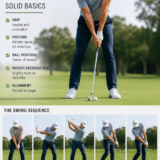
Mastering the art of alignment is crucial for every golfer,no matter the skill level.To set up your swing like a pro, it’s essential to start by understanding the importance of your feet, knees, hipsand shoulders. Your body alignment should mimic the direction your ball is aimed,forming a straight line from your feet through your body to the target. For most shots, aim your feet, knees, hipsand shoulders parallel to the target line, not directly at the target. This slight offset promotes a straighter ball flight and easier release of the clubface. Beginners frequently enough struggle with aligning their body properly, leading to inconsistent shots off line. A simple drill to practice proper alignment involves marking two tees about three feet apart on the ground to represent your ball and a line perpendicular to your target. Stand with these tees directly between your feet,and then adjust until you feel confident you are set up correctly. This drill helps you visualize and understand the importance of square alignment and builds muscle memory for future shots.
Once you have your body aligned correctly, focus on your grip and stance to complete the setup. The grip is often overlooked but plays a vital role in achieving a consistent ball flight. For a grip that offers control and an appropriate release, hold the club with your hands positioned so that the ‘V’ formed between your thumb and forefinger points towards your right shoulder for right-handed playersand left shoulder for left-handed players. This grip alignment can be critical for beginners, as it helps in hitting straighter shots, a common struggle when learning to hit the ball with a consistent distance and direction. Moreover, for more advanced players, adjusting this grip slightly can make all the difference in shaping shots left or right. Your stance width impacts balance and power transfer, so aim for a stance that is slightly wider than shoulder-width for most full swings. This setup ensures stability,leading to better weight shifting throughout the swing. A stable base is also crucial for playing out of challenging lies, like sidehill lies or tough turf conditions. With these elements in place, you’re in a better position to execute the shot you envisage on the course, whether you are driving off the tee or attacking the green.
Finding Your Rhythm Mastering the Tempo for Consistent Shots
The rhythm and tempo in the golf swing are often overlooked aspects of the game, yet they play a crucial role in achieving consistent and powerful shots. A smooth, controlled tempo allows players to maintain the integrity of their swing mechanics throughout the movement, reducing the likelihood of mis-hits or off-balance shots. Beginners can start by focusing on their takeaway, aiming for a slow, intentional movement where the club head lifts up to chest height in about two seconds. This slow lift is the beginning of the swing’s rhythm, setting the stage for a natural acceleration through the ball. For more advanced players, the key lies in replicating this initial slow motion but with a gradual acceleration towards impact. Imagine the clubhead building speed like waves in a river-calm at first, growing stronger as it reaches the apexand peaking at the moment of impact.
To master this concept, it helps to practice specific drills designed to improve your tempo. One such drill involves using a metronome or a stable beat to guide your swing. Start by selecting a relatively slow beat of around 40-50 beats per minute for the rhythm of your golf swing. Focus on matching your swing movements to each beat: one beat for the backswing, another for the transitionand at least two more for the forward swing and follow-through. This repetition trains your body to move in harmony with the rhythm, improving consistency and accuracy. As you become more comfortable with this tempo, gradually increase the tempo of the metronome to mimic a quicker swing while still maintaining a controlled transition from backswing to downswing. By practicing with a metronome,golfers can fine-tune their timing and rhythm,leading to more balanced swings and improved shot-making capabilities.
Green Reading 101 Secrets to Reading and Mastering Putting
Mastering the green involves more than just a smooth putting stroke; it requires a keen eye for reading the subtle nuances of the terrain. One of the first steps in green reading is to understand how the slope affects your putt. When you approach a putt, start by standing behind the ball and visualize the slope as if you were standing on it, feeling the way the ball would roll from your perspective. A critical technique is to focus on the high point of your putt and the degree of slope around it. Beginners might find it helpful to mark the high point with a tee and compare it to where their ball hits the center of the cup.Advanced golfers aim to estimate these points mentally, honing in on the speed and shape of the green.
An frequently enough-overlooked aspect of green reading is the consideration of external factors like yardage, grainand wind.As an example, on a sloping green, the grain can either help or hinder the natural path your ball would take. If the grain is flowing, the ball will tend to break more easily; against the grain, it will resist. A useful drill is to putt from the uphill and downhill sides of a green and observe how the grain impacts your ball’s trajectory. This practice will improve your ability to predict break, which is vital for scoring in tournaments. understanding yardage can influence your choice of putter and stroke speed. Keeping a yardage book or using a rangefinder during practice sessions can help you gauge distance more accurately. These simple yet effective methods aid in fine-tuning your green reading skills, regardless of your handicap.
Driving Distance and Direction Tips for Added Power and Accuracy
When it comes to driving distance, many golfers focus solely on power, frequently enough neglecting the importance of proper direction. To effectively cover the necessary lengths of fairways, especially on the PGA and Champions Tours where driving distance is crucial, it’s essential to balance power with accuracy. A beginner might aim to hit the ball straight down the middle, while more experienced golfers may work on controlling the ball’s direction and curve even at higher speeds. A reliable drill to start with is the ‘square-to-target’ setup, which involves aiming your club face directly at the target and your body parallel to your target line. This helps establish a neutral starting position that can be adjusted based on your level of expertise. Beginners should start by ensuring they are neither over-swinging nor under-swinging, with a goal of consistently hitting their fairway woods and drivers within a target of 200-250 yards while staying within a 10-yard corridor. More advanced players can aim for distances upwards of 260 yards with precision in fairways under 300 yards in length.
Improving your direction and power requires a balanced approach to your swing mechanics. A critical technique is mastering the transition point, where you smoothly shift from backswing to downswing. At this junction, a slight pause or a feeling of connectedness can enhance both distance and control. Beginners frequently enough struggle with timing here, leading to off-center hits and compromised direction.To address this, try incorporating a split-second pause or a sense of ‘rhythm’ just before the downswing to ensure your weight shifts correctly and your hands release the club in unison with your torso. This rhythm can be honed by practicing with a mirror or video recording your swing to observe any inconsistencies. For intermediate players, focus on rotating your hips and shoulders simultaneously during the transition, rather than leading with the arms. This rotational movement can add the necessary power and stability to your strike, enabling you to aim at your desired angle with confidence. Advanced golfers might experiment with varying their grip position or club selection based on the desired amount of fade or draw, providing an extra layer of customization to control distance and direction on challenging holes.