

Golf sits at a unique crossroads of athletic practice, landscape-making, and social ritual. Following its journey from the wind-swept dunes of fifteenth‑century Scotland to the closely managed courses and global tours of today reveals transformations in technique, institutions, and cultural meanings. This essay revisits golf’s long advancement through three connected prisms-how courses are designed,how rules have been written and revised,and how the game is woven into social life-to show how tools,regulations,and social forces together shape golf’s changing identity.The opening section places early play in its environmental and regional setting, highlighting how linksland became the defining arena for early golf and how a shared architectural vocabulary gradually emerged. The next section traces rulemaking from local conventions and primitive club by‑laws to national codes and coordinated international governance, showing how regulation evolved in response to new technologies (clubs, balls, and maintenance machinery) and disputes over fairness, standards of play, and professionalism. The third section situates these technical and institutional developments within social processes: class formation and leisure patterns,imperial and transatlantic diffusion,commercialization and media,and current debates about access,equity,and ecological duty.The analysis draws on archival documents, ancient rule texts, cartographic and design evidence, material‑technical studies, and contemporary discussions about equipment and coaching to map continuities and breaks over time.
Bringing together landscape history, regulatory study, and social analysis, the piece argues that golf’s persistent customs are best read as outcomes of continual negotiation between preservation and innovation. The conclusion points to implications for present policy conversations and future research, where questions of conserving heritage, protecting environments, and widening participation intersect with long-standing concerns about the integrity of play.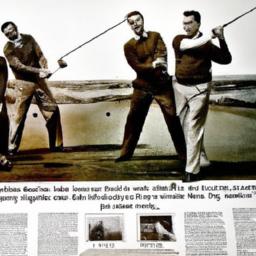
Historical Origins and Early Codification of Golf Rules: Implications for Contemporary Governance
Evidence from legal records and contemporaneous writings places the earliest forms of stick‑and‑ball play in late medieval Scotland, particularly across coastal commons and dunes. In those formative centuries, play was embedded in communal custom rather than organized competition, and implements and balls varied widely in form and construction. That heterogeneity produced a mosaic of local practices-different teeing conventions, scoring habits, and responses to hazards-that had to be reconciled once play began to travel beyond its home regions.
Written rules were introduced gradually as clubs with social standing required reliable procedures for contests and dispute settlement. From the mid‑18th century onward, Scottish societies began producing short rule sets that fixed playing order, scoring norms, and how to deal with impediments. Over the nineteenth century national institutions increasingly assumed the role of harmonizing these divergent local precedents. two governance tools forged in this process remain central today: authoritative rule books, and committees or secretariats responsible for interpretation, amendment, and enforcement.
contemporary administrative systems in golf still reflect these early choices. Modern governance rests on core principles-fairness, clarity, coherence, and sensitivity to local circumstances-that emerged from the historical need to align local custom with inter‑club competition. Typical governance instruments include:
- Uniform equipment and measurement standards that reduce variability in competitive settings;
- Local rule mechanisms enabling committees to adapt play for immediate environmental or maintenance conditions;
- Handicap and eligibility frameworks designed to equalize play across different venues and fields;
- Committee adjudication and appeal channels descended from early club dispute processes.
Codification also helped produce the language of course design: defining hazards, out‑of‑bounds, and relief procedures assumed particular landscape elements that architects could then use deliberately. The two‑way influence between rules and design is clear where regulatory changes-such as adjustments to lost‑ball search allowances or preferred‑lies policies-have prompted architects and turf teams to reposition bunkers, alter green shaping, and reconfigure tee complexes. Thus, updates to the rule book frequently have measurable effects on design priorities and maintenance spending.
Broader social forces-imperial spread, class divisions, and the rise of professional play-have continuously pressured governance systems to negotiate between historical continuity and necessary reform.Institutional custodians must honour tradition while responding to calls for greater inclusion,addressing technological shifts,and meeting environmental responsibilities. A historical view of early codification explains why contemporary rulemaking remains procedural, precedent‑aware, and institutionally rooted rather than purely technocratic.
Standardization, Governing Bodies, and the internationalization of Rulemaking
What began as local custom at links and private clubs evolved, by the late nineteenth century, into formal offices and secretariats that recorded precedents, decided disputes, and issued written guidance-moving golf from folk practice toward a rules‑based sport. Those brief local bylaws expanded over time into comprehensive rulebooks covering stroke play,equipment,course measurement,and player conduct.
National organizations accelerated this consolidation by providing structures for consistent interpretation and appeals; inter‑organizational dialogue then permitted cross‑border concord. Cooperative milestones-most prominently mid‑20th‑century reconciliations and the major joint rewrite completed in 2019-show how bilateral and multilateral collaboration reduced contradictions and created a single, internationally applicable code that still allows for regional accommodations.
Several technical and administrative instruments support modern harmonization. Important elements are:
- Model rules and clarifications: authoritative documents that set out principles and worked examples;
- Equipment conformity standards: lab tests and certification procedures that limit technological divergence;
- Handicap systems: statistically grounded indices that permit equitable competition across countries;
- Course and tournament protocols: measurement standards, teeing regulations, and adjudication procedures ensuring consistent submission.
the following organizations map the institutional architecture that governs golf internationally:
| Institution | Founded | Primary Contribution |
|---|---|---|
| The R&A | 1754 (historic roots) | Early codification, links jurisprudence |
| USGA | 1894 | National standards, equipment testing |
| IGF & regional bodies | 20th century | olympic liaison, international coordination |
Globalizing the rules has had wide social and operational consequences. A coherent international code enabled transnational competition, simplified the transfer of club and course models, and created steady conditions for tours and recreational exchange. Simultaneously occurring, centralized authority has sparked current governance debates over stakeholder depiction, technical regulation of equipment, and cultural inclusion-questions that will shape how golf balances its heritage, innovation, and international credibility in the years ahead.
Evolution of course Architecture: From Traditional Links to Modern Parkland and Resort Courses
- Soil and turf practices that produce forgiving lies;
- Arboricultural framing where trees become strategic and aesthetic devices;
- Constructed water and bunker features used for both beauty and tactical interest;
- Clubhouse and social programming integrated within the course experience.
These traits aligned golf with the leisure preferences of a growing middle class and the emergence of country club culture.
Technological Innovations in Equipment,Turf Science,and Their Implications for Play and Design
Progress in equipment has dramatically changed the interplay between player skill and course form. Modern club heads combine composite materials and precision weighting (including tungsten inserts), while shafts use engineered fibers and tapering to tune launch, spin, and forgiveness. Golf balls have progressed from gutta‑percha to wound cores and, more recently, to advanced multi‑layer constructions with engineered covers and dimple patterns that tailor aerodynamics across different swing speeds. Launch monitors and player‑tracking systems now provide exacting data on carry, spin, and shot shape, supporting personalized fitting and rigorous study of how technology alters shot choices on course.
Turf management has likewise become scientific and data‑driven, merging plant physiology, soil science, and microclimate monitoring. Managers choose species-bentgrass, bermudagrass, zoysiagrass, and newer salt‑tolerant cultivars-based on playability goals and local water constraints. Innovations in rootzone engineering, moisture‑retentive amendments, and precision irrigation governed by soil sensors and NDVI mapping raise surface consistency while lowering inputs.Such measures preserve the play characteristics that designers count on when forming fairways,tees,and green complexes.
The combination of equipment and agronomic change forces designers to rethink classical notions of challenge and parity. With balls flying farther and surfaces firming more quickly, architects counter by narrowing corridors, moving hazards, and reworking strategic angles so that decision‑making and shot execution remain decisive. Typical adaptive moves include:
- Relocating bunkers to intercept current landing areas rather than historical carry distances;
- Adding run‑off zones and sculpted surrounds to react to firmer playing conditions;
- Increasing green complexity and tiering to preserve approach‑shot challenge despite shifting distances.
These interventions help retain the cognitive and technical dilemmas that define high‑quality golf design.
Regulation plays a moderating role in how rapidly equipment innovations reshape play. Governing bodies enforce conforming equipment standards through laboratory testing and technical limits intended to ensure that shot‑making reflects player skill more than purely technological advantage. Designers thus plan against a range of regulatory futures-conservative, permissive, and intermediate-so new builds or renovations remain relevant even if rules tighten or relax.
Looking ahead, artificial intelligence, machine learning, robotics, and advanced sensors promise tighter integration between design, upkeep, and playability evaluation. Predictive turf models driven by climate projections can refine irrigation schedules and species choices, while AI routing tools allow rapid exploration of strategic layouts and pace‑of‑play impacts during preliminary design. The table below summarizes representative technologies, their likely effects on play, and common designer responses.
| Technology | Implication for Play | Designer Response |
|---|---|---|
| Multi‑layer golf balls | Greater carry and roll variability at different swing speeds | Move hazards, alter fairway widths |
| Precision turf sensors | More uniform and predictable surfaces | Shift emphasis to visible strategic contours |
| AI routing tools | Faster evaluation of alternative routings | Test multiple strategic scenarios early in design |
Socioeconomic Dynamics, Class, and Gender: Transformations in Participation and Club Culture
The organizational structure of golf emerged at the same time as formal rules: nineteenth‑century clubs founded by landowners and urban elites converted informal play into institutionalized practice. These associations created not only rule frameworks but also social codes that resolute who belonged. The distinction between amateur “gentleman” players and professional instructors, caddies, or tournament players became a primary social divide, embedding class differences into competitive eligibility, prestige, and access to resources.
Economic development and demographic shifts gradually broadened participation. Industrialization, greater urban incomes, better transport, and more leisure time expanded the playing public, and municipal courses and charitable projects helped lower formal barriers. Mechanisms that aided diffusion included:
- Construction of public and municipal courses offering affordable access;
- Broadcast and digital media turning tournaments into spectator events;
- Corporate sponsorships and company outings embedding golf in business culture;
- Youth development and community coaching programs promoting skills and social mobility.
Gender has long been a central axis of exclusion and reform. For much of its history organized golf created gendered domains-separate ladies’ committees, distinct membership rules, and limited access to facilities-that reflected wider social inequalities. The twentieth century saw persistent contestation: women’s clubs, alternative rule adaptations, and the institutionalization of women’s professional circuits (such as the LPGA) expanded opportunities unevenly.Even today, vestiges of former dress codes, etiquette rules, and leadership imbalances persist despite growing coeducational instruction and mixed events.
Today’s class differences often show up in the split between private‑club culture and public‑course participation. Private clubs continue to offer exclusive amenities,controlled memberships,and high‑end hospitality,while public courses serve a broader-and often more economically vulnerable-cross‑section of players. The table below highlights notable contrasts relevant for policy and sociological analysis.
| Indicator | Private Club | Public Course |
|---|---|---|
| Average Entry Barrier | High (initiation fees, dues) | Low (green fees, walk‑ins) |
| Access to Facilities | Restricted (members & guests) | Open (community users) |
| Typical Demographic | Affluent and corporate patrons | Mixed‑income local populations |
Contemporary tensions reflect competing pressures: globalization and digital platforms have increased visibility and aspirational reach, yet rising costs, land pressures, and entrenched social networks sustain exclusionary patterns.Policy measures-targeted outreach, municipal investment, and governance reforms informed by historical awareness of how class and gender have been encoded into rules and spaces-are essential to align golf’s traditions with wider goals of fair access. Comparative national studies can definitely help identify which institutional interventions most effectively broaden participation.
Global Diffusion and Cultural Adaptation: Strategies for Responsible market Development
Scaling golf responsibly into new regions requires a framework that emphasizes partnership rather than extraction. Projects that ignore local land uses or ceremonial landscapes risk reputational and operational failure. Successful market entry therefore combines ethnographic research and legal due diligence from the outset to align investments with social and environmental contexts.
Practical strategies for culturally attuned growth include:
- Co‑creation: engage community leaders and local players in design, rules adaptation, and programming to ensure cultural fit;
- Capacity building: fund coaching, caddie programs, and administrative training to develop local expertise;
- Hybrid governance: create public‑private stewardship models that safeguard communal access and ecological values;
- Contextual marketing: tailor membership and pricing models to local socioeconomic realities rather of exporting luxury templates.
These approaches increase legitimacy and reduce the risk of displacement and backlash.
Environmental responsibility and equitable economics should be non‑negotiable parts of market plans. Designers and developers should specify adaptive water use,low‑impact turf practices,and habitat corridors,while contractual structures and hiring practices should prioritize local inclusion. Embedding environmental impact assessments and social metrics into business plans-tracking participation diversity, local employment, and affordability-helps balance commercial goals with community wellbeing and climate resilience.
| Region | Primary Cultural Priority | Adaptation Focus |
|---|---|---|
| Scotland (legacy sites) | Heritage preservation | Conservation + community access |
| East Asia | sport modernization | Junior development + urban integration |
| sub‑Saharan Africa | Local livelihoods | Skills training + low‑water design |
| Middle East | Private clubs & tourism | Energy efficiency + cultural programming |
Turning intentions into results requires monitoring, evaluation, and adaptation. Establish clear KPIs-participation diversity, local hiring levels, ecological indicators, and fee affordability-and make periodic audits public to ensure accountability. Partnerships with universities, NGOs, and municipal bodies support longitudinal research and training that embed golf into civic life without commodifying or sidelining local traditions. Such evidence‑based, participatory pathways make market growth both legitimate and resilient.
Environmental Sustainability and Land Use Policy: Recommendations for Greener Course Management
Managing golf landscapes responsibly requires aligning operations with environmental regulation and best practice stewardship. International guidance emphasizes compliance with water‑quality standards and, where relevant, securing environmental approvals before major earthworks. Building ecological risk assessment into every design and maintenance stage reduces liability, enhances resilience to climate variability, and protects shared water resources.
Operational measures should aim for multifunctional land use that supports habitat while preserving playability. Recommended actions include:
- Hydrological zoning-preserve wetlands and riparian buffers to filter run‑off and sustain biodiversity;
- Integrated pest and turf management-use biological controls, precision dosing, and drought‑tolerant grasses;
- Native vegetation corridors-shrink mown areas, create wildlife habitat, and reduce invasive species spread;
- Water stewardship-meter irrigation, use reclaimed water where feasible, and adopt seasonal schedules;
- Low‑carbon materials and machinery policy-specify lower‑embodied‑carbon supplies and optimize equipment use to cut emissions.
To turn these goals into enforceable practice, clubs should adopt permit‑and‑monitor systems similar to national regimes for land alteration and effluent control.Regular monitoring, transparent reporting, and adaptive management cycles enable continuous improvement and regulatory compliance. Working with agencies and following international environmental standards can also unlock technical support and conservation funding.
| Indicator | Short‑Term Target (2-3 yrs) | Priority |
|---|---|---|
| Potable water saved | Reduce consumption by 25% | High |
| Non‑play mown area | Increase native cover by 15% | Medium |
| Pollutant load in run‑off | Establish baseline; aim for 10% reduction | High |
Long‑term success depends on embedding ecological objectives in charters and land‑use covenants. Joint management committees, incentives for biodiversity offsets, and proactive stakeholder engagement-including indigenous groups, local governments, and conservation NGOs-make environmental performance socially legitimate and deliverable. Greener course management is a systemic shift-moving from single projects to landscape‑scale stewardship that reconciles sporting heritage with planetary limits.
Policy Recommendations for Governance,Accessibility,and Preservation of Historical Course Integrity
Stewarding historically notable golf sites requires governance arrangements that balance private stewardship with broader public interest.Create autonomous conservation councils composed of landscape historians,agronomists,municipal planners,and community representatives to evaluate proposed changes; adopt transparent decision‑making that publicly archives minutes,environmental assessments,and design rationales; and require structured public consultation before major redevelopments so that adaptive use honors historical intent while meeting contemporary needs.
Access should be a stated policy priority.Implement tiered access systems to harmonize preservation and community use-examples include reserved community tee times, discounted rate days, and scholarship programs for underrepresented groups-and require routine design audits to meet accessibility standards across clubhouses, paths, and practice areas. Suggested operational steps include:
- guarantee a set number of public rounds each week at historic venues;
- Offer targeted fee waivers or sliding‑scale memberships for local residents;
- Invest in multi‑modal transit links and secure bicycle parking to reduce transport barriers.
| Policy Pillar | Illustrative Action |
|---|---|
| Governance | Conservation council with published charter |
| Accessibility | Community tee‑time quota |
| Preservation | Conservation easement & maintenance covenant |
Legal instruments-conservation easements, heritage listings, and restrictive covenants-offer durable protections for course character. Pair these tools with design guidance that prioritizes original routing, landmark features, and key vistas while permitting limited, reversible modifications for safety and sustainability.
Financial and regulatory incentives can accelerate preservation and inclusion without unduly burdening owners. Propose tax credits for certified conservation work, grant programs for native landscape restoration, and performance‑based subsidies for water‑ and energy‑efficiency upgrades. Promote public‑private partnerships linking heritage tourism to stewardship funding, and require adaptive‑use proposals to include legally enforceable maintenance plans backed by escrow or insurance to secure long‑term care.
Adopt a robust adaptive monitoring system that connects governance, access, and preservation through measurable indicators. Carry out audits every 3-5 years to assess physical state, participation patterns, and ecological outcomes; convene annual stakeholder forums; and publish an open dashboard reporting metrics such as public round allocations, invasive species incidence, and restoration spending. Supported by training programs for staff and community stewards, these measures help ensure policies remain transparent, evidence‑based, and responsive to changing social and environmental contexts.
Q&A
Note: the web‑search results supplied with your query did not return direct scholarly sources for all historical claims; this Q&A thus synthesizes established historical consensus and the article link you provided for further reading: https://golflessonschannel.com/golfs-historical-evolution-rules-courses-and-society/
Q1: What broad historical phases mark golf’s development?
A1: Scholars typically divide the game’s past into phases such as: (1) early proto‑golf and localized codification in scotland (late medieval-18th century); (2) club consolidation and regional export within Britain (18th-19th century); (3) international spread and professionalization to north America and across the Empire (late 19th-early 20th century); (4) technological and architectural modernization (mid‑20th century); and (5) globalization, harmonized governance, and heightened environmental and inclusion concerns (late 20th-21st century).
Q2: When and where were the first written rules produced?
A2: The earliest surviving rule set dates to 1744 and is attributed to the Company (or Gentlemen) Golfers of Leith near Edinburgh. These initial rules were concise and tailored to local conditions. Later institutional rulemaking centralized authority with bodies such as the Royal and Ancient Golf Club of St Andrews (established 1754) and the USGA (founded 1894).
Q3: how did rulemaking shift from local codes to modern international governance?
A3: Local customs governed early play, but growing inter‑club competition and national organizations in the 19th century pushed toward standardization. The R&A and the USGA emerged as principal authorities and, over the twentieth century, coordinated revisions that culminated in joint rule books-most recently producing major consolidated updates in 2019-striving for a single code applicable across jurisdictions while allowing local adaptations.
Q4: Which rule changes most shaped modern golf?
A4: Important changes include standardizing teeing areas and hole sizes, formalizing stroke and match play formats, codifying penalty relief and out‑of‑bounds rules, and regulating equipment characteristics.Recent rule updates have addressed slow play, banning certain anchoring techniques, and clarifying repair of the playing surface. Rules have continuously adapted to tackle technological, inclusivity, and safety questions.
Q5: how did course architecture evolve?
A5: Courses began as links on coastal commons using natural contours.During the nineteenth century designers began to shape holes intentionally; the early twentieth century produced celebrated architects (e.g., Charles Blair Macdonald, Harry Colt, Alister MacKenzie, Donald Ross) who combined strategic thinking, aesthetics, and routing. Later advances included large‑scale earthworks, irrigation and drainage systems, complex green complexes, and a shift from punitive design to strategic and naturalistic approaches.
Q6: What course typologies exist and how did technology expand them?
A6: Major typologies include links (coastal sands), heathland, parkland, and desert/municipal courses. Mechanized earthmoving, improved turfgrass science, irrigation, and pest control enabled construction in previously unsuitable landscapes and supported year‑round play, greatly extending golf’s geographic footprint.
Q7: How have social factors affected access to golf?
A7: Golf began as an elite pastime in scotland.The nineteenth century’s transport improvements, urbanization, and municipal investment broadened access. Nevertheless, exclusions based on gender, class, and race persisted in club rules and culture. Social movements, legislation, and proactive policies by governing bodies and municipalities have expanded opportunities, but disparities in land access, cost, and culture remain important obstacles.
Q8: How did Britain and the U.S. help spread golf globally?
A8: British military, colonial administrators, and expatriate communities carried golf across the Empire in the late nineteenth and early twentieth centuries, founding clubs abroad. Concurrently,the U.S. professional and commercial golf sphere-boosted by mass media and television-helped export tournaments, equipment innovations, and architectural models worldwide.
Q9: What role has equipment change played?
A9: Equipment shifted from wooden “feathery” balls to gutta‑percha, then wound rubber‑core balls, and now to engineered multi‑layer balls; clubs moved from hickory to steel and then to composites. These changes greatly influenced distance and control, forcing architects and regulators to respond by lengthening courses, repositioning hazards, and updating equipment standards.
Q10: How have traditions adapted?
A10: Rituals-respect for the course, etiquette, and an emphasis on integrity-have deep roots but have relaxed in many contexts. Dress codes and gender segregation have loosened in numerous places, while core values such as rules observance remain central. Institutional traditions (for example, links customs at St Andrews) persist even as broader social norms evolve.
Q11: What environmental and social challenges confront golf?
A11: Environmental issues include water demand, chemical inputs, habitat loss, and carbon emissions. Social challenges involve equitable access, diversity, land‑use conflicts, and balancing preservation with modernization. Responses include sustainability programs, native‑plant and “rewilding” initiatives, water‑saving technologies, and community access projects.
Q12: How have governance and handicapping systems changed?
A12: Handicapping evolved from informal local methods to nationally administered systems and, more recently, to the unified World Handicap System (implemented in 2020) that standardizes calculations across countries. Governance has moved toward international cooperation-principally between the R&A and USGA-to harmonize rules and support international competitions.
Q13: How does material culture relate to social meaning?
A13: Course architecture, clubhouses, and equipment both reflect and reproduce social hierarchies: stately clubhouses and formal routing signaled status historically, while municipal courses and lower‑cost gear helped reframe golf as civic and recreational. Material change thus both expresses and reshapes who plays and why.
Q14: What methods illuminate golf’s history?
A14: Interdisciplinary approaches-archival research, landscape and architectural studies, oral histories, labor and economic analysis, and environmental science-offer complementary insights. Comparative and transnational methods help track diffusion and variation across different cultures and colonial contexts.
Q15: Where can readers go to learn more?
A15: Useful resources include original rulebooks and club minutes (for instance, early Leith and St Andrews records), authoritative histories of golf and course architecture, official publications from the R&A and USGA, academic journals in sport history, and recent research on environmental and social aspects. The article you provided (https://golflessonschannel.com/golfs-historical-evolution-rules-courses-and-society/) is a practical starting point; for deeper academic work consult university libraries and specialized journals.
If desired, I can:
– Expand any Q&A into a longer essay with references.
– Compile a bibliography of scholarly books and articles on golf history and design.
– Produce classroom questions or discussion prompts based on the topics above.
Wrapping Up
From modest, communal play on Scottish sands to a globally organized sport, golf’s history demonstrates how course design, rule formation, and social change interlock to produce material and cultural outcomes. Course types-from exposed links to lush parkland and engineered resort layouts-trace shifts in aesthetic priorities,technological capacity,and land‑use economics. Concurrently, the development and institutionalization of rules by organizations such as the R&A and USGA reflect a continual negotiation between preserving tradition and ensuring comparability across nations.
Taken together, these threads show that golf’s past resists a single linear story. Instead, it is a field of competing tendencies: preservation vs. innovation, exclusivity vs.inclusion, and local distinctiveness vs. global standardization. The persistence of certain customs alongside rapid technological and institutional change highlights the sport’s capacity to adapt while also prompting reflection on which voices and histories are most visible.
Future research will benefit from truly interdisciplinary approaches that weave landscape and environmental history with sociology, economics, and archival studies-especially to address urgent issues such as course climate resilience, technological impacts on play, and broadening participation across race, gender, and class. Such scholarship can both enrich historical understanding and inform practical policy for the sport.
Ultimately, a historically informed lens reveals how golf-though often experienced as a bounded leisure activity-is entangled with larger social, environmental, and institutional transformations. Recognizing those entanglements is crucial for historians, practitioners, and policymakers who want to preserve valuable traditions while steering the game toward greater equity and sustainability.

Pick the Perfect Title: 10 Engaging Options for Articles about Golf’s Courses, rules & Culture
Below are 10 evocative title options you provided. This article helps you pick a tone (dramatic, scholarly, playful), refines titles for different target audiences (SEO-focused, magazine feature, academic), and gives actionable SEO and editorial recommendations so your piece ranks, reads well, and converts.
The Original Title Options
- From Links to Legends: How Courses, Rules, and Society Shaped Golf
- Fairways Through Time: The Story of Golf’s Design, rules, and Culture
- Teeing Off Through History: How Course Architecture and Rulemaking Forged Modern Golf
- Shaping the Game: A Journey Through Golf’s Courses, Codes, and Social Rise
- Greens, Governance, and Gentlemen: The Untold Evolution of Golf
- From Pebble Beaches to Championship Greens: the Evolution of Golf
- Rules, Routes, Reputation: How Golf Became a Global Game
- The Making of Modern Golf: Course Design, Rulebooks, and Social Change
- Sweeping Drives, Strict Codes: Tracing golf’s Transformation
- Echoes on the Green: How Architecture, Rules, and Society Built Golf
Which Tone Fits Each Title?
Choose a tone that matches your audience and distribution channel.
- Dramatic: Titles that use evocative language – e.g., “From Links to Legends” or “Echoes on the Green.” Best for magazine features and long-form storytelling.
- Scholarly: Direct and precise – e.g., “The making of Modern Golf” or “Teeing Off Through history.” Best for academic journals, trade publications, and deep-dive blogs.
- playful: Lighter, punchy phrasing – e.g., “Sweeping Drives, Strict Codes” or “Rules, Routes, Reputation.” Best for consumer blogs, newsletters, and social posts.
SEO-Optimized Title Variations (by Tone and Audience)
Below are refined titles tailored for specific objectives. Each includes primary keyword focus for search optimization (keywords italicized).
Dramatic – Magazine Feature
- From Links to Legends: The Rise of Modern Golf Course Design and Culture
- Echoes on the Green: How Course Architecture and Rules Shaped Golf
Scholarly – academic / Trade
- Teeing Off Through History: A Study of Golf Course Architecture, Rulemaking, and Social Change
- The Making of Modern golf: Course Design Principles and the Evolution of Golf Rules
Playful – SEO & Consumer blog
- From Pebble beaches to Championship Greens: A Beginner’s Guide to Golf Course Design
- Rules, Routes, Reputation: How golf History Built the Game We Play Today
Keyword Strategy & On-Page SEO checklist
Target keywords naturally across the page. Primary and secondary keywords to consider:
- Primary keywords: golf course design, course architecture, golf history
- Secondary keywords: hole layout, green complexes, bunkering, links golf, championship greens
- Long-tail phrases: history of golf course design, how golf rules evolved, lasting golf course practices
On-page checklist:
- Include the primary keyword in the H1 or first H2 and within the first 100 words.
- Use H2/H3 structure for readability and keyword distribution.
- Write a meta title (50-60 characters) and meta description (140-160 characters) that include target keywords.
- Optimize URL slug: short, keyword-rich – e.g., /golf-course-design-history
- Use descriptive alt text for images containing keywords (e.g.,”links-golf-course-architecture.jpg”).
- Implement internal links to related pages (lessons,course reviews,history articles) and authoritative external links (golf associations,design firms).
- Use schema markup (Article, BreadcrumbList) to improve SERP appearance.
Fast Title comparison Table
| title | Tone | SEO Strength | Best Use |
|---|---|---|---|
| From Links to Legends | Dramatic | high (with “golf course design”) | Magazine longread |
| Teeing Off Through History | Scholarly | High (research queries) | Academic / trade piece |
| Rules, Routes, Reputation | Playful | Medium (shareable) | Blog / newsletter |
Structural Template for the Article Body (SEO & UX Kind)
Use clear sections for both human readers and search engines. Suggested H2/H3 layout:
- H1 – Title
- H2 – The Ancient Arc: Links, Rules, and Social Context
- H2 – Course Architecture: Key Design principles
- H3 – Hole Layout & Routing
- H3 – Bunkering & Green Complexes
- H3 – Environmental & Sustainability Considerations
- H2 – Rules & Governance: How Rulemaking Changed Play
- H2 – Culture & Class: Golf’s Social Evolution
- H2 – Benefits & Practical Tips (for writers/publishers)
- H2 – case Studies: Iconic Courses and What They Teach
- H2 – Title Selection Checklist + A/B Testing Ideas
Content Blocks – What to Include in Each Section
The Historical Arc: Links, Rules, and Social Context
Write 200-300 words that trace golf from coastal links to inland parkland and championship venues, weaving in how early rules and club cultures influenced design and play. Use keywords: golf history, links golf, course architecture.
Course Architecture: Key Design Principles
Explain the fundamentals of golf course design: routing, strategic hole design, green complexes, and bunkering.emphasize these actionable phrases: hole layout, green complexes, bunkering, playability.
Rules & Governance: How Rulemaking Changed Play
discuss pivotal rule changes that affected equipment and course design (e.g., club/ball technology, relief rules) and how governing bodies influence course setup during tournaments. Include keyword: golf rules.
Culture & Class: golf’s Social Evolution
Cover how club membership, gender, and public access shaped the sport’s image and led to new course types (municipal courses, resort courses). Use keyword: golf culture.
Environmental & Sustainability Considerations
Describe modern sustainable practices: water management, native grasses, reduced chemical use, and habitat restoration. Keywords: sustainable golf course, course maintenance.
Benefits & Practical Tips (for Writers & Publishers)
- Use one clear keyword focus per article and 2-3 secondary keywords to avoid dilution.
- Keep titles under 70 characters for SERP display; meta descriptions under 160 characters.
- Place the most critically important information in the first 150 words.
- Include high-quality images of course architecture,annotated diagrams of green complexes,and short video clips to increase dwell time.
- Encourage social sharing with ready-made pull quotes and image cards optimized for Open Graph/Twitter Cards.
Case Studies: Short Teaching examples
1. Links vs. Parkland – Routing and Wind
Contrast an exposed seaside links routing (emphasis on ground play and wind) with an inland parkland layout (tree-lined corridors, strategic bunkering). Call out keywords: links golf, routing.
2. Bunkering as Strategy
Show how classic designers used pot bunkers to demand shot-shaping, while modern architects sometimes use collection bunkers to influence landing areas. Keyword: bunkering.
title Selection Checklist + A/B Testing Ideas
- Dose the title include the primary keyword or a clear synonym? If not, add it to a subtitle or H2.
- Is the title aligned with the tone and the target audience? (Magazine readers vs. academics vs. casual golfers)
- Perform A/B tests on headlines using email subject lines and social ad copy: test dramatic vs. scholarly phrasing and track CTR and time on page.
- Create two meta titles: one optimized for click-through (emotion) and one precise for search (keywords). Monitor impressions and clicks via Google Search Console.
Practical Example: Three Finalized Title + Metadata Sets
SEO-focused (Blog / Organic Search)
Title: From Pebble Beaches to Championship greens: The Evolution of Golf Course Design
meta title: Evolution of golf Course Design | Links to Championship Greens
Meta description: Explore the history and principles of golf course design-routing, bunkering, green complexes-and how rules and culture shaped the modern game.
Magazine Feature (Dramatic)
Title: From Links to Legends: How Course Architecture and Culture Built the Game We Love
Meta title: From Links to Legends – Golf’s Design & Culture
Meta description: A longform look at iconic courses, bold architects, and the cultural currents that turned seaside links into championship greens.
Scholarly (Academic / Trade)
Title: Teeing Off Through History: Course Architecture, Rulemaking, and the Social Formation of Golf
Meta title: Course Architecture & Golf Rulemaking – A Historical Study
Meta description: An analytical review of how rule changes and course design principles shaped competitive play and club culture throughout golf history.
Recommended Word Count & Structure
- Magazine feature / longread: 1,800-3,500 words with images,pull-quotes,and sidebars.
- SEO-focused evergreen article: 1,200-1,800 words with H2/H3 breakdowns, internal links, and a FAQ or quick tips section to capture featured snippets.
- Academic paper: 4,000+ words with references, methods, and formal citations.
Final Editorial Tips
- Match title tone to distribution: social-first pieces can be playful, while print features should be dramatic and evocative.
- Use surveys or heatmaps to test which headline drives deeper engagement on your site.
- Keep a short subtitle or deck under the main title to place additional keywords and clarify the article’s angle.
- Always optimize images and use descriptive file names and alt text to boost image search traffic (e.g., “classic-links-bunkers.jpg”).
If you tell me the target audience (e.g., recreational golfers, golf course architects, academic readers) and preferred tone (dramatic, scholarly, playful), I’ll refine three headline options and provide matching meta title, meta description, URL slug, and a suggested H1/H2 structure ready for WordPress publishing.


