
The golf swing represents a complex motor task in which coordinated multisegmental motion produces precision outcomes under variable environmental and strategic constraints. this article examines the golf swing through dual lenses-kinematic analysis of movement patterns and tactical analysis of in-play decision-making-too bridge biomechanical understanding with performance-oriented strategy. By synthesizing empirical findings from motion-capture studies, force-plate and electromyographic investigations, and applied research on course management and shot selection, the aim is to elucidate how mechanical execution and tactical choices interact to determine shot quality and competitive success.
from a kinematic perspective, the swing is characterized by temporal and spatial coordination among the lower limbs, pelvis, trunk, and upper extremities, with key metrics including segmental angular velocities, sequencing (proximal-to-distal transfer), swing plane consistency, clubhead speed, and variability in joint kinematics. Contemporary methodologies-high-speed optical motion capture, inertial measurement units, ground-reaction force analysis, and musculoskeletal modeling-have refined our understanding of the kinetic chain, energy transfer, and the biomechanical constraints that underlie repeatable ball-striking. Attention to within-subject variability, interindividual differences (e.g., morphological and versatility constraints), and the effects of fatigue and perturbation provides a foundation for evidence-based instruction and individualized training interventions.
Tactically, effective swing execution is embedded in decision-making processes that encompass target selection, club choice, risk-reward assessment, and adaptive strategies under pressure. Cognitive factors-attentional focus, situational awareness, and pre-shot routines-moderate the translation of biomechanical capability into on-course performance.Integrative approaches that combine kinematic profiling with situational analytics can inform coaching prescriptions, guiding players toward swing adaptations that align with strategic objectives and environmental demands. The following sections review current empirical evidence, identify methodological limitations, and propose avenues for research that link movement mechanics to tactical optimization in both novice and elite populations.
Kinematic Foundations of the Golf Swing: Joint sequencing, Angular Momentum, and Recommendations for Efficient Force Transmission
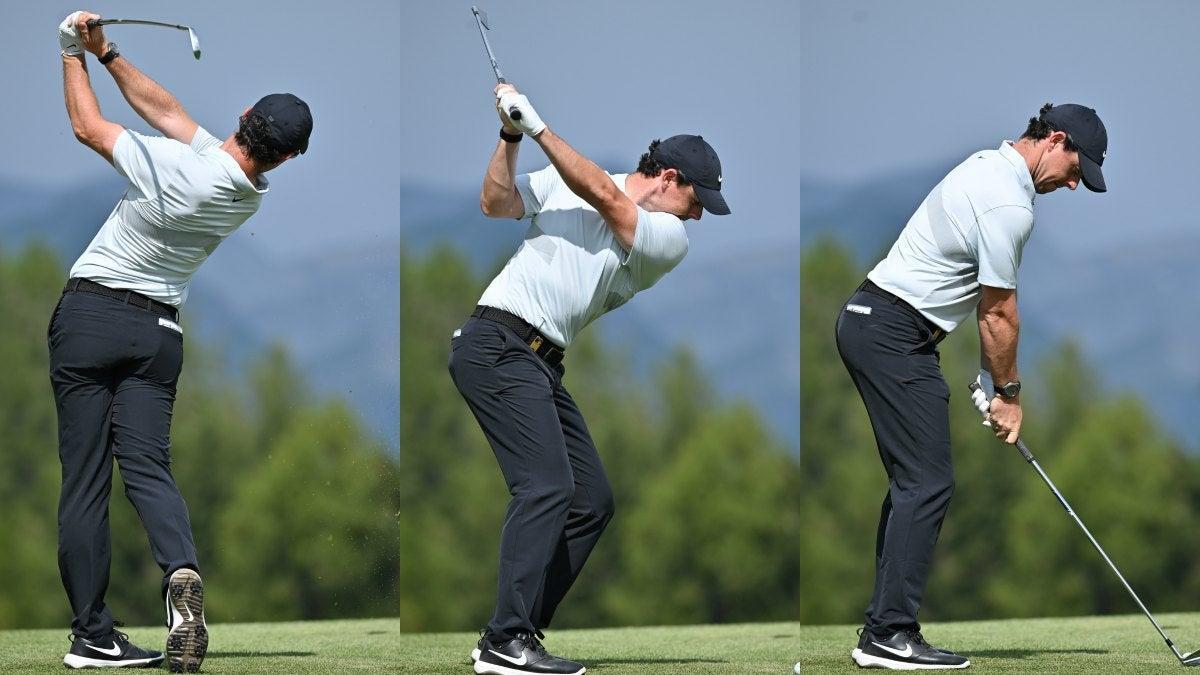
Effective performance emerges from a disciplined kinematic chain in which proximal segments initiate motion and distal segments refine and accelerate it. The classic biomechanical paradigm-frequently enough described as a proximal-to-distal sequence-positions the pelvis and lower thorax as prime movers that generate rotational momentum, followed by the shoulders, arms, wrists and finally the clubhead. Precise temporal sequencing (timing of segment peak angular velocities) is more critical than maximal velocity of any single segment: synchronized peaks create constructive interference of velocities, whereas mistimed peaks dissipate energy. Empirical observations and motion-capture studies consistently associate superior outcomes with consistent pelvis-first initiation and delayed wrist unhinging to preserve kinetic chain integrity.
Angular momentum and moment-of-inertia dynamics underlie how rotational energy is stored and released through the swing. The differential rotation between pelvis and thorax (the so-called X-factor) increases elastic torque across the torso, thereby elevating potential angular momentum available to distal segments. Conservation principles imply that reducing effective moment of inertia near impact (e.g., compressing the arm-club system through appropriate forearm rotation and wrist set) concentrates angular velocity at the clubhead. Coaches shoudl therefore target both controlled generation of torque from the ground and strategies that manipulate segmental inertia to maximize clubhead speed at ball contact.
Efficient force transmission requires minimizing kinematic “leakage” and preserving mechanical continuity across joints. Common leakage mechanisms include premature wrist release (casting), lateral sway that decouples the lower and upper torso, and loss of postural integrity at impact. Analogous to hydraulic systems-where intact seals,pistons and properly aligned components prevent pressure loss and preserve flow (see pump component literature on seals and pistons)-the musculoskeletal system benefits from well-timed joint stiffness modulation and alignment to transmit impulse efficiently. Maintaining a stable base, optimizing hip-shoulder separation, and sequencing joint extension/flexion so that each segment hands off angular momentum cleanly will reduce dissipative losses and improve transfer to the clubhead.
Applied recommendations emphasize reproducible sequencing, mechanical economy, and measurable cues. Key practice elements include:
- Ground-to-pelvis initiation – emphasize weight shift and lead-leg bracing to create a torque foundation.
- Delayed wrist release – maintain wrist hinge until after maximal shoulder-to-arm acceleration to protect stored elastic energy.
- Separation control – practice torso-pelvis X-factor drills to increase safe elastic loading without over-rotating.
- Temporal drills – use step-through swings, paused-top repetitions, and med-ball rotational throws to ingrain sequencing.
| Segment | Primary Role | Training Cue |
|---|---|---|
| Hips/Pelvis | Torque initiation | “Drive the left hip” |
| Thorax/Shoulders | Energy transfer & X-factor | “Rotate through the chest” |
| Arms/Wrists | Velocity amplification | “Hold the hinge – release late” |
Segmental Coordination and Intersegmental Timing: Optimizing Pelvis, Thorax, and Arm Interplay to Enhance Clubhead Velocity
Segmental dynamics-understood in physiological literature as the interaction of discrete body segments-provide the conceptual foundation for optimizing rotational power transfer in the swing. Framing the pelvis, thorax and upper-limb system as coordinated segments clarifies how angular momentum is generated, conserved and handed off along the kinematic chain. Empirical kinematic analyses show that maximizing clubhead velocity depends less on any single segment’s peak output and more on the relative phasing and velocity gradients between segments; effective performance therefore emerges from controlled differences in angular displacement and timing rather than brute force from one area alone.
From a biomechanical perspective, the downswing is best modeled as a proximal-to-distal sequence with intersegmental timing that creates constructive summation of segmental velocities. Key measurable markers for optimization include:
- Pelvic rotation initiation (timing relative to top of swing)
- Trunk (thorax) peak angular velocity and the magnitude of pelvis-thorax separation
- Forearm and club angular acceleration culminating in peak clubhead speed near impact
Representative timing and peak velocity benchmarks
| Segment | Typical Peak Angular Velocity | Relative Timing (downswing %) |
|---|---|---|
| Pelvis | ~300-500 deg/s | 20-35% |
| Thorax | ~600-1,000 deg/s | 40-65% |
| Forearms/Club | >1,000 deg/s (clubhead) | 90-100% (impact) |
Translating kinematic insight into training requires drills and feedback that emphasize timing and coordination rather than isolated strength.effective interventions include: separation drills (stabilize pelvis while allowing thorax rotation), tempo-modulation drills (use metronome or rhythmic swings to preserve intersegmental phasing), and accelerative release drills (train progressive distal acceleration).Augment these with objective feedback-video or inertial sensor metrics-targeting the three markers above to iteratively tune the velocity gradients and timing windows that produce reliable increases in clubhead speed.
Ground Reaction Forces and Weight Transfer Strategies: Practical Exercises to Improve Stability, balance, and Power Output
Ground reaction forces (GRF) are the biomechanical interface between the golfer and the playing surface; conceptually this relates to definitions of “ground” as the surface of the earth and the substrate against which force is applied (see Cambridge Dictionary, dictionary.com). From a kinematic perspective, GRF vectors provide the primary external impulse that must be managed to convert rotational energy into translational clubhead speed. Precise alignment of force submission in the sagittal and transverse planes reduces compensatory motion, improving repeatability of the strike while preserving postural integrity throughout the swing.
Applied practice must target three discrete objectives: enhancing the ability to generate vertical impulse, controlling mediolateral shear, and sequencing weight transfer. Core drills that address these aims include the following,each with an explicit mechanical rationale: ground-stamp variations to sensitize vertical force timing; step-through swings to rehearse lead-side loading; and single-leg holds to improve stabilizing torque. These exercises emphasize rate-of-force growth and proprioceptive feedback rather than mere strength, aligning neuromuscular adaptations with on-course demands.
To operationalize training and measure progress, use simple metrics and short structured sessions. The table below provides an example protocol suitable for field use, organized by exercise, targeted mechanical outcome, and recommended frequency. this pragmatic scheme supports reproducible data collection for both coaches and practitioners.
| Exercise | Primary Outcome | Frequency |
|---|---|---|
| Ground‑stamp | Vertical impulse timing | 3×/week |
| Step‑through swing | Lead-side loading | 2×/week |
| Single‑leg hold | Stability & torque | Daily |
Progression should be criterion-based rather than time-based; advance complexity only when objective markers (e.g., reduced mediolateral center-of-pressure excursion, increased peak vertical GRF at transition) are met. Coaching cues that consistently produce reliable force vectors include focusing on a short, firm initial push into the ground, maintaining a responsive hip hinge, and sequencing the pelvis ahead of the shoulders at transition.complementary drills:
- Tempo‑restricted swings to refine sequencing
- Reactive balance taps for perturbation tolerance
- Loaded eccentric lowers to control deceleration
These elements together build stability, balance, and power output in a manner consistent with kinematic principles and tactical on-course requirements.
Temporal Dynamics and Motor Control of the Swing: Prescriptive drills for Consistent Tempo, Timing, and Strike Location
Temporal structure in the stroke is a primary determinant of reproducible kinematic patterns and consistent strike location. Contemporary biomechanical analyses demonstrate that the temporal segmentation of the swing-onset of initiation, peak backswing, transition, and acceleration through impact-governs intersegmental coordination and energy transfer through the kinetic chain.Maintaining a stable tempo reduces high-frequency noise in angular velocities of the torso, arms, and club, which in turn narrows the variance in clubface orientation at contact. Emphasizing **tempo ratios** (for example, 3:1 backswing:downswing) provides a simple, empirically grounded prescription that links perceptual cues to measurable kinematic outcomes.
Practical motor-control interventions should be explicit, measurable, and progressively loaded. The following unnumbered list presents targeted drills that map directly to identified control goals; each drill uses a clear external cue to facilitate automaticity and minimize conscious intersegmental corrections:
- Metronome Tempo Drill – swing to an external beat to engrain a consistent backswing-to-downswing ratio.
- Pause-at-Top Drill – brief (0.3-0.5 s) pause to improve timing of the transition and sequencing of hip-to-shoulder rotation.
- Impact Tape Feedback – immediate outcome feedback to close the action-perception loop for strike location.
- Pressure-Plate Awareness Drill – integrate sole-pressure cues to stabilize weight-shift timing and preserve clubhead arc geometry.
each drill is designed to alter a single control parameter (tempo, transition timing, feedback salience, or ground reaction phasing) so adaptations are specific and measurable.
For implementation and monitoring, simple metrics facilitate objective progress tracking. the table below (WordPress table class applied) summarizes practical targets and primary biomechanical cues to monitor during practice:
| Drill | Target Metric | Main Cue |
|---|---|---|
| Metronome Tempo | 3:1 ratio ±10% | Beat-guided backswing |
| Pause-at-Top | 0.3-0.5 s pause | Controlled transition |
| Impact Tape | Desired strike area % | Immediate visual feedback |
Use video frame-rate analysis or simple phone slow-motion to quantify the metrics and link perceptual cues to kinematic change.
From a motor-control perspective, practice should progress from high-feedback, low-variability conditions to lower-feedback, higher-variability environments to promote robust, adaptable control policies. Early stages rely on augmented feedback (metronome, impact tape) and blocked repetitions to reduce task-space variance and reinforce desired synergies; later stages adopt randomized targets and dual-task constraints to develop feedforward predictions and resilience under pressure. Coaches should emphasize **outcome-prescriptive cues** (strike zone, tempo) rather than internalized joint-by-joint instructions, thereby encouraging the nervous system to self-organize efficient intersegmental timing that preserves both tempo and strike location under competitive perturbations.
Tactical Integration of Swing mechanics with Shot Selection: Aligning Biomechanical Constraints to Course Management and Risk Assessment
Effective alignment of a player’s kinematic profile with on-course decision-making begins by defining a measurable biomechanical envelope-the reproducible ranges of joint motion, sequencing, and tempo that a golfer can sustain under pressure. Quantifying variables such as peak clubhead speed, attack angle variability, and torso-pelvic separation creates a map of feasible shot shapes and distances. Coaches can then construct a constrained set of reliable shot options that respect those mechanical limits,ensuring tactical choices are both enterprising and attainable rather than idealized and brittle.
Translating mechanical constraints into tactical prescriptions requires explicit risk assessment and probabilistic thinking. Practitioners should convert biomechanical metrics into likelihoods of executing particular shots from specific lies and wind conditions. Useful heuristics include:
- Conservative thresholding – choose targets inside the 85-90% execution band for pressured shots;
- Adaptive shaping – prefer lower-risk trajectories when variability increases (e.g., into a headwind);
- Recovery prioritization – select clubs that maximize error tolerance when the penalty for miss is severe.
These tactical rules create a bridge between deterministic kinematics and the stochastic realities of course play.
Practical application benefits from succinct decision aids. The table below exemplifies how a few common biomechanical constraints map to tactical shot selection and short coaching interventions.
| Biomechanical Constraint | Tactical Choice | Short Intervention |
|---|---|---|
| Limited hip rotation | use partial swings / narrower targets | Mobility + sequencing drills (3-6 weeks) |
| Inconsistent tempo | Choose higher-lofted clubs; play for center fairway | Metronome and rhythm repetitions |
| Lower peak speed | Shorter carry strategy; emphasize accuracy | Power-phase conditioning |
Implementation is an iterative, data-driven process: continually revise tactical prescriptions as the player’s biomechanical thresholds shift through training or fatigue. Integrating launch-monitor analytics,shot-tracking on course,and standardized pressure tests allows coaches to estimate the expected value of alternative plays and to set actionable thresholds for when to accept increased risk. Ultimately, superior course management emerges from a disciplined feedback loop that synthesizes kinematic reality, statistical assessment, and purposeful practice.
Individualized Adaptations Based on Anthropometry and Physical Capacity: Assessment Protocols and Tailored Training Interventions
Inter-individual morphology drives both the kinematic solutions available to a player and the specific injury risks that emerge during repetitive rotational loading.Precise baseline evaluation should therefore include segmental anthropometry (segment lengths, circumferences, and estimated segmental mass), body composition, and joint range-of-motion metrics (hip rotation, thoracic rotation, ankle dorsiflexion). Complementary functional assessments-such as three-dimensional motion capture of the swing, force-plate quantification of ground reaction vectors, and field tests for rotational power-allow clinicians and coaches to map morphology to movement patterns and tactical tendencies.
Assessment data should be synthesized into mechanistic interpretations rather than isolated scores. For example, restricted lead-hip internal rotation commonly correlates with early hip extension and a compensatory increase in lateral bending and upper-torso uncoupling, which manifests as loss of clubface control under pressure. Conversely, players with long segmental moment arms can achieve high clubhead speed but may demand greater sequencing fidelity; if sequencing deficits are identified, tactical adaptations (e.g.,modified shot selection or altered launch conditions) may be required while remediation proceeds.
Interventions must be prioritized from capacity to transfer: first restore joint integrity and mobility, then rebuild foundational strength, and finally develop rotational power and sport-specific sequencing. Recommended emphases include mobility restoration (thoracic and hip rotation drills), eccentric and unilateral strength (single-leg deadlifts, split squats), and rotational power training (medicine-ball throws, band-resisted swings). Practical, evidence-aligned modalities for implementation include:
- 3D-guided movement retraining with progressive load
- Plyometric and ballistic rotational drills to increase rate of force development
- Isolated anti-rotation core work to improve torque transfer
These elements should be selected and dosed according to the athlete’s diagnostic profile and competitive calendar.
Periodization and ongoing monitoring close the loop between assessment and performance. re-assess every 6-12 weeks with targeted metrics (e.g., change in peak rotational velocity, ground-reaction asymmetry, and swing sequencing indices) and use objective thresholds to progress from remediation to high-speed, late-stage training. The table below provides a concise mapping to guide initial program emphases based on common morphological clusters:
| Profile | Mechanical Characteristic | Primary Training Focus |
|---|---|---|
| Long-limbed / tall | High moment arms; greater angular inertia | Sequencing drills; unilateral stability; RFD development |
| Short/compact | Lower leverage; quicker angular accel. | Rotational power; mobility for larger ROM |
| High adiposity / low relative power | Reduced relative force output | Strength-to-weight enhancement; metabolic conditioning |
Use these guidelines as a template-individual readiness, pain history, and tactical goals should always refine final prescriptions.
Applying Technology and Objective Feedback to Coaching: Best Practices for Motion Capture, Force Plate Analysis, and Progressive Practice Planning
Integrating 3D motion capture with force plate analysis requires methodological rigor: ensure **synchronization** between kinetic and kinematic streams, adopt consistent marker sets and anatomical landmarks, and select sampling frequencies that preserve impact-bandwidth events (recommended ≥200 Hz for clubhead and ≥1000 Hz for GRF when high-frequency transients are analyzed). calibration procedures should be documented and repeated for longitudinal tracking, and normative baselines should be established for cohort- and skill-level comparisons rather than relying on single-subject heuristics.
Objective feedback is only actionable when processed and presented within a validated pipeline. apply transparent filtering and event-detection protocols (e.g., zero-lag Butterworth filtering with reported cutoffs), compute derived metrics with explicit definitions (joint angles, segment angular velocities, X‑factor, peak resultant GRF), and provide both summary and epoch-based outputs. Coaches should emphasize **interpretable** metrics and avoid information overload by prioritizing a small set of reproducible indicators, such as:
- Peak clubhead speed (epoch: late downswing)
- X‑factor and X‑factor stretch (torso-pelvis separation)
- Lead leg peak vertical force and rate of force development
- COP excursion during weight transfer
Translating measurements into progressive practice plans requires an evidence-based bridging strategy: diagnose the primary kinetic/kinematic deficit, prescribe targeted motor tasks that manipulate constraint variables, and operationalize progression with measurable milestones. A simple periodized progression can be encoded as follows:
| Phase | Duration | Primary Objective |
|---|---|---|
| Assessment | 1-2 sessions | Establish baselines & validity of measures |
| Technique | 2-6 weeks | Isolated motor control & targeted drills |
| Integration | 2-8 weeks | Transfer to speed & on-course variability |
maintain critical standards for validity, ecology, and ethics: routinely cross-validate lab-derived improvements with on-course performance metrics, ensure informed consent and secure handling of biomechanical data, and prioritize interventions with demonstrated transfer. Use objective feedback as a complement-not a substitute-for skilled observation and athlete-reported experience; the most effective programs are iterative, data-informed, and tailored to the individual’s tactical demands and learning rate.
Q&A
1. What are the primary kinematic constructs used to describe the golf swing?
– Kinematic descriptions of the golf swing typically include segmental rotations (pelvis, thorax/shoulders, arms, wrists), intersegmental coordination (timing relations such as the kinematic sequence or proximal-to-distal sequencing), joint angles and angular velocities, clubhead trajectory and orientation, and linear variables (center-of-mass translation, clubhead linear velocity). Derived metrics such as X‑factor (trunk-pelvis separation), X‑factor stretch, peak angular velocities, and timing of peak velocities are commonly reported.
2.What is the “kinematic sequence” and why is it important?
– The kinematic sequence refers to the temporal ordering of peak angular velocities from proximal to distal segments (pelvis → thorax → lead arm → club). Efficient sequence timing maximizes energy transfer along the kinetic chain, increasing clubhead velocity while minimizing compensatory joint loads. deviations from an optimal sequence can reduce performance and increase injury risk.
3. How are joint kinetics integrated with kinematics in swing analysis?
– Kinetics (forces and moments) complement kinematics by explaining how observed motions are generated. typical kinetic measures include joint moments and powers (hip, lumbar, shoulder), ground reaction forces (GRFs), and club-hand interaction forces. Inverse dynamics-using segmental kinematics, mass properties, and external forces-yields joint kinetics that are critical for assessing load distribution and mechanical demands during the swing.
4. What roles do ground reaction forces and lower-limb mechanics play?
– GRFs provide the external impulse that initiates and modulates rotational and translational motion. Efficient use of the lower limbs (weight shift, bracing, and timing of force application) supports the generation of rotational power and contributes to proximal-to-distal sequencing. asymmetries or mistimed force application can compromise energy transfer and increase spinal or hip loading.
5.How can neuromuscular dynamics be characterized in the golf swing?
– Neuromuscular dynamics are characterized by the timing and amplitude of muscle activation (electromyography), stretch-shortening cycle utilization (e.g., trunk and pelvic pre-stretch), inter-muscular coordination, and neural strategies for feedforward and feedback control. These dynamics underpin the ability to coordinate high-speed rotational actions with stability and precision.
6. Which measurement technologies are used for kinematic and kinetic assessment?
– Laboratory-grade 3D optical motion capture, inertial measurement units (IMUs), high-speed video, force plates, instrumented clubs/grasps, and surface EMG are the primary tools. Each has trade-offs: motion capture and force plates offer high accuracy but are laboratory-bound; IMUs and instrumented clubs enable on-course measurement but require careful calibration and validation.
7. What analytic methods are applied to time-series kinematic data?
– Time-series analyses include inverse dynamics, time-normalization of swing phases, principal component analysis, statistical parametric mapping, cross-correlation, continuous relative phase and vector coding for coordination, and machine-learning approaches for pattern recognition. These methods help quantify coordination patterns, variability, and phase-specific differences.8. How does shot-tactical decision-making interact with kinematic execution?
– Tactical decisions (club selection, shot shape, risk tolerance, target line) impose constraints on the required swing kinematics (e.g., reduced backswing for low-ball flights, altered face angle for draws/fades). Tactical constraints alter the movement problem and therefore the kinematic/kinetic solution chosen by the performer. Good coaching integrates tactical requirements with biomechanical feasibility.
9. How do environmental and situational factors influence tactical and kinematic choices?
– wind, lie, green position, hole context (match-play vs.casual round), and psychological pressure modulate tactical choices and can induce adapted kinematic patterns (e.g., abbreviated swings, altered weight distribution). Ecologically valid research and on-course assessments are necessary to capture these interactions.10. What are the common injury mechanisms related to swing mechanics?
– Recurrent injuries are most prevalent in the lumbar spine, medial/lateral elbow, shoulder, and wrist. Common mechanisms include repetitive high torsional and shear loading of the spine (especially with early extension and loss of posture), excessive lateral bending combined with rotation, sudden high peak moments at the elbow during impact, and overload from poor sequencing or muscular fatigue.
11. What biomechanical markers indicate elevated injury risk?
– Markers include excessive lumbar axial rotation combined with lateral flexion, high peak lumbar extension moments, abrupt extension of the spine during transition, large asymmetries in GRF and hip moments, high peak elbow valgus/varus moments around impact, and reduced eccentric control of trunk musculature. Elevated movement variability under fatigue may also signal risk.
12. How should coaches translate kinematic findings into practical instruction?
– Coaches should prioritize movement goals that are mechanically meaningful (e.g., improving pelvic rotation timing, enhancing thoracic mobility, promoting proximal-to-distal sequencing) and use simple, validated drills that emphasize key constraints (task, environmental, performer).Feedback should be objective (video, inertial metrics) when possible, and progression should address mobility, stability, and power in an integrated manner.
13. What training interventions have the strongest evidence for improving swing kinematics and performance?
– Multimodal programs combining strength/power training (rotational medicine-ball work, Olympic-style lifts where relevant), mobility work (thoracic and hip rotation), velocity-specific practice (overspeed/underspeed swings, targeted ball-strike drills), and neuromuscular control (rotational stability exercises) have demonstrated improvements in clubhead speed and movement quality. Specificity to the swing and progressive overload are essential.
14. How can variability in movement be interpreted in golf biomechanics?
- Not all variability is detrimental. Functional variability can allow adaptability to varied shots and environmental perturbations. Excessive or uncontrolled variability-particularly in critical phases like transition and impact-can reduce repeatability and increase injury risk. Analysis should distinguish between task-relevant and task-irrelevant variability.
15. What differences are seen between skill levels, sexes, and ages?
– Elite players typically display greater rotational ROM (thorax and pelvis), higher peak angular velocities, more effective proximal-to-distal sequencing, and lower intra-subject variability in critical phases. Sex and age differences often reflect strength, flexibility, and anthropometry (e.g., elite male drivers often generate higher absolute clubhead speeds). Older players may adopt swing changes to manage mobility or injury, emphasizing technique modifications and load management.
16. Which metrics best predict performance (distance, accuracy)?
– Clubhead speed is the principal predictor of distance, but effective ball-strike (centeredness), launch angle, spin rate, and face-to-path relationship determine carry and dispersion. Kinematically, metrics such as peak thorax angular velocity, timing of peak pelvis-to-thorax separation, and efficient sequencing correlate with greater clubhead speed and consistent strike location.
17.How can wearables and on-course technology be used responsibly?
– Wearables (IMUs, instrumented clubs) enable ecologically valid monitoring but require validation against gold-standard systems and careful handling of sensor drift and attachment variability. Coaches and researchers should report reliability metrics, use standardized protocols, and interpret data within the context of individual baselines and day-to-day variability.18. What methodological considerations should researchers prioritize in future studies?
– Priorities include increased ecological validity (field-based studies), longitudinal and interventional designs to infer causality, larger and more diverse cohorts (female, amateur, older adults), standardized reporting of metrics and phases, multimodal data integration (kinematics + kinetics + neuromuscular), and transparent reproducible analysis pipelines.
19. How can tactical training be integrated with biomechanical optimization in practice?
– combine scenario-based practice (simulated course-management situations) with targeted biomechanical drills. For example, practice low-trajectory punch shots under tactical constraints while addressing trunk flexion control and shortened backswing kinematics. Use objective measures (ball flight, launch monitor metrics) to evaluate tactical consequences of kinematic changes.
20. what are the key takeaways for practitioners and researchers?
– Effective swing performance arises from the integration of kinematics, kinetics, and neuromuscular control within the constraints of shot tactics and environment. Diagnostics should combine motion and force assessment with on-course validation. Coaching interventions should be evidence-informed, individualized, and address mobility, strength/power, sequencing, and tactical decision-making.Research should move toward longitudinal, ecologically valid studies and multimodal measurement to bridge lab findings with practical performance outcomes.
If you would like, I can convert this Q&A into a one-page handout for coaches, propose assessment protocols (lab and field), or draft sample training progressions that align tactical scenarios with specific biomechanical objectives.
In sum, a dual lens that combines kinematic analysis with tactical understanding provides a richer, more actionable account of the golf swing than either perspective alone. Kinematic investigation offers precise, quantifiable descriptions of motion-temporal sequencing, joint kinematics, clubhead trajectory, and variability patterns-that illuminate the mechanical foundations of repeatable performance. the tactical perspective contextualizes those mechanics within the decision-making demands of play-shot selection, risk-reward tradeoffs, course management, and adaptation to environmental constraints-thereby clarifying which mechanical features matter most in competition. Together, these perspectives reveal how movement solutions are both constrained by human biomechanics and shaped by strategic imperatives.
For practitioners and researchers, the integration of kinematic and tactical approaches carries several practical implications. Coaches should pair objective motion-capture or wearable-derived metrics with situationally representative practice tasks that preserve the decision-making elements of play; interventions should be individualized, recognizing inter-player variability in both mechanics and tactical preferences. Researchers must continue to prioritize ecological validity,robust longitudinal designs,and standardized outcome measures to assess transfer from practice to competition. Emerging technologies-high-fidelity motion capture, inertial sensors, and data-driven analytics-offer promising tools for linking biomechanical signatures to tactical outcomes, but their application should be guided by rigorous validation and multidisciplinary collaboration.
ultimately, advancing golf performance requires an evidence-based, integrative framework that respects the complexity of human movement and the strategic nature of the sport. By aligning detailed kinematic insight with the realities of tactical choice,coaches,athletes,and scientists can develop training and assessment protocols that not only refine swing mechanics but also enhance decision-making under competitive pressure,thereby fostering more resilient and effective performance on the course.
Kinematic and Tactical Perspectives on the Golf Swing
Why combine kinematics and tactics?
Optimizing the golf swing requires both mechanical precision (the kinematic side) and smart on-course decisions (tactical thinking).Kinematics – the geometry of motion describing position, velocity and acceleration – gives coaches and players the language to quantify swing mechanics. Tactical thinking turns that mechanical capability into lower scores by choosing the right shots, managing risk, and controlling course strategy.
Kinematic fundamentals for better ball striking
In kinematics we focus on how the body and club move through space; we don’t immediately attribute forces. Applied to golf, the key measurable variables are:
- Clubhead speed – peak linear speed of the clubhead before impact (linked to distance).
- Angular velocity - rotation rates of the hips, torso and shoulders (core of rotational power).
- Shaft lean and clubface orientation – angles at impact that determine launch and spin.
- sequencing (kinematic sequence) - order and timing of pelvis → torso → arms → club rotation to maximize energy transfer.
- Center-of-mass transfer – how weight shifts during the swing, affecting balance and consistency.
Swing phases and their kinematic priorities
| Phase | Kinematic focus | Tactical takeaway |
|---|---|---|
| Address / Setup | Posture, grip, ball position | Choose stance for intended shot shape |
| Backswing | Rotation angle, wrist set | Set up for trajectory (low/high) |
| Downswing / Transition | Sequencing & weight shift | Commit to target & tempo |
| Impact | Clubface alignment & impact position | Select club and aim for landing zone |
Core kinematic concepts every golfer should track
- Kinematic sequence: Efficient energy transfer follows a proximal-to-distal pattern – hips initiate rotation, shoulders follow, then arms and club. Poor sequencing reduces clubhead speed and increases inconsistency.
- Angular momentum and rotational inertia: Increasing torso rotation without losing posture maximizes stored energy. But over-rotation without control makes accuracy suffer.
- Tempo and timing: The ratio of backswing to downswing (commonly ~3:1 for amateurs/pros) controls rhythm and repeatability. Measure tempo with metronome drills.
- Impact kinematics: Loft, face angle, attack angle and swing path at impact determine launch angle, spin rate and dispersion.
- Sequence variability: Small differences in timing produce large ball-flight changes – this is why video and motion-capture analysis are so valuable.
Tactical perspectives: turning mechanics into smarter golf
Tactics in golf are about maximizing the value of each shot given your strengths and the course situation. Integrating kinematics with tactics creates actionable game plans:
Pre-shot tactical checklist
- Course features: pin position, hazards, wind and lie.
- Self-awareness: current club distances, dispersion pattern, and confidence level with each club.
- Shot selection: choose a shot that aligns with your consistent kinematic strengths (e.g., if your driver dispersion is right, play an aim that uses a fade).
Examples of kinematic-informed tactics
- If data shows a weak hip rotation (low angular velocity), favor controlled target golf – hit more fairway woods or long irons and play to the middle of greens.
- When your swing tempo is solid but clubhead speed is down,optimize equipment (shaft flex,loft) and focus on increasing rotational speed via gym drills rather than changing technique mid-round.
- If impact data shows consistent toe strikes,move the ball slightly back in stance and check sequencing to avoid late release.
Practical drills and training to merge kinematics with tactics
Drills should be measurable and repeatable. Thes exercises link a mechanical outcome to a tactical benefit on the course.
Drills
- Sequencing Tape Drill: Place adhesive markers on shoulders, hips, and wrists. slow-motion swings to practice initiating with hips, then shoulders, then arms. Tactical benefit: more predictable dispersion under pressure.
- Tempo Metronome Drill: Use a 3:1 metronome (backswing:downswing). Hit 10 balls maintaining tempo. Tactical benefit: improved consistency when hitting shots under stress.
- Impact Bag Drill: Short swings into a soft bag to feel forward shaft lean and low point control. Tactical benefit: better control over launch and spin around the greens.
- targeted Fairway Drill: On the range, set up landing areas for tee shots. Use clubs and swing adjustments that fit your kinematic strengths to hit those zones. tactical benefit: course-management practice that reduces risk.
Fitness and kinematic gains
- Rotational mobility (thoracic spine) improves turn and increases angular velocity.
- Hip strength and stability support efficient weight transfer and better sequencing.
- Reactive power (medicine-ball rotational throws) translates to faster clubhead speed without sacrificing control.
Data & technology: measuring kinematics for tactical gains
Modern tools turn kinematic measures into tactical decisions:
- Launch monitors (track spin rate, launch angle, clubhead speed): help select clubs and adjust strategy for given wind/lie.
- High-speed video and motion capture: reveal sequencing problems and allow corrective drill prescriptions.
- Wearables and IMUs: provide rotation rates and tempo metrics during on-course play for real-world feedback.
How to use the data tactically
- if launch monitor shows higher-than-expected spin on driver, change tee height or back off loft to reduce ballooning on windy holes.
- If dispersion clusters toward a miss, plan tee aims and landing zones to use that miss to your advantage.
- Use average carry and total distance numbers to select safer clubs into greens when pin position or hazards demand precision.
Case studies: applying kinematic-tactical thinking on the course
Case study A – The Accurate Driver: an amateurS data showed consistent clubhead speed but a fade bias off the tee. Tactical change: aim left and use a slight inside path drill to bias a draw when needed. Result: lower scoring average on long par 4s by reducing forced layups.
Case study B – The Distance Seeker: A player had low angular velocity in the torso and poor sequencing, limiting carry with the driver. Tactical + kinematic approach: focused rotational mobility and sequencing drills in practice, switched to a more forgiving 9° driver during tournaments. Result: modest increase in carry and much narrower dispersion.
Practice session template (sample)
| Segment | Minutes | Focus |
|---|---|---|
| Warm-up & mobility | 10 | Thoracic turns,hip openers |
| Sequencing drills | 15 | Slow to full-speed reps |
| Launch monitor work | 20 | Record spin/launch for 3 clubs |
| on-course tactical practice | 30 | Targeted holes,playing smart |
| Short game & pressure shots | 15 | chipping/putting under conditions |
common mistakes when merging kinematics and tactics (and how to fix them)
- Overfitting to tech data: Don’t chase tiny swing-speed gains at the cost of consistency. Fix: prioritize repeatable impact conditions.
- Ignoring the tactical context: A powerful swing doesn’t always mean the right club. Fix: select shots based on risk/reward and your measured dispersion patterns.
- Chasing swing changes mid-round: Large technical tinkering during play increases variability. Fix: keep tactical choices simple and reserve technical changes for practice.
FAQs: Swift answers
- Q: What is the single most notable kinematic metric? A: Consistent impact conditions (face angle and low-point control) – they most directly affect dispersion.
- Q: How do I choose a shot when wind and hazards are present? A: Use your club carry and dispersion averages to pick a landing zone that minimizes penalty risk.
- Q: Should I prioritize speed or tempo? A: Tempo first for repeatability; speed can be developed once you have a reliable sequence.
Benefits and practical tips
- Benefit: Data-driven practice converts time on the range into on-course scoring enhancement.
- Tip: Keep a simple stats sheet (fairways hit, greens in regulation, average proximity from pin) to track tactical improvements after kinematic training.
- Tip: Use a launch monitor for meaningful sessions, but practice tactical scenarios on-course to build decision-making under pressure.
Blending kinematic understanding with tactical decision-making is how many golfers transform raw swing mechanics into consistently lower scores. Train the body to produce reliable motion, then let tactical intelligence decide how and when to use that motion on the course.