
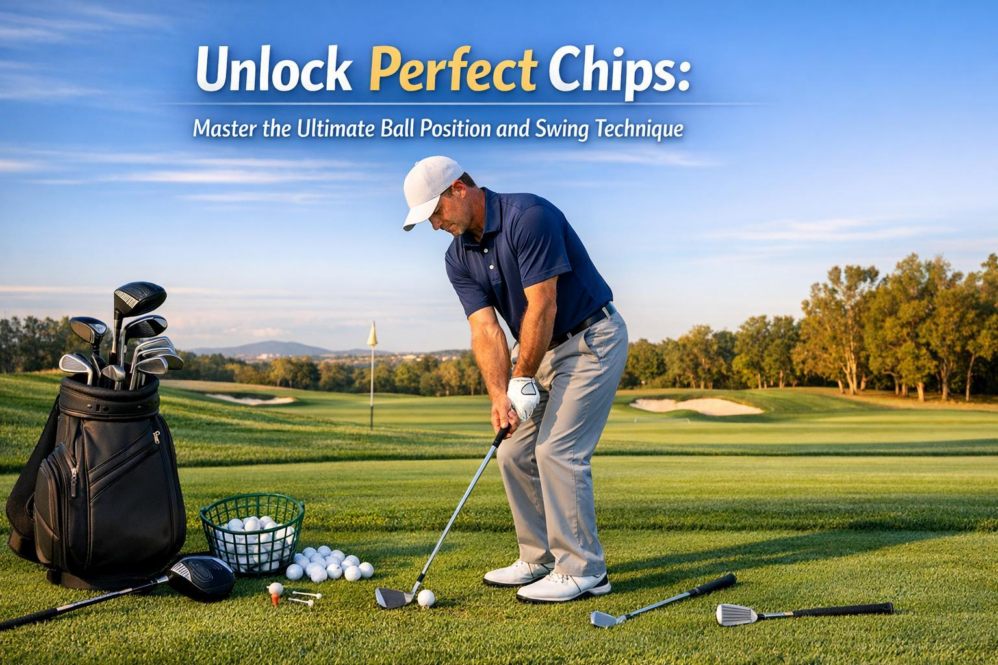
Mastering the Ideal Contact Point for Reliable Chipping
Achieving consistent contact with the sweet spot on your clubface during chip shots starts with a well-structured setup that encourages precise ball striking. Place the ball slightly behind centre in your stance-approximately 1 to 2 inches behind your lead heel-to promote a descending blow, which is essential for clean contact and optimal ball trajectory. Adopt a narrow stance with your weight predominantly on your front foot (around 60%-70%) to stabilize your lower body and minimize unwanted lateral movement during the short chip stroke. Positioning your hands just ahead of the ball at address creates a forward shaft lean, ensuring the clubhead contacts the ball before the turf. this setup not only enhances consistency but also helps prevent common mishits such as fat or thin shots, often caused by incorrect ball placement or weight distribution.
Equally crucial is understanding the swing mechanics that bring the club’s sweet spot into contact with the ball. Your chip stroke should mimic a controlled pendulum motion,driven mainly by the shoulders with minimal wrist involvement,preserving the clubface angle and avoiding flipping. Aim for a smooth, downward strike by accelerating slightly through impact and finishing low, which improves accuracy and spin control. A practical drill to develop this sensation involves placing a tee just ahead of the ball and practicing striking the ball cleanly without disturbing the tee; this reinforces hitting the club’s center and clean turf contact. Advanced players can experiment with subtle changes in loft or face angle to manipulate trajectory and spin, adapting to course conditions like tight lies or damp turf.
On the course,consistent sweet spot contact is a vital scoring tool rather than just a technical skill. For instance, when chipping near slick greens or from uneven lies, moving the ball slightly forward can reduce ground interference and produce a higher, softer landing shot. Conversely, from tight lies or firm soil, positioning the ball a bit further back encourages a lower, running chip that rolls toward the target. Regularly practicing drills that focus on landing the ball within a 2-3 foot radius of a target builds precision under pressure and boosts confidence in diverse conditions. Carrying these dependable contact habits into competitive play minimizes shot variability and helps lower scores by ensuring consistent ball flight, spin, and rollout-key elements every golfer must master for a strong short game.
The Impact of Ball Position on Swing Dynamics and Control
Adjusting the ball position within your stance is a fundamental yet often underestimated factor in refining your golf swing and enhancing shot control. Depending on the club and desired shot shape, shifting the ball slightly forward or backward can significantly influence the clubface’s angle of attack and swing path. Such as, placing the ball just ahead of center when using mid-irons encourages a slightly ascending strike, promoting crisp contact and launching the ball higher with optimal spin.Beginners may find consistent contact by positioning the ball at the center of their stance, while more experienced players frequently enough move the ball one to two inches forward for longer irons or woods and slightly back for wedges or chips. This simple adjustment affects the club’s loft at impact, allowing better control over trajectory and distance, especially when navigating tight pin placements or varying turf conditions.
When playing around the greens, fine-tuning ball position is equally critical for effective chipping and pitching. Positioning the ball back in your stance encourages a steeper angle of attack,resulting in a crisp,downward strike that minimizes ground contact and launches the ball higher with controlled rollout. This technique is particularly useful on firm greens or tight lies,where precision outweighs power in scoring opportunities. A helpful practice routine involves setting the ball just behind the front foot’s instep and maintaining a stable lower body through a short, smooth stroke. Additionally,favoring your lead foot with your weight helps maintain a descending strike. Experimenting with ball position across different turf conditions enhances adaptability and short game versatility, reducing common errors like hitting behind the ball or scooping, which cause inconsistent contact and poor distance control.
Incorporating ball position adjustments into your overall course management strategy also strengthens your mental approach and shot selection.When faced with challenging lies such as uneven ground or thick rough, moving the ball forward in your stance helps maintain balance and prevents deceleration through impact. Conversely, in windy conditions or when a lower ball flight is needed, playing the ball more centrally or back offers greater control and helps the ball cut through the elements. Golfers of all skill levels benefit from practicing deliberate ball position changes, which improve feel and awareness, making the swing more intuitive. Effective drills include using alignment rods to mark ball positions for different clubs and shots, then hitting repeated shots to build muscle memory.Ultimately,mastering ball position adjustments transforms your swing mechanics and shot confidence,essential for lowering scores and maintaining control on every hole.
Key setup Tips for Precision and Accuracy in Short-Game Shots
A reliable and consistent setup is the cornerstone of accurate shots, especially around the greens where precision is crucial. Start by setting your stance width and posture: position your feet about shoulder-width apart for stability, with knees slightly bent to maintain balance. Focus on ball placement-when chipping, placing the ball just inside your back foot encourages a downward strike that promotes crisp contact and controlled rollout. Align your hips,shoulders,and feet parallel to the target line to ensure the clubface travels along the intended path,reducing unwanted side spin.Incorporate a slight forward shaft lean (hands ahead of the ball at address) to keep the clubhead low and accelerate through impact, enhancing shot consistency and height control.
Refining your setup also involves adapting to course conditions and shot types. On tight lies or firm turf, shifting about 60% of your weight onto your front foot helps ensure the clubhead compresses the ball first rather than bouncing off the ground. In softer turf, a more centered weight distribution allows the club to release naturally, aiding spin control. To develop this adaptability, try drills like the “gate drill”, where two alignment sticks create a narrow path for your club to swing through without ground contact before hitting the ball. Additionally, practice landing shots on different target areas of the green using markers; this hones precision and height control, vital for scoring under pressure.
understanding how your setup influences your overall course management can elevate your short game and scoring potential. Beginners benefit from simplifying their setup by minimizing needless movement and focusing on a compact swing,which builds confidence and repeatability. Advanced players can experiment with subtle changes in ball position and hand placement to shape shots-such as fading around hazards or running the ball close to the green’s edge.Incorporating mental focus techniques like a consistent pre-shot routine and visualizing shot trajectory complements technical adjustments and helps maintain composure in varying weather or course conditions. Remember, a meticulous setup not only improves physical execution but also fosters trust in your technique, leading to more confident and aggressive scoring opportunities on any course.

Unlock Perfect Chips: Master the Ultimate Ball Position and Swing Technique
The Importance of Ball Position in Golf Chipping
When it comes to refining your golf chipping, ball position plays a crucial role in controlling trajectory, spin, and distance.Proper ball placement can be the difference between a snagged shot landing in the rough or a smooth chip rolling perfectly onto the green.
Generally, the optimal ball position for chip shots is slightly back of center in your stance. This promotes a crisp strike and more control, especially in varying turf conditions.
How Ball Position Influences Your Chip Shot
- Forward Ball Position: Increases loft but decreases control; ball tends to fly higher.
- Center Ball position: A balanced trajectory with moderate spin and accuracy.
- Back Ball position: Promotes a downward strike leading to lower flight and better roll.
Step-by-Step Guide to Achieving the Perfect Ball Position
| Step | Description | Tip |
|---|---|---|
| 1. Stance Setup | Position your feet about shoulder width apart to maintain balance. | Keep a slight open stance with your front foot pulled slightly back. |
| 2. Locate the Ball | Place the ball just behind center, roughly aligning with the inside of your back foot’s heel. | Experiment by shifting the ball a half-inch to find your personal sweet spot. |
| 3. Weight Distribution | Shift your weight to your front foot, about 60-70% to promote crisp contact. | This prevents hitting behind the ball and encourages downward strike. |
| 4. Clubface Alignment | Keep the clubface square or slightly open depending on the desired shot shape. | An open face helps with higher chips and softer landings. |
Mastering the Swing Technique for Chip Shots
Once the ball position is dialed in,the next step to perfect your chips is developing a consistent and repeatable swing technique.This involves the mechanics of your backswing, downswing, and follow-through.
Key Elements of an Effective Chipping Swing
- Minimal Wrist action: Keep wrists firm to maintain control and prevent flicking.
- Short, Controlled Backswing: A small takeaway promotes precision over power.
- Accelerated Downswing: Maintain clubhead speed through impact for crisp contact.
- Steady Follow-Through: A smooth finish ensures proper trajectory and spin.
Common Mistakes to Avoid
- Hitting the ball too far forward in stance causing thin shots.
- Overusing wrists leading to inconsistent strikes.
- Standing too upright or too far from the ball disrupting swing path.
Choosing the Right Club for Your Chip Shots
your ball position and swing technique work hand-in-hand with the golf club you select. Each club affects the trajectory, spin, and roll differently, so understanding club characteristics is key.
| Club | Loft | Ideal Chip Shot Use | Ball Position Suggestion |
|---|---|---|---|
| Pitching Wedge | 44° – 48° | Longer chips with moderate roll | Center to back of stance |
| Sand Wedge | 54° – 58° | Short chips around bunkers or softer landing | Just behind center |
| Lob Wedge | 58° – 64° | High flying chips with quick stop on green | forward to center |
Benefits and practical Tips for Consistent chipping
Mastering ball position and swing technique brings multiple benefits to your short game:
- Improved accuracy: control the landing spot and roll for closer approach shots.
- Better Distance Control: Consistent strike leads to precise yardage control.
- Lower Scores: Efficient chipping reduces the number of putts per hole.
Pro Tips for Practice:
- Use alignment sticks to visualize stance and ball position during practice.
- Practice with different clubs to understand how ball position affects trajectory.
- Film your swing from the side to analyze your ball contact and follow-through.
- Incorporate varied lies and turf conditions to simulate real course scenarios.
Case Study: How Pros Adjust Ball Position for Pin-High Chips
Professional golfers often adjust the ball position slightly forward when faced with shorter chips aiming for a higher trajectory and softer landing near the pin. Such as, on tight pins on firmer greens, players will position the ball just ahead of center and slightly open the clubface to increase loft. This technique minimizes roll and maximizes stopping power.
Firsthand Experience: Developing Confidence with ball Position
Many golfers find that spending extra time perfecting ball position during practice drills pays dividends during rounds. One player shared, “Once I learned to place the ball just behind center with my sand wedge, my chips became more predictable. My confidence skyrocketed when I started landing the ball consistently near the hole rather of too long or short.”


