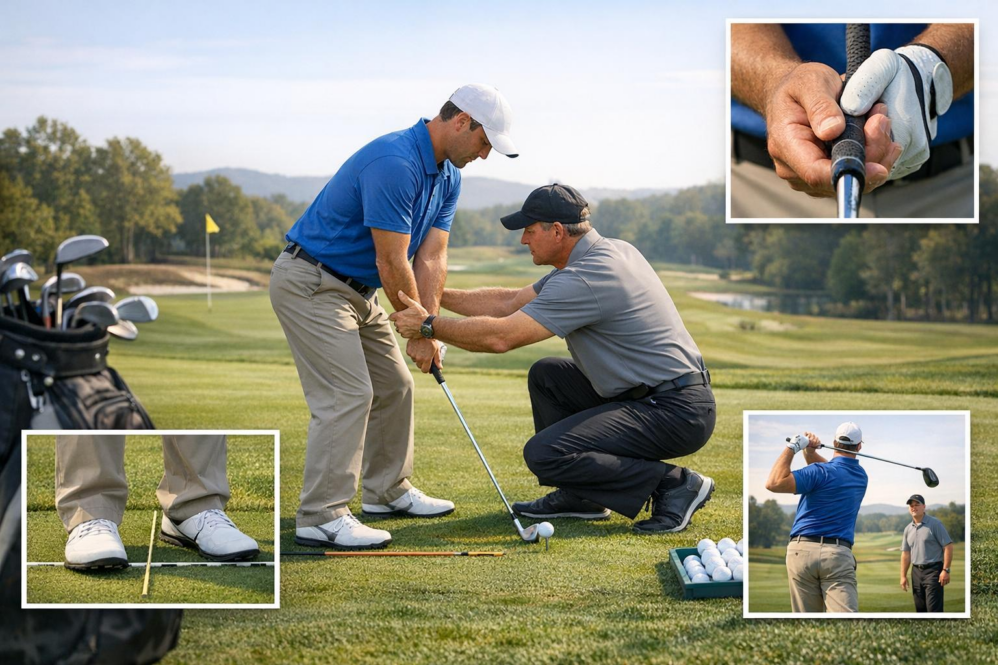
Understanding the Foundations of the Single-Plane Swing for Effortless Power
Mastering the single-plane swing begins with establishing a consistent and repeatable setup that aligns the club shaft, arms, and shoulders on a single plane, typically tilted at about 30 to 35 degrees from vertical. This alignment simplifies the swing path, reducing excessive wrist breakdown and promoting a natural, effortless rotation through the ball. To start, position your feet shoulder-width apart and ensure the club shaft points slightly down the target line when addressing the ball. The left arm (for right-handed golfers) should hang naturally, forming a straight line with the club shaft, creating the foundation for a powerful, connected takeaway. Using a mirror or video feedback during practice can help reinforce this posture, ensuring your body and club work harmoniously on the same plane for improved swing consistency.
Once the setup is dialed in, focus shifts to the mechanics of the swing itself. The single-plane swing favors a one-piece takeaway, where the arms, shoulders, and hands move in unison, allowing the club to stay on plane without unneeded manipulation. A key instruction point is maintaining a 60- to 70-degree arm-to-shoulder angle at the top of the backswing,which helps generate a wide arc translating into effortless power. Drills that promote this feeling include the “two-tee drill,” where you place two tees just outside the target line to guide the club path during takeaway and downswing. Additionally, ensuring the hips lead the downswing by rotating toward the target while the arms follow prevents casting and promotes solid ball striking. This technique efficiently transfers energy from the body to the clubhead, maximizing distance while maintaining control.
Integrating the single-plane swing into your course strategy can significantly enhance your scoring potential. Because this technique encourages a more consistent swing path, it naturally lends itself to improved shot dispersion and accuracy, especially helpful on tight fairways or when navigating doglegs. When faced with challenging lies or windy conditions, a well-trained single-plane swing allows you to confidently select lower trajectory shots by adjusting ball position slightly back in your stance and controlling wrist hinge through impact, reducing ballooning. For beginners, focusing on smooth tempo and balance in their rhythm will build a strong physical and mental foundation, while advanced players can experiment with subtle variations in wrist angles or weight shift timing for shot shaping. Through deliberate practice and mindful course management-such as selecting clubs that favor your single-plane ball flight and planning conservative routes to the green-you can maximize your performance on every hole.
How to Develop Rhythm and Timing for Smooth Driving Every Time
Developing consistent rhythm and timing starts with establishing a solid setup and using the Single-plane swing to create simplicity in your motion. Begin by aligning your feet, hips, and shoulders parallel to the target line with a slight knee flex, maintaining a balanced athletic posture. The Single-plane technique encourages keeping the club shaft and lead arm on one plane during the takeaway, helping to minimize excessive arm or wrist action. This alignment naturally produces a smooth, repeatable swing arc and encourages a tempo where your backswing and downswing blend harmoniously without rushing. Focus on a leisurely takeaway to the halfway point-about waist height-where the club should be parallel to the ground and pointing down the target line. This setup fosters consistent sequencing, allowing your body to initiate the downswing before your arms, which is critical for delivering the clubhead at optimal speed and square to the ball.
Incorporating deliberate practice drills can help embed the timing needed for smooth driving on-course and under pressure. Try the “count rhythm” drill by silently counting “one, two” during your backswing and downswing respectively, aiming for an even tempo split. This drill reinforces a balanced transition and prevents early acceleration, a common flaw that causes loss of control or hooks. Additionally, practice with a metronome app set around 60-70 beats per minute to cultivate uniform tempo. On the range, use alignment sticks to guide your swing plane and track your impact consistency. As you progress, introduce situational variables like windy conditions or slight uphill lies to simulate course challenges. This prepares you to maintain rhythm despite external factors, which is vital for effective course management and reducing errant drives.
Awareness of equipment fit and minor swing adjustments can further fine-tune your rhythm and timing for all skill levels. For instance, ensure your driver shaft length and flex match your swing speed-an overly stiff shaft can throw off timing by forcing early release, while an excessively flexible shaft might cause lag and mishits. Beginners should start with lightweight clubs designed to promote easy tempo, whereas advanced players can experiment with subtle variations in wrist hinge or weight transfer to maximize drive distance without sacrificing control. Remember, smooth rhythm is as much a mental exercise as physical; maintaining relaxed breathing and visualizing a fluid swing promotes calmness and focus. Integrate these elements into your practice routine with targeted drills such as slow-motion swings emphasizing weight shift and follow-through, building muscle memory for smooth, efficient driving that consistently lowers scores and enhances course strategy.
Putting with Precision Discovering the Connection Between stroke and Alignment
Mastering the relationship between stroke and alignment begins with an intentional setup that promotes consistency and control. For golfers practicing the Single-plane swing technique, placing emphasis on a square clubface aligned to the target line is foundational. Set the putter face perpendicular to the intended target path, ensuring your feet, hips, and shoulders are aligned parallel to this line, creating a stable base that guides a straight-back, straight-through stroke. This setup reduces variables introduced by open or closed clubfaces that often lead to errant pulls or pushes. Pay particular attention to the position of the ball, which should rest just forward of center in your stance-generally about an inch ahead of the left heel for right-handed golfers-to facilitate a slightly descending stroke that strikes the ball first, promoting a smooth roll. Incorporating a mirror or alignment sticks during practice can help refine posture and face alignment, making these setup fundamentals automatic on the course.
Once correctly aligned, the stroke itself demands a balance of rhythm and path control to optimize precision. The Single-plane method encourages a pendulum-like motion, hinging primarily at the shoulders with minimal wrist breakdown, which stabilizes the path and face angle throughout the stroke. Aiming for a backswing and follow-through that are roughly equal in length-measured by how far the putter moves behind and ahead of the ball-promotes tempo and aids distance control. For example, a 12-inch takeaway followed by a 12-inch follow-through can be a reliable benchmark during drills.In practice, focus on keeping your lower body quiet while your shoulders swing the putter smoothly, preventing the common mistake of excessive hand manipulation or lifting, which disrupts face alignment and timing. On varying green speeds or slopes, adjust stroke length and speed while maintaining clubface orientation to accommodate break and pace, rather than altering alignment, ensuring your foundational stroke mechanics remain intact.
Integrating these mechanical skills with thoughtful course management enhances putting success, especially under pressure. Read greens meticulously,noting subtle breaks and grain direction,and use your aligned setup to visualize the intended line. When facing downhill or sidehill putts, maintain the stroke’s pendulum rhythm while slightly softening the grip to avoid tension, which can cause jerky strokes and misreads. Incorporate specific drills such as the “gate drill,” where two alignment sticks set a narrow channel for the putter head to pass through, reinforcing straight stroke path and face control. additionally, practice distance control drills by setting targets at 3, 6, and 9 feet to develop feel and consistency. Remember, the psychological component is vital: approach each putt with confidence rooted in sound technique, minimizing overthinking and allowing the ingrained alignment and stroke mechanics to guide execution. Over time, these layered strategies significantly reduce three-putts and bolster scoring opportunities across all course conditions.
Practical Drills to Reinforce Consistency on the Course
Building a reliable, repeatable swing on the course begins with mastering the single-plane swing technique, which simplifies the motion by aligning the shaft, arms, and shoulders on a single plane during the takeaway and downswing. to reinforce this consistency, practice drills like the rail drill are invaluable: set up alignment rods or clubs on the ground parallel to your target line and use a training aid as a guide for your club shaft angle at address-aim for an approximate 30-35 degree shaft-to-ground angle at setup. By repeatedly swinging with this setup and focusing on matching your backswing and downswing to the initial plane,golfers develop muscle memory that minimizes common faults such as over-the-top swings or casting. For beginners, starting with slow, half swings helps ingraining the positions, while advanced players can add tempo variations to simulate course pressure and improve shot control.
short game excellence, especially around the greens, requires precise touch and adaptability, which can be honed through targeted practice routines. A practical drill is the clock drill for chipping and pitching, which places balls around the green at cardinal points-distances of 5, 10, and 20 yards-to simulate diverse lies and slopes. Focus on maintaining a consistent wrist hinge and a neutral grip pressure throughout the stroke, avoiding flipping the wrists. Implementing instant feedback tools like impact tape or face tape on wedges helps detect mishits and encourages centered strikes. Additionally,performing these shots with varied ball positions in your stance trains your ability to alter launch angles,crucial for navigating tight pin placements and different green speeds. This systematic approach enables golfers to reduce three-putts and convert more up-and-down opportunities, directly lowering scores.
Effective course management ties together technical proficiency with strategic decision-making, essential for scoring well under variable conditions. One drill to enhance situational awareness blends shot shaping practice with mental rehearsal: select a hole on the course and play it multiple times with a specific shot shape-draw, fade, or straight-while consciously noting wind direction, hazards, and landing zones. Employing the single-plane swing aids in controlling the clubface and path to produce these shapes reliably. Coupled with pre-shot routines emphasizing visualization and club selection, this exercise nurtures confidence and adaptability. moreover, incorporating yardage control drills using rangefinders and calibrated wedges (noting the difference between 52, 56, and 60-degree lofted clubs) equips golfers to avoid unnecessary risk and play smart, percentage golf.Through consistent application, these strategies improve shot accuracy and course management, ultimately driving down your handicap.