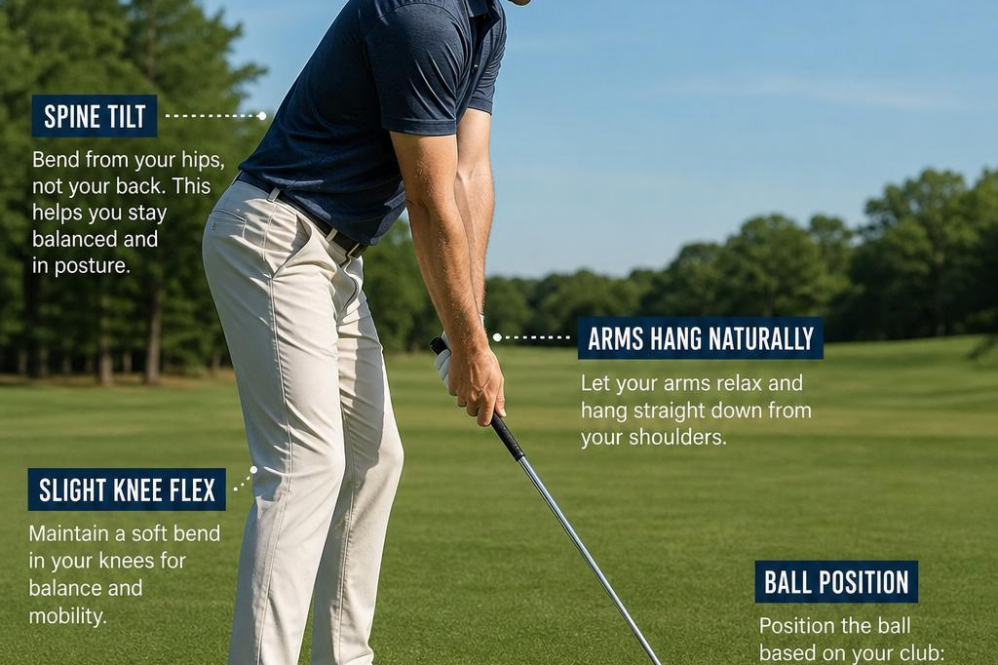
Unlocking the Secrets Behind a Flawless Golf Swing
Mastering a consistent golf swing begins with understanding the essential mechanics that generate both power adn control. Start with a balanced setup-feet shoulder-width apart, knees slightly flexed, and a straight spine tilted at about 20 degrees from vertical. This posture allows a free and natural rotation through the hips and shoulders. During the takeaway, focus on a smooth, one-piece movement where the clubhead stays low and close to the ground, promoting an inside-to-square swing path. A critical checkpoint is the club shaft angle at the top of the backswing, which should point parallel to the target line, creating a full shoulder turn of approximately 90 degrees.For beginners, practicing with slow-motion swings or alignment sticks can reinforce these positions, while advanced players should aim to maintain lag by feeling the wrist hinge at a 90-degree angle before transition, helping to maximize clubhead speed and shot accuracy.
Once the full swing fundamentals are in place, integrating precise short game techniques becomes essential for lowering scores. Chipping and pitching around the green require controlled wrist hinge and the ability to vary loft dynamically through clubface manipulation. Use a slightly open clubface and position the ball off the front foot to promote a descending strike-this ensures clean contact and produces a predictable, low-rolling chip shot. Practicing bump-and-run shots on varied grass lies simulates real-course conditions, teaching players how to read turf interaction and control spin. For approach shots inside 100 yards, develop a repeatable drill focusing on consistent swing length and rhythm with no over-rotation of the hips, allowing the club’s loft to do the work. incorporating these controlled, finesse-based shots into regular practice will yield tangible improvements during pressure situations on the course.
Effective course management perfectly complements technical skill by sharpening decision-making and strategic play under different conditions. Before every shot, evaluate hazards, wind direction, and pin placement, then select a shot shape that aligns with the target and natural ball flight tendencies, such as a gentle fade or draw.for exmaple,executing a controlled draw to navigate doglegs requires an inside-out swing path with a slightly closed clubface at impact,while a fade needs the opposite. Adjusting tee height and ball position can further fine-tune trajectory and spin rates-use a higher tee with a driver to reduce spin on windy days, favoring distance and control. To reinforce these concepts, adopt a pre-shot routine including visualization and a few practice swings aimed at rehearsing the intended shot shape and target line. Holistically, combining mechanical precision with clever course strategy enables all golfers to improve scoring consistency and enjoy a more confident, resilient game.
How to Read the Green and Perfect your Putting Stroke
Mastering the art of reading the green begins with understanding the subtle contours and slopes that influence the ball’s path. As you approach your putt, take time to walk around your ball and observe the terrain from multiple angles, especially from behind the hole and from the ball’s position.This practice reveals how gravity will affect the roll and helps you identify any subtle breaks or undulations. Also,assess the grain of the green-as grain can speed up or slow down putts depending on its direction relative to your line. A key tip for golfers of all levels is to align your eyes directly over the ball at address to gain a precise viewpoint on the target line. Using a basic method like the clock method, imagine the hole’s position as it relates to the ball (e.g., 3 o’clock means a right-to-left break), to visualize the amount and direction of the break before setting up the putt.
Developing a consistently smooth putting stroke requires attention to both setup fundamentals and stroke mechanics. Begin with a stable stance approximately shoulder-width apart, ensuring your eyes are over or just inside the ball, promoting an accurate swing path.The putting grip should be relaxed yet secure; many pros recommend a reverse overlap grip to encourage a pendulum motion using the shoulders rather than the wrists. during your stroke, maintain a steady tempo, focusing on a controlled backswing that mirrors the length of your follow-through to control distance effectively. Incorporate drills such as the gate drill, where two tees create a narrow path to help prevent the putter head from coming inside too much, and the ladder drill, which assists with distance control by repeatedly putting to targets at incremental distances (e.g., 3, 6, 9 feet). Avoid common mistakes like decelerating through impact or pressing too hard with your hands, as these disrupt the smooth roll essential for consistent speed and accuracy.
Successfully combining your green-reading skills and stroke mechanics also involves adapting to real-course variables such as grass type, moisture level, and wind conditions. Such as, Bermuda greens typically require a firmer touch because the grain can grab the ball, while Poa Annua may produce bumpy or uneven rolls as it ages. To enhance your adaptability, practice lag putting by aiming to leave the ball within a putter’s length of the hole on longer putts rather than risking aggressive attempts.Additionally, integrating mental cues, such as visualizing the ball’s ideal path and focusing on a confident practice stroke, can build consistency under pressure. By fine-tuning your green reading, setup, and stroke, you will not only lower your putts per round but also build confidence that translates into decisive, smart course management-turning potential bogeys into pars and pars into birdies.
Drive with Confidence Using Proven Techniques and Targeted Drills
Building a powerful and consistent drive begins with mastering the fundamentals of your setup and swing mechanics. Start by positioning the ball just inside your front heel to promote a sweeping upward strike that maximizes launch angle and reduces spin for longer carry. Maintain a slightly wider stance than shoulder-width, which enhances stability through the swing while allowing for full hip rotation. Focus on a smooth takeaway, keeping the clubhead low to the ground for the first few feet before gradually lifting it to the top of your backswing. This encourages a natural arc and helps prevent common faults like early lifting or casting the club. Incorporate a controlled weight shift by feeling your weight move to the inside of your back foot during the backswing, then aggressively transferring to your front foot through impact. For measurable advancement, aim to achieve an impact angle of attack around +3 to +5 degrees, which promotes optimal launch conditions with a driver. Regularly video your swing to check for consistent spine tilt and hip rotation, key markers for powerful and accurate drives.
To translate these foundational mechanics into real-course success, it’s essential to integrate targeted drills that refine both your swing feel and shot precision. One highly effective drill is the “tee drive alignment drill,” where you place two tees parallel to your intended target line-one just outside the ball and one just inside your lead foot.this visual setup promotes a square clubface path and encourages proper swing plane awareness. Additionally, practicing with intermediate targets, like aiming your drive toward a precise landing zone rather than simply “straight ahead,” cultivates better course management habits and reduces the risk of hazards. Incorporate variability drills where you practice drives under different conditions: as an example, hitting off a downhill lie or with a slight crosswind. These simulate on-course challenges and enhance adaptability. Complement your practice sessions with flexibility exercises to maintain your thoracic rotation and hip mobility, ensuring your body can replicate efficient motion patterns under tournament pressure.
addressing common mistakes such as tension in the upper body or misaligned grip pressure can significantly elevate your driving performance. Many golfers unknowingly grip the club too tightly, which restricts wrist hinge and reduces clubhead speed; instead, adopt a grip pressure just firm enough to maintain control, approximately a 4 or 5 on a 10-point scale. If inconsistent contact arises, check for early extension-the forward movement of the hips toward the ball during downswing-which often leads to block or pull hooks. A practical correction is the “wall drill,” standing with your backside close to a wall and practicing swings without hitting it,promoting better posture retention through impact. Integrate mental strategies like pre-shot visualization and breathing techniques to build confidence and reduce anxiety before every tee shot. Together, these physical and psychological adjustments not only improve distance and accuracy off the tee but also contribute decisively to lower scores and a more enjoyable round overall.