Mastering the Art of Hogan’s Kinematic Sequence to Boost Your Driving Distance
Achieving a powerful and efficient driving distance begins with mastering the intricate kinematic sequence-the biomechanical chain of movements that systematically transfers energy from the feet through the hips, torso, arms, and finally to the clubhead.Ben Hogan emphasized the importance of initiating the downswing with a distinct weight shift onto the lead foot combined with a controlled hip rotation of approximately 45 to 50 degrees. This coordinated motion creates a whipping effect, maximizing clubhead speed without sacrificing control. For beginners, practicing this can start with slow, mirror-backed drills focusing on feeling the proper sequence: hips leading shoulders, followed by the arms and hands. Intermediate and advanced players should integrate motion capture feedback or video analysis to refine timing and avoid common faults such as “casting” or early release, which dissipate energy prematurely. Hogan’s methodical approach to swing sequencing directly enhances launch conditions and spin rate, resulting in longer, straighter drives even under variable course conditions like wind or uphill tees.
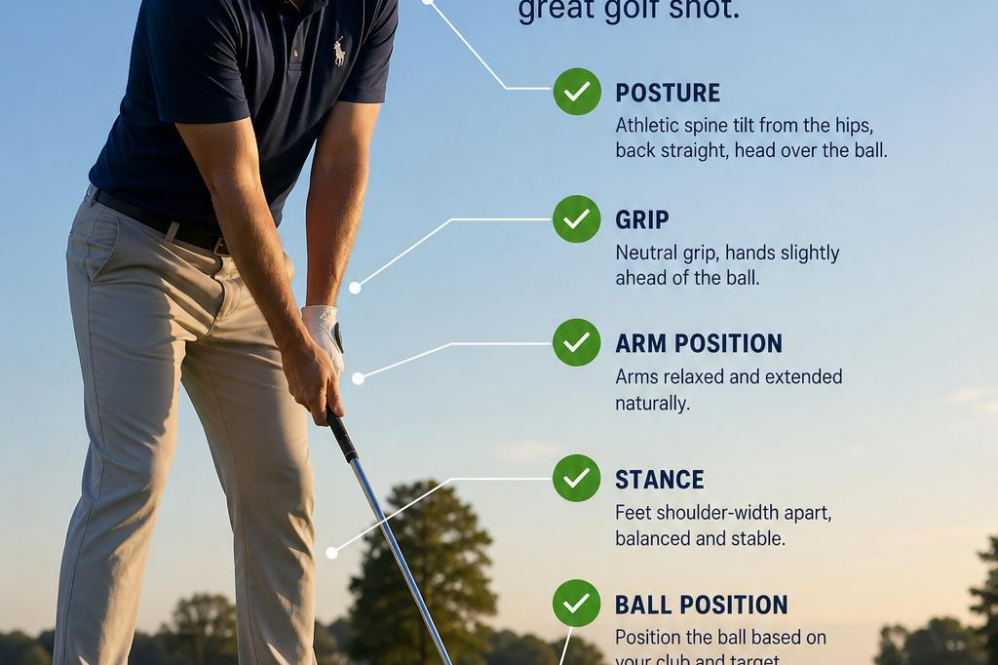
Proper setup and equipment alignment further complement the kinematic sequence for consistent power. Hogan advocated for a slightly narrower stance-about shoulder-width-promoting balance while allowing dynamic rotation. Coupled with a neutral grip and balanced spine tilt, this posture enables golfers to maintain the ideal swing plane and deliver the clubhead squarely at impact. Incorporating Hogan’s focus on the “triangle” formed by the shoulders and arms helps stabilize the swing arc and supports an inside-to-outside club path, reducing slices and hooks off the tee. Practical drills such as the “step-through” and “pause at transition” exercises encourage maintaining body angles without early breakdowns in posture. Additionally, modern players should select driver loft and shaft flex that complement their swing speed and maintain Hogan’s emphasis on precision timing over sheer muscle. By attentively linking setup fundamentals with kinematic sequencing, golfers may see immediate gains in distance and accuracy, especially on tight, strategically guarded fairways.
Course strategy also plays a pivotal role in leveraging the benefits of mastering Hogan’s kinematic sequence.On longer par-4s or par-5s, golfers can strategically plan tee shots by selecting lines that favor their optimized swing mechanics-targeting landing zones that minimize forced carries over hazards and allow favorable angles into the green. Hogan’s lessons remind players to balance aggression with prudence; as a notable example, a slight reduction in backswing length or a controlled tempo can reduce inconsistent strikes when wind or uneven lies occur. Mental focus on maintaining the kinematic sequence rhythm under pressure is crucial, and techniques such as deep breathing or pre-shot visualization can help maintain that flow. A solid routine incorporating targeted practice on driving range drills-like hitting alternating fade and draw shots-along with course simulations enhances the ability to execute these mechanical insights under tournament conditions. Ultimately,by integrating Hogan’s precise movement patterns with smart equipment choices and strategic play,golfers across skill levels can unlock greater driving distances while improving overall scoring consistency.
Unlocking the Impact Alignments That Made Hogan’s Iron play Unstoppable
Ben Hogan’s iron play was legendary largely due to his precise impact alignments, which created consistent ball strikes and exceptional control. At address, alignment starts with the golfer’s body and clubface working together at precise angles. Hogan emphasized setting the clubface square to the target line and aligning the feet, hips, and shoulders slightly left of the target for a right-handed player. this setup creates an inside-to-square-to-inside swing path, promoting a powerful yet controlled compression of the ball.To emulate this, golfers should practice using alignment sticks during setup to ensure their stance matches the intended target line.An effective drill involves placing a shaft or alignment rod just outside the lead foot parallel to the target to ingrain correct body positioning while focusing on a square clubface throughout the swing.
Proper impact alignment also requires mastering the dynamic relationship between the hands and body through the downswing. Hogan’s theory on the “triangle of force” at impact,formed by the shoulders and arms,ensures that clubhead delivery is on plane and the hands lead the clubhead slightly ahead at contact. This leverages forward shaft lean typically between 5 to 10 degrees to maximize ball compression and launch control. Golfers can improve this by practicing the “lag and release” drill-holding the club back at the top, then initiating the downswing with the lower body while maintaining wrist hinge until the last moment. Using impact tape during practice sessions reveals how centered and consistent your strikes are, offering immediate feedback. Correcting common faults such as casting or flipping the wrists will result in straighter, more penetrating iron shots with added spin control.
integrating these impact fundamentals into course strategy enables smarter shot selection, especially in varied lies and wind conditions. Hogan believed in hitting to precise yardages with irons, frequently enough controlling trajectory by adjusting ball position slightly forward or back in the stance and modifying swing length to respond to gusty winds or tight pin placements. Advanced players benefit from incorporating this into their pre-shot routine by analyzing green contours and wind direction to decide the optimal club and shot shape.beginners, conversely, can focus on consistent contact through routine practice of setup and impact positions to lower their dispersion pattern. Developing this synergy between technical impact alignments and tactical decision-making accelerates scoring advancement and builds confidence for long-term success on any course.
Putting Like Hogan The Subtle Dynamics That Can Lower Your Score Every Time
mastering the subtle dynamics of putting, as Ben hogan emphasized, begins with a precise and repeatable setup that prioritizes alignment and stroke consistency.Hogan’s method highlights the importance of a square clubface at impact, achieved through a relaxed grip and a pendulum-like stroke that minimizes wrist breakdown. Begin by positioning the ball just forward of center in your stance and ensure your eyes are directly over or slightly inside the ball line to promote accurate line-of-sight judgment. Hogan discouraged excessive hand manipulation, recommending a smooth, one-piece takeaway from the shoulders, which fosters a more controlled and predictable roll. As you develop muscle memory with this technique,use a training aid such as an alignment rod or putting arc to reinforce the path and face angle-this helps eliminate common errors like scooping or pushing the putt.
Reading greens effectively is integral to translating Hogan’s putting principles into lowered scores, especially when dealing with subtle breaks or varying grain directions on true fast greens. Begin your read by assessing the slope from multiple vantage points, factoring in not only the visible gradient but also environmental cues such as wind direction and moisture, which affect ball roll. Hogan advocated for a “feel” approach rather than overthinking distance control; practice this by varying your putting stroke length to adjust pace rather than attempting to compensate with added force. To build this skill, incorporate drills that involve lag putting to targets placed 20-30 feet away, focusing on stopping the ball within a 3-foot radius beyond the hole. This practice instills confidence in speed control,a frequent culprit behind three-putts. Remember, green reading paired with confident stroke execution leads to a more relaxed mental state, vital for sinking crucial putts under pressure.
Integrating these mechanical and green-reading insights into your overall course strategy aligns with Hogan’s holistic approach to the game. for example, when facing a downhill putt with a sharp break, adjust your aim several inches uphill and practice a slightly firmer stroke to counteract the speed while maintaining your pendulum rhythm. Equipment choices also matter; selecting a putter with a low moment of inertia (MOI) can provide the necessary feedback for subtle stroke nuances and improve ball contact consistency. Beginners should focus on developing a repeatable routine that incorporates pre-putt visualization, alignment verification, and a calm tempo, while advanced players can experiment with stroke tempo variations and green-reading techniques tailored to different course conditions. Ultimately, applying Hogan’s refined putting concepts fosters a dependable short game that not only saves strokes but also builds confidence walking to the next tee.