Master the Smooth Swing That Made Ernie els a Legend
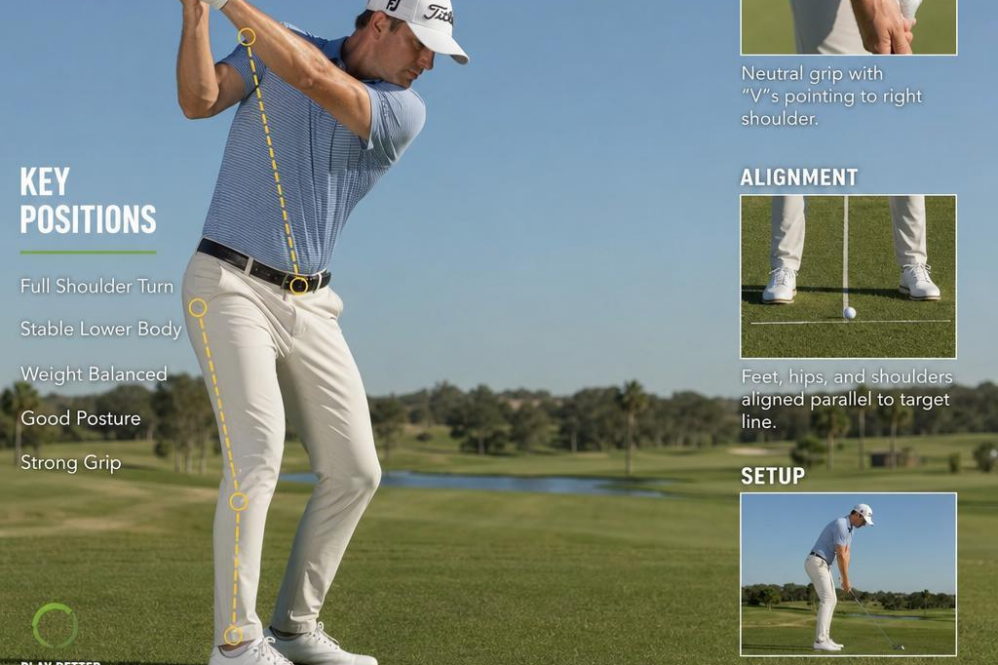
Ernie els’ signature swing is a masterclass in fluidity and precision, grounded in a foundation of essential setup and disciplined mechanics. At address, maintaining a balanced posture with a spine tilt of approximately 5 to 7 degrees away from the target allows for a naturally inside-out swing path that promotes a powerful yet controlled draw. Els advocates an easy grip pressure-think “holding a tube of toothpaste without squeezing”-to ensure smooth wrist action and prevent tension. Transitioning through the takeaway, golfers should focus on keeping the clubhead low to the ground and extending the arms fully without collapsing the lead elbow, similar to Els’ distinctive “Elsbow” position. This subtle leading arm bend at the top of the backswing adds leverage and stores energy efficiently, which is a key component in his effortless swing speed. Practicing partial swings with mirror feedback or slow-motion video helps to engrain these mechanics, while drills such as the “pump drill” (pausing at the halfway backswing position) build muscle memory for proper arm extension and wrist hinge.
Beyond pure swing mechanics, Els’ approach to course strategy and shot selection complements his technical prowess by enhancing consistency and lowering scores. He emphasizes the importance of detailed pre-shot routines and mental visualization, particularly when navigating challenging lies and variable wind conditions. One standout strategy is his thoughtful club choice-often opting for clubs that promote a controlled trajectory and allow shot-shaping versatility, such as a 3-iron for long, precision-focused approaches under tight tree lines or a draw-biased hybrid off the tee. To replicate this approach, golfers should practice trajectory control drills, like hitting half shots with varying ball positions to manipulate launch angles in windy conditions. Additionally, Els leverages meticulous course management by targeting safer landing zones and factoring in elevation changes, which reduces the risk of penalties and positions the ball for easier up-and-downs. Incorporating a simple course mapping routine-utilizing yardage books or GPS data before each round-can definitely help golfers internalize these principles,leading to smarter decisions and more confident execution under pressure.
Discover the Driving Techniques to Add Power and Precision
To generate additional power and precision off the tee, it’s essential to start with a fundamentally sound setup. Position the ball just inside your lead heel to promote an upward angle of attack, typically between 3 to 5 degrees, which helps maximize launch and optimize carry distance. Ernie Els emphasizes the importance of a relaxed grip and a wide stance – about 1.5 times shoulder width – which provides stability and allows a full shoulder turn through impact. As you initiate the backswing, focus on maintaining a slight flex in your lead knee and turning your hips fully while keeping your head steady. This hip rotation, paired with a coil of the torso, is critical for building torque and storing energy. Importantly, avoid “casting” the club early; instead, hinge the wrists naturally around 90 degrees at the top of the backswing to create a lag angle, which translates into greater clubhead speed upon release. Practicing with alignment sticks or video feedback can definitely help golfers at all levels internalize these positions and monitor progress.
Implementing strategic drills will reinforce these mechanics and gradually build consistency. For example, to improve both power and control, try the “Pause and Go” drill where you pause for a brief count at the top of your swing before driving through the ball, improving tempo and encouraging proper sequencing from hips to hands. Additionally, Ernie Els advocates for incorporating weighted club swings or resistance band work to develop strength in critical muscle groups like the core and forearms, which support an explosive release and precise contact. When on the course, assess wind direction and firmness of the fairway – these factors influence choice of tee shot trajectory and club selection, thus connecting physical technique with smarter course management. For beginners, focusing on smooth acceleration and balance throughout the swing often yields better results then attempting maximum power immediately. Ultimately, consistent practice, combined with keen awareness of body mechanics and environmental variables, will lead to noticeable improvements in driving distance and accuracy, lowering scores across various game conditions.
Unlock the Putting Secrets for Consistent Green Reading
Mastering consistent green reading begins with developing a keen eye for subtle breaks and grain patterns on the putting surface. Start by establishing a reliable pre-putt routine that includes multiple reads: first from behind the ball, then from the low side of the puttand finally a step or two to the side to visualize the slope.this multi-angle approach, advocated by Ernie els, helps golfers understand how terrain undulations and grass growth affect ball roll.Pay close attention to the grain direction, which can influence ball speed-putts against the grain slow down, while with the grain accelerate. To build this skill, incorporate a drill where you place three balls at varying slopes and lengths, read each putt aloudand compare your reads with actual roll outcomes. this intentional practice of observing break and speed promotes greater green confidence and fewer three-putts. Additionally, consider adjusting your putter setup to ensure the face is square at address, which enhances directional control for true rolls.
Once you’ve honed your green reading, translating that insight into a smooth, repeatable stroke is key for lowering scores. Focus on a pendulum-like putting stroke, minimizing wrist breakdown and maintaining a consistent tempo, as Ernie Els emphasizes through his relaxed, rhythm-driven technique. Incorporate alignment aids such as putting mirrors or chalk lines during practice to encourage a square clubface path and eye-line positioning directly over the ball. Effective distance control comes from calibrated backswing lengths matched to putt length-start with a half swing for shorters and scale up proportionally, maintaining a stroke length ratio of roughly 3:1 backswing to follow-through.To simulate on-course pressures, practice lag putting from 20-40 feet with targets marked by tees or towels, aiming to leave the ball within a 3-foot circle. These drills not only sharpen feel and speed judgment but also train your mental focus for diverse green conditions-from fast Bermuda to slower bentgrass. By blending refined green reading with stroke mechanics and strategic practice routines,golfers at every skill level can unlock the secrets to consistent putting performance and meaningful score improvements.
Tips and Drills to Bring Ernie’s Game Into Your Practice Routine
To emulate Ernie Els’ fluid and powerful swing, begin with mastering what is famously coined the “Elsbow” position-a subtle but crucial inward bend of the lead arm at address and throughout the backswing. this provides greater control and width in the arc,which in turn fosters a smoother tempo and consistency in ball striking. Start your practice by setting up with a slightly wider than shoulder-width stance and ensure your lead elbow maintains a gentle flex of about 15 degrees. Incorporate slow-motion swings focusing on this angle, allowing the elbow to lead the rotation without collapsing or locking out. Use a mirror or video recording to self-check and, if needed, place a training aid or an alignment stick alongside your lead arm to provide real-time feedback. As you build this muscle memory, integrate a metronome set around 60-70 beats per minute to cultivate Els’ signature rhythmic tempo, which balances power and precision. Practicing under varying conditions-such as light winds or different tee heights-can refine your adaptability and encourage a feel for natural shot shaping on-course, just as Els adapts to strategic demands.
Beyond swing mechanics,Els’ success is deeply rooted in his strategic approach to course management and versatility in the short game. When practicing, emphasize precision with your wedge play by crafting drills that simulate real-course scenarios: from a tucked bunker lie to tight, low-faced chips. Use targets at varying distances, focusing on controlling trajectory and spin to land balls softly within a three-foot radius of your chosen spot-this sharpens proximity to the hole and dramatically improves scoring opportunities. Implement a “pre-shot routine” where you visualize the shot shape,select the appropriate loft and spin rate,and confirm stance alignment within ±1 degree of intended target line,borrowing Els’ meticulous setup habits. Additionally, cultivate situational awareness by incorporating game-like pressure in practice rounds, such as playing each hole with a “par-or-better” mindset while accounting for wind direction, elevation changesand pin location. For golfers striving to advance beyond basics,integrating practice with a rangefinder allows precise yardage assessments and strengthens club selection judgment,mirroring Els’ thoughtful decision-making during high-stakes tournaments. Over time, these well-rounded drills and mental frameworks will foster a balance between technical skill and strategic savvy, enabling any golfer to bring Ernie Els’ layered mastery into their own game.