introduction
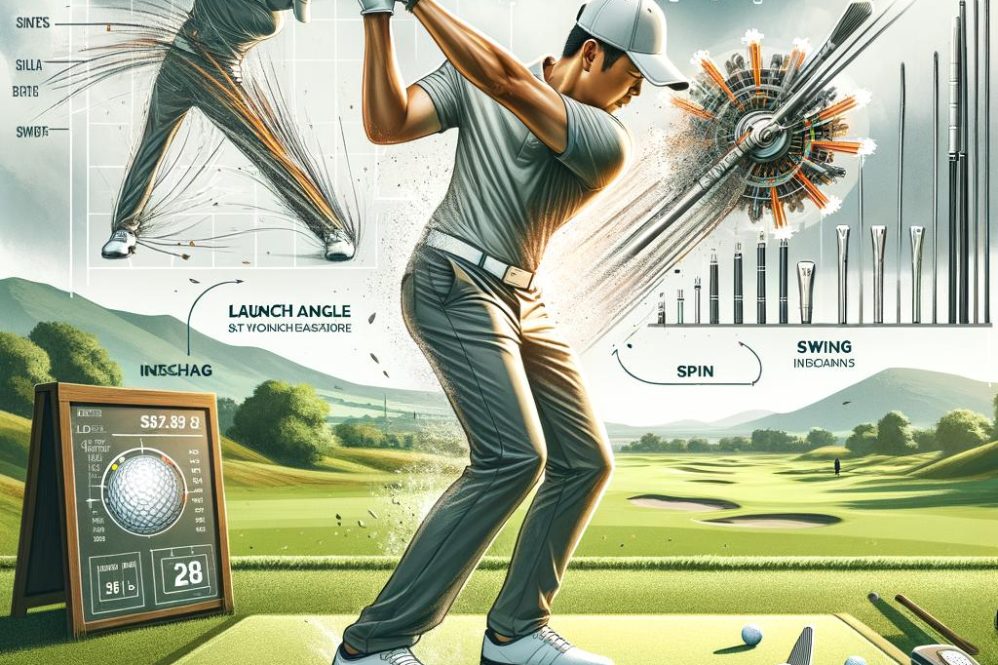
Fine‑tuning the relationship between a player’s mechanics and the golf shaft is one of the most powerful – and frequently overlooked – ways to improve driving distance, direction, and repeatability. Shaft flex – the way stiffness is distributed along the tube and how it bends dynamically – changes how force from the body is delivered to the head and ball. That in turn alters launch characteristics (angle and spin), velocity at the head and ball, and the timing of face orientation at impact. While manufacturers publish nominal flex categories, individual differences in body size, swing speed, tempo, release point, and shot intent mean shaft selection should be driven by measurement and individual tuning rather than labels alone.
this piece combines biomechanical insight and ball‑flight physics to show how shaft attributes – tip stiffness, bend (kick) point, distributed flex profile, mass, and torsion – change dynamic loft, effective face angle, and the timing sequence of the downswing. We summarize empirical links between shaft behavior and core performance metrics (launch angle, spin, smash factor, and dispersion), outline how those links vary by swing archetype, and discuss how shaft deflection and stored energy (lag) trade off distance versus accuracy.
Below is a practical, repeatable fitting workflow that pairs objective tools (launch monitors, high‑speed video and kinematic sensors, and shaft load/deflection measurements) with pragmatic on‑course validation. The goal is to give coaches, fitters, and researchers a reproducible path to prescribe shafts that increase driving distance without sacrificing control and consistency.
How Shaft Stiffness Shapes Launch, Spin and Power Transfer
The shaft is a springy transmission between golfer and head: during the downswing it stores kinetic energy as it bends and then returns that energy as it straightens, directly influencing face timing, dynamic loft at impact, and ultimately ball trajectory. Shaft flex ratings (L/A/R/S/X) are rough guides tied to clubhead speed – for example, L: under ~75 mph, A: ~75-85 mph, R: ~85-95 mph, S: ~95-105 mph, X: above ~105 mph – because picking the wrong stiffness shifts the phase of shaft release relative to contact and typically increases dispersion. Beyond overall stiffness, the shaft’s kick point (where it bends most) and its torque (resistance to twist) alter the effective launch vector: a higher kick point tends to lower launch and reduce backspin, whereas higher torque can improve subjective feel but may permit greater face rotation into impact. Treat the shaft as both a timing mechanism and a feel element; matching its natural frequency to the player’s rhythm reduces timing variability and improves repeatability of launch conditions.
Two immediate outputs strongly influenced by shaft behavior are launch angle and spin rate. Because the shaft continues to unload late in the downswing, it changes the clubhead’s effective loft and face orientation at impact – the so‑called dynamic loft. For drivers, practical targets frequently enough fall in the range of a 9-12° measured launch with spin roughly between 1,800 and 3,000 rpm, even though ideal windows shift with speed and goals; too much launch with high spin kills rollout, while too little launch with very low spin cuts carry. You can change launch and spin by adjusting shaft flex (stiffer sections usually reduce launch and spin for higher‑speed swings), shaft length (longer shafts can add speed at the cost of control), and head loft/face angle (use small loft steps of 0.5-1.5° to fine tune).any equipment change should be validated with launch‑monitor testing so you can quantify trade‑offs in launch, spin, and carry distance.
Energy transfer – often expressed as smash factor (ball speed ÷ clubhead speed) – depends on both where the ball is struck and the temporal match between shaft release and head arrival. A good benchmark for drivers is a smash factor near 1.48-1.50. To develop reliable timing, employ these practical drills and setup cues to reduce shaft‑related timing errors:
- Towel lag drill: tuck a folded towel under the lead armpit and swing to preserve wrist lag and enhance shaft loading for a later, stronger release.
- Impact‑bag short swings: three‑quarter swings into an impact bag with a focus on compressing the bag squarely to stabilize the release.
- Tempo metronome: use a metronome at about 60-72 bpm to harmonize backswing and downswing timing and better match shaft frequency.
- Ball‑position and spine cues: position the ball slightly forward for the driver and maintain a spine tilt that supports a desired upward attack when appropriate.
These practices reduce early release (casting) and hand‑flipping through impact – common errors that degrade smash factor and raise unwanted spin.
A data‑driven fitting approach is essential: measure clubhead speed, attack angle, launch, spin, and lateral dispersion on a launch monitor before choosing flex, length, or tip stiffness. A simple fitting sequence: (1) record baseline swing data, (2) compare two or three flex levels and a couple of kick‑points, (3) log launch, spin and dispersion for at least 10 good impacts per configuration, and (4) pick the option that best balances carry, rollout and shot pattern for the player. As a practical rule, in windy or very firm conditions favor a lower‑launch/lower‑spin setup (higher kick point, slightly stiffer tip) for a penetrating ball flight; in soft conditions or when maximizing carry, a tip with slightly more compliance that raises launch without excessive spin can be preferable. Avoid the common pitfalls of choosing shafts only by “feel” or failing to test with the player’s typical ball and realistic swing intensity – always revalidate outdoors if possible.
To convert equipment improvements into lower scores, merge shaft‑aware technique work with course strategy. For beginners, set measurable early goals such as reducing dispersion by 10-15 yards and achieving repeatable launch within ±1.5° after six weeks of tempo and impact‑bag training. Mid‑handicappers should focus on optimizing spin to reach their ideal carry/roll balance (for example, cutting driver spin by 500-1,000 rpm if carry is already high but rollout is limited). Low handicappers can fine‑tune bend profiles to match preferred shot shapes and minimize side spin through incremental changes in tip stiffness and face‑bias. On course, choose trajectories that suit the shaft: a lower‑launch driver into the wind, a higher‑launch fairway wood with a softer tip for uphill plays, and adjusted aim points where a shaft produces a reproducible face rotation. Remember: shaft choice is one part of the system – keep measuring, testing, and drilling to lock changes into your motor pattern and scoring process.

Measuring Shaft Stiffness: Lab Protocols, field Translation and Practical Metrics
Accurate stiffness assessment starts in the lab where repeatable instrumented tests create objective numbers for fitting decisions. Technicians commonly combine three approaches: frequency analysis (CPM/Hz) to capture dynamic bending response, static cantilever deflection to estimate flexural rigidity (EI), and torsional testing to quantify torque (reported in degree·inches or equivalent).Driver shafts often fall in the ballpark of ~200-350 CPM (higher values indicate stiffer overall bend), while torque figures typically range from ~2.5 to 6.0 deg·in depending on construction. To compare shafts reliably, specify a fixed support span (for example, 600 mm), apply a calibrated transverse load at a known distance, and capture deflection and natural frequency with an accelerometer or frequency analyzer; from those data calculate EI using beam formulas appropriate to the boundary conditions. Record tip and butt stiffness separately because the flex distribution (profile) strongly influences release timing and shot shape. Always cross‑check lab results against manufacturer tolerances and equipment conformity rules before making coaching or purchase recommendations.
Field testing converts laboratory metrics into on‑course performance using launch monitors and controlled playing tests. After a standardized warm‑up, hit at least 20 solid driver strikes and 30-40 long‑iron strikes while keeping tee height and ball position constant; log averages and standard deviations for clubhead speed, ball speed, launch, smash factor, spin, and lateral dispersion. Performance norms vary by skill, but many well‑fitted setups yield launch angles around 9-14°, spin rates near 1,800-3,200 rpm, and a smash factor close to 1.45. augment telemetry with high‑speed video (240-1,000 fps) to observe mid‑ and late‑swing bend and release – visual evidence that clarifies whether a shaft’s kick is early or late relative to impact. For formal comparison compute effect sizes: for instance, if a shaft swap reduces lateral dispersion standard deviation by >10% while keeping or increasing ball speed, that change is likely meaningful for play.
To convert stiffness findings into actionable coaching cues, tie physical measurements to specific mechanical adjustments. Softer tips generally increase dynamic loft and spin, so players with slower clubhead speed (commonly <85 mph) often benefit from tip compliance that raises launch without forcing major swing changes. Conversely,strong players with speeds above ~100 mph typically need firmer tip sections to lower spin and tighten dispersion.use the following checkpoints and drills to align body motion with shaft behavior:
- Setup checks: ball position one ball forward of center for driver, slight forward shaft lean at address, and grip pressure around 4-5/10.
- Tempo drill: metronome‑guided 3:1 backswing:downswing ratio at 60-80 bpm to stabilize release timing for shafts with later kick.
- Release drill: place a headcover 6-8 inches behind the ball to encourage a descending strike and prevent casting that exaggerates unwanted tip action.
Use video to confirm shaft bend peaks just before impact for the intended flex; if bending peaks too soon or too late, adjust wrist set and sequencing accordingly.
Treat fitting as an iterative tool, not a one‑time purchase. Match shaft profile to clubhead speed,attack angle,and preferred shot shape: for example,players who attack upward and launch high may require slightly stiffer tip sections or less loft to control spin,while players with steep attack angles often prefer softer tips to smooth turf interaction. Evaluate not only flex rating (L/A/R/S/X) but also progressive stiffness, torque, kick point and mass distribution – shafts in the 45-60 g range suit many mid‑handicappers, while stronger players frequently enough prefer 55-65+ g driver shafts for stability. Validate candidate shafts on representative holes (for example, a tight tree‑lined par‑4 and a wind‑exposed coastal tee) to observe dispersion under pressure; keep a fitting log and retest after making technique or equipment tweaks.
Set measurable practice objectives to convert shaft insights into scoring gains. Short‑term targets can include reducing driver lateral dispersion by 10-15 yards or lowering average driver spin by 300-500 rpm within four weeks, with a plan that mixes range tempo work and on‑course scenario practice. Drills should be leveled by ability: beginners work on consistent impact and tempo; advanced players pursue shot shaping and trajectory control. Avoid common mistakes such as choosing a shaft by brand name or flex label alone, ignoring torque in crosswinds, or failing to change ball position when switching flex. Combine lab metrics,field results,and progressive coaching to deliver measurable,repeatable improvements in driver performance and score.
Swing Tempo,Shaft Bend Timing and the Roots of Dispersion
Controlling dispersion requires understanding how shaft deflection (temporary bending under load) interacts with tempo and release point. Shaft deflection behaves like a spring: it stores energy and releases it as the club approaches the ball; the timing of that release relative to the downswing governs face angle and dynamic loft at impact. Small face‑angle errors produce large lateral misses – for example, roughly 1° of face misalignment at 250 yards corresponds to about 4-5 yards of lateral error.As of this sensitivity, tempo – commonly coached as a roughly 3:1 backswing:downswing rhythm – is a primary control over how much the shaft bends and when it unloads.Fast transitions tend to increase deflection and require a later release to retain control; slower, smoother tempos limit extreme bending and create more consistent impact conditions. Coaches should thus address tempo and shaft behavior together to reduce dispersion and raise scoring consistency.
Teach release mechanics with clear kinematic checkpoints so shaft behavior translates into predictable ball flight. begin with a repeatable address routine: neutral grip, square shoulders, ball slightly forward for the driver (about one ball width inside the lead heel), and a slight forward shaft lean. Sequence the downswing to hold lag: aim to keep roughly a 30° angle between the lead forearm and the shaft through the early downswing, delaying wrist uncocking until the club approaches the slot. Helpful drills include:
- Towel‑under‑arm drill to preserve connection and resist casting,
- Impact‑bag/slow‑motion near‑impact drill to develop an appropriate release feel and shaft unload,
- Metronome rhythm practice using a 3:1 pattern to sync lower‑body lead with the shaft’s load/unload timing.
These drills create measurable checkpoints (for instance, higher clubhead speed without loss of smash factor or reduced side spin) enabling coaches to quantify progress.
Equipment choices amplify or dampen these mechanical inputs, so integrate fitting into instruction rather than treating it separately. Shaft flex, torque, kick point, and length all influence deflection: softer flexes and higher torque increase bending and typically raise launch and spin; stiffer, lower‑torque shafts reduce deflection and often tighten dispersion for players with consistent tempo. Use swing‑speed guidelines as a starting point – under 85 mph (consider senior/soft), 85-95 mph (regular), 95-105 mph (stiff), and above 105 mph (extra stiff) – and refine choices using launch‑monitor outputs (face angle, spin, launch, smash factor). also remember that length (standard driver ≈ 45 inches) and head mass affect feel and timing; adding length or weight increases demands on tempo.Ensure fitted clubs conform to USGA/R&A rules for competition use.
To transfer practice to play, use structured sessions with measurable goals and situational strategy. Pick target launch‑monitor windows – for example, driver launch 10-13°, spin 1,800-3,000 rpm, and smash factor 1.45-1.50 for many players – and practice in blocks of 10-15 swings until those metrics are routinely achieved. A practical session can follow this order:
- Warm up with 20 half‑swings aimed at rhythm (metronome 3:1),
- Do 10 towel‑under‑arm swings, then 10 full swings tracking face angle and spin,
- Finish with 12 on‑course simulation shots: two wind directions, two fairway targets and two recovery shots per side to rehearse tactical choices.
On windy or firm days, decrease loft (or use a higher kick point) and adopt a slightly earlier, more compact release to keep the flight penetrating.When carry is the priority (soft greens or hazards), allow a touch more shaft flex and maintain a controlled, later release to increase peak and hold the green.
Troubleshoot common faults by linking diagnosis to targeted corrective work and mental rehearsal. Early release (casting) often leads to inconsistent ball speed and elevated sidespin; signs include low smash factor and rising spin. Counter with impact‑bag work and biofeedback (video or inertial sensors tracking wrist angle) to reinforce lag through impact. An overly late or flipped release can cause hooks and toe strikes; remedy with tempo reduction,a shorter shaft,or a tip that is marginally stiffer to tame excessive deflection. For advanced players, use launch‑monitor feedback to keep face angle at impact within ±1° of intent and aim to reduce carry dispersion into the 10-15 yard band. Pair technical fixes with pre‑shot routines and visualization to make timing repeatable under pressure. Align shaft choice, tempo, and release drills with clear, measurable milestones to cut dispersion and improve scoring across skill levels.
Flex Recommendations by Skill: Practical Protocols for Novices, Intermediates and Competitors
Integrating shaft flex into player progress starts with recognizing how shaft behavior alters ball flight: flex changes dynamic loft, release timing, and clubhead pose at impact, which then modify launch, spin and direction. Selection should be guided by measurable swing characteristics rather than looks. use these starting speed bands when matching driver flex: women/ladies: <70 mph, senior/A: 70-85 mph, regular/R: 85-95 mph, stiff/S: 95-105 mph, and extra‑stiff/X: >105 mph. Fitters refine these initial choices by measuring smash factor, launch (frequently enough targeted near 12-16° for many players) and spin (typical targets range from 1,800-2,600 rpm for low handicappers up to ~3,000 rpm for higher handicaps). Always start with launch‑monitor data and then validate outdoors.
Novice golfers should prioritize forgiveness, simple sequencing and launch‑assistance. Recommendation: a more compliant shaft with a mid‑to‑low kick point, moderate torque and a higher launch profile to help create ball speed and reduce the penalty for off‑center strikes.Practice plan:
- Setup checks: balanced posture (roughly 20° spine tilt),ball forward of center for driver,and relaxed grip pressure (≈3-4/10).
- Drills: slow two‑phase tempo (count 1‑2 on takeaway, 1 at transition) and impact‑bag swings to feel forward shaft lean through contact.
- Troubleshooting: if shots push/fade, first check ball position and posture before changing flex; only move to a firmer shaft after a 5-7 mph swing‑speed increase.
Reasonable short‑term goals: increase driver speed by 5-8% over 8-12 weeks and improve centered contact using impact tape twice weekly.
Intermediate players should align shaft choices to rising clubhead speed, shot shape preferences and course tactics. Tip: consider moving from regular to stiff when driver speed regularly exceeds ~90-95 mph or when timing becomes inconsistent. practical steps:
- Technical drill: alignment stick at 2° open to practice face control and shape variety.
- Short‑game work: practice 50-75 yard pitch landings with 4-6 ft target zones and spend focused time on bunker play.
- Equipment check: use a launch monitor to compare tip stiffness and torque combinations, seeking a consistent smash factor (>1.45) and acceptable spin profiles.
Translate range improvements into scoring by recording three tee shots with varied aim points and tracking GIR and up‑and‑down percentages.
Competitive and low‑handicap players require fine‑grained, individualized tuning where small shaft changes produce meaningful pattern shifts. Recommendation: favor stiffer tips, lower torque and often a lower kick point to minimize dispersion and preserve shot‑shaping capability at higher speeds (commonly >95-100 mph). practice and fitting priorities:
- Data targets: driver carry dispersion <20 yards, driver spin ~1,800-2,200 rpm, and positive attack angles of +1° to +4° for sweepers seeking distance.
- Drills: weighted‑club tempo work to maintain smooth transitions at high velocity and impact‑dot exercises to eliminate toe/high‑heel misses.
- On‑course plan: favor tee placements and shapes that use the golfer’s best route to the green and rehearse low “punch” shots for wind and higher‑stop shots for receptive greens.
Top players should re‑fit every 6-12 months as swing tendencies and environmental demands evolve.
Combine technical practice and mental strategies in a progressive plan aligned to measurable targets. begin sessions with structured warm‑ups (10 swings at 70%, 10 at 85%, 10 at 100%) to gather baseline launch‑monitor data, then move into pressure simulations such as making five consecutive 6‑footers under time limits. Course rules of thumb: play to the safest line that still leaves your preferred approach; when wind exceeds ~15 mph, choose lower‑launch, tighter‑dispersion setups (stiffer flex or 1-2° less loft). For players with limitations, use multisensory feedback (video, audible metronome, tactile impact aids) and set incremental targets (e.g.,halve three‑putts in eight weeks or increase fairways by 15%) to sustain progress. Align flex choices with objective data, structured drills and real‑world play to convert technical changes into lower scores and greater confidence.
A Stepwise, Objective Fitting Workflow: from Measurements to On‑Course Validation
Start with a repeatable baseline that blends static clubfitting measures and a controlled instrumented session to define the player’s performance envelope. Collect static data (height, wrist‑to‑floor, hand size, grip preference) then capture launch‑monitor metrics: clubhead speed, ball speed, launch angle, spin rate, smash factor, and attack angle. For initial flex guidance, use these ranges: <85 mph = A/L, 85-95 mph = Regular, 95-105 mph = Stiff, >105 mph = X, but remember tempo and release patterns may override pure speed rules. record at least 10 consistent swings with a fixed setup (neutral stance, ball off left heel, consistent tee height) to build a reliable benchmark for subsequent comparisons.
Then translate lab and indoor results into on‑course reality.Over a minimum of nine holes document carry, roll, left/right and short/long dispersion and typical miss patterns; include environmental variables (wind speed/direction, temperature, turf firmness) that influence landing and rollout. Simple tests – for example repeating the same tee shot to the same target on three successive holes – give median carry and lateral deviation comparisons. A practical objective is to reduce lateral dispersion by ~20 yards or raise median carry by 5-10 yards without increasing spin into a distance‑sapping regime. If an indoor best‑fit shaft fails to produce predictable outdoor results,iterate to a diffrent flex profile,torque or tip stiffness and retest.
Follow with instrumented tuning that isolates cause and effect using high‑resolution tools (launch monitor, high‑speed video, motion capture where available). Recognise that shaft flex affects timing and effective loft: softer tips tend to raise dynamic loft and spin while stiffer tips lower spin and improve dispersion for faster swingers. Kick point shifts launch (higher → lower launch; lower → higher launch) and torque influences face twist and directional control. Use a disciplined protocol: (1) change only one variable at a time (weight, flex, tip stiffness), (2) hit a consistent test set (10-15 solid swings), and (3) compare launch shifts (±1-2°), spin changes (±200-400 rpm) and carry differences (typically 3-12 yards). This controlled method avoids confounding effects and yields actionable recommendations grounded in numbers.
Integrate equipment choices with swing mechanics and course tactics. Example: a player who casts early and produces high spin and left misses may benefit from a stiffer tip and slightly heavier shaft to encourage later release and reduce spin. Conversely, a smooth, late‑releaser can gain launch and carry from a more compliant tip. Link these hardware changes to drills such as a metronome set to a simplified 4:1 backswing:downswing for beginners, the “pump” lag drill (pause at waist height and then accelerate), and impact‑bag work to feel forward shaft lean and a square face. Use a practical setup checklist:
- Ball position: off the left heel for driver
- Spine tilt: 3-5° away from the target at address
- Weight distribution: ~55-60% on the back foot at setup, transitioning to a near‑balanced impact
Correct common fitting mistakes (wrong tee height, excessive shaft lean) with immediate visual and tactile feedback and set measurable targets (e.g., increase smash factor by 0.02-0.05 or cut spin by ≥300 rpm).
Implement a monitored trial and multi‑modal coaching plan to ensure fitted benefits transfer to scoring. A 4-6 week validation plan combining weekly course play, range practice and video/check‑ins is effective: track fairways hit, GIR, proximity, and strokes‑gained relative to baseline.Support multiple learning styles – video for visual learners,weighted‑shaft drills for kinesthetic players,and numeric charts for analytical types. Account for playing situations: when wind is high, prefer a lower‑launch setup and forward ball position; on soft, receptive turf favor a higher launch and lower spin to maximize stopping power.Use confidence as a selection criterion: retain a shaft that produces dependable dispersion and predictable carry across conditions even if a marginal distance gain is theoretically possible with a less forgiving option. Conclude each cycle with clear, measurable outcomes (such as +8 yards carry, 20% reduction in lateral dispersion) and iterate as the player’s technique and goals evolve.
Tuning Flex Alongside Loft, Mass Distribution and Swing Mechanics
Begin by locking down a reproducible address and measurement baseline so that changes to loft, mass distribution and flex lead to measurable outcomes. For drivers, consistent ball position (generally opposite the left heel) and tee height so the ball sits about half a ball above the crown create a stable window for testing. Capture baseline launch‑monitor numbers – clubhead speed, ball speed, smash factor, launch angle, and spin. Low‑handicappers often seek launch between 10-14° and spin in the 1,800-3,000 rpm band; beginners typically produce lower speeds (70-85 mph) and benefit from softer flex and more loft to maximize carry. Note the head’s mass distribution (CG front/back and overall weight) because moving mass forward generally reduces spin and launch – information critical when pairing flex and loft adjustments.
From a mechanics standpoint, shaft flex must be coordinated with sequencing and release timing. A more compliant shaft (regular/senior) stores and returns energy later in the downswing, frequently enough increasing launch and spin if the player times it well; a stiffer shaft (stiff/X‑stiff) resists bend and typically produces lower launch and spin for swings that release earlier. to coordinate these factors, practice rhythm with a target backswing:downswing tempo of ~3:1 and feel an athletic transition. Drill: take 10 metronome‑guided swings and assess whether ball flight climbs or drops; if shots balloon with a softer shaft, either adjust wrist set earlier on the downswing or move to a firmer flex.
Tuning must pair loft and mass considerations with shaft flex rather than treating them independently. A change of ±1° loft will typically shift launch by about 1° and can alter spin by several hundred rpm depending on strike quality; thus, when raising loft consider whether a firmer flex is needed to avoid excessive droop at impact. likewise, shifting CG rearward adds MOI and forgiveness while increasing launch and spin – frequently enough balanced by a stiffer shaft to maintain carry without ballooning. In practice, try incremental steps: test 0.5-1.0° loft changes and one flex step at a time (e.g., R→S) while recording launch‑monitor data to isolate effects.
Translate fitting into practice with focused drills and measurable goals for all levels. Beginners should hit a central 2‑inch target on the face repeatedly using alignment rods and a tee, aiming to improve smash factor by 0.05-0.10 over four weeks. Intermediate/advanced players should alternate three shots with current and three with test setups and compare carry and dispersion; acceptable gains include a 10-20 yard carry increase or a 10% reduction in lateral dispersion without exceeding spin targets. Useful practice activities include:
- metronome tempo swings (30-60 seconds) to sync shaft load/unload,
- low‑trajectory punch shots to manage the shaft in wind,
- face‑strike work with impact tape to cut toe/heel misses.
These exercises integrate technique,hardware and on‑course scenarios while producing numeric markers of progress.
Include course strategy and the mental game in flex and loft choices. In crosswinds or on firm fairways, favor a slightly stiffer flex and reduced loft to keep the ball low and penetrating; on soft courses pick a softer flex and more loft to maximize carry and check. Troubleshoot common patterns: consistent right‑and‑low shots with a late perceived release may respond to a stiffer tip or earlier wrist uncock; ballooning shots with high spin frequently enough indicate an overly soft shaft, too much rearward mass or an aggressively positive attack angle. Keep a simple in‑bag notes sheet documenting conditions, setup and outcomes; over time you’ll develop rules such as windy >15 mph = choose stiffer flex or reduce loft by 0.5-1.0°. Combining measured equipment changes, repeatable mechanics, targeted practice and situational strategy yields reliable scoring improvements.
Analyzing Distance and Accuracy After a Shaft Change: Statistical Best Practices
When assessing how a shaft swap affects distance and accuracy,follow a controlled,repeatable data protocol that isolates the shaft as the primary variable. Standardize equipment (same head, ball model, tee height) and surroundings (preferably indoors on a launch monitor or outdoors in calm conditions). Collect a statistically useful sample – at least 30-50 full‑swing drives per configuration – and log swing speed, clubhead speed, ball speed, carry, total distance, launch angle, peak height, spin, smash factor and left/right dispersion. Record player state (fatigue, time of day) and any concomitant swing changes so confounders are minimized and the effect of stiffness, torque and kick point can be isolated.
Interpret distance results via biomechanics and shaft mechanics. Because flex alters timing and dynamic loft, expect patterns: players swinging faster (>~100 mph) typically benefit from stiffer or lower‑kick‑point shafts that curb dynamic loft and spin, yielding flatter trajectories and longer rollout; players with slower speeds (<~85 mph) usually gain carry from more flexible, higher‑kick configurations. Look for meaningful changes such as >5-10 yards extra carry or a ≥0.02 increase in smash factor. To adapt to a new flex use these drills:
- tempo ladder: 3/4 speed swings with metronome at 60-80 bpm then ramp to full speed,
- towel‑under‑arm impact drill to secure connection and limit early extension,
- half‑swings into a net with impact tape to confirm consistent center strikes and observe how shaft loading affects impact location.
These practices speed neural adaptation to different bend characteristics.
Accuracy evaluation requires careful attention to face‑angle control and dispersion geometry. Flex changes the timing of face squareing and can introduce systematic miss biases: a too‑soft shaft may promote early closure (hook tendency),while an overly stiff shaft may leave the face open (slice tendency). Quantify these effects with mean lateral deviation and standard deviation of impact locations; realistic betterment targets include cutting lateral SD by 30-40% or achieving a dispersion radius under 20-25 yards at typical carry distances for skilled players. Reinforce setup fundamentals to fix errant patterns:
- Ball position: driver slightly forward of left heel to encourage an upward AOA,
- Grip pressure: moderate (≈4-5/10) to let the shaft load/unload naturally,
- Alignment: pick an intermediate aiming point 30-50 yards out to maintain consistent body/face setup.
Use mirror work and half‑speed face‑control drills to eliminate overactive hands and premature wrist uncocking.
From a course‑management outlook, translate statistical shifts into tactical choices. A lower,penetrative flight with less spin invites more aggressive lines on windy links holes and the use of roll‑favoring targets on firm ground.A higher carry with reduced roll suggests maximizing carry when hazards guard the landing area. Set measurable course goals that reflect observed changes – e.g., if fairways hit rises by 10 percentage points after a shaft change, play more aggressively on reachable par‑5s; if lateral dispersion tightens to ±15 yards, prioritize driver on short par‑4s. reinforce range gains with situational drills (10 drives into a 30‑yard window under pressure) to cement transfer from data to decision‑making.
Implement a fitting and adaptation plan that pairs objective measurement with intentional practice. Work with a certified fitter to assess tip stiffness, torque and kick point using launch data and bend profiles; then allow a 2-6 week adaptation phase (3 sessions per week, 30-50 balls per session). Track progress in a simple spreadsheet capturing key metrics and subjective notes. Cater to learning styles – video and launch charts for visual learners, weighted‑club drills for kinesthetic learners, numeric targets for analytic players – and set realistic benchmarks (e.g., keep spin within 1,900-2,600 rpm, launch within 10-14°). Guard against chasing distance at the expense of face control: give the shaft time to integrate into the motor pattern and revisit setup checkpoints regularly. With rigorous measurement, tailored drills and on‑course validation, shaft flex changes can produce consistent scoring gains.
Practical Implementation: Coaching, Equipment Rules and Research Directions
Begin every intervention with a standard assessment protocol before advising technique or equipment changes. Collect objective swing metrics – clubhead speed, ball speed, launch angle, and spin via a launch monitor – and perform video analysis at ≥240 fps where possible. pair those data with a physical screen (hip rotation, thoracic mobility, ankle stability) to identify movement constraints or injury risks. Use shaft‑flex research principles to match stiffness to tempo and head speed – players above ~105 mph often benefit from stiffer (S/X) shafts and shorter dynamic lengths, while slower swingers can gain from R/A flexes. Keep a baseline scorecard (fairways, GIR, putts) so coaching interventions change measurable performance outcomes.
From diagnostics move to targeted mechanical work linked to scoring aims. Reinforce setup fundamentals (feet shoulder‑width, shaft lean for irons to promote downward strikes, and slight forward spine tilt for driver with ball just inside left heel for right‑handers). Promote a positive driver attack angle for distance players (commonly +1° to +4°) and a launch loft that produces optimal carry (typical long‑game targets ~11-15° launch, 1,800-3,000 rpm spin). Break sequencing into concrete checkpoints (weight shift: ~60% backswing/40% at the top, then accelerate through to impact) and address common faults with targeted drills (towel drill for overactive hands, wall posture for early extension, pause‑at‑top to fix casting).Tie mechanical fixes to on‑course outcomes – e.g., reducing face openness by 3° can turn an out‑of‑bounds fade into a playable controlled draw.
Design practice sessions that are explicit, measurable and tailored to ability. Use 30-60 minute blocks 3-4 times weekly with drills integrating technical, equipment and tactical skills:
- Gate Drill (short game) – two tees one clubhead apart, 30 strokes; target 25/30 thru the gate.
- Launch Monitor Tempo Ladder – 10 swings at 50/70/90% effort; keep ball‑speed variance within ±2% at 90% effort.
- Driver Tee Drill – progressively lower tee heights to train low‑launch, low‑spin contact; 20 reps with impact‑tape verified center hits.
- putting Clock – 12 balls at 3, 6, 9 and 12 ft; aim to make 30/48 to cut three‑putts.
Beginners focus on repetition and slow‑motion feedback; advanced players add fine‑tuning of torque, kick point and lie, and simulate course conditions. If dispersion worsens check grip pressure (goal ~4-5/10),then test shaft response to tempo,then confirm face alignment.
Include equipment conformity and practical selection rules in coaching. Ensure clubs meet R&A/USGA rules and the 14‑club limit; fit shafts to the player’s body and swing (flex, lie, loft, grip size). Use scenario planning to guide choices: on a windy links layout choose a stiffer shaft and lower loft; on soft, receptive courses use more loft and a shaft that promotes higher launch and stopping power. teach conservative selection rules (for instance, choose a 3‑wood to a 230‑yard carry zone rather than risking driver into trouble) and rehearse setup fundamentals so equipment changes translate to consistent performance under pressure.
Adopt a forward‑looking coaching strategy built on data, periodized practice and targeted research. Track longitudinal performance (fairways,GIR,scrambling,strokes gained) and set incremental targets such as cutting three‑putts by 30% in eight weeks or increasing fairways hit by 15% in a season. Future research areas to watch and contribute to include shaft‑tempo interactions, turf effects on iron spin/launch and cognitive training for pressure putting. Integrate mental techniques in every technical session – consistent pre‑shot routine, breath cues to steady tempo, and visualization of successful shot shapes – so equipment and technique changes are robust under stress. By merging precise fitting,progressive coaching and ongoing data capture,instructors can build individualized plans that produce measurable score reductions from beginner to elite levels.
Q&A
Below is a concise, practitioner‑focused Q&A designed to accompany an article such as “Master Shaft Flex: Unlock Driving Distance & Swing.” It distills biomechanical principles, launch‑monitor metrics and field‑tested fitting protocols to help coaches and researchers optimize distance, accuracy and consistency with individualized shaft selection.
Note on sources: the short references in this Q&A are drawn from standard industry practice and biomechanics literature; always corroborate with your lab’s or fitter’s specific measurement procedures.
1) What is “shaft flex” and why does it matter for driving?
– Shaft flex describes the longitudinal bending stiffness distribution along the shaft and its dynamic response (frequency and torsional behavior). It determines how the shaft deforms during the downswing and at impact, thereby changing dynamic loft, the timing of release, clubhead orientation and energy transfer. Through those pathways, shaft flex affects launch angle, spin, distance and shot‑to‑shot repeatability.
2) How does shaft flex mechanically change launch and spin?
– As the shaft bends and unloads, it modifies the clubhead’s effective loft and face orientation at contact (dynamic loft/face angle). A more compliant shaft frequently enough allows later unload and higher dynamic loft, increasing launch and spin; a stiffer shaft tends to unload earlier and can lower dynamic loft. Torque and torsional stiffness influence face rotation during impact and therefore sidespin and dispersion.
3) How does shaft flex interact with individual biomechanics?
– Key interactions include:
– Tempo and transition: fast transition players with early release frequently enough need stiffer tips to avoid excess dynamic loft and hooking; slower, late‑release players can benefit from more flexible shafts that help square the face and increase launch.- Wrist and forearm sequencing: shaft bending coordinates with wrist hinge and forearm rotation to determine face orientation at impact.
– Swing arc radius: deflection patterns can subtly change path tendencies and emphasize inside/outside arcs.
Biomechanically, flex shifts timing of peak head speed relative to contact and therefore alters the kinematic sequence (torso → arms → club).
4) what metrics should a fitter capture?
– Core launch‑monitor metrics: clubhead speed, ball speed, smash factor, launch angle, spin rate and spin axis, carry and total distance, and dispersion pattern. Dynamic measures such as impact location,dynamic loft,face angle and attack angle are essential. Shaft metrics include frequency (Hz), static/dynamic bend profile, tip stiffness, torque rating and weight. For advanced fitting or research include kinematic data (wrist angles,release timing) via high‑speed video or motion capture.
5) What empirical links between flex and ideal launch/spin are supported?
– General patterns: faster clubhead speeds generally need stiffer shafts to control dynamic loft and spin; lower speeds often benefit from more flexible shafts to enhance launch. Approximate target windows (to be individualized with a fitting):
– ~110+ mph: launch ~10-13°, spin ~2,000-2,800 rpm.
– ~95-105 mph: launch ~11-14°, spin ~2,200-3,000 rpm.
– ~80-95 mph: launch ~13-17°, spin ~2,500-3,500 rpm.These are starting points – always validate with measurement.
6) What is a repeatable shaft‑fitting protocol?
– Eight‑step evidence‑based outline:
1. Pre‑fit intake: player history, shot tendencies and feel preferences.
2. Baseline: 15-20 swings on a calibrated launch monitor with current driver.
3. Biomechanics: tempo and release evaluation via video or sensors.
4. Test matrix: 3-6 shafts varying primarily by flex/tip stiffness, same head/loft.5.Physical profiling: measure frequency and bend curves.6. On‑range testing: randomized order, 6-10 good swings per shaft.
7. Analysis: prioritize carry,dispersion and consistency; normalize with smash factor and strike location.
8. On‑course validation: confirm under real conditions.Make small iterative changes (one flex step or a tip‑stiffness tweak) rather than radical swaps.
7) How should tempo and release guide recommendations?
– Classify tempo (fast, moderate, slow) and release timing (early/late). Fast‑tempo players often require firmer tip profiles to prevent excessive tip whip; slow‑tempo players may benefit from softer tips that raise launch. Use bend point and tip stiffness to help correct mistimed releases.
8) What trade‑offs occur when changing flex?
– Distance vs.dispersion: higher launch/spin setups can add carry but increase lateral variability. Feel vs. control: lighter, flexible shafts feel easier to load but may reduce predictability for high‑speed swings. Spin vs. launch: too much compliance can over‑spin and reduce total, while overly stiff shafts can under‑spin and shrink carry.
9) How is frequency testing used?
– Frequency (Hz/CPM) quantifies bending stiffness; measure with standardized cantilever and frequency analyzer. Use meaningful Hz differences (±2-6 Hz) to compare shafts and correlate changes with launch‑monitor outcomes rather than relying on nominal flex labels that vary between manufacturers.
10) how do weight, torque and bend point relate to flex?
– Weight affects swingweight and perceived tempo (heavier shafts frequently enough stabilize face rotation but may slightly reduce speed). Torque determines how much the head twists under load (higher torque allows more face rotation). Bend point (kick point) shifts launch profile: lower = higher launch; higher = lower launch. Balance these attributes to meet target launch/spin while preserving feel.
11) How to handle noisy or inconsistent launch data?
– Increase sample size, control for impact location, and use smash factor to normalize mis‑hits.If inconsistency persists, do a biomechanical check to see if swing variance is the root cause rather than equipment. Use incremental shaft changes and validate on course.
12) Are there quantitative decision rules by speed or player type?
– Use speed rules as a starting point but always confirm with testing:
– >108-110 mph: S→X tip profiles.
– 95-108 mph: generally S or R→S hybrids depending on tempo.
– 85-95 mph: Regular flex,consider softer tip for more launch.
– <85 mph: Senior or Ladies flex with higher bend point for launch and spin.
Treat these as hypotheses to be tested in the fitting process.
13) how should researchers design studies on flex effects?
- Use within‑subject repeated measures with randomized shaft order, adequate swings per shaft (≥10-15 good strikes), controlled head/loft/length, and impact‑location tracking. Collect both launch and kinematic data and publish physical shaft metrics (Hz, tip curve, torque, weight, bend point) to enable reproducibility.
14) What red flags should fitters watch for?
- Increased dispersion despite more carry, spin moving in the wrong direction, player discomfort or compensatory swing changes, and overreliance on nominal flex labels rather than measured stiffness.
15) Key practitioner takeaways
- Base recommendations on objective baseline metrics and a standardized shaft test matrix. Match flex, tip stiffness, torque, weight and bend point to clubhead speed, tempo, release pattern and launch/spin targets. Favor consistency (stable dispersion and repeatability) over marginal single‑shot distance gains and involve biomechanical assessment when results are ambiguous.if desired, this Q&A can be converted into a printable checklist, a randomized testing spreadsheet, or a concise methodology table for empirical work.
Future outlook
This review emphasizes that shaft flex is a continuous,tunable parameter that interacts with a player’s movement,launch conditions and course‑specific dispersion. When stiffness is adapted to individual clubhead speed, tempo and attack angle, predictable shifts occur in launch, spin, ball speed and lateral dispersion that translate into measurable changes in carry and consistency. The same flex change can produce different outcomes across skill levels as of systematic differences in swing variability and shot intent – reinforcing the need for individualized, data‑driven fitting rather than one‑size‑fits‑all advice.
For practitioners and researchers the practical implications are twofold. First, club fitting should rely on objective, repeatable metrics (shaft frequency/CPM, launch‑monitor outputs such as ball speed, launch, spin, smash factor and dispersion) gathered under realistic conditions. Second, fitting choices should optimize a multi‑criteria objective – maximize expected carry and total distance while constraining dispersion and preserving the player’s feel and shape control – rather than chasing a single metric.
A pragmatic protocol distilled from this work includes: (1) baseline assessment of player attributes (swing speed, tempo, attack angle, variability); (2) static and dynamic shaft characterization (frequency, tip stiffness, kick point, torque); (3) shortlists trialed on a launch monitor to record ball speed, launch, spin, carry, total and lateral dispersion; (4) statistical comparisons that consider variance and also mean changes; and (5) iterative on‑course validation. Where feasible, add high‑speed video and player feedback to capture interaction effects that raw mechanics may miss.
Future research should prioritize randomized crossover trials across diverse golfer populations to quantify effect sizes by skill, investigate shaft‑head‑ball interaction effects in varying turf and weather conditions, and develop decision‑support tools that combine objective performance data with player preference constraints. By treating shaft flex as a measurable,optimizable element in a systems framework,coaches,fitters and researchers can more reliably unlock distance and control while respecting the natural variability of human movement.

Unlock Explosive Drives: How Custom Shaft Flex Transforms Your Distance and Swing Precision
Choosing the right custom shaft flex for your driver is one of the fastest ways to improve driving distance,tighten dispersion and dial in launch conditions. This article breaks down the mechanics-launch angle, spin rate and swing biomechanics-then offers a measurable fitting protocol, practical tips and real-world case examples so you can test and select the optimal driver shaft flex with confidence.
Why Shaft Flex Matters for Driver Performance
The term shaft flex refers to the bending characteristics of a golf shaft during the swing and at impact. Shaft flex interacts with swing speed, tempo, release timing and the clubhead to affect:
- Launch angle – how high the ball leaves the clubface
- Spin rate – backspin generated at impact
- Ball speed & smash factor – energy transfer from club to ball
- Shot dispersion – left/right and distance consistency
- Feel & timing – how the player perceives the club and times the release
Core Shaft Parameters That Influence Drives
- Flex/Stiffness: Common categories LADY (L), SENIOR (A), REGULAR (R), STIFF (S), X-STIFF (X). A softer flex bends more and can increase effective launch for slower swingers; a stiffer shaft resists bend,favoring faster swingers and producing lower,more penetrating trajectories.
- Shaft weight: Heavier shafts can stabilize the clubhead and promote control; lighter shafts can increase swing speed but may reduce tempo control for some players.
- Kick point (bend profile): A high kick point yields lower launch; a low kick point promotes higher launch.
- Torque: Measures resistance to twisting; higher torque feels more forgiving but can increase side spin for aggressive releases.
- Tip stiffness / profile: Tip stiffness affects how the head squares and how the shaft transmits energy to the head (importent for smash factor and spin).
How Shaft Flex Changes Launch Angle & Spin Rates
Here’s how common changes in shaft flex typically alter measurable ball flight metrics when all other variables are constant:
- Softer flex (more whip): Tends to increase dynamic loft at impact for players with late release, producing higher launch and often higher spin. Good for moderate swing speeds that need more carry.
- Stiffer flex: Produces lower dynamic loft,lower spin and a more penetrating ball flight for players with earlier release or faster swing speeds. It can reduce sidespin and tighten dispersion if well-matched to the player.
- Mismatched flex: Too soft for a fast swinger can cause high spin, loss of ball speed and erratic shot shape. Too stiff for a slow swinger can reduce launch and leave distance on the table.
Measurable Driver Fitting Protocol – Step-by-Step
Use a launch monitor, a selection of test shafts (varying flex, weight, kick point), and head/loft variations. Follow this protocol to quantify the best shaft flex for your driver.
1. Baseline Measurements
- Warm up and hit 8-12 familiar shots with your current driver to settle.
- Record: swing speed (mph), ball speed (mph), smash factor, launch angle (degrees), spin rate (rpm), attack angle (degrees), face angle at impact, carry and total distance.
- Note your typical shot shape (draw, fade, slice) and swing tempo (smooth/slow, medium, fast/aggressive).
2. Create a test Matrix
Test at least 3 flex options around your expected range (e.g., R, S, X) and 2 weights (light/heavy) if available. For each shaft option, hit 8-10 tracked swings with the same loft and head.
3.record & Compare Key Metrics
- Average swing speed and ball speed (smash factor = ball speed / swing speed)
- Average launch angle and spin rate
- Carry distance and total distance
- Shot dispersion (left/right and yardage consistency)
- Subjective feel and confidence
4. Analyze results – What to Look For
- Maximize ball speed and smash factor – good indicator of energy transfer.
- Target an optimal launch/spin window for your swing speed. (Use launch monitor or a fitter’s recommended windows-see table below for typical targets.)
- Choose the shaft that produces the best combination of distance, consistent dispersion and feel.
Typical Launch & Spin Targets by swing Speed
| swing Speed (mph) | suggested Flex | Target Launch | Target Spin (rpm) |
|---|---|---|---|
| Under 80 | L / A | 12°-16° | ≥ 2600 |
| 80-95 | A / R | 10°-14° | 2200-3000 |
| 95-105 | R / S | 9°-13° | 1800-2600 |
| 105+ | S / X | 8°-12° | 1500-2300 |
Note: These are general ranges; ideal launch/spin vary with loft, attack angle and ball type.
Biomechanics: How Your Swing Interacts with Shaft Flex
Shaft flex doesn’t act in isolation – it interacts with your swing mechanics:
- Tempo & transition: Slow, smooth tempos often benefit from lighter, slightly softer shafts to help accelerate the head. Aggressive tempos usually need stiffer shafts to control face rotation and timing.
- Release point: A late release player (hands pass the body at impact) can generate extra dynamic loft with a softer shaft; an early-releaser may need a stiffer shaft to prevent over-rotation and hooks.
- attack angle: Upward attack favors lower spin; a softer shaft that increases loft can raise spin if you need more carry.
- Wrist and forearm strength: Stronger wrists can handle lower torque and stiffer tips for better ball speed retention.
Practical Tips for Choosing custom Shaft Flex
- Always use a launch monitor. Numbers remove guesswork.
- Test shafts with the same head and loft to isolate shaft effects.
- Make statistically significant samples – average of multiple shots per shaft is more reliable then single “money” shots.
- Consider shaft weight to improve tempo stability. If you feel rushed, slightly heavier shafts can help.
- Don’t ignore feel – even if numbers look close, confidence with a shaft frequently enough improves consistency on the course.
- Remember ball model affects spin.Re-test with your gamer ball for final confirmation.
Common Fitting Outcomes & Recommended Adjustments
- If ball speed is high but spin is excessive: try a stiffer tip profile or lower-loft head to reduce spin, or move to a lower torque shaft.
- If launch is low and you’re losing carry: test softer flex or a shaft with a lower kick point to increase dynamic loft and spin.
- If dispersion is wide (slices/hook): focus on flex and tip stiffness to correct face timing; for slices, stiffer tip or lower torque can help reduce excessive open-face rotation.
- If swing speed is high but smash factor is low: experiment with shaft weight and tip stiffness-stability at impact often raises smash.
Case Studies – Real-World Fits
Case 1: The Mid-Speed Player Who Added Carry
Profile: 88 mph swing speed, late release, low carry (220 yards) and high descent angle.
- Baseline: Regular flex, 2500 rpm, 11° launch, 127 mph ball speed.
- Tested: A softer Regular with a lower kick point produced 12.5° launch and 2700 rpm spin – carry improved to 235 yards but total distance wasn’t as consistent due to increased sidespin.
- Final fit: Slightly heavier Regular with marginally stiffer tip produced 12° launch, 2500 rpm spin and carry of 232 yards with tighter dispersion – the compromise retained carry while improving accuracy.
Case 2: The Fast Player Who Wanted Control
Profile: 107 mph swing speed, tendency to balloon drives with a lighter, whippier shaft.
- baseline: X stiff shaft, high ball speed but high spin and inconsistency.
- Tested: A heavier X with lower kick point reduced launch and spin (by ~400 rpm), increased ball speed marginally due to better energy transfer and tightened fairway hits.
- Final fit: X-stiff, heavier shaft with lower torque; resulted in more consistent carry and improved confidence off the tee.
Fitting Checklist – What to Bring to a Driver Fitting
- Your current driver and copy of your typical golf ball (same ball model).
- Comfortable shoes and typical glove (affects feel).
- Openness to testing several flexes, weights and kick points (plan for 45-90 minutes).
- A fitter or launch monitor report to take home with all measured metrics.
FAQ – Speedy Answers
Q: Will a softer shaft always increase distance?
A: No. A softer shaft can increase launch and carry for moderate swing speeds, but if too soft for your tempo it can reduce ball speed and increase spin-ultimately costing distance.
Q: How many shafts should I test in a session?
A: Test at least three flex options and two weight/kick point variations if possible. More is better if you have time-the goal is to triangulate the best combination of numbers and feel.
Q: Can shaft flex cure a slice or hook?
A: It can help. Matching flex and tip stiffness to your release timing can reduce tendency to open or close the face at impact, but core swing mechanics often need adjustment for persistent shape issues.
Next Steps: How to Implement Your Fit
- Record your fitter’s final recommended shaft spec (flex, weight, torque, kick point, tip diameter) and order a custom-built driver if possible.
- Allow a one-to-two week acclimation period-tempo and feel adapt over time.
- Re-check numbers after 6-12 rounds or 1-2 months to confirm long-term performance.
Choosing the right custom shaft flex is a data-driven process. Armed with a launch monitor, a structured test matrix and the biomechanical context of your swing, you can unlock meaningful gains in driver distance, accuracy and consistency.