Choosing the Right Clubs to build Confidence and Improve Your swing
Selecting the proper clubs is foundational for building confidence and refining your swing mechanics,especially as it directly influences your ability to execute shots with consistency.For beginners, choosing clubs with a higher loft-such as a 9-iron or pitching wedge-can encourage better launch angles and forgiveness, easing ball contact and promoting solid strikes. A club with a wider sole and perimeter weighting helps reduce mishits by stabilizing the clubface through impact, which is crucial when developing a repeatable swing path. More advanced players should assess their club specs, including shaft flex and lie angle, to ensure they match their swing speed and body alignment; proper fitting can noticeably improve shot dispersion and trajectory control across all swings. When practicing,test your chosen clubs on varied turf types and lie positions to simulate on-course conditions and build familiarity with their response,which increases trust in your equipment during competition.
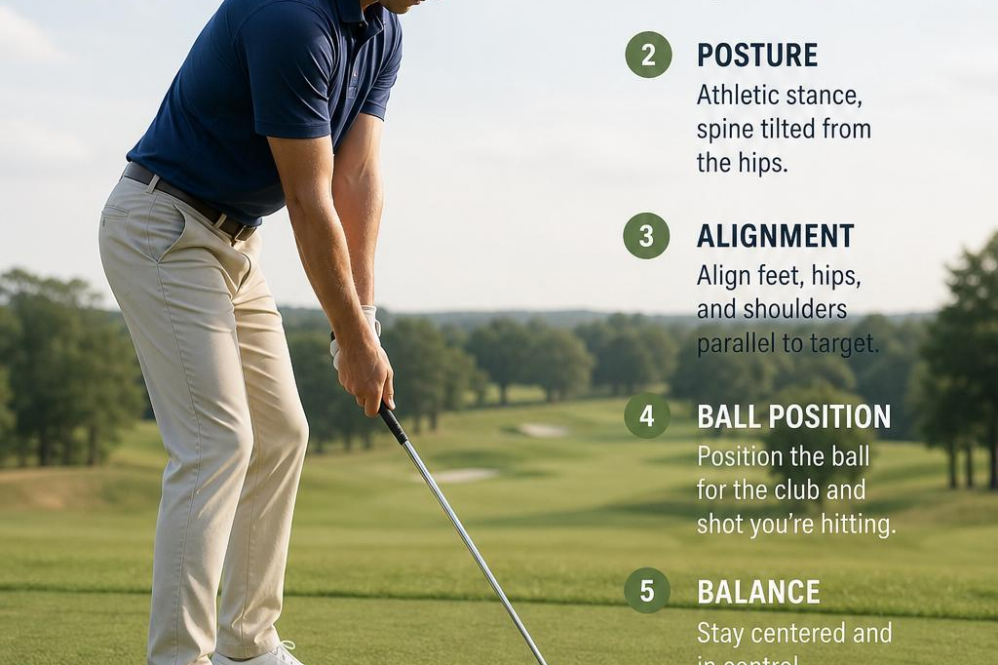
Understanding how your club selection interacts with your swing dynamics enables smarter shot planning and course management. For instance, using a hybrid instead of a long iron can facilitate better launch and softer landing on approach shots, especially from tough lies or windy environments. Pay close attention to your setup fundamentals: ensure the ball position aligns with the club you’re using-typically forward in the stance for longer clubs and centered for short irons-to optimize the angle of attack and spin rate. Additionally, focus on consistent clubhead speed and maintaining a square clubface through impact, both of which can be improved with drills like the “pause and go” or slow-motion swings.These exercises hone muscle memory,allowing for more precise shot shaping such as draws or fades,which greatly aids in navigating doglegs or hazards. Incorporating a pre-shot routine that factors in club choice relative to lie, wind, and hazard location sharpens decision-making on the course.
To elevate your game, integrate practice sessions that blend technical improvement with realistic course scenarios. Create drills involving various clubs from your set, such as hitting controlled 50-yard pitches using wedges of different lofts to learn distance gaps and trajectory nuances. Regularly measure carry distances and dispersion patterns to track progress and identify any inconsistencies caused by grip pressure or swing path deviations. Moreover, consider environmental factors like turf firmness and wind direction when selecting your club, as these affect roll-out and ball flight. For all skill levels, a balanced approach combining equipment knowlege with swing fundamentals-supported by routine practice and strategic course play-will foster confidence and reduce scores. Remember, trusting your clubs lets you focus more on rhythm and alignment, turning technical expertise into competitive advantage.
Unlocking Greater Driving Distance with Innovative Technology and Forgiveness
Maximizing driving distance begins with understanding the critical role of equipment technology combined with sound swing mechanics. Modern drivers incorporate advanced materials such as carbon fiber and titanium, which reduce clubhead weight without sacrificing strength. This innovation allows for a larger clubface with increased Moment of Inertia (MOI), making off-center hits more forgiving and maintaining ball speed across the face. When setting up, focus on a stance width just wider than shoulder-width, positioning the ball just inside your lead heel to encourage an upward strike angle of approximately 2 to 4 degrees. This promotes an optimal launch angle between 12 and 15 degrees in conjunction with a spin rate of around 2000 to 3000 rpm,ideal for maximizing carry and roll. For golfers using frist-time gear such as oversized drivers paired with high-MOI shafts, it is crucial to practice consistent tempo and maintain a smooth transition to harness this technology effectively.
Refining technique to unlock greater distance is equally significant, starting with sequencing the body’s motion to generate powerful and efficient energy transfer. Begin your downswing by rotating the hips toward the target while keeping the upper body slightly behind, creating a lag angle between the shaft and forearm of about 45 degrees at the top of the swing. This stored energy releases at impact, increasing clubhead speed. Incorporate drills such as the pump drill – pausing midway down to feel the lag – and the one-plane swing drill to improve swing path consistency. Additionally, practicing with a launch monitor or smartphone app helps quantify progress by measuring ball speed, smash factor, and launch conditions, allowing tailored adjustments.Golfers across all skill levels will benefit by focusing on a rhythm-driven tempo, avoiding common pitfalls like casting the club too early, which reduces power and accuracy.
Strategically, harnessing driving distance extends beyond pure power; it involves integrating course management principles and adapting to variable conditions. On tight fairways or windy days, choosing a driver with adjustable loft and weight settings enables fine-tuning trajectory and shot shape-promoting a controlled fade or draw tailored to the hole layout. Understanding when to prioritize direction over distance helps golfers avoid costly hazards and maximize scoring potential; such as, laying up short of a bunker rather than forcing a risky carry can save strokes. Incorporate practice routines that simulate course scenarios, such as hitting driver into a narrow fairway or adjusting shots under pressure. maintain mental composure by visualizing the shot shape and desired landing zone prior to swinging, which fosters confidence and consistency, ultimately leading to lower scores and more enjoyable rounds.
Putting Precision Made Simple with Essential Accessories and Expert Tips
Mastering putting precision begins with a well-established setup that promotes consistency and confidence on the greens.Start by ensuring your stance is shoulder-width apart with your eyes positioned directly over the ball to facilitate an accurate reading of the putt’s line and break. Maintain a slight bend in your knees and lean forward from the hips to create a stable and athletic posture,which is essential for a smooth stroke. When selecting putters as part of your essential gear,consider models with alignment aids like sight lines or dots to visually reinforce your target path. Practicing the forward pendulum motion while keeping the wrists firm helps maintain a true backstroke and follow-through-crucial for distance control. Incorporate drills such as the “gate drill,” were two tees form a corridor for your putter head to swing through, ensuring you eliminate excessive face rotation and promote a square impact consistently.
Reading greens effectively goes beyond visual observation; it requires sensitivity to subtle slopes, grain direction, and environmental conditions like wind or moisture, all of which influence ball behavior. Use a systematic approach by walking around the putt and viewing it from multiple angles-behind the ball, behind the hole, and from the side-to gauge elevation changes and breaks. Leverage tools like a digital green reader or a simple ball marker to estimate the putt’s break percentage and gauge speed requirements. When practicing,implement drills designed to improve touch and feel,such as lag putting where you aim to stop the ball within a 3-foot radius of the hole from 30 to 40 feet away. This not only enhances distance judgment but also reduces three-putt scenarios.remember to adjust your stroke tempo and face angle subtly based on these readings to match the green’s undulations precisely, an approach vital for both novice golfers and seasoned players aiming to sharpen their short game under pressure.
integrating course management strategies with your putting routine significantly optimizes scoring opportunities.Before each hole, analyze the green layout along with pin placement to decide whether an aggressive approach or a conservative lag putt serves best. For example, on a green with severe side slope leading away from the hole, it’s often wiser to aim for the safer inside edge and rely on a downhill comeback putt rather than risking a fatal miss.Utilize essential accessories like a reliable ball marker and a putter grip with tacky textures to maintain control even in damp conditions. Routine pre-shot visualization paired with deep breathing helps maintain focus and reduces the influence of nerves during critical putts. By incorporating these mental and physical strategies-matched with steady practice and proper equipment choice-you create a extensive putting system that improves accuracy, builds confidence, and ultimately lowers your scores regardless of skill level or playing conditions.