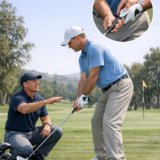
The follow-through phase of the golf swing-frequently enough relegated to aesthetics or habit-plays a determinative role in shot precision,energy transfer,and musculoskeletal loading. Beyond the visible arc of the arms and club, the follow-through encapsulates the culmination of coordinated segmental rotations, ground reaction forces, and neuromuscular timing that together determine clubhead trajectory, face orientation at impact, and post‑impact ball behavior. A rigorous biomechanical examination of this phase therefore offers a pathway to improved accuracy, increased consistency, and reduced injury risk for golfers across skill levels.
This article synthesizes contemporary biomechanical theory and empirical findings to illuminate the mechanistic links between follow-through characteristics and performance outcomes. We consider kinematic patterns (segmental angular velocities and sequencing), kinetic determinants (force application and impulse through the lower limbs), and neuromuscular control (timing and magnitude of muscle activation) that shape the terminal portion of the swing.methodological approaches surveyed include three‑dimensional motion capture, force‑plate analysis, surface electromyography, and computational modeling-each providing complementary insights into how technical variations alter outcome measures such as clubhead speed, face angle stability, and ball dispersion.
Our objectives are threefold: (1) to clarify the biomechanical principles that underpin an effective follow‑through, (2) to identify measurable targets for coaching and training, and (3) to outline evidence‑based interventions that reconcile performance enhancement with injury mitigation. By integrating laboratory findings with applied coaching considerations,this review seeks to furnish researchers and practitioners with a principled framework for optimizing the golf swing follow‑through.
Kinematic Sequence of the Follow Through and Its Impact on Ball Trajectory
The follow‑through is not a passive outcome of impact but an integral phase in the proximal‑to‑distal kinematic sequence that governs energy transfer to the clubhead. In optimal executions the pelvis accelerates and decelerates first, followed by thorax rotation, then the shoulder-arm complex, and finally the wrists and club. This temporal cascade produces predictable peaks of angular velocity that maximize clubhead speed while stabilizing clubface orientation at impact. Disturbances to the sequence-either temporal compression or segmental substitution-systematically alter launch conditions and increase shot variance.
Mechanical consequences of sequence deviations are measurable and repeatable. Proper sequencing minimizes inter‑segmental counter‑torque and negative work at proximal joints, preserving angular momentum for distal expression. conversely, premature distal release or delayed trunk rotation increases the demand for compensatory motions (e.g., forearm supination or lateral wrist breakdown), which typically manifest as altered face angle and higher side spin. Quantifying these relationships supports evidence‑based coaching and targeted interventions.
- Pelvic deceleration → Thorax acceleration: establishes global rotational tempo and initial face path.
- Thorax → Lead arm acceleration: positions the shaft for efficient energy transfer and affects attack angle.
- Lead arm extension → Wrist release/pronation: times the moment of inertia shift to increase clubhead speed.
- Lower‑body stabilization: dissipates residual forces and preserves balance for consistent impact geometry.
| Timing Error | Typical Ball Outcome |
|---|---|
| Early distal release (casting) | Reduced launch, increased sidespin (slice) |
| Delayed trunk rotation | Closed face at impact, low trajectory (hook/low ball) |
| Insufficient arm extension | Lower clubhead speed, vertical dispersion |
| Poor wrist pronation timing | Inconsistent spin axis, lateral curvature |
Assessment and training should emphasize measurable sequence markers: the order of peak angular velocities (pelvis → thorax → arm → club) and inter‑peak time differences (typically tens of milliseconds). Practical evaluation tools include high‑speed video, IMU sensors, and optical motion capture; these permit objective feedback on whether peaks conform to the ideal proximal‑to‑distal timing. Coaching cues and drills that restore sequencing-such as slow‑motion accelerations, resistance band rotations, and release‑timing drills-reestablish efficient torque transfer and improve the predictability of launch angle and spin.
From a performance‑transfer outlook, interventions should combine neuromuscular training to reinforce temporal coordination with technique drills that isolate problematic links in the chain. Emphasize **consistent trunk rotation finishing**, **full lead‑arm extension**, and **controlled wrist pronation** as primary checkpoints; secondary targets include hip deceleration control and scapular stability. When sequence integrity is restored and reinforced under varied tempos and loads, golfers reliably produce tighter dispersion patterns and more repeatable ball trajectories.

Lower Body Role and Weight Transfer During the follow Through: recommendations for Stability and Power
The lower extremities serve as the primary interface between the golfer and the ground,converting muscular action into observable clubhead velocity through coordinated application of ground reaction forces (GRFs).During the follow-through, continued transmission of GRFs from the rear foot to the lead foot supports deceleration of the torso while sustaining energy transfer to the club.Biomechanically, effective follow-through requires sustained force vectors that are directed through the stance rather then dissipated laterally; this alignment preserves clubhead speed while enabling controlled ball dispersion. Empirical studies of rotational athletes suggest that optimizing the magnitude and timing of these GRFs improves both accuracy and repeatability of the strike.
Sequencing remains critical: a proximal-to-distal cascade starting from hip rotation, through femoral rotation and knee extension, to ankle stabilization, governs the timing of weight transfer. Correct sequencing ensures that peak lower-limb power is generated shortly before ball impact and that the residual momentum is safely absorbed in the follow-through. Excessive early weight shift or delayed hip clearance produces compensatory upper-body motions that increase lateral dispersion and reduce consistency. For precision outcomes,the lead hip should rotate and accept compressive load immediately post-impact while the trail leg unloads in a controlled manner.
Stability during the follow-through is achieved by managing base of support and joint stiffness. A moderately widened stance at setup and a slight flex in the lead knee at impact provide a mechanical advantage for absorbing rotational torque; conversely, excessive stiffness or hyperextension increases perturbation sensitivity.The ankle complex acts as a fine-tuner for mediolateral balance-subtle eversion of the lead foot and controlled pronation can definitely help route vertical GRFs through the kinetic chain. Maintaining the center of mass (COM) within the polygon of support during the transition from impact to finish reduces variability in face angle at release.
Practical recommendations to develop these qualities include targeted drills and motor-control cues.focused exercises should emphasize controlled weight transfer, hip deceleration, and single-leg stability. Suggested practices:
- Slow-motion impact-to-finish swings-promote correct timing of hip rotation and knee absorption.
- Single-leg balance holds (30-45 s)-enhance proprioception of COM over the lead foot.
- Med-ball rotational throws-train coordinated hip-to-shoulder energy transfer and deceleration.
- Ground-reaction feedback drills using force-plate apps or wearable pressure sensors-improve awareness of lateral-to-medial transfer.
emphasize controlled deceleration cues (“finish soft on the lead leg,” “feel weight through the big toe”) rather than maximal acceleration cues during follow-through practice sessions.
Objective monitoring and simple assessment protocols support skill acquisition and retention. Key performance indicators include peak vertical GRF under the lead foot at impact, timing of peak pelvis rotation relative to impact (ideally slightly post-impact), and mediolateral COM displacement during the first second after impact. A concise reference table below can guide on-course assessment and training prioritization:
| Metric | Target | Speedy Drill |
|---|---|---|
| lead-foot peak GRF | Moderate increase post-impact | Step-through swings |
| Pelvis rotation timing | Peak ≈ 0-50 ms after impact | slow-impact rotations |
| COM lateral displacement | < stance width/4 | single-leg balance holds |
shoulder and Torso Rotation Mechanics for Optimal Clubface Control
Precision of the clubface at impact emerges from coordinated rotational kinematics of the torso and shoulders. effective follow-through is the terminal expression of a kinetic chain that transfers angular momentum from the lower body through the pelvis and thorax into the shoulder girdle and upper limb.Temporal sequencing-where thoracic rotation leads and scapulothoracic motion follows-reduces unwanted lag in the clubhead and stabilizes the face angle through impact, thereby minimizing sidespin and improving directional control.
Key mechanical elements converge to regulate face orientation: controlled axial rotation of the thorax, symmetric scapular posterior tilt and retraction, and finely timed humeral rotation. These elements function together to set the relative orientation of the clubshaft at and after impact. Coaches and biomechanists should monitor:
- Thoracic rotation amplitude – sufficient to store elastic energy but not so excessive as to decouple the arms.
- Scapular stability – to maintain a consistent clubface plane through impact.
- Humeral tracking – smooth internal rotation of the lead arm and controlled external rotation of the trail arm during follow-through.
Quantitative benchmarks can guide training focus: the table below summarizes succinct movement priorities and their expected influence on clubface control.
| phase | Movement Priority | Expected Effect |
|---|---|---|
| Late downswing | Thorax accelerates rotation | Improved clubhead centration |
| Impact window | Scapular stability + lead arm extension | Reduced face rotation |
| Follow-through | Controlled humeral internal rotation | consistent launch direction |
Shoulder health and pain prevention are integral to mechanical optimization. The shoulder complex is highly mobile and vulnerable to overload; epidemiological and clinical sources emphasize that repetitive or forceful rotations performed without adequate scapular control predispose players to pain syndromes. persistent discomfort should prompt load modulation,targeted rehabilitation,and consultation with musculoskeletal specialists to avoid chronic deficits that would degrade clubface consistency.
Translating mechanics into practice requires progressive,measurable drill work: emphasize thoracic mobility,scapular proprioception,and timed rotational drills. Useful progressions include:
- Controlled med-ball rotations – low-load, high-velocity emphasis on trunk-to-shoulder sequencing.
- Band-resisted scapular retraction – to reinforce a stable platform for the lead arm through impact.
- Impact-focus swings – short swings concentrating on face awareness and follow-through symmetry.
Wrist release and Clubhead Path: Techniques to Minimize Sidespin and Enhance Accuracy
The distal radioulnar joint and the complex assembly of carpal bones create a highly mobile pivot at the base of the hand; this anatomy underpins the wrist’s role as the primary interface between human kinematics and club dynamics. contemporary biomechanical analyses treat the wrist not as a single hinge but as a multi-axial control node offering flexion/extension,radial/ulnar deviation and subtle rotational adjustments.Because the wrist can alter clubface orientation milliseconds before impact, small changes in its timing or axis of rotation produce measurable changes in spin axis and lateral deviation at ball launch.
Release mechanics determine the instantaneous clubface orientation and the effective clubhead path through the impact window. An aggressive early wrist uncocking (loss of “lag”) tends to produce an open clubface relative to an inside-out path or a closed face relative to an outside-in path, both of which increase sidespin. Conversely, a well-timed combination of forearm rotation (pronation through impact), maintained wrist angle, and a neutral shaft lean promotes a square face and an inside-to-square-to-out path that minimizes lateral spin. Emphasis on the temporal coordination of pronation/supination with body rotation converts potentially destabilizing wrist motion into a stabilizing corrective at impact.
Practical techniques focus on timing and axis control rather than brute restraint. Key drills and checkpoints include:
- Lag-retention drill – hold the wrist hinge until the hands cross the lead thigh on the downswing to delay release timing.
- Alignment-rod path – swing with an alignment rod placed along the target line to ingrain an inside-to-square path.
- Impact tape feedback – use impact tape or foot spray combined with launch monitor spin readings to correlate wrist timing with sidespin metrics.
- Forearm-rotation repetition – practice slow-motion swings emphasizing controlled pronation through impact to square the face without an early flip.
Sequence and load transfer are essential complements to wrist technique. Proper lower-body rotation and weight shift create a predictable clubhead arc that reduces the compensatory demands on the wrist; in other words, reliable ground reaction forces attenuate errant wrist-driven face rotations. Coaches should monitor for symptoms of repetitive strain-chronic pain or paresthesia can indicate overuse or maladaptive mechanics (e.g.,excessive wrist extension under load) and warrant modification of drill volume or rehabilitation input. Objective measures-clubhead path, spin axis, and ball dispersion-provide the empirical basis for progressive adjustments.
For applied coaching, the following table synthesizes common corrective interventions and their expected effects in practice:
| Intervention | Primary target | Expected Outcome |
|---|---|---|
| Delayed release (lag drill) | Release timing | Reduced sidespin, tighter dispersion |
| Alignment-rod path | Clubhead path | More inside-to-square path |
| Forearm pronation reps | Face rotation | Face stabilization through impact |
Collectively, these strategies demonstrate that disciplined wrist release integrated with optimized clubhead path is a replicable, measurable method to minimize sidespin and enhance shot accuracy.
Temporal Coordination and Timing: Drills to Synchronize Transition From Impact to Follow through
Efficient transition through impact into the follow-through is governed by precise temporal coordination of the kinetic chain: pelvis rotation, thorax clearance, and distal segment deceleration must occur in a defined sequence and timing to produce repeatable ball flight. Biomechanical analyses indicate that milliseconds of mistimed muscle activation-particularly in the gluteals, obliques, and rotator cuff-alter clubface orientation and path at and immediately after impact. Therefore, temporal control is not merely aesthetic; it is a measurable neuromuscular variable that underpins **accuracy**, **dispersion**, and **energy transfer**.
Practically, temporal synchronization can be trained through targeted drills that emphasize rhythm, delayed release, and consistent deceleration patterns. Effective drills include:
- Metronome Tempo Swings – synchronize backswing and downswing to a fixed BPM to stabilize overall cycle time;
- Impact-Release Pause – brief isometric hold at impact position to reinforce structural alignment before allowing the follow-through;
- Trail-Hand Deceleration – softening the trail wrist immediately post-impact to train controlled clubhead deceleration;
- Step-Through Progression – initiating lower-body rotation earlier to promote correct lead-side sequencing.
Each drill targets a specific phase of the transition and can be parameterized for intensity and duration.
Objective feedback enhances motor learning; therefore, incorporate simple measurement tools. A metronome or smartphone app provides tempo consistency, slow‑motion video supplies kinematic verification, and launch monitors quantify changes in face angle and dispersion attributable to timing adjustments. The table below summarizes recommended practice targets for common synchronization drills.
| Drill | Target Rhythm | Primary Focus |
|---|---|---|
| Metronome Tempo Swings | 60-70 BPM | Global cycle time |
| Impact-Release Pause | Hold 0.25-0.5 s | Impact stability |
| Trail-Hand Deceleration | Progressive slow-down | Deceleration control |
Programme progression should follow motor-learning principles: begin with slow, externally focused repetitions for explicit timing (e.g., metronome-guided), then move to variable, faster practice that simulates on-course stressors. Volume and load must be managed to avoid fatigue-induced timing breakdowns; incorporate rest intervals and alternate between technical and outcome-focused sessions. Emphasize proprioceptive cues-feel of weight transfer and lead-side stabilization-so temporal patterns become implicit and resilient.
Typical timing faults include premature upper-body rotation, delayed pelvis clearance, and an early cast of the club, each producing predictable ball-flight signatures. Corrective verbal cues-for example, **”lead hip first”**, **”hold through impact”**, or **”soft trail wrist”**-coupled with the drills above, provide concise reminders that re-establish proper sequencing. Regularly re-assess using video and launch data to confirm that temporal changes translate into improved **precision** and **consistency** under realistic conditions.
Balance Posture and Center of Mass Progression: Assessment Protocols and Correction strategies
Effective follow-through mechanics depend on a systematic appraisal of whole-body stability and the trajectory of the body’s center of mass (CoM) from address through deceleration. Clinical and performance assessments should combine qualitative observation with quantitative instrumentation to capture both positional alignment and dynamic transfer of mass. Commonly used protocols include:
- High-speed video analysis for segmental kinematics;
- Force-plate/pressure-mat recordings for CoM excursion and ground-reaction-force (GRF) symmetry;
- Clinical balance tests (single-leg stance, Y-balance) for proprioceptive capacity.
These complementary modalities establish a reproducible baseline and identify whether imbalances are neuromuscular, structural, or technique-driven.
Objective metrics that reliably predict follow-through stability are: mediolateral CoM displacement relative to base of support, vertical loading patterns through lead and trail limbs, and trunk-pelvis coupling angles during deceleration. Field-friendly protocols should quantify these with simple thresholds-such as, mediolateral CoM excursion exceeding 8-10% of stance width or persistent >10% asymmetry in vertical GRF under the lead foot-flagging a need for intervention. Emphasis should be placed on capturing both peak values and the temporal profile of CoM progression to differentiate premature lateral weight shift from controlled lateral transfer.
Correction strategies must be hierarchically organized and individually prescribed. Begin with restorative mobility and motor control, progress to targeted strength and reactive balance, and integrate technical re-education within the on-course motor pattern. Practical interventions include:
- Mobility first: thoracic rotation and ankle dorsiflexion restoration to enable a centered finish;
- Proximal control drills: pelvis-on-femur stability exercises and loaded hip hinge patterns;
- Balance-specific training: single-leg perturbation work and reactive reach tasks to reduce excessive CoM drift.
Each drill should be dosed with objective targets (e.g., maintain CoM within 5% of midline during single-leg dynamic rotations) to ensure measurable progress.
When integrating assessment and correction into practice, use a concise decision matrix to translate findings into immediate coaching cues. The table below is an exemplar for field implementation and communicates a rapid intervention pathway that coaches and clinicians can use between practice rounds. Use force-plate or pressure-mat feedback where available; otherwise substitute real-time video and validated clinical tests for triangulation.
| Assessment | Key Metric | Immediate Correction |
|---|---|---|
| Single-leg dynamic reach | Reach asymmetry >10% | Split-stance balance drills + cue: “stay centered” |
| Pressure-mat CoM trace | ML excursion >10% stance | Medial T-band resisted swings; hip control |
| Video trunk-pelvis phase | Early pelvic slide | Tempo swings emphasizing delayed weight shift |
Longitudinal monitoring is essential: retest after defined training blocks (4-8 weeks) and correlate biomechanical changes with shot dispersion and pain metrics. Prioritize convergent evidence (instrumented + clinical + performance) to confirm that reduced CoM variability translates to greater repeatability and lower injury risk. In practice, adopt a mixed-model feedback strategy-objective numbers for progression, and concise tactile/verbal cues for on-course transfer-to consolidate neuromotor adaptations into the golfer’s habitual follow-through pattern.
Neuromuscular Patterns and Motor Learning Principles for Durable Follow Through Habits
Neuromuscular coordination underpins a durable follow-through by organizing intersegmental timing into reproducible motor patterns. High-fidelity sequencing from pelvis through trunk to the distal upper limb reduces variability at ball contact and during the subsequent deceleration phase. Contemporary electromyographic and kinematic studies indicate that stable outcomes are associated with consistent activation order and timing rather than maximal activation alone; therefore, training should prioritize temporal fidelity of the pattern-relative onset latencies and phase durations-over isolated strength increases.
Motor learning principles provide the scaffolding for converting a repeatable pattern into a durable habit. Progression through the cognitive, associative and autonomous stages requires graduated challenge, systematic variability, and appropriately timed feedback. Emphasize practice structures that favor retention and transfer: distributed schedules, contextual interference (variable practice), and intermittent augmented feedback that fades as performance stabilizes.These approaches accelerate consolidation in neural circuits responsible for both feedforward commands and feedback-based corrections.
At the physiological level, durable follow-throughs depend on adaptive modulation of motor unit recruitment, rate coding, and reflex gains. Controlled co-contraction around the shoulder and trunk increases mechanical stability during high-velocity rotations,while tuned stretch‑shortening responses of the wrist and forearm optimize terminal clubhead behavior. Attention to neuromuscular stiffness and reflex tuning-parameters commonly assessed in clinical neuromuscular evaluations-can reduce unwanted oscillations and improve the repeatability of launch conditions.
Translate these principles into targeted interventions with a constraints-led approach and progressive overload on temporal and spatial accuracy. Useful practice components include: kinesthetic sequencing drills to stabilize timing, variable-speed impact repetitions to broaden control solutions, and proprioceptive perturbation tasks to enhance reflex adaptability.
- Kinematic chaining drills – pelvis to shoulder to wrist
- Deceleration control – slow-to-fast reversals
- Augmented feedback schedule – bandwidth and faded feedback
Objective monitoring enhances habit durability and guides progression. Key metrics and pragmatic targets can be summarized as follows:
| Metric | Practical target |
|---|---|
| Trunk rotation velocity | Consistent peak timing |
| Arm extension angle | Reproducible within ±3° |
| Wrist pronation timing | Onset aligned with release window |
Integrating periodic EMG snapshots, simple inertial sensors, and structured retention tests ensures that neuromuscular adaptations reflect true learning rather than transient performance, thereby producing robust follow-through habits that transfer to the course.
Integrating Biomechanical Assessment Into Practice: Measurement Tools Feedback Methods and Progressive Training Plans
Contemporary coaching demands that biomechanical assessment be integrated as a systematic component of skill acquisition rather than an occasional diagnostic tool. By embedding quantitative evaluation into routine practice, coaches can move beyond heuristic instruction and apply evidence-based prescriptions that target the mechanical determinants of a consistent follow-through. This approach emphasizes repeatable metrics-such as peak clubhead speed, pelvis rotation timing, and center-of-pressure migration-so that technical modifications can be evaluated against objective benchmarks.Implementing these measurements requires clear protocols for data capture, standardized warm-up routines, and controlled test swings to ensure inter-session comparability.
Selection of measurement instruments should align with the performance questions being asked and the logistical constraints of the training habitat. High-fidelity systems (optical motion capture and force plates) offer the most thorough kinematic and kinetic profiles but have cost and lab-bound limitations; conversely, wearable inertial measurement units (IMUs) and pressure insoles provide field-capable alternatives suitable for on-course monitoring. The table below summarizes common tools, their principal outputs, and typical use cases to guide pragmatic tool choice.
| Tool | Primary metric | Typical Use |
|---|---|---|
| Optical motion capture | Kinematics (segment angles, timing) | Lab-based swing sequencing |
| IMUs / Wearables | Angular velocity, segment acceleration | On-course and practice-range monitoring |
| Force plate | Ground reaction forces | Weight-transfer and push-off analysis |
| Pressure mat / Insoles | Center of pressure, plantar loading | Footwork and balance during follow-through |
Feedback strategies must translate biomechanical data into actionable interventions that fit the athlete’s cognitive load and training stage. Effective modalities include:
- Augmented visual feedback: synchronized slow-motion replay with annotated kinematic markers to illustrate sequencing deficits.
- Real-time auditory cues: sonified timing markers that signal correct pelvis-to-shoulder rotation ratios during practice swings.
- Haptic guidance: wearable vibration cues to reinforce desired wrist or hip angles during the follow-through.
- Descriptive analytics reports: concise graphs and KPI summaries that inform weekly training adjustments.
Progressive training plans should be periodized, data-informed, and individualized, progressing from motor control re-education to power expression and finally situational integration. Early phases focus on isolated drills that normalize segmental sequence and posture under low tempo and low variability; intermediate phases increase velocity demands and add perturbations to build robustness; advanced phases prioritize transfer to on-course tasks and cognitive load management (e.g., decision-making under pressure). Throughout,predefined thresholds for load,variability,and performance (e.g., acceptable ranges for pelvic rotation timing or COP excursion) guide progression and reduce injury risk.
Q&A
Below is a professional, academically styled Q&A designed to accompany an article titled “Mastering Golf Swing Follow-Through: Biomechanical Insights.” The questions address foundational theory, measurement and analysis, practical coaching, injury considerations, and directions for research and practice.
1. Q: What biomechanical role does the follow-through play in the golf swing?
A: The follow-through is an integral terminal phase of the swing that reflects the preceding kinematic sequence and force application. Biomechanically, it is indeed the expression of momentum transfer through the kinetic chain, indicating how effectively angular and linear impulses generated in the lower body and torso have been transmitted to the club. Proper follow-through is associated with energy dissipation in controlled ways, consistent clubhead orientation at impact, and minimized compensatory movements that impair accuracy and precision.
2.Q: How does the follow-through influence shot accuracy and precision?
A: The follow-through is correlated with the kinematic and kinetic variables at impact-clubface orientation, swing path, and clubhead speed. A balanced and biomechanically consistent follow-through signals stable center-of-mass (COM) control, appropriate deceleration patterns, and minimal late-stage compensations, all of which reduce variability in face angle and path at impact and thus enhance accuracy (systematic error reduction) and precision (reduced dispersion).3. Q: What are the principal biomechanical concepts relevant to an effective follow-through?
A: Key concepts include:
– Kinetic chain sequencing (proximal-to-distal activation)
– Conservation and redirection of angular momentum
– Ground reaction force (GRF) generation and dissipation
– Center-of-mass transfer and base-of-support dynamics
– Joint torque production and controlled eccentric deceleration
– Coordinated timing of wrist release and forearm pronation/supination
4. Q: Which joints and muscle groups are most critical during the follow-through?
A: Primary contributors include the hips and pelvis (rotation and deceleration), lumbar and thoracic spine (rotation/control), gluteal and quadriceps musculature (stabilization and GRF management), rotator cuff and scapular stabilizers (shoulder control), and forearm/wrist musculature (release and deceleration). Eccentric action in the lead-side posterior chain and shoulder complex is particularly critically important for controlled dissipation.
5. Q: How does ground reaction force (GRF) behavior relate to an effective follow-through?
A: GRFs provide the external force base for generating rotational torque and linear momentum. An effective follow-through follows a characteristic GRF pattern: an initial drive and weight transfer toward the lead side, a peak in vertical and anterior-posterior GRFs near impact, and a controlled redistribution of load during follow-through. Dysregulated GRF patterns (e.g., excessive heel loading or failure to transfer weight) often manifest as compromised follow-through and inconsistent ball flight.
6. Q: How is timing in the kinetic chain linked to follow-through quality?
A: Precise proximal-to-distal sequencing-pelvis rotation preceding torso, torso preceding arms, and arms preceding the release of the club-is essential. if sequencing is disrupted (e.g., early arm acceleration or late hip rotation), the follow-through will show compensatory motion (e.g., over-rotated shoulders, early collapse) that reflects impaired impulse transmission and increases shot variability.
7. Q: What are common biomechanical faults in the follow-through and their performance consequences?
A: Common faults include:
– early deceleration of the arms (loss of clubhead speed; inconsistent contact)
– Over-rotation or collapse of the torso (inconsistent face angle)
– Insufficient weight transfer (blocked or pulled shots)
– Excessive lateral sway (distance loss and direction variability)
Each fault alters impact kinematics, increasing the likelihood of direction and distance errors.
8. Q: How should follow-through mechanics adapt across different clubs and shot types?
A: Essential sequencing remains consistent, but amplitude and terminal positions vary. Full drivers require longer arc and greater torso rotation with delayed wrist release to maximize clubhead speed; short irons and wedges emphasize control, shorter swing arcs, and a more compact, balanced follow-through to prioritize precision and spin control. Adaptation must preserve kinetic sequencing and controlled deceleration appropriate to shot intent.9. Q: Which objective measures are most useful to evaluate follow-through in research or coaching?
A: useful measures include:
– Kinematic variables: joint angles, angular velocities, and segment sequencing (via motion capture)
– Kinetic variables: GRFs and center-of-pressure (via force plates)
– Club metrics: clubhead speed, attack angle, path, and face angle (via launch monitors)
– Temporal metrics: sequencing timing (e.g., pelvis peak velocity preceding thorax by specific ms)
– Variability metrics: within-subject standard deviation of impact-related parameters
10. Q: What technologies best support biomechanical analysis of the follow-through?
A: Laboratory-grade optical motion capture and force plates provide the most comprehensive biomechanical data. Portable inertial measurement units (IMUs) combined with high-fidelity launch monitors (radar/LiDAR) offer practical field assessments. High-speed video with synchronized markers remains valuable for coach-led qualitative analysis when advanced lab equipment is unavailable.
11. Q: Which training interventions effectively improve follow-through mechanics?
A: Evidence-based interventions include:
– Drills that emphasize proximal-to-distal sequencing (e.g., medicine-ball rotational throws)
– Load-transfer exercises to reinforce weight shift (e.g., step-and-rotate drills)
– Eccentric strength and deceleration training for shoulders and posterior chain
– Tempo and rhythm drills to stabilize timing
– augmented feedback (video, IMU biofeedback, launch monitor metrics) to accelerate motor learning
12. Q: How should a coach give feedback about follow-through to avoid inducing maladaptive changes?
A: Feedback should be concise, outcome-focused, and externally referenced (e.g., “finish with chest/face toward target”) rather than internally prescriptive. Use objective metrics to show progress, apply prescriptive cues only after assessing the athlete’s individual movement constraints, and prioritize drills that reproduce game-like conditions. Avoid over-coaching the finish; rather, teach movement patterns that naturally produce a desirable follow-through.
13. Q: Are there injury risks associated with poor follow-through mechanics?
A: yes. Faulty follow-through can increase eccentric load and shear forces at the lumbar spine, shoulder girdle, and wrists, raising injury risk over time. Examples include lumbar strain from abrupt trunk deceleration, rotator cuff overload from poor scapular control, and wrist tendinopathy from late or violent release. Strengthening, mobility work, and technique correction reduce these risks.
14. Q: how does anthropometry and physical capacity affect an optimal follow-through?
A: Individual differences in stature, limb lengths, joint range-of-motion, and strength/power profiles influence feasible swing geometry and follow-through aesthetics. Coaches should tailor technical goals to an athlete’s structural and functional capacity-what is optimal for one golfer (large torso rotation) might potentially be suboptimal or injurious for another with limited hip mobility.15. Q: What practical drills specifically target follow-through improvements?
A: Effective drills include:
– Medicine-ball rotational throws to reinforce sequencing and release timing
– Step-through swings to emphasize forward weight transfer and balanced finish
– Pause-at-impact drills to ingrain correct wrist and arm positions
– Slow-motion swings focusing on controlled deceleration and balanced finish
– One-handed swings (lead arm only) to train torso-driven rotation and deceleration
16. Q: How should practice be structured to transfer follow-through improvements to on-course performance?
A: Integrate variable practice with deliberate focus: alternate between constrained drills (to establish correct sequencing) and contextualized practice (full swings under varied conditions). Use block practice to consolidate technique, then randomize shot type and target to foster adaptability. Incorporate outcome-based feedback (shot dispersion and launch monitor data) and schedule progressive overload in physical conditioning to match technical improvements.
17. Q: Which outcome metrics best reflect improved follow-through in field settings?
A: Improvements manifest as reduced variability in face angle and club path at impact, tighter dispersion patterns on the range or course, consistent carry distance, and stable launch conditions (spin rate and launch angle). Subjective indicators include more repeatable finish positions and reduced compensatory motions observable in video.
18. Q: What are current gaps in biomechanical knowledge of the follow-through and future research directions?
A: gaps include longitudinal causal evidence linking specific follow-through kinematics to injury incidence, optimal variability levels for performance under pressure, and individualized models predicting the best technical adaptations considering anthropometrics and neuromuscular profiles. Future research should integrate wearable sensor data,machine learning for individualization,and field-based longitudinal studies to validate interventions over competitive seasons.
19. Q: how can practitioners balance technical instruction with athletes’ natural technique variation?
A: Emphasize key functional invariants (sequencing, weight transfer, controlled deceleration) rather than prescribing a single aesthetic finish. Use individualized assessment to identify which variations are benign and which compromise impact mechanics. Employ a constraint-led approach that modifies task, environment, or equipment to guide desirable movement solutions.
20. Q: Where can readers find further applied and scientific resources on follow-through biomechanics?
A: Consult peer-reviewed journals in sports biomechanics and sports medicine, biomechanics textbooks addressing rotational sports, and applied resources from certified coaching bodies. The main article (provided link) offers a synthesis of applied techniques and references; practitioners should complement it with empirical studies using motion capture, force plate, and launch monitor data for evidence-based practice.
If you would like, I can:
– Convert these Q&A into a one-page handout for coaches,
– Produce drill progressions tailored to a specific golfer profile (age, handicap, physical limitations), or
– Summarize relevant empirical studies and produce recommended metrics for on-course tracking.
Concluding Remarks
a deliberate and biomechanically informed follow-through is not a cosmetic afterthought but an integral component of a repeatable, accurate golf swing. Synthesizing kinematic and kinetic evidence highlights how coordinated segmental sequencing, appropriate energy dissipation, and neuromuscular timing jointly determine shot dispersion, clubface control, and injury risk. For practitioners, this underscores the value of objective assessment-using tools such as high-speed motion capture, inertial sensors, and ground-reaction force measurement-to identify individual constraints and to prescribe targeted interventions that balance performance gains with tissue safety. For coaches and athletes, progressive drill design that emphasizes tempo, extension, and deceleration while preserving intersegmental coordination will likely yield the greatest improvements in precision and consistency.
Future research should prioritize longitudinal and ecologically valid studies that examine how training-induced changes in follow-through mechanics translate to on-course outcomes across skill levels, equipment types, and fatigue states. Investigations into individual variability and optimal movement solutions will further refine evidence-based coaching frameworks.ultimately, integrating biomechanical insight with systematic practice and individualized coaching offers the most promising pathway to mastering the follow-through-and thereby enhancing both accuracy and longevity in the game.