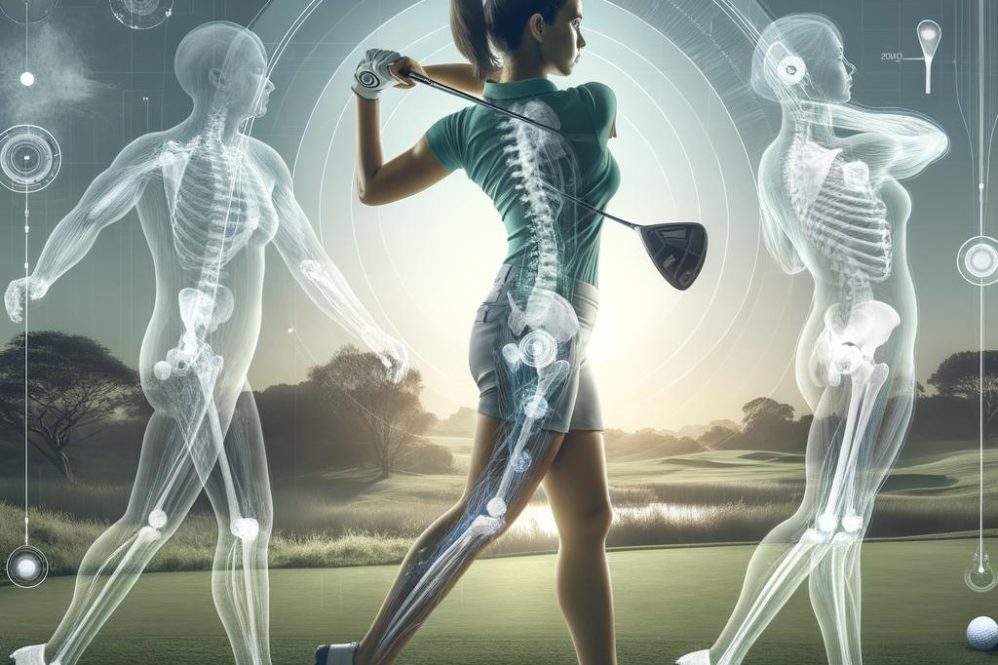
Optimizing the follow-through phase of the golf swing is central to enhancing shot precision, consistency, and injury prevention. Optimization-understood here as the process of improving or making the best possible use of biomechanical and neuromuscular resources (cf. Merriam‑webster; Cambridge Dictionary)-requires systematic attention to kinematic sequencing, intersegmental force transfer, and sensorimotor control. Although much research has focused on clubhead speed and impact mechanics, the follow-through encapsulates the culmination of energy transfer and motor regulation; its characteristics offer insight into preceding coordination patterns and the capacity of the athlete to execute repeatable motor programs under task constraints.
This article synthesizes contemporary biomechanical evidence on the determinants of an effective follow-through. Key topics include proximal-to-distal sequencing from the lower limbs through the pelvis and trunk to the upper limb, the role of ground reaction forces and angular impulse in generating and dissipating rotational energy, and the temporal coordination of eccentric-to-concentric muscle transitions that govern deceleration and clubface control. Attention is paid to how small variations in timing or segmental alignment propagate through the kinetic chain to influence clubhead orientation at and after impact, thereby affecting shot dispersion and landing behaviour.
neuromuscular control mechanisms that underlie follow-through quality are examined, including feedforward planning, feedback-mediated corrections, and motor variability as both a source of error and an adaptive feature of skilled performance. Measurement modalities-three‑dimensional motion capture, force platforms, electromyography, and inertial sensors-are reviewed for their utility in quantifying kinematic sequencing, force transfer, and muscle activation patterns relevant to follow-through optimization. applied considerations for coaching, strength and conditioning, and injury risk mitigation are integrated with empirical findings to bridge laboratory evidence and on-course practice.
The ensuing sections aim to (1) define biomechanical markers of an optimal follow-through, (2) identify neuromuscular and mechanical constraints that limit repeatability, and (3) propose evidence-based strategies for assessment and training. By framing follow-through as a diagnostic and performance-relevant phase rather than a mere result of impact, the discussion provides a coherent framework for advancing both scientific understanding and practical interventions in golf swing performance.
Kinematic Sequencing and Energy Transfer During the Follow-Through
Proximal-to-distal kinematic sequencing remains the canonical framework for understanding how mechanical energy is generated and conveyed through the body into the club during the terminal phases of the swing. In the follow-through, the pelvis completes its rotational impulse and begins active deceleration, followed shortly by the thorax, upper arm, forearm, and finally the club. This ordered cascade-characterized by transient peaks in angular velocity that occur sequentially-maximizes the effective transfer of rotational kinetic energy while minimizing counterproductive torques at distal segments. Precise temporal ordering is critical: small perturbations in the timing of peak segmental velocities can increase intersegmental forces, promote unwanted wrist rolls, or create clubhead yaw that degrades shot precision.
The dynamics of energy transfer in the immediate post-impact window are governed by both inertial interactions among segments and the modulation of ground reaction forces (GRFs). Ground forces provide the earliest source of external impulse; an appropriately timed reduction in vertical GRF and a coordinated shift of shear forces facilitate a smooth redirection of angular momentum up the kinematic chain. Equally important is the neuromechanical process of eccentric braking in proximal musculature (notably gluteals and paraspinals), which stabilizes the pelvis and thorax to allow distal segments to continue releasing energy into the club. A robust follow-through thus reflects effective management of momentum: energy should be dissipated in controlled muscle activity rather than by uncontrolled segmental collisions or excessive joint loading.
Neuromuscular coordination mediates variability in sequencing and underpins repeatability across swings. Skilled performers demonstrate consistent intersegmental timing and lower trial-to-trial variability in peak velocity order, suggesting tightly coupled motor synergies and feedforward control strategies supplemented by rapid proprioceptive feedback. From a training outlook, interventions that emphasize timing, rate of force development, and deceleration capacity improve sequencing fidelity. Practical drills include:
- Step-through swing: promotes weight transfer and encourages pelvis-to-thorax lead.
- Medicine-ball rotational throws: develop explosive proximal-to-distal force transmission and timing of torso-to-arm release.
- Deceleration/tempo drills: focused on controlled follow-through to train eccentric braking and reduce distal overshoot.
Objective assessment and simple coaching cues help translate these biomechanical principles into practice.commonly used metrics are the order of peak angular velocities, the inter-peak latency between pelvis and thorax, and the presence of smooth decline in clubhead angular acceleration post-impact. Coaches can use wearable inertial sensors or motion capture to quantify sequencing and target corrective actions. The table below summarizes concise,coach-friendly targets and cues.
| Metric | Typical Target | Coaching Cue |
|---|---|---|
| Pelvis→Thorax lag | ~30-60 ms | “Lead with the hips, let the chest follow.” |
| Thorax→Hands lag | ~50-120 ms | “Chest opens, then let the arms release.” |
| post-impact deceleration | Smooth decline in club accel. | “finish through the ball; resist snapping back.” |

lower Body Stability and Weight Shift Strategies for Post-Impact Control
The lower kinetic chain functions as the primary stabilizer during the post-impact phase, converting translational momentum into controlled deceleration and balance. Effective post-impact control depends on precise alignment of the **center of pressure (CoP)** beneath the lead foot and timely modulation of **ground reaction forces (GRF)** to resist unwanted transverse and frontal plane motion. When the lead limb provides a stable base-through hip abduction control, knee flexion stiffness, and ankle dorsiflexion-the torso and upper extremity can complete follow-through rotations without late compensations that degrade shot dispersion.
Timing and direction of lateral-to-anterior weight transfer are essential to reproducible outcomes; practitioners should prioritize coordinated shift rather than maximal shift.Practical coaching cues and drill emphases include:
- Controlled bracing: maintain a slight lead-knee flexion to accept impact eccentrically rather than locking the joint;
- progressive transfer: shift body mass onto the lead side across impact, then allow a measured anterior transfer to enable follow-through extension;
- Foot contact strategy: promote toe-up/off of the trail foot while ensuring plantar contact of the lead forefoot for rotational arrest.
Neuromuscular orchestration of specific muscle groups underlies the mechanical stability required after contact. A concise mapping of primary contributors clarifies training priorities:
| Muscle | Primary post-impact role |
|---|---|
| Gluteus medius | frontal-plane stabilization of pelvis |
| Quadriceps (lead) | Eccentric load absorption and knee position control |
| Calf complex & tibialis anterior | regulation of ankle dorsiflexion and CoP progression |
Quantifiable practice progressions and monitoring enhance repeatability: use short-range metrics (e.g., CoP trajectory, lead-leg vertical force curve, and pelvic angular deceleration) to evaluate interventions. Implement staged drills-static single-leg holds, slow-speed half-swings emphasizing weight arrival, and loaded eccentric braking exercises-to train the timing and magnitude of force acceptance. Coaches should emphasize simple objective cues such as a stable lead-hip line and absence of lateral trunk collapse; these, combined with force- or pressure-based feedback where available, accelerate neuromuscular adaptation and refine post-impact control.
Torso Rotation, Shoulder Mechanics, and Clubface Orientation Management
Efficient transfer of angular momentum from the lower body to the upper body is fundamental to consistent ball-striking. Optimal pelvic-thoracic separation generates stored elastic energy that, when released, produces a controlled acceleration of the torso through impact. Excessive or premature rotation disrupts the kinematic sequence and increases variability in clubhead path; conversely, insufficient rotation forces compensatory upper-body motions that misalign the strike. Maintaining a stable lower spine and timed thoracic rotation preserves the geometric relationship between the shoulder plane and the clubshaft, which is essential for predictable clubface behavior at impact.
Shoulder girdle mechanics act as the link between torso rotation and distal segment release. Scapular stability and coordinated thoracohumeral motion ensure the shoulders rotate on an appropriate plane without unwanted elevation or collapse. Key coaching emphases include:
- Scapular control: maintain retraction on the trail side through transition to avoid early face opening.
- Lead shoulder descent: controlled drop through impact to square the face while conserving rotation speed.
- Symmetric rotation plane: align shoulder turn with pelvic rotation to minimize lateral sway and preserve path consistency.
| Metric | Practical Target |
|---|---|
| Pelvic-thoracic separation | 20°-40° (mounted elastic load) |
| Lead shoulder descent | Controlled 5°-10° drop through impact |
Management of clubface orientation is the emergent property of coordinated torso rotation, shoulder mechanics, and distal segment timing. The final face angle at impact is primarily governed by the relative timing of forearm rotation (pronation/supination), wrist hinge release, and the deceleration profile of the shoulders. Precise temporal sequencing – a delayed but rapid distal release following torso deceleration – reduces the need for corrective wrist action post-impact. From a neuromuscular perspective, training should emphasize reproducible motor patterns through rhythm-based drills and perturbation training that stresses feedforward control.
Integrative practice strategies prioritize reproducibility: use tempo-governed swings to stabilize torso-to-shoulder timing,employ mirror and video feedback to monitor shoulder plane alignment,and incorporate resisted rotational drills to build robust trunk-to-shoulder coupling. Objective monitoring (high-speed video or inertial sensors) allows quantification of rotation angles and release timing, enabling incremental adjustments.In applied settings, emphasize three principles: consistent kinematic sequencing, minimized compensatory shoulder motion, and timed distal release – together these reduce shot dispersion and enhance repeatability of clubface orientation at impact.
Wrist and Forearm Dynamics for controlling clubhead Speed and Release
The distal forearm and wrist form a biomechanically complex linkage that governs the final kinematic outputs of the golf swing. The carpus-composed of eight small carpal bones that articulate with the radius and ulna-provides a multi-axial pivot that enables flexion/extension, radial/ulnar deviation, and contributes to forearm pronation/supination. Surrounding tendons,ligaments and muscular attachments transmit high-frequency forces from proximal segments to the clubhead while also providing the viscoelastic damping necessary for precise release timing. These anatomical features create a small, high-bandwidth control system whose mechanical state at impact disproportionately affects clubhead velocity and face orientation.
From a systems-control perspective, wrist and forearm mechanics modulate both the magnitude and timing of distal segment angular velocity. Controlled wrist cocking during the downswing stores elastic energy in wrist extensors and flexors; a coordinated uncocking (release) transfers that stored energy into clubhead speed when timed with torso and arm deceleration. Fine adjustments in radial/ulnar deviation and subtle pronation/supination near impact alter loft, face angle and the effective lever arm of the club. Neural control strategies therefore prioritize rapid, low-amplitude corrections-stiffness regulation and anticipatory muscle activation-to stabilize the clubface while allowing efficient energy transfer.
Optimizing that control requires targeted neuromuscular and sensorimotor training to improve rate of force development, eccentric control, and proprioceptive acuity. Effective interventions combine strength and tolerance of high-velocity eccentric loads with drills that emphasize timing and feel rather than brute force.Practical training elements include:
- Wrist hinge and uncock drills to refine timing of release relative to torso deceleration.
- Isometric and eccentric wrist strengthening to manage late-swing deceleration and prevent early release.
- Reactive tempo swings and medicine-ball throws to enhance intersegmental sequencing and rate coding.
- Proprioceptive perturbation work (e.g., perturbation holds) to increase wrist stability under variable loads.
These approaches emphasize repeatable motor patterns that reduce variability in clubhead speed and face orientation at impact.
Common biomechanical faults can be diagnosed and corrected by focusing on wrist kinematics, muscular timing and load transfer. The table below summarizes typical errors, their mechanical consequences, and primary corrective targets for practice and conditioning.
| Fault | Biomechanical Effect | Corrective Focus |
|---|---|---|
| Early release | Reduced lever length → lower clubhead speed | Eccentric wrist extensor control, timing drills |
| Passive wrists at impact | Increased face variability | Isometric stability, grip-pressure modulation |
| Excessive radial deviation | Altered loft/face angle | forearm pronation/supination sequencing |
Monitoring wrist stiffness, grip pressure and the temporal relationship between wrist uncocking and torso deceleration provides practical metrics for coaches seeking to improve shot precision and repeatability.
Ground Reaction Forces and Balance Metrics Informing Consistent Finish Positions
Quantifying the interaction between the golfer and the ground provides objective anchors for understanding why a finish position is repeatable or variable. Vertical and shear components of the ground reaction force (GRF) during late downswing and impact determine how effectively momentum is transferred through the lead limb into torso rotation and arm follow-through. Timing of the peak vertical GRF relative to ball contact and the subsequent reduction in medial-lateral shear are especially informative: early or delayed GRF peaks commonly correlate with premature collapse of the trail side or insufficient lead-side stabilization, both of which produce inconsistent finishes. In applied testing, **peak vertical force**, **peak shear**, and **rate of force development** should be reported alongside temporal markers (milliseconds pre/post impact) to interpret their effect on end-of-swing kinematics.
Balance metrics derived from center-of-pressure (COP) trajectories offer a compact representation of postural control strategies that determine finish stability. COP excursion, path complexity, and sway velocity during the deceleration and recovery phases are predictive of whether a golfer will sustain an upright, balanced finish or drift into off-balance postures. From a neuromuscular standpoint, smaller COP excursions with rapid settling times reflect efficient eccentric control in the lead limb and coordinated activation timing across the hip-trunk complex.Relevant metrics for monitoring and training include:
- COP excursion (mm) – magnitude of displacement during follow-through
- Stability index (%) – proportion of time within a defined support envelope
- Settling time (s) - time to return to baseline post-contact
Translating GRF and balance data into coaching targets requires simple, interpretable thresholds. A short table below synthesizes representative metrics and practical desirable ranges that have emerged from biomechanical analyses of consistent finish positions.Use these as starting points rather than absolute norms; individual anthropometrics and skill level will shift target values.
| Metric | Practical target |
|---|---|
| Peak vertical GRF (lead) | 1.1-1.4 bodyweight at impact |
| COP medial-lateral excursion | <35 mm during follow-through |
| Settling time | <0.8 s post-impact |
For practical implementation, integrate inexpensive pressure insoles or portable force plates into routine assessment and translate numbers into clear cues: **”drive the lead foot into the ground”** to increase vertical support, **”limit lateral slide”** to reduce COP excursion, and **”soft, controlled deceleration”** to manage shear impulses. Training interventions that reliably influence these metrics include unilateral eccentric strength work, tempo-controlled impact drills, and balance perturbation exercises that challenge COP control under rotational loads. Monitoring progress with repeated GRF and COP captures permits objective feedback, ensuring that technical adjustments produce measurable improvements in finish consistency rather than just subjective feel.
Assessment Protocols and Biomechanical Feedback Tools for Follow-Through Optimization
Assessment begins with a standardized protocol to ensure reliability and inter-session comparability. Recommended steps include participant preparation (consistent footwear and clothing), instrument calibration, a standardized warm-up, and a defined sequence of trials (e.g., five submaximal swings, ten full swings). Controlled environmental factors-lighting, floor surface, and club selection-are specified to reduce extraneous variance. Repeated-measures design and reporting of intra-class correlation coefficients (ICC) for key metrics (e.g., peak trunk rotation velocity) are essential to demonstrate measurement fidelity.
Instrument selection is predicated on the metrics of interest and their temporal requirements. A multimodal approach combining 3D optical motion capture, inertial measurement units (IMUs), force plates or pressure mats, surface electromyography (sEMG), and high-speed video provides complementary kinematic, kinetic, and neuromuscular data. The table below summarizes typical pairings of tool,primary metric and suggested minimum sampling rate for follow-through analysis.
| Tool | Primary Metric | Minimum Sampling Rate |
|---|---|---|
| 3D motion capture | Joint kinematics (trunk, shoulder, wrist) | 200 hz |
| IMUs | Segment angular velocity | 500 Hz |
| Force plate / pressure mat | Ground reaction forces / weight transfer | 1000 Hz |
| sEMG | Muscle activation timing & amplitude | 1000 hz |
| High-speed video | Clubhead path & impact alignment | 240-1000 fps |
Real-time and post-session feedback modalities facilitate motor learning and corrective control. Effective combinations include visual overlays (synchronized kinematic playback), auditory cues tied to threshold events (e.g., peak trunk rotation), and haptic feedback for proximal segment cues. Recommended feedback targets for follow-through optimization include:
- Trunk rotation completion (degrees and angular velocity)
- Arm extension at finish (linear distance and elbow angle)
- Wrist pronation timing relative to impact
- Clubface orientation through impact and into follow-through
- Inter-limb symmetry and variability indices (SD, CoV)
Interpretation is governed by explicit decision rules that link measured deviations to intervention strategies. Thresholds (e.g., trunk rotation <10° deficit vs normative dataset) prompt targeted drills, biofeedback delivery, or strength/mobility interventions. Progress monitoring utilizes baseline, short-term (2 week) and intermediate (6-8 week) reassessments with both objective metrics and transfer tests (on-course dispersion and carry). Data governance-secure storage, consent documentation, and anonymized reporting-complements the technical protocol to ensure ethical and reproducible practice in applied biomechanics.
evidence-Based Drills, Progressions, and Coaching Cues to Enhance Accuracy and Consistency
Contemporary biomechanical evidence supports targeted, task-specific drills that isolate the kinetic chain components responsible for a controlled follow-through. Implement short, high-repetition drills that emphasize rotational sequencing and upper‑body dissociation to reinforce efficient energy transfer.Recommended exercises include:
- Medicine‑ball rotational throws - reproduce late downswing acceleration and emphasize trunk deceleration through the follow‑through;
- Step‑through progression - initiate lower‑body lead and allow natural weight transfer to promote consistent release angles;
- Half‑swing pause at impact – build proprioception for the moment of release and reduce late face manipulation.
Each drill targets a measurable biomechanical goal (e.g., peak trunk angular velocity, timing of pelvis‑thorax separation) and should be performed with intentional variability to promote transfer to on‑course conditions.
Arm extension and distal control are critical for face alignment during the follow‑through; exercises that constrain the distal segments while freeing proximal rotation produce robust learning effects.Key practice methods:
- Lead‑arm only swings – exaggerate extension and allow the body to drive the club through impact;
- Towel‑under‑arm drill – maintain connection between torso and arms to discourage early collapse of the elbow;
- Impact‑bag or soft‑pad strikes - emphasize stable clubface at release and reduce compensatory wrist flicks;
- Wrist pronation progression – slow, controlled toggles from toe‑up to toe‑down to ingrain the preferred pronation timing.
Coaching cues should be concise and externally focused (e.g., “turn through the target,” “release the handle along the line”), as external attentional focus has empirical support for improving accuracy and automaticity.
Wellstructured progressions accelerate skill acquisition by moving from isolated control to integrated, task‑representative practice. A simple three‑stage progression aligns with motor learning principles and can be summarized as:
| Stage | focus | Practice Dose |
|---|---|---|
| Part‑task | Trunk rotation & extension | 3-5 sets × 12-20 reps |
| Integrated | Sequenced swing with pause | 4-6 sets × 8-12 reps |
| Contextual | Full swings under variability | 6-10 sets × 6-10 reps |
Progress from blocked to random practice and progressively reduce augmented feedback (video/launch monitor) to foster error detection and retention; additionally, incorporate tempo constraints and dual‑task challenges to encourage robust control under pressure.
Objective measurement and concise coaching cues are essential for translating practice to performance. Use wearable IMUs, high‑speed video, or launch monitors to monitor metrics such as clubface angle at release, clubhead speed, and trunk angular velocity; target values should be individualized but tracked longitudinally. Practical cues to reinforce consistency:
- “Finish tall,chest toward target” - promotes full trunk rotation and stable posture;
- “Extend the lead arm” – maintains radius and reduces face manipulation;
- “Smooth pronation through release” – times face closure with path for accuracy.
Implement retention tests (delayed, no‑feedback trials) and transfer tests (different targets, fatigue) to confirm that gains in accuracy and consistency persist beyond the practice surroundings.
Q&A
Below is an academic-style Q&A intended to accompany an article titled “Optimizing Golf Swing Follow‑Through: Biomechanics and control.” The Q&A clarifies key biomechanical concepts, measurement and analytic approaches, practical coaching and training implications, and directions for research. Note: “optimizing” is used here in the conventional sense – to make something as good as possible (Cambridge Dictionary).
1. What is meant by the “follow‑through” in the context of the golf swing, and why is it important?
Answer: The follow‑through is the portion of the swing that occurs after ball impact and encompasses continued motion of the musculoskeletal system as kinetic and kinematic variables return to rest or new equilibrium. Although ball contact is the immediate determinant of ball flight, the follow‑through is a visible and biomechanically meaningful indicator of the quality of pre‑impact sequencing, energy transfer, and neuromuscular control. Proper follow‑through correlates with effective force transfer, reduced compensatory stresses, and greater shot repeatability; aberrant follow‑throughs often reflect sequence errors or inadequate deceleration strategies that can reduce precision and increase injury risk.
2. Which biomechanical determinants most influence follow‑through quality?
Answer: key determinants include:
– Kinematic sequencing (proximal‑to‑distal timing of rotations and segment angular velocities).- Ground reaction forces and lower‑body torque generation and transfer.
– Intersegmental force and moment transfer through the kinetic chain (hips → torso → shoulders → arms → club).
- Muscle activation patterns,especially eccentric control for deceleration (e.g., trunk rotators, shoulder stabilizers).
– Joint mobility and stiffness properties (lumbar, hip, thoracic rotation, shoulder).
– Neural control strategies (feedforward timing, feedback corrections, and motor variability management).
3. What is “proximal‑to‑distal sequencing” and why does it matter for the follow‑through?
answer: Proximal‑to‑distal sequencing is the temporal pattern in which larger proximal segments (pelvis, trunk) reach peak angular velocities before more distal segments (shoulder, elbow, wrist, club).This sequence optimizes intersegmental energy transfer and maximizes clubhead speed at impact. A preserved P‑to‑D sequence typically results in smoother, controlled follow‑throughs as distal segments decelerate via coordinated eccentric control, reducing disruptive compensations after impact.
4.How does force transfer from the ground affect the follow‑through?
Answer: Ground reaction forces (GRFs) are the initial external inputs for the swing’s kinetic chain. Efficient force transfer involves timely lateral-to-rotational force conversion: stable lower‑body bracing and selective GRF modulation enable torque generation in the hips and trunk that propagate proximally‑to‑distally. If GRFs are insufficient,mistimed,or asymmetrical,proximal torque is reduced or mistimed,leading to inefficient impact mechanics and a follow‑through that compensates (e.g., early arm cast, loss of rotation), increasing dispersion and reducing repeatability.
5.What neuromuscular control processes are critical during follow‑through?
Answer: Critical processes include:
– Feedforward motor planning to produce the desired pre‑impact sequence.
– eccentric muscle control to decelerate the distal segments safely and to dissipate residual energy.
- Rapid feedback corrections to small perturbations (e.g., off‑center strikes) to preserve direction and stability.
– Task‑specific motor variability regulation: intentional variability that does not affect task outcome versus uncontrolled variability that degrades precision.
6. How should coaches measure and quantify follow‑through performance?
Answer: Common and complementary measures:
- Kinematic: 3‑D motion capture or inertial measurement units (IMUs) to extract segment angles, angular velocities, timing of peak velocities, and sequence indices.
– Kinetic: force plates to measure GRFs and moments; pressure insoles for weight transfer.- Outcome metrics: clubhead speed, ball speed, launch angle, spin rate, carry distance, lateral dispersion.- Electromyography (EMG): to assess activation patterns and eccentric deceleration.
– High‑speed video and launch monitors for practical on‑course evaluation.
Analyses often include time‑normalized sequencing plots, cross‑correlations, and timing windows for peak angular velocities.
7. What objective kinematic signatures indicate an efficient follow‑through?
Answer: Efficient follow‑through signatures include:
– Clear proximal‑to‑distal peaks in angular velocity with appropriate temporal spacing (pelvis peak → trunk peak → shoulder/arm peak → wrist/club peak).
– Smooth deceleration of distal segments showing eccentric control (no abrupt spikes or rebounds).
– Continued rotation of the torso and hips after impact with balanced weight on the lead leg.
– Minimal compensatory lateral trunk tilt or excessive arm casting in the post‑impact phase.
8. What common faults in follow‑through mechanics compromise precision and repeatability?
Answer: Common faults:
– Early release or “casting,” where the wrists uncock prematurely diminishing energy transfer.
– “Sliding” of the lower body (poor weight transfer) reducing rotational torque.
– Excessive head movement or early spine tilt leading to altered strike location and face orientation.
– Inadequate deceleration of the arms,leading to overswing or jerky finish that reflects poor pre‑impact control.
9. what training interventions improve follow‑through biomechanics and control?
Answer: Evidence‑based interventions:
– Technical drills emphasizing timing (e.g., pause drills at transition; slow‑motion swings to ingrain sequencing).- Resistance and plyometric training to increase rotational power and eccentric control (medicine ball rotational throws, cable wood‑chops).
- Neuromuscular training for deceleration control (slow controlled swings with focus on soft finish; specific eccentrics for trunk and shoulder).
– Variable practice and external focus cues to enhance adaptability and automaticity (e.g., target‑based tasks, different ball positions).
– Real‑time biofeedback (IMU/launch monitor) to correct temporal sequencing and face/path relationships.
programs should be individualized by physical capacity, injury history, and technical needs.10. How does motor learning theory inform effective coaching of follow‑through?
Answer: Motor learning principles applicable to follow‑through optimization:
- External focus of attention (focusing on the intended ball flight or a target) generally enhances automatic control and consistency better than internal anatomical cues.- Variable practice promotes robustness to contextual perturbations and transfer.
– Augmented feedback (e.g., immediate launch monitor metrics) should be faded over time to prevent dependency.
– Task decomposition (drill segmentation) is useful initially, but reintegration is essential to restore coordinated sequencing.
11.How should practitioners balance power and control objectives when optimizing follow‑through?
Answer: Balance is achieved by prioritizing coordinated sequencing over raw power. Training should aim to increase the capacity for force production while preserving timing and eccentric control. Progressive overload (strength/power development) must be paired with technical re‑training to maintain or improve sequencing. Emphasize transfer tasks (sport‑specific rotational power,dynamic balance) rather than isolated strength alone.
12. What are the primary injury risks related to poor follow‑through mechanics, and how can they be mitigated?
Answer: Primary injury risks:
– Lumbar spine: excessive shear and rotation, especially with poor pelvic stability.
– Shoulder/rotator cuff: eccentric overload during deceleration.- Elbow/wrist: repetitive stress with poor impact mechanics (e.g.,medial epicondylalgia).
Mitigation strategies: mobility and stability screening, eccentric strength programs for trunk and shoulder, technique adjustments to reduce extreme joint loading, appropriate conditioning, and workload periodization.13. How can data analytics be used to improve follow‑through repeatability in practice?
Answer: Data analytics applications:
– Time‑series analysis to quantify timing windows and detect deviations from optimal sequencing templates.
– Cluster analysis or machine learning to identify common movement phenotypes and their association with performance outcomes (e.g., dispersion vs clubhead speed tradeoffs).- Individualized baselining to set targeted feedback thresholds and to monitor adaptation over training cycles.
– Integration of multi‑modal data (kinetics, kinematics, outcome metrics) to provide thorough diagnostic profiles.
14. How should follow‑through optimization be individualized across different player profiles (e.g., amateurs vs professionals, varying anthropometrics)?
Answer: Individualization principles:
– Assess anthropometrics and physical capacities – taller or more flexible players may naturally have different optimal ranges and timing.
– Skill level dictates intervention complexity: novices benefit more from gross sequencing and external focus cues; advanced players may require nuanced timing and force modulation work.
– Injury history and mobility restrictions necessitate compensatory technical adjustments and targeted conditioning.
– Use outcome metrics (dispersion, launch conditions) to determine acceptable individual tradeoffs between power and control.15. What are promising directions for future research on follow‑through biomechanics and control?
Answer: Future research opportunities:
– Longitudinal intervention trials linking specific training protocols to changes in sequencing, follow‑through mechanics, and on‑course performance.
– Multimodal studies combining high‑fidelity biomechanics with neuromuscular and imaging data to elucidate injury mechanisms.
– Development and validation of wearable technologies and algorithms that provide ecologically valid, real‑time feedback for sequencing and deceleration.
- Investigation of individual motor control strategies (e.g.,uncontrolled manifold analyses) to identify what aspects of variability are functionally beneficial versus detrimental.
Practical takeaway (concise)
– Optimize follow‑through by emphasizing correct proximal‑to‑distal sequencing,robust ground force transfer,and eccentric deceleration control.
– Use objective measurement (imus, launch monitors, force plates) to diagnose sequencing errors and track progress.
– Combine technical drills, neuromuscular conditioning, and evidence‑based motor learning strategies to improve shot precision and repeatability while minimizing injury risk.
if you would like, I can convert any of these Q&As into a short handout for coaches, a protocol for biomechanical assessment, or a set of progressive drills tailored to a specific player profile.
this review has articulated how an optimized golf swing follow-through emerges from the integrated operation of coordinated kinematic sequencing,efficient intersegmental force transfer,and adaptive neuromuscular control. Sustained precision and repeatability depend not on any single variable but on the temporal orchestration of pelvis,trunk,upper limb,and club motions that preserve kinetic chain continuity and manage angular momentum through impact and beyond. attention to the mechanical links that convey energy, coupled with motor programs that accommodate variability and sensory feedback, provides the most robust path to consistent shot outcomes.
From a practical perspective, optimization-understood in the conventional sense as making movement as effective and reliable as possible-requires a multimodal approach. Objective assessment (e.g., motion capture, force plates, wearable inertial sensors), targeted strength and mobility conditioning, and progressive motor learning protocols should be integrated into individualized training plans. Coaches and clinicians should prioritize drills that reinforce proper sequencing and timing, condition the musculature responsible for deceleration and control, and monitor fatigue and compensatory patterns that degrade follow-through mechanics.
For researchers, several avenues merit further exploration: longitudinal trials linking specific neuromuscular interventions to performance metrics; investigations of inter-individual differences in optimal sequencing strategies; the role of fatigue and recovery in follow-through stability; and the development of real-time biofeedback systems that translate biomechanical insights into actionable coaching cues. Bridging laboratory biomechanics with field-based, ecologically valid assessments will accelerate translation of findings into practice.
Ultimately, optimizing the golf swing follow-through is both a scientific and a coaching endeavor-one that benefits from precise measurement, theoretically grounded interventions, and iterative refinement.By aligning biomechanical principles with targeted training and ongoing evaluation, players and practitioners can systematically improve control, accuracy, and consistency in shot performance.

Optimizing Golf Swing Follow-Through: Biomechanics and Control
Why the Golf Follow-Through Matters
The golf swing follow-through is not just the final flourish – it is the biomechanical outcome of how you delivered the club through impact.A consistent follow-through reflects correct sequencing, efficient energy transfer, and reliable clubface control. Focusing on the finish helps golfers diagnose faults, improve ball striking, and gain better distance control and accuracy.
key Biomechanical Principles of a Controlled Follow-Through
Kinematic Sequence and energy Transfer
The ideal kinematic sequence moves from the ground up: feet → hips → torso → shoulders → arms → hands → clubhead. Correct sequencing maximizes clubhead speed while maintaining control through impact and into the follow-through. If any link (for example,hip rotation) is mistimed,the follow-through will compensate,leading too inconsistent shots.
ground Reaction Forces and Weight Transfer
Efficient weight transfer into the lead leg and use of ground reaction forces (GRF) create a stable platform for extension and a balanced finish. At impact you should be moving your center of mass (COM) toward the target; in the follow-through you continue to accept GRF through the lead leg, finishing balanced over the front foot.
Axial Rotation and Spine Angle
A smooth follow-through requires continuing axial rotation of the torso while maintaining a controlled spine angle. Over-rotating or standing up (losing posture) in the follow-through often indicates early extension or poor hip clearance at impact.
Wrist Release and Clubface Control
The timing of wrist release influences clubface rotation. A controlled release through impact produces a stable clubface and predictable ball flight. An early release (casting) or late flip often shows up in the follow-through as an inconsistent hand position and clubface alignment.
Ideal Finish Positions and What They Tell You
- High balanced finish: Indicates full shoulder turn and good extension – typically associated with increased distance and a square clubface.
- Arms collapsed low finish: Suggests deceleration through impact or early release – often leads to loss of distance and inconsistent spin.
- Open or closed upper body alignment: tells you about posture and hip rotation timing; an excessively open finish can signal over-rotation early in the downswing.
Common Follow-Through Faults and Biomechanical fixes
Fault: Early Extension (Standing Up)
Why it happens: Loss of hip flexion in transition,poor core sequencing,or tight hips.
Fixes:
- Drill: Chair or wall drill – practice rotating hips while keeping butt back against a chair to maintain posture.
- Mobility: Hip flexor and thoracic rotation stretches to allow proper rotation through impact.
Fault: Casting / Early Release
Why it happens: Overactive hands trying to generate speed or lack of lag due to poor wrist-cocking mechanics.
Fixes:
- drill: Impact bag to feel forward shaft lean and delayed release.
- Drill: Half-swings with pause at the top to develop correct lag and hand path.
Fault: Over-rotated Finish
Why it happens: Excessive upper body rotation with insufficient lower-body drive; often results in loss of balance.
Fixes:
- Drill: Slow-motion swings focusing on initiating rotation from the hips and letting the arms follow.
- Drill: Step-through drill – move weight forward naturally to force proper sequencing.
Follow-Through Drills to Build Biomechanics and Control
These golf drills emphasize tempo, sequencing, and clubface awareness. Use them in your warm-up or dedicated practice sessions.
| Drill | Purpose | Reps/Time |
|---|---|---|
| Towel Under Lead Arm | Promotes connection between torso and lead arm; prevents early separation | 10-15 reps |
| Impact Bag | Feel forward shaft lean and solid compression at impact | 8-12 hits |
| Step-Through Drill | Encourages weight transfer and balanced finish | 10 reps |
| Mirror Slow-Swing | Check posture, spine angle, and finish position | 5 minutes |
| Medicine Ball Rotations | Build explosive torso rotation and control | 3 sets x 8 |
Tempo, Rhythm, and Follow-Through control
Tempo directly impacts the quality of your follow-through. A smooth, rhythmic transition helps maintain sequencing and reduces compensations in the finish. Popular tempo guidelines:
- Use a backswing-to-downswing ratio around 3:1 for many amateur golfers (slow backswing,quicker but controlled downswing).
- Count-in drill: “One-two” or “One-two-three” to synchronize lower-body initiation and arm release.
- Practice with a metronome app if timing is inconsistent – it improves repeatability and a balanced finish.
Core Strength, Mobility, and Their Role in Follow-Through
Strong core and good thoracic mobility support powerful, controlled rotation. Key training elements:
- Rotational core exercises (e.g., cable chops, medicine ball throws) mimic the swing’s torque.
- Thoracic rotation mobility drills reduce compensatory movements that distort the follow-through.
- Single-leg stability exercises improve balance when finishing over the lead foot.
Using Technology to Analyze and Improve Your Follow-Through
Technology offers objective feedback to refine the follow-through:
- Video analysis (slow motion) to compare finish positions and detect posture changes post-impact.
- Launch monitors to correlate follow-through patterns with ball flight,spin,and carry distance.
- wearable sensors and force plates to measure weight transfer and ground reaction forces for biomechanical insight.
Practice Plan: 4-Week Follow-Through improvement Routine
Follow this progressive routine to make measurable gains in your follow-through, control, and consistency.
- Week 1 – Fundamentals: 15 minutes of dynamic mobility + 20 minutes of mirror slow-swings and towel-under-arm drill (3x/week).
- Week 2 – Sequencing & Tempo: Add impact bag work and step-through drill. Practice tempo with a metronome (4x/week).
- Week 3 – Transfer to Ball: Use half swings then full swings on the range focusing on hold-and-check finish positions. Incorporate launch monitor feedback (3-4x/week).
- Week 4 – Consolidation: Play 9 holes concentrating only on finish positions and balance; follow each round with quick video review (2 rounds + range sessions).
Case Study: Amateur to Consistent Ball-Striker
Profile: 38-year-old amateur golfer with inconsistent iron strikes and tendency to cast early.
Intervention:
- Week 1: Mirror slow-swing and towel-under-arm to build connection.
- Week 2: Impact bag to train forward shaft lean; medicine ball throws to build rotational power.
- Week 3-4: Range sessions with metronome tempo, video analysis, and launch monitor checks.
Outcome: Within 6 weeks the golfer reported more consistent compression,improved carry distance (average +12 yards),and a repeatable high balanced finish that correlated with straighter ball flight.
Practical Follow-Through cues and Quick Fixes on the Course
- “Finish and hold” – hold your balanced finish for 2-3 seconds to ensure full rotation and balance.
- “Turn your belt buckle” – an easy cue to promote hip rotation through impact and into the follow-through.
- “Point the clubhead behind you” – encourages full release and extension rather than collapsing the arms.
- “Step into it” – small forward step to promote correct weight transfer and a stable lead-leg finish.
Tracking Progress: Metrics That Matter
Track these simple metrics to quantify improvements in follow-through and overall swing efficiency:
- Clubhead speed and ball speed (via launch monitor)
- Smash factor (ball speed / clubhead speed)
- Carry distance and dispersion (left/right spread)
- balance time in finish (seconds held)
Editor’s Practical Checklist: Pre-Shot to Follow-Through
- Grip and posture set correctly
- Shoulders and hips aligned to target line
- Weight slightly favoring trail leg at address
- Controlled tempo (use metronome if needed)
- Complete hip rotation through impact
- Accept pressure on lead leg and hold a balanced finish
Related Keywords to Practice With
Use these keywords as mental cues or in your training notes to align practice with performance goals: golf follow-through, golf swing follow-through, follow-through drills, follow-through tips, clubface control, weight transfer, swing tempo, finish position, consistent swing, distance control.