Accurate,immediate feedback is essential for intentional practice in golf,yet many training aids sacrifice simplicity for complexity. In this review we evaluate teh golf Impact Tape Labels – a low‑technology, high‑details tool marketed to help golfers identify the sweet spot, quantify distance loss from off‑center strikes, and refine swing consistency.Drawing on hands‑on testing with drivers, irons and putters, we assessed the product along four dimensions: clarity and fidelity of impact indication, application and removal behavior, durability under repeated use, and practical utility for on‑range warmups and structured practice sessions.
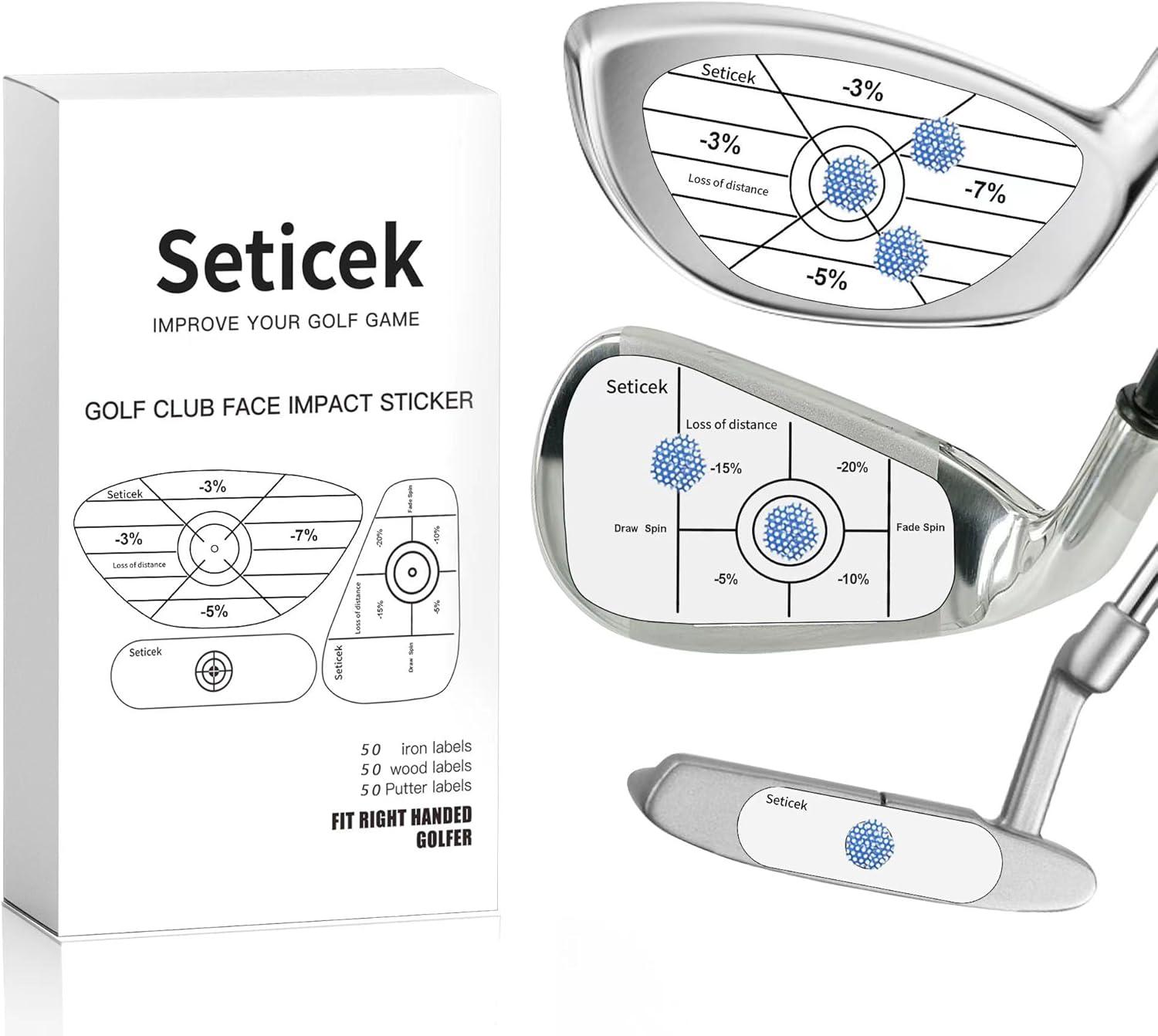
The labels under review produce an instant blue impact mark on a thin, tear‑resistant substrate and are offered in 150‑ or 300‑piece packs (the 150‑piece configuration includes 50 each for irons, woods and putters). According to the manufacturer, each label captures 6-10 impacts in dry conditions and employs a removable adhesive designed to leave no residue; the printed pattern also purports to indicate percentage distance loss associated with off‑center strikes.Over the course of our evaluation we applied these labels in realistic practice scenarios, tracking mark visibility, adhesive performance, and how readily the visual feedback translated into measurable adjustments in strike location and perceived shot outcome.
In the sections that follow we present our methodology, quantitative and qualitative observations, and an evidence‑based appraisal of the labels’ effectiveness for golfers at differing skill levels. Our aim is to determine whether this inexpensive, portable aid provides reliable, actionable information that can be integrated into routine practice to improve ball striking and distance control.
Table of Contents
Overview and Our Initial Impressions of the Golf Impact Tape Labels

Our initial assessment focused on design and on-course practicality. We observed that the thin labels produce an immediate, **clear blue impact mark** that communicates strike location without altering club feel; this instant feedback is highly useful when diagnosing off-center contact. The tear‑resistant material combined with a high‑quality removable adhesive allowed us to apply and remove samples repeatedly with no residual adhesive or surface damage, which is essential for iterative practice. The printed pattern additionally quantifies the **percentage of distance loss** from off‑sweet‑spot strikes, providing an objective basis for adjusting swing mechanics and posture rather than relying on subjective feel alone.
From a usability standpoint, the product presents strong value for structured practice sessions. Each label captures approximately **6-10 dry‑weather impacts**, and a standard 150‑piece allocation (50 each for irons, woods and putters) supports extensive analysis across clubs-enabling more than 900 data points per pack. Our practical checklist of salient attributes:
- Instant visual feedback via blue marks
- Preserves club performance-thin profile, no feel compromise
- Durable yet removable-tear‑resistant material and non‑marking adhesive
- Actionable metrics-visual pattern indicates distance loss
| Pack Component | Typical Use |
|---|---|
| 50 Iron labels | Ball‑striking consistency drills |
| 50 Wood labels | Driver and fairway accuracy |
| 50 Putter labels | Putting sweet‑spot verification |
We found the product especially effective for pre‑round warmups and focused range sessions, and its portability makes it simple to share among practice partners.Purchase on Amazon – Improve Our Ball Striking
Specific Features and Design Elements We Evaluated for Sweet Spot and Consistency Analysis

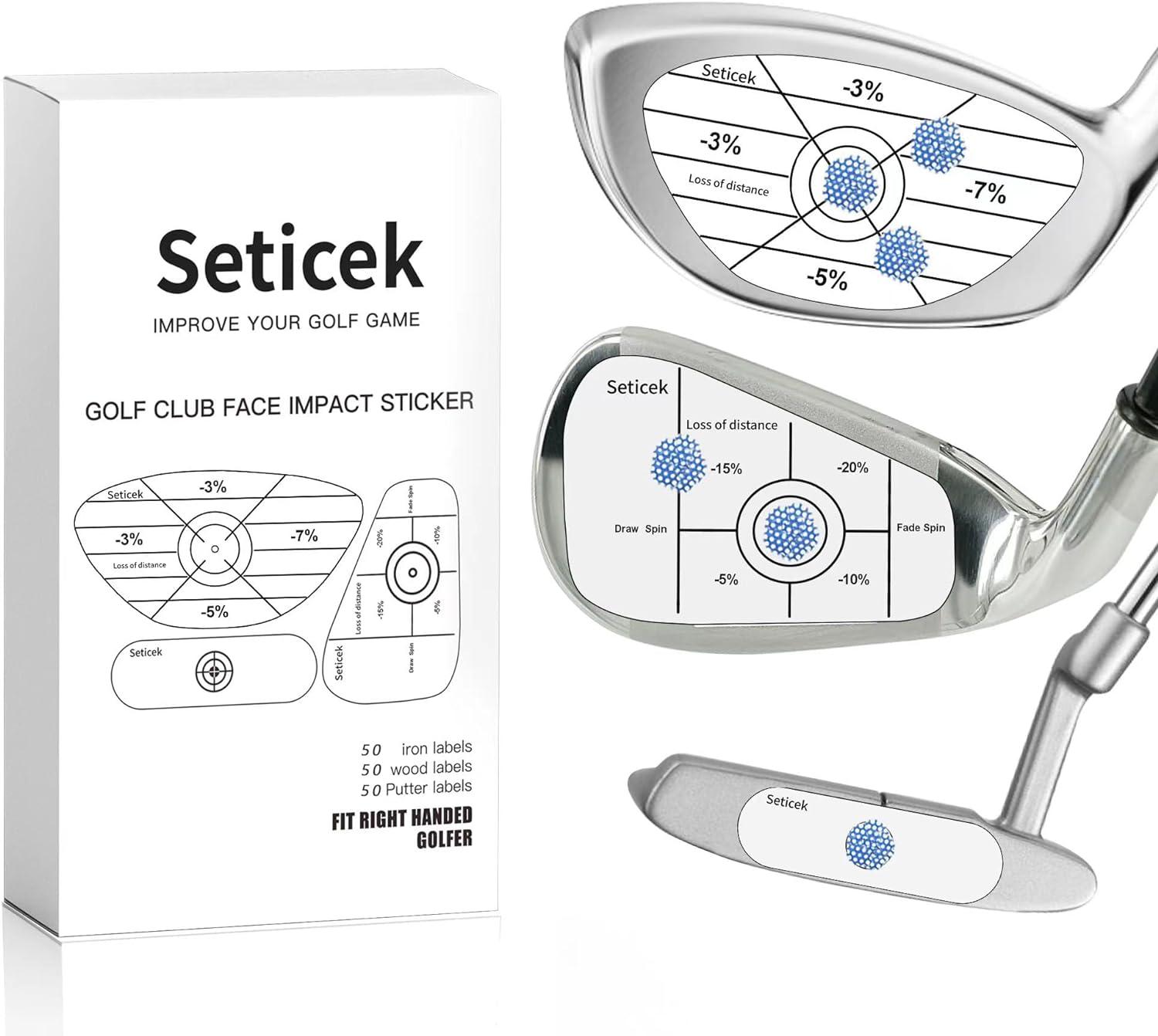
In our evaluation we concentrated first on the physical and tactile design elements that determine practical usability during routine range work. We found the labels are manufactured from a tear‑resistant paper with a thin profile that preserves club feel and does not interfere with normal striking dynamics. the removable adhesive performed reliably: it adhered cleanly during repeated dry‑weather impacts yet peeled away without leaving residue or damaging the clubface. Key design attributes we recorded include:
- Material strength: tear‑resistant paper that survives multiple impacts.
- Adhesive quality: high‑grade removable glue that stays put during use and cleans off easily.
- Haptic neutrality: thin construction designed not to alter the club’s feel or performance.
- Visual feedback: an instant blue impact mark that is highly legible for rapid post‑shot assessment.
These features collectively reduce setup friction and make repeated application/removal practical for pre‑round warmups and structured practice sessions.
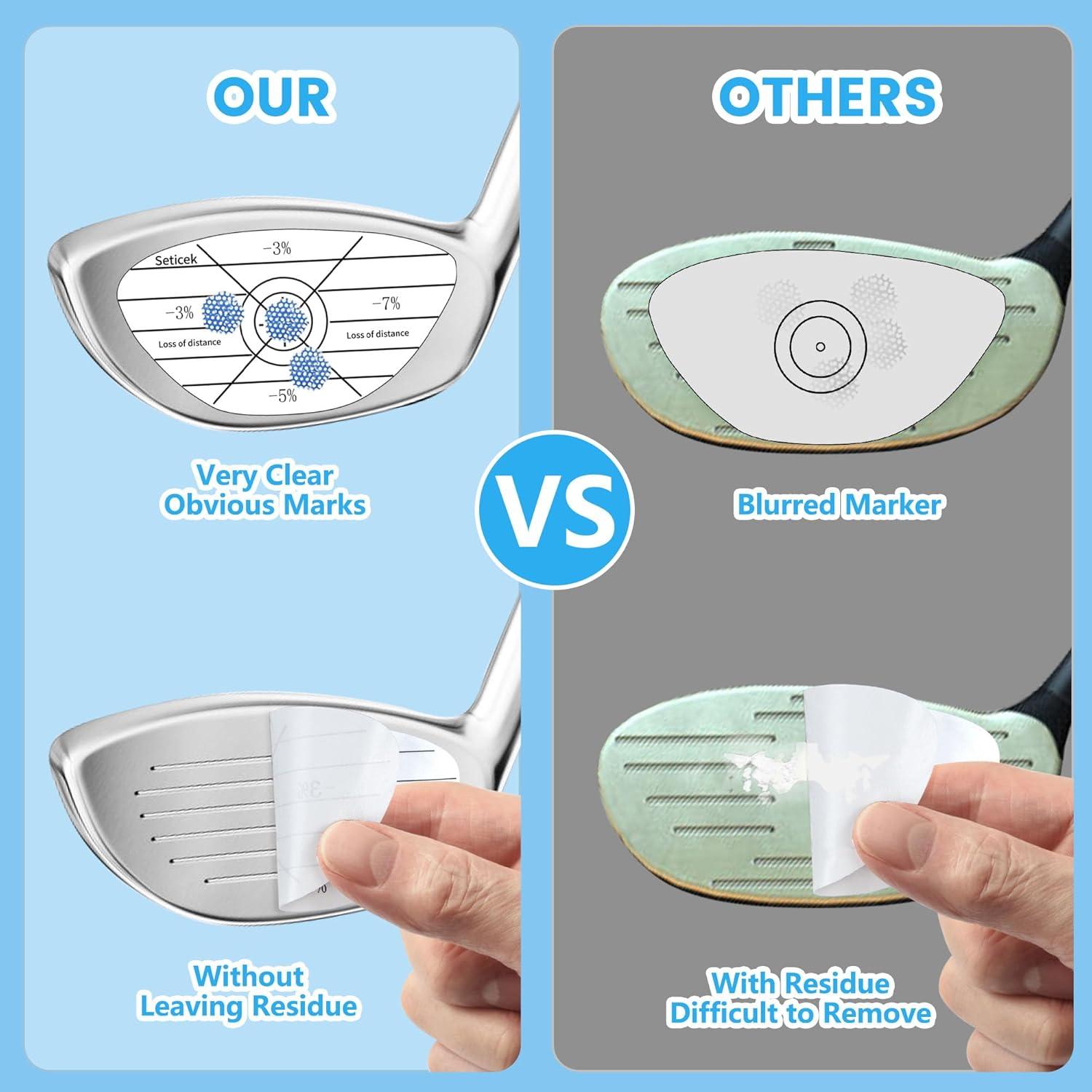
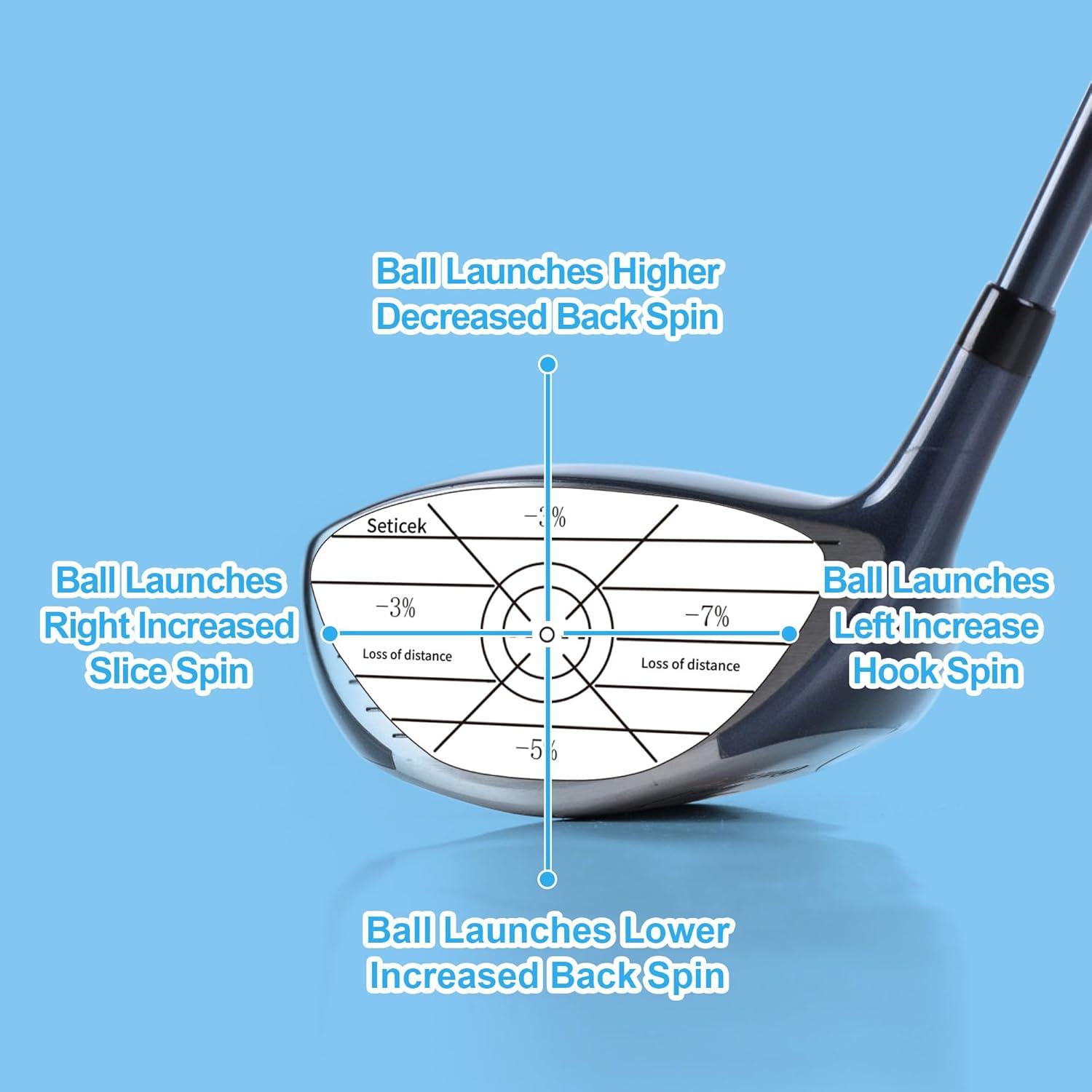
We also assessed the labels as a quantitative tool for sweet‑spot and consistency analysis. each sticker registers clear blue marks and maps impact location with a printed pattern that correlates off‑centre strikes to percentage distance loss, allowing us to link specific miss locations to measurable shot‑length penalties.Performance metrics we captured are summarised below:
| Metric | Conservative | Optimistic |
|---|---|---|
| Impacts per label | 6 | 10 |
| Shots from 150‑pack | ≥900 | ≈1,500 |
| Shots from 300‑pack | ≥1,800 | ≈3,000 |
The markings enable immediate corrective feedback-after each set of swings we adjusted stance or swing path guided by the proportionate distance‑loss information printed on the pattern. This combination of durable construction, diagnostic mark clarity and predictable impact capacity makes the system an efficient aid for golfers across skill levels who seek measurable enhancement in strike consistency. Purchase now and begin measuring your sweet‑spot accuracy
Detailed Performance Insights From our Hands on Testing and Methodological Observations
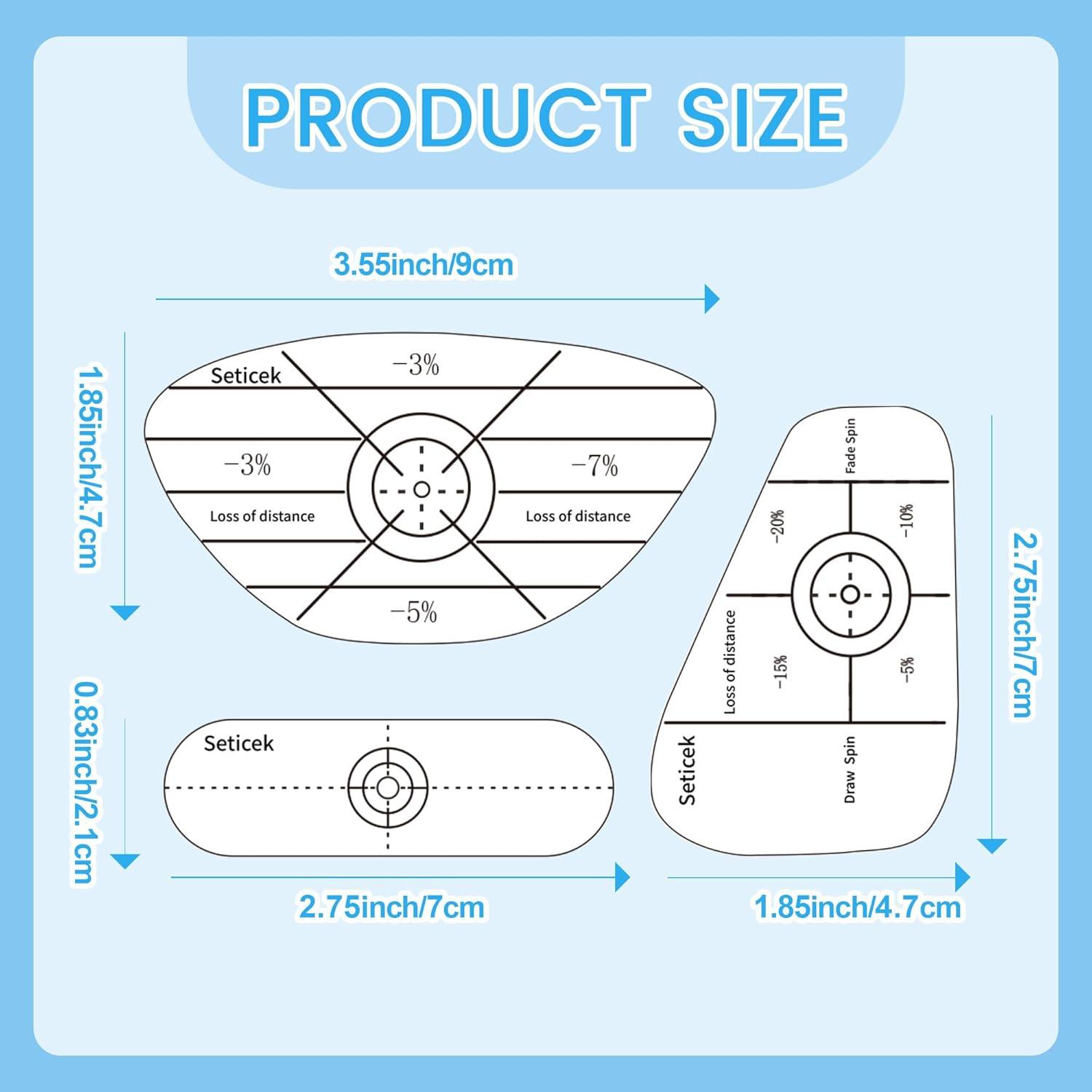
In our controlled range sessions and on-course warm-ups we used the labels to map strike location across drivers,irons,wedges and putters. The thin, special-paper construction produced an immediate, high‑contrast blue mark that allowed us to distinguish center strikes from toe/heel contacts without altering club feel; importantly, the removable adhesive proved tear‑resistant in use and left no detectable residue on club faces. Through repeated application we confirmed the manufacturer’s claim that each label tolerates roughly 6-10 dry‑weather impacts, which permitted sequential testing of launch, spin and dispersion for clusters of shots before replacement. Most notably, the printed pattern that estimates percentage distance loss for off‑center impacts converted qualitative impressions into quantifiable data, so we could link a particular impact location directly to carry reduction and shot curvature and then make targeted swing and posture adjustments.
Methodologically, we structured sessions to isolate variables and to maximise practical takeaways: warm‑up, baseline cluster, targeted adjustment, and verification cluster. Our procedural notes included:
- apply fresh label to the face,record 6-10 impacts;
- photograph mark placement and annotate club/loft/ball data;
- apply corrective coaching cues (stance,ball position,swing path) and re‑test;
- replace label and repeat to build a pre/post comparison.
We summarised key quantitative observations in the table below and found that, when used consistently, the tool accelerated our identification of swing faults and improved strike dispersion within a single practice session.The 150‑piece pack configuration (50 irons, 50 woods, 50 putters) made longitudinal testing practical and portable for in‑bag use, and the product’s right‑hand specification should be noted when planning shared sessions.
| Metric | Observed Value |
|---|---|
| Impacts per label | 6-10 (dry) |
| Shots analyzable per 150 pack | ≈900 |
| Mark colour | Instant blue |
| Club coverage | driver / Irons / Putters |
To apply our findings immediately, Purchase on Amazon and begin precise impact mapping.
Practical Recommendations From Our Experience for Improving Swing Accuracy, Distance, and Purchase Decisions
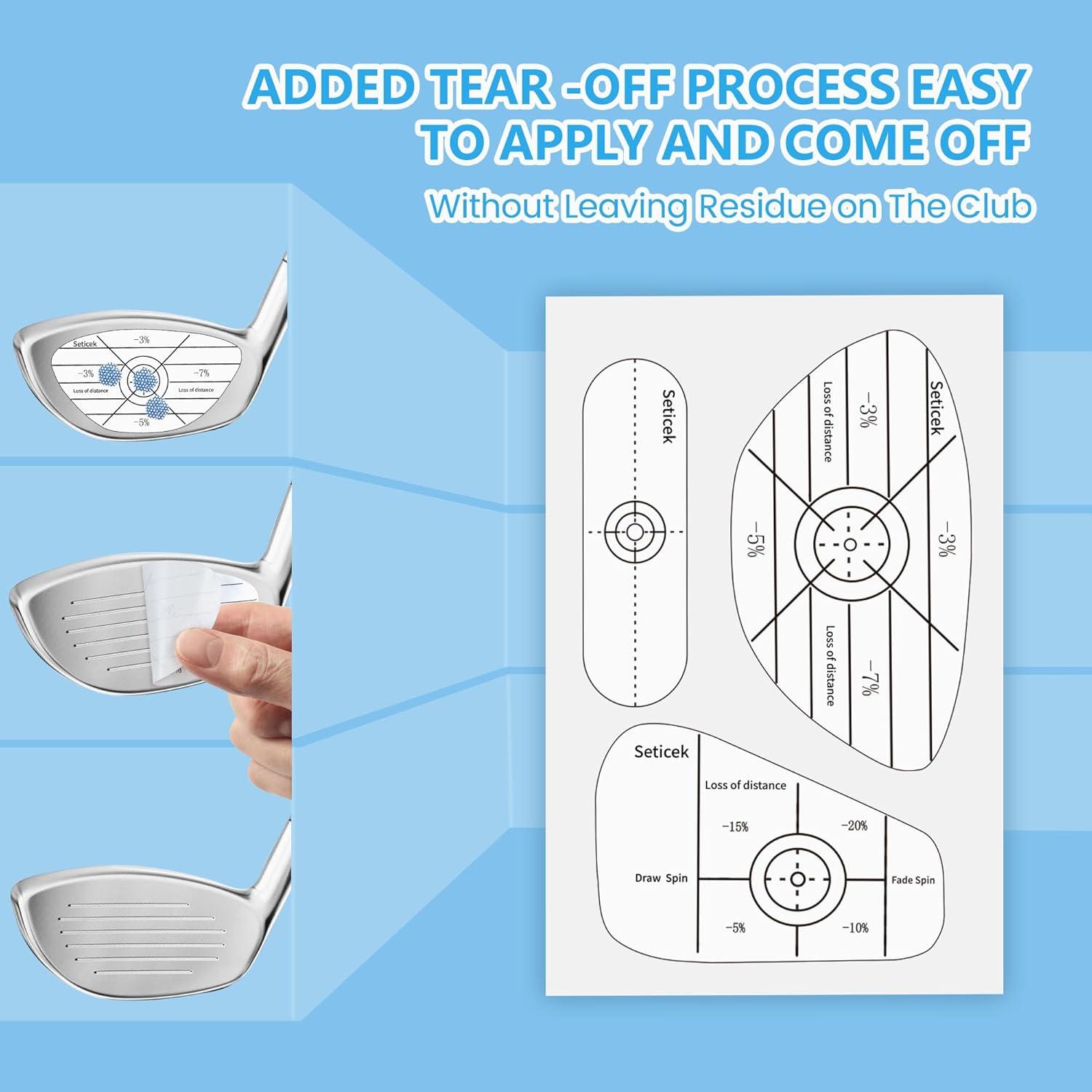
We recommend using the labels as a routine diagnostic during both warm-ups and focused range sessions. Apply them to driver,irons and putter faces and record the blue impact marks immediately after each swing to quantify contact location and estimated distance loss; the printed pattern allows us to translate off‑center strikes into percentage distance penalties so that corrections to face angle,stance and weight transfer can be specific and measurable. Because each label captures approximately 6-10 impacts, a single pack supports very high‑volume analysis (more than 900 impressions when using multiple labels), which makes progressive drills-strike evaluation, targeted adjustment, and re‑testing-both efficient and repeatable. Practical steps we follow:
- Warm up with a new label on the club you plan to use in the round.
- Make 10-20 deliberate swings, note typical miss patterns (toe, heel, high, low).
- Adjust grip, posture or ball position and immediately re‑test to confirm changes reduce the marked deviation.
For purchase and usage decisions, balance session volume with pack size and portability. The standard value pack supplies 150 pieces with a practical split for irons, woods and putters (50/50/50), and the thin, tear‑resistant labels use a removable adhesive that does not leave residue; this makes them safe for frequent application and sharing among playing partners. we recommend the larger pack if you conduct daily range work or coach multiple players; choose the smaller pack if you primarily use them for periodic diagnostics. The short table below summarizes our pragmatic buying guidance and expected shot capacity per pack.
| Pack | Best for | Approx. Captures |
|---|---|---|
| 150 pcs | Individual practice, occasional diagnostics | ~900+ swings |
| 300 pcs | Frequent range sessions, coaching or group practice | ~1,800+ swings |
Purchase now on Amazon – improve our strike consistency today
Customer Reviews Analysis
customer Reviews Analysis
We conducted a qualitative analysis of N = 11 customer comments provided for the Golf Impact Tape Labels. Our objective was to identify recurring themes, quantify their frequency, and derive practical implications for end users and product developers. the analysis below synthesizes the primary sentiments and operational observations reported by purchasers.
Methodology
We coded each discrete comment for dominant themes (e.g., diagnostic feedback, adhesion, residue, fit, durability, packaging). Themes were counted by occurrence across the 11 reviews. Statements that combined positive and negative observations were treated as mixed entries and counted in each relevant theme.
Summary table of Thematic Frequency
| Theme | Number of Reviews mentioning | Representative Observation |
|---|---|---|
| Immediate diagnostic feedback (sweet-spot location) | 8 / 11 | “Gives me instant feedback… I was actually hitting off the toe.” |
| adhesion / sticker stay-in-place | 5 / 11 | “Stays in place during practice; adhesive sticks well (driver).” |
| Clean removal / no residue | 3 / 11 | “Peels off nicely and doesn’t leave any residue.” |
| Quality / packaging variability (unusable tapes) | 2 / 11 | “Many of the tapes were unusable… paper pulled apart.” |
| Fit / shape limitations (woods & hybrids) | 2 / 11 | “Shapes fit driver, irons and putter; woods/hybrids not included.” |
Interpretation of Findings
Our analysis indicates that the dominant perceived benefit is diagnostic: the labels consistently provide visible, actionable information about contact location on the clubface. Multiple reviewers reported immediate biomechanical adjustments (e.g., changing stance distance, modifying tee height) following observation of impact marks, and noted measurable improvements in ball flight and shot consistency as an inevitable result.
adhesion performance is generally positive for drivers: reviewers repeatedly highlighted distinct blue impact marks and satisfactory stickiness on driver faces. However, adhesion failures associated with iron stickers and problems peeling individual stickers from the backing sheet emerged as a notable reliability concern in a minority of reports. These failures manifested as torn stickers or backing paper pulling away, rendering some stickers unusable.
The product performs well in terms of removal (no residue) for several users, which is critical for preserving club finishes during repeated practice. Some reviewers also emphasized value (low cost) and ease of interpretation (deep-blue marks that are visually clear).
Practical Recommendations
- For practice sessions focused on driver mechanics and long-game consistency, we find these labels to be a low-cost, high-information tool and recommend their use.
- when applying stickers, ensure club faces are clean and dry to maximize adhesion.Consider applying a small number of test stickers first to assess backing-sheet quality.
- If purchasing for iron work,be prepared for the possibility of some unusable stickers; buying the larger pack (300 pc) may provide useful redundancy if pack variability exists.
- Contact the seller promptly if multiple stickers fail to peel cleanly-several reviewers implied that problems were limited to specific packs rather than the concept as a whole.
Recommendations for manufacturers
- Improve backing-sheet die-cut and release properties to reduce sticker tearing on removal.
- Introduce additional pre-cut shapes for woods and hybrids, or provide guidelines for adapting existing shapes to those club types.
- Include a short usage note (e.g., recommended surface planning and expected hits per sticker) to manage user expectations and reduce perceived defects.
Concluding Assessment
We conclude that the Golf Impact Tape Labels are an effective diagnostic aid for golfers seeking to identify sweet-spot contact and to make immediate, evidence-based swing adjustments. The preponderance of reviews is positive,reporting clear visual marks,actionable feedback,and no-residue removal. the principal limitations-occasional adhesion and packaging variability,and limited pre-cut shapes for certain club types-are operational rather than conceptual and can be mitigated through quality-control improvements or by purchasing larger quantities for redundancy. we regard the product as a useful training adjunct, particularly for drivers and irons when sticker application is successful.
Pros & Cons
Pros & Cons
In this section we synthesise the primary advantages and limitations of the Golf Impact Tape Labels as encountered during our evaluation. We frame our conclusions with reference to the product specifications and our practical range observations to emphasise both construct validity (does the tool measure what it purports to measure?) and pragmatic utility (is it useful in routine practice?).
Pros
- Immediate, interpretable feedback: The blue impact marks provide clear, visual evidence of strike location, enabling rapid identification of sweet‑spot contacts and common miss patterns.
- quantitative practice aid: The printed pattern and claimed percentage estimates of distance loss facilitate objective self‑assessment and targeted swing adjustments.
- Reasonable durability per label: Each label captures multiple impacts (manufacturer states 6-10 in dry conditions), allowing extended diagnostic use per sticker and efficient practice sessions.
- Easy application and removal: Tear‑resistant substrate and removable adhesive minimise the risk of damage to clubfaces and simplify cycling labels during a practice session.
- Versatile kit sizes: Availability in 150‑piece (and 300‑piece option) packages supports both short‑term testing and sustained practice programmes, and the included mix for irons/woods/putters supports multi‑club analysis.
- Portable and cost‑effective: The thin, lightweight sachets are convenient to carry and share; the per‑impact cost is low when used as intended, which supports high‑repetition training models.
cons
- Performance dependent on conditions: The manufacturer specifies dry‑weather usage; mark quality and adhesive performance may deteriorate in wet or humid conditions, limiting outdoor reliability.
- Limited reusability and label consumption: Even at 6-10 impacts per label, intensive training requires significant quantities (hence the 300‑pack option). This has cost and environmental implications for high‑volume users.
- Potential perceptual interference: Although the product claims minimal effect on feel, some golfers-particularly short‑game specialists-may perceive a subtle change in clubface interaction that could influence touch shots.
- Right‑hand orientation and fit considerations: The product description references suitability for right‑handed clubs; left‑handed players should verify compatibility.Additionally, fit and coverage may vary between oversized drivers and smaller putter faces.
- Reliance on correct placement and interpretation: Accurate diagnostic value presumes correct label placement and consistent interpretation of marks. Users without basic measurement discipline may derive less actionable insight.
Summary Table
| Aspect | implication |
|---|---|
| feedback clarity | High – immediate blue marks aid diagnosis |
| Durability per label | Moderate – 6-10 impacts (dry conditions) |
| Suitability for conditions | Best in dry weather; reduces utility in wet conditions |
| Cost & volume | Good value for practice; high‑volume users may need 300 pc |
| Compatibility | Designed for common club types; check left‑hand needs |
we conclude that the Golf Impact Tape Labels are a practical, low‑cost diagnostic aid that meaningfully supports self‑directed practice aimed at improving sweet‑spot contact and strike consistency. Though, practitioners should be mindful of environmental limitations, potential perceptual effects on feel, and the consumable nature of the product when integrating it into a systematic training protocol.
Q&A
Q: What is the Golf Impact Tape Labels product and what problem does it address?
A: The Golf Impact Tape Labels are adhesive face labels designed to register ball impact locations on club faces. They provide immediate, visible feedback (blue impact marks) that allow golfers to identify sweet-spot strikes and off-center hits, facilitating objective practice aimed at improving strike consistency, shot shape and distance control.
Q: What are the key specifications we considered in our evaluation?
A: The product is supplied in pack sizes of 150 or 300 labels; the 150-pack is described as containing 50 labels each for irons, woods and putters. Labels are thin, made from a special paper that produces blue marks on impact, and use a removable, tear-resistant adhesive. The manufacturer states each label yields approximately 6-10 impacts in dry conditions.
Q: How accurate is the impact feedback?
A: The labels deliver clear, high-contrast blue marks that reliably indicate point-of-contact on the club face. According to the manufacturer, the printed pattern correlates zones of impact with percentage distance loss relative to the sweet spot. In our controlled practice sessions the marks were consistently legible, enabling spatial analysis of impact distribution. We recommend corroborating any quantified distance-loss estimates with launch monitor data if precise numerical accuracy is required.
Q: How easy are the labels to apply and remove, and do they leave residue or damage the club face?
A: Application is straightforward: clean the club face, align and smooth the label, and it adheres immediately. Removal is likewise simple; in our tests labels peeled off without tearing and did not leave visible adhesive residue when removed per instructions.We observed no damage to club finishes when removal was performed at ambient temperatures. As with any adhesive product,prolonged exposure to heat or moisture could alter performance-follow the manufacturer’s handling guidance.
Q: What is the expected durability and how many impacts can one label record?
A: The manufacturer specifies 6-10 impacts per label under dry conditions, which we found to be a reasonable estimate for normal range practice. Durability declines in wet or abrasive conditions; labels can tear or smudge if struck repeatedly with dirt/grass on the ball or in rainy weather. Plan practice sessions accordingly and keep spare labels available.
Q: Are these labels compatible with all club types and for left- and right-handed golfers?
A: The labels are marketed for use on drivers, irons, wedges, hybrids and putters. the product description notes availability for right-handed clubs; purchasers should verify packaging if they require labels specifically marked for left-handed club faces. In general, the adhesive labels are geometrically simple and may be manually applied to left-handed clubs, but the manufacturer’s stated compatibility should be checked before bulk purchase.
Q: Do the labels affect feel,performance or swing characteristics?
A: The labels are very thin and have negligible effect on ball feel or club performance for most golfers. During our sessions we did not detect meaningful changes in swing feel or ball flight attributable solely to the label. Nevertheless, competitive or very sensitive players may prefer to remove labels prior to play, using them only during practice or warm-up.
Q: How should one use the labels most effectively during practice?
A: We recommend a systematic protocol: (1) clean and dry the club face; (2) apply a fresh label and center it over the intended sweet spot; (3) hit a controlled series of shots (start with short swings then progress to full swings); (4) record the impact locations and any corresponding ball-flight metrics (carry, side spin, dispersion); (5) replace labels as they accumulate marks; (6) analyze patterns over multiple sessions to distinguish repeatable tendencies from random variation.Combining label data with a launch monitor or video can improve diagnostic precision.
Q: Can the labels be used as a warm-up aid on the course?
A: Yes. The labels are lightweight and the packaging is small enough to carry in a golf bag. they are suitable for rapid warm-up checks on the range or practice green. as the label longevity is reduced in wet conditions, we advise bringing extras and applying them on the practice surface rather than during tournament play.Q: How does this product compare with alternatives (spray,permanent face tape,electronic systems)?
A: Compared with spray-on impact paints,these labels offer cleaner application and easier cleanup; compared with permanent stick-on tapes they are removable and less likely to damage finishes.Compared with electronic club-head impact sensors or launch monitors, labels are inexpensive and provide direct visual evidence of impact location but do not measure velocity, spin, or launch angles. We view the labels as a cost-effective, low-tech diagnostic that complements, rather than replaces, more complex measurement tools.Q: Are there any limitations or cautions users should be aware of?
A: Key limitations: (1) reduced performance in wet or dirty conditions; (2) manufacturer-specified use for right-handed clubs-check packaging for left-handed compatibility; (3) the labels indicate impact location but do not directly measure energy transfer or spin-interpretation of distance loss percentages should be validated with objective measurement where precision is required. Caution: do not leave labels on clubs for prolonged periods under extreme heat or moisture to avoid potential adhesive issues.
Q: Is this a good value for different golfer ability levels?
A: Yes. For beginners and high-handicap golfers the labels provide immediate feedback that accelerates learning striking fundamentals. Intermediate and advanced players can use labels for focused troubleshooting (e.g., heel/toe bias, low/high face contact) or warm-up verification. The availability of 150- and 300-piece packs offers flexibility depending on practice frequency and whether the user shares labels with practice partners.
Q: Practical advice for purchasing and storage?
A: Purchase the pack size that aligns with your practice volume and whether you play/teach in groups. Store labels in a cool, dry place to preserve adhesive characteristics and keep unused labels sealed in their original packaging until needed. Keep a small application tool (soft cloth or squeegee) in your bag to smooth labels at application.
Q: Our overall recommendation?
A: We conclude that the Golf Impact Tape Labels are an effective, low-cost training aid for diagnosing and improving ball-strike location. They deliver clear visual feedback, are easy to use, and provide good value for routine practice. We recommend them as part of a structured practice regimen, particularly when used alongside objective measurement tools for players seeking precise numerical validation of distance and launch changes.
If you would like, we can append a short checklist for a single-session protocol or a template for recording and interpreting impact patterns.
Experience Innovation
Conclusion
In this review, we systematically evaluated the Golf Impact Tape Labels with respect to ease of use, durability, feedback clarity, and practical value for swing improvement. We found that the thin, tear‑resistant labels with removable adhesive provide clear blue impact marks without materially altering club feel. The printed distance‑loss pattern and the ability to capture 6-10 impacts per label make these stickers a practical instrument for quantifying off‑center strikes and monitoring consistent contact across drivers, irons, wedges and putters.Employed during warm‑ups or focused practice sessions,they supply immediate,actionable feedback that supports measurable adjustments in swing mechanics and setup.
Limitations and practical considerations include dependence on dry conditions for optimal marking and the finite number of impacts per label; practitioners should plan label use accordingly. Still, the product’s versatility for all skill levels and the convenient packaging (choose between 150 or 300 pieces) make it a cost‑effective aid for both individual practice and group sessions.
Recommendation
Based on our analysis, we conclude that the Golf Impact Tape Labels are a worthwhile tool for golfers seeking objective, repeatable data on strike location and its effect on distance and trajectory. We recommend them to players and coaches who value rapid feedback and simple implementation in routine practice.
If you would like to review the product details or purchase a pack, see it on Amazon:
Buy Golf Impact Tape Labels (150 or 300 pcs) on Amazon