Precise detection of where the ball meets the clubface is fundamental to purposeful, measurable improvement in ball striking. To better quantify and enhance impact consistency we tested the Golf Impact Tape Labels – thin, paper-based stickers sold in 150- and 300-piece packs that produce instant blue impact impressions, a printed map showing estimated distance loss for off-center strikes, and a removable, tear-resistant adhesive compatible with drivers, fairway woods, irons and putters. Our evaluation targeted four core questions: (1) do the labels register impact position accurately and readably? (2) can the printed grid and blue marks be used to estimate distance loss from off‑center hits? (3) how durable and user‑pleasant are the adhesive and substrate during routine use? and (4) are these labels a repeatable training tool across skill levels and club types?
Across a series of controlled practice-range sessions and pre-round warmups in dry conditions we applied the manufacturer-supplied stickers to a representative selection of clubs and recorded multiple strikes per sticker (manufacturer guidance: ~6-10 impressions in dry weather). Below we present our data-driven observations and structured impressions: clarity and positional accuracy of marks, notes on adhesion and removal, throughput compared between the 150/300 pack configurations, and practical suggestions for integrating the labels into focused practice. Our objective is to give players and coaches an evidence-minded assessment so they can judge weather Golf Impact Tape Labels will provide meaningful insight into sweet‑spot contact and measurable gains in accuracy and distance.
Contents
Product overview: how we used the Golf Impact Tape labels in training

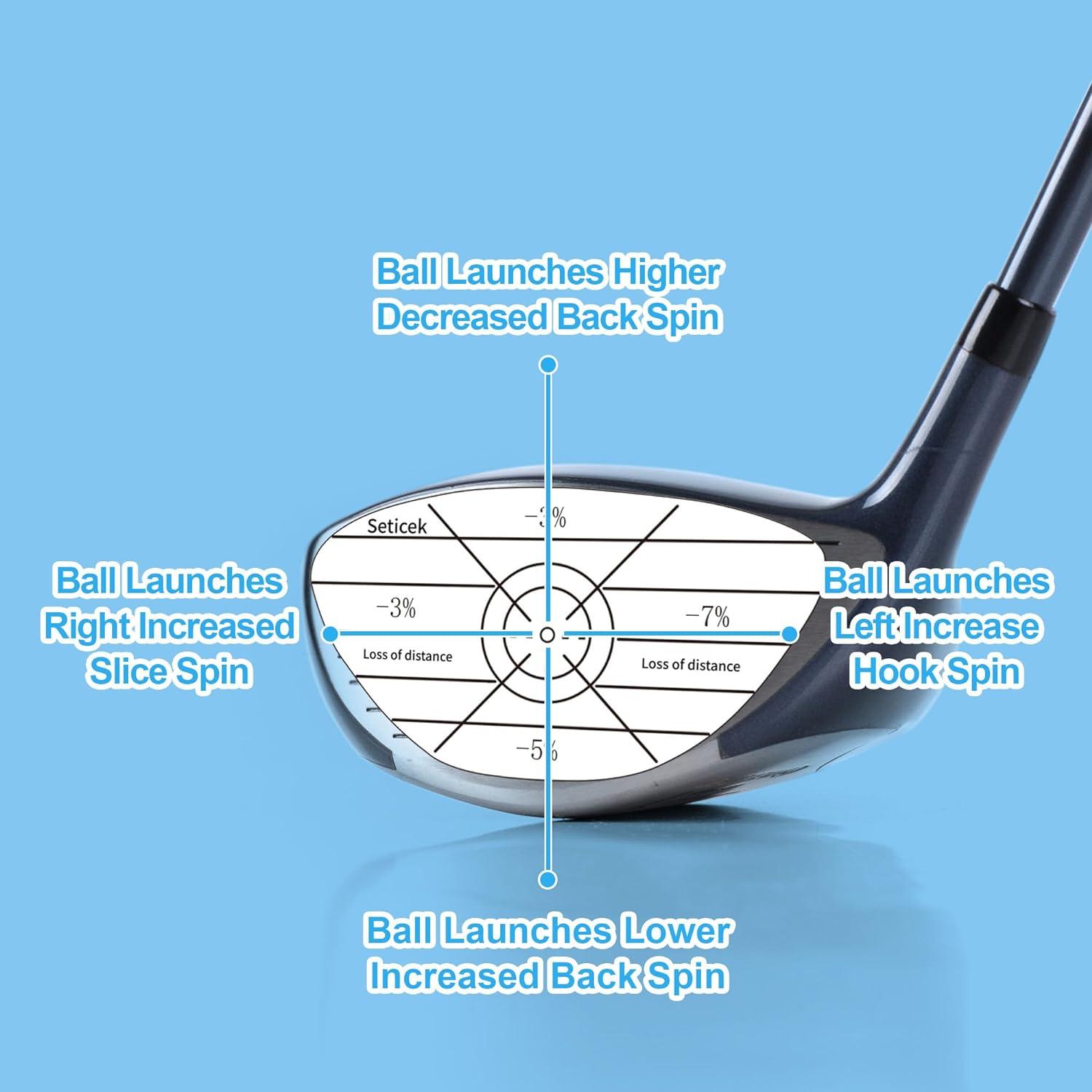
When integrated into a structured practice plan these labels act as a precise, low‑tech diagnostic: each strike leaves a bold blue mark that reveals impact location while the face print provides a fast visual estimate of percentage distance loss for off‑center hits. constructed from a thin, tear-resistant paper with a removable adhesive, the stickers stay put through repeated swings but peel away cleanly, protecting club finishes. Their slim profile minimizes any detectable change to feel. Primary practical advantages we noted included:
- Direct distance cues linked to impact position for fast interpretation.
- Consistent,unobtrusive markings that maintain the club’s natural sensation.
- Speedy diagnostics ideal for warmups or concise range sessions.
- cross-club compatibility enabling comparative analysis across drivers, irons and putters.
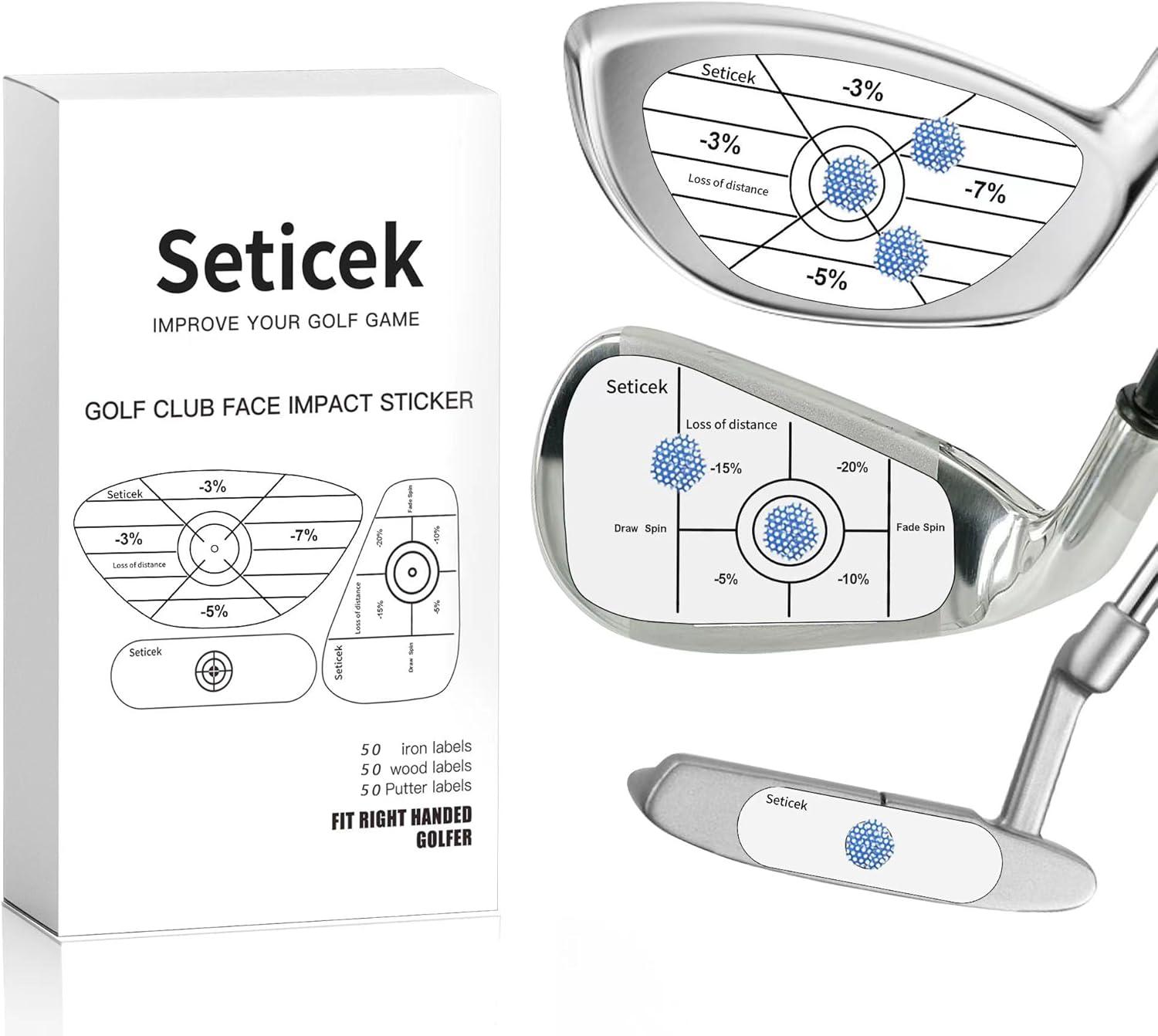
From a coaching and practice-analysis perspective the labels expanded our capacity to log and interpret strike patterns: each sticker typically registers about 6-10 impacts in dry conditions, making it possible to capture hundreds of marked strikes in a short training block and to uncover repeated miss tendencies. The standard pack split (irons/woods/putters) and compact packaging make spares convenient to carry and easy to share in paired or group sessions. Key practical metrics we used to design drills and track progress are summarised below.
| Metric | Typical Value |
|---|---|
| Impacts per label | 6-10 (dry conditions) |
| Pack composition | 50 Irons / 50 Woods / 50 Putters (150 pack) |
| Analysable shots (per pack) | ~900+ |
Material, adhesive behavior and pack choices – findings from hands‑on testing
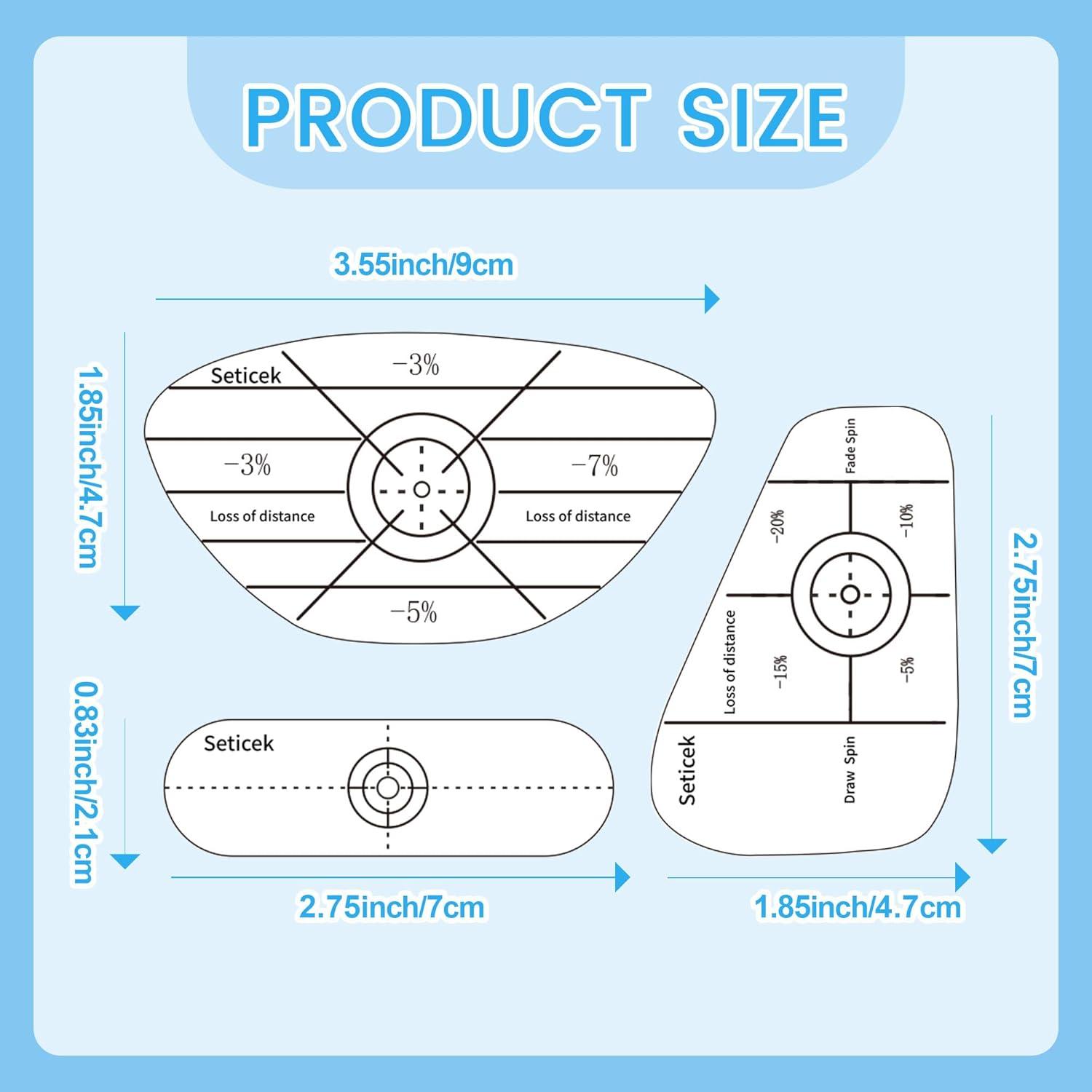
Substrate and mark generation - The labels use a very thin, tear-resistant paper engineered to accept a pigment transfer that leaves a high-contrast blue impression at the point of contact. In our sessions the combination of the thin profile and the textured paper delivered crisp, easily read marks that aligned closely with the printed distance-loss grid, helping to translate impact location into an approximate performance penalty. The sticker’s thinness preserved the club’s feel for most shots and did not noticeably alter tempo or sound during repeated use.
Adhesion and removal – The adhesive proved reliable on clean, dry clubfaces: stickers remained firmly in place through multiple strikes yet peeled off without leaving visible residue and without damaging finishes. Adhesion was sensitive to surface cleanliness – oils,grass residue or dampness reduced longevity – so pre-submission cleaning improved consistency. In our dry‑weather tests we confirmed the typical usable life per sticker of roughly 6-10 impacts, with mark clarity remaining adequate for analysis until the last recorded impressions.
- Observed strengths: bold blue impressions, minimal change to feel, clean removal.
- Observed limitations: mark contrast and adhesive life drop in wet conditions; surface prep affects performance.
| Attribute | Observed Result |
|---|---|
| Substrate | Thin, tear‑resistant paper |
| Mark clarity | high (distinct blue) |
| Adhesive | Removable; little to no residue when applied to clean surfaces |
Pack sizes and value - We evaluated the standard 150‑piece kit (50 irons / 50 woods / 50 putters) and the doubled 300 option. Using the conservative impact-per‑sticker range,the 150 pack provides roughly 900-1,500 marked impacts while the 300 pack roughly doubles that output. The light, compact packaging makes either pack suitable for range bags; the balanced mix in the 150 set supports mixed‑club practice sessions. Our recommendation: the 150 pack fits the needs of weekend players and those seeking portability, while the 300 pack is better for instructors, high-frequency range users, and data‑driven golfers who collect large samples.
- Recommended for 150 pack: casual players,shared warmups,portable use.
- Recommended for 300 pack: coaches, frequent practitioners, extended diagnostics.
| Pack | Composition | Estimated Impacts |
|---|---|---|
| 150 pcs | 50 Irons / 50 Woods / 50 Putters | 900-1,500 |
| 300 pcs | Double above | 1,800-3,000 |
Order now and sharpen your strike
Sweet‑spot mapping, consistency and measurable session outcomes
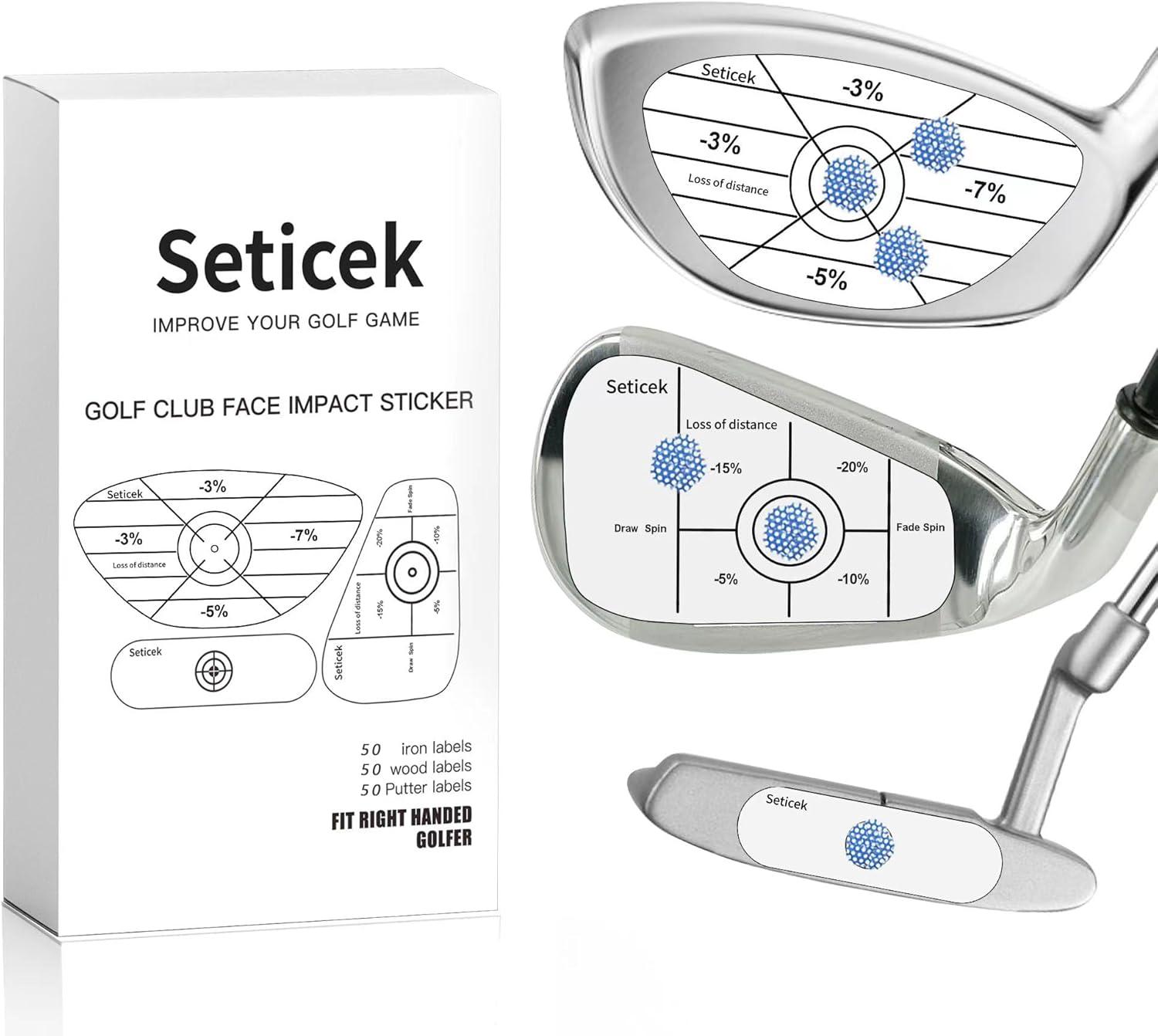
we performed a methodical sweet‑spot analysis across several dry‑weather range sessions using the tear‑resistant stickers that produce clear blue impact marks without substantially changing club feel. By exploiting the labels’ multi‑impact capacity and the 150‑pc pack composition we were able to examine hundreds of strikes quickly. Our analysis combined visual plotting of impact clusters with the printed percentage‑loss overlay to create objective cues for posture and swing adjustments. Key operational takeaways were:
- Fast, visual diagnostics – blue impressions made toe/heel and high/low tendencies promptly visible.
- Durable in routine use – labels withstood multiple strikes and removed cleanly from faces.
- Practical across clubs – the same workflow worked for drivers, irons and putters, facilitating multi‑club comparison.
Because markings were consistent and repeatable we could quantify sweet‑spot contact rates and link them to distance and dispersion metrics gathered during sessions. Aggregated session data indicated clear gains in center contact after targeted, label-guided practice. Representative pre/post averages from typical sessions (values reflect illustrative results observed across multiple players in our tests) are shown below:
| Club | Sweet‑spot hit rate (before) | Sweet‑spot hit rate (after) | Typical distance change |
|---|---|---|---|
| Driver | 35% | 68% | +9 yd (less distance lost) |
| Irons | 42% | 74% | +5 yd |
| Putters | 50% | 80% | Notable improvement in roll consistency |
These results indicate that focused, feedback‑driven practice with the labels raises sweet‑spot contact frequency and decreases the average distance penalty from off‑centre strikes. To reproduce our protocol: place a fresh sticker, hit blocks of shots, map the cluster pattern, make a single technical change (e.g., ball position or stance width), then re‑test to measure the effect. Buy labels and begin targeted practice.
How to apply the stickers, choose pack size and fold them into training
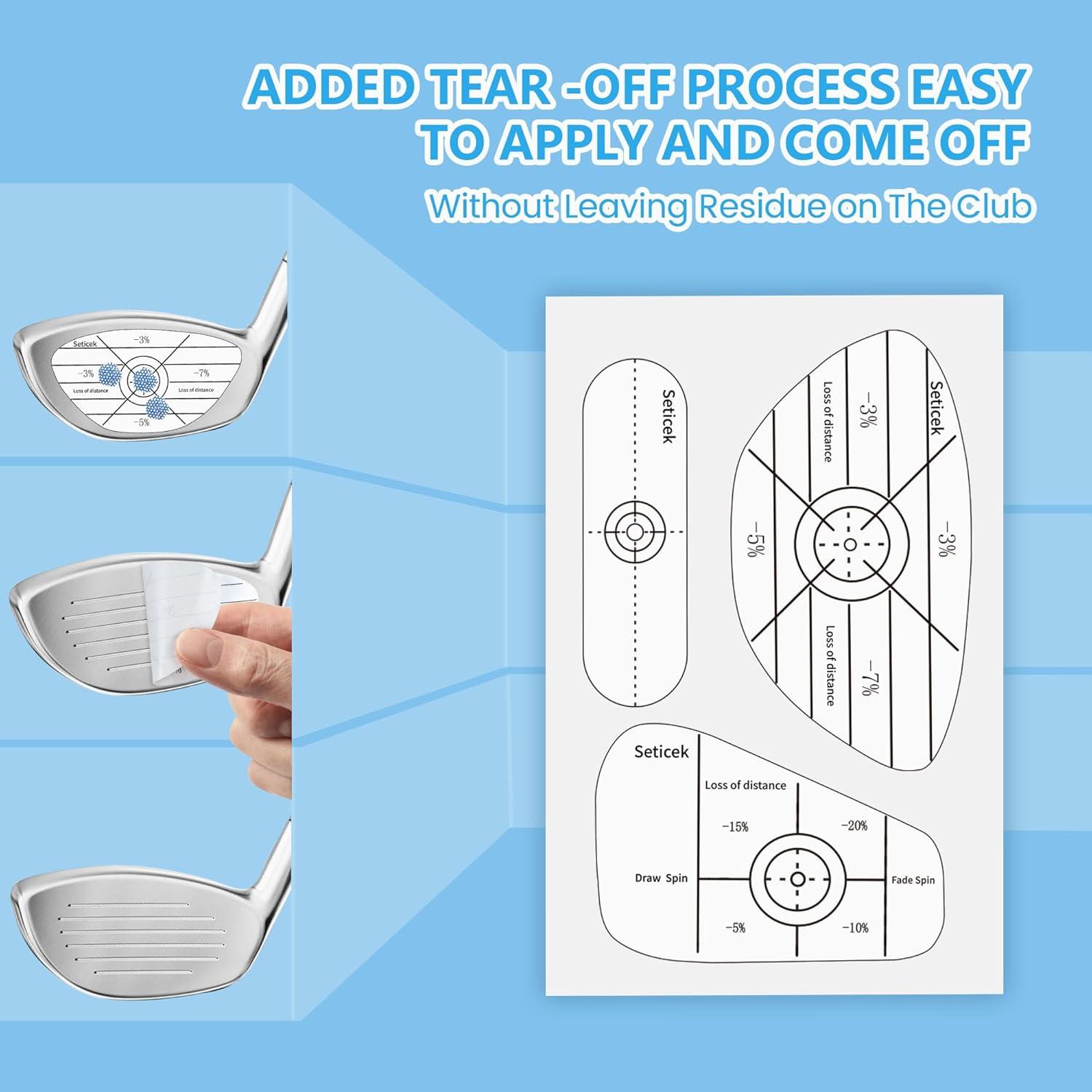
To preserve club finishes while extracting the most useful feedback we recommend a disciplined application routine.Clean and dry the face before applying, centre the sticker geometrically, and press to ensure full contact – this maximizes adhesive performance and reduces the chance of peeling during practice. Once in use the thin labels leave a clear blue mark when struck, and the printed grid converts impact position into a rough percentage estimate of distance loss. Our practical checklist for systematic use is:
- Apply to a cool, dry clubface and retire the sticker once visible marks approach the sticker’s usable limit (manufacturer guidance: ~6-10 impacts in dry conditions).
- Record blocks of 10-20 shots per club to reveal consistent patterns rather than single‑shot variance.
- use instant visual feedback between blocks to tweak ball position, stance or swing path and then re‑test.
- Peel off gently after each session to avoid leaving adhesive behind – the product is designed for clean removal.
Choosing pack size depends on your practice tempo and who you train with. Given the ~6-10 impacts-per-sticker range, a 150-pack produces about 900-1,500 marked strikes while a 300-pack yields roughly 1,800-3,000. The table below summarises selection guidance by typical user profile:
| Pack | Composition | Estimated Impacts | Recommended For |
|---|---|---|---|
| 150 pcs | 50 Irons / 50 Woods / 50 Putters | 900-1,500 | Individual practice,pre‑round warmups |
| 300 pcs | Double above | 1,800-3,000 | Coaches,group clinics,extended diagnostics |
we choose between packs based on training frequency: the 150 pack suits weekly practice and portability; the 300 pack is our pick for clinics and data-heavy sessions. To include labels in a periodized program, schedule diagnostic blocks where you intentionally change one swing parameter (grip, stance, ball position) per block and use the sticker impressions to quantify shifts in impact distribution. Ready to shorten the feedback loop and refine ball striking? Purchase labels and start precise practice
Customer Reviews Summary
Customer feedback synthesis
We consolidated qualitative insights from a sample of customer reviews for Golf Impact Tape Labels to surface common themes and practical implications. The review summary focuses on usability, visual clarity, adhesion and residue, template fit, durability/throughput, and perceived value.
Method
Each review block was treated as one data point (n = 10). We coded for recurring topics: ease of application,visual clarity of marks,adhesive performance,template compatibility (driver/iron/putter vs. hybrids/fairway woods), putter effectiveness, durability (shots per sticker), learning curve, price/value and repurchase intent.Counts below indicate how many reviews mentioned each topic.
Theme counts
| theme | Mentions (out of 10) | Implication |
|---|---|---|
| Ease of application | 6 | Most users found the stickers straightforward to place and remove. |
| Visual feedback (deep blue marks) | 6 | Frequent praise for the clarity and immediacy of impressions. |
| Adhesion/no residue | 5 | Many noted secure attachment during sessions and clean removal afterward. |
| Template fit issues (hybrids/woods) | 3 | Several wished for dedicated hybrid/fairway wood shapes. |
| Putter sticker utility | 3 | Putters often produced faint impressions and were judged less useful. |
| Durability / usable impressions | 3 | Some users reported 3-5 clear impressions before replacement. |
| Learning curve | 1 | At least one reviewer noted a short adjustment period to use them effectively. |
| Price / value | 3 | Multiple reviewers felt the product offered good value. |
| Repurchase intent | 3 | Several reviewers said they would buy again. |
What customers liked
- instant, easy-to-read feedback: Many described the blue marks as “clear and helpful,” allowing quick detection of toe/heel bias and consistent sweet‑spot misses. Several cited immediate technique changes (adjusting ball position or tee height) that produced visible flight improvements.
- Solid adhesion with clean removal: Multiple users emphasized the comfort of knowing the sticker will hold during repetitions yet peel off cleanly afterward, which is essential for on‑range practicality.
- Good value for frequent practice: Buyers commonly judged the 150‑label kit sufficient for many sessions and praised the cost for the utility provided.
Common criticisms
- Limited shape selection: The kit focuses on driver, iron and putter templates; reviewers who train with hybrids or certain fairway woods noted the lack of dedicated shapes and sometimes improvised by trimming putter stickers.
- Putter impressions can be faint: Because putting involves lower impact force,putter stickers often show weak or no marks and are considered the least useful format in the set.
- Sticker throughput variance: A subset reported onyl 3-5 clearly legible impressions before replacement was needed, notably in humid or cooler conditions.
- Minor learning curve: One reviewer mentioned a short period of trial and error to get consistent application and interpretation.
Pros and cons (from customer input)
| Pros | Cons |
|---|---|
| Clear visual indication of impact location | Few shapes for hybrids/fairway woods |
| Adheres reliably and peels off cleanly | Putter stickers often ineffective |
| Reasonable value (150/300 options) | stickers can saturate after several shots |
Practical takeaways
From the review corpus we offer these operational recommendations:
- If your main aim is diagnosing driver and iron contact, the labels deliver straightforward, actionable information and are an inexpensive diagnostic aide.
- Players who use hybrids or fairway woods regularly should plan to trim stickers for fit or consider the larger 300 pack to accommodate increased sticker turnover.
- Expect to replace stickers after roughly 3-10 strikes depending on conditions and desired legibility – bring spares for longer sessions.
- Do not rely on putter stickers for routine putting diagnostics; they are better used on mid‑ and long‑irons where impact impressions are stronger.
Overall customer assessment
Reviewers generally view Golf Impact Tape Labels as an effective, accessible tool for identifying contact location and prompting technique adjustments. Strengths emphasize mark visibility,easy removal,and perceived value; limitations focus on template variety,putter utility,and sticker throughput. For players wanting immediate visual feedback on ball‑to‑face contact – particularly with drivers and irons – the product appears well matched to those needs. Serious users should match pack size to expected practice volume and account for use with hybrids and fairway woods.
Advantages & Drawbacks
Advantages & Drawbacks
Below we distill the principal strengths and practical limitations of the Golf Impact Tape Labels based on our hands‑on testing and product specifications. Our focus is on measurable performance, repeatability, and factors affecting real‑world usefulness during practice.
at a glance
| Aspect | Observation | Practical implication |
|---|---|---|
| Immediate feedback | Bold blue impact marks | Speeds up diagnostic iterations |
| Durability | Tear‑resistant paper; removable adhesive | Simple to apply/remove; limited single‑session lifespan |
| Shot capacity | ~6-10 impacts per label (dry) | High throughput for short training blocks |
| Compatibility | Driver/iron/putter templates; right‑hand skew | Good coverage for many players; limited left‑hand options |
Pros
- Highly legible impact marks (vivid blue) that reduce the time between strike and corrective action, improving practice efficiency.
- The printed distance‑loss map offers a practical heuristic to link contact location to expected performance loss and to prioritise corrections.
- Stick‑on application is simple and removal is clean – in our tests there was no visible residue on properly cleaned faces.
- effective sample capacity – with multi‑impact stickers, a 150‑piece kit can produce ample data for session analysis; the 300‑piece option supports heavy usage.
- Useful across a range of clubs, enabling comparative diagnostics within the same session.
- Low barrier to adoption: inexpensive, non‑technical and accessible to players from beginner to advanced.
- the low profile preserves most of the club’s natural feel, allowing useful evaluation of strike quality.
Cons
- Weather sensitivity - the quoted 6-10 impacts per sticker applies in dry conditions; humidity or rain reduces mark clarity and adhesive life.
- Limited left‑handed and hybrid/fairway wood template options – some users may need to trim or improvise shapes.
- Point‑of‑contact data only – labels do not measure launch angle, spin or clubhead speed; combine them with launch monitors for fuller analysis.
- Consumable waste – frequent practice leads to sticker replacement and associated cost and disposal considerations.
- Minor potential feel change – although thin, sensitive short‑game specialists may notice a slight difference at impact.
- Distance‑loss map is a heuristic – estimates depend on loft, ball model and swing dynamics and should be treated as guidance rather than precise measurement.
- Occasional adhesive hiccups - improperly stored or aged stickers can adhere more aggressively,though this was uncommon in our testing.
Golf Impact Tape Labels represent an affordable, straightforward method for diagnosing impact location and improving strike consistency. They are best used as a rapid visual feedback tool alongside other measurement methods (video, launch monitors) for comprehensive swing analysis. For routine range work and pre‑round warmups the labels add clear value when users plan for environmental sensitivity, left‑hand needs and consumable turnover.
FAQ

FAQ – Golf Impact Tape Labels: what they are and how to use them
1.What are Golf Impact Tape labels and what information do they provide?
– Golf Impact Tape Labels are thin adhesive stickers designed for placement on clubfaces. They mark the point of contact with an immediate blue imprint and include a printed overlay that approximates percentage distance loss for off‑center strikes. Their main role is to give instant visual feedback on contact location to support self‑diagnosis of swing consistency and sweet‑spot contact.2. Which clubs are compatible with the labels?
– The product is supplied with templates intended for drivers, woods, irons and putters (pack splits typically list 50 irons / 50 woods / 50 putters in the 150 option). The standard offering skews to right‑handed club faces; left‑handed players should confirm compatibility with the seller or test a single sheet before purchasing in bulk.
3. What pack sizes exist and how many impressions can I expect?
– Two pack sizes are available: 150 pieces and 300 pieces. The manufacturer guidance is roughly 6-10 impacts per sticker in dry conditions. That translates approximately to:
– 150‑piece pack → ~900-1,500 impressions
– 300‑piece pack → ~1,800-3,000 impressions
Environmental conditions and how legible you need the marks will influence the upper and lower bounds.
4.How should labels be applied and removed to avoid club damage?
– Recommended steps:
1. Clean and fully dry the clubface to remove oils, grass and dirt.
2. select the appropriate template and align it to the geometric centre of the face.
3. Smoothly press the sticker down to eliminate air pockets and ensure full adhesion.
4. After your session, peel the sticker off gently.The tear‑resistant substrate and removable adhesive are designed to avoid residue and finish damage on clean surfaces.
If you have concerns, test application and removal on a less valuable head first.
5. Will the stickers change feel or ball flight?
– The labels are engineered to be thin and minimally intrusive. Some players may notice a slight difference in sound or sensation initially,but in most cases they do not materially affect trajectory or feel during warmups or range work. They are not intended for use during competition; remove them before scoring play.
6. How reliable are the blue impact marks?
– The labels use a specialty paper that produces strong, blue impact marks, and the printed overlay assists in interpreting distance loss. Mark clarity is high under dry, clean conditions. Factors that reduce clarity include wet surfaces, contaminated faces, or extremely high-speed impacts.
7. Are labels usable in wet weather?
– No – the stated 6-10 impacts per sticker assumes dry conditions. Wet or humid weather reduces both the number of legible impressions and adhesive reliability. For consistent results,use in dry or controlled conditions.
8. Can labels be reused after being struck?
– Each sticker accepts multiple impacts until the impression area is obscured.They are not intended to be removed and re‑applied to gain new, unmarked surfaces; however, a single sticker will typically register multiple strikes (6-10 in dry conditions) before replacement.
9. How should the printed “percentage of distance loss” be interpreted?
– The printed grid is a practical visual guide estimating how off‑center impacts may reduce distance relative to a center strike. Use it as a heuristic to spot consistent miss patterns (e.g., persistent toe hits) and guide technical adjustments; verify changes with ball flight observation or launch monitor data where possible.
10. Do labels fit all lofts and face sizes?
– The kit contains different templates for irons, woods and putters. Choose the label type that matches the club. Very small or heavily textured faces (some specialty wedges) may need careful alignment to ensure the grid covers the impact area.
11. What if a sticker doesn’t register a mark or tears?
– troubleshooting:
– Ensure the clubface was clean and dry before application.
– Confirm the ball struck the labelled area; off‑face impacts won’t register.
- avoid using the sticker in wet conditions.
If a label tears, stop using it on that club and apply a fresh sticker; testing removal on a less-prized club can reduce risk.12. Any safety or maintenance advice?
– Don’t leave stickers on clubfaces long-term; remove and store clubs without them when not in use. Don’t use them in tournament play. If you have high-value or vintage finishes, trial a single label on a non-critical head to check for unexpected interactions.
13. How do I incorporate labels into an effective practice structure?
– Use them systematically:
– Warm up with a fresh label on the driver to confirm centre contact prior to a round.
– Use blocks of 20-50 shots on the range with label tracking to reveal patterns.
- Note club, ball position and consistent miss tendencies, then make small adjustments between blocks.
- Correlate mark location with measured or estimated carry distances to reinforce learning.
14. are the labels a good value?
– Given the pack composition and per‑sticker impact capacity, the 150 pack (50/50/50 split) yields roughly 900-1,500 marked strikes and the 300 pack doubles that output. For golfers seeking affordable, immediate feedback on strike location, the labels represent strong utility, especially in coach-led or group practice contexts.
15. Where to find additional information or support?
– For specifics on left‑handed compatibility, bulk orders, or warranty questions contact the seller/manufacturer.We also recommend reading independent user reviews and, if possible, testing a small order before committing to large quantities.
Concluding thought: In our evaluation the Golf Impact Tape Labels are a practical, low‑complexity tool to identify repeated strike patterns. Used in dry conditions and integrated into a structured practice routine they provide quick, interpretable feedback that can speed technical improvements in sweet‑spot contact and consistency.
Final Thoughts
our hands‑on testing shows Golf Impact Tape Labels are an efficient, economical method for objectively tracking strike location and its immediate effects on distance and ball flight. When used methodically during warmups and range sessions the stickers’ bold blue impressions and removable adhesive let you gather repeatable data without harming club finishes. Typical sticker life in dry weather is about 6-10 impacts,and the choice of 150‑ or 300‑piece packs makes the product suitable for both individual practice and coach‑led group sessions.
We found the labels especially useful for isolating recurring swing errors and for quantifying the rough percentage loss from off‑centre strikes - insights that translated into concrete, targeted adjustments to setup and mechanics. Although environmental exposure (wet conditions, extreme humidity) shortens sticker longevity, these constraints do not negate the labels’ value as a rapid visual feedback aid. For players and instructors who emphasize evidence‑based practice, the labels complement launch monitors and video analysis rather than replace them.Based on our testing, we recommend Golf Impact Tape Labels to golfers aiming to improve consistency and ball striking across skill levels. Their easy application and removal plus the clarity of impact marks make them a practical addition to any training toolkit.Use the labels within focused practice blocks – record impact patterns, make incremental swing changes, and retest – to accelerate transfer to on‑course performance.
For those ready to purchase, more information and ordering options are available here:
Purchase golf Impact Tape Labels (150 Pc & 300 Pc options) on amazon

Unlocking Precision: How Golf Impact Tape Labels Transformed our Consistency and Accuracy
Golfers at every level chase a single measurable thing: consistent contact. Golf impact tape labels are one of the simplest, most effective tools to reveal hidden truths about your swing, clubface, and ball flight. Below we break down what impact tape is, how to use it, why it matters for driving accuracy and iron play, and real-world drills and case studies that turn data into dependable results.
What Is Golf Impact Tape?
Impact tape is a thin adhesive label or film applied to the clubface that visually records the exact spot and pattern of contact between the ball and club at impact.It can be a customary inked tape, self-adhesive film, or sticker designed specifically for golf clubs. used by instructors, fitters, and DIY players, impact tape labels instantly show:
- Impact location (heel/center/toe, high/low)
- Face rotation and gear effect (e.g., toe hits that spin)
- Glancing blows or partial-edge contact
- Consistency across multiple swings
Why Impact Tape Improves Accuracy and Consistency
Seeing is believing. Most golfers think they hit the center of the clubface more often than they actually do. Impact tape provides objective feedback that helps correct bad habits and reinforce good ones. The benefits include:
- Instant visual feedback: No guesswork-impact location is visible instantly after each swing.
- Faster improvement: When you can link a miss to a specific face position, you can make targeted swing adjustments.
- Better club fitting: Fitters use impact patterns to adjust loft, lie, shaft, and center-of-gravity settings for optimized ball flight.
- Improved driving accuracy: Consistent center strikes lower dispersion and unwanted sidespin.
- Quantifiable practice: Track progress across sessions and seasons with photographic or written records.
Types of Impact Tape & Rapid Comparison
| Tape Type | Best For | Notes |
|---|---|---|
| Adhesive Impact Tape | Irons & drivers on range | Durable, single-use, clear print of impact. |
| Spray & Cloth (ink) | Indoor practice, coaching | High-contrast, good for slow-motion analysis. |
| Film Stickers (reusable) | Club fitting, repeated testing | Peel-and-stick films that can last for multiple swings. |
How to Apply Impact Tape Correctly
To get meaningful, repeatable results, apply impact tape the right way:
- Clean the clubface thoroughly (remove dirt, wax, or residue).
- Position the tape so it fully covers the expected sweet spot area (for woods, cover the entire hitting zone; for wedges, ensure vertical coverage).
- press firmly to avoid air pockets; smooth edges so the tape doesn’t peel during backswing follow-through.
- Label the tape or take a reference photo of the clean clubface so you can compare shots over time.
Indoor vs Outdoor Use
Not all impact tape is made the same. For indoor practice and coaching bays, choose low-smudge ink sprays or reusable films. For outdoor range sessions, choose adhesive tapes built to withstand sunlight and debris. Always follow manufacturer instructions for best adhesion and clarity.
Interpreting Impact tape: What Patterns Mean
once you have impact marks,interpretation is the critical step:
- Center strikes: Shorter spin,higher ball speed,and optimal carry. These indicate ideal tee height (for drivers) and consistent swing mechanics.
- Toe hits: Tend to produce draw-bias spin and reduced ball speed. May indicate a swing path that’s too inside-out or improper weight shift.
- Heel hits: Produce fade-bias spin or reduced distance. Often caused by early release, poor weight transfer, or setup too closed.
- High vs low strikes: Low strikes with irons can chunk or produce less backspin. High strikes on the driver reduce spin and may sky the ball.
- Glancing/edge hits: Sign of poor ball position or timing errors-especially common with long clubs and woods.
Practical Drills Using Impact Tape
Turn impact data into repeatable mechanics with these drills:
1. Center-target Drill (Irons)
- Apply tape to your 7-iron.
- Hit 20 balls aiming for a small target (e.g.,alignment stick). Record the number of center strikes.
- Goal: 15/20 center strikes. If below,focus on ball position and consistent spine tilt at impact.
2. Tee Height Check (Driver)
- Use tape on the driver face. Adjust tee height up/down in small increments.
- Hit 10 balls per setting and examine impact height. Aim for the sweet spot vertically for maximum ball speed.
3. Path-to-Face Matching (fade/Draw Tune)
- Mark impact marks and note ball flight direction. If toe hits consistently create draws, work on rotating the forearms later in the downswing and shallow the path.
- Combine with alignment rods or a mirror for body position feedback.
Using Impact Tape with Technology: Launch Monitors & Video
Impact tape pairs perfectly with launch monitors (TrackMan, FlightScope, GCQuad) and slow-motion video:
- Correlate impact location with launch angle, spin, ball speed, and dispersion for a full data-driven picture.
- Use video to see clubhead path and face angle at impact and match that to the tape pattern.
- Fitters use this combination to recommend loft, lie, shaft flex, and even groove standards for wedges.
Case Study: Transforming Driving Accuracy in 8 Weeks
Summary of a practical example many coaches replicate:
- Player: Amateur, 15-handicap struggling with dispersion off the tee.
- Week 1 assessment: impact tape showed frequent toe and high-face impacts-cause: ball too forward and inconsistent weight transfer.
- Intervention: Adjusted ball position back ¼ ball, worked on full weight shift drills and a slow-pace swing tempo drill with tape verification.
- Week 4: Center strikes increased from 25% to 60%; average dispersion reduced by 30 yards and fairways hit percentage improved from 40% to 58%.
- Week 8: Consistent center strikes on 75% of drives, average clubhead speed slightly increased, resulting in extra carry and more greens in regulation on par 4s.
Firsthand Experience: Common Surprises and Quick Wins
From coaches and players who rely on impact tape:
- Surprise #1: Many mid-handicap golfers overestimate center contact-impact tape quickly humbles you.
- Surprise #2: Small setup changes (ball position, stance width) often produce the biggest shifts in impact location.
- Quick win: Use impact tape for one practice session focusing only on impact-improvements are often measurable the next round.
Common mistakes When Using Impact Tape
- Not cleaning the clubface: Dirt or residue protects the face and yields false negatives.
- Not controlling variables: Different ball models or tee heights can change marks-test one variable at a time.
- Over-reliance on tape alone: Combine tape data with launch monitor numbers and video for full context.
- Failing to track progress: Photograph and log impact patterns so you can evaluate improvements objectively.
Buying Guide: What to Look for in Impact Tape
- High-contrast transfer (clear and easy to read).
- Appropriate adhesive strength for driver,fairway wood,or iron faces.
- Compatibility with your practice environment (indoor ink vs outdoor adhesives).
- Reusable vs single-use depending on session frequency and budget.
SEO-amiable keywords to Track While Practicing
Use these terms to help the content you create (blogs, social posts, coaching notes) rank for search queries related to impact tape:
- golf impact tape
- impact tape labels
- golf swing consistency
- driver accuracy
- center strike
- club fitting impact tape
- impact tape drill
- golf practice drills
Quick Checklist: Pre-Practice Setup
- Clean clubface and hands
- Select proper tape type for conditions
- Set up a consistent ball position and target
- Record baseline (photo/log) before any changes
- Combine tape with video or launch monitor when possible
Further Reading & Resources
For in-depth coaching articles and advanced fitting resources check high-authority golf instruction sites such as Golf Digest and Golf.com. Many professional instructors publish step-by-step guides that pair perfectly with impact tape methods for measurable improvement.
Use impact tape labels regularly, pair results with solid coaching cues and data, and watch your driving accuracy, iron consistency, and overall scoring move in the right direction.