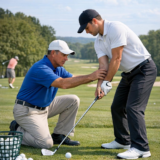
elite golf occupies a singular space at the intersection of sustained technical mastery, strategic acumen, and psychological resilience.This article examines the lives and performances of golf legends through an integrated lens that combines psychological theory and empirical biomechanics, with the aim of clarifying how mental processes and movement mechanics jointly produce repeatable excellence and enduring competitive advantage. By situating individual case studies within broader empirical and technological evidence, we seek to move beyond anecdote toward a systematic understanding of the factors that differentiate the sport’s most successful practitioners.
Psychology, broadly defined as the scientific study of mind, behavior, and related mental processes, provides the conceptual foundation for analyzing traits such as focus, decision-making under pressure, motivation, and recovery from setback (see Britannica; SimplyPsychology). Contemporary approaches to sports psychology are explicitly interdisciplinary, drawing on biological, sociological, and neuroscientific insights to explain how cognition, emotion, and social context shape performance (American Public University). For golf, where outcomes are determined by a sequence of high-precision motor acts embedded in complex strategic choices, psychological processes mediate both moment-to-moment execution and long-term career trajectories.
Complementing psychological inquiry, biomechanical analysis offers quantitative description of the kinematics, kinetics, and neuromuscular coordination underlying golf strokes, putting mechanics, and movement patterns associated with injury risk.Advances in motion capture,force measurement,and wearable sensing allow fine-grained comparison of technique across eras and between individual athletes,linking mechanical efficiency and consistency to outcomes on course. When integrated with psychological metrics-such as stress reactivity,attentional control,and resilience-biomechanics helps explain not only how great shots are produced but why they are produced reliably under competitive strain.
This article synthesizes peer-reviewed research, case analyses of canonical players, and contemporary technological findings to articulate a model of elite golf performance in which psychological resilience, biomechanical precision, and strategic intelligence interact dynamically across time. The analysis concludes with implications for coaching, talent identification, and preserving the legacies of golf’s leading figures, offering evidence-based pathways to replicate elements of legendary performance in contemporary practice.
Psychological Resilience and Competitive Consistency: Evidence Based Mental Skills and Prescriptive Training Protocols
Contemporary sport psychology frames resilience as an adaptive,trainable set of cognitive-affective processes that stabilise performance under variable stressors. The term psychological-commonly defined as “of or relating to psychology” -highlights the centrality of mental operations (attention, appraisal, affect regulation) in mediating clutch outcomes. Empirical work across high-performance domains shows that golfers who develop robust appraisal strategies and rapid emotion regulation exhibit greater shot-to-shot and round-to-round consistency, particularly on high-stakes holes and in major tournaments.
core mental skills emerge repeatedly in applied and experimental literature as predictors of competitive steadiness. These include:
- Attentional control -the ability to flexibly shift between broad course awareness and narrow pre-shot focus;
- Self-regulation -goal-directed control of arousal and thoughts via breathing, cue words and micro-routines;
- imagery and simulation -rehearsal of variable wind, lie and pressure conditions to reduce novelty in competition;
- Routine fidelity -consistency of pre-shot and between-shot rituals that preserve motor execution under duress.
Prescriptive training protocols translate these skills into weekly and periodised practice. A concise summary table provides a practical template coaches can adapt.
| Protocol | Frequency | Targeted Outcome |
|---|---|---|
| Simulated-pressure rounds | 1-2×/week | Transfer of skills to contest-like stress |
| Focused-attention blocks (20-30 min) | 3-4×/week | Improved shot-to-shot regulation |
| Breath/coherence training | Daily (10 min) | arousal control, HRV gains |
Rigorous measurement is required to individualise prescriptions. Integrative monitoring blends psychometric scales (confidence, worry, perceived control), physiological indices (HRV, sleep quality) and behavioral markers (pre-shot timing, error clustering). Recommended monitoring components include:
- Validated questionnaires for situational anxiety and resilience;
- Objective physiological sensors during practice and tournaments;
- Video-based behavioral coding of routines and pre-shot micro-decisions.
To consolidate gains into competitive consistency, interventions must be woven into technical and tactical coaching. Practical, evidence-aligned recommendations are: maintain daily micro-practice for attention and breath regulation, run weekly simulated-pressure sessions that mimic tournament contingencies, and use fortnightly data reviews to adjust load. When sustained over championship cycles, this integrated approach enhances not only short-term scoring stability but also the longitudinal legacy markers that distinguish historic performers.
Arousal Regulation and Decision Making Under Pressure: Cognitive Strategies and Practical Implementation guidelines
Contemporary sport psychology frames the interaction between physiological arousal and cognitive control as a determinative factor in motor execution. Classic models such as Yerkes-Dodson and attentional control theory describe an inverted-U relationship between arousal and performance and predict attentional narrowing under stress. In golf, where shot execution demands precise temporal coordination and fine motor control, elevated sympathetic activation can degrade kinematic sequencing and decision quality. Empirical work on elite golfers shows that alterations in gaze behavior, muscle co-contraction, and variability of clubhead speed correlate with transient increases in somatic and cognitive arousal, underscoring the necessity of targeted regulatory practices to preserve technical integrity under contest demands.
Evidence-based cognitive strategies can be organized into preparatory, in-play, and recovery categories that afford both immediacy and durability. Core interventions include pre-shot routines to stabilize attentional focus, mental imagery for motor rehearsal, and calibrated breathing techniques to down-regulate sympathetic tone.practical options are:
- Pre-shot routine: standardized sequence (visualize – step – breathe) executed in under 8-12 seconds to create procedural consistency.
- Micro-imagery: brief kinesthetic cue rehearsal focusing on key swing sensations rather than elaborate scripts.
- Adaptive self-talk: cue words that shift focus between outcome and process depending on situational demands.
- Progressive breathing: 4:4 or box-breathing protocols to reduce heart rate and improve vagal tone between shots.
Translating strategy into practice requires structured implementation guidelines to ensure transfer from practice to competition. The following table summarizes concise prescriptions suitable for integration into weekly training cycles and on-course rehearsals:
| strategy | Mechanism | Practical Implementation |
|---|---|---|
| Simulated Pressure | Stress inoculation | score-based games, crowd noise, stakes |
| Routine Automation | Procedural memory | Repeat same 8-12s routine across 100+ reps |
| Biofeedback | Physiological self-regulation | HRV or breath-coach sessions 2×/week |
Decision-making under acute stress reflects an interaction between fast, recognition-based processes and slower, analytic evaluation.Under time pressure or heightened arousal, golfers preferentially recruit recognition-primed decisions-selecting rehearsed shot templates-rather than deliberating over probabilistic outcomes. Training should thus emphasize both the breadth of recognition cues (e.g., wind, lie, green speed) and the adaptability to override scripted options when environmental contingencies dictate. Techniques such as constrained decision drills, timed pre-shot deliberations, and post-round cognitive debriefs can cultivate adaptive heuristics without sacrificing the accuracy of shot selection.
monitoring and iterative refinement complete the implementation loop. Objective measures (heart-rate variability, shot dispersion metrics, clubhead kinematics) combined with subjective indices (rating of perceived exertion, cognitive load scales) enable individualized thresholds for arousal and bespoke intervention dosing. Coaches and sport psychologists should co-develop a data-informed protocol that links biomechanical tolerance zones with cognitive strategies-e.g., when HRV falls below a threshold employ a 60-90s breathing reset; when dispersion exceeds a target, increase imagery reps. Such integration maximizes the likelihood that technical skills remain robust in pressure contexts and aligns with the methodological rigor characteristic of research into golf’s legendary performers.
Cueing Routine Development and Attentional control: Specific Interventions to Enhance On Course Focus
Contemporary approaches to pre-shot preparation conceptualize cueing routines as structured, repeatable sequences that align perceptual priorities with motor execution. Drawing on the broader notion of “cueing” as the timed insertion of an informational or mechanical prompt into performance, effective routines couple sensory triggers (visual, tactile, auditory) with a concise cognitive script.In practice this means designing cues that: 1) are task-specific, 2) minimize working-memory load, and 3) map directly onto the intended biomechanical outcome-thereby reducing variance in force production and kinematic timing during the swing.
Interventions to establish and stabilize these routines emphasize simplicity, fidelity, and context specificity.Core techniques include:
- Perceptual anchors: a single, external focal point (hole edge, clubface mark) to promote external attentional focus.
- Kinesthetic tethers: a one- or two-count tempo based on tactile sensation at the lead wrist or feet to stabilize rhythm.
- Micro-scripts: 3-5 word cognitive cues (e.g., “smooth, rotate, release”) that translate technical intent into actionable motor goals.
Training protocols should integrate cue acquisition with progressive overload and biomechanical feedback. Early-stage learning uses blocked practice and high-frequency repetition to consolidate the cue-movement mapping; mid-stage work introduces variability (different lies, wind) and perceptual decoys to promote robust cue retrieval; late-stage training applies dual-task and pressure simulations to test attentional resilience. Where available, force-cueing simulators or instrumented mats can be employed to quantify temporal alignment between cue onset and peak force/clubhead speed, providing objective indices for cue refinement.
| Intervention | Primary Target | Typical Session |
|---|---|---|
| Quiet-eye anchoring | Visual attention stability | 15 min: progressive gaze holds |
| Tempo tethering | Temporal consistency | 10 sets: 10 reps with metronome |
| micro-script rehearsal | cognitive economy | 20 putts: silent cue before each stroke |
Monitoring progression requires both quantitative and qualitative metrics to ensure cues remain functional under play conditions. Recommended tools include: video kinematic snapshots for pre- and post-cue movement comparison, force/timing logs from practice devices to track cue-to-peak-force latency, and self-report checklists for perceived attentional state and cue compliance. Practitioners should prioritize ecological validity-testing cues in simulated pressure and varied environmental contexts-and adopt an iterative refinement process where ineffective cues are pruned and effective cues are gradually automatized to support implicit control under competitive stress.
biomechanical Foundations of the Elite Golf Swing: Kinematic Sequencing, kinetic Chain Efficiency, and Technique Modifiers
Kinematic sequencing in the elite golf swing is characterized by a reliable proximal-to-distal activation pattern that maximizes rotational impulse while minimizing energy dissipation. Elite performers initiate the downswing with coordinated ground reaction modulation and pelvic rotation, followed by thoracic unwinding, upper-arm acceleration, and finally club release. This ordered cascade produces additive segmental velocities and preserves angular momentum, yielding high clubhead speed with controlled impact geometry. Precise intersegmental timing-not merely gross strength-is the primary determinant of efficient energy transfer.
The concept of kinetic chain efficiency emphasizes how multisegment coordination, joint stiffness regulation, and timing of muscle activation convert ground forces into clubhead velocity. Ground reaction forces (GRFs) supply the base impulse; lower-limb and hip mechanics convert vertical and horizontal GRFs into axial rotation; the torso and upper limbs refine the direction and magnitude of the resultant vector. technique modifiers that systematically alter this conversion include:
- Grip pressure – influences wrist hinge and release timing
- Postural set – alters lever lengths and spinal load
- Swing plane and arc width – change moments of inertia and energy storage
- Tempo and rhythm – affect the phase relationships between segments
Quantitative analysis of timing relationships clarifies coaching targets.The following simple schematic summarizes representative peak angular velocity loci and relative downswing timing observed in high-level samples:
| Segment | peak Angular Velocity | Typical Downswing Timing |
|---|---|---|
| pelvis | Moderate | Early (0-30%) |
| Thorax | High | Mid (30-70%) |
| Arms/Club | Peak | Late (70-100%) |
These simplified markers permit objective feedback using motion capture, radar, or high-speed video to align an individual’s sequence with performance goals.
When sequencing deviates from the optimal pattern, compensatory strategies emerge that reduce efficiency and raise injury risk. Common faults-premature arm acceleration, hip slide, or excessive lateral sway-create counterproductive torques and abnormal spinal shear. Clinically, these faults correlate with overuse syndromes in the lumbar spine, hips, and lead shoulder. Effective corrective interventions prioritize restoring segmental timing through drills that emphasize proximal initiation, controlled dissociation, and variable practice under progressive load, while monitoring joint stress and recovery.
Translating biomechanical principles into practice requires individualized profiling and iterative feedback. Baseline assessment should quantify intersegmental timings, GRF patterns, and joint range-of-motion to identify which technique modifiers will most efficiently close the gap between current and optimal sequencing.Coaching recommendations grounded in this profile combine targeted mobility/strength interventions with cueing strategies that align motor learning (e.g., external focus, blocked-to-random practice) to the athlete’s biomechanical constraints. This integrated, evidence-informed approach fosters lasting gains in performance while mitigating injury risk.
strength Power and Mobility Profiles for Peak Performance: Targeted Conditioning Recommendations and Periodization Considerations
Physiological profiling for elite golf performance requires quantifying rotational power, unilateral stability and posterior-chain capacity as primary determinants of long‑drive output and shot consistency.Standardized assessments-countermovement jump (CMJ) for lower‑limb power, isometric mid‑thigh pull or submaximal 1RM for maximal strength, and the Y‑Balance or single‑leg squat for dynamic stability-provide objective baselines. Interpreting these metrics together,rather than in isolation,reveals athlete-specific deficiencies (e.g., high rotational velocity with inadequate hip extension torque) that should drive conditioning priorities.
Targeted interventions must align with the identified profile: build foundational strength, convert strength to golf‑specific power, and restore or extend joint mobility ranges critical to swing kinematics. recommended exercise emphases include:
- Strength: heavy bilateral and unilateral hip-dominant lifts (e.g., trap bar deadlift, split squat) performed in 3-5 sets of 3-6 reps to raise maximal force capacity.
- Power: rotational medicine‑ball throws, band‑resisted rotational accelerations, and loaded jump variations in 2-4 sets of 3-6 explosive reps to enhance rate of force development.
- Mobility: thoracic rotation drills, hip internal/external rotation mobilizations, and dorsiflexion sequences performed daily with short holds and active control work.
Periodization considerations should be pragmatic and athlete‑centred, using mesocycles to prioritize qualities in sequence: an off‑season hypertrophy/strength block (8-12 weeks), a pre‑season conversion block emphasizing power and speed (4-8 weeks), and an in‑season maintenance phase focused on frequency, technical integration, and recovery. Intensity, volume and complexity should follow progressive overload principles but be modulated by competition schedule and subjective readiness; incorporate deload microcycles and planned reductions in volume 7-10 days before significant events.
The following table provides a concise monitoring framework to operationalize training decisions and periodization checkpoints:
| Metric | Baseline Target | Test Frequency |
|---|---|---|
| CMJ (peak power) | ↑ 5-10% vs baseline | Every 4 weeks |
| Single‑leg stability (reach asymmetry) | < 8% asymmetry | Monthly |
| Thoracic rotation ROM | ≥ normative for sex/age | Biweekly |
Integration and autoregulation are critical to translate conditioning gains into on‑course performance. Use session RPE,readiness questionnaires and simple neuromuscular tests (e.g., CMJ peak velocity) to adjust load in real time; prioritize technique‑preserving intensity over indiscriminate volume spikes. Psychophysiological strategies-structured recovery, sleep hygiene and cognitive arousal control-support adaptation and reduce injury risk, enabling sustained progression through periodized blocks while maintaining swing mechanics under competitive pressure.
Injury Prevention Through Movement Screening and Corrective Exercise: Prescriptive Protocols for Longevity
Contemporary programmes that preserve career length and performance in elite and recreational golfers prioritize systematic assessment of the musculoskeletal system rather than ad hoc symptom management. Targeted screening identifies biomechanical risk factors underlying prevalent conditions-most notably chronic low back pain,entrapment neuropathies of the wrist and hand,and overuse injuries in skeletally immature athletes-allowing clinicians to transition from reactive care to preventive prescription. The clinical objective is to quantify deficit magnitude (range-of-motion, strength asymmetry, neuromuscular timing) so that interventions are measurable, progressive, and specific to the demands of repeated rotational loading and fine motor control inherent to the golf swing.
Movement appraisal should be structured and reproducible, combining global and sport-specific elements into a single battery. Core components include:
- Segmental mobility (thoracic rotation, hip internal rotation)
- Motor control (lumbopelvic stability, scapular control)
- Neurodynamic screening (median nerve mechanosensitivity for wrist/hand symptoms)
- Load tolerance (progressive rotational and axial load tests)
Each element yields a categorical outcome (adequate, deficient, intolerant) which directly informs the corrective hierarchy and prevents premature exposure to high-velocity practice that can exacerbate pathology.
The prescriptive framework follows a staged algorithm: first restore pain-free mobility,then re-establish positional control,progress to tissue capacity (strength and endurance),and finally reintegrate speed and variability specific to swing mechanics. Typical progressions include neural gliding and wrist posture retraining for neuropathic symptoms, thoracic mobilizations plus active extension exercises for spinal extension deficits, and graded hip rotation strength work to redistribute rotational loads away from the lumbar spine. Emphasis is placed on objective thresholds (e.g., symmetric hip internal rotation within 10°, pain-free thoracic rotation to 45°) to determine advancement to the next stage.
| Deficit | Corrective Focus | Example Intervention |
|---|---|---|
| Reduced thoracic rotation | Mobility + segmental control | Thoracic foam-roll + seated rotations (3×10) |
| Wrist neural sensitivity | Neurodynamics + ergonomic retraining | Median nerve glides + grip posture drills (2×20) |
| Hip rotational weakness | Rotational strength & load tolerance | Band-resisted hip rotations → cable chops (progressive) |
Longevity-oriented programmes embed ongoing surveillance and multidisciplinary collaboration. Regular retesting intervals (6-12 weeks for most deficits; shorter for high-risk juniors with open growth plates) and load-monitoring metrics (practice volume, pain-free range, objective strength ratios) allow dose adjustments before tissue overload occurs. Key monitoring items include:
- Symptom diary (frequency, provocation and resolution)
- Objective retest (rotation angles, strength ratios, neurodynamic tolerance)
- Workload metrics (ball strikes, practice duration, intensity)
Integration of physiotherapy, coaching and psychological support ensures adherence and addresses fear-avoidance or performance anxiety that can modulate motor patterns-ultimately converting screening data into durable, on-course resilience.
Wearable Technology and Motion Analysis to Inform Technique Refinement: Data Driven Feedback Loops and Implementation Best practices
contemporary performance analysis in golf integrates wearable technology with high-fidelity motion capture to translate biomechanical signals into coachable interventions. By synthesizing inertial measurement units (IMUs), pressure insoles, electromyography (EMG), and optical tracking, researchers and practitioners can quantify swing variability, segmental sequencing, and joint loading with granularity previously reserved for laboratory settings. This convergence permits hypothesis-driven modifications to technique that respect each player’s unique motor patterns and psychological profile while preserving ecological validity on the practice range and course.
Key measurement domains are distilled into actionable variables: clubhead speed, temporal sequencing, pelvis-thorax separation, ground-reaction force curves, and muscle activation timing. Effective deployment prioritizes transparency of signal provenance and repeatability of metrics. Typical sensor contributions include:
- IMUs – angular velocity and segment orientation;
- Force sensors – weight shift and drive impulse;
- EMG – onset and amplitude of muscular recruitment;
- Optical systems – three-dimensional kinematics and validation of inertial outputs.
These modalities create a multidimensional snapshot that supports both descriptive and predictive modeling of performance.
A robust feedback loop couples measurement, modeling, and intervention.Raw data are preprocessed (filtering, drift correction), feature-engineered (temporal windows, phase detection), and fed into analytical pipelines that produce concise KPIs for the coach and athlete.Real-time feedback architectures emphasize latency under 100 ms for perceptible motor learning benefits, whereas batch analyses enable longitudinal trend detection and personalized training prescriptions. Machine learning classifiers and regression models are useful for detecting subtle pattern shifts but must be interpreted through a biomechanical lens to avoid spurious coach directives.
Implementation best practices stress calibration, cross-validation, and user-centered design. Prioritize sensor placement protocols with documented inter-session reliability, establish baseline measures in standardized drills, and combine objective outputs with subjective measures of perceived exertion and cognitive load. Data governance (secure storage,consent,and anonymization) and clear interaction pathways between analyst,coach,and athlete are essential to translate metrics into behavioral change without overburdening the learning process.Minimal-intrusion wearables and phased introduction increase adoption and preserve naturalistic swing dynamics.
The table below summarizes pragmatic pairings of sensor type, primary metric, and recommended acquisition characteristics for routine deployment in coaching environments.
| Sensor | Primary Metric | Typical Sampling/Use |
|---|---|---|
| IMU | Segment angular velocity | 200-1000 Hz / swing-phase timing |
| Force insole | Center-of-pressure shift | 100-500 Hz / weight-transfer profiling |
| EMG | Muscle activation onset | 1000 Hz / sequencing & fatigue monitoring |
Integrated Performance Planning: Translating Psychological and biomechanical Insights into Individualized Training and Competition Strategies
Interdisciplinary assessment forms the foundational axis of any elite golfer’s plan: standardized psychological inventories (resilience, attention control, decision-making under pressure) are triangulated with high-resolution biomechanical profiling (3D kinematics, ground reaction forces, clubface dynamics) to derive an athlete-specific performance signature. This signature characterizes both stable traits (e.g., preferred tempo, attentional style) and dynamic states (e.g., fatigue-related variability), enabling precise targeting of interventions that address the interaction between mind and movement rather than treating them as independent domains.
Translating signatures into practice requires clearly defined, measurable objectives and a hierarchy of interventions that bridge cognitive skills training and motor learning. Core components include targeted motor patterns (e.g., optimized pelvic-shoulder sequencing), contextualized mental routines (e.g., pre-shot imagery tied to swing tempo), and integrated feedback systems (concurrent augmented feedback transitioning to internalized self-monitoring). The structure of each training block is informed by a priori decision rules that specify when to prioritize variability for adaptability versus repetition for mechanical stabilization.
- Assessment-to-target mapping: translate test results into discrete, prioritized KPIs.
- Hybrid drills: combine stress inoculation with constrained motor learning to simulate competitive constraints.
- Data governance: define sampling windows, acceptable thresholds, and roles for automated alerts.
- Micro-periodization: align psychological load and biomechanical intensity with competition calendars.
| Player Archetype | Psychobiomech Target | Primary Modality |
|---|---|---|
| Controlled Power | Reduce lateral hip torque variability | Force-plate guided tempo drills |
| Rhythmic Precision | Enhance attentional focus under fatigue | Simulated match-play with cognitive load |
| Adaptive Consistency | Increase desirable motor exploration | Variable practice + biofeedback |
Competition plans operationalize the training signal through microcycles that deliberately manipulate psychological and biomechanical stressors. Pre-tournament phases emphasize consolidation of robust pre-shot routines and situational decision rules; tapering phases prioritize neuromuscular freshness and attentional anchoring. Tactical templates-such as predefined risk thresholds for aggressive shot selection-are established from practice-derived outcome distributions so that in-competition choices are supported by empirical likelihoods rather than momentary bias.
Implementation is iterative and data-driven: continuous monitoring (wearables, shot-link analytics, subjective readiness scales) feeds weekly review cycles where thresholds are adjusted via Bayesian-informed updates. Success metrics combine reliability (reduced unwanted variance in key mechanics), transfer (maintenance of mental routines under pressure), and ecological validity (performance in simulated competitive contexts). Obvious coach-athlete communication protocols and explicit decision-rule documentation ensure that adaptations remain athlete-centered, replicable, and aligned with long-term development objectives.
Q&A
1. What do you mean by “psychological” in the context of elite golf performance?
Answer: In this article, “psychological” refers to mental processes and states that influence performance-cognition, emotion, attention, motivation, and self-regulation.Consistent with standard lexical definitions, psychological denotes aspects “concerned with a person’s mind and thoughts” (Collins English Dictionary).In elite golf these processes interact dynamically with perceptual-motor and biomechanical systems to determine behavior under competitive pressure.
2. How is psychological resilience defined for elite golfers,and why is it important?
Answer: Psychological resilience is the capacity to maintain or rapidly recover effective cognitive and emotional functioning when faced with stressors,setbacks,or novel demands. For elite golfers, resilience supports rapid recovery from poor shots, sustained focus across rounds and tournaments, and adaptive coping during high-stakes moments. Resilient athletes show flexible appraisal, effective emotion regulation, and rapid behavioral recalibration-attributes strongly associated with consistent high performance.
3. Which motor-control theories best explain the shot-to-shot consistency of elite golfers?
Answer: Several complementary motor-control frameworks are relevant. Schema theory (Schmidt) explains adaptive generalization through stored rules of action; dynamical systems theory emphasizes self-organization and task constraints producing stable attractor states; and the constrained action hypothesis highlights external-focus instructions improving automaticity. Together these perspectives explain how golfers develop robust, flexible motor solutions that maintain performance under variability and pressure.
4. What biomechanical features characterize elite golf swings?
Answer: Common biomechanical hallmarks include an efficient kinematic sequence (proximal-to-distal energy transfer), optimized pelvis-thorax separation (X-factor) and its rate of unwinding, effective ground reaction force generation and weight transfer, minimal unnecessary segmental compensations, and clubhead speed produced through coordinated angular velocities and moments. Efficiency is achieved by maximizing useful kinetic energy transfer while minimizing energy loss through unwanted motions.
5. How do psychological states interact with biomechanical execution?
Answer: Psychological states modulate attentional focus, muscle tension, movement timing, and decision thresholds. For example, heightened anxiety can shift focus inward, increase co-contraction, alter tempo, and disrupt the kinematic sequence, degrading mechanical efficiency. Conversely, optimal arousal and a clear external focus support automated motor programs and preserve biomechanical efficiency. The interaction is bidirectional: successful mechanics can improve confidence and reduce negative affect.6. What are the most informative measurement techniques for studying these interactions?
Answer: Multimodal approaches are most informative: 3D motion capture and inertial measurement units (IMUs) for kinematics; force plates for ground reaction forces; electromyography (EMG) for muscular activation patterns; eye-tracking and pupillometry for attentional metrics; heart-rate variability and cortisol assays for autonomic stress markers; validated psychometric instruments for traits/state measures; and high-resolution clubhead and ball-launch monitors for outcome metrics. Synchronized collection enables time-locked analysis across domains.
7.How can analytics be used to integrate psychological and biomechanical data?
Answer: analytics strategies include time-series analysis, cross-correlation, Granger causality testing, mixed-effects modeling to account for within-player variability, machine learning for pattern revelation (e.g., clustering of movement-mental-state phenotypes), and multivariate dimensionality reduction (PCA, CCA) to identify latent factors linking mental states and mechanics. Visualization of phase relationships and coupling metrics aids interpretation. Crucially, models must respect the temporal dynamics and hierarchical structure of the data.
8. What patterns have been observed in elite players that distinguish them from lower-level golfers?
Answer: Elite players typically exhibit more stable pre-shot routines, superior emotion regulation, refined attentional control, and greater movement economy.Biomechanically, they tend to display a more consistent kinematic sequence, reduced intra-swing variability in key parameters (e.g., clubhead path at impact), and better coupling between lower- and upper-body segments. Behaviorally, they recover faster from errors and maintain decision quality under pressure.9. How should coaches translate these insights into training practice?
Answer: Integrate mental skills training (self-talk, imagery, pre-shot routines, arousal regulation) with biomechanical and motor-learning practices. Use external-focus instructions, variable practice schedules to enhance adaptive generalization, error-clamp or reduced-feedback blocks to foster internal model robustness, and progressive stress inoculation (simulated pressure) to rehearse resilience. Employ objective measurement (IMUs, launch monitors) to track mechanical targets and psychometric/state markers to monitor mental readiness.
10. What is the role of biofeedback and technology-enabled interventions?
Answer: Biofeedback (real-time auditory/visual/ haptic cues from EMG, motion sensors, or HRV) can accelerate skill acquisition and promote desirable relaxation or activation patterns. Augmented reality, motion-capture-informed drills, and individualized performance dashboards enable targeted adjustments. Interventions must be used judiciously to avoid over-reliance; the goal is to internalize desirable patterns so that performance remains robust when feedback is withdrawn.
11. What are the limitations of current research and measurement approaches?
Answer: Limitations include ecological validity gaps (laboratory swings vs.on-course variability), small and non-representative samples, reliance on cross-sectional designs, and difficulty establishing causal direction between psychological states and biomechanical changes. Measurement noise, sensor drift, and heterogeneity in protocol reduce comparability. many analytics tools can overfit without sufficient data or appropriate validation.
12. How can future research address these limitations?
answer: Emphasize longitudinal,within-athlete designs; collect larger,multisite datasets with standardized protocols; combine laboratory precision with field-based,competition-context sampling; use causal inference methods and pre-registered experiments; and develop interoperable data standards.Multidisciplinary teams (sports scientists, biomechanists, psychologists, data scientists) should collaborate to ensure robust, clinically relevant findings.
13. Are there ethical concerns when applying analytics and monitoring to elite golfers?
Answer: Yes. Continuous monitoring raises privacy concerns and potential misuse of sensitive psychological data. Informed consent, data security, and clear policies about data ownership and sharing are essential. Coaches should avoid coercive monitoring or punitive use of mental-state metrics; interventions must respect athlete autonomy and well-being.
14. What practical metrics should teams track to assess an elite golfer’s integrated readiness?
Answer: Recommended metrics include objective mechanical indicators (clubhead speed, smash factor, dispersion at launch), kinematic consistency scores (variance in key joint angles and timing), physiological stress markers (HRV, resting cortisol when feasible), validated psychological state measures (anxiety, confidence, focus), and outcome metrics (strokes gained, putting/approach performance). Composite indicators that combine these domains can signal integrated readiness more effectively than any single metric.
15. How should interventions be periodized across a season?
Answer: Early-season phases should prioritize technical consolidation and capacity building with higher variability and feedback for motor learning, alongside development of baseline psychological skills. Pre-competition tapering should reduce variability, refine routines, and emphasize arousal control. In-competition phases require maintenance of routines, rapid recovery protocols, and targeted interventions for identified weaknesses. Post-competition reviews should integrate biomechanical and psychological data to set next-phase objectives.
16.How do individual differences affect the request of these principles?
Answer: Individual differences in anatomy, motor learning style, cognitive style, and personality mean that one-size-fits-all prescriptions are suboptimal. Assessment-driven individualization is paramount: use baseline testing to identify dominant constraints (e.g., mobility limits, attentional tendencies) and tailor interventions. Inter-individual variability also necessitates adaptive analytics that learn individual baselines and detect meaningful deviations.
17. What are the key takeaways for researchers and practitioners?
Answer: Integrative approaches that bridge psychological resilience, motor control, and biomechanics yield richer explanations of elite performance than single-domain analyses. multimodal measurement, rigorous analytics, ecological validity, and individualized, ethically guided interventions are critical. Coaches should blend mental skills training with motor-learning-informed practice and biomechanical targets, using technology to inform but not replace expert judgment.
18. What are promising directions for translational applications in coaching and performance enhancement?
Answer: Promising directions include real-time multimodal feedback systems that preserve ecological validity, adaptive training protocols informed by machine-learning models, personalized resilience training based on physiological and behavioral markers, and collaborative platforms that synthesize biomechanical and psychological data for actionable coaching cues. Validation in competitive contexts will determine long-term utility.
19. How can this article inform aspiring golfers aiming for higher consistency?
Answer: Aspiring golfers should adopt an evidence-informed, integrated approach: develop structured pre-shot routines and mental skills, practice under varied and pressure-simulated conditions to build robust motor programs, focus on biomechanical efficiency through targeted drills and strength/mobility work, and use objective feedback to monitor progress. Emphasize recovery and mental health as integral to consistent performance.
20.Where can readers find definitions and further reading on psychological constructs used here?
Answer: For concise lexical definitions of “psychological,” standard dictionaries such as Collins English Dictionary and Merriam-Webster provide accessible entries. For deeper theoretical coverage, consult foundational texts in sport psychology, motor control, and biomechanics, and review recent interdisciplinary empirical studies that integrate these domains.
If you would like, I can convert this Q&A into a printable FAQ, expand any answer with citations to empirical studies, or tailor the Q&A for a coaching audience or for a scientific journal submission.
The Conclusion
In sum, this analysis underscores that the remarkable performance of golf legends cannot be ascribed to a single domain but rather emerges from the dynamic interplay of psychological resilience, refined motor and biomechanical proficiency, strategic decision-making, and analytics-informed equipment optimization.By conceptualizing psychological constructs-understood broadly as the scientific study of mind and behavior-and situating them alongside precise biomechanical measures, the study demonstrates how mental strategies and motor control co-adapt to produce consistent high-level outcomes (see definitions of psychology for context: e.g., SimplyPsychology).
The practical implications are twofold. For practitioners and coaches, an integrated assessment-and-intervention framework that combines evidence-based psychological training, individualized biomechanical diagnostics, and data-driven equipment fitting offers a coherent pathway to cultivate performance robustness. For researchers, the results advocate for multi-modal methodologies that bridge laboratory biomechanics, in-situ performance metrics, and validated psychometric instruments to capture the complexity of elite play.
Limitations of the present analysis-including sample heterogeneity, cross-sectional designs, and variability in measurement protocols-highlight the need for longitudinal, ecologically valid studies and standardized reporting practices. Future work should prioritize longitudinal tracking across developmental stages,the use of wearable and high-fidelity motion-capture technologies in competition settings,and advanced analytic techniques (e.g., machine learning) to model individual trajectories and intervention effects.
Ultimately, advancing our understanding of golf excellence demands sustained interdisciplinary collaboration. Integrating psychological theory with biomechanical rigor and analytics not only refines explanatory models of elite performance but also generates actionable insights to inform coaching, equipment design, and athlete development-thereby supporting the next generation of legends on and off the course.