
Golfers confronting temporary “preferred lies” rules often ask the same practical question: after measuring adn replacing a cleaned ball within the permitted club‑length area, may you leave the club or other measuring device on the turf and use it as an alignment aid when you play the shot? The Rules guy examines the tension between seasonal relief policies-which commonly let you lift, clean and place a ball within a club‑length-and the Rules of Golf limits on improving one’s conditions or using equipment to affect stance, line or execution. With casual habits from practice areas migrating onto tournament fairways, players and officials are split over weather a marker left in position is merely a removable object, an unlawful advancement, or something a commitee must explicitly allow or forbid. A quick check of available model local‑rule text and recent guidance shows no single, clear directive covering this exact scenario, so committees and referees must often resolve it locally.
preferred lies explained and when they apply
Clubs and tournament committees introduce a temporary Local Rule commonly called “preferred lies” to protect playability and fairness after adverse weather or course damage. The intent is practical: allow play to proceed without penalizing players for unavoidable poor lies while preventing systematic advantages from repeatedly improving conditions.
when implemented, the rule is deliberately specific. it usually covers fairways and closely mown areas, is moast often used in stroke‑play competitions, and prescribes a defined relief zone-typically 6 inches or one club‑length-with the standard restriction that the ball must not be placed nearer the hole. The committee must publish the exact limits and conditions in advance of play.
- Where: fairways and closely mown lies
- Distance allowed: commonly 6 inches or one club‑length (as stated by the committee)
- Permitted action: lift, clean and place; no further improvement
- Usual format: primarily for stroke play; committee notice required
| Trigger | Typical action |
|---|---|
| Waterlogged fairways | Lift, clean and place within the allowed distance |
| Frost or overnight damage | Temporary placement permitted |
| Rough / hazards | Generally excluded from the Local Rule |
crucial marker note: “one club‑length” describes a permitted measurement, not a license to leave measuring aids in place while making a stroke. Players should mark and lift the ball, place it within the authorised area, and remove any measuring device or marker before addressing the ball. Leaving a club‑length marker in position during your swing may change the character of the play and conflict with the committee’s intent-measure, replace, then remove and play.
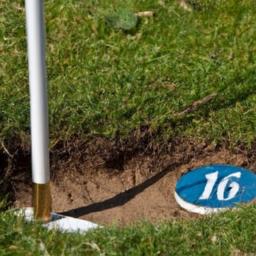
legal status of leaving a club‑length marker on the turf under preferred lies
Model Local Rules for preferred lies permit lifting, cleaning and placing within a stated club‑length, but they do not expressly grant the right to leave a measuring club or similar device on the ground as you make a stroke. Committees flesh out specifics for their competitions, and in events with strict enforcement even an apparently minor practice can attract attention from officials or opponents. The Model Local Rules do not contain a global authorization to leave measuring markers on the ground during a stroke.
under the Rules, a measuring implement on the turf is normally a movable obstruction; players may remove movable obstructions, but that removal should occur before making a stroke. More importantly, if a marker remains and is used-intentionally or not-to help alignment, steady a stance, or alter the execution of the shot, it risks being treated as an artificial aid or as improving the conditions affecting the stroke. In that case a player may be subject to a ruling and possible penalty depending on the committee’s interpretation and the level of advantage obtained.
How to reduce risk on the course:
- Read the Local Rule: Confirm precise club or tournament wording before you start.
- Measure, replace, remove: Mark the original position, place the ball within the allowed area, and remove any measuring device before you play.
- When unsure, ask: In competitive play, call a rules official rather then guessing.
- Casual rounds: Even in friendly play,most groups clear the marker to prevent disputes.
| Committee stance | Likely result |
|---|---|
| Require removal of measuring aids | No rule queries if followed |
| Allow marker but forbid use as an aid | Permitted, but liable to penalty if used to assist |
| Prohibit any markers in play | Failure to remove could lead to penalty |
Veteran referees and experienced competitors advise the safest course is removal: play without the marker in place. High‑level events often take a stricter view; casual rounds may resolve matters informally-but the universally accepted habit is simple: if the Rules are not explicit, take the conservative approach and remove the marker.
ruling bodies, committee power and on‑course markers
Day‑to‑day choices about course management fall to the local committee, and both the R&A and the USGA provide model local‑rule text and commentary to guide that delegation. Their materials address common marker types-from winter preferred‑lies indicators to temporary distance posts-and recommend clear language for committees to adopt. In practice, committees must convert that guidance into explicit, published instructions for players at each venue.
A committee decides whether a marker is treated as part of the course (an immovable obstruction), a loose impediment that may be removed, or a temporary item subject to special handling.Committees can write local rules that describe how players may use markers (such as,whether preferred‑lies apply,the permitted relief area,or whether a club‑length marker can remain in place while playing). Any variations from standard wording must be posted on the official notice board and included in competition materials; absent explicit local language, the default Rules of Golf interpretations govern.
Committee duties typically include:
- Precise wording: adopt model text or draft clear custom language.
- Visibility: place signage and post the Local Rule before play.
- Uniformity: apply marker policies consistently across events.
- Consultation: seek interpretation from the R&A/USGA for atypical situations.
For players, the implications are direct. If a committee declares a marker to be part of the course, relief and obstruction rules change; if it calls a marker a loose impediment, a player may remove it unless the committee’s Local Rule specifies otherwise. The short table below summarizes common marker types and how committees typically treat them in tournaments.
| Marker Type | Typical Ruling | Committee note |
|---|---|---|
| Preferred‑lie marker | Relief allowed as stated by Local Rule | Use model E‑3 wording or similarly clear text |
| Distance/yardage post | Often classed as part of the course (immovable) | Note if temporary and intended to be movable |
| Temporary event stakes/markers | Treatment depends on posted notice | define in competition conditions to avoid confusion |
Both governing bodies advise using published model language when feasible and documenting any departures in competition details.Players should check the official notice board before starting: a committee’s declaration can instantly change what’s permitted, including whether leaving a measurement aid on the ground is acceptable.
practical steps to avoid penalties and keep pace
As preferred‑lies become more common in damp or damaged conditions, players should adopt consistent on‑course routines to avoid accidental breaches and to help maintain pace. Simple, quick habits reduce both the risk of a rules issue and time lost to disputes.
- Remove the marker before you play: A measuring club left next to the ball can be perceived as an artificial aid-pick it up and move it out of the shot area.
- Mark, place, confirm: When applying preferred‑lies, mark the original position, place the ball within the authorised zone, then indicate the new spot so the group knows what was done.
- Adopt ready‑golf where safe: To keep play moving, be ready to play when conditions and courtesy allow-but never rush if a rules question is unresolved.
Teams that divide responsibilities save time: appoint one person to measure or handle markers, agree quickly on replacement spots, and limit searches for balls to a fixed time. Officials are trained to uphold both the letter and spirit of the Rules; consulting them early is faster than resolving post‑shot disputes.
| Action | Estimated Time Saved |
|---|---|
| Remove measuring device before stroke | 5-10 seconds |
| Agree replacement promptly | 10-20 seconds |
| Designate a retriever/marker | 15-30 seconds per hole |
Always read the event’s Local Rule notice and, if unsure, ask an official. Small, consistent habits-taking up the marker, marking cleanly and communicating-prevent rulings and keep rounds moving. those practices protect both your score and the tournament timetable.
recommendations for clubs introducing preferred lies, including marker rules
Clubs introducing preferred‑lies this season should adopt straightforward, enforceable marker procedures to reduce confusion and marshal intervention. Vague guidance about whether a club‑length marker may remain on the ground has led to inconsistent player behavior and disputed rulings.
Suggested policy language should be concise and safety‑focused: measure, mark, lift, clean, place. Points to cover include:
- Approved measuring methods: specify acceptable tools (a club flagged for length, a measuring rod, a coin or tee).
- Placement rules: define the permitted circle (e.g., 6 inches or one club‑length) and any orientation limits.
- Marker handling: require removal of rigid measuring aids from the playing surface before a stroke is made.
On management of temporary markers, clubs should state that such aids are for locating and measuring only and must be removed or laid flat out of the playing line before the stroke. This reduces the chance of equipment damage, cuts the risk of being ruled to have assisted a stroke, and preserves playing speed.
Publish enforcement procedures clearly: include the Local Rule on the scorecard,post signage at tees,and brief starters and marshals on penalties.Clubs should issue a one‑paragraph “player checklist” summarising what to do to reduce disputes and keep play moving.
| Policy Item | Club suggestion |
|---|---|
| Measuring device | List approved devices; avoid upright or pointed aids left in place |
| Marker on ground | Require removal or laying flat outside the line of play before stroke |
| Player interaction | Scorecard note plus tee signage and starter brief |
recent incidents and how they’re shaping committee guidance
Several recent competitions have forced committees to address whether a player may leave a club‑length marker on the ground and play while it remains in place. The spike in preferred‑lies usage has led more competitors to use clubs as measuring tools, exposing inconsistencies in how markers are handled during a stroke.
One notable case involved an amateur who left a measuring club directly behind the ball and played without removing it; the committee later decided no penalty was warranted as the marker’s presence appeared incidental and there was no sign it had been used to alter stance or the lie. Conversely, another event produced a penalty after video showed a player bracing against a marker to steady a foot; that panel concluded the device had been used to improve the conditions affecting the stroke.
Brief summary of outcomes:
| Incident | Ruling | Takeaway |
|---|---|---|
| Marker present but unused | No penalty | Incidental presence can be tolerated |
| Marker used as brace | Penalty | Using a device to steady stance is prohibited |
| Marker moved to alter lie | Penalty | Altering the lie is not permitted |
Rule authorities and national associations have issued interim guidance to committees in light of these mixed outcomes. Common recommendations include:
- Require removal of measuring devices before the stroke in situations that have generated disputes;
- Document intent in rulings-note whether a marker was used to change stance, lie or line;
- Use explicit Local Rule wording to permit or ban leaving measuring devices in place.
Committees that adopt clear language report fewer on‑course disagreements and faster resolution of questions when they arise.
Officials interviewed by the golf press urge a simple practical rule for players: when in doubt, remove the marker. Tournament directors are increasingly publishing explicit instructions before competition, and committee updates this season are expected to tighten or clarify model wording to reduce ambiguity. The rulings and practices established now will likely inform future committee instructions and player education.
Q&A
Q: what are “preferred lies” and why are they relevant here?
A: Preferred lies (sometimes called “winter rules”) are a Local rule some committees adopt that let players lift,clean and place their ball within a prescribed area-commonly one club‑length-without penalty,provided the ball is not placed closer to the hole. That rule changes on‑ground handling and raises questions about what measuring objects may remain in the playing area.Q: May I use a club to measure a club‑length?
A: Yes. Using a club, an alignment stick or a marked club to gauge one club‑length when applying the preferred‑lies Local Rule is common and widely accepted.
Q: After measuring, can I leave that club or marker on the ground while I take my shot?
A: Short practical answer: avoid doing so. Even though the measuring tool itself is not automatically penal, keeping it on the ground while you play risks giving an apparent or actual advantage, interfering with stance or swing, or provoking a rules dispute. Many committees and officials advise removing the marker before playing.
Q: Is leaving the marker on the ground explicitly illegal?
A: The Rules of Golf do not contain a single blanket clause that says “remove measuring clubs.” Outcomes depend on usage: a measuring implement is generally a movable obstruction you may remove; however, intentionally using it to assist your stroke (for alignment, bracing or other support) risks a penalty.Interpretations can vary, so leaving it in place remains risky.
Q: Could I be penalised for leaving the marker?
A: Potentially. If an implement is used in a way that effectively assists the stroke-steadying a foot, setting a stance or or else altering the playing conditions-a penalty might potentially be applied under the Rules or for conduct contrary to the Rules’ intent. Even absent a penalty, an official may require removal and could issue a ruling.
Q: How do tournament committees normally handle this?
A: Most committees adopting preferred‑lies include guidance on measuring and commonly state that measuring objects must be picked up after placement. Explicit wording requiring removal avoids ambiguity and preserves fairness.
Q: What’s the safest approach for players?
A: After measuring and placing your ball under a preferred‑lies Local Rule, pick up the measuring device and move it out of play before you address the ball. That eliminates any suggestion you’re using it to aid alignment or stance and minimizes the chance of a dispute.
Q: What if I’m uncertain during a round?
A: Ask the starter, a committee member or a rules official before playing the shot.If no official is available, follow the competition’s Local Rule wording and, as a prudent default, remove the measuring device. In match play, call for a rules decision before continuing where disagreement exists.
Q: Bottom line from the Rules guy:
A: Preferred‑lies permit measuring and replacing a ball within a club‑length, but leaving the measuring club or marker on the ground while you hit adds avoidable risk. Best practice-and what most committees expect-is to remove any measuring aid before taking the shot. When uncertain, read the Local Rule and consult an official.
Bottom line: Preferred‑lies give players measured flexibility to improve a wet or damaged lie, but leaving a club‑length marker in place when making a stroke is a contentious practice best avoided. Committees and the USGA/R&A determine permitted tools and marker treatment; in doubt,remove the measuring aid and seek clarification from a rules official. For amateurs and competitors alike, following committee directives and the Rules of Golf is the prudent course. Stay tuned to Rules Guy for further interpretations and practical guidance as committees refine policies on on‑course measuring aids.
Can You Swing with a Club-Length Marker in Place Under preferred Lies? Rules Guy Explains
Other headline options
- “Leave the Marker, Take the Shot? Preferred-lie Rules on Swinging with a Club-Length marker”
- “Marker on the Turf: Are You Allowed to Hit with a Club-length Marker Under Preferred Lies?”
- “Preferred Lies Pitfall: is Leaving Your Club-Length Marker on the Ground Legal?”
- “Avoid a Penalty: What the Rules Say About Hitting with a Club-Length Marker”
- “Swinging with a Marker – Legal Under Preferred-Lie Local Rules?”
- “Club-Length Marker Left on the Ground – Smart Shortcut or Rules Breach?”
- “Rules Guy: Can That Club-Length Marker Stay Put When You Hit Under Preferred Lies?”
If you’d like, I can switch the tone (legal, friendly, snappy) or pick a different headline from the list above – tell me which one and I’ll tweak the article to match.
Understanding preferred lies (lift, clean and place)
Preferred lies (commonly called “lift, clean and place”) are a local rule tournament committees and clubs introduce when fairway conditions (wet, heavily worn, or disease-prone turf) would otherwise unfairly affect play. The local rule typically permits a player to lift, clean and place the ball within a specified area – often within one club-length, no nearer the hole – and to place the ball on the turf rather than play it as it lies.
Key SEO terms: preferred lies, lift clean and place, local rule, club-length, place ball, golf rules.
What is a club-length marker and why players use it?
A club-length marker is any object (frequently enough a club, alignment stick, or small marker) used to measure or indicate the allowed placement area when applying preferred-lie relief.Players commonly lay a club or marker on the ground as a rapid check of the permitted club-length radius or to mark a reference point when placing the ball.
- Used for measurement and alignment during lift/clean/place procedures.
- May be purposely or accidentally left on the turf after placing the ball.
- Raises questions: can you then make a stroke with that marker still on the ground?
Rules basics: objects on or near the ball and improving the lie
The Rules of Golf let players remove many types of objects (e.g., loose impediments, movable obstructions).Though, local preferred-lie rules are explicit about what you may and may not do when replacing/placing the ball. Two relevant principles apply:
- You may not improve your lie, the area of intended stance, or the area of intended swing.
- You must play the ball from where you place it under the local rule, without using other actions to gain an advantage.
Leaving a marker on the ground in the area of your intended swing can potentially: (a) interfere with the club or turf, (b) influence where you stand or how you align, or (c) otherwise give you an advantage in breach of the local rule. That’s why the simple act of leaving a marker in place can become a rules issue.
Is it legal to hit while a club-length marker remains on the turf?
Short answer: Generally – no, its not advisable. The specifics depend on the marker’s nature and the exact wording of the local preferred-lie rule in effect, but common practice and rules guidance leads to these conclusions:
- If the marker is a movable obstruction (e.g., a club or alignment stick), you may remove it without penalty. You should remove it before making your stroke.
- If the marker is intentionally left to aid alignment or materially affects the stroke (for example, acting as a tee or support), that can be viewed as improving the area of intended stance or swing and may lead to a penalty.
- Even if the marker is classified as a loose impediment, leaving it in place and relying on it is risky and could be deemed an improper action under the local rule.
Because preferred-lie local rules are created and enforced by the Committee, the safe play is to remove any marker from the area of intended stance and swing before making a stroke.
Common scenarios and how to handle them
- Scenario A – Club used as club-length measure is lying parallel to your target line, outside your stance: Remove it before hitting. Even if it’s off to the side, it may still affect your alignment or be seen as giving an advantage.
- Scenario B – Marker placed promptly behind the ball to show the exact placement point: Remove it.Leaving a marker behind the ball could affect how the ball sits or how you address it.
- Scenario C – Small marker placed well away from your swing and not affecting alignment: Likely safe, but still wise to remove to avoid any doubt from competitors or officials.
Potential penalties and practical consequences
Penalties vary by format (stroke play vs match play) and the nature of the breach, but typical outcomes for breaching local rules or improving the lie are:
- Stroke play – general penalty (usually two strokes) for playing from an improved lie or breaching a local rule.
- Match play – loss of hole if the opponent successfully invokes the breach.
Practical consequences include disputes with playing partners, issues with scorecards, and possibly an official ruling if a committee is involved. Don’t let a small convenience turn into a round‑defining mistake.
Quick reference table: safe moves vs risky moves
| Action | Safe? | Recommended |
|---|---|---|
| Remove club-length marker before stroke | Yes | Always |
| Leave marker on ground behind ball to guide placement | No | Remove it |
| Use marker away from stance and swing area, remove before hitting | Yes | Fine |
Best practice: step-by-step checklist to avoid trouble
- Read the committee’s local rule wording carefully at the start of your round (scorecard or starter sheet).
- When applying preferred-lie relief, mark, lift, clean and place the ball as required – use a marker only to measure, not to assist the stroke.
- Remove any marker, club or alignment aid from the area of your intended stance and swing.
- If unsure whether an object might affect the stroke, remove it or call a rules official for clarification.
- keep the process quick and consistent to avoid slowing play.
Rules official perspective and when to call for help
If competing in an organized event,ask the committee or a rules official if you’re in doubt.Officials will look at:
- Committee’s local rule wording for preferred lies (distance allowed, replacement procedure).
- Whether the marker is a movable obstruction or being used to gain an advantage.
- The player’s intent – was the marker left accidentally or intentionally to help the stroke?
Calling for a ruling is always better than guessing when a potential penalty is on the line.
Benefits and practical tips for club-length measuring without risk
- Carry a small alignment stick or marked club that you place temporarily and pick up before addressing the ball.
- Use a coin or tee in a marker role only while you’re away from the ball, then remove it before hitting.
- Practice a consistent lift-clean-place routine that includes picking up any measuring device as the final step.
- When in doubt, err on the side of removing the marker – minimal time cost, avoids penalties.
Case study: recreational league match – what went wrong
During a wet-season club event the committee implemented a one‑club‑length preferred-lie local rule. A player used a spare club as a quick measuring guide and left it behind the ball while placing.After placing, the player addressed and hit without removing the measuring club. A marker in the path of the swing clipped the clubhead on the follow-thru and the player’s partner called a rules official.
ruling: The marker provided a potential benefit and was in the area of the intended swing. The committee applied the local rule and general penalty (stroke play) because the player effectively played from an altered area. A two-stroke penalty was added.
Lesson: Always remove measuring items from the area of intended swing even in casual play.
FAQ – quick answers to common questions
Q: Can I use a marker to show where to place the ball and then leave it?
A: No. Do not leave the marker in a position that could influence where you stand, how you align, or your swing. Remove it before making the stroke.
Q: What if my marker is off to the side and clearly not in the swing zone?
A: even if it’s off to the side, removing it is safest. If a fellow competitor or an official believes it aided your play,you could be penalized.
Q: Does the committee wording ever explicitly allow leaving markers?
A: Committees generally do not allow leaving anything that affects play. If a committee does authorize a specific practice, it will be explicit – check the rule sheet.
Final tips for keeping your round penalty-free (and faster)
- know the local preferred-lie wording before you tee off.
- Use markers only to measure, then immediately remove them.
- Develop a habit of removing all temporary aids before you address the ball.
- When officiating or committee-writing local rules,explicitly state the measurement method and “remove marker before stroke” to avoid confusion.
Want this written in a shorter rules-brief style for your club newsletter or in a snappier blog post? Tell me which headline you prefer from the list and the tone (friendly, strict, or technical) and I’ll adapt it.