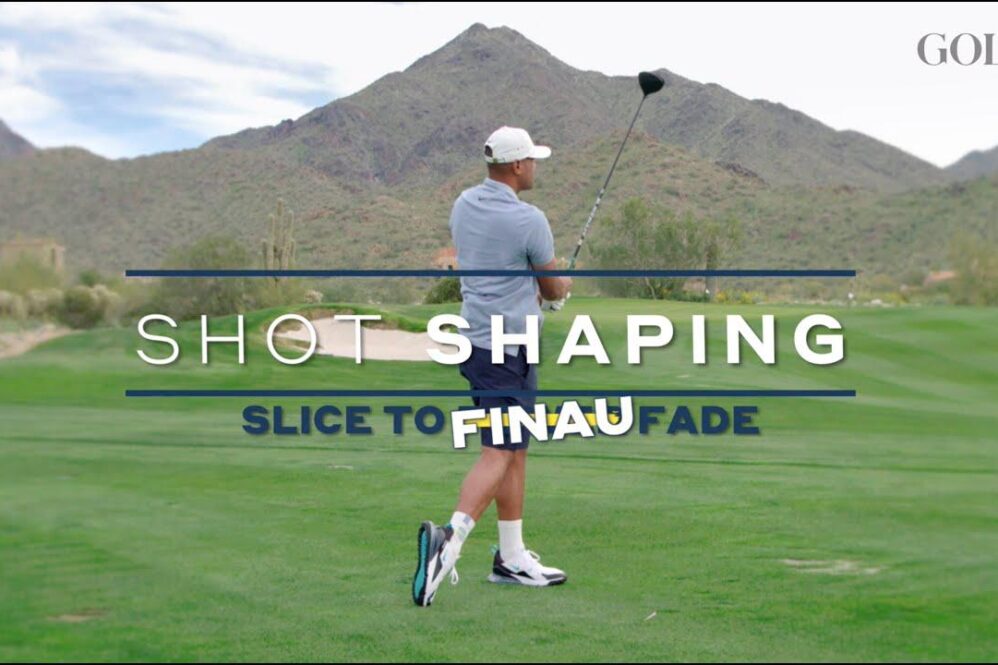
Professional Shot Shaping Strategies Analyzed: An Examination of Tony Finau’s Approach
In the dynamic world of golf, the ability to execute a variety of shot shapes is essential for navigating the complexities of the course. Tony Finau, a renowned PGA Tour player, has mastered this art and employs a specific set of techniques to achieve precise shot shaping.
This blog post delves into the strategies employed by Finau, as elucidated in his YouTube video “Shot Shaping Strategies Explored: An Analysis of Tony Finau’s Approach.” We will examine the key factors affecting Finau’s shot shaping, including grip, forearm alignment, and the influence of both on clubface orientation and ball trajectory.
Drawing on Finau’s insights, the analysis will provide valuable insights for golfers looking to enhance their shot shaping capabilities. Through a comprehensive review of the video’s transcript, we will explore the following topics:
- The importance of grip strength in promoting a square clubface
- The role of forearm alignment in ensuring accurate aiming
- The impact of wrist position on spin rate and shot trajectory
- Checkpoints to optimize forearm and wrist alignment throughout the swing
By examining Finau’s techniques and understanding the scientific principles behind them, aspiring golfers can elevate their game and unleash their full potential on the course.
– Grip Strength and Clubface Control
### Grip Strength and Clubface Control
Tony Finau initially struggled with an open clubface due to a weak grip and high right forearm, which forced him to compensate with an open clubface to square the club. This resulted in a pronounced slice. By strengthening his grip and aligning his forearms more squarely, he improved clubface control and reduced his slice to a soft fade.
Finau’s adjustment involved aligning his forearms with the desired ball start line using an alignment rod, which also influenced his wrist action. Stronger grip strength and more aligned forearms enabled him to take the club back more squarely, resulting in straighter ball flights. This change significantly decreased spin rates on his drives, as evidenced by the marked difference between the first shot (5,000 spin rate) and the second shot (2,600 spin rate) mentioned in the video transcript.
– Forearm Alignment and Aim
### Forearm Alignment and Aim
- Tony Finau’s struggle with an open clubface led to shots to the right. He compensated by strengthening his grip and aligning his forearms more square.
- Strengthened grip and aligned forearms facilitated a more square clubface at impact, resulting in a straighter ball flight and a reduced slice.
– Checkpoints for Proper Ball Flight
### Checkpoints for Proper Ball Flight
Alignment and Gripping:
- Grip Alignment: Strengthen your grip to square the clubface, aligning it properly for a straighter shot.
- Forearm Position: Align your forearms perpendicular to the target line, promoting a more consistent swing and reducing sideway deviation.
- Forearm Aiming: Use an alignment rod to visually guide your forearms, ensuring they are aimed towards your desired ball flight trajectory.
Swing Mechanics:
- Wrist Action: At the top of the swing, the right hand should be slightly underneath the club shaft, influencing spin rate and shot trajectory.
- Ball Spin: Adjusting wrist action can alter the spin rate of the ball, affecting its distance and flight pattern.
- Clubface Position: Maintain a square clubface throughout the swing to achieve a straight ball flight.
– Wrist Action and Spin Rate
### Wrist Action and Spin Rate
Influence of Grip Strength and Forearm Alignment:
Finau emphasizes the significance of grip strength and forearm alignment in achieving a square clubface. By strengthening his grip, he gained better control over the club, reducing the tendency to fight an open clubface and slice the ball to the right. Additionally, adjusting his forearms to a more square position played a crucial role in improving his aim and consistency.
Correlations between Wrist Action and Spin Rate:
Interestingly, Finau’s wrist action was observed to have a direct impact on ball spin rate. On a shot with a soft fade, his right hand was more underneath the club, resulting in a spin rate of approximately 5,000 rpm. In contrast, on a shot with a slice, his right hand was less underneath the club, causing a significantly lower spin rate of around 2,600 rpm. This highlights the interplay between wrist action and spin rate, affecting ball trajectory and overall shot performance.
Outro
In conclusion, the YouTube video ”Shot Shaping Strategies Explored: An Analysis of Tony Finau’s Approach” provided valuable insights into the techniques employed by professional golfers to shape their approach shots. Finau’s journey to correct his excessive slice and develop a more consistent and accurate shot highlights the importance of grip strength, forearm alignment, and wrist action. The video offers practical guidance for golfers of all skill levels to improve their shot shaping and trajectory control. By understanding the principles demonstrated in this video, golfers can enhance their overall performance and achieve greater success on the course.