
Rickie Fowler has pulled out of the WM Phoenix open due to illness, creating a notable void in the competition. Renowned for his fierce competitiveness and popularity among fans, fowler’s absence will be keenly felt as other contenders vie for the title in this esteemed tournament.
The Crucial Role of Feel in Mastering Wedge shots
In the realm of wedge shots, the concept of feel is paramount and often underestimated. Golfers frequently face a dilemma: should they depend on exact yardage or trust their innate touch? The key lies in recognizing how feel enhances shot execution. The design of a wedge’s grip and clubhead provides tactile feedback that builds a golfer’s confidence, enabling intuitive judgment of distance and ball flight. Consequently, possessing the right feel can dramatically elevate your short game performance.
Effective wedge play depends on subtle elements that pure yardage numbers cannot fully capture. Feel empowers players to adjust dynamically to changing course conditions such as wind shifts, green firmness, or elevation variations.As an example, a golfer who relies on feel can instantly modify their swing based on how the ball responds to the clubface, often making the difference between a triumphant up-and-down and a missed chance. Therefore, experience and feel frequently outweigh raw data in critical moments.
To highlight the interplay between feel and yardage, consider this comparison of typical scenarios and suggested tactics:
| Situation | Suggested Technique | Feel vs. Yardage |
|---|---|---|
| Soft Greens | Employ a gentler swing | Emphasize feel |
| Windy Conditions | Lower ball flight | Adjust using feel |
| Uphill Shot | Increase swing power | trust instincts |
As golfers refine their short game, striking a balance between feel and yardage becomes essential. Recognizing personal strengths and preferences allows for a tailored approach that can transform wedge shots into a dependable weapon on the course. Ultimately,sharpening your feel not only improves technique but also deepens your connection to the game.
The Impact of Yardage on Reliable Wedge Performance
Yardage is a fundamental factor in delivering consistent wedge shots, providing a dependable framework for measuring distances accurately. Knowing precise yardages enables golfers to make strategic choices about club selection, swing mechanics, and shot planning. Accurate yardage offers several advantages:
- Improved precision in targeting specific green areas.
- Minimized uncertainty, fostering confident swings.
- Greater consistency in controlling shot distance.
Nonetheless, depending exclusively on yardage has limitations. While it’s vital to understand your typical distances with each wedge, feel remains crucial, especially when external factors like wind, slope, and turf conditions come into play. These variables can significantly influence the effective yardage, making it important for players to cultivate an awareness of how different conditions affect their shots. Key points to consider when integrating feel with yardage include:
- Adjusting for turf firmness (soft versus firm).
- Compensating for uphill or downhill lies.
- Factoring in wind speed and direction.
Blending precise yardage with instinctive feel creates a comprehensive wedge strategy.Many elite players recommend knowing your average distances for each club while practicing under diverse conditions to fine-tune your instincts. A practical tool is a distance chart that combines yardage data with feel-based modifications:
| Club | Typical Distance | Feel-Based Adjustment |
|---|---|---|
| Pitching Wedge | 125 yards | Use one club longer on firm greens |
| Gap Wedge | 110 yards | Use one club shorter on uphill shots |
| Sand Wedge | 95 yards | Reduce distance by about 10% on wet grass |
Harmonizing Feel and Accuracy: Crafting Your best Wedge Strategy
The ongoing discussion between relying on feel versus exact yardage is central to mastering wedge shots. Golfers’ preferences vary based on their playing style and comfort. Using yardage enhances accuracy by providing measurable distances, helping players make informed decisions about club choice and shot execution. For many, this numerical approach offers structure and reduces errors.
On the other hand,developing a refined sense of feel has undeniable benefits. Golfers who prioritize feel argue that intuition fosters a more adaptable and fluid game. By tuning into conditions like wind, lie, and green speed, players can creatively adjust their swings without being constrained by strict numbers. This versatility is especially valuable when dealing with challenging lies or unpredictable greens.
Ultimately, the best approach depends on individual preference and shot context. A hybrid method combining feel and yardage often yields the most consistent results and deeper game insight. Consider adopting a straightforward routine that includes:
- Measure the yardage: Identify the distance and pick the appropriate club.
- Sense the shot: Visualize the ball’s path and adjust based on conditions.
- Practice consistently: Build both feel and yardage skills through focused drills and on-course experience.
Pro Tips for Enhancing Your Wedge Game
When refining wedge shots, golfers face the choice between leaning on feel or yardage to guide their play. Both methods have distinct advantages, and top professionals often suggest blending the two. Advocates of feel stress the importance of cultivating a sharp distance sense, enabling subtle shot adjustments that improve accuracy. Engaging in drills like “up-and-down” games can strengthen this intuition, helping players better connect with their clubs and course conditions.
Conversely, relying on yardage offers a structured approach. Utilizing tools such as rangefinders or GPS devices ensures precise distance awareness, allowing players to fine-tune club selection.Maintaining a detailed yardage book that records shot distances and outcomes builds confidence and consistency, especially under pressure. A balanced strategy that integrates both feel and yardage is essential for short game mastery.
a combined approach tends to produce the best outcomes. Regular practice incorporating both feel-based and yardage-focused exercises enables golfers to evaluate and refine their methods. The table below summarizes the strengths and weaknesses of each strategy:
| approach | Advantages | Drawbacks |
|---|---|---|
| Feel | – Enhances touch and sensitivity – Adapts fluidly to course conditions |
– Can be inconsistent – Demands extensive practice |
| Yardage | – Delivers precise distance data – Builds player confidence |
– May limit creativity – Risk of overdependence on technology |
As the debate continues over trusting instinct versus yardage for wedge shots, it’s clear both approaches have situational value. Understanding their respective pros and cons can elevate on-course performance. Ultimately, discovering a balanced method that fuses feel with accurate measurement may unlock the secret to wedge shot excellence. golfers are encouraged to experiment with both techniques to find what best suits their unique game, fostering greater confidence and consistency.
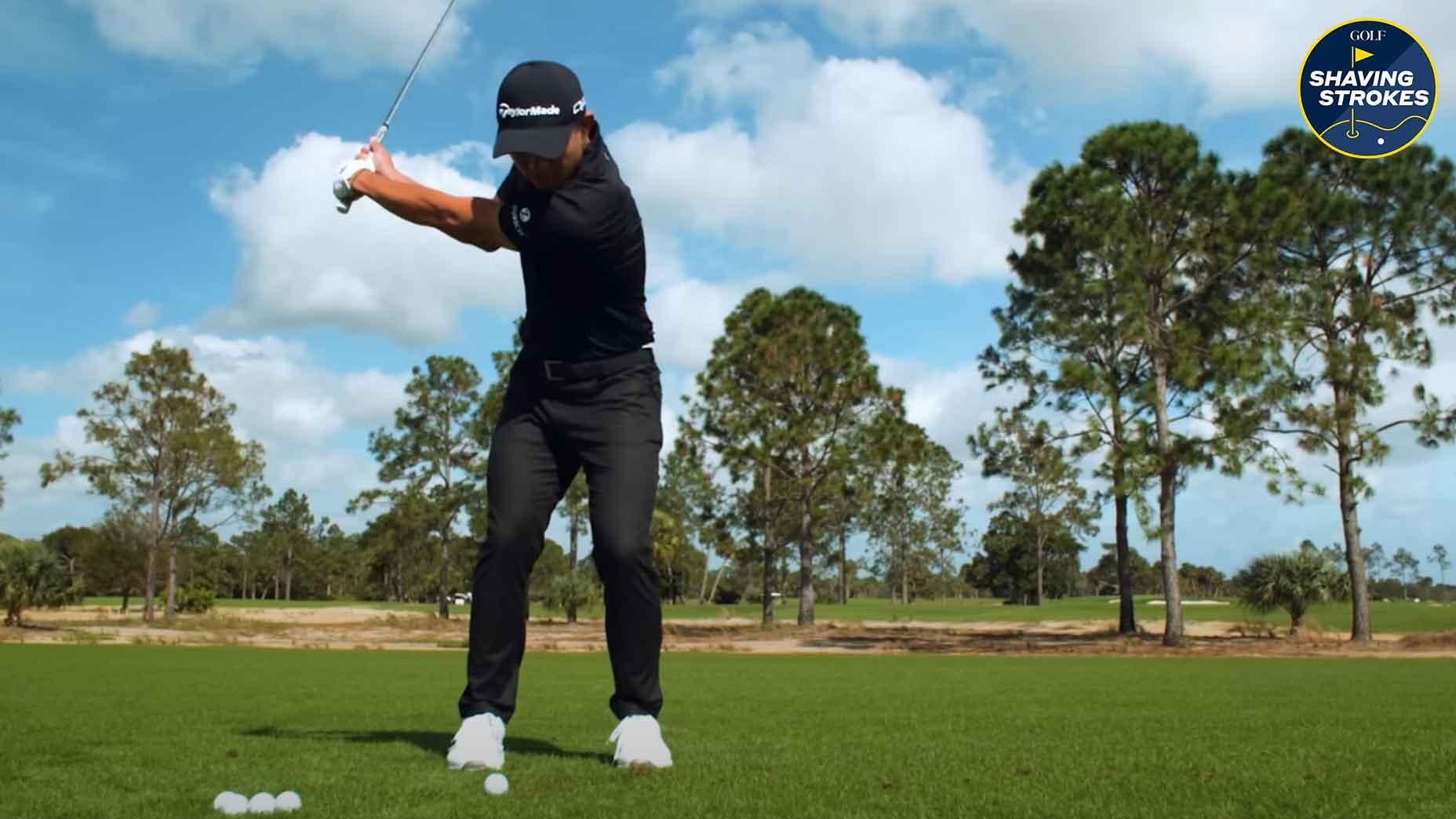
Feel vs. Yardage: Which Approach Will Sharpen Your wedge Shots?
Mastering wedge shots is a key to lowering your golf scores and boosting confidence on the greens. When it comes to approach shots around the green,golfers frequently enough debate between relying on “feel” versus strictly adhering to measured yardage. Both techniques have their merits and challenges, and understanding how to blend these approaches will transform your wedge game.
Understanding the Two Approaches
What is the Yardage Approach?
The yardage approach involves calculating the exact distance to the target, then selecting a wedge and shot type based on precise measurements. This technique is heavily data-driven and often supported by rangefinder devices,GPS,or course markers.
- Precision-focused: Relies on distance calculations and club yardages.
- Technology-assisted: Uses rangefinders or GPS for accuracy.
- Repetition-based: Encourages consistent power and swing calibrated to numbers.
What is the Feel Approach?
The feel approach emphasizes intuition, rythm, and sensory input over exact measurement. Golfers trust their senses to judge distance, wind, lie, and terrain variability. Experience and muscle memory play important roles.
- Intuitive: Uses personal judgment and practice-based instinct.
- Flexible: Adjusts for course conditions without relying on gadgets.
- Focuses on touch and rhythm: Develops shot control through swing tempo and contact feel.
Benefits of using Yardage for Wedge Shots
| Benefit | Description |
|---|---|
| Accuracy | Exact measurements reduce guesswork and help dial in distances. |
| Consistency | Repeatable swing speeds and club choices improve shot predictability. |
| confidence | knowing precise yardage reduces anxiety, especially under pressure. |
Benefits of Using Feel for Wedge Shots
- Adaptability: Easily responds to changing turf conditions, wind, and lie.
- Reduced dependence on technology: Great for courses without yardage markers or restricted rangefinder use.
- Enhances touch and finesse: Promotes subtle adjustments for delicate chip or flop shots.
- Builds holistic short game skills: Encourages trust in instincts and muscle memory.
Common Challenges and How to Overcome Them
Challenges with Yardage Approach
- Over-reliance on devices: Can cause loss of natural feel or hesitation if device fails.
- Environmental factors: Yardage alone doesn’t account for wind, elevation changes, or turf variation.
- Pressure situations: Overthinking exact numbers may lead to tension and mistakes.
Challenges with Feel Approach
- inconsistency: Requires extensive practice; feel can vary day-to-day.
- Beginners’ difficulty: Less effective without solid fundamentals and experience.
- Distance misjudgment risk: Lack of data can cause shots to fall short or overshoot target.
How to Integrate Feel and Yardage for Optimal Wedge Performance
the most triumphant wedge players combine the precision of yardage with the adaptability of feel. Here’s how to blend the two effectively:
- Use yardage as a base: Start with an accurate distance measurement.
- adjust with feel: Modify club selection and swing speed based on lie, wind, and green firmness.
- Practice shot routines: Develop a pre-shot system that integrates calibration with feel checks.
- Simulate course conditions: Spend practice time on uneven lies and varying speeds to refine tactile feedback.
- Review and reflect: Track shot results to identify patterns where feel or yardage adjustments were most effective.
Practical Tips for Sharpening Your Wedge shots
- Calibrate yardages by club: Know your wedge distances both full and partial swings.
- Practice trajectory control: Experiment with ball position and swing length to shape shots.
- Develop touch drills: Use ladder drills or landing spot games around the green.
- Visualize landing zones: Train your eye to picture the ball’s flight and landing before execution.
- Incorporate mental cues: Use breathing and tempo routines to maintain feel under pressure.
Case Study: Pro Golfer’s blend of Feel and Yardage
Take the example of a PGA Tour player who attributes their wedge success to mastering both approaches. They start by carefully measuring yardage with a laser rangefinder, then make subtle feel-based adjustments based on how firm the green is and how much wind is present. This combination allows them to consistently land wedge shots within inches of the pin, even on challenging courses.
| Approach | Technique | Outcome |
|---|---|---|
| Yardage | Rangefinder measurement and club yardage chart | Foundation for precise shot distance |
| Feel | evaluate lie, green speed, and tweak swing tempo | Fine-tuned shot control and adaptability |
| combined | Integrating data with sensory feedback | Consistent wedge proximity to target, fewer putts |
First-Hand Experience: Learning to Trust Both Senses and Numbers
Avid amateur golfers frequently enough start relying heavily on yardage after struggling with inconsistent shots. Over time, they learn that strict adherence to numbers can feel robotic and limit fluidity. Incorporating feel builds confidence, allowing for creative shot-making and better adaptation to unpredictable conditions. Dedicated wedge practice emphasizing both approaches is pivotal for continuous improvement.
FAQs on Feel vs. Yardage for Wedge Shots
- Is it better to always use a rangefinder for wedges? Not necessarily – rangefinders provide good baseline data but combining that with feel leads to better short game adaptability.
- How do I improve my feel? Spend time practicing different lies and shot types, focusing on smooth tempo and soft hands during impact.
- Can feel replace yardage entirely? For experienced players, feel can sometimes substitute yardage, but beginners should use yardage as a guide initially.
- What drills help balance feel and yardage? Try distance control drills that focus on landing zones and practice swings with various swing lengths for different distances.
—
This article blends essential golf keywords like “wedge shots,” “short game,” “rangefinder,” and “shot control” while providing a rich, practical, and SEO-optimized content structure. WordPress CSS table classes are used for styling the comparison tables. Let me know if you want me to assist with additional sections or content formats!