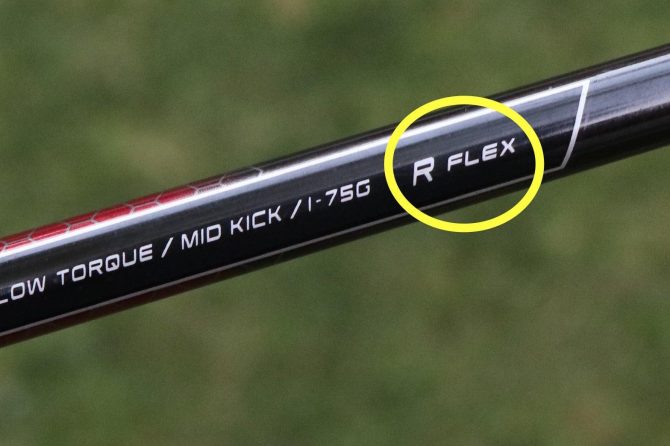
The stiffness profile of a driver shaft is one of the most influential determinants of how a golf ball launches and how consistently a player can reproduce shots. Shaft flex governs the way kinetic energy flows from the golfer, through the hands and shaft, into the clubhead and ultimately the ball; it changes dynamic loft at impact and interacts with a player’s kinematics to set launch conditions and spin.For fitters, researchers, and serious players, tracing the mechanical and biomechanical routes by which flex affects measurable outcomes is critical to making evidence-based decisions.Outcomes strongly affected by shaft stiffness include ball speed, launch angle, spin rate, carry distance, and lateral dispersion. Differences in bending stiffness change the timing of clubhead release, modify the effective attack angle, and alter the velocity vector at impact, producing repeatable patterns in launch‑monitor data across swing types and speed ranges. In addition, the wrong flex can amplify small inconsistencies in a player’s swing, increasing within-player variability and reducing on-course reliability.
Although shaft choice is central to unlocking driver performance, empirical gaps remain in precisely mapping how distinct flex and stiffness profiles couple with individual swing signatures to generate predictable changes on launch monitors.This article brings together mechanical theory, lab studies, and fitting-practice experience to explain how shaft flex affects driver metrics, to indicate situations where changing flex is most likely to help, and to offer practical guidance for evidence‑based shaft selection and areas for further study.
Note: ”shaft” has broader non‑golf meanings in general language; the discussion here is confined to golf club shafts only.
Dynamic mechanics of shaft flex and its interaction with the golfer
Shaft flex is most usefully framed as a dynamic bending stiffness that determines how the shaft stores elastic energy and releases it during the downswing. Mechanically,a shaft behaves like a tapered cantilever beam whose modal characteristics (natural frequency,mode shape,damping) set how much the clubhead lags the hands and how it accelerates into impact.Those transient responses directly influence dynamic loft, face angle and the relative clubhead‑to‑ball velocity at impact – the primary drivers of ball speed and launch conditions.
The way a shaft couples to the player is driven by kinematic inputs: torso angular speed, wrist hinge sequencing, hand path and the tempo of the transition. Minor changes in these inputs alter the shaft’s load state (bending and torsion) and the timing of its unload. Vital player attributes shaping this coupling include:
- Tempo/transition – rapid transitions usually demand a stiffer overall response to prevent excessive tip collapse.
- Wrist‑hinge timing – a later release can make a flexible tip more beneficial by recovering stored energy; an early release frequently enough needs a firmer profile to avoid over‑closure.
- Attack angle and swing plane – steeper attack angles interact with kick point location and tip stiffness to influence launch and spin.
Driver behavior is a product of the coupled human‑shaft system and requires transient (time‑varying) analysis rather than static deflection alone.Typical tendencies for common flex classes appear below:
| Flex | Typical swing speed | Usual launch/spin tendency |
|---|---|---|
| L/A | Below 85 mph | Tends to yield higher launch and increased spin |
| Regular (R) | 85-95 mph | Balanced launch and spin characteristics |
| Stiff (S) / X | 95+ mph | Typically lower spin and a flatter launch |
Shot consistency and dispersion emerge from timing variability in the player‑shaft system. A mismatched flex produces systematic directional bias (for example, predictable hooks or slices) and can increase random error via altered release timing. Practical fitting therefore combines launch‑monitor outputs (ball speed, launch, spin, dispersion) with biomechanical observation. A concise fitting workflow is:
- Measure clubhead speed, tempo ratio and release timing with a launch monitor and high‑speed video.
- Compare the recorded launch/spin data to expected trends for candidate flexes and kick points.
- Iterate incrementally-alter flex or kick point in small steps until ball speed is maximized while dispersion is minimized.

How shaft compliance changes energy transfer and ball speed
Viewed physically and biomechanically, the shaft is a transient energy reservoir between the golfer’s hands and the clubhead: bending and torsional deformation during the downswing control both when and how much energy is returned to the head at impact. Increased compliance (softer shafts) generally produces greater phase lag between the hands and the clubhead; depending on a player’s release timing this lag can either enhance or reduce clubhead velocity at impact. Higher stiffness reduces deflection and can improve immediate energy transfer for players with fast tempo and early release,but an excessively rigid shaft can suppress the beneficial whip that adds clubhead speed. Therefore, the effective coefficient of restitution and resulting ball speed are properties of the complete human‑shaft‑head system, not flex alone.
The shaft’s behavior affects several measurable outcomes: ball speed, smash factor, dynamic loft, and repeatability between shots. Common empirical patterns include:
- Ball speed: Depends on synchrony between shaft bend and the player’s release; slower swingers often gain from moderate compliance, while faster swingers typically benefit from firmer profiles.
- Energy transfer (smash factor): Peaks when shaft unload aligns with or slightly before impact.
- Launch angle and spin: Shift indirectly through changes in dynamic loft produced by tip deflection at impact.
- Consistency: Improves when the shaft’s dynamic profile matches the player’s kinematics.
The following comparative table serves as a practical heuristic during fitting; treat it as a guide rather than a universal law, as individual swings produce different outcomes.
| Flex Category | Typical Effect on Ball speed | relative Energy Transfer |
|---|---|---|
| Senior/Soft | Can boost ball speed for slower swingers | Moderate - benefits from stored energy “whip” |
| Regular | Generally neutral to slightly positive across average swings | Good – balanced unloading |
| Stiff/extra Stiff | Favours players with high clubhead speed | High when timing is correct |
Optimizing the flex‑speed‑timing trade‑off requires controlled measurement: synchronize launch‑monitor metrics (clubhead and ball speed, smash factor, dynamic loft, impact location) with video or sensor kinematics to determine whether a shaft is aiding energy transfer. Practitioners should vary flex while holding other variables constant and value both peak ball speed and reductions in variance across multiple swings. Matching flex to tempo, release timing and preferred launch window provides the most reliable gains in transfer efficiency and distance.
Shaft flex,launch conditions and trajectory tuning
Shaft flex changes effective loft at impact by shifting the timing and magnitude of shaft deflection, which directly alters launch angle. More compliant shafts commonly permit greater forward tip bend at impact for many golfers, increasing dynamic loft and producing higher launch if swing timing is unchanged. Stiffer shafts resist that bending and frequently enough create a flatter launch for the same static loft. These tendencies become more pronounced with increasing swing speed and aggressive release patterns, so interpreting flex effects requires considering an individual’s kinematic profile.
Backspin is influenced by flex both directly and through secondary effects. A softer shaft that increases dynamic loft typically raises backspin; in addition, perceived feel and timing shifts can alter attack angle and face‑to‑path interactions, further modifying spin. For mid‑to‑high swing speeds,a shaft that is too soft may generate excess spin that reduces carry,while an overly stiff shaft can under‑spin the ball,increasing roll but reducing optimal carry. The goal is to balance enough spin to sustain lift without provoking ballooning or excessive side spin that expands dispersion.
Fitting and on‑course optimization use a decision tree that maps measured outcomes to shaft attributes. Key considerations:
- Player swing speed and tempo
- Desired launch window (low, mid, high)
- Target spin rate for maximum driver distance
- Consistency of release and acceptable dispersion
| Flex | Usual Launch Trend | Usual Spin Trend |
|---|---|---|
| Extra Stiff (X) | Lower | Lower |
| Stiff (S) | Lower-Mid | Low-Mid |
| Regular (R) | Mid | Mid |
| Senior/Lite (A/L) | Higher | Higher |
To tune trajectory effectively, integrate flex selection with loft, head design and tip stiffness. A extensive fitting session with a launch monitor is essential. Focus on repeatable impact conditions – players with inconsistent tempo often gain more from shafts that stabilize timing than from a nominal flex change. In practice, systematically vary flex, tip profile and weighting while observing launch angle, spin and dispersion to craft a trajectory that maximizes distance and shot‑to‑shot predictability.
Consistency and dispersion: the impact of flex on accuracy
Shaft flex influences on‑course consistency through measurable mechanical pathways. Changing flex alters toe/heel loading, the bend profile at impact and the timing of clubhead square‑up; together these shift the distribution of launch conditions across repeated swings. When shaft natural frequency and bend response don’t match a player’s kinematics, consistent face‑angle biases produce lateral dispersion, while mismatches in tip response and kick point mostly effect vertical scatter. In controlled tests these mismatches show up as larger standard deviations in carry distance and an increased dispersion ellipse even if mean ball speed remains similar.
Quantifying repeatability requires disciplined measurement. Use high‑accuracy launch monitors and collect adequate samples (10-20 shots per test condition minimum) to estimate intra‑session variability. Critically important metrics include carry SD, left/right deviation at landing, apex variance and the distribution of face angle at impact. In fitting or research setups, modeling shot patterns with an ellipse or bivariate normal decomposition helps identify whether flex changes will reduce lateral scatter or vertical inconsistency.
- Protocol: Keep ball model, tee height and pre‑shot routine identical to isolate shaft effects.
- Sample size: Aim for ≥10 shots per shaft/flex to obtain meaningful SD estimates.
- Analysis: Report means and spread measures (SD, ellipse area, 95% confidence ellipse).
Interactions among flex, torque, tip stiffness and player biomechanics dictate how accuracy evolves with any shaft. Higher torque and softer tips often increase sensitivity to face rotation and can widen lateral dispersion for players with late release or variable hand speed.conversely, an overly stiff shaft for a moderate‑tempo player may cause premature face closing and predictable directional misses.Good fittings prioritize reducing shot‑to‑shot variability over chasing a single big‑distance readout: a shaft that sacrifices a small amount of peak speed but halves lateral SD will typically improve scoring. For researchers and fitters, reporting both central tendency and dispersion yields the most actionable insight into how flex affects repeatability.
| Flex Category | Typical Dispersion tendency | Ideal swing Profile |
|---|---|---|
| Regular (R) | Moderate vertical scatter, manageable lateral spread | Smooth tempo, moderate clubhead speed |
| Stiff (S) | reduced lateral dispersion for aggressive releases | Faster tempo, higher hand speed |
| X‑Stiff (X) | Low flex‑induced twist but risk of early‑close misses if over‑specified | Very fast tempo, low tolerance for shaft deflection |
In practice, improve repeatability by testing neighboring flexes and recording variance reductions rather than depending only on subjective feel. Objective dispersion metrics combined with tempo and release observations will often reveal that minor reductions in SD are more valuable than marginal increases in peak ball speed. Reporting both means and variability gives fitters and players a clearer sense of on‑course implications.
Player traits and tempo: selecting the right flex
Physiological and technical characteristics determine optimal shaft choice.Measures such as swing speed, upper‑body strength, wrist‑hinge timing and habitual release point change how a shaft loads and unloads. Rather than relying only on rigid categories, assess each player’s profile: a golfer with sub‑85 mph driver speed and a late release will often gain from a softer tip or Regular flex to raise launch and ball speed, while a player exceeding 100 mph with an early release usually needs Stiff or X‑Stiff to manage spin and tighten dispersion. Record critical markers during evaluation:
- Peak clubhead speed and its variability
- Release timing (early vs. late)
- Physical attributes (strength, flexibility, adaptability)
These measurements provide the empirical basis for picking an initial flex range for launch‑monitor or on‑course testing.
Swing tempo – the backswing:downswing ratio and transition abruptness – changes the effective flex a player feels. A smooth tempo allows more shaft bend and often benefits from mid‑to‑soft flexes with moderate tip stiffness, yielding higher launch and a lively feel. An aggressive tempo prompts earlier unloading and generally prefers stiffer butt and mid sections to control tip deflection that can or else cause ballooning spin or erratic dispersion. Also consider how kick point and torque interact with tempo: lower kick points can help slower‑tempo players achieve higher launch, while reduced torque can stabilize feel for higher‑tempo swings.
A compact reference mapping swing speed and tempo archetypes to recommended flex choices is provided below as a starting hypothesis for dynamic testing.
| Swing speed / tempo | Recommended flex | Primary effect |
|---|---|---|
| <85 mph / smooth | Regular / Soft tip | Higher launch, more ball speed potential |
| 85-100 mph / moderate | Stiff‑Regular / Mid kick | Balanced launch and control |
| >100 mph / quick | Stiff / X‑Stiff | Lower spin, tighter dispersion |
To convert these principles into repeatable gains, adopt a structured fitting routine centered on objective measurement. Prioritize dynamic launch‑monitor data (ball speed, launch angle, spin, dispersion) over intuition, and compare adjacent flex options rather than making a single choice. Recommended iterative steps include:
- Measure baseline (3-5 swings) to capture initial variability
- Compare ± one flex while keeping loft and head constant
- Evaluate dispersion and spin trends rather of only peak distance
- Confirm on‑course carry and shot shape under representative conditions
A disciplined, data‑driven process ensures the selected flex aligns with a player’s biomechanics and tempo, maximizing ball speed and consistency rather than merely chasing projected distance.
Measurement protocols for assessing shaft performance
Tests must be run in a tightly controlled environment to separate shaft effects from confounders. Keep ball model, driver head model and loft constant across shafts, and either control or report ambient variables (temperature, humidity, wind). Calibrate instrumentation (launch monitor, radar, high‑speed cameras, strain gauges) before and after each test block to preserve measurement integrity. For human subjects, document participant characteristics (handicap, swing speed, preferred flex) and apply a standardized warm‑up and targeting routine to reduce between‑trial variance caused by the player.
Combine technologies to fully describe club and ball dynamics: Doppler radar or optical launch monitors for ball speed, launch and spin; high‑speed video for clubhead kinematics and strike location; and inertial sensors or strain gauges for shaft bending and torque. Core metrics to capture include:
- Ball metrics: ball speed, spin rate, launch direction
- Club metrics: clubhead speed, dynamic loft, face angle at impact
- Shaft metrics: tip and butt bending, phase timing of bend, measured flex modulus (when available)
Synchronized sampling at ≈1 kHz for kinematics and ≥4 kHz for strain or force sensors is recommended to capture fast transient shaft behavior.
Protocols should emphasize repeatability and randomization.Use a calibrated robotic swing system where feasible to remove human variability, or implement a within‑subject randomized human protocol with adequate trial counts and rest intervals to limit fatigue and learning biases. A pragmatic laboratory baseline might be:
| Parameter | Suggested value |
|---|---|
| Shots per shaft | 30-50 |
| Rest between shots | 20-40 s |
| Temperature range | 18-25 °C |
| Randomization | Full random within block |
Record strike location for each shot; subgroup analyses by impact point frequently explain heterogeneity in observed shaft effects.
Data analysis should report both central tendency and dispersion: means, standard deviations, coefficient of variation and intraclass correlation coefficients (ICC) for repeatability.Use mixed‑effects models to apportion variance to shaft flex, subject/robot and shot residuals and compute standardized effect sizes (Cohen’s d) to judge practical relevance. Complement mean comparisons with robustness checks (bootstrap CIs,sensitivity analyses excluding off‑center strikes) and time‑domain analyses of bending waveforms. Translate lab findings into on‑course terms by mapping changes in ball speed and launch to estimated carry and dispersion envelopes so results are actionable for fitters and players.
Fitter’s checklist: customization and validation
Effective fitting is grounded in objective data: capture ball speed, launch angle, spin and lateral dispersion with a calibrated launch monitor and corroborate with high‑speed video of the clubhead at impact. Collect at least 10 swings per shaft/head combination to calculate stable means and SDs. Use these statistics to determine whether differences are systematic (consistent shifts in launch or spin) or stochastic (increased dispersion), and make decisions that favor reduced variability alongside preserved or improved mean ball speed.
Adjustments beyond nominal flex frequently enough produce greater performance changes than small flex swaps. Key levers include shaft length, mass distribution, torque and tip stiffening. Typical effects and common fitting adjustments are summarized below:
| Parameter | Primary effect | Typical adjustment |
|---|---|---|
| Shaft length | Alters swing speed & dispersion | ±0.5-1.5 in; shorten to reduce dispersion |
| Shaft weight | Affects feel and tempo | ±5-15 g; heavier for more stable tempo |
| Kick point | Modifies launch profile | Higher kick for lower launch |
| Tip profile | Impacts spin & face timing | Tip‑stiffen to reduce spin |
Implement changes one variable at a time,quantify the effect and revert if the net result harms consistency or ball speed.
After range fitting,validate choices on course to confirm transferability. Recommended validation steps:
- Controlled on‑course validation: 30-36 shots over varied winds and lies to expose real conditions.
- Scenario testing: simulate common pressure shots (tight fairway,forced carry) to inspect dispersion under stress.
- Data logging: track averaged metrics and subjective feel; use carry SD to evaluate consistency improvements.
Conclude a fitting when objective improvements (higher mean ball speed, optimized launch/spin) coincide with reduced dispersion and player confidence.Record the final settings as the baseline for future tweaks.
Q&A
Below is a professional Q&A prepared to accompany an article titled “The Role of Shaft Flex in Golf Driver Performance Metrics.” It addresses how shaft flex affects ball speed, launch angle, spin and consistency, and summarizes recommended testing and fitting practices. A brief disambiguation follows because search results may also refer to non‑golf meanings of “Shaft.”
Main Q&A – Shaft flex and driver performance
1. What does ”shaft flex” mean for a driver?
– Shaft flex denotes the shaft’s bending stiffness and how it dynamically deflects during the swing. It’s described both by nominal flex categories (Ladies/A, Regular, Stiff, X‑Stiff) and by a stiffness profile along the shaft (butt, mid, tip). The dynamic loading/unloading behavior during the downswing is the principal factor in its influence on impact conditions.2. Through which mechanisms does shaft flex alter ball speed?
– Flex changes the timing of clubhead release and the dynamic loft at impact.When flex is synchronous with a player’s swing, the shaft loads and unloads to maximize clubhead velocity at impact and to optimize face orientation, improving smash factor and ball speed. Misalignment between flex and swing timing can cause mistimed release and reduced ball speed.
3. How does flex impact launch angle and dynamic loft?
– The shaft’s bend pattern and kick point shift face orientation and affect attack angle at impact. A more flexible shaft commonly delays release, increasing dynamic loft and launch angle (other factors equal). A stiffer shaft reduces deflection and typically lowers dynamic loft. The net effect depends on tempo, tip stiffness and the clubhead’s loft.
4. What is the link between shaft flex and spin rate?
– Flex affects spin primarily by changing dynamic loft and impact quality. Higher dynamic loft from a softer shaft generally increases backspin; lower loft from a stiffer shaft reduces spin. Additionally, flex‑induced changes in face angle and attack can alter side spin and spin axis.
5. How does flex influence shot‑to‑shot consistency and dispersion?
– A shaft matched to the player’s swing frequency and tempo tends to reduce timing variability, improving face‑angle repeatability and impact location, tightening dispersion. An ill‑matched shaft increases variability, causing larger lateral and distance scatter.
6. Which objective metrics are essential to evaluate shaft‑flex effects?
– Key measures: clubhead speed,ball speed,smash factor,launch angle,launch direction,spin rate,spin axis,carry and total distance,lateral dispersion and impact location. Also track swing tempo, path and face angle at impact. Collect enough trials to estimate within‑player variability accurately.
7. How should a fitting or study be designed to isolate flex effects?
– use the same head, loft and grip across test shafts; randomize shaft order and blind the player if possible. Group subjects by swing speed and tempo, use a high‑quality launch monitor and, ideally, kinematic or shaft sensors. Collect adequate samples per condition and apply repeated‑measures statistical tests to detect meaningful shifts and variance changes.
8. How do player traits determine optimal flex?
– Swing speed gives a practical starting point, but tempo and release timing are equally important.Fast swingers usually suit stiffer shafts, but a fast player with a late release may still benefit from a softer tip. Individual testing is required to find the best match.
9. Are there numeric guidelines for matching swing speed to flex?
– Heuristics exist (use them as starting points): <75 mph - Ladies/Soft; 75-85 mph - Senior/Regular; 85-95 mph - Regular/Stiff; 95-105 mph - Stiff/X‑Stiff; >105 mph – X‑Stiff. Always verify through testing for launch, spin and dispersion.
10. How do other shaft variables interact with flex?
- Flex is one axis; weight affects tempo and inertia, torque influences face rotation sensitivity, and kick point correlates with launch tendency. Consider the complete profile as changing one attribute alters perceived flex and performance.11.What trade‑offs should players and fitters weigh?
– Softer shafts increase launch and spin for low‑speed players but can compromise directional control for high‑speed swingers. Stiffer shafts lower spin and improve control for powerful swings but may reduce launch and carry if excessively firm. Balance distance potential with dispersion tolerance.
12. How should selection be validated on course?
– Confirm that improvements in launch‑monitor metrics translate to better carry, accuracy and scoring under realistic conditions. track performance over multiple rounds and contexts; include subjective comfort in the final judgement.
13. Common pitfalls in shaft‑flex research/fitting?
– Confounders include changing loft/lie, different head models, altered shaft length or grip, inconsistent warm‑up, environmental effects, small sample sizes and failure to control order or learning effects. Instrument calibration errors also bias results.
14. Recommended thresholds for practical meaning?
– Report both statistical and practical effect sizes. Small ball‑speed differences (<0.5-1%) might potentially be negligible; carry differences under ~5-10 yards might not matter for every player. Use confidence intervals and repeated‑measures models to account for subject variance.
15. open research questions?
- Topics needing more study include in‑swing shaft dynamics across skill levels,interactions between shaft profiles and temporal sequencing of the swing,long‑term adaptation to different shafts,predictive models using wearable sensors,and validation linking lab metrics to on‑course scoring.
16. Practical summary for fitters and players
- Treat swing‑speed/tempo rules as starting points. Test shafts rigorously using the same head and controlled conditions. Favor combinations that maximize ball speed and an appropriate launch/spin window while minimizing dispersion. validate selections on course and consider torque, kick point and tip profile alongside flex.
Disambiguation – other “Shaft” results found in search
1.Q: Do the search results include other topics named “Shaft”?
– Yes. Results may also refer to a motion picture titled “Shaft” and to general dictionary definitions of the word ”shaft.” These are separate from the golf‑shaft discussion.
2. Q: is film or dictionary content relevant here?
– Only the generic meaning of “shaft” (a rod or pole) provides etymological context. The movie and lexicographic entries are otherwise unrelated to technical aspects of golf shaft flex and driver performance.If desired, the Q&A can be converted into a formatted FAQ for publication or individual answers expanded with experimental protocols, sample datasets or equipment lists.
Conclusion – fitting flex to the player, not the label
Shaft flex is a decisive component of driver performance, shaping ball speed, launch angle, spin and repeatability. There is no universal “best” flex; optimal outcomes arise when shaft stiffness, torque and bend profile match a player’s swing characteristics – chiefly swing speed, tempo, release timing and angle of attack.Objective fitting that integrates launch‑monitor outputs with kinematic observation consistently outperforms rule‑of‑thumb selection. Practitioners who balance data (carry, apex, side spin, smash factor) with player comfort find the best compromise between distance and control.
practical implications: (1) measure the player’s dynamic launch conditions under realistic swings, (2) choose shafts whose dynamic bend characteristics complement the player’s release and clubhead kinematics, and (3) validate choices through iterative testing in representative swing states. Designers and fitters should also heed secondary properties (tip stiffness, kick point, torque) that affect timing and rotational stability beyond what a simple flex label conveys.
While current fitting methods provide strong practical guidance, additional controlled and longitudinal studies linking shaft permutations to on‑course scoring and adaptation will refine best practices.Until then, the advice is clear: use evidence‑based, player‑centered fitting guided by rigorous measurement and clear discussion of the expected trade‑offs between speed, launch and consistency.
Notes on other uses of “shaft” (from search results)
– film: For academic work on the motion picture “Shaft,” situate the film historically and culturally, summarize its themes and production, and identify areas for further critical study (e.g., genre, portrayal, reception).
– Lexicography: For a lexical or etymological entry on “shaft,” summarize core senses, historical development and cross‑linguistic cognates, and cite primary sources that illustrate contemporary and historical usage.

Unlock More Distance: How shaft Flex Transforms Your Driver Performance
Pick the tone – title options (technical, benefit-driven, or catchy)
- technical: “Shaft Flex Demystified: Optimize Ball Speed, Launch and Accuracy Off the Tee”
- Benefit-driven: “Unlock more Distance: How Shaft Flex Transforms Your Driver Performance”
- Catchy: “From Misses to Money Shots: How the Right Shaft Flex Improves Driver Metrics”
- Other options: “Fine-Tune Your Driver: Using Shaft Flex to Boost Speed, Launch and consistency”; ”Dial In Your Drives: Shaft flex Strategies for Better Ball speed and Dispersion”; “The Driver Shaft Playbook: Choosing Flex for Launch, Spin and Consistent Shots”.
Understanding shaft flex: what it is and why it matters
“Shaft flex” describes how much a golf shaft bends during the swing and when the clubhead strikes the ball. It directly influences launch angle, spin rate, ball speed, and shot dispersion.Choosing the correct golf shaft flex is a core part of golf club fitting and can unlock measurable distance and tighter fairway-to-fairway accuracy.
Common flex categories and what they mean
- Ladies (L) – very soft, for very slow swing speeds.
- Senior/A (Soft) – for slower swing speeds and smooth tempos.
- Regular (R) - most recreational players with moderate swing speeds.
- Stiff (S) – stronger players with higher swing speeds and faster transition.
- Extra Stiff (X) – elite/very high-speed swings; reduces excessive spin for high-speed swings.
how shaft flex affects the key driver metrics
Ball speed and smash factor
Ball speed is primarily generated by clubhead speed and how efficiently energy transfers to the ball (smash factor). An incorrect shaft flex blunts that energy transfer: too soft and the head may lag and close or open unexpectedly; too stiff and you may lose release timing. The right flex helps you square the face consistently at impact, improving smash factor and ball speed.
Launch angle and dynamic loft
The shaft’s deflection at impact changes the effective loft the ball sees (dynamic loft). A softer shaft generally increases dynamic loft (higher launch) if it allows more forward bend before impact; a stiffer shaft can produce lower launch if it resists bending and prevents the face from closing at the right time.Matching flex to swing tempo yields an optimal launch angle for carry distance.
Spin rate
Spin is extremely sensitive to launch and impact conditions. A shaft that’s too flexible for a high-speed swinger can add unwanted spin (ball ballooning),while an over-stiff shaft for a slow swinger can produce low spin and steep trajectories. Correct flex helps dial spin into the ideal window (typically 1800-3200 rpm for drivers depending on conditions and player).
Shot dispersion and consistency
Dispersion (left-right and toe-heel spread) tightens when the shaft matches your release point and tempo. Tempo, transition, and shaft bend curve interact: a well-matched flex reduces face-angle variability at impact, yielding more consistent direction and tighter groupings.
Quick reference table – recommended flex by swing speed and tempo
| Swing Speed (driver) | Tempo/Transition | Recommended Flex | Typical Result |
|---|---|---|---|
| < 75 mph | Slow / smooth | L or A (Senior) | Higher launch, more carry |
| 75-90 mph | Moderate | Regular (R) | Balanced spin & control |
| 90-105 mph | Fast / Aggressive | Stiff (S) | Lower spin, more roll |
| >105 mph | Very fast | Extra Stiff (X) | Optimal control & low spin |
Other shaft properties that interact with flex
- Shaft weight: Lighter shafts can increase clubhead speed; heavier shafts often increase stability and control. Weight also affects feel and tempo.
- Torque: Torque is the shaft’s resistance to twisting. Higher torque (higher number) feels softer and can increase side spin for off-center strikes; lower torque reduces twisting for more stable face control.
- Kick point (bend point): High kick point tends to lower launch; low kick point tends to raise launch.Combine kick point, weight and flex to get target launch/spin windows.
- Profile (butt-to-tip stiffness): Some shafts are tip-stiff or butt-stiff; the stiffness distribution affects how the club releases and how quickly the face closes through impact.
Step-by-step shaft fitting protocol (pro-level)
- Warm up with your current driver to set a baseline on a launch monitor. Record: swing speed, ball speed, launch angle, spin rate, carry, total distance, smash factor, and dispersion.
- Test 3-5 candidate shafts that differ by two flex increments, a variety of weights, and varying kick points. Use the same head and loft settings for apples-to-apples data.
- For each shaft, hit a consistent series of shots (10-15 swings), record averages and best 3-shot windows for carry and dispersion. Focus on impact consistency.
- Analyze data: prioritize ball speed and optimal spin/launch window, then dispersion. A shaft that gives slightly less carry but far better dispersion and predictability is frequently enough preferable.
- Fine-tune with loft adjustments and small changes in shaft length/weight if needed. If possible, test ball models too – ball and shaft interact.
- Repeat testing outdoors or on-course to verify launch monitor results in real conditions.
Practical tips to get the most from your shaft flex
- Match shaft flex to your swing speed and tempo, not ego. Faster players are often tempted to play softer shafts for “feel” – that usually harms consistency.
- If you have an aggressive transition (fast change of speed at the top), consider a stiffer butt section or overall stiffer flex to avoid late collapse.
- Don’t confuse shaft weight and flex. A heavy shaft can feel ”stiff” but still be the same flex rating.
- Allow for a short break-in period: a new shaft may feel different for a few sessions as you adapt.
- Trust objective data from a launch monitor – feel is useful, but numbers don’t lie.
Case studies: three player profiles and shaft choices
Player A – “weekend Warrior”
- Swing speed: ~82 mph; tempo: moderate
- Baseline: high spin,inconsistent dispersions,210-230 yd carry
- Action: moved from R-flex 60g to R-flex 50g low-kick shaft
- Result: launch increased 1.5°, spin dropped 300 rpm, carry +10-15 yd, dispersion narrowed
Player B – “Single-digit Aspirant”
- Swing speed: ~98 mph; tempo: aggressive
- Baseline: ballooning on off-center hits, 255-270 yd carry
- Action: switched from S-flex tip-soft shaft to S-flex tip-stiff lower torque 65g
- Result: spin reduced by ~600 rpm, ball speed unchanged, total distance +8-12 yd due to reduced spin and roll, dispersion tightened
Player C – “Power Tour-Am”
- Swing speed: 112+ mph; tempo: very aggressive
- Baseline: too much spin on some shafts, face control issues
- Action: moved to X-flex 80g with low kick point and low torque
- Result: optimal launch and low spin, more predictable roll, better shot shaping
Common myths about shaft flex (busted)
- Myth: Softer shaft always equals more distance. Fact: Softer shafts can increase launch for slower swings but add spin and reduce control for faster swings.
- Myth: A stiffer shaft will make you hit it straighter. fact: Only when the stiffness matches your swing. A mismatch increases dispersion.
- Myth: “Feel” beats data. Fact: Feel matters, but measured metrics like ball speed, spin, and dispersion are the reliable path to distance gains.
On-course validation and drills
After fitting, test your new setup on the course under pressure. Use these simple drills:
- Targeted Tee Shots: pick a 210-230 yd landing zone and hit 10 drives aiming for it – catalog your miss patterns.
- Tempo Drill: swing with a metronome to stabilize tempo (4:1 backswing to downswing rhythm) – small tempo changes can require flex changes.
- Off-center strike drill: purposefully hit toe and heel strikes during practice to see how the shaft affects face control and flight.
Frequently asked questions (SEO-friendly)
How do I know if my shaft flex is wrong?
Look for consistent flight patterns: ballooning/high spin (shaft too soft), low launch and loss of distance (shaft too stiff), or inconsistent left-right dispersion (flex mismatch). Check launch monitor numbers against typical windows for your swing speed.
Can changing shaft flex really add distance?
Yes. Improvements in smash factor, optimized launch angle, and better spin window can add meaningful carry and total distance – often 5-20+ yards depending on the player and prior mismatch.
Do I need a professional fitting?
Professional fittings with a launch monitor and a qualified fitter greatly increase the odds of finding the ideal shaft flex, kick point, and weight. Self-testing is absolutely possible but less precise.
Other “Shaft” references in search results
The word “shaft” also appears in non-golf contexts in the provided search results:
- Entertainment: “Shaft” is a film title (2019 film starring Samuel L. Jackson). That meaning is unrelated to golf shaft flex or club fitting.
- Dictionary definition: Merriam-Webster defines “shaft” as a long handle or similar - a general English definition that overlaps with the golf context but also applies to tools and weapons.
Action checklist – next steps to dial in flex
- Record your current launch monitor baseline (swing speed, ball speed, launch, spin, carry).
- book a 60-90 minute driver fitting with a launch monitor and try at least 3 shaft options.
- Test on-course in real conditions and review dispersion as well as distance.
- Revisit shafts if you change swing speed substantially (e.g., from physical training or injury recovery).
Pick one of the title options above that fits your site tone (technical, benefit-driven, or catchy) and use the meta title/description provided at the top for SEO-ready publishing. If you’d like, I can tailor this article to a specific audience (beginners, mid-handicap, or low-handicap golfers) or produce the HTML block ready to paste into WordPress with CSS tweaks for your theme.