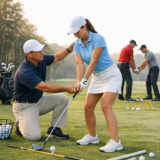
A rising cohort of well-known amateurs is choosing paths outside full-time touring-pursuing business careers, coaching roles or extended collegiate eligibility. Motivated by education,financial stability and lifestyle choices,their decisions are forcing tours,sponsors and national federations to rethink how elite amateur talent is supported and retained.
The R&A announced a qualification pathway allowing LIV golfers to compete for Open spots, reshaping eligibility rules and reigniting debate over the integration of rival-tour players into golf’s majors
With the professional landscape evolving-LIV Golf having emerged as a major disruptor since 2022 and governing bodies adjusting entry routes-players at every level must update how they prepare for championship conditions. Start by reinforcing setup basics: adopt a neutral grip, keep the eyes over or slightly inside the ball and use a stance about shoulder-width for mid-irons, widening a touch for longer clubs. Ball position principles remain useful: drive with the ball just inside the left heel, place mid‑irons around mid‑foot and set wedges slightly back of center to promote predictable low‑point control. Maintain light grip pressure-approximately 4-5 on a 1-10 scale-to keep feel and allow proper wrist action. For example, on a blustery seaside links hole lower the trajectory by narrowing the stance and moving the ball back one club, a setup tactic many elite amateurs who remain amateur rely on to manage wind and reduce spin.
Improve ball striking by breaking the swing into objective checkpoints. Aim for roughly a 90° shoulder turn on a full backswing (torso relative to hips) to generate power while preserving sequencing, and allow hip rotation in the 40°-50° range to facilitate weight shift. At impact, the hands should be 1-2 inches ahead of the ball with irons to ensure a descending strike and solid compression; with the driver expect a slightly shallower attack and modest forward shaft lean.Practice sequencing with these drills:
- Pause-at-top drill – pause briefly at the top of the backswing to assess plane before finishing the downswing, which ingrains correct timing.
- Step drill - begin with feet together and step into the downswing to feel proper weight transfer and rhythm.
- Impact bag / face-tape work – focus on centered strikes and a square face at impact; target roughly ±3° face-angle consistency during repetitions.
Set clear targets such as improving fairways hit by 10 percentage points over 12 weeks through disciplined alignment and tempo practice.
The short game usually decides outcomes in links‑style or major venues, so create a repeatable routine for chips, pitches, bunker escapes and putting.For greenside chips and pitches, open the face 10°-15° when you need a higher release; for bump‑and‑run shots choose less loft and move the ball back in the stance. In bunkers, open the face and aim to enter the sand 1-2 inches behind the ball with an accelerating follow‑through-opening a 56° sand wedge by about 30° increases effective loft while the bounce helps prevent digging. Putting fundamentals include a quiet stroke with minimal wrist break; use the clock drill for 3-8 footers until you sink 8 of 12 to build confidence. Practice items:
- 30‑yard pitch to a 10‑foot circle – target ~70% proximity within six weeks.
- Sand‑save simulation – 10 reps from compact lies and 10 from deeper sand to measure repeatability.
- Lag‑putting test - 20 putts from 30-50 feet, tracking those finishing inside a 6‑foot circle; aim for 60%+.
As tournament fields deepen, course management becomes a major advantage for amateurs who can outthink stronger opponents. Build a detailed yardage book that records carry and roll for each club in dry, damp and windy conditions. Apply a simple risk‑management rule: on holes where trouble starts around 250 yards, plan a layup to a club that consistently leaves an approach you can hit to a comfortable 50 ft² landing area. Adjust for wind by taking one extra club for an additional 10 mph of headwind and one less club with a 10-15 mph tailwind on shots that will run. Schedule situational practice rounds where you assign club limits and penalty consequences for missed targets; those scenarios translate into steadier scores at championship venues and reflect the conservative decision‑making many top amateurs use when they choose a non‑tour lifestyle.
Combine equipment setup, a consistent practice cadence and mental routines into a measurable enhancement plan. book a professional fitting to verify loft and lie-small changes such as a 2° lie adjustment can shift miss direction-and match shaft flex to driver speed: regular for roughly 80-95 mph, stiff for 95-110 mph.Weekly structure examples:
- Short‑game focus: 30-40 minutes daily on chips, pitches and bunker work (around 40% of total time).
- Full swing: two to three sessions per week of 45-60 minutes with focused drills and video review.
- On‑course simulation: one nine‑hole practice round per week concentrating on club selection and green reading under pressure.
Address common faults-overactive wrists (use slower‑tempo, arm‑body connection drills), alignment errors (use an alignment stick) and poor distance control (track dispersion and carry numbers). Practice psychological tools-pre‑shot routines, visualization and breathing-to stabilize performance and aim to halve three‑putt frequency within 8-10 weeks.Together, these technical, tactical and mental components prepare golfers to perform as major fields and eligibility evolve.

Examining financial security and career prospects that sway top amateurs toward nonprofessional lives
Many elite amateurs who choose stable careers off tour reallocate limited practice time into high‑impact, time‑efficient work. Coaches increasingly advise emphasizing short‑game proficiency and course management-areas that deliver the moast strokes gained per hour.Set measurable objectives: halve three‑putts within six weeks, raise scrambling by 10 percentage points or push fairways‑hit to 60%+. With constrained schedules,re‑anchor each session around setup fundamentals: grip around 4/10 for control without tension,ball a ball‑forward for drivers and centered for short irons,and an athletic posture with about 10-15° knee flex. These checkpoints create a reliable baseline so practice transfers directly to competition.
Under time pressure, dissect the swing into component movements and employ short, repeatable drills that emphasize feel and measurable outcomes. For full swings, target a roughly 90° shoulder turn for many male players (modest reductions for certain women and seniors), use a controlled transition and practice a 3:1 tempo ratio in tempo drills (backswing one count, downswing about one‑third of that feel). Target attack angles near −3° for irons and +2° to +4° for drivers; if available, validate with a launch monitor to monitor launch angle and spin (driver spin commonly falls between 1,800-3,000 rpm and wedge spin typically 6,000-9,000 rpm). Useful drills:
- Gate drill with two tees to reinforce a square face at impact (use alignment rods for setup).
- Towel‑under‑arms work to encourage a connected downswing and limit casting.
- Impact bag strikes to cultivate a forward shaft lean of ~5-10° at contact for solid iron compression.
These exercises suit beginners through low handicappers: beginners rely on feel, while better players refine using data.
For amateurs balancing career and golf, the short game is the highest‑return investment. Choose wedge lofts and bounce according to turf: higher bounce (8-12°) for soft sand or deep lies; lower (4-6°) for tight turf. Teach consistent contact points: for bump‑and‑runs place the ball back and minimize wrist hinge; for full lob shots play the ball forward, open the face and accelerate to create spin. Putting work should target stroke length control,alignment tools (mirror or lines) and a set aim‑point routine for reading greens. Practice examples:
- 50‑yard ladder – 10 chips at 5, 10, 15 and 20 yards to master trajectory and landing control.
- Ping‑pong putting challenge – make 10 consecutive three‑footers with varied pace to build feel.
- bunker station – 20 practice shots from soft sand focusing on a consistent entry point 1-2 inches behind the ball.
Aim for up‑and‑down rates of about 80% inside 30 yards within eight weeks.
Smart course strategy and tactical discipline often separate good amateurs from great ones-especially those who opt out of professional life and rely on steady scores. Start by mapping tee‑shot targets with concrete yardages, identify preferred miss zones and choose conservative landing areas that avoid hazards (for instance, a 220-240 yd corridor that keeps water well out of play). For wind adjustments, add roughly one club for each 10 mph of headwind and remove one for comparable tailwinds. On par‑5s, prioritize a layup that leaves a preferred angle for the approach rather than forcing risky carries. Practice situational scenarios-wet fairways, 20‑mph crosswinds-and rehearse specific club choices and shot shapes. Troubleshooting checklist:
- Confirm yardage and wind at every tee with GPS or a laser rangefinder (permitted in many amateur events).
- account for elevation: adjust distance by about 2-3% per 10 ft of elevation change.
- Apply Rule 17 relief options confidently when a ball is unplayable or in a penalty area.
These methods reduce score volatility and sustain consistency.
The interplay of psychology and equipment completes a practical plan for high‑level amateurs balancing careers. Many report success using time‑budgeted practice-three sessions per week of 60-90 minutes: one devoted to the short game, one to focused full‑swing work and one to on‑course scenarios. equipment choices should be pragmatic: a one‑time fitting to match shaft flex and lofts to swing speed (for example, a 94-105 mph driver speed typically sits between regular and stiff shafts), keeping grooves clean and selecting a putter length that supports neutral posture. Mental skills-pre‑shot routines, breath control and visualization of landing zones-should be rehearsed like physical drills; reduce on‑shot decision time toward 15 seconds to support ready golf and consistent execution. Common errors and fixes:
- Overemphasis on full‑swing at the expense of short game – reallocate according to a 60/40 short‑game/full‑swing split for busy players.
- Ignoring club fitting – complete a fit and re‑test annually.
- Poor green reading – practice with slope boards and aim‑point systems until you consistently predict breaks within ~6 inches on 10‑ft putts.
When combined, these technical, tactical and practical practices allow amateurs to protect or lower handicaps while following option career paths.
Mental health and life balance lessons from amateurs who declined the professional grind
Players who step away from the tour lifestyle commonly report greater freedom to build lasting, performance‑focused routines that emphasize quality over volume. reaffirm fundamentals every session: a neutral grip (about 2-3 knuckles visible on the lead hand), a modest spine tilt at address and shoulder‑hip‑toe alignment parallel to the target. Use this simple setup checklist for repeatability:
- Feet width: shoulder‑width for irons, slightly wider for driver;
- Ball position: center for short irons, 1-2 ball diameters forward for mid‑irons, inside the lead heel for driver;
- Grip pressure: firm but relaxed-test with a 5/10 squeeze.
These players favor short, focused sessions and often use 120 fps video capture to compare clubhead path and face angle for objective feedback.
Short‑game investment reduces pressure and shortens rounds, improving enjoyment and balance. Focus on consistent contact and distance control: fit wedges to typical gapping-gap ~50°,sand ~54-56°,lob ~58-60°-and match bounce to turf. drills that yield rapid improvement include:
- Chip‑to‑flag: 30 chips from 20-30 yards aiming to land on a chosen landing spot within a 10‑ft circle;
- Landing‑zone ladder: towels at 10‑yard intervals from 30-80 yards to train precise landing control with 15-20 shots per club;
- Bunker routine: blast out with an open face, feet slightly dug and splash the sand 1-2 inches behind the ball.
explain basics for beginners-greater loft produces higher flight and less roll-while advanced players refine spin by varying attack angle and hand position through impact.
Course management from these amateurs stresses conservative play when it reduces long‑term score and emotional swings. They protect pars rather than gamble for birdies that increase volatility. in a 420‑yard par‑4 with water left of the green, select a tee shot that leaves a comfortable mid‑iron into the putting surface rather than risking driver distance into trouble. Shot‑shape techniques:
- To fade: present a slightly open clubface to the path, position the ball a touch forward and use a neutral‑to‑open stance;
- To draw: feel an inside‑out path with a slightly closed face and transfer weight into the lead leg through impact.
Remember the penalty ramifications-lose a ball and you incur stroke‑and‑distance under Rule 18.2-so favor plays that keep the ball in play and simplify choices under pressure.
practice planning and equipment routines are where these amateurs regain control of time and stress. Limit full‑swing work to one focused 60-90 minute session with warm‑up and measurable targets (such as,60% fairways in practice bays or ten consecutive wedges inside a 10‑yard circle). Equipment checks are routine-confirm shaft flex aligns with swing speed, verify lie angles for consistent contact and ensure grip size allows a relaxed release.weekly templates:
- Two short sessions (30-45 minutes) dedicated to putting and chipping with clear targets;
- one full‑swing session (60 minutes) concentrating on a single characteristic such as tempo or downswing sequencing;
- One on‑course strategic round aimed at hitting predetermined targets rather than recording score,to rehearse decisions under real conditions.
These players also schedule recovery, mobility work and cross‑training to support consistency and reduce burnout.
Mental skills are explicit and actionable: use a concise pre‑shot routine, regulated breathing and emotion tracking to avoid slumps. A sample routine: visualize the shot for 3-5 seconds, take two practice swings focusing on tempo, perform box breathing (inhale 4, hold 4, exhale 4) and execute.To cut three‑putts, practice lag putting to a knocker-aim to leave putts inside 3 feet from 30-40 feet about 80% of the time-and use alignment aids to lock in setup. Cater instruction to different learning styles: visual learners benefit from video and markers, kinesthetic learners from slow‑motion feels and drill repetitions, analytical learners from tracking fairways‑hit, GIR and putts per hole.Applied together, these mental and tactical frameworks help golfers improve technique, make better course decisions and maintain life balance while steadily lowering scores.
How tournament access and sponsorship dynamics influence the choice to remain amateur
Reporters and coaches note that tournament entry routes and sponsorship options strongly affect a player’s decision to stay amateur, and that reality shapes how they train and strategize. Under current governance, amateur status rules bar full commercial endorsements or open prize money without forfeiting eligibility, though targeted expense reimbursement for travel and entry is allowed under R&A/USGA guidelines-a detail many top amateurs use. Those who remain amateur typically concentrate on formats that reward precision-match play, national amateur championships and collegiate events-so their practice focuses on short‑game excellence, shot‑shaping reliability and tactical green‑reading rather than maximizing raw distance.Instructors should therefore reframe objectives toward repeatability and stability-metrics such as fairways hit and up‑and‑down percentage-and design practice cycles aligned with available tournament opportunities.
Technically, elite amateurs who stay competitive favor a swing plan that minimizes low‑odds heroics and produces controllable dispersion. Reinforce setup fundamentals-stance equal to shoulder width, grip pressure 4-5/10 and driver ball position 1-2 ball widths inside the left heel with mid‑irons centered. For launch targets, aim for a driver attack angle of +2° to +4° to boost carry and reduce spin, while iron players should pursue −2° to −4° attack angles for crisp turf contact. Set staged clubhead speed goals by level-beginners 70-85 mph, intermediates 85-95 mph, low handicappers 95-110 mph-and use launch monitor data (ball speed, launch angle, spin) during practice blocks. Drills:
- Impact‑bag sets to feel compressive contact (5 sets × 10 swings).
- Tempo metronome drill: practice a 3:1 backswing‑to‑downswing feel across 100 swings.
- Alignment‑stick gate drill to prevent casting and encourage an inside‑to‑square impact (3 × 12 reps).
These steps produce repeatable contact and shot‑shape control suited to the tournament formats most amateurs access.
When travel budgets and starts are limited, course management becomes a strategic equalizer. Build a hole‑by‑hole plan favoring position over distance. For example, on a 420‑yard par‑4 with left‑side water and a risky right option, target a 230-240 yd safe landing zone with a 3‑wood or long iron to leave a reliable 120-140 yd wedge into the green rather than trying to reach the green from the tee. Yardage‑book checkpoints:
- Preferred miss: note one or two safe miss areas per hole;
- Wind adjustment: add or subtract ~5-10% of carry distance for 10-20 mph cross/headwinds depending on the club;
- Layup windows: mark 30‑yard safe zones for conservative play to avoid hazards.
Use GPS or laser readings during practice rounds to confirm carry numbers and rehearse these plays on the range with the exact clubs you will use in competition.
Short‑game excellence distinguishes amateurs who remain competitive without full tour support. Set measurable targets-up‑and‑down rates above 60% from within 50 yards and leaving putts inside 3 feet on approaches of 20 feet or less. Dial in wedge gapping so each wedge carries within consistent 10-15 yard windows; perform a gapping session with seven impacts per club and record averages. Drills:
- 50‑yard ladder to verify gapping and landing angles in 10‑yard increments;
- Bunker basics: open the face, aim 1-2 inches behind the ball, accelerate through sand and measure success by clearing by >6 inches and landing within 10-15 yards;
- Putting gate drill: roll short putts through a 3‑inch gate, then complete 30 putts from 6 feet under pressure.
Correct common flaws-muscled chips, misuse of bounce and misreading green speed-by rehearsing on variable surfaces and tracking up‑and‑down percentages to quantify improvement.
Choosing to remain amateur is both a practical and psychological decision; sponsorship dynamics shape mental planning and resource allocation. Many top amateurs who prioritize education or expense reimbursement adopt structured weekly schedules: 8-12 hours on short game and putting, 6-8 hours on full swing and 2-4 hours on course strategy, plus 1-2 recovery/fitness sessions. Mental routines matter: a concise pre‑shot routine of 8-12 seconds, two diaphragmatic breaths and visualization of the landing spot helps under pressure. When accepting in‑kind equipment support,consult governing‑body rules-clubs or footwear are commonly permitted but commercial endorsement deals can void amateur status-and choose gear consistent with your strategic aims (a slightly stiffer shaft for tighter dispersion vs. softer for feel). Troubleshooting:
- If dispersion worsens: shorten the backswing and slow tempo (see tempo drill).
- If proximity to hole is poor: re‑run a wedge‑gapping session and practice explosive wedge shots to regain spin control.
- If nerves rise in competition: simulate pressure with 9‑hole pressure drills, small paid events or match‑play practice to build stress tolerance.
Combined,these instruction‑centred techniques offer a practical roadmap for amateurs who opt out of the pro ranks but still pursue elite performance.
Transition strategies and education pathways recommended for amateurs opting out of pro golf
An increasing number of elite amateurs have blended formal education with applied experience to build careers outside touring.First steps should include a clear skills audit and an education map.List strengths-swing coaching,short‑game instruction,biomechanical analysis,tournament strategy-and pursue targeted credentials such as PGA/LPGA teaching qualifications,TPI level 1 or club‑fitting certifications that include launch‑monitor proficiency (GCQuad or TrackMan experience is valuable). Create a measurable first year: 60-120 hours of supervised mentoring or coursework and a goal of delivering your first paid lesson within 3-6 months. Top amateurs who transitioned fastest combined tournament knowledge with structured certification and recorded contact hours.
next, develop transferable coaching skills by breaking swing mechanics into teachable checkpoints and drills that scale from beginners to low handicappers. Start with setup norms-stance at shoulder width ±1 inch, spine tilt 5-7° away from the target for long clubs and ball position centered for mid‑irons but forward for longer clubs. Use this checklist in lessons:
- Grip pressure: hold around 4-5/10 to permit natural release;
- Clubface control: square at impact-use an impact bag to feel compression;
- Swing plane: monitor with alignment rods on the target line and a 45° takeaway at waist height.
Coach with drills such as slow‑motion swings to 50% speed and the pump drill (three shallow practice swings and a full swing) and quantify progress by tracking dispersion-aim for a 10-15 yard reduction over six months for mid‑handicappers.
Short game and putting should be prioritized as highest‑return areas for those moving into coaching. Emphasize loft and bounce selection for chips and pitches-8-12° bounce for soft turf, 4-6° for tight lies-and practice distance control with measurable routines. Recommended sessions:
- 30‑minute putting ladder (3 ft, 6 ft, 12 ft) recording make percentages;
- 50‑ball wedge routine from 30-60 yards focusing on carry‑only targets and reducing lateral miss to about 10 yards;
- 60‑shot around‑the‑green mix of bump‑and‑runs and open‑face flops with progressive targets.
Fix common errors-chip deceleration (use a stop‑at‑impact drill) and inconsistent putting setup (keep shoulders parallel and eyes over or slightly inside the ball). Goals: cut three‑putts by ~30% in eight weeks and improve up‑and‑down by 10 points in three months.
Translate playing intuition into teachable course management by using a decision rubric the best amateurs apply themselves. Step‑by‑step:
(1) assess lie and pin,
(2) pick a landing area based on carry/run numbers,
(3) select a club with a 30-50 yard safety buffer for narrow greens,
(4) commit to a conservative miss (e.g., aim center‑left when the pin is tucked right). Teach Rules application-use a provisional when OB is absolutely possible (stroke‑and‑distance) and explain free relief under Rule 16 for abnormal course conditions so students make fast, rules‑compliant decisions. Include environmental adjustments-for a 15-20 mph crosswind move the ball back half a club and open the face 2-4° to hold carry and control.
Outline career building for those becoming educators: assemble a modular lesson portfolio, create a client progression system and use data to show outcomes. Suggested pathway: self‑assessment → certification → apprenticeship → independent coaching, with milestones such as running a 10‑lesson beginner block, delivering a six‑week short‑game clinic and completing a launch‑monitor fitting case study. Troubleshooting for new coaches:
- If student progress stalls: shift from blocked repetition to random practice to improve on‑course transfer;
- If speed control is an issue: introduce tempo drills with metronome work at a 3:1 ratio;
- If equipment limits results: perform loft/lie checks and recommend a re‑grip or 1-2° lie tweak.
Set a measurable business target-document an average student improvement of roughly three strokes in handicap or a 20% reduction in key errors (three‑putts, penalty shots) inside six months to demonstrate effectiveness.
Profiles in choice detailing former top amateurs who built successful careers outside competitive golf
Recent reporting on former elite amateurs who left the tour path for careers in engineering,law,business and coaching shows how disciplined practice habits transfer to other fields. These individuals kept core performance habits: a consistent pre‑shot routine, measurable goals (strokes gained components or proximity to hole) and practice blocks built around those metrics.Begin by logging baseline stats for a month-fairways hit, greens in regulation and three‑putt frequency-and then attack the single area that yields the biggest stroke reduction. As a notable example, if GIR are low but scrambling is solid, prioritize approach accuracy with a plan to boost GIR by 5-10 percentage points over three months through targeted range work and on‑course simulation.
Sound swing mechanics remain foundational. emphasize a neutral setup with roughly 25-30° of spine tilt for iron shots, an approximate 55/45 weight split favoring the lead foot at address, and club‑specific ball positions: short irons centered, mid‑irons slightly forward, driver inside the front heel. Use these checks for diagnostics:
- Setup checkpoints: shoulder‑width stance for irons, 1.5× shoulder width for driver; knees flexed 10-15°; chin up to allow a full shoulder turn;
- Drills: mirror setup holds (30 seconds), wrist‑hinge practice to feel ~90° on short swings and towel‑under‑armpits work to encourage connected rotation;
- Troubleshooting: for a slice, check path and close the face through impact; for a hook, reassess grip pressure and avoid early release.
Measure progression-use a launch monitor or GPS to increase carry distance and set incremental targets (for example, +5-10 yards over 12 weeks for mid‑handicappers with combined technique and conditioning work).
Short‑game control is a recurring theme among amateurs who prioritized life balance over constant travel. Their routines emphasize predictable contact and consistent trajectories. For chips and pitches, strike with a descending blow using lower‑loft clubs for roll and higher‑lofted wedges for carry; keep the hands slightly ahead at address and accelerate through impact. Useful drills:
- Clock drill for putting: balls at 3,6,9 and 12 o’clock from 3-6 feet to build stroke repeatability;
- Ladder chipping drill: land balls at 10,20 and 30 feet to refine rollout and distance control;
- partial‑swing wedge drill: ¾ swings to calibrate carry and record distances for each wedge to construct a personal yardage chart.
Set short‑game goals-target a three‑putt rate near 0.3 per round and 60%+ up‑and‑down from inside 50 yards-and practice adjustments for wet or firm conditions to build adaptability.
Course management and shot selection are where former top amateurs often excel relative to less experienced players. Build a pragmatic playbook: identify safe landing zones off the tee, choose approach targets that leave preferred wedge distances (100-140 yards for many amateurs) and adjust for wind-add a club for a 10-15 mph headwind, subtract one for a similar tailwind. For shot shaping, teach stance and face relationships: set feet slightly right and a marginally closed face for a draw; reverse for a fade. use situational practice-play a 350‑yard par‑4 as a strategic par by aiming 20-30 yards off the center to avoid bunkers, or lay up short of a penal carry so tactical decisions become automatic under pressure.
When equipment, practice structure and the mental game converge, sustained improvement follows. Check lofts and lie angles every 12-24 months and build wedges with 8-10 yard gapping. Weekly practice by level:
- Beginners: 2-3 hours per week on fundamentals;
- Intermediates: 4-6 hours with mixed range and short‑game sessions;
- Low handicappers: 8-12 hours emphasizing simulation and pressure drills.
incorporate varied learning methods-video analysis for visual learners, impact‑bag drills for kinesthetic learners and metronome tempo work (3:1 backswing‑to‑downswing) for auditory pacing. Tie the mental to the mechanical via a concise pre‑shot routine,range visualization and quarterly performance targets-improve fairways hit by 10% or lower handicap by 2-3 strokes-so practice gains convert into measurable scoring improvements.
Practical advice for young talents on managing expectations finances and long term planning if not turning pro
Financial planning and expectation management start with clear, measurable budgets: young players should build a 12‑month cash reserve covering 6-9 months of living costs and maintain a separate performance budget for travel, coaching and equipment (frequently enough 20-30% of annual income or sponsorship support). Many top amateurs who decline the pro route reallocate travel funds into coach education or business degrees, preserving competitive play while creating stable income opportunities. Practical steps include a simple annual spreadsheet tracking income, travel, entry fees, coaching hours and equipment depreciation, quarterly reviews and agreed stroke‑saving goals with mentors (for example, a 1.5‑stroke season improvement).This method helps balance selective event entry with steady local competition and supports choices like low‑cost regional opens over national qualifiers.
Technique work should be time‑boxed and outcome driven. Begin with baseline testing: measure clubhead speed, ball speed and smash factor for driver and a mid‑iron, then set realistic targets such as +2-4 mph clubhead speed over 12 months for players undertaking physical training or a measurable smash‑factor improvement for accuracy. Follow a step‑by‑step coaching progression: neutral grip and alignment, spine tilt around 25-30° for mid‑irons and an alignment stick to square shoulders and toes. Practice drills:
- Half‑swing tempo drill – 50 swings at a 3:1 backswing‑to‑downswing count to cement rhythm;
- Impact‑tape feedback – 30 balls per session to tighten dispersion into a 3‑inch group for a 7‑iron;
- Launch‑monitor test - 20‑shot sets to create baseline dispersion charts and refine loft or shaft choices.
For beginners, offer plain explanations; for advanced tweaks-if a block occurs, close the face slightly and lower the hands at impact; if a slice persists, shallow the angle of attack by 2-4 degrees.
Short game and course strategy are the most cost‑efficient ways to save strokes. Aim for a 50-60% up‑and‑down rate inside 100 yards for amateurs progressing toward single‑digit handicaps; low handicappers should target 70%+. Drill prescriptions:
- Arc chip progression – 40 balls from varying lies to achieve ground‑first contact 80% of the time;
- Bunker control – 30 practice shots landing within a 6‑foot circle, emphasizing an open face and a swing that enters 1-2 inches behind the ball;
- Putting ladder – 10 putts at 4, 8 and 12 feet to log make percentages and stroke‑length consistency.
On course, adopt match‑style management-on tight, tree‑lined par‑4s choose a 3‑wood or long iron to prioritize keeping the ball in play; read greens using grain and slope cues and account for subtle wind effects (factor in roughly 0.1-0.2% extra break per 1 mph wind across a green). These practices link short‑term drill metrics with scoring performance in rounds.
Equipment and setup tuning are practical investments that reduce compensatory swing work and injury risk. Young players should pursue a full club fitting, focusing on loft/lie and shaft flex/length. Recommended checkpoints:
- maintain roughly 4° loft gaps between successive irons for consistent distance spacing;
- Adjust lie angles so impact marks cluster toward the center rather than toe or heel;
- Pick wedge bounce by turf-10-12° for soft conditions, 4-6° for tight, firm sand.
- Practical testing: 10‑shot samples per iron/wedge on a launch monitor, two grip sizes tested across 50 swings and confirm equipment meets USGA conformity for competitive play.
Proper fitting shortens learning curves, reduces injury risk and makes practice time more efficient so technique transfers more directly to the course.
Long‑term planning should pair playing objectives with career alternatives, mental skills and scalable practice schedules so enjoyment and competitiveness are sustainable. Create a five‑year plan with layered goals: maintain a competitive handicap (for elites a +1-3 range or mid‑single digits for club players), secure coaching credentials and limit travel to a sustainable 10-12 weeks per year unless sponsored. Integrate mental training-pre‑shot routines,4‑4 breathing to manage arousal and simulated pressure through small‑stakes or timed practice. Address varied learning preferences-video feedback, kinesthetic drills and structured lesson plans-and set quarterly metrics (putting percentage, fairways hit, proximity to hole). By combining disciplined finances, targeted technical work, fitted equipment and purposeful career steps-as many top amateurs have demonstrated-young talents can pursue both personal growth and competitive excellence without sacrificing long‑term stability.
Q&A
Note: a topical web search returned unrelated results (education platform Top Hat). The Q&A below is a standalone, journalistic‑style discussion of ”The top amateurs who decided to forgo the pro‑golf life.” For background, the original item is at: https://golflessonschannel.com/amateur-golfers-fresh-perspectives-on-pro-golf/
Q: What is meant by “top amateurs who forgo the pro life”?
A: The term describes elite golfers who, despite demonstrable ability and success in major amateur events, decide against pursuing careers on professional tours. Rather they remain amateurs,enter other professions,or focus on governance,coaching and promoting the game rather than life on tour.
Q: which historical figures best illustrate this route?
A: Several individuals stand out:
– Bobby Jones (1902-1971): The best‑known example-Jones dominated in the 1920s, won the 1930 Grand Slam as an amateur, then retired from competitive play at 28 to concentrate on course design and administration, co‑founding Augusta National and helping establish the Masters.
– Francis Ouimet (1893-1967): His shocking 1913 U.S. Open victory broadened American interest in the game; Ouimet remained an amateur and later worked in business and administration.
– Johnny Goodman (1909-1970): The 1933 U.S. Open champion as an amateur who continued to compete locally while working outside the professional tour.
– Michael Bonallack (1934-2023): A dominant British amateur who later became a key administrator and influencer of the amateur game.
– Frank Stranahan (1922-2013): A successful competitive amateur who balanced high‑level golf with business and philanthropy rather than a full professional career.
Q: Why would top players choose the amateur path instead of turning professional?
A: Motivations differ but common reasons include:
– financial security outside the uncertain earnings of early tour life (especially relevant historically).
– Personal values-some players prize amateur traditions and the ethos they represent.
– Career and family priorities-opting for stable professions over the travel and uncertainty of touring.
– A desire to influence the sport through administration, course design or promotion rather than chasing purses.
– In certain eras institutional and social factors made remaining an amateur more attractive or practical.
Q: What impact did those choices have on the individuals and the game?
A: Individually, many left legacies beyond tournament wins-Bobby Jones’s role in founding Augusta National and the Masters reshaped major‑championship golf; Ouimet’s victory expanded the sport’s appeal; administrators such as Bonallack shaped governance and preserved traditions.Collectively, their choices showed that contributions to golf-leadership, course architecture, governance and outreach-can be as consequential as professional victories.
Q: Is staying amateur still common today among top players?
A: No; modern professional golf offers greater financial rewards, endorsement opportunities and clearer development pathways, so most top amateurs turn pro sooner, often after collegiate success or breakthrough performances. Permanent amateurism is now uncommon and usually reflects educational or personal priorities or short‑term timing decisions.
Q: Are there modern examples of elite players delaying or rejecting a pro career?
A: Contemporary cases are rarer and typically temporary-players defer turning pro to finish college,play amateur team events,or meet Olympic eligibility-rather than choosing lifelong amateurism. The commercial structure and multiple global tours make permanent amateur status less common now.
Q: What should a promising amateur weigh when deciding whether to turn pro?
A: considerations include:
– Financial readiness and sponsorship or funding to support travel and entry fees in the early years.- Performance readiness-consistent high finishes in strong fields and the ability to handle tour pressure.
– Personal ambitions-education,family and alternative career goals versus full competitive commitment.
– A contingency plan-coaching, equipment industry or business options if touring proves unsustainable.
– The evolving landscape-mini‑tours, LIV/PGA/DP world pathways and exemptions create varying opportunities compared to previous generations.
Q: Why do these stories matter to modern golf audiences?
A: they provide perspective on how the sport has changed-economically, culturally and institutionally. These narratives remind fans that influence in golf comes in many forms-championship wins, institution building, governance and widening access-and inform current debates about the sport’s values and future direction.
Q: Where can readers learn more?
A: Readers can consult historical profiles,biographies of figures like Bobby Jones and Francis Ouimet,and the histories of the USGA and The R&A. The user‑supplied article at golflessonschannel.com offers a contemporary look at how amateur perspectives shape discussions about accessibility and innovation in golf.
If desired, I can expand any of the profile sketches into longer biographical sidebars, produce a timeline of major amateurs who stayed amateur, or draft interview questions for contemporary amateur players weighing the pro transition.Which would you like?
As career paths diverge from the conventional pro route, these players illustrate an alternative definition of success-one shaped by personal priorities, lasting amateur legacies and contributions to the sport that extend well beyond prize money. their decisions highlight that the future of golf will be influenced as much by individual values as by rankings and purses.

Why Elite Amateurs Are Choosing Life Beyond Pro Golf: Stories of Passion, Priorities, and New Paths
Shifting goals: What “Elite Amateur” Means Today
When we say “elite amateurs” we mean golfers who regularly shoot low scores (single-digit handicaps or better), win club championships, compete in regional and national amateur events, or represent colleges and national teams. These players have the technical skill and competitive experience to consider professional golf-but many are choosing a different route. The reasons often combine pragmatic financial realities with personal values,long-term priorities,and a desire to keep golf as a passion rather than a pressure-filled profession.
Why Many Elite Amateurs Opt Out of the Pro Track
1. Financial and sponsorship realities
Turning pro frequently enough requires sustained investment-travel, caddie fees, coaching, entry fees, equipment, and living expenses-without guaranteed prize money. Sponsors tend to concentrate on the top few tours (PGA/DP World/LPGA) and breakout stars, leaving many lower-tour professionals struggling to break even. For elite amateurs who value financial stability, corporate careers, or business ownership can provide a steadier income while still funding travel for selective tournaments.
2. Work-life balance and family priorities
Professional golf demands long blocks of travel, time away from family, and an unpredictable schedule. Many elite amateurs prioritize relationships, parenthood, or partner careers and choose paths that allow them to remain present at home while staying deeply involved in competitive golf locally and regionally.
3. Physical and mental well-being
Intense tour life increases injury risk and mental fatigue. Some elite players decide to preserve long-term health and enjoyment of the game by stepping away from the relentless grind of tour golf while still competing in select events, club competitions, and friendlies.
4. Passion for other careers or education
Elite amateur golfers frequently have strong academic backgrounds or entrepreneurial ambitions. College golf and amateur competition often open doors to careers in finance, tech, law, medicine, and business. Choosing life beyond pro golf can be a conscious decision to pursue intellectual or professional passions while keeping golf as a central recreational pursuit.
5.Alternative golf-related careers
Many elite amateurs find meaningful careers in the golf industry-coaching, club management, golf media, equipment R&D, course architecture, events, and operations. these roles let them apply competitive insight while building more predictable, stable lives.
Case Studies: Realistic Stories and Paths (Composite Profiles)
Case Study A – The Coach and Mentor
“Anna,” a two-time college all-conference player, considered mini-tours but chose to pursue a coaching certification and start a junior academy. She still plays competitive amateur events and club championships, but her primary income and fulfillment come from teaching. Her deep understanding of shot shaping, short game, and mental strategy makes her a sought-after coach while allowing a regular family schedule.
Case Study B – The Corporate Professional Who Keeps Competing
“David,” previously ranked among regional amateurs, accepted a finance role in a major city. He shifted to weekend tournament golf, playing scratch-level events and city opens. The stable salary, health insurance, and career progression gave him long-term security; he uses vacation and weekends for elite amateur competitions and charity pro-ams.
Case Study C – The Entrepreneur and Club Pro Hybrid
“Maya” opened a golf apparel and training-aid startup, leveraging her amateur reputation to build brand trust. She also works part-time as a club professional and plays in national amateur events. This hybrid model mixes stable business income with the freedom to set her competitive schedule.
Benefits of Choosing Life Beyond Pro Golf
- Financial stability: Salaries, benefits, and predictable income streams reduce long-term risk.
- Control over schedule: More predictable time for family, education, or other passions.
- Reduced pressure: Ability to play for joy and competitive satisfaction rather than survival.
- Long-term career development: Possibility to build expertise and networks in other industries while keeping golf central.
- Health preservation: Less travel and stress can mean fewer injuries and better mental health.
Practical Tips for Elite Amateurs Considering Alternatives
Assess your short- and long-term priorities
Make a list of what matters moast: financial independence, family time, competitive goals, career aspirations.rank these to guide decisions-this will help you choose between full-time pro pursuits, a hybrid model, or another professional path.
Create a realistic financial plan
- Estimate annual travel and entry costs for a pro attempt vs. hybrid play.
- Account for health insurance, retirement savings, and downtime.
- Explore sponsorship, local business partnerships, or part-time coaching for revenue.
Build transferable skills and credentials
Consider coaching certifications (PGA/LPGA pathways), event management courses, or business education that allow pivoting into golf-related careers. Many elite amateurs combine a day job with evening/weekend coaching-creating diversified income and staying competitive.
Keep your game sharp with focused practise
If you’re no longer touring, adopt efficient practice models to maintain performance:
- Quality over quantity: short, structured sessions focused on weakness correction.
- Play tournaments selectively: target events that match your goals and give best competitive value.
- Use technology: launch monitors, short-game studios, and video analysis save time and improve outcomes.
How to Stay Competitive as an Elite Amateur without Turning Pro
Maintaining tournament-level performance while pursuing other goals is achievable with planning:
- Prioritize tournaments: pick 6-12 key events per year (club champs, national amateurs, select opens).
- Maintain a consistent practice plan tied to those events.
- hire a swing coach or short-game specialist for targeted improvement phases.
- Use fitness programs tailored to golf mobility and injury prevention.
- Form a local competitive network (regular foursomes, local leagues) to stay sharp in match play and stroke play formats.
Common Misconceptions and Realities
Misconception: “Going pro is the only way to achieve peak golf performance.”
Reality: High performance is absolutely possible outside the pro ranks. Many elite amateurs reach peak technical and tactical levels while holding careers, coaching, or running businesses.
Misconception: “if you don’t go pro now, you’ll never have another chance.”
Reality: some players attempt pro life later or take sabbaticals. others enter qualifying schools later, while maintaining amateur status.A staggered approach or a well-timed pivot can work.
Table: Quick Comparison of Career Paths for Elite Amateurs
| Path | Pros | Typical Tradeoffs |
|---|---|---|
| full-time Pro | highest upside; full commitment to golf | Financial risk; heavy travel; time away from family |
| Hybrid (Career + Compete) | Stability; selective competition; balanced life | Less time for full training; slower ascent if turning pro later |
| Golf Industry Career | Use golf expertise daily; networking; stable income | May limit competitive schedule; different career metrics |
First-Hand Experience: Structuring a Hybrid competitive Calendar
Many elite amateurs who choose a hybrid life follow a structured annual rhythm:
- Winter (Base/Skill Development) – Short-game overhaul, fitness, and swing adjustments.
- Spring (Peak Building) – Play local stroke-play events and tune approach play.
- Summer (Primary Competitive Window) – focus on 3-6 priority tournaments including state and national amateur events.
- Fall (Maintenance & Recovery) - Reduced competition, injury prevention, and off-season coaching.
This approach maximizes competitive readiness during key events while safeguarding career and family time.
SEO Tips for Writng About Elite Amateur Golf
For authors, coaches, and club sites covering this topic, use the following SEO best practices to reach readers searching for alternatives to professional golf:
- Target long-tail keywords: “elite amateur golf career alternatives,” “should I turn pro golf,” ”how to stay competitive as an amateur golfer”.
- Use clear H1/H2/H3 hierarchy and include keywords naturally in headings and first 100 words.
- Include case studies or local examples (with permission) to improve dwell time and engagement.
- Link to reputable resources (golf associations, coaching certs, health and fitness info) to increase trustworthiness.
- Use images with descriptive alt text (e.g., ”elite amateur golfer coaching juniors”) and structured data where applicable.
Practical Resources and Next Steps
If you’re an elite amateur weighing options:
- Schedule a “career + golf” planning session-map 5- and 10-year plans.
- Meet financial advisors to model touring vs. hybrid incomes.
- Try a sabbatical-style pro attempt (6-12 months) with an exit strategy.
- Network with club professionals, college coaches, and former amateurs who built careers beyond tour play.
Choosing life beyond pro golf is an informed, frequently enough liberating decision for many elite amateurs. It allows them to preserve the love of competition and golf performance while investing in stable careers, family, health, and other passions. The common thread across prosperous transitions is intentional planning-aligning values with a practical roadmap so that golf remains a central, joyful part of life rather than the only path.