
Appropriate equipment selection is a foundational element in early-stage golf instruction and skill acquisition. For novice players, choices that prioritize forgiveness, proper fit, and functional versatility reduce early frustration, accelerate motor learning, and promote consistent on-course performance. Empirical and practitioner guidance converges on the importance of balancing quality with cost-effectiveness: well-chosen basic equipment can have a disproportionately positive effect on trajectory control, short-game development, and overall enjoyment compared with either under‑equipped or overly specialized gear.
This article evaluates eight core pieces of equipment that are most influential for beginners, using criteria grounded in ergonomics, playability, and instructional value. Each section will appraise recommended features (such as, club forgiveness and shaft flex, ball compression, and shoe traction), explain how those features interact with common novice swing characteristics, and offer practical selection and fitting advice to help new players make informed purchases that support steady improvement and comfort on the course.
Holistic Club Set Composition and Professional Fitting Guidelines for Novice Players
Adopting an integrated approach to equipment selection ensures that each club in a beginner’s bag contributes coherently to distance gaps, trajectory control, and tolerance for common stroke errors. Emphasize consistency across loft progression and shaft characteristics so the player encounters predictable ball flights while learning.Prioritize **forgiveness** and ergonomics over advanced adjustability; novices benefit more from clubs that reduce the penalty of mishits than from incremental performance gains tied to highly specialized heads or shafts. Remember the rules constraint of a maximum of 14 clubs,which itself encourages deliberate composition rather than accumulation.
Practical set architecture for a novice should balance long-game launch with short-game control. Typical elements to include are:
- Driver – large, forgiving face with moderate loft to aid launch;
- Fairway wood or hybrid (one or two) – hybrids frequently enough replace long irons for easier turf interaction;
- Iron set – cavity-back irons (typically 6-PW or a 5-PW combo) for consistent distance gaps;
- Wedges – at minimum a sand wedge and a gap/pitching wedge to manage short-game scoring;
- Putter – select by feel and alignment aid rather than brand prestige;
- Optional – a rescue/hybrid or an additional wedge depending on course types played.
This configuration reduces overlap in distance coverage and simplifies practise routines, letting learners focus on repeatable mechanics rather than compensating for equipment inconsistencies.
Fitting should be evidence-based and staged: begin with a static assessment (height, wrist-to-floor measurement, natural posture) and proceed to dynamic evaluation using a launch monitor or skilled observer to capture swing speed, launch angle, and spin characteristics. Key adjustable parameters include **shaft flex and length**, **lie angle**, **grip size**, and **head loft**.Graphite shafts are usually preferable in longer clubs for novices because they reduce vibration and can increase clubhead speed, whereas steel shafts may be selected for irons if the player favors control and feedback. Below is a concise reference table illustrating typical loft roles for beginners (creative, simplified guidance):
| Club | Primary Role | Typical Novice Loft |
|---|---|---|
| Driver | Max distance with forgiveness | 10.5°-12° |
| Hybrid (3/4) | Long-iron replacement | 18°-24° |
| Irons (6-PW) | Scoring and consistency | 24°-46° (progressive) |
| Sand/Gap Wedges | Short-game variety | 50°-56° |
| Putter | Green-side precision | N/A |
The fitting process should culminate in on-course verification where the player tests the proposed set under realistic conditions; small iterative adjustments are preferable to wholesale changes. Schedule a reassessment after ample swing changes or annually-this preserves **optimal launch conditions**, reduces compensatory techniques, and accelerates learning. For budget-conscious beginners, professional fitting remains worthwhile: opting for prior-year models or certified pre-owned clubs paired with a professional fitting session delivers a superior cost-to-performance ratio compared with buying unfitted new equipment.
Driver and Fairway Wood Selection Based on Swing Speed and Launch Characteristics
Appropriate pairing of drivers and fairway woods to a player’s physical dynamics is a determinative factor for trajectory control and distance optimization. Empirical studies and fitting protocols indicate that equipment choices should be driven by measurable metrics-primarily clubhead speed,attack angle,and spin rate-rather than aesthetic preferences alone.Novice players benefit most from clubs that promote a slightly higher launch and moderate spin to increase carry and reduce mis-hits; thus, loft and center-of-gravity placement are as consequential as shaft characteristics when seeking reproducible launch windows.
when selecting models, consider the following practical selection criteria integrated into the fitting process:
- Shaft flex and weight aligned to measured swing speed and tempo (lighter, more flexible shafts for lower speeds).
- loft optimization to achieve an initial launch angle that, together with spin rate, maximizes carry for the individual.
- Head design (forgiveness vs. workability) matching the player’s dispersion tendencies and progression goals.
These criteria form the basis of an evidence-based proposal rather than an ad hoc purchase.
Below is a concise reference matrix suitable for preliminary club selection during early-stage fittings. Use this as a starting framework and refine with launch-monitor data during a lesson or fitting session.
| Swing Speed | Typical Loft (Driver) | Shaft Flex/Weight | Target Launch |
|---|---|---|---|
| <85 mph (slow) | 11°-14° | Regular / 45-55g | 12°-16° |
| 85-100 mph (moderate) | 9°-11° | Stiff-Regular / 55-65g | 10°-14° |
| >100 mph (fast) | 8°-10° | Stiff-X / 65-80g | 8°-12° |
prioritize an iterative approach: test driver and fairway wood combinations on a launch monitor to verify that the selected loft,shaft,and head geometry consistently produce the predicted ball speed,launch angle,and spin window. Emphasize adjustability features (loft sleeves, movable weights) only as tools to fine-tune measurable deficiencies rather than as substitutes for proper shaft selection and basic swing development. For novices, the objective is to create a stable, repeatable launch profile that accelerates skill acquisition while minimizing performance variability.
Practical fitting adjustments that typically yield the largest performance gains for beginners include:
- Shaft length and tip trimming – aligns swing arc with body height and posture to improve contact.
- Shaft flex matching – balances energy transfer and timing for a given swing speed and tempo.
- Clubhead forgiveness (MOI & CG location) – reduces the penalty of off-center hits and stabilizes dispersion.
- Loft selection and adjustable hosels – modestly higher lofts with high‑MOI heads often yield higher launch and more carry for slower swings.
- Grip size and lie angle – ensure correct hand placement and face alignment at impact.
A simple heuristic useful for first‑time players maps approximate driver swing speed to shaft flex and a starting driver loft (starting points best validated by a launch‑monitor session):
| Approx. Driver Swing Speed | Suggested Shaft Flex | Suggested Driver Loft |
|---|---|---|
| Under 80 mph | Senior / A (soft) | 12°-14° |
| 80-95 mph | Regular (R) | 10°-12° |
| 95-105 mph | Stiff (S) | 9°-11° |
Hybrid and Iron Pairing Strategies to Maximize Forgiveness and Distance Control
Effective long-club integration requires an evidence-based approach to loft continuity and playability. Matching a hybrid to the adjacent iron is primarily an exercise in gapping: ensure incremental yardage steps so the set produces predictable distances. For many players this means replacing the hardest-to-hit long irons with hybrids whose lofts and shafts are tuned to produce a consistent gap while preserving the intended yardage bands.
From a biomechanical and shot-engineering viewpoint, hybrids function optimally when swung like mid-irons-slightly more sweeping, but still with a controlled downward angle of attack when required. Empirical guidance recommends a swing plane and contact point similar to an iron to preserve turf interaction and launch characteristics; hybrids are designed to promote higher launch and greater forgiveness, but their effectiveness depends on the player’s contact pattern and attack angle.
Practical pairing decisions should prioritize shaft and loft continuity ahead of brand or model. Using the same or similar shaft as the iron you are replacing (or carefully trimming shafts to match feel) reduces dispersion and preserves tempo; adjusting lofts in small increments avoids large yardage overlaps or voids. The following checklist summarizes the most reliable pairing interventions:
- Match lofts so that hybrids sit between the adjacent fairway wood and iron in launch and distance.
- Prioritize shaft consistency-use the same shaft family or flex to maintain feel and trajectory.
- Check gapping on the course (not just the launch monitor) to confirm real-world yardage steps.
- Prefer hybrids for forgiveness when a tentative player struggles with long irons; prioritize control over maximal carry.
| Iron | Iron Loft | Hybrid Loft | Typical Gap (yds) |
|---|---|---|---|
| 4-iron | 24° | 21° hybrid | 20-25 |
| 5-iron | 27° | 24° hybrid | 15-20 |
| 6-iron | 31° | – | 10-15 |
Wedge Selection and Short Game Technique Insights for Scoring Improvement
A coherent wedge set is foundational for consistent scoring; novices should prioritize a logical loft progression and forgiveness over specialty options. Maintain loft gaps of approximately 4-6 degrees between wedges to avoid distance overlap and cover critical yardages around the green. consider the interaction of loft, bounce, and sole grind when selecting wedges-higher bounce typically helps players with steeper attack angles or soft turf, while lower bounce benefits shallow sweeps and tight lies. The short table below summarizes practical starter choices for players establishing a wedge chart.
| Wedge | Typical Loft | Primary Use |
|---|---|---|
| Pitching Wedge | 46-48° | Full shots to fringe; tight lies |
| Gap Wedge | 50-52° | Bridges PW and SW distance |
| Sand Wedge | 54-56° | Bunker play; full and partial chips |
| Lob Wedge | 58-60° | Flop shots; high soft landings |
Technique must complement equipment: spin generation, consistent contact, and trajectory control are repeatable skills rather than ephemeral tricks. Emphasize a compact, accelerating stroke that maintains loft through impact and avoids deceleration that produces duffs or thin strikes. Key checkpoints for each wedge shot include:
- Setup: slightly open stance for higher lofted shots; ball position progressively forward for higher trajectory.
- Clubface control: align loft with intended trajectory; use open face judiciously for increased effective loft.
- Attack and acceleration: maintain a descending strike for crisp contact and spin; accelerate through the ball.
- Finish length: use swing length to control distance-not arbitrary wrist manipulation.
Practice structure should mirror scoring scenarios: rehearse distance control to consistent yardages (e.g., 20, 40, 60 yards) and simulate varied lies-tight, plugged, and rough-to build decision-making under pressure. Recommended drills include partial-swing landing-targets, bunker-to-green sequences, and a “one-club” challenge to develop creativity and feel with limited options. Track outcomes quantitatively (proximity-to-hole,missed-left/right percentages) to convert feel-based improvements into measurable scoring gains. pair technique work with equipment testing-confirm that loft,bounce,and grind choices produce predictable,repeatable results across the common short-game shots a novice will face.
Putter Design, Alignment Aids, and Consistency Practices for greenside Performance
Contemporary putter geometries-most notably **mallet** and **blade** silhouettes-exert measurable influence on a novice’s ability to align accurately and repeat stroke mechanics.Mallet heads typically offer broader sightlines and stability through increased moment of inertia, whereas blade designs present a narrower visual footprint that can benefit players seeking minimalistic feedback.Visual alignment aids such as single lines,dual lines,dots,and contrasting inserts are intentionally integrated into these head shapes to reduce cognitive load during address; though,some configurations may make it more tough for a beginner to consistently place their eyes over the intended sightline,so selection should consider perceptual comfort as well as theoretical alignment utility.
Alignment aids operate along two complementary principles: enhancement of geometric aim and reduction of visual ambiguity. Features like **sightlines**, high-contrast face inserts, and distinctive head contours help the visual system establish the putter-face/target relationship, while textured or colored elements support rapid verification of face squareness at address.Empirical fitting principles emphasize matching alignment complexity to the player’s visual tendencies-simpler aids for those who struggle with eye positioning, more elaborate guides for players who can exploit additional visual cues without distraction.
Effective consistency practices synthesize equipment design with repeatable pre-shot behaviour. Core components of an evidence-informed routine include:
- Pre-putt routine – identical steps before each stroke to stabilize decision-making;
- Eye alignment – a reproducible head/eye relationship relative to the chosen sightline;
- Stroke tempo – a metronomic backswing-to-follow-through rhythm maintained in practice;
- Feedback integration – using alignment aids as training scaffolds rather than crutches.
When these elements are practiced deliberately, the visual advantages of the putter design translate into measurable greenside performance gains.
| Drill | Duration | Objective |
|---|---|---|
| Gate alignment with tees | 5-10 minutes | Reinforce eye-line and face path |
| Slow-tempo putts | 10 minutes | Stabilize backswing/forward swing ratio |
| Short putt block | 8-12 minutes | Automate pre-putt routine under pressure |
Integrating periodic equipment reassessment-confirming that alignment aids remain visible and ergonomically matched to the player’s stance-ensures that technical practice translates into reliable on-course performance. A disciplined approach that couples the right head geometry with targeted drills fosters the motor learning and perceptual stability necessary for novice golfers to lower putts with greater frequency and confidence.
Golf Ball Selection Criteria Focusing on Compression, Spin Behavior, and Feel for Beginners
Spin behavior should be evaluated in the context of both long-game forgiveness and short-game control. Two-piece, low‑spin balls reduce sidespin and exaggeration of miss-hits, while multi‑layer, higher‑spin models increase greenside bite but also amplify hooks and slices for inconsistent swings. When choosing, weigh the following practical priorities:
- Forgiveness: lower spin on full shots to limit lateral dispersion.
- Approach control: moderate spin to allow predictable stopping on greens.
- Progression: ability to transition later to higher‑spin, multi‑layer balls as technique improves.
Perceptual feel-the subjective sensation at impact-affects confidence and short-game performance. Soft-feel balls provide clearer feedback around the greens and can improve touch on chips and pitches, whereas firmer balls may favor players with higher swing speeds seeking roll and distance. A brief on-course trial is advisable: use consistent test conditions and focus on relative differences in feel and outcome rather than marketing claims.
- Test protocol: ten drives, ten mid-irons, ten chips, and ten putts with each model.
- Record: distance dispersion, side‑spin tendency, and subjective feel score (1-5).
The following concise comparison can guide an evidence‑based selection:
| Ball Type | Compression | Spin/Control | Recommended For |
|---|---|---|---|
| 2‑piece, soft | low | Low sidespin, forgiving | Beginners seeking distance and consistency |
| Mid‑compression | Medium | Balanced spin and feel | Developing players refining approach shots |
| Multi‑layer, urethane cover | Medium-High | High greenside spin, sensitive to strike | Advanced novices preparing to optimize control |
Practical recommendation: start with a soft, low‑compression two‑piece or a “soft‑feel” model to maximize consistency and confidence; migrate to higher‑spin constructions as swing mechanics and short‑game technique become repeatable.
To expedite ball selection, a simple mapping between swing speed and compression can help during initial trials:
| Swing Speed (mph) | Suggested Compression | Expected Outcome |
|---|---|---|
| < 80 | Soft (low) | Better compression, increased carry |
| 80-95 | Medium | Balanced distance and control |
| > 95 | Firm (high) | Maintain ball speed; manage spin |
Footwear, Gloves, Bags, and Technology Accessories to Enhance Comfort Stability and Practice Efficiency
Footwear is a primary determinant of on‑course stability and long‑term comfort; novices should prioritize shoes that balance traction with cushioning. Choose footwear with a secure heel lock and midfoot support to minimize lateral slide during the swing-this preserves rotational mechanics and reduces compensatory movements. For most beginners, modern spikeless shoes deliver adequate grip on fairways while offering superior versatility and comfort for walking; however, players who frequently encounter wet links or steep lies may prefer replaceable soft spikes for maximal traction. A waterproof membrane and breathable upper are practical investments because dry feet maintain proprioception and reduce fatigue over a full round.
Controlled comparisons indicate purpose‑built golf shoes yield measurable gains in lateral stability and traction relative to general athletic footwear; some analyses report stability improvements of up to ~60% on wet turf when using waterproof spiked shoes versus standard trainers. Choose sole geometry appropriate to typical turf conditions: traditional spiked designs for soft or wet turf, spikeless for firm/dry conditions, and high‑traction hybrids for undulating lies.
| Condition | Recommended sole | Primary Benefit |
|---|---|---|
| Wet/soft turf | Traditional spiked (metal or soft spikes) | Maximized shear resistance |
| Firm/dry turf | Spikeless with multi‑directional nubs | Enhanced comfort and walkability |
| Undulating/hilly | High‑traction spiked or hybrid soles | Improved footing on slopes |
Fit test: try shoes with the socks you will use on course and assess heel slip under simulated swings. Condition match: prioritize spike type according to typical course moisture. Trial period: evaluate comfort across a walking loop of 9-18 holes before committing.
Glove selection directly affects club control and sensory feedback. Fit is paramount: a glove that sits snugly without restricting flex will transmit subtle tactile cues from the grip to the hand,facilitating consistent release and face control.Leather gloves provide superior feel and conform to the hand over time, whereas synthetic materials offer durability and better performance in humid conditions; many novices benefit from carrying both types. Routine replacement-typically every few weeks of regular play-ensures consistent friction characteristics and prevents slippage that can degrade swing mechanics.
Hand placement and grip style also influence kinematic chains in the swing. Common grip styles-overlap (Vardon), interlock, and 10‑finger (baseball)-alter wrist coupling and can change repeatability; beginners should choose the style that feels secure and minimizes compensatory wrist motion. For blister prevention and glove longevity: rotate gloves to allow drying, select gloves with reinforced seams in high‑abrasion zones, consider prophylactic tape at known pressure points, and practice optimal grip pressure (firm enough to control the club but relaxed enough to allow natural wrist hinge).
Bags serve both ergonomic and organizational functions and should be matched to typical playing conditions and transportation modes. A lightweight stand bag with a cozy dual strap is ideal for walking players who prioritize mobility, while cart bags offer increased storage and protection for those who ride. Consider pocket configuration to support practice efficiency: an easily accessible apparel pocket, a lined valuables pocket, and a dedicated recovery compartment for extra balls and gloves streamline on‑course decision making. Essential pocket contents often include:
- Rangefinder or GPS
- Spare gloves and balls
- Towels and a small repair tool
Organisational architecture in a bag directly affects on-course efficiency. Key compartmentation should separate frequently accessed items from infrequently used ones to minimise motion and cognitive load during play. Useful pocket functions include a valuables pocket (lined and zipped), an apparel pocket (ventilated), a shallow ball & tee pocket for rapid replenishment, a fleece-lined rangefinder/GPS pocket, and an external umbrella/rainwear sleeve. Accessories that enhance organisation and performance efficiency are compact, durable and strategically placed:
| Accessory | Function | Placement |
|---|---|---|
| Magnetic towel hook | Hygiene & club cleaning | Outer side rail |
| Rain cover | Equipment protection | Compressed pocket or top ring |
| Divot tool & ball marker | Course maintenance & marking | Accessible front pocket |
| Portable club brush | Groove maintenance | Long accessory pocket |
Q&A
Below is a structured Q&A intended to accompany an academic-style article on “Top Eight Essential Golf equipment for Novice Players.” The Q&A clarifies definitions, selection criteria, and practical implementation while referencing consensus guidance from beginner-equipment resources.
1. question: What are the “top eight” pieces of equipment a novice golfer should acquire?
Answer: For beginners a pragmatic set of essentials is: (1) a beginner-pleasant club set (driver, fairway wood or hybrid, irons, wedge(s), putter), (2) golf balls suitable for slower swing speeds, (3) a functional golf bag (carry or cart), (4) golf shoes with appropriate traction, (5) a golf glove, (6) tees and ball markers, (7) a distance-measuring device (basic GPS or rangefinder), and (8) basic accessories for care and practice (towel, groove brush, practice aid or alignment tool). this list synthesizes common recommendations for new players and balances performance, comfort, and cost-effectiveness (see industry and beginner guides) [1-4].
2. Question: Why is a complete club set (item 1) considered a single essential rather than multiple separate essentials?
Answer: Novices benefit most from a coordinated set designed to work together – a forgiving driver, a hybrid or fairway wood for longer shots, a small selection of irons (frequently enough 5-9 or cavity-back irons), a pitching wedge (and possibly a sand wedge), and a putter. A matched set simplifies club selection, ensures balanced loft progression, and provides consistent feel and forgiveness appropriate to changing technique in early development [2,4].
3. Question: How should a beginner choose clubs – what technical criteria matter most?
answer: Prioritize forgiveness, correct length, and appropriate shaft flex. Look for larger sweet spots (cavity-back irons; high-MOI drivers), hybrids or high-loft fairway woods that replace difficult long irons, and perimeter-weighted putters. For shaft selection, match flex to swing speed; for loft/loft progression, ensure gaps between clubs are consistent. Retail and expert guides recommend starter sets optimized for ease of play over premium performance features that matter later [2,3].4. Question: Are custom fittings necessary for beginners?
Answer: Custom fitting can accelerate improvement, but it is not mandatory for absolute beginners. Many entry-level sets are pre-configured for average height and swing characteristics. If a player commits to regular play,a basic fitting (length,lie,shaft flex) within the first season is cost-effective and improves consistency.Guides note that beginners’ swings change quickly, so an incremental approach (start with a forgiving set, then fit when committed) is reasonable [1,2].
5. Question: what should novices look for in golf balls (item 2)?
Answer: Choose balls with lower compression and a softer cover to maximize feel and distance at modest swing speeds,and to limit side-spin that exacerbates slices.Cost is also a factor-practice balls or mid-priced balls are recommended until the player’s swing stabilizes. Equipment guides consistently advise that beginners do not need premium, multi-layer tour balls until launch conditions and consistency improve [1,4].6. Question: What are the priorities when selecting a golf bag (item 3)?
Answer: Prioritize weight, organization, and intended use (walking vs.cart). Lightweight stand bags are preferable for those who walk; cart bags offer pockets and organization for players who use carts.Durable materials, and a comfortable strap system, are critically important. Storage for balls, rangefinder/GPS, water, and an umbrella enhances on-course convenience [4].
7. Question: How important are golf shoes (item 4) and what features should a beginner prioritize?
Answer: Shoes are important for stability, comfort, and consistent traction during the swing. Novices should prioritize fit, comfort for multi-hour rounds, and weather-appropriate features.Spikeless shoes offer turf-friendly traction and greater off-course versatility; customary spiked shoes offer more consistent grip on wet turf. Quality shoes can reduce fatigue and improve stability, thus supporting technique acquisition [3,4].
8. Question: Why is a golf glove (item 5) essential and how should it fit?
Answer: Gloves improve grip security and reduce blisters, aiding shot consistency. Fit should be snug but not constricting; a properly sized glove prevents shifting during the swing. Many players use a glove on the lead hand (left for right-handed players). Replacing the glove when worn maintains grip quality and comfort [4].
9. Question: What role do tees, ball markers, and basic accessories (item 6 and part of item 8) play?
Answer: These small items facilitate practical play. Tee length selection affects launch conditions but is less critical than club choice for beginners; ball markers and divot repair tools maintain course etiquette and turf condition. A towel and groove brush help maintain clean contact and consistent performance. Simple accessories are inexpensive but meaningful contributors to comfort and play quality [4].
10. Question: Should a novice invest in a distance-measuring device (item 7) or rely on yardage books and course signs?
Answer: A basic GPS unit or a simple laser rangefinder can meaningfully reduce uncertainty about shot distance and accelerate course management skills. Industry guidance suggests a modest investment in a basic distance device is beneficial for beginners as it reduces guesswork and fosters better club selection; complex launch monitors are unnecessary at the earliest stages [1,3].
11. Question: Are practice aids and training tools recommended as part of the eight essentials?
Answer: Yes-simple alignment sticks, putting mats, or swing trainers can be included as part of the “basic accessories/practice aid” slot. They encourage repetition and allow focused practice on fundamentals (alignment, tempo, putting stroke) outside formal lessons. however, organizers of beginner recommendations emphasize moderation: fundamental practice and lessons are higher priority than an array of gadgets [1].
12. Question: How should a novice balance budget versus equipment quality?
Answer: Prioritize key items that most directly affect play: a forgiving, properly sized club set; comfortable shoes; and balls appropriate to swing speed. Buy used or value-oriented options (certified pre-owned clubs, entry-level shoes) to manage cost. Avoid purchasing premium tour equipment early; once swing characteristics and commitment level are clear, incremental upgrades focused on fit and performance are prudent [1,2,3].
13. question: How does equipment selection affect enjoyment and long-term retention?
Answer: Equipment that reduces frustration (forgiveness in clubs, comfortable shoes, reliable distance data) lowers early barriers and supports positive feedback loops-shorter learning curves, fewer punitive shots, and greater enjoyment. Enjoyment increases the likelihood of practice and investment in lessons,which are the primary drivers of long-term improvement [1,4].14. Question: What common mistakes should novices avoid when purchasing equipment?
Answer: Common errors include: (a) buying clubs that are too advanced (low-loft long irons, stiff shafts) in pursuit of “better” branding; (b) overinvesting in premium balls or high-end launch monitors prematurely; (c) neglecting proper shoe fit and comfort; and (d) eschewing a basic distance aid that could improve decision making. Instead, choose forgiving, appropriately spec’d equipment that promotes consistent contact and course management [1-3].
15. Question: How should novices plan equipment evolution over time?
Answer: Adopt a staged approach: begin with a forgiving, complete set and basic accessories; after 6-12 months of consistent play and/or instruction, reassess via a simple fitting to correct length, lie, shaft flex, and possibly add or replace clubs that no longer fit the player’s swing. As skills and swing speed stabilize, consider upgrading balls and specific clubs (driver, putter) to refine performance [1,2].
References and further reading:
– Industry beginner-equipment guidance and buyer’s guides recommend simple GPS or a basic rangefinder and emphasize forgiveness and fit in starter sets [1].
– Comparative club-set reviews and beginner-focused product lists outline what to look for in entry-level complete sets and highlight hybrids and forgiving woods as priorities [2].- Retail overviews emphasize the importance of lightweight, forgiving clubs, appropriate footwear, and accessory organization for new players [3].
– Clubhouse/beginner guides list essential items (clubs, balls, bag, shoes, glove, tees, towel, accessories) similar to the enumerated eight and stress practicality and course etiquette [4].
If you would like, I can:
– Convert this Q&A into a concise FAQ for publication.
– Produce an annotated checklist for on-course packing for novices.
– Recommend specific beginner models and budget tiers for each of the eight categories.
In sum, the eight items discussed-a properly selected set of clubs, quality golf balls, a functional golf bag, appropriate footwear, a well‑fitting glove, durable tees, an absorbent towel, and select accessories (distance device or basic training aids)-constitute the foundation of a beginner’s equipment portfolio.Each element contributes to measurable outcomes in accuracy, consistency, and physical comfort; collectively they shape a novice player’s opportunity to learn efficiently and to derive sustained enjoyment from the game. Equipment decisions therefore should balance immediate playability (forgiveness, weight, and ergonomics) with long‑term adaptability as skill develops.
Practically, novices should prioritize clubs and footwear that match their physical characteristics and swing tendencies, opt for mid‑range balls that combine feel with consistency, and include a small suite of accessories that support on‑course decision making and routine maintenance.Where feasible, professional club fitting and introductory instruction will accelerate progress and reduce the likelihood of equipment‑driven technique adaptations. Budgetary constraints are best managed by selecting forgiving, versatile items now and planning phased upgrades as competencies and needs become clearer.
Ultimately, equipment is an enabler rather than a substitute for practice and instruction. Thoughtful selection of these eight essentials will foster more reliable performance, greater comfort, and higher intrinsic motivation to improve.Future choices should be informed by measured experience,objective feedback,and,when available,guidance from qualified professionals.
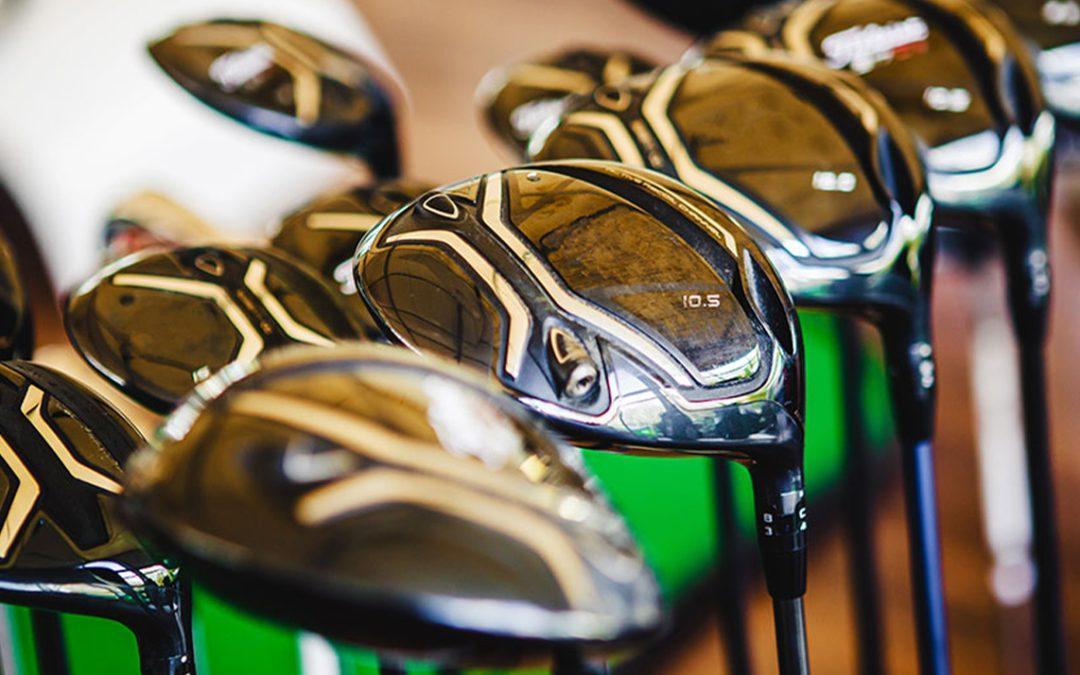
Top eight Essential Golf Equipment for Novice Players
1. Beginner Golf Clubs: The Foundation of Your Game
Choosing the right golf clubs for beginners has the biggest impact on accuracy and enjoyment. Novice golf clubs should prioritize forgiveness, consistency, and a simple setup.Look for a prebuilt beginner set (often 10-14 clubs) or assemble a half set that covers the essentials.
Key features to look for
- Forgiving clubhead design (cavity-back irons)
- Hybrids in place of long irons (easier to launch)
- Graphite shafts for lighter swing weight (especially for slower swing speed)
- Appropriate shaft flex (regular for most beginners; senior/ladies for slower swings)
- Proper club length-get measured or use a standard fitting guide
2. Putter: score-Saving Precision
Putting wins or loses holes. A reliable putter that suits your eye and stroke is essential for new golfers. Mallet putters offer stability and alignment aids; blades are compact and better for more experienced stroke control.
How to choose a beginner putter
- Test putters for alignment lines and toe-hang to match your stroke
- Choose a comfortable grip size-bigger grips dampen wrist action
- Practice with the same putter on the practice green before buying
Strong SEO keywords: beginner putter,best putter for beginners,putter alignment
3. Golf Balls: Pick the Right Ball for Distance and Forgiveness
Golf balls are a surprisingly crucial factor for new players. Most novices should start with inexpensive 2-piece distance balls. They travel farther, are more durable, and help keep scores manageable while you learn swing mechanics and course management.
What to consider
- 2-piece vs multi-layer: 2-piece for distance and durability
- Compression rating: lower compression for slower swing speeds
- Price vs performance: don’t overspend until you find consistency
- Visibility: colored balls (yellow/orange) can be easier to find
4. Golf Bag: Institution, Comfort, and Mobility
Your golf bag carries everything. For beginners, a lightweight stand bag or a small cart bag is typically best. Important features include a comfortable double strap, well-organized pockets, and a dedicated putter well.
Bag types and why they matter
- Stand bag: best for walking golfers-lightweight with pop-out legs
- cart bag: more pockets and storage if you use a cart
- Carry weight: aim for 5-7 kg empty if you’ll walk
- Materials: waterproof pockets and durable zips are useful
5.Golf Shoes: Grip, comfort, and stability
Good golf shoes improve balance, traction, and comfort during a round. Beginners frequently enough underestimate how much stable footing affects contact and consistency.
What to look for in beginner golf shoes
- Spikeless shoes: comfortable and versatile (easier for walking)
- Spiked shoes (soft spikes): better traction in wet conditions
- Waterproofing: helpful in damp climates
- proper fit: buy shoes that fit like your everyday walking shoes
6. Golf Glove: Simple Grip Consistency
A golf glove helps maintain consistent grip pressure, reduces blisters, and improves feel.Most players wear a glove on the non-dominant hand (left hand for right-handed golfers).
Glove tips
- Leather gloves offer the best feel but wear faster
- Synthetic gloves are durable and less expensive
- Replace when seams loosen or grip feels slick
7. Rangefinder or GPS: Smart Yardage and Course Management
Knowing exact yardages removes guesswork. Rangefinders and golf GPS devices help beginners pick the right club and avoid costly mistakes.even a basic laser rangefinder or phone app improves decision-making dramatically.
Laser vs GPS
- Laser rangefinder: precise yardage to a flag or object (good for direct pin shots)
- GPS/Golf watch: gives hole layouts, hazards, and front/middle/back yardages
- Budget picks: smartphone GPS apps are a good starter option
8.Practice Aids & Small Accessories
practice tools magnify the impact of lessons and time at the range. These cost-effective aids accelerate learning and build confidence.
Essential practice aids
- Alignment sticks – teach swing path and setup
- Putting mat or training aid – groove your stroke
- Chipping net or mat – practice short-game control
- Rangefinder/phone app (if not purchased already)
- Tees, ball markers, towel, brush, and glove replacements
When structured around established motor‑learning principles, targeted tools can substantially shorten the learning curve and stabilize stroke mechanics. Emphasize **deliberate practice** with clear performance goals, use **augmented feedback** (video, launch monitors) to close perception-action gaps, and cultivate an **external focus** of attention to enhance automaticity. Structure sessions as short, concentrated blocks (for example, 15-25 minutes) targeting one technical constraint, then shift to randomized repetitions that emphasize accuracy under varying conditions. Use feedback sparingly-provide objective metrics for error detection, then remove them to encourage intrinsic calibration.
| Tool | Primary Benefit | Weekly Focus (min) |
|---|---|---|
| Alignment sticks | Setup & path | 30 |
| Putting mirror | Face & arc repeatability | 40 |
| Launch monitor | Objective ball data | 20 |
| Impact bag | Compression & strike | 15 |
Starter Set: Simple Club Layout for Novice Players
| Club | Purpose | Beginner Recommendation |
|---|---|---|
| Driver | Max distance off the tee | 10.5°-12° loft, large sweet spot |
| Hybrid (3 or 4) | Replace long irons | Easy-launch hybrid for forgiveness |
| Irons (6-9) | Approach shots and control | Cavity-back irons for forgiveness |
| Pitching wedge & Sand wedge | Short game, bunker exits | 50°-56° loft with moderate bounce |
| Putter | Putting and alignment | Mallet with alignment aid (try before buying) |
Benefits, Practical Tips, and Buying Checklist
Benefits of investing in the right beginner gear
- Faster improvement: forgiving clubs let you focus on fundamentals
- Better enjoyment: comfort and confidence keep you playing
- Lower scores sooner: correct equipment reduces unforced errors
Practical shopping tips
- Try before you buy: demo days, ranges, or shop fittings
- Consider used or certified pre-owned gear to save money
- Buy clubs suited to your swing speed (shaft flex matters)
- Start with a compact set-upgrading later is fine as skills develop
- Pair gear buys with a few lessons to maximize benefit
Rapid buying checklist
- Clubs: forgiveness, hybrids, proper shaft flex
- Putter: alignment and comfortable grip
- Balls: 2-piece distance balls
- Bag: lightweight with good strap system
- Shoes: comfortable, right traction for local conditions
- Glove: snug fit, replace when worn
- Rangefinder/GPS: choose one that fits your budget
- Practice aids: alignment sticks and putting trainer
First-Hand Experience: Quick case Study
when I switched from an old, mismatched set to a simple 12-piece beginner kit and a forgiving putter, my ball-striking consistency improved instantly. Loss of distance decreased as hybrids replaced stiff long irons, and my confidence on the greens rose with a putter that matched my eye. Adding a basic laser rangefinder helped with club selection, shaving strokes off my score and making rounds more enjoyable.
Care & Maintenance: Keep Gear Performing
- Clean clubfaces after each round to preserve spin and turf interaction
- Air out gloves and dry shoes-avoid leaving damp gear in a bag
- Re-grip clubs annually or when tackiness fades
- Store clubs in a cool, dry place-avoid extreme heat in trunks
SEO-Friendly Keywords Used Naturally
Golf clubs, beginner golf clubs, best putter for beginners, golf balls for beginners, golf bag for walking, golf shoes, golf glove, rangefinder for golf, golf GPS, practice aids for golf, hybrid clubs, cavity-back irons.
Final Practical Tips for Novice Golfers
- Pair the right equipment with consistent practice and at least a few lessons.
- Focus on comfort and forgiveness over brand-name status when starting out.
- Use lower-cost balls while you learn-save premium balls for better contact consistency.
- Replace single items gradually-improving one area (like putter or shoes) often gives the best ROI.