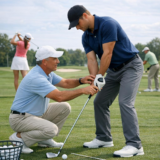
Golf participation continues to expand globally, yet novice players frequently encounter predictable technical and perceptual barriers that limit performance, increase injury risk, and reduce enjoyment. Small, recurrent errors-such as an inconsistent grip, flawed stance and posture, improper alignment, incorrect ball position, compromised swing mechanics, deficient tempo and rhythm, inadequate weight transfer and balance, and suboptimal club selection and distance control-account for a disproportionate share of early-stage frustration and stalled skill progress. Understanding these errors through the lenses of biomechanics, motor learning, and coaching science enables targeted, scalable interventions that accelerate skill acquisition while preserving long-term retention and playability.
This article synthesizes evidence from biomechanical analyses, controlled motor‑learning studies, observational coaching research, and injury‑prevention literature to catalog the eight most common novice errors and to recommend empirically supported corrective strategies. Remedies emphasize principled cueing (favoring external attentional focus where appropriate),progressive constraint‑based practice,augmented feedback (video and goal‑oriented metrics),and simple biomechanical adjustments that prioritize repeatability and safety.Where available,intervention effect sizes,practical drills,and implementation guidance for coaches and self‑directed learners are provided,with attention to individual variability and contextual constraints typical of recreational play.
Grip Mechanics and clinically supported Corrections to Improve Clubface Control and Wrist Health
Precision in the hand-club interface is foundational for consistent clubface orientation and long‑term wrist integrity. Biomechanical analyses using motion capture and pressure mapping identify three controllable variables at the grip: **grip type** (ten‑finger, interlock, overlap), **grip pressure**, and **relative wrist angle** at address and through impact. A neutral hand position-neutral lead‑hand rotation with the trailing hand supporting-optimizes the forearm supination/pronation sequence and reduces compensatory ulnar deviation moments that are associated with lateral wrist tendon load. Clinically informed coaching thus prioritizes reproducible hand placement that minimizes extraneous wrist motion while allowing natural hinge through the backswing and downswing.
Novice golfers commonly adopt maladaptive patterns that compromise both ball flight and wrist health. Typical errors include:
- excessive grip pressure – leads to tension up the forearm,reduced clubhead speed variability control,and increased tendon loading;
- Overly strong or weak grip rotation – produces systematic closed or open clubface presentations at impact;
- Forced early wrist unhinging – increases shear forces across the radiocarpal joint and destabilizes impact timing.
Recognition of these faults via video and pressure‑sensor feedback is supported by applied sports‑medicine studies that correlate kinematic deviations with higher rates of overuse symptoms.
Evidence‑based corrections combine motor learning principles with graded tissue loading to restore efficient mechanics and protect vulnerable structures. Recommended interventions include:
- Pressure awareness training - use a soft ball or grip sensor to train a light but secure hold (coaching cue: “hold like a bird, not a fist”);
- Neutral‑hand re‑setting drill – place hands on the club together at address, remove and re‑set to the neutral cue to ingrain reproducible placement;
- Integrated wrist hinge progressions – slow, rhythmical half‑swings focusing on maintaining wrist axis until transition, then advancing swing speed as control improves.
These strategies are reinforced by EMG and kinematic work showing reduced compensatory muscle co‑contraction and more consistent face angles following targeted grip and wrist drills.
Swift prescription table for on‑range use (practical,short):
| Fault | Biomechanical effect | Immediate correction |
|---|---|---|
| Tight grip | Increased forearm tension | Grip sensor/towel: relax to 20-30% maximal squeeze |
| Strong lead hand | Closed face at impact | Rotate lead hand slightly neutral; check V‑formation of thumbs |
| Early wrist release | Loss of lag,↑ wrist shear | half‑swing hinge drill + impact bag |
Use these prescriptions within progressive practice (low load → higher speed) and consult a physiotherapist if persistent pain or tendon symptoms arise; combining motor retraining with graded tissue adaptation yields the best evidence‑based outcomes for both performance and wrist health.

Stance Stability and Weight Transfer Strategies Informed by Biomechanical Analysis
Stance as a construct is fundamentally a postural configuration-literally the way one stands-so corrective work begins with defining the base of support and the resultant center-of-pressure (COP) behavior during the golf swing (see standard lexical definitions of stance as posture). Biomechanical analyses show that a stable stance reduces unwanted degrees of freedom at the feet and ankles,permitting more repeatable proximal-to-distal sequencing. Stability is not rigidity: an effective posture balances sufficient joint stiffness to resist perturbation with mobility to allow planned rotation about the hips and trunk. Practically, this translates to attention to foot placement, knee flex, and spine angle to create a consistent starting COP distribution and an appropriate moment arm for hip-driven rotation.
Efficient weight transfer is a coordinated shift of ground reaction forces (GRF) and COP from the lead to trail limb and back in a time-locked sequence with the pelvis and thorax. biomechanical studies link smoother lateral-to-medial COP migration and timely vertical GRF peaks to improved ball speed and dispersion metrics. Corrective strategies emphasize simple, measurable adjustments and drills that alter the COP trajectory and timing. Recommended cues and interventions include:
- Base-width modulation: slightly wider than shoulder width for longer clubs to increase mediolateral stability;
- Dynamic pre-swing balance drill: small lateral weight shifts on the address to practice controlled COP migration;
- Step-through or tempoed swing drill: exaggerate downswing weight transfer without losing pelvic rotation;
- Feedback integration: use mirror, video, or inexpensive pressure insoles to visualize COP and timing.
| Stance Variable | Biomechanical Rationale | Practical Adjustment |
|---|---|---|
| Base width | Affects mediolateral stability and COP excursion | Shoulder-width ± 2 in. by club type |
| knee flex | Enables shock absorption and hip rotation torque | Maintain slight flex (15-25°) at address |
| Foot angle | Guides hip turn and prevents early sliding | Lead foot open ~10°, trail foot neutral |
Implementation should be data-informed and progressive: baseline assessment with simple tools (pressure mats, smartphone video, or validated wearables) allows quantification of COP path, peak vertical GRF, and timing relative to clubhead acceleration. Coaches should prescribe short, focused practice blocks that emphasize one variable at a time (e.g., base width for two weeks, then tempo for two weeks) and use objective metrics to confirm transfer to ball flight. Key metrics to track include:
- COP excursion and timing
- Peak vertical GRF symmetry
- Pelvic rotation at impact
- Clubhead speed consistency
Applying these biomechanical principles-stabilize the base, choreograph COP migration, and measure change-yields reproducible improvements in shot consistency and power while minimizing compensatory movement patterns that commonly afflict novice golfers.
Alignment and Visual Targeting Protocols Derived from Motor Learning Research
Contemporary motor learning literature reframes aiming as a sensorimotor calibration problem rather than a purely biomechanical one: consistent ball flight emerges when perceptual anchors and motor patterns co-adapt. Empirical findings on gaze behavior (e.g., the “quiet eye”) and external-focus advantages indicate that novices benefit more from stable visual targets and concise external cues than from detailed internal mechanical instructions. Accordingly, the emphasis should shift from “fixing” body geometry to designing perceptual-motor tasks that constrain the learner toward the desired outcome. Perceptual anchoring (a fixed distal target) and external focus instructions produce faster error reduction and superior retention in novice populations.
Translate these principles into a compact pre-shot targeting protocol: first select a precise landing point (a 10-30 cm marker on turf), then choose an intermediate clubface aim-point (e.g., leading edge or a notch on the clubhead) and finally orient the feet to a parallel alignment with that visual line. Implement a consistent gaze sequence-brief fixation on the landing point, transition to the clubface aim-point, then a final quiet-eye fixation (300-600 ms) just prior to initiation. Coaches should deliver cues framed externally (e.g., “face to the dot”, “finish to the flag”) and pair them with a physically salient marker so that visual attention and motor output are co-located during learning.
Practical drills and feedback regimes should leverage reduced and faded feedback, variability of practice, and task-representative constraints. Use simple tools-alignment sticks, a yardstick or spray-dot targets, and mirror/video-for augmented feedback but fade these aids as the learner’s error structure stabilizes. The table below summarizes exemplar drills and their targeted motor-learning mechanism:
| Drill | Primary Visual Target | Motor-learning mechanism |
|---|---|---|
| Dot-to-Dot Pitch | 10 cm turf dot | External focus; reduced degrees of freedom |
| Alignment-Stick Address | parallel stick line | Proprioceptive calibration; contextual interference |
| Quiet-Eye Timing | Landing marker then clubface | Gaze stabilization; improved movement initiation |
Coaching progression should emphasize measurable transfer: begin with high-frequency, salient visual cues and blocked practice to reduce early variability, then advance to randomized target tasks and reduced feedback schedules to enhance generalization.Recommended verbal cues remain short and outcome-directed (e.g., “to the dot”, “through the stick”). Avoid excessive alignment corrections in a single session-novices adapt slowly to new reference frames-so adopt a phased approach (assist → fade → test) and record objective metrics (dispersion, mean error, gaze duration) to judge readiness for increased task complexity.
Posture Optimization and Spinal Safety Techniques Based on Kinematic Evidence
Contemporary kinematic analyses of the golf swing emphasize preservation of a neutral lumbar curve and maximal contribution from thoracic rotation to generate clubhead speed while minimizing injurious shear at the lumbopelvic junction.Maintaining a slight posterior-to-neutral pelvic tilt and controlled knee flexion promotes a stable base for proximal-to-distal sequencing, whereas excessive lumbar flexion/extension during rotation increases compressive and shear forces linked to low-back symptoms. Accordingly, corrective strategies should prioritize segmental alignment and coordinated rotation rather than simply increasing range of motion in isolation; this focus aligns with biomechanics literature that attributes efficient energy transfer to controlled intersegmental motion.
translate kinematic principles into reproducible motor patterns with concise, task-specific cues and safety techniques. Key practical cues include:
- hip hinge: initiate from the hips so the lumbar curve remains neutral while the torso tilts forward.
- Micro knee flexion: maintain ~10-20° flexion to absorb forces and enable pelvic rotation.
- Cervical neutrality: keep the head aligned with the spine to avoid compensatory lumbar motion.
- Abdominal bracing with diaphragmatic breathing: stabilize the trunk during loading and rotation.
- Thoracic mobility prep: dynamic rotations to offload the lumbar spine and facilitate segmental dissociation.
These cues are evidence-informed and intended to reduce harmful lumbar loading while preserving efficient swing mechanics.
Structured drills and progressive training reinforce safer kinematics. The following table summarizes compact drill prescriptions suitable for novice progression, with clear kinematic targets and simple dosage guidance (session-based repetition):
| Drill | Kinematic Target | Dosage |
|---|---|---|
| Hinge-with-club | Neutral lumbar, hip-driven tilt | 3×10 slow reps |
| Seated thoracic rotations | Increase upper spine rotation, reduce lumbar twist | 2×12 each side |
| Resisted band rotation | Controlled pelvis dissociation | 3×8 moderate resistance |
| Slow full-swing in mirror | Segmental sequencing and posture retention | 5-8 swings |
Integrate posture optimization into practice with objective monitoring and conservative load progression. Use simple metrics-movement quality (video feedback), session RPE, and pain localization-to decide advancement; persistent localized lumbar pain, radicular features, or worsening function warrant early referral to a clinician. Equipment and fit (club length, grip size) should be adjusted to support favorable posture. Emphasize that progressive strengthening of hip,thoracic,and core systems combined with consistent motor practice produces the best evidence-based outcomes for both performance betterment and spinal safety.
Swing Path Assessment and Motor Relearning Interventions for Consistent Ball Striking
Accurate diagnosis begins with systematic, objective assessment rather than subjective impressions. Combine high-frame-rate 2-D video (face-on and down-the-line), portable inertial measurement units (IMUs) and launch monitor outputs to quantify **club path**, **face-to-path relationship**, **attack angle**, and segmental sequencing.Video provides ecological validity for on-course movement, IMUs capture temporal sequencing (e.g., hip-shoulder separation and downswing tempo), and launch data validates the mechanical consequence at ball contact. For novice golfers, a tiered assessment-screen (video + simple swing gates), quantify (IMU/launch monitor), and profile (3-D or expert analysis if available)-yields reliable targets for intervention while minimizing unnecessary instrumentation.
Motor relearning interventions should be grounded in contemporary motor control theory. Prioritize a **constraint-led approach** (manipulate task, environmental, and performer constraints), encourage an **external focus** of attention, and structure practice using variability and appropriate feedback schedules. Early training benefits from augmented feedback (e.g., immediate video playback or brief KP cues) to establish a desired pattern; as skill consolidates, shift toward reduced feedback frequency, increased variability, and **randomized practice** to promote retention and transfer. These strategies reduce conscious control and promote automaticity, leading to more consistent ball striking under changing conditions.
translate assessment findings into graded, task-specific drills that reshape path geometry and timing. Effective, evidence-aligned drills include:
- Gate Drill – narrow tee gates at ball and behind to enforce an inside-to-square impact corridor.
- Impact Bag Progression – short swings into a bag to feel centered impact and square face at contact.
- Path Mirror or Plane Board – visual reference for swing arc and hand path in real time.
- Variable Targeting – alternate shot shapes and targets to promote adaptable motor solutions.
Begin with reduced amplitude and slow tempo to encode kinematics,then increase speed and variability while intermittently removing external feedback to strengthen internalized control.
| Error | Kinematic signature | Focused intervention |
|---|---|---|
| outside-in path (slice) | Early clubface open; steep downswing | Gate drill + tempo reduction |
| Inside-too-far path (hook) | Excessive early release; closed face | Impact bag + plane board |
| Variable inconsistency | Irregular sequencing; tempo drift | IMU feedback + randomized practice |
Clinical application: prescribe short, frequent sessions (e.g., 3×/week with 200-400 quality, variable repetitions total) emphasizing progression from high-feedback/low-speed to low-feedback/high-speed practice. Monitor for fatigue and pain; prioritizing movement quality over volume decreases injury risk and promotes durable transfer to on-course performance.
Tempo Regulation and Rhythm Training Methods grounded in Performance Science
Performance science frames temporal control as a core constraint on skilled golf behavior: accurate shot execution emerges from coordinated spatiotemporal patterns rather than isolated kinematic positions.Empirical motor-control studies indicate that stable inter-segmental timing and appropriate movement variability are stronger predictors of consistency than maximal joint excursions.Temporal regularity reduces cognitive load during decision-making and facilitates automatization of the swing, while controlled variability supports adaptability to changing lie, wind and shot-goal conditions.
Applied interventions emphasize sensorimotor coupling and progressive entrainment.Evidence-backed modalities include auditory pacing (metronome/beats), breath-synchronized initiation, and visuomotor rhythm cues. Core drills that translate theory into practice are:
- Metronome Entrainment: synchronize takeaway and transition phases to a steady beat to stabilize swing period.
- Short-to-long Tempo Ladder: alternate truncated swings and full swings at matched rhythm to transfer timing across amplitudes.
- Breath-Triggered Initiation: start the downswing at exhalation peak to harness cardiovagal timing for reduced variability.
- External Focus Beat: practice with a rhythmic external cue (ball sound, coach claps) to promote automaticity.
Each drill targets auditory-motor integration and reduces attentional demands documented to degrade when novices adopt conscious control strategies.
Design should follow motor-learning principles: distribute practice across variable contexts, incorporate faded augmented feedback, and use self-controlled practice opportunities to enhance retention. Constraint-led manipulations – for example, altering tempo demands, club length or stance width – create representative task dynamics that promote robust timing solutions. Use brief, frequent blocks (e.g., 6-10 minutes focused on tempo per session) and progress complexity by increasing environmental variability (wind simulation, uneven lies) once baseline temporal consistency improves. Objective feedback (audio recordings, wearable inertial measures) paired with succinct KP/ KR (knowledge of performance/outcome) is recommended onyl intermittently to avoid dependency.
A concise microcycle template supports translation to coaching practice:
| Day | Focus | Tempo Target |
|---|---|---|
| Mon | Metronome entrainment (short swings) | 60-70 bpm |
| Wed | Transfer to full swing; breath timing | 55-65 bpm |
| Fri | Variable practice (lies, wind) | Target variability ±5 bpm |
Monitor progress with simple metrics: mean swing period, coefficient of variation, and subjective tempo confidence (0-10). Combine these measures to judge progression and to decide when to increase contextual complexity or reduce explicit pacing aids.
Ball Position and Short Game Drill prescriptions with Evidence Based Progressions to Enhance Accuracy and Scoring
Fundamental ball-location rules should be treated as constraints that shape swing geometry and impact conditions. For short-game shots (chips and pitches) empirical coaching consensus and kinematic analyses indicate a slightly rearward ball position relative to stance center promotes a downward blade-to-ball compression and cleaner turf interaction; for full irons the ball progresses toward center-to-slightly-forward, and for woods it is distinctly forward. These placement adjustments alter attack angle and club-face exposure at impact,which in turn affect launch angle,spin,and dispersion-key determinants of accuracy and scoring performance. Maintaining a consistent reference (e.g., groove on the shoe, club shaft alignment) reduces inter-shot variability and the compensatory movements that increase injury risk.
Prescriptive, evidence-aligned progressions emphasize motor-learning principles: start blocked, progress to variable, then impose contextual interference to enhance transfer. A practical progression is:
- Setup stabilization: mirror/marker feedback to groove ball position and posture (10-15 minutes).
- Impact-feel drills: impact bag and gate drills to internalize correct compression (3 sets × 8-12 reps).
- Distance laddering: half→¾→full swings to specific landing zones, alternating clubs to vary task demand.
- Pressure and transfer: short-course scenarios or scoring games under mild time/score constraints to replicate competitive decision-making.
Objective criteria at each stage (e.g.,8/10 strikes within target zone) provide measurable progression and align with evidence that criterion-based advancement improves retention and on-course transfer.
targeted short-game drills should prioritize controllable contact and repeatable launch conditions. Recommended drills grounded in experimental and applied literature include:
- Landing-spot ladder: place sequential targets at incremented distances to train consistent carry by varying swing length rather than club selection.
- Two-club drill: alternate between a wedge and a loft-similar club to promote feel for trajectory vs. distance control.
- Clock-face distance control: use concentric rings around the hole and assign probabilistic scoring to encourage risk-reward decision-making.
These drills exploit variability of practice to enhance generalized accuracy while minimizing overreliance on a single motor plan.
| Level | Primary Objective | Representative Drill | Success Criterion |
|---|---|---|---|
| Foundational | Consistent ball-posture relation | Mirror setup + impact bag | 90% correct set-ups in 10 trials |
| Controlled practice | Repeatable contact & carry | Landing-spot ladder | 8/10 within ±2m of target |
| Variable/Transfer | On-course accuracy under pressure | Short-course scoring game | Stable score across 3 rounds |
Implementation note: schedule multiple short sessions per week (e.g., 15-20 minutes) rather than infrequent long blocks; the literature favors distributed practice for durable skill gains and reduced overuse stress.
Q&A
Note on sources: the web search results provided with your request did not return material related to golf or motor-learning literature. The Q&A below is thus grounded in widely accepted principles from motor learning, biomechanics, and contemporary golf-instruction practice (e.g., constrained action hypothesis / external-focus benefits, variability of practice, video/augmented feedback, progressive drill design) rather than being a point-by-point synthesis of the supplied search results.
Q1. What are the “Top Eight” novice-golfer errors addressed in this review?
Answer:
The eight errors addressed are: (1) incorrect grip, (2) poor stance/posture, (3) misalignment/aiming errors, (4) incorrect ball position, (5) faulty swing mechanics (including casting and over-rotation), (6) inadequate weight transfer and balance, (7) inconsistent tempo and rhythm, and (8) early head/eye lift (premature “look up”) and poor follow-through. These categories capture the most common technical and motor-control deficits reported by instructors and evidenced in performance analyses of novice populations.
Q2. why focus on these eight errors from an evidence-based viewpoint?
answer:
these faults are highly prevalent among beginners and each directly degrades clubface control, strike quality, distance, and consistency. From a motor-learning perspective, they are amenable to structured intervention using empirically supported methods (e.g., external-focus cues, variable practice, augmented feedback).addressing them improves both short-term performance and long-term learning while increasing enjoyment and reducing frustration-key drivers of continued participation.
Q3. What is the general evidence-based framework for remediation?
Answer:
A pragmatic, evidence-based remediation framework combines: (a) assessment and simplification of the primary error, (b) use of external-focus and outcome-oriented cues rather than detailed internal mechanics, (c) progressive, task-relevant drills that constrain or guide problematic degrees of freedom, (d) variable and randomized practice to promote transfer, (e) appropriately timed feedback (augmented, video, or biofeedback) with fading frequency, and (f) objective measurement of performance (dispersion, clubface angle, ball speed, launch conditions) to track progress.Q4. Error 1 – Incorrect grip: definition and evidence-based remedies?
Answer:
Definition: A grip that is too weak/strong, inconsistent between hands, or tense-leading to poor face control, excessive open/closed face at impact, or grip-induced tension.
Remedies:
– Start with a neutral grip template (V’s to the right shoulder for a right-hander), using a physical cue (e.g., index-finger pad contact, three-finger hold on lead hand) but accompany with an external target cue (e.g., ”send the clubhead to the target”).
– Use progressive constraints: place a grip pressure meter or use a towel under the armpits to reduce tension; perform short, slow swings focusing on consistent face alignment at address and impact.
- Augmented feedback: video of grip from address plus immediate frontal/over-the-shoulder images; use mirror drills to verify positioning.
– Practice dosage: 5-10 minutes at start of session, then integrated into full-swing practice; check grip each session until self-correcting.
Progress markers: repeatable face-square at address, decreased lateral dispersion, subjective decrease in hand/wrist tension.Q5. Error 2 – Poor stance/posture: definition and corrective strategies?
Answer:
definition: excessive spine bend, slumped shoulders, too straight or overly flexed knees, or excessive forward/backward weight bias at set-up that impede rotation and consistent strike.Remedies:
– Use objective set-up checklist: neutral spine tilt (approx. 20-30° at hips), light knee flex, balanced weight distribution (mid-foot), relaxed arms hanging from shoulders.
- Drills: “stick-and-hinge” drill (place an alignment rod along spine to feel tilt), wall-tilt drill (back and buttocks near wall to feel spine angle), and slow-motion swings maintaining spine angle.
– Motor-learning principle: use external cues (e.g., ”hinge from hips to load the back leg”) and immediate video-feedback to reinforce proprioceptive learning.
– Practice dosage: incorporate posture checks during warm-up and 10-20% of practice reps devoted to posture-constrained swings for 2-3 weeks.
Progress markers: improved club contact, more consistent ball flight height, ability to rotate without compensatory head movement.
Q6. Error 3 – Misalignment and aiming errors: how to correct reliably?
Answer:
Definition: Improper aim of feet, hips, shoulders, and clubface causing consistent directional misses.
Remedies:
– measurement-first: use alignment sticks or clubs to check footline, hip line, shoulder line, and clubface separately.
– External-focus cues: “aim clubface to the left of the target by X inches” and then align body to that line. Teach clubface as primary; body alignment follows.
– Drill: “clubface-then-body” routine-set the clubface to the target; then align feet/hips/shoulders parallel to a second stick placed slightly left.
– Variable practice: practice different target distances and angles to build perceptual alignment skills.Progress markers: reduced systematic directional bias, narrower lateral dispersion, faster setup routine.
Q7. Error 4 – incorrect ball position: specifics and corrective drills?
Answer:
Definition: Ball too far forward/back relative to stance leading to thin/top shots, hooks/slices, or inconsistent trajectory control.
Remedies:
– Provide a simple rule-of-thumb: short irons-center to slightly forward of center; mid-irons-center; long irons/woods and driver-progressively more forward (driver just inside left heel for right-handers).
– Use objective checks: place a marker under the instep or toe line to standardize ball position; use repeated randomized trials to test effects.
– Drill: ”step-and-hit” where player steps to set-up from an address index spot to build correct ball-position consistency.
– Evidence-based practice: vary ball position across sessions to learn how slight changes affect contact and trajectory.
Progress markers: consistent strike height (not thin or topped), predictable trajectories matching club selection.
Q8. Error 5 – Faulty swing mechanics (casting,over-rotation,early release): remediation?
Answer:
Definition: Specific kinematic faults such as casting (premature release of the wrists),over-rotation of the upper body,or excessive lateral movement that reduces energy transfer and increases variability.
Remedies:
– Diagnose via video with slow-motion to identify temporal sequence errors (e.g., loss of lag, early extension).
– Use constraint-led drills: for casting, use a towel under the lead arm to encourage connection; for lag, practice “pump” drills where wrists hinge and retain angle until downswing initiation.
– Use feel-based/external cues: “turn the hips to send the club” rather than “release wrists,” which supports constrained-action benefits.
– Progressive overload: start with half-swings focusing on kinematic sequencing, then integrate into three-quarter and full swings with feedback.
Progress markers: increased ball speed (if relevant), improved smash factor, reduced dispersion and more consistent low-point control.
Q9. Error 6 – Inadequate weight transfer and balance: how to improve?
Answer:
Definition: Failure to shift weight adequately during backswing and downswing (e.g., staying on heels or early weight shift to front), leading to poor compression and directional error.
Remedies:
– Use balance/weight-shift drills: step-and-swing (step into the ball to reinforce forward weight shift), medicine-ball rotational throws to train hip-torso sequencing, and heel/toe pressure awareness (pressure mat or force-plate if available).
– External cues: “push off the back foot toward the target” or “fire the left side” rather than internal cues about specific muscles.
- Augmented feedback: use slow-motion video and wearable pressure sensors or simple toe/heel awareness boards.
– Practice structure: integrate balance drills into warm-up and 10-15% of practice reps until automatic.
Progress markers: more consistent divots (for irons), improved compression, increased carry distance with maintained dispersion.
Q10. Error 7 - Inconsistent tempo and rhythm: evidence-based correction?
Answer:
Definition: Variable swing speed and rhythm leading to timing errors and inconsistent contact.
Remedies:
– Teach a target tempo or ratio (e.g., backswing : downswing ≈ 3:1 or another individualized ratio); use metronome apps to establish tempo.
– Use rhythmic/paced drills: swing to a metronome, count rhythm aloud, and practice slow-to-fast progressions.
– External-focus cue: “sweep the turf in time with the beat” or “smooth acceleration to the ball.”
– Variability: practice swings at different tempos to produce robust timing control; randomized tempo practice improves adaptability.
Progress markers: reduced timing errors, more consistent impact conditions across clubs, and improved repeatable delivery.
Q11. Error 8 - Early head/eye lift and poor follow-through: causes and remedies?
answer:
Definition: Lifting the head or opening eyes to watch the ball too early, or stopping through the shot (poor extension/follow-through), resulting in mishits and weak contact.
remedies:
– Use the “finish through” cue and a follow-through target (e.g., focus on a point on the turf past the ball and maintain gaze until after impact).
– Drills: coin/tees under chin or towel under chin to discourage head lift; “finish hold” drill to maintain balance in a full follow-through for 2-3 seconds.
– Augmented feedback: video playback to reveal premature head movement and check finish position.
– Practice integration: gradually shorten the feedback window; practice with and without visual targets to encourage proprioceptive control.
Progress markers: sustained head position through impact,stronger follow-through position,and improved strike quality.
Q12. How should a novice structure practice to maximize learning and retention?
Answer:
– Begin sessions with a 5-10 minute technical warm-up focusing on one primary corrective target (micro-goal).
– Use distributed practice: shorter, frequent sessions (e.g., 3-5× per week, 20-45 minutes) generally produce better retention for novices than long infrequent sessions.
– Follow motor-learning principles: start with more augmented feedback and blocked practice for initial acquisition, then transition to faded feedback and variable/random practice to promote transfer and retention.
– Include deliberate practice elements: specific, measurable goals for each block (e.g., reduce lateral dispersion by X meters, achieve consistent strike zone on clubface).
– Integrate fun/engagement elements to sustain motivation (short games, target practice) because adherence enhances long-term skill acquisition.
Q13.What objective measures should instructors and learners monitor?
Answer:
– Ball dispersion (lateral and longitudinal), impact location on the face, carry distance, smash factor/ball speed, clubhead speed, and launch conditions (spin, loft) where possible.- Kinematic measures as available: clubface angle at impact, swing tempo ratio, weight-shift metrics, and posture/spine angle.
– Subjective but significant: perceived effort/tension, confidence, and enjoyment-these moderate practice adherence.
Q14. When should a beginner seek professional coaching or biomechanical assessment?
Answer:
– Seek a qualified coach if faults persist beyond several weeks of structured practice, if there is pain or injury, or when planning a transition to a more advanced training load.
– Consider biomechanical or motion-analysis assessment if measurable performance plateaus despite consistent, evidence-based practice-this can reveal subtle kinematic constraints or equipment mismatches.
Q15.How do equipment and fitting intersect with technique remediation?
Answer:
– Ill-fitting clubs (length, lie angle, shaft flex, grip size) can mimic or exacerbate technical faults. Basic fitting (lie, length, grip size) is recommended early to avoid developing compensations.
– Don’t over-rely on equipment to mask technical faults; first correct fundamental set-up and basic swing patterns, then optimize equipment for individual biomechanics.
Q16. Practical summary: top-level checklist for coaches and learners?
Answer:
– Assess baseline with simple metrics (directional bias, dispersion, contact location).
– Prioritize one primary error per practice block.
- Use external-focus cues,progressive constraints,and variable practice.
– Provide timely augmented feedback but fade it as performance stabilizes.
– Measure progress objectively and adjust drills based on data.
– Maintain engagement-learning is accelerated when practice is deliberate and enjoyable.
if you would like, I can:
– Convert each error into a one-page clinic handout with specific drills and a 4-week practice plan; or
– Provide short scripts of external-focus cues and progressive feedback schedules tailored for a particular novice profile (e.g., older beginner, junior player, adult amateur).
In sum, this review has cataloged the principal technical and behavioural deficits that recur among novice golfers-deficient grip, unstable stance, misalignment, inconsistent swing mechanics, inappropriate tempo, limited transfer of learning, inadequate feedback use, and underdeveloped practice structure-and has synthesised contemporary, evidence-based corrective strategies to address them. Drawing on principles from motor learning, biomechanics, and coaching science, the remedies emphasise progressive task simplification, externally focused cues, variable and distributed practice schedules, timely augmented feedback (including video and objective launch data where available), and staged reintegration of complexity to promote robust skill acquisition and transfer to on-course performance.For practitioners and learners, the principal implications are clear: diagnosis should precede prescription; interventions should be individualized, measurable, and oriented toward retention and transfer rather than short‑term error correction; and psychological and motivational factors-enjoyment, self-efficacy, and realistic goal setting-must be integrated to sustain practice adherence. Coaches should combine low-cost observational assessment with selective technology to monitor change, and prioritize drills that embody the desired task constraints rather than relying solely on repetitive, decontextualised repetitions.
although the body of applied research on novice golf instruction has grown, importent gaps remain-notably long‑term randomized trials, ecologically valid studies of practice structure, and investigations of how individual differences (age, prior motor experience, and physical capacity) moderate optimal interventions. Future work that bridges lab‑based biomechanical insight with applied coaching contexts will strengthen recommendations and improve both performance and enjoyment for beginning golfers. Until such evidence is more complete, adopting an evidence‑informed, learner‑centred approach offers the best pathway for accelerating skill development and enhancing the beginner’s experience on the course.

Top Eight Novice Golfer Errors and Evidence-Based Remedies
1. grip: Too Tight, Too Weak, or Inconsistent
Keywords: golf grip, neutral grip, grip pressure, clubface control
why it matters: the grip is the only contact point between the golfer and the club-errors here directly affect clubface orientation, shot shape, and consistency. Research in biomechanics and coaching consensus shows consistent grip and moderate grip pressure improve accuracy and reduce unwanted spin.
Common symptoms
- Ball slices or hooks unpredictably.
- Hands feel cramped, wrists collapse on impact.
- Inconsistent ball flight and distance.
Evidence-based remedies & drills
- Adopt a neutral grip: V’s formed by thumb/index point to your trailing shoulder (right shoulder for right-handers).
- Grip pressure drill: Hold club with a 1-10 scale pressure-aim for 4-5. Practice hitting 10 balls while maintaining the same pressure scale.
- Split-grip drill: place left hand at normal position and right hand a few inches down the shaft to train forearm rotation and release-10 swings per set.
- Use a grip trainer or alignment strap for 5-10 minutes before practice to build muscle memory.
2. Stance: Too Narrow or Too Wide
Keywords: golf stance, balance, setup width, base of support
Why it matters: Stance affects balance, weight transfer, and the ability to rotate the hips and shoulders.A poor stance increases the chance of topping, fat shots, and compensatory moves that lead to inconsistent contact and injury.
Common symptoms
- Topping the ball or hitting behind the ball (fat shots).
- Loss of balance during follow-thru.
Evidence-based remedies & drills
- Check base width: Rough rule-narrow for short irons (feet close to shoulder width), wider for drives (slightly wider than shoulders).
- Balance drill: Stand on an even surface and make slow swings, pausing at impact-check that weight shifts from ~60% back to ~40% front through the swing.
- Box-foot drill: Place an alignment stick across heels for driver and across toes for wedges to feel width differences and their effect on movement.
3. Alignment: Aiming Errors and Poor Targeting
Keywords: golf alignment, aim, target line, pre-shot routine
Why it matters: Misalignment causes systematic misses. Even a small aiming error (a few degrees) becomes a large miss over distance-poor alignment frequently enough masquerades as swing problems.
Common symptoms
- Consistent misses to one side (often perceived as “slice” or “hook”).
- Confusion over shot selection and club choice.
Evidence-based remedies & drills
- Three-stick method: Place one stick on the target line, one along toe line, and one at the clubface-repeat pre-shot routine until alignment feels automatic.
- pre-shot check: Create a consistent routine that includes a final visual alignment check,which reduces random errors and improves focus.
- Video or mirror check: Use a phone camera or mirror to verify shoulder/foot/clubface alignment during setup.
4.Posture: Slumped or Standing Too Upright
Keywords: golf posture, athletic stance, back angle, spine tilt
Why it matters: Good posture allows efficient rotation and reduces lower-back stress. Poor posture forces compensations in the swing, reducing power and increasing injury risk.
Common symptoms
- Early extension (standing up during the swing).
- Stuck or blocked hips; loss of distance.
Evidence-based remedies & drills
- Athletic posture routine: Slight knee flex, hinge at hips with spine angle maintained, chest over ball. Practice by bending over and letting arms hang-then take the grip without losing spine angle.
- Wall hinge drill: Stand a few inches from a wall-hinge at the hips until your rear nearly touches the wall to feel correct spine angle.
- Mobility work: Incorporate thoracic rotation and hip mobility exercises (e.g., seated twists, hip flexor stretches) 10-15 minutes, 3x/week-evidence shows mobility aids swing kinematics and reduces injury risk.
5. Swing Path: Over-the-Top, Inside-Out, or Sliced Path
Keywords: swing path, clubface control, slice correction, swing plane
Why it matters: Swing path and clubface relationship determine ball flight.Novices frequently swing ‘over the top’ or leave the club inside resulting in slices, hooks, or weak fades.
Common symptoms
- Slices (outside-to-in) or strong hooks (inside-to-out) inconsistent in shape.
- Thin or fat contact due to incorrect attack angle.
Evidence-based remedies & drills
- Path gate drill: Place two alignment sticks on either side of the target line creating a “gate” the club must pass through-ensures a repeatable path.
- Plane board mirrors: Use a towel or plane board to feel a shallow takeaway and on-plane transition-repetition changes motor patterns.
- Slow motion swings with impact bag: Focus on clubface square at impact and smooth release-studies on motor learning show slow deliberate practice improves neural encoding of correct movement.
6. Tempo: Rushing the Backswing or Rapid Downswing
Keywords: golf tempo, rhythm, smooth swing, cadence
Why it matters: Optimal tempo increases consistency, timing, and power production. A hurried swing creates poor sequencing and mis-timed impact-evidence from biomechanics and coaching interventions highlights tempo training’s positive effect on shot repeatability.
Common symptoms
- inconsistent contact and distance control.
- Over-swinging with loss of rhythm.
Evidence-based remedies & drills
- Metronome drill: Use a metronome app set to a consistent beat (e.g., 60-70 BPM) to sync backswing (two beats) and downswing (one beat). Studies on rhythmic cueing show big gains in motor consistency.
- Count swing: “One…two…Smooooth” rhythm-practice 30 swings per session focusing on even tempo.
- Half-swing tempo work: Hit 50% swings while keeping tempo-then gradually increase length while maintaining cadence.
7. Ball Position: Too Far Forward or Back
Keywords: ball position, impact position, driver setup, iron setup
Why it matters: Ball position influences the attack angle and contact point.Incorrect ball position causes thin shots, fat shots, and inconsistent launch angles.
Common symptoms
- Driver misses high/low; irons topped or fat.
- Poor trajectory control (too low or too high).
Evidence-based remedies & drills
- General rules: Driver-ball off inside of front heel; mid-irons-centered or slightly forward of center; wedges-centered or slightly back. Use clubs’ length and stance to verify.
- Target-line dots: Place tees or dots on ground showing center, forward, and back positions-hit sets of five switching ball positions to feel differences.
- Impact tape or spray: use impact spray to see contact location and adjust ball position until consistent center strikes are achieved.
8. Short Game: Poor Technique Around the Green (Chipping & Putting)
Keywords: short game, chipping, pitching, putting, greenside technique
Why it matters: 60-70% of shots in a round occur within 100 yards-improving the short game yields the biggest score reduction. Evidence from performance analyses shows strong short-game skills lower scores more quickly than length improvements alone.
Common symptoms
- Three-putts, inconsistent chip trajectories, or excessive run-on after pitch shots.
- Anxiety around the green due to lack of reliable technique.
Evidence-based remedies & drills
- Putting gate and circle drill: Use tees to create a small gate to improve stroke path; use a 3-foot circle around the hole and practice making 50 consecutive putts from inside to build confidence.
- Chipping ladder: Place targets at 5, 10, 15, and 20 yards-chip to each target using bump-and-run and higher pitch shots to develop distance control.
- Hands-forward drill: For chips, play ball back in your stance and keep hands ahead of the ball at impact to ensure clean contact.
Quick practice plan (3-day microcycle):
- Day 1 – Fundamentals: 30 min grip & alignment drills; 30 min short-game ladder.
- Day 2 – Mechanics: 30 min stance/posture drills; 30 min swing path/metronome work.
- Day 3 – Integration: 60 min on-course simulation (9 holes or target-based practice),focusing on pre-shot routine and tempo.
Benefits & Practical Tips
- Score gains: Fixing one or two of these fundamentals typically reduces stroke variance and can shave strokes quickly-short game + alignment changes are especially high yield.
- Injury prevention: Improved posture, grip pressure, and mobility reduce lower-back and wrist stress common in novice players.
- Practice smart: Short, focused sessions with a single objective (e.g., “tempo only”) outperform marathon unfocused sessions.
Simple Reference Table: Error → Fast Fix → Drill
| Error | Fast Fix | Drill (2-5 min) |
|---|---|---|
| Grip | Neutral grip,4/10 pressure | Grip pressure swings |
| Stance | Adjust base width to club | Box-foot balance |
| Alignment | Three-stick aim | Pre-shot alignment checks |
| Posture | Hip hinge,slight knee flex | Wall hinge |
| Swing Path | On-plane takeaway | Gate & impact bag |
| Tempo | Even cadence | Metronome |
| Ball Position | Follow club rules | Target-line dots |
| Short Game | Hands forward for chips | Chipping ladder |
Case Study: From Slice to Controlled Fade (Practical Example)
Keywords: fix slice,swing correction,practice case study
Scenario: A novice consistently sliced tee shots 40-60 yards right. after a simple diagnostic routine-checking grip, alignment, and swing path-the following plan reduced slices and improved distance:
- Grip: Moved from weak to neutral (two V’s between thumbs pointing to right shoulder).
- Alignment: Implemented three-stick method to aim properly.
- Swing path: Performed gate drill and slow-motion swings for 2 weeks.
- Tempo: Used metronome 3x per week for 15 minutes strengthening rhythm.
Result (4 weeks): More centered contact, reduced slice curvature, gained controllable fade-score on par-4s improved as fairway hits increased.
Tracking Progress: Metrics That Matter
- Fairways hit and GIR (greens in regulation) – show setup and alignment changes.
- Distance dispersion (left/right spread) - reflects swing path and tempo stability.
- Number of 3-putts – short-game improvements are measurable here.
- Contact location on clubface (impact tape) - immediate feedback for ball position/posture changes.
Final practical tips
- One fix at a time: Attack the highest-impact error first (usually alignment or short game).
- Use video: A 30-second phone clip frequently clarifies what feels vs. what is happening.
- Consistency over intensity: Short, daily reps create durable motor learning.
- Seek a certified instructor when pain or persistent technical issues arise.