
This article presents a systematic,evidence-informed framework for advancing golf performance by integrating refined swing mechanics,data-driven driving strategies,and empirically supported putting methods. Drawing on principles from biomechanics,motor learning,and shot-making psychology,the discussion emphasizes how precise kinematic sequencing,force transfer,and tempo regulation underpin consistent ball-striking,while club-selection,launch-angle optimization,and risk-reward course management enhance long-tee efficiency. For short game proficiency, the focus shifts to perceptual calibration, green-reading models, and repeatable stroke mechanics that reduce variability under pressure. Each section combines diagnostic indicators, measurable performance targets, and targeted practice drills designed to produce durable improvements in consistency and scoring, with guidance on using objective feedback (video, launch monitors, and statistical tracking) to individualize interventions and monitor progress.
Optimizing Kinematic Sequencing and Lower body Drive to increase Swing Efficiency and Power
Build a reliable kinematic sequence by first attending to the physical foundations that enable an efficient swing: a well-balanced stance, deliberate weight transfer, and precisely timed hip rotation. Start with consistent setup cues – adopt a shoulder-width base for driver shots and a slightly narrower stance for shorter irons, maintain roughly 10-15° of knee flex, and keep the spine angled about 10-15° away from the target to protect the attack angle. Biomechanically, effective force generation follows a proximal‑to‑distal progression: ground reaction → lower limbs → hips → torso → arms → club.Practically, this requires the downswing to begin with a subtle lateral motion of the trail hip toward the target (a controlled lateral bump of approximately 1-2 inches), quickly followed by decisive lead‑hip rotation; that sequence produces the hip‑shoulder separation (the X‑factor) many players find effective – typically in the 20-45° range depending on mobility. At impact, aim to have most weight shifted onto the lead foot (roughly 60-80% of body weight) with a modest shaft lean of about 4-6° to achieve solid compression. The timing of the transition matters: lower‑body initiation should lead upper‑body turn to boost clubhead speed while keeping the face under control and launch conditions repeatable.
Advance technical gains through progressive, measurable practice that suits novices through elite amateurs. Use the drills and benchmarks below to train sequencing, mobility, and force production:
- Step Drill – at address, step the lead foot slightly toward the target during transition, then rotate; perform 3 sets of 8 swings concentrating on hip‑first initiation to ingrain the timing pattern.
- Medicine‑Ball Rotational Throws – 3 sets of 10 throws to a wall or partner to develop explosive hip‑to‑torso transfer (aim: greater rotational power and shorter separation time).
- Impact Bag & alignment Rod - 10 controlled strikes on an impact bag to feel lead‑side compression; place an alignment rod across the hips to confirm the trail hip clears and the lead hip rotates actively.
- Pump Drill – pause at the top, pump to halfway two times then swing through, focusing on initiating the downswing with the hips to reinforce proximal→distal sequencing.
Coaches and players should set objective targets: increase clubhead speed by about 3-5 mph within 8-12 weeks,improve X‑factor separation by roughly 5-10° as mobility permits,and tighten impact dispersion to less than 1 inch during focused striking sessions. Beginners benefit from clear cues (“lead hip first”,”bump then turn”) and slower tempos; advanced players should layer in heavier medicine‑ball work and radar/track feedback to refine timing down to milliseconds.
move physical improvements onto the course with context‑specific shot planning. When conditions demand a low, penetrating ball (strong wind or firm fairways), intentionally lower dynamic loft and increase shaft lean to reduce launch and spin, while keeping your sequencing intact to retain accuracy. Conversely, when you need carry into soft greens, allow fuller hip clearance and a slightly later release to raise launch and add spin.Embed situational practice into rounds by selecting 8-12 range repetitions per round that mimic approach or short‑game scenarios (for example: 110 yd into a steady headwind; narrow fairway with OB on the right) and apply the lower‑body‑first cue under mild pressure to promote transfer. Troubleshoot typical faults with targeted fixes:
- Early extension - strengthen the posterior chain (glute bridges, Romanian deadlifts) and rehearse holding spine angle with the impact bag.
- Sliding instead of rotating – narrow the stance a touch and use the step drill to encourage rotation over lateral drift.
- Casting (early release) – introduce short‑swing drills and monitor wrist angles; delay wrist uncocking by emphasizing hip rotation timing.
Combine these physical practices with concise pre‑shot routines and focus cues to preserve tempo and confidence; that psychological layer helps ensure improved sequencing and lower‑body drive translate into tighter dispersion, lower scores, and reliable course management. also verify equipment conforms to USGA/R&A rules and is properly fit – shaft flex, loft, and grip size materially influence how sequencing converts to ball flight – and tailor practice targets to weather, traction, and individual physical limits.
Refining Grip, Wrist Action, and Clubface Control for Repeatable Impact Dynamics
Start by establishing a repeatable grip and setup that lets both hands work in unison while preserving neutral face control. Common choices are the Vardon (overlap), interlocking, or ten‑finger grips, with the “V”s aimed toward the trail shoulder for a neutral‑to‑slightly‑strong orientation. at address, maintain moderate grip pressure (about 3-5 on a 1-10 scale) so the hands guide the club without squeezing; excessive tension encourages unwanted wrist motion and early release. Position the shaft to bisect the palm of the lead hand (not across the fingers) and seat the trail hand so both palms can work together; a grip that is too weak (shaft in the palm) tends to open the face, while one that is too strong (shaft across fingers) tends to close it. for irons, set the hands slightly ahead of the ball with roughly 5-10° forward shaft lean to preload the lead wrist and promote a negative attack angle; for driver, move the ball forward and reduce forward shaft lean to allow a slightly positive attack angle. Equipment details matter: even a ±0.5 mm change in grip diameter affects forearm rotation, and shaft torque and grip wear influence feel and repeatability. Use brief pre‑shot checks to lock in the relationship between hands, shaft, and ball before each swing.
- Grip‑check drill: before every shot, glance at both “V”s – they should point toward the trail shoulder.
- Towel/wet‑grip drill: practice with a damp glove or small towel to simulate slick conditions and keep grip pressure relaxed.
- Shaft‑lean checkpoint: use an alignment stick at address to confirm 5-10° forward shaft lean for iron strikes.
With a stable grip and setup in place, refine wrist action and the release pattern that produces consistent impact. Target a controlled wrist hinge so the lead forearm and shaft form about a 90° angle at the top during full swings; this stored angle reduces flipping and conserves energy. On the downswing, sequence the release so hips and torso lead the hands – this helps square the clubface at impact instead of a hands‑first flip. Aim for a slightly negative angle of attack on irons (around -2° to -4°) to compress the ball, and a slightly positive AOA with the driver (approximately +2° to +4°) to optimize launch and spin. Typical mistakes include early release, excessive cupping of the lead wrist (which opens the face), and overzealous trail‑hand dominance (which closes the face); correct these with focused drills. Set measurable practice objectives: strike the face within a ½ inch of center across 50 short‑range repetitions and achieve a consistent angle‑of‑attack within the specified ranges across a 20‑ball range test.
- Pause‑at‑the‑top drill: perform 10 swings pausing for one second at the top to feel the 90° set, then accelerate through impact.
- One‑handed swings: perform 10-15 lead‑hand‑only swings (for right‑handed players) to groove the lead‑wrist position,then 10 trail‑hand‑only swings to train release feel.
- Impact bag / tee gate: use an impact bag or two tees slightly wider than the clubhead to train a square‑to‑path impact window.
Convert grip and wrist improvements into deliberate clubface control and strategic shot selection by practicing face‑to‑path relationships and situational shots. Remember that curvature results from the interaction between face angle and swing path: a face‑to‑path differential around 2-4° produces a manageable draw or fade rather than extreme sidespin. Use that knowledge to shape approaches around hazards and into pins. in firm or windy conditions reduce dynamic loft and enhance face control (slightly bow the lead wrist for punch shots) to keep trajectory low; in softer or downwind circumstances add loft and accept a slightly weaker hand position to increase spin and holding ability. Implement a concise pre‑shot routine (visualization, one practice swing emphasizing wrist set, and a commitment cue) to fuse mental readiness with mechanical adjustments and reduce indecision on the course. Set on‑course benchmarks such as narrowing lateral dispersion to within 10 yards on approaches or halving three‑putt rates through improved first‑putt distance control. If persistent fit issues arise (consistent toe/heel strikes), consult a qualified clubfitter rather than improvising mid‑round; under competition Rules you cannot use altered equipment to gain advantage. By combining precise grip checks, controlled wrist sequencing, and disciplined face‑to‑path practice, golfers at every level can turn technical refinement into reliable impact dynamics and real scoring improvements.
- Face‑to‑path practice: employ a launch monitor or impact tape to log face angle and path; aim for a steady face‑to‑path differential for your preferred shot shape.
- course‑scenario drills: practice 20‑yard left/right target shots into mock greenside hazards to develop selective shot‑shaping under pressure.
- Mental‑prep checklist: visualization → single swing‑focus cue → commitment phrase (e.g., “finish the shot”).
Advanced Driving Strategies: Launch Angle, Spin Management, and Equipment Calibration
Producing consistent driver distance and controllable ball flight depends on managing the relationship among launch angle, spin rate, and impact quality. begin by collecting baseline measurements with a launch monitor: record clubhead speed,ball speed,launch angle,and spin rate for driver and long irons. As a practical guide, aim for driver launch/spin windows by swing‑speed bands: for players under ~85 mph clubhead speed target roughly 14-16° launch and 2,500-3,500 rpm spin; for 85-100 mph swing speeds target 11-14° and 2,000-3,000 rpm; above 100 mph aim closer to 9-12° and 1,500-2,500 rpm. These ranges balance carry and roll – too much spin limits rollout, while too little spin sacrifices carry. To lower excessive backspin, reduce dynamic loft at impact (shallower attack, more forward shaft lean); to fix a low‑spin, slice‑prone shot, focus on center‑face contact (reduce gear‑effect) and encourage a more inside‑out path. Use these data to set measurable goals – such as, drop driver spin by ~200-400 rpm over eight weeks while keeping carry within ±5 yards of baseline.
Then apply specific drills and fit adjustments so those measured improvements become repeatable on course. Rotate through the following range work to address motor control and mechanical factors:
- Tee‑Height & Launch Drill: tee the ball so about half of it is indeed above the crown; aim for a small upward attack (+2-4° for most players) while monitoring launch/spin.
- Impact‑Feedback Drill: use impact tape or face paper to encourage center strikes; pair with a towel‑under‑arm for slower swingers and a wrist‑**** gate for advanced players to protect lag.
- Path & Face Awareness Drill: place an alignment stick outside the ball to promote an inside‑out path for a draw, or inside the back foot to encourage a low punch.
For equipment tuning, document loft and shaft specs: small loft changes (±0.5-1.0°) commonly shift launch by ~1-2° and spin by ~100-300 rpm; test loft sleeves, shaft flex/torque, and head CG/MOI (higher MOI or rear CG often reduces spin and raises forgiveness). Verify gear conforms to USGA/R&A rules before comparisons. Troubleshoot common driver faults:
- Slice – typically an open face and out‑to‑in path; address with path drills and stronger release drills.
- Low launch, high spin – usually caused by a steep attack or too much dynamic loft; practice forward ball position and weight‑shift to shallow the descent angle.
- Stiff‑shaft feel – can delay release and lower spin; trial slightly more flexible shafts during controlled fittings.
These steps give concrete, repeatable actions for beginners while offering fine‑tuning options for lower handicappers.
Translate these mechanical refinements into adaptable on‑course strategies and shot shapes. In strong crosswinds or on firm fairways, lower trajectory and spin by moving the ball marginally back in stance, biasing weight forward at address, and reducing loft at the face by 0.5-1.0°; execute a punch with a compact wrist set and abbreviated finish. When attacking a receptive, elevated green, opt for a higher‑launch, higher‑spin approach: select a club that increases dynamic loft slightly, open the face as conditions permit, and focus on center‑face compression to maximize friction and stopping power. Use multi‑shot planning: when risk is high,favor a lower‑lofted,conservative option to stay below hazards and accept a longer putt; when hunting pins,commit to higher‑spin tactics and visualize landing windows. Adopt consistent pre‑shot routines and measurable on‑course goals – for instance,aiming to hit 70% of fairways with a chosen strategy or trimming average driver spin by ~250 rpm in windy conditions – to align technical work with shot‑selection discipline. With progressive practice, proper fitting, and context‑aware decisions, golfers can convert launch and spin control into tighter scoring dispersion and more predictable results.
Evidence‑based Putting Mechanics: Stroke Stability, Tempo Regulation, and Distance Control
Establish a reliable putting setup that minimizes variables affecting the putter head path to achieve consistent stroke stability. Adopt a stance roughly shoulder width (about 22-26 inches for most adults) and position the ball slightly forward of center for mid‑range putts to help ensure a square face at impact. Position the eyes over or just inside the ball line; a quick check is that a vertical plumb from the forehead bisects the ball when seen from 3-4 feet behind. Use light grip pressure (around 3-4/10) to limit wrist breakdown and tilt the shaft slightly toward the target (~2-4° forward shaft lean) to present consistent loft. A shoulder‑driven pendulum stroke with minimal wrist hinge (≤5-10°) generally yields the most repeatable path; emphasize coordinated shoulder rotation rather than active hand motion. Reinforce these essentials with the drills below until they become automatic:
- setup checkpoints: stance width, ball position, shaft lean, eye‑over‑ball confirmation.
- Stabilization drill: place a headcover under both armpits and make short strokes to feel connected shoulder motion.
- Gate drill: set two tees just outside the putter head to enforce a straight‑through path.
After establishing stability, focus on tempo regulation using measurable rhythm cues that fit the golfer’s physiology. Motor‑control research supports maintaining a consistent backswing:forward swing ratio and using an external timing device; many players find a 2:1 ratio effective (backswing twice the duration of the forward stroke) or a metronome between 60-80 bpm with a 2:1 cadence, but tempo should be individualized. Start with short putts (3-6 ft) to calibrate feel, then move to mid (10-20 ft) and long lag putts; for each distance, note a repeatable backswing length (e.g., 3-4 inches for a 6‑footer, 8-12 inches for ~20‑footers) and train to accuracy benchmarks such as 8/10 made from 6 feet and 80% within 3 feet from 20 feet. Use variable practice and augmented feedback early (video, launch monitor, partner) then progressively fade feedback to cement retention. Useful tempo and rhythm drills include:
- Metronome drill: set a tempo and perform 20 strokes at each distance while recording dispersion.
- Clock drill: putt from 3, 6, 9, and 12 o’clock positions to stabilize direction and rhythm under changing reads.
- eyes‑closed feel drill: execute short strokes with eyes closed to strengthen kinesthetic tempo absent visual cues.
Link distance control practice to on‑course decision making and environmental adaptation. Translate range performance into conservative on‑course targets: for example, if a 10-40 ft ladder test shows a median miss of +1.5 ft on 30‑footers, plan putts to leave the ball inside 3-4 ft on average to reduce three‑putts. Equipment matters: higher‑MOI mallets can assist higher‑handicap players with stability, while better players may prefer blades for finer directional feedback; small changes in putter loft (factory ~3.5°) and lie alter launch and roll,so confirm specs in a fitting. On fast, grainy, or windy greens adjust pace primarily by changing stroke length rather than accelerating the stroke (e.g., shorten backswing by 10-20% in windy conditions) and pick conservative lines when hole‑out odds are low. Typical faults and fixes: if you decelerate through impact, practice a longer follow‑through emphasizing acceleration of the handle; if you flip or break the wrists, return to stabilization and gate drills and shorten the stroke until correct wrist angles return. Combine technical drills with pre‑shot routines and visualization (aim‑point practice) to integrate mechanics, perception, and pressure handling so practice gains convert to lower scores.
Course Management and Shot Selection: Statistical Decision Making and Risk‑Reward Assessment
Smart decisions start with objective knowledge of your ball flight and dispersion tendencies. Collect a simple dataset for each club by hitting 10-20 shots in consistent conditions and recording the mean carry, standard deviation, and the primary miss direction (e.g., 2 o’clock or 8 o’clock). Translate those figures to the hole by defining a safe landing zone that leaves ample buffer from hazards - for instance,if your 7‑iron carries a mean of 150 yd with a 1‑SD of 8 yd,aim for target windows at least 2-3 SD (16-24 yd) away from penalties to reduce the chance of trouble. Use a simple expected‑value model to compare strategic choices: EV = P(success) × strokes_if_success + P(failure) × strokes_if_failure. when debating going for a reachable par‑5 in two,estimate P(success) to stick the green and weigh plausible outcomes (birdie probability versus penalty cost) to determine whether the aggressive option lowers your expected score versus laying up. remember rules implications – an OB result triggers stroke‑and‑distance (Rule 18.2) – so avoid marginal carry attempts near OB unless EV supports the risk.
Once a plan is chosen, align shot shape and mechanics to that plan. Control shot shape by adjusting three elements: clubface angle, swing path, and loft/attack angle. For a low, running approach into firm greens use a 3-6° shallower attack angle, move the ball back slightly in stance, and aim for 60-70% lead‑side weight at impact to deloft the face and reduce spin. For soft, holding approaches open the face a touch and play the ball forward to raise launch and increase spin. Practical drills to reinforce these mechanics include:
- Impact bag – 6-8 swings focused on compressing the bag to promote forward shaft lean for crisp iron contact.
- Shot‑shaping station – two alignment sticks 6-8 ft apart to practice face/path relationships for fades and draws at 50% speed.
- Short‑game sequence – 20 bump‑and‑runs and 20 flops over two weeks, recording landing points and distance control.
Beginner golfers should prioritize solid contact and sensible club selection (carry vs. rollout), while advanced players should quantify loft and spin with a launch monitor and pursue targets such as tightening approach dispersion to ±8-12 yd within 12 weeks. Correct common mistakes – relaxing an over‑tight grip (~4-5/10) and moderating swing aggressiveness (practice at ~70% speed) – and always link mechanical fixes to on‑course scenarios to ensure practice transfers to scoring.
Factor environmental conditions, course design, and your mental checklist into each pre‑shot decision. Expect increased rollout (about 10-30% more) on firm fairways and swap clubs accordingly in strong winds (add or subtract 1-2 clubs for heavy headwinds/tailwinds).Use a consistent pre‑shot routine to reduce pressure errors: yardage → landing zone → preferred miss → club → swing thought. simulate pressure with range games that penalize misses to sharpen risk assessment. Troubleshooting reminders:
- Consistently long/right misses – aim left of normal target and address swing path with corrective drills.
- Short chip outcomes – experiment with lower‑loft bump‑and‑runs and note landing ranges until dependable.
- Penalty area decisions – recall Rule 17 options (play it as it lies, stroke‑and‑distance, or penalty drop/back‑on‑line with one penalty stroke; lateral relief for red penalty areas may allow a 2‑club‑length drop in certain situations).
By quantifying tendencies, rehearsing a repeatable routine, and practicing both execution and decision scenarios, golfers can make statistically informed, risk‑adjusted choices that yield lower scores and more confident play.
Targeted Drills and Training Protocols Incorporating Motor Learning and Progressive Overload
First, design practice around motor‑learning principles: move from blocked (repetitions) to random (variable) practice, and include periodic retention and transfer tests to measure on‑course carryover. Start sessions by capturing a measurable baseline (e.g., 7‑iron carry and dispersion over 20 swings), then apply progressive overload by gradually increasing complexity or load in small, controlled steps – typical increments are **5-10%** more swings, resistance, or variability every 7-14 days.Use augmented feedback strategically: immediate video or launch‑monitor data during early acquisition, then reduce feedback frequency to promote learning retention.Practical drill examples:
- Targeted Range Series: 15 balls in sets of 5 with alternating targets at 75%, 100%, and 125% of baseline yardage (e.g., 120, 160, 200 yd) to train distance scaling and shape control.
- Random Club Roulette: draw clubs from a hat and hit to a single target to force decision‑making and variability.
- Retention Test: perform a 10‑ball target test 72 hours after practice to assess learning rather than immediate performance.
Avoid common pitfalls such as overreliance on constant feedback and insufficient trajectory variety; limit video review to about 1 in 5 reps and deliberately practice both draws and fades toward concrete course targets.
Then layer progressive overload into mechanics training while maintaining setup integrity: begin with static checkpoints – ball 2-3 in forward of center for mid‑irons, 1-2 in inside the lead heel for driver, neutral grip pressure, and a spine tilt that supports a slightly downward iron attack. For kinematics, target a shoulder turn of approximately **80-100°** on full swings and aim for a modest forward shaft lean at impact (~**5-10°**) on irons. Incorporate overload tools such as light overspeed clubs for neuromuscular adaptation and alternate heavier microcycles (6-8 weeks) of resistance‑band rotational work and medicine‑ball throws to build speed and stability; increase intensity by **5-10%** per cycle then deload. Drills and checkpoints:
- One‑Plane / Two‑Plane Drill: use an alignment stick at a 45° plane as a visual guide; mirror the takeaway and check shoulder‑to‑shaft relation at waist height.
- Impact Tape Drill: put tape on the face to monitor strike location – aim for a consistent center‑to‑lead‑heel pattern and adjust ball position as needed.
- Tempo Ladder: perform 5 swings at progressively longer backswing lengths maintaining a **3:1** tempo ratio (backswing:downswing) to stabilize rhythm.
address common faults (over‑rotation causing a cast: try restricted hip‑turn drills; early extension: use a wall‑posture drill) and set measurable outcomes (e.g., add **5-8 yd** to average carry in 8 weeks, reduce dispersion to within a **15‑yd** radius) to quantify progress.
Transfer technical gains to on‑course short‑game and management practice that considers lie,weather,and rules. For bunker and chip play, prioritize appropriate loft and bounce selection – use a wedge with at least **10°** of bounce from soft, fluffy sand – and practice both the bump‑and‑run and the flop from 20-30 yd to master trajectory options. Putting work should combine distance ladders (10, 20, 30 ft) with pressure drills (make X in a row) to improve lag conversion and reduce three‑putts. Situation‑based drills:
- Up‑and‑Down Circuit: practice from three different lies (tight fairway chip, downhill fringe, greenside bunker), track conversion rate, and set incremental goals (e.g., raise up‑and‑down % by **10%** over six weeks).
- Wind/Weather simulation: practice holes into artificial crosswinds or wet turf to rehearse lower trajectories and altered spin – reduce flight by about **20-40%** for into‑wind approaches as a practice guideline.
- Mental‑Routine Drill: rehearse a two‑breath pre‑shot routine and contingency plan (pin‑front vs safe‑middle) to sharpen decision making under pressure.
Respect Rules‑of‑Golf constraints in competition (for example, anchoring the club to the body is prohibited) and adapt practice accordingly. By integrating motor‑learning sequencing, progressive overload, and scenario rehearsal, players from beginner to low handicap can set measurable targets, fix recurring faults, and reliably convert technique into lower scores and smarter course play.
Measuring Progress with Objective Metrics, Video Analysis, and Data‑Driven Practice Plans
Start with a baseline battery of objective metrics to map strengths and weaknesses: log clubhead speed (mph), ball speed (mph), carry distance (yd), launch angle (°), attack angle (°), spin rate (rpm), dispersion (yd), greens‑in‑regulation (GIR %), fairways hit (%), and putts per hole. As a notable example, gather a 30‑shot sample with a 7‑iron and driver on a calibrated launch monitor (TrackMan/GCQuad or equivalent) to calculate mean and standard deviation for carry and dispersion; achievable objectives could include reducing 7‑iron lateral dispersion by 20-30% and increasing GIR by 10-20 percentage points across 12 weeks.To keep measures valid, standardize test conditions: use the same ball model, consistent tee height for driver (about 1.5-2 shaft diameters above the crown), similar footwear, and record environmental factors (wind, temperature, green firmness) since they influence spin and roll; include these as covariates when tracking progress. Converting raw numbers into process thresholds (for example,iron attack angles of -4° to -7° and driver attack of +1° to +5° for launch‑spin optimization) focuses training on durable technique changes rather than only outcome swings.
High‑speed video augments numerical data by exposing kinematic details launch monitors miss, such as spine angle, pelvic rotation, and wrist‑hinge timing. Record multiple views – down‑the‑line and face‑on - at least 120-240 fps for detailed segmentation, and consider simple markers on the shaft, wrist, and sternum for frame‑by‑frame angle and timing analysis. Break the swing into three analytic phases: setup and takeaway (neutral grip, ball position, scapular plane), transition and downswing (sequence: hips → torso → arms → clubhead), and impact‑to‑follow‑through (shaft lean and face‑to‑path evaluation). Pair diagnostic findings with corrective drills such as:
- Gate drill – use tees or sticks to square the clubface through impact to reduce face‑open errors,
- Impact bag – promote forward shaft lean and compression,
- Towel under armpits – keep the upper body connected and reduce casting or hooking,
- Low punch drill – ball back in stance,hands ahead to lower trajectory for windy play.
Scale these drills: beginners emphasize setup and tempo, intermediates work sequencing and contact, and low‑handicappers refine subtle face‑to‑path control and shot‑shape nuances.
Translate diagnostics into a structured, data‑driven practice plan that uses periodization, objective checkpoints, and on‑course simulation to move skills from the range into real scoring. Organize training into microcycles (three weeks) with a sample weekly allocation such as 40% short game & putting, 35% ball striking, and 25% shot shaping & course management; reassess at the end of each microcycle and adapt based on measured outcomes (for example, if putts per round remain >33, increase focused putting volume and add pressure simulations). Include concrete drills and targets: making 16/20 in a putting clock from 3-6 ft, achieving ±6 yd carry dispersion with a 7‑iron over 30 balls, and improving driver fairway percentage by 10% through tee‑ball dispersion reduction. On‑course sessions should rehearse specific scenarios – punching under limbs, attacking firm greens, and choosing conservative lines against strong crosswinds – and pair these with pre‑shot routines and breathing techniques to fortify the mental game. Combining objective metrics, high‑speed video, and a periodized, adaptive practice plan enables reliable tracking, targeted correction, and measurable translation of technical gains into lower scores and smarter management.
Q&A
Note on search results: The supplied web search results relate to an auto-parts retailer (Advance Auto Parts) and are not relevant to the golf topic. The Q&A below is produced based on established principles in golf biomechanics, motor learning, and performance coaching rather than those search results.
Q&A: Unlock Advanced Golf tricks – perfect Swing,Putting,and Driving Skills
Style: Academic. tone: Professional.
1. What are the primary biomechanical principles that underpin an effective golf swing?
Answer: an effective golf swing adheres to proximal-to-distal sequencing (pelvis rotation initiates, followed by torso, arms, and club), coordinated kinematic linkage to maximize stored elastic energy, and optimized ground reaction force request. Efficient sequencing produces a rapid increase in clubhead angular velocity near impact while minimizing energy leaks.maintenance of a consistent swing plane, appropriate center-of-mass control, and balance throughout the motion are also basic.
2. how should golfers prioritize changes to swing mechanics to maximize transfer to on-course performance?
Answer: Prioritize interventions that (a) address the largest and most consistent sources of error in the individual’s swing, (b) preserve or enhance kinematic sequencing, and (c) are measurable.Use baseline data (video kinematics, launch monitor metrics) to define specific, incremental objectives (e.g., reduce lateral sway by X cm; increase hip rotation by Y degrees). Emphasize low-variability drills, integrate changes into full-swing practice under variable conditions, and monitor transference to on-course scoring metrics.
3. What objective metrics should be monitored to evaluate driving performance?
Answer: key metrics include ball speed, clubhead speed, launch angle, spin rate, smash factor (ball speed/clubhead speed), carry distance, total distance, lateral dispersion (side carry), and landing angle. Consistent measurement with a calibrated launch monitor (e.g., TrackMan, FlightScope) allows targeted adjustments to equipment and technique.
4. What driver-launch characteristics generally maximize distance for most players?
Answer: Maximization typically requires a high clubhead speed combined with an optimal combination of launch angle and spin rate that produces a favorable carry-to-roll profile given conditions. For many amateurs, this means achieving a slightly higher launch with moderate spin (too much spin reduces roll; too little reduces carry). Exact optimal values depend on clubhead speed, ball construction, and course conditions and should be individualized via launch-monitor testing.
5. How does proximal-to-distal sequencing improve consistency and power?
Answer: Proximal-to-distal sequencing staggers the peak angular velocities of body segments so energy is transferred efficiently through the kinetic chain. this reduces counterproductive torques at each joint, minimizes compensatory movements, increases peak clubhead speed at impact, and decreases variability when rehearsed and reinforced through specific drills.
6. Which drills concretely develop correct sequencing and impact mechanics?
Answer: Evidence-informed drills include:
– Towel-under-arm drill: promotes connected arms and torso rotation.
– Step-through or step-and-swing drill: encourages weight transfer and timing.
– Impact-bag drill: reinforces forward shaft lean and impact position.- Medicine-ball rotational throws: build explosive rotational power and proximal-to-distal feel.
Structure drills in short, focused sets with objective targets (e.g., 3 sets of 10 throws with measured hip rotation velocity if available).
7. What are the common technical causes of a persistent slice and how can they be corrected?
Answer: Common causes: open clubface at impact, out-to-in swing path, insufficient release, poor weight transfer.Corrections: work on in-to-out path via alignment rod or gate drills, promote proper release with impact-location drills, strengthen sequencing (towel-under-arm), and use video/launch monitor feedback to verify reductions in face-to-path angle at impact.
8. How should a player structure practice to improve both consistency and adaptability on course?
Answer: Adopt a mixed practice model: interleave deliberate, technique-focused sessions (blocked practice with immediate augmented feedback) and variability-rich sessions (random practice, situational simulations). Emphasize high-quality repetitions with explicit goals, use performance metrics for feedback, and include pressure-imitating tasks to foster transfer to competitive contexts. Frequency and duration should follow progressive overload with recovery periods.9. What does current motor-learning research say about blocked versus random practice for golf skills?
Answer: Motor-learning literature generally shows blocked practice improves short-term performance during acquisition, but random and variable practice better support long-term retention and transfer to novel conditions. For golf: use blocked practice initially to ingrain mechanics, then transition to random/variable practice to enhance adaptability.
10. Which putting mechanics are supported by empirical evidence to improve accuracy?
answer: Consistent face orientation at impact, stable stroke path (pendulum-like shoulder rotation), minimal wrist breakdown, and reliable distance control are linked to better putting outcomes. Stroke tempo consistency and centering of impact (sweet spot of the putter face) also correlate with improved accuracy. speed control is frequently the primary determinant of three-putt avoidance.11. How should golfers read greens and manage speed on putts of varying length?
Answer: Assess slope, grain, and green speed (Stimp) before stroking. Use the concept of target speed (where the ball would stop relative to hole if struck to a reference pace) and practice distance control drills (e.g.,ladder drill) to calibrate force.For longer putts,prioritize speed over precise line; for short putts,emphasize face alignment and acceleration through impact.
12. What evidence-based interventions help players overcome the “yips” in putting?
Answer: Treat as a multifactorial phenomenon with motor and psychological components. Interventions: adopt alternate putting techniques (e.g.,longer putter,cross-handed grip) to change motor patterns,implement task-specific motor-relearning with variable practice,use biofeedback (EMG) or stabilizing devices to reduce undesired muscle activity,and include psychological strategies such as cognitive-behavioral techniques,pre-shot routines,and quiet-eye training. Integration of sports psychology and motor-retraining yields the best outcomes.
13.How can technology (launch monitors, high-speed video, force plates) be used responsibly in skill development?
Answer: Use technology to quantify baseline performance, set objective targets, and evaluate interventions. Prioritize metrics that have clear performance relevance. Avoid over-reliance on isolated numbers; interpret data in the context of kinematics,feel,and on-course results.ensure measurement devices are calibrated and that test conditions (ball type, tee height, temperature) are controlled for comparability.
14. What course-management principles optimize scoring for advanced players?
answer: Play to your strengths, minimize high-variance shots (e.g.,clubbing down when appropriate),choose conservative lines when hazards impose large penalty risks,and factor hole design,wind,pin position,and green speed into approach strategies. Pre-shot planning that integrates expected dispersion patterns and recovery probabilities tends to reduce score volatility.
15.which physical attributes most strongly correlate with improved golf performance, and how should they be trained?
Answer: Hip and thoracic mobility, core stability, lower-body strength (especially glutes), and rotational power are strongly associated with swing efficiency, injury prevention, and distance. train with a periodized program emphasizing mobility work, strength (compound lifts), and power exercises (medicine-ball rotational throws, kettlebell swings). integrate sport-specific conditioning with on-course and swing practice.
16. how should golfers choose and adjust equipment (clubs, shaft flex, ball) for advanced performance?
answer: Equipment selection should be data-driven. Use launch monitor testing to identify driver loft and shaft characteristics that optimize launch angle and spin for maximal carry and acceptable dispersion.Irons should be fit to achieve desired launch and spin profiles for precise distance gapping. Ball selection should balance spin,feel,and distance characteristics relative to player speed and shot-shaping needs.
17. what simple assessment checklist can a coach use to evaluate a player’s readiness for advanced technique work?
Answer: Checklist items:
– Baseline ball-flight consistency (dispersion and repeatability)
– Swing-sequencing assessment (video: pelvis → torso → arms)
– Mobility screen: hip rotation,thoracic rotation,ankle dorsiflexion
– Strength screen: single-leg stability,glute firing
– Putting metrics: percent of putts made at 3,6,9 feet; speed control drills
– Psychological readiness: ability to focus,accept incremental failure
If multiple items are deficient,prioritize physical and consistency issues before advanced refinements.
18. Which drills are recommended for improving putting distance control?
Answer: Ladder drill (place tees at incremental distances and try to stop putts within each zone), three-point distance drill (short, medium, long repeated in randomized order), and the “return-to-start” drill (putt to a designated return target). Use limited feedback or delayed knowledge of results occasionally to promote internalization of feel.
19. How can players translate range improvements into on-course scoring improvements?
Answer: Simulate on-course conditions during practice (wind, lies, target constraints), practice with variable shot selection in a pre-shot routine, and incorporate pressure-based tasks (scorekeeping, gamified competition). track on-course metrics (putts per round, GIR, scrambling) and align practice content to the statistical deficits that most influence scoring.
20. What are sensible short- and long-term goals for an advanced amateur seeking measurable improvement?
Answer: Short-term (6-12 weeks): establish baseline metrics and reduce a primary source of error (e.g., decrease average lateral dispersion by X meters, improve 3-6 ft putt conversion by Y%). Medium-term (3-6 months): increase clubhead speed by a measurable amount while preserving accuracy; reduce average putts per hole. Long-term (12+ months): sustainable improvements in scoring average and handicap, improved consistency under pressure, and resilience to environmental variability. Goals should be specific, measurable, achievable, relevant, and time-bound (SMART).
21.Are there any common misconceptions about “advanced” techniques that coaches should guard against?
answer: yes. Common misconceptions: (a) attempting radical swing overhauls during competitive season-gradual changes are superior; (b) assuming more power always leads to lower scores-accuracy and short-game proficiency frequently enough matter more; (c) overemphasis on feel without objective measurement-subjective feel should be reconciled with measurable outcomes; and (d) believing a single “perfect” swing exists-individual anthropometrics and motor patterns necessitate individualized solutions.22. what research gaps exist in advanced golf-skill training that merit further inquiry?
Answer: Research gaps include longitudinal randomized trials comparing specific intervention protocols for swing modification,more ecologically valid studies on transfer from practice to competition,mechanisms underlying the yips and effective multimodal interventions,and individualized equipment-fitting outcomes tied to long-term scoring improvement.Concluding note: implementing advanced techniques requires an integrated approach-biomechanics-informed coaching, structured deliberate practice, individualized equipment fitting, and physical conditioning.Use objective measurement where possible, progress changes incrementally, and continually evaluate on-course transfer to ensure technical refinements yield meaningful performance gains.
Outro – unlock Advanced Golf Tricks: Perfect Your Swing, Putting, and Driving Skills
in closing, the synthesis presented in this article underscores that higher-order improvements in swing mechanics, driving strategy, and putting performance emerge from the deliberate integration of biomechanical principles, evidence-based motor learning, and context-sensitive course management. empirical findings and applied case examples indicate that incremental changes-targeted alignment and kinematic sequencing for the swing, launch- and risk-aware decision rules for driving, and pressure- and speed-regulated routines for putting-produce measurable gains in consistency and scoring when reinforced through structured practice prescriptions. Practitioners should prioritize objective measurement (e.g.,launch monitors,stroke-rate metrics,and outcome-based feedback) to individualize interventions and to track adaptation over time.For coaches and researchers, the implications are twofold: first, adopt multidisciplinary assessment frameworks that combine quantitative biomechanical analysis with qualitative on-course evaluation; second, pursue longitudinal and controlled studies that test the transfer of range- and drill-based improvements to competitive performance. At the player level, committing to deliberate, varied practice coupled with periodic reassessment will optimize motor consolidation and course-specific decision-making.Ultimately, unlocking advanced golf skills is less a matter of singular technique points than of creating a reproducible, evidence-informed process that aligns physical execution, perceptual judgment, and strategic play to lower scores consistently.
Note on search results: the provided web results reference a distinct entity named “Unlock” (a fintech company offering home equity agreements), which is unrelated to the golf topic addressed above. If you would like an academic-style outro tailored to that subject as well, I can provide one.
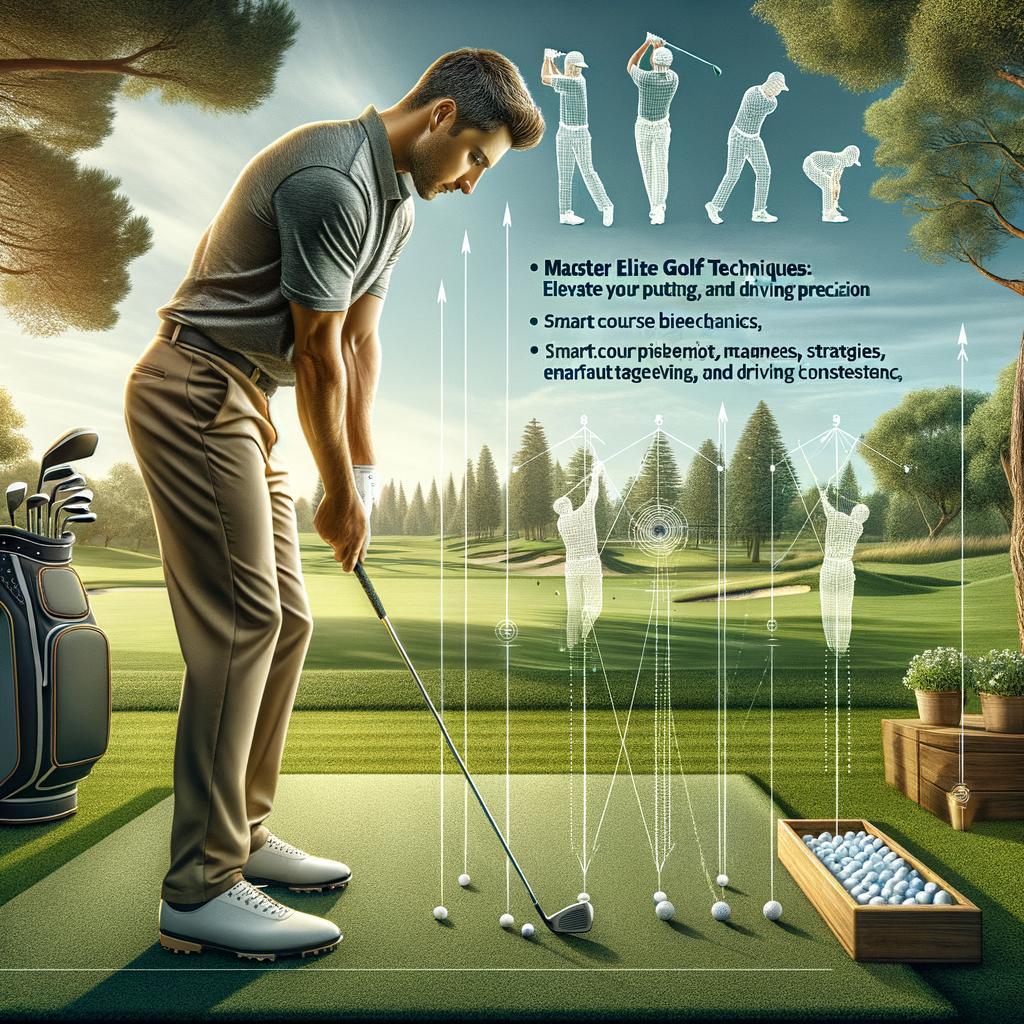
Master Elite Golf Techniques: Elevate Your Swing, Putting, and Driving Precision
Biomechanics of an Elite Swing: Fundamentals & Measurable Targets
To master your swing, start by understanding the kinematic sequence – pelvis → torso → arms → club – and how efficient energy transfer creates clubhead speed with control. The best golfers combine consistent setup, proper rotation, and a repeatable impact position.
Key setup & movement cues
- Grip & pressure: Neutral grip, light-to-moderate pressure. Tension kills rhythm and reduces clubhead speed consistency.
- Posture & spine angle: Athletic, balanced tilt from the hips. Keep spine angle through the swing to preserve swing plane.
- Rotation & sequencing: Hips lead backswing and initiate downswing; shoulders follow. Aim for a smooth top with stored rotational energy.
- Impact position: Slight forward shaft lean, left wrist flat (for right-handers), centered posture and weight shifted slightly forward.
Measurable swing metrics to track
- Clubhead speed (mph or km/h)
- Ball speed
- Smash factor (ball speed ÷ clubhead speed)
- Launch angle & spin rate
- Attack angle and swing path
Level-specific swing drills
- Beginner: Slow-swing mirror drill - focus on posture and making one-piece takeaway, 50 slow reps/session.
- Intermediate: Impact bag drill – teaches forward shaft lean and impact compression.
- Advanced: Kinematic-sequence ladder with medicine ball throws – build rotational speed and transfer.
Putting Precision: Mechanics, Tempo & Green Reading
Putting is 40-50% of your strokes; mastering putting elevates scores quickly. Focus on consistent setup,tempo,and controlling speed (distance control).
Putting fundamentals
- Setup: Eyes over or slightly inside the ball, narrow stance, pleasant knee flex, slight forward press of the hands.
- stroke: Pendulum motion from shoulders.Minimize wrist action; maintain a quite lower body.
- tempo: Use a 3:1 rhythm (backswing:through-stroke) as a reference – e.g., 1 second back, 1/3 second through for shorter putts.
- Speed control: Practice to a target speed (use Stimp equivalents) rather than just aiming at the cup.
High-value putting drills
- Gate drill – improves putter-face alignment and path
- Clock drill (3/6/9 feet) – sharpens short-putt accuracy
- Ladder drill (10-30 feet) – builds speed control at varied distances
Putting metrics to measure progress
- Putts per round
- Make percentage from 3-6 ft, 6-12 ft, and 12-20 ft
- Distance missed (left/right) relative to hole
Driving: Distance, Accuracy & Launch Optimization
Effective driving combines optimal launch conditions with directional control. modern drivers and shafts let players tune launch angle, spin and dispersion for best results.
Driving setup & swing keys
- Ball slightly forward in stance; weight slightly favoring the rear at setup but shift through impact for upward angle of attack (when desired).
- Tee height tuned to the clubhead’s center to encourage a slightly upward strike.
- Full shoulder turn with stable lower body and controlled hip clearance on downswing for consistency.
Launch monitor metrics to optimize
- Carry distance and total distance
- Launch angle (ideal depends on player speed; commonly 10-15° for many amateurs)
- Spin rate (excess spin reduces roll; aim for balanced spin for your swing speed)
- Smash factor
- Shot dispersion (left/right yardage from target)
Driving drills
- Three-tee drill – vary tee heights and find optimal contact point for best launch/spin.
- Distance/accuracy ladder - alternate between distance shots and controlled target shots.
- Headcover drill – place a headcover just outside the path to prevent early casting and promote inside-to-square swing path.
Practice Protocols: Evidence-Based Training & Tracking
Use purposeful practice, variability, and measurable feedback to accelerate improvement. Short, focused sessions with immediate feedback are more effective than mindless range reps.
Principles
- Deliberate practice: Work on specific subskills with feedback (video, coach, or launch monitor).
- blocked vs. random practice: start blocked to build motor patterns; shift to random/variable practice to improve on-course performance.
- Progressive overload: Increase complexity: hitting shapes, distance targets, pressure reps.
- Metrics-based goals: Set numeric targets for clubhead speed, putt make% or dispersion.
Level-Specific 4-Week Practice Plan
| Level | Weekly Focus | Key Drill | Measurable Goal |
|---|---|---|---|
| Beginner | Fundamentals: setup, short game | Gate + Chip-to-Target | Reduce 3-putts by 50% |
| Intermediate | Consistency: impact & tempo | Impact Bag + Clock Drill | Smash factor ≥ 1.45 |
| Advanced | Optimization: launch & accuracy | Launch Monitor Sessions + Medball Rotations | Reduce driving dispersion by 20% |
Course-Strategy Integration & On-Course Request
Technical skills must transfer to course performance.strategy-club selection, hole management and risk assessment-often separates scratch players from high handicaps.
Pre-shot routine & decision-making
- Establish a simple pre-shot routine that controls breathing, visualization and tempo.
- Use yardage + green conditions + lie to choose club and target; favor conservative lines when risk of big number exists.
- Practice simulated pressure reps (money ball, match play) to rehearse decision-making under stress.
Benefits & Practical Tips
- Mastering fundamentals reduces variability and makes scoring more consistent.
- Tracking metrics focuses practice and accelerates improvement (you can’t improve what you don’t measure).
- Short,frequent practice sessions beat rare long sessions – aim for 3-5 focused sessions/week.
- Combine on-course practice and range drills to ensure transfer of skills.
Case Study: 12-Week Conversion (Example)
Player: 14-handicap amateur. Plan: 2 launch-monitor sessions,3 focused range/practice sessions per week,weekly on-course application.
- Week 0 metrics: Clubhead speed 92 mph, smash factor 1.40, avg putts/round 33, driving dispersion ±30 yards.
- Interventions: Impact bag & kinematic sequence drills, clock drill for putting, tee-height and attack-angle work for driving.
- Week 12 results: Clubhead speed 98 mph, smash factor 1.47, avg putts/round 28, driving dispersion ±18 yards. Scoring reduced from 86 to 78.
Equipment & Technology Recommendations
- Use a launch monitor (e.g., TrackMan, FlightScope, or lower-cost options) for accurate feedback on launch angle, spin and smash factor.
- Get fitted for driver shaft flex, loft and head; small changes often yield big gains.
- Consider putter fitting for loft, lie and head shape to match stroke type (arc vs. straight-back-straight-through).
Trackable Metrics Cheat Sheet
| Metric | Amateur Target | Why it matters |
|---|---|---|
| Clubhead speed | Men: 95-105 mph / Women: 75-85 mph | Primary driver distance driver influence |
| Smash factor | 1.45-1.50+ | Indicates quality of contact and energy transfer |
| Putts per round | <30 | Direct impact on score |
| Driving dispersion | <20 yards | Accuracy reduces penalty shots and improves scoring opportunities |
Rapid Drills Reference (Printable)
- Mirror takes: 5 minutes of posture and takeaway alignment.
- Impact bag: 3 sets of 10 reps to lock impact position.
- Med-ball throws: 3×10 rotational throws for power sequence.
- Gate putting: 5 minutes targeting face path control.
- Clock drill: 3 sets from 3, 6, 9 feet for short putt confidence.
Final Practical Tips to Master Your Swing,Putting & Driving
- Keep practice measurable: set weekly numeric targets and review with video or launch data.
- Balance skill work (technique) with performance work (on-course and pressure drills).
- Prioritize sleep, mobility and strength – a stable body is the base for a repeatable swing.
- Slow incremental changes: fix one thing at a time and ensure transfer to the course.
Want to master your swing, putting and driving precision faster? Start by recording one metric (e.g., smash factor or putts per round) and run a 4-week protocol focused on that metric. Small, consistent improvements compound into better scores.