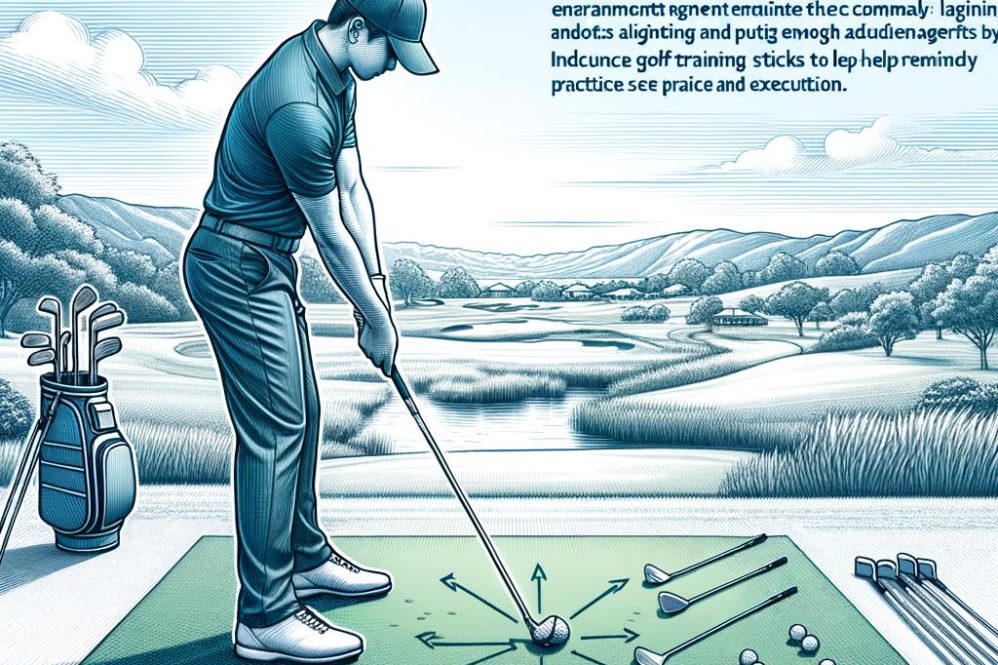
Consistent ball‑striking and dependable putting are the cornerstones of score reduction, yet many new golfers find it tough to convert practice into reliable on‑course results. Typical full‑swing faults-such as an unstable grip, misaligned aim, early extension, and overactive hands-combined with short‑game and putting errors like uneven setup, poor read of the green, and no pre‑putt routine, create wide shot dispersion and needless three‑putts. Instructional compilations and coaching resources identify these problems as frequent and highly fixable contributors to high scores; contemporary data indicates roughly 60-70% of shots in the average round occur from inside 100 yards, making short‑game proficiency crucial to scoring improvement.
This piece reorganizes the same corrective solutions into a structured program that targets the eight most damaging beginner mistakes in both the full swing and putting. For each error it explains the mechanical or perceptual cause, offers practical cues and drills that rewire motor patterns, and suggests progressive practice blocks to lock the changes in under pressure. The emphasis is on building a practical, evidence‑informed system-combining reproducible setup, consistent routines, alignment protocols, and measurable feedback-that delivers fewer mistakes, clearer reads, and more predictable outcomes for developing golfers.
Building a Compact, Repeatable Pre‑Shot Routine to Cement Motor Memory
Start every shot with the same short sequence to program your nervous system: picture the target (visualize the landing spot, the initial line, and the desired shape), pick the club, and take one or two deliberate practice swings that mirror the length and tempo you intend to use. On address, confirm ball position (e.g.,driver: just inside the left heel; mid‑irons: around center to slightly forward),set stance width (about shoulder‑width for irons,a touch wider for driver),and check your spine tilt (roughly 5-8° away from the target with driver,neutral for short irons). Use a single calming inhale after practice swings, reduce grip tension to a consistent level (target 4-5/10), and verify alignment quickly with a toe‑to‑heel check to prevent the classic beginner mistakes of rushed setup and misalignment. Use these fast checkpoints before every shot:
- Target lock‑in: chosen landing point and intended shot shape (fade/draw).
- Club confirmation: check distance and factor in wind or elevation; adjust loft/club as necessary.
- Address checklist: ball position,stance width,weight distribution,and grip pressure.
When the setup is constant, tie that routine into consistent swing mechanics and short‑game choices. Aim for a steady tempo (a practical target is a discernible 3:1 backswing‑to‑downswing ratio for full swings and roughly 1:1 for wedge work), and rehearse the same pre‑impact feeling on practice swings as when hitting the ball to strengthen kinesthetic memory. Address frequent faults-over‑swinging, lifting the head too soon, incorrect wrist hinge-with scalable drills: the alignment‑stick path drill for plane awareness, the gate drill to improve contact around the green, and the 5‑5‑5 rhythm drill (five light swings, five half swings, five full swings at your target tempo). Track simple metrics to quantify progress: approach proximity (benchmark average 40-50 ft and aim to cut that by 20% in six weeks) and drive dispersion (strive to land 60% of drives within 20 yards of the intended line). These practices address core beginner faults-wrong ball position, inconsistent tempo, and poor contact-and scale by increasing environmental complexity for better transfer to the course.
embed the pre‑shot routine into course management and the mental game so it functions as a performance cue rather than a checklist. Adapt the routine to context: shorten it when pace‑of‑play forces you to move quickly, lengthen it for high‑pressure recovery shots, and never practice by grounding the club in a hazard (observe the Rules of Golf). Quick troubleshooting: if you push shots recheck alignment and grip; if you fat shots check ball position and weight bias; if you hook reassess grip and swing path. Use focused practice blocks of 10-15 minutes on one variable to accelerate neural adaptation. Cater drills to learning styles-visual players should scan an intended target image, kinesthetic learners take extra practice swings holding exact setup, and players with mobility restrictions can use shortened, controlled backswing reps that emphasize impact. A compact,repeatable routine measured in seconds,reinforced by specific drills and performance metrics,links setup,swing,and decision‑making to fewer errors and more consistent scoring.

Grip Pressure and Hand Placement: The Small Changes that Stabilize the Face
Start by standardizing how your hands sit on the handle: choose a repeatable hand position (neutral, slightly weak, or slightly strong) that lines the face up with your intended target and allows a natural release through impact. For most players a neutral grip-with the V’s of thumbs and forefingers pointing between the chin and right shoulder for right‑handed golfers-gives the most predictable face control. A strong grip tends to close the face and promote hooks, while a weak grip can leave the face open and encourage slices. Equally crucial is measured grip pressure: on a 1-10 scale aim for 4-6/10 for full swings and 2-3/10 for putting to preserve wrist hinge and forearm rotation. At address ensure the lead hand sits slightly ahead of the ball for irons (about 1-2 cm (0.4-0.8 in)) to encourage a descending strike; at impact the lead wrist should be neutral to slightly bowed for a square face instead of cupped or excessively bowed positions that cause thin or hooked shots. common beginner tendencies-gripping too hard, flipping wrists through impact, or varying hand position from shot to shot-are corrected by deliberately setting pressure in the pre‑shot routine so the grip becomes automatic under stress.
Move to focused drills and measurable goals that translate hand settings into repeatable ball flight. Track outcomes as you practice:
- grip Pressure Ladder: hit 10 balls each at pressures of 3/10, 4/10, 5/10, and 6/10; log dispersion and trajectory to find the lightest pressure that still controls the face (usually 4-6/10 for full swings).
- Towel‑Under‑Arm Drill: tuck a small towel beneath the lead armpit and make 50 slow swings to promote connection and discourage casting.
- Impact Bag / Half‑Swing Drill: strike an impact bag or stop at the impact position to feel a flat or slightly bowed lead wrist and a square face; record video to compare wrist angles across reps.
- Putting Gate & Pressure Drill: hit 25 putts through a narrow gate using light grip pressure (2-3/10) and count how many pass cleanly to build low‑tension feel.
Plan practice sessions with structure: warm up 10-15 minutes with mobility and grip‑awareness, then spend 30-40 minutes on targeted drills with concrete targets (such as, 80% of range shots within desired dispersion or achieving a consistent lead‑wrist picture on video in repeated 15‑minute blocks). Use a metronome or simple cadence (e.g., 1‑2) to coordinate pressure and timing; beginners benefit from exaggerated slow‑motion reps while better players should add variable speeds and situational simulations to refine subtle grip changes for shot‑shaping.
Apply these adjustments on the course and link the mental plan to physical execution.In wind or wet lies slightly firm the grip while staying inside the 4-6/10 window to preserve control; in delicate chips and bunker shots ease pressure for greater feel. Observe rules that affect grip and execution-do not ground the club in a hazard per Rule 11.1a-and practice a non‑grounded setup for those situations. on course troubleshooting:
- Check grip size and condition (replace worn grips; avoid oversized grips that kill wrist action).
- Use a fast 3‑count pre‑shot to reduce tension and stop last‑second squeeze under pressure.
- Consider adaptive options (softer or larger grips, or a neutral‑strong grip) for limited wrist mobility; seek a professional fitting if persistent shot patterns remain.
By marrying precise hand positioning and measured grip pressure with specific drills, course tactics, and mental routines, golfers can expect narrower dispersion, improved clubface consistency, and better scoring-trackable via video, shot‑data, or simple yardage and dispersion logs over successive practice cycles.
Aligning Face and Path: Reduce sidespin and Keep Direction True
Face angle and swing path together determine the launch direction and the sidespin applied at impact. The key variable to control is the face‑to‑path relationship: keeping it within about ±1-2° yields mostly straight flights,while differences beyond 3° commonly create pronounced slices or hooks. Also be mindful of the gear effect-off‑center toe or heel strikes add sidespin and alter effective launch-so consistent centered contact is essential. Novice errors like inconsistent grip,poor setup,or wrist flipping at impact increase variability in both face and path; tightening setup consistency reduces the degrees of freedom the swing must manage and lowers lateral dispersion.
Put the concept into practice with clear setup checks and drills suitable for all levels. Begin with these fundamentals: neutral grip pressure (3-5/10), feet and shoulders square to the target, ball position tailored to the club, and an athletic posture with roughly 60-70% of weight on the lead leg at address for full shots. Then use practical drills to train face and path control: an alignment stick on the turf to fix body and clubface aim, a gate drill (two tees) to promote a square face through impact, and impact‑bag or short‑line work to feel centered strikes. Useful practice items include:
- Slow‑motion swings focused on the impact position and a slightly targetward leaning shaft for irons.
- Half‑swing punch shots to ingrain a neutral‑to‑in‑to‑square path and avoid over‑rotation.
- A tempo drill with a metronome (e.g., 3:1 backswing:downswing) to discourage casting and flipping.
These exercises address the Top‑8 beginner issues-grip, alignment, ball position, weight shift, over‑swing, poor tempo, lack of centered contact, and unfocused practice-by isolating mechanical faults in repeatable conditions.
Translate practice gains into course strategy and equipment checks: when fighting a slice into the wind,close the stance and aim left by 10-15 yards,and consider a weaker loft or adding a club to counter curvature; to hit a controlled draw in protected pin locations,close the face relative to the path by about 1-2°. Regularly confirm correct lie angles, grip size, and shaft flex-poorly fit clubs magnify face/path problems. Set measurable goals-reduce lateral dispersion by 20-30% in three months or hold face‑to‑path variance within ±2°-and use range sessions that mix technical drills with pressure simulations (target cards, scorekeeping) to improve transfer.Add mental practice-visualization and the pre‑shot routine-to reinforce alignment and commitment; together these physical, equipment, and psychological measures tighten scoring windows and cut down putts.
Posture and Lower‑Body Sequencing: Stable base, Efficient Power Transfer
start with a reproducible address that emphasizes balance and a stable center of gravity. Create a neutral spine by hinging at the hips so your torso inclines forward roughly 20-30° from vertical, with a light knee bend of about 10-20°, producing an athletic posture that resists lateral sway and allows torque. Stance should be about shoulder‑width to 1.25× shoulder‑width (narrower for short irons, wider for driver) with ball position adjusted by club. Before every shot check:
- Weight distribution: roughly 50/50 at address so you can shift controllably;
- Spine angle: preserve the same tilt through the swing to prevent early extension;
- Head position: keep the head stable and relaxed so the eyes track the intended line.
These simple setup cues solve common beginner faults-slumped posture, wrong ball position, and over‑gripping-that otherwise sap power and consistency.
From that base, coordinate lower‑body motion to convert ground force into rotational speed.Train the hips to initiate the downswing: the pelvis should start rotating toward the target while the trail knee retains flex to create a stable axis; a backswing pelvic turn of roughly 30°-45° with a shoulder coil near 90° is a reasonable benchmark for many players. Focus on shifting the center of pressure rather than sliding the hips laterally-the trail foot should push into the turf to create a “coil and release” sensation-so that at impact about 60%-80% of weight is on the lead side.To avoid common errors (swaying, early release, early extension) use these cues:
- Keep spine angle to stabilize the head and prevent lateral movement;
- Don’t lift with the upper body-use a firm lead leg and rotating pelvis to deliver the club;
- Hold the wrist hinge into transition and feel ground reaction through the trail leg to avoid deceleration before impact.
These mechanics work for all shot types-producing a higher driver launch or the crisp, descending strikes desired from irons.
Ingrain these patterns with measurable drills and on‑course adjustments:
- Chair/No‑Sway Drill: place a chair just behind the trail hip and make slow half‑swings, feeling rotation without lateral movement-3 sets of 10 with video feedback.
- Step‑Through Drill: hit short wedge shots while stepping the trail foot forward through the finish to exaggerate weight transfer-start with 20 reps.
- Medicine‑Ball Rotations: 3 sets of 8 explosive rotations to develop sequencing and core power for players seeking more clubhead speed.
On tight tees or windy days, shorten the turn and lower flight by operating at the lower end of the 60%-80% lead‑foot guideline to maintain accuracy. Check shoes for traction, confirm shaft flex and club balance during fittings, and consider a putter with a stable sole to help balance. use a concise mental cue-such as “rotate, hold, release”-to weld the movement and intent, and set targets like halving lateral sway on video in six weeks or hitting the sweet spot on 75% of strikes during practice. this blend of technical, physical, and tactical work produces measurable gains for beginners through low handicappers.
Short‑Game Precision: Controlling Trajectory,Spin and Landing Zones
Refining the short game is about honing precision and control. Start with consistent setup cues that eliminate common faults-poor alignment, variable ball position, and tight grip. For most pitch and chip shots adopt a slightly open stance with the ball placed 1-2 inches back of center for bump‑and‑run shots, and around center to slightly forward for higher pitches. this produces a shallow to neutral attack (≈0° to −2°) for low‑running shots and a moderately descending attack (−3° to −6°) for controlled airborne shots. Choose loft and bounce to match turf conditions (for example, low bounce ~4° on tight lies, high bounce 8-12° on soft sand or fluffy rough). Key checkpoints before every rep:
- Grip pressure: light‑to‑moderate (~4/10) to preserve feel;
- Weight distribution: about 60/40 forward for higher pitches, 50/50 for run‑and‑roll shots;
- Eye over ball: maintain neutral posture for consistent contact.
Onc setup is consistent, decompose the stroke to better manage touch and landing zones.For high‑trajectory pitches and lobs hinge more at the wrists and adopt a steeper hand path, creating a slightly greater negative attack angle; a controlled wrist hinge of about 60°-70° on the backswing and finishing with hands slightly ahead of the ball (~1-2 inches shaft lean) produces the desired compression. For runny chips use a shorter, pendulum‑style stroke with minimal wrist hinge and a near‑zero attack to maximize roll. Practice drills with measurable targets accelerate improvement:
- Landing‑Zone Box Drill: place a 6 ft × 6 ft landing box at a chosen distance (e.g., 20-30 yards) and log the percentage of landings inside the box-target 70%+ within four weeks.
- Variable‑lie Sequence: hit the same shot from tight, uphill, and plugged lies-10 reps per lie-to learn bounce interaction and dispersion.
- club‑Selection Ladder: play identical landing zones with progressively higher lofts to learn trajectory and rollout differences.
These drills directly address lifting the ball, inconsistent tempo, and wrong club selection while providing clear benchmarks for golfers of varying ability.
Plan landing zones strategically to turn recoveries into pars. Choose a landing area that simplifies the next stroke-such as, a flat spot 8-12 yards short of the hole that leaves a two‑putt or an easy chip. Factor green speed (Stimp) and wind: on a Stimp 10-12 surface aim slightly short to allow run‑out; in crosswinds increase the landing area depth by about 20-30% to reduce risk. Use a pre‑shot decision checklist to prevent misreads,club indecision,and lack of commitment. Quick fixes:
- If thin contact: move the ball back slightly and shift more weight forward;
- If low pop‑up with little roll: reduce wrist hinge and select less loft;
- If ball plugs or bounces unpredictably: choose a higher‑bounce or more‑lofted wedge and steepen the attack angle carefully.
Couple this technical work with a short pre‑shot routine and commit to the chosen landing zone-this integration of skill, equipment awareness, and situational strategy raises up‑and‑down percentages and improves recovery scoring for all levels.
Putting Essentials: Aim, Stroke Plane and Distance Control You Can Rely On
A consistent setup and accurate aim are the basis for every effective putt. Select a putter length that keeps your forearms near parallel to the ground at address and a face with about 2°-4° loft to initiate roll.Position the ball roughly 0.25-0.5 inches forward of center for a neutral to slightly ascending impact, stand shoulder‑width apart with knees flexed, and place your eyes over or just inside the ball line so the shoulders rotate on one plane. Avoid typical beginner faults-misalignment, white‑knuckle grip, or standing up through impact-by checking:
- Feet, hips and shoulders parallel to the intended line (imagine rails beneath your feet);
- Light grip pressure (about 3-5/10) to prevent wrist breakdown;
- Shaft lean of around 3°-5° toward the target so the face returns square at impact.
These measures also follow the Rules of Golf for green procedure-you can mark and lift your ball (Rule 14.1c) to check aim without penalty. Rehearse this setup as part of a short pre‑putt routine to make it habitual.
When setup is stable, concentrate on a consistent stroke plane and repeatable tempo for true roll. Use a shoulder‑driven pendulum motion with minimal wrist action so the putter head travels on a small arc; most players benefit from a face path that is slightly inside‑to‑square‑to‑inside with a total arc of around 1°-3°. Adopt a backswing‑to‑follow‑through tempo of roughly 2:1 to 3:1 (backswing shorter/slower, follow‑through longer) to protect distance control and prevent deceleration. practice with targeted drills:
- Gate drill: place tees to guide the putter head along the intended path to remove inside‑out or outside‑in errors.
- String‑line drill: run a string along the target line to train face squareness through impact.
- Metronome drill: use a tempo device and hit 50 strokes at three distances to lock in rhythm.
For refinement, map stroke length to ball distance: short putts typically need 2-4 inches of backswing, mid‑range putts 6-12 inches, and long lags 18-36 inches, adjusting for green speed and slope.
Combine distance control with reliable green reading to turn strokes into consistent results. Read greens by identifying the fall line first and then pick intermediate aiming points (a pebble, a blade of grass, or an AimPoint reference) rather than simply staring at the hole-new golfers often under‑read breaks by aiming at the cup. Adjust for speed: on a typical green (Stimp 9-11) expect firmer reactions and reduce force on soft or wet days. Set measurable practice goals:
- Ladder drill: from 3, 6, 9, 12 feet roll five balls to each distance and aim to finish within a 1‑foot circle at least 80% of the time.
- 3‑putt reduction plan: three 20‑minute weekly sessions focused on long lag control-goal: fewer than 1 three‑putt per 9 holes.
- Pre‑round warm‑up: 10 minutes of short putts (3-6 ft), followed by 5 lag strokes to sense green speed.
Adjust tactics: on fast, firm greens aim to leave an uphill tap rather than chasing extreme break lines; in wind or rain favor a slightly firmer stroke to overcome surface drag. Use a concise pre‑putt ritual, visualize the path, and avoid early look‑ups to reduce indecision. Track progress with simple stats-make percentage from 3-6 ft and lag distance accuracy-to drive measurable improvement across handicaps.
Evidence‑Led Practice: Specific Drills, Objective Feedback and Smart Tracking
Begin with a solid, repeatable setup before adding complexity: ensure a neutral grip (V’s between the right shoulder and chin for right‑handers), square the clubface to the intended line, and maintain a consistent spine angle through the swing (about 20°-30° forward tilt for irons, slightly more for driver). Position the ball so the clubface meets the ball near its center at impact (mid‑irons slightly forward of center; driver off the left heel). Progress with drills that isolate faults and produce measurable change:
- Gate drill: two tees slightly wider than the head to correct path errors and over‑swinging;
- Towel‑under‑armpit: promotes connection and rotation, reducing arm separation;
- Impact bag: reinforces forward shaft lean and ball compression (aim for 0.5-1.0 in hands ahead of the ball on short irons).
These drills address common beginner problems-poor tempo, balance, and contact-while providing observable checkpoints for players at all levels.
Use objective feedback to quantify technique and steer practice: high‑speed video lets you check clubhead and wrist positions at key moments, and a launch monitor records ball speed, launch angle, spin rate and attack angle (targets vary: long irons ~−2° to −4°, drivers ~+2° to +4° as appropriate). Complement costly gear with inexpensive tools-impact tape to see strike location, alignment rods to validate setup, and a pressure mat or balance board to monitor weight transfer.Turn measurements into drill goals:
- Dispersion control: aim to keep lateral deviation within 10 yards of target at 150 yards using half‑swing wedge work and a 9‑spot target drill.
- Short game: perform the clock‑face putting drill to hone distance control (make 24 consecutive putts from the 3, 6, 9 and 12 o’clock positions at 3 ft increments) and use the 30/60 wedge drill to standardize wedge trajectories and landing zones.
- To stamp out deceleration or scooping, review stroke‑by‑stroke video and enforce a tempo target (metronome or a 3:1 backswing:downswing rhythm) until the movement is consistent under pressure.
This measurement→intervention→re‑measurement cycle keeps practice evidence‑based and efficient.
link practice tracking to course aims with SMART goals: reduce three‑putts to <1.5 per round, push greens‑in‑regulation (GIR) toward an appropriate target (for mid‑handicaps, ~60% GIR), or raise scrambling to 60%+. Keep a practice log recording time, drills, and objective metrics (clubhead speed, carry distance, dispersion) and review weekly to reallocate focus. On course, translate data into decisions-use a center‑line tee strategy to limit OB risk, choose a more conservative approach club into firm greens on windy days, and apply USGA relief options when a ball is unplayable (back‑on‑the‑line or two‑club‑length relief with a one‑stroke penalty).Address the mental game with a compact pre‑shot routine and controlled breathing to stabilize performance. By combining targeted drills, measurable feedback, and match‑ready course choices, players can create a clear pathway from practice to lower scores.
Q&A
Q: Who will benefit most from the guidance in “Unlock Consistency: Fix 8 costly Beginner Swing & Putting Mistakes”?
A: This material is aimed at golfers in the beginner-to‑early intermediate phase who are actively developing essential movement patterns for the swing and putting. In practice, a “beginner” here means someone still building repeatable setup, rhythm, and short‑game routines rather than a fully established motor pattern.
Q: Wich eight high‑impact beginner errors does the article target?
A: The program focuses on these eight common, correctable faults:
1. Excessive grip tension and inconsistent grip pressure.
2. Poor setup: flawed posture, broken spine angle, and incorrect ball position.
3. Insufficient body rotation and overuse of the arms.
4.Early release (casting) and loss of lag on the downswing.
5. Misalignment and inconsistent aim.
6. Faulty green reading and poor starting line selection.
7. Early head/eye lift during putting.
8. Inconsistent putting tempo and excessive wrist action.
Q: Why emphasize setup, alignment and routine ahead of obsessing over swing path?
A: Motor‑learning and biomechanical principles show that stable initial conditions reduce movement variability. A repeatable setup (grip, posture, ball position, alignment) narrows the number of variables your body must solve, making it easier to engrain a reliable swing or putting stroke. A compact pre‑shot routine reduces cognitive noise and accelerates automaticity through consistent sensorimotor repetition.
Q: How should a beginner reduce excessive grip tension?
A: Problem: Too‑tight hands prevent wrist hinge, reduce clubhead speed variability and increase inconsistency.
Correction:
– Adopt a neutral grip pressure around 4/10-secure but relaxed.
– Drill: the “towel squeeze”-place a small folded towel under the lead forearm and maintain it while gripping to discourage a death‑grip.
– Check: you should feel slight clubhead movement in the fingers at the top of the backswing without forearm strain. Use a grip‑pressure app or a simple subjective rating for consistency.
Q: What’s the practical fix for incorrect setup (posture, spine angle, ball position)?
A: Problem: Rounded shoulders, broken spine angle, or wrong ball position changes swing geometry.
Correction:
– Setup: feet shoulder‑width (full swing); ball neutral to slightly forward for mid‑irons, progressively forward for longer clubs.
– Posture: hinge at the hips with light knee flex and a flat back; ensure the sternum is roughly over or slightly behind the toes. Use an alignment stick along the spine in practice to confirm angle.
– Drill: ”Wall tilt”-stand with your back to a wall, hinge until your shoulder blades lightly touch, then step forward keeping that hinge.
– Check: spine angle holds through the initial backswing and impact positions are repeatable.
Q: how can beginners generate effective rotation and stop arm‑dominated swings?
A: Problem: Too much arm action and limited torso/hip turn cause inconsistent contact and distance loss.
Correction:
– Cue: “turn the chest-let the arms follow.” Aim for an ~80°-100° shoulder turn on the backswing (adjust for mobility).
– Drill: “club across shoulders”-rotate the torso while keeping the lower body quiet, then progress to letting the hips lead the downswing.
– Integration: practice half swings emphasizing coil and sequencing, then gradually increase speed.
– Check: strikes become more centered and divots more consistent.
Q: How do beginners stop casting/early release?
A: Problem: Releasing the wrists early flattens the swing arc and makes contact erratic.Correction:
– Cue: keep a “bow” between the lead wrist and shaft through transition to preserve lag.
– Drill: “pump drill”-pause halfway down, pump to sustain lag, then strike; impact‑bag work also helps feel forward shaft lean.
- Check: at impact the shaft shows slight forward lean (lead wrist flat or slightly bowed), not a cupped wrist.
Q: How do I fix chronic alignment errors?
A: Problem: Misaligned feet, hips, or shoulders cause predictable misses.
Correction:
– Use two alignment sticks-one along the target line and one parallel to your feet-to square body and face.
– Anchor your aim on a precise intermediate target (a blade of grass or tee) 1-2 m ahead of the ball.
- habit drill: spend 10-15 minutes rehearsing setup with sticks and track directional dispersion across sets of 10 swings.
Q: what’s a reliable method to read greens and choose a starting line?
A: Problem: Misjudging slope, grain or elevation leads to wrong starting directions.
Correction:
– Multi‑point read: view from behind the ball, behind the hole, and walk the fall line to feel subtle grades.
– Aim via an intermediate target (tiny pebble or grass blade) rather than relying on an imagined curving line.
- Drill: “two‑putt from 6 m”-practice known small breaks and record first‑putt‑to‑circle percentages.
– Check: improvement shows as more first putts finishing inside a 1-1.5 m circle.
Q: How do I stop lifting the eyes early when putting?
A: Problem: Looking up too soon changes mechanics and distance control.
Correction:
- Cue: keep your gaze steady over the ball through the stroke and a beat after impact; keep the chin down and shoulders stable.- Drill: “coin under the ball”-fix your gaze to the coin for a count after impact.
– check: side video shows minimal head movement and a delayed look‑up until the ball’s roll stabilizes.
Q: How can beginners set a consistent putting tempo and avoid wrist breakdown?
A: Problem: Erratic backswing speed, decelerated follow‑through, or excessive wrist use creates distance inconsistency.
Correction:
– Tempo: use a shoulder‑driven pendulum with a backswing:downswing ratio of about 2:1; a metronome/app helps.
– Drill: “gate drill” with tees to prevent wrist collapse; use a “ladder drill” to test distance control across increments.
– Check: reduced variability in putt lengths and better 3-6 ft conversion rates.
Q: How should a beginner structure practice for transfer to the course?
A: A: Use a deliberate‑practice model:
– Warm‑up (10 min): mobility, short putts, and short wedge strikes to prepare mechanics.
– Blocked technical work (15-25 min): one or two corrective drills with immediate feedback (impact bag, video).- variable practice (20-30 min): mix clubs, distances, lies and reads to build adaptability.
– simulation & routine rehearsal (10-15 min): play short‑hole scenarios and rehearse pre‑shot/pre‑putt routines.
– Measure: log outcomes (fairways,GIR,first‑putt‑to‑circle,dispersion) and adjust focus accordingly.
Q: What objective checkpoints should beginners use to track progress?
A: use simple,repeatable metrics:
– Strike quality: percentage of centered strikes over 20‑shot blocks (impact spray/tape).
– Dispersion: lateral deviation from target over 10 shots with alignment targets.- Putting: first‑putt‑to‑circle rate (1.5 m), putts per simulated round.
– Tempo: metronome consistency or video frame counts.
Improvements show as reduced dispersion, more centered strikes, and steadier tempo/setup.Q: When is it time to see a coach or get a biomechanical assessment?
A: Seek professional help if:
– Problems persist despite focused practice and consistent feedback.
- Pain, limited mobility, or compensatory movements suggest a fitness or rehabilitation need.
– You want faster progress-coaches can provide video kinematics, force‑plate data, or launch‑monitor analysis to speed learning and prevent bad habits.
Q: What are the distilled, practical takeaways for beginners seeking consistency?
A: Key recommendations:
– Make setup and a short pre‑shot/pre‑putt routine your priority.
– Relax the grip, emphasize coordinated body rotation for the swing, and use a shoulder‑driven pendulum for putting.
– use specific, measurable drills (alignment sticks, pump drill, impact bag, metronome) and monitor objective checkpoints.
– Structure practice with deliberate technique work, variability training, and simulation.
– log progress and consult a qualified coach when movement faults persist or when more technical feedback is required.
If you prefer, this material can be converted into a one‑page checklist, a focused 6‑week practice plan targeting the eight faults, or short video script prompts for each drill.Which format would you like next?
Conclusion
The eight faults covered-ranging from foundational setup and swing sequencing to alignment and putting routine-represent common, high‑frequency sources of inconsistency for new golfers. The corrective approach here is grounded in motor‑learning and biomechanical reasoning: reduce unnecessary degrees of freedom, prioritize an identical setup, use perceptual cues for alignment and distance, and favor structured, feedback‑driven practice over unfocused repetition. When you address root causes rather than masking symptoms, gains in consistency are more reliable and longer lasting.
make progress measurable with clear targets (putt percentages from set distances, dispersion patterns on approach shots), keep a concise practice log, and seek periodic, evidence‑based coaching to validate changes and accelerate motor learning while preventing compensations. Consistency compounds: small, steady improvements in setup, sequence, and routine yield disproportionately large scoring benefits over time. Adopt these protocols-repeatable alignment,dependable motion patterns,and disciplined feedback-and you’ll build a robust platform for continued improvement and greater enjoyment of the game.

Master Your Game: Eliminate 8 Common Swing & Putting Mistakes for Consistent Golf Success
Why fix these mistakes? (Benefits & Practical Tips)
- Consistency: Eliminating repeatable swing and putting errors lowers score variance and reduces three-putts and wayward drives.
- distance & Accuracy: Correct biomechanical errors in driving and swing mechanics to unlock distance while controlling dispersion.
- confidence & Course Management: When you know your ball flight and putting stroke, course strategy and scoring become simpler.
- Practise efficiency: Use measurable metrics and targeted drills to get more improvement per minute spent on the range or putting green.
Quick overview: The 8 common mistakes
Below are the most frequent faults golfers experience in both the long game (swing/driving) and short game (putting). Each section includes the problem, the likely cause, a biomechanical or technical fix, and practical drills with measurable metrics.
| # | Mistake | Primary Fix | Metric to Track |
|---|---|---|---|
| 1 | Over-the-top (slice / pull) | Shallow the downswing; lead with lower body rotation | Ball flight % (fairway hits) |
| 2 | Lack of posture / early extension | Maintain spine angle; hip hinge drills | Clubface contact location |
| 3 | Grip pressure inconsistent | Balanced hold (4-6/10) and pre-shot routine | Stroke repeatability (% of putts holed) |
| 4 | Poor setup alignment | Use alignment sticks; check feet/hips/shoulders | Left/right miss distribution |
| 5 | Wrong tempo & acceleration | Use metronome or count; accelerate through impact | Smash factor / clubhead speed consistency |
| 6 | Incomplete follow-through | Commit to finish; balance holds | Balance hold duration (seconds) |
| 7 | Poor green reading | Read low-to-high, use gate and line checks | Putts-to-hole average |
| 8 | Deceleration on putts / skulls and lags | Maintain forward shaft lean and steady acceleration | 3-6ft conversion % and lag distance error |
Swing & Driving Mistakes (1-6)
1. Over-the-top swing (slice / pull)
What happens: The club moves outside-to-in on the downswing, producing a slice or pull.
Likely cause
- Upper-body dominates downswing; lack of hip rotation.
- Steep swing plane or early casting of the wrists.
Fix & drills
- Lead with your hips: practice “step-through” drill-start on the inside of the ball and feel the lead hip rotate toward the target.
- Place a headcover outside the ball and practice swinging without hitting it (inside path emphasis).
- Shallow drill: take slow half swings from the top focusing on keeping the shaft pointing slightly behind the hands at the start of the downswing.
Metrics to track
- fairway hit % with driver and 3-wood.
- Shot dispersion (distance left/right).
2. Early extension / bad posture
What happens: The hips slide toward the ball on the downswing and the body straightens, causing thin shots, hooks, or blocks.
Likely cause
- Poor hip hinge at setup; weak core or mobility limits.
Fix & drills
- Hip-hinge drills: place a club across your lower back and bend at the hips while keeping the club in contact with your body.
- Wall drill: stand with your butt against a wall and make slow swings to feel the hinge; if you move forward off the wall-your early extending.
- Core stability exercises off-course improve posture maintenance through impact.
Metrics
- Strike consistency: center-face percentage using impact tape or launch monitor.
3.Incorrect grip pressure & hand position
What happens: To tight creates tension and blocks natural wrist hinge; too light causes timing issues.
Fix & drills
- Test grip pressure with a 0-10 scale: aim for 4-6/10 (firm enough to control but relaxed).
- Grip alignment: check V’s point to lead shoulder (for most players).
- Finger-only drill: hold a short-range chip with finger pads only to feel a light but secure grip.
4. Poor setup alignment
What happens: Feet, hips or shoulders aimed incorrectly results in predictable misses and compensations.
Fix & drills
- Use alignment sticks or clubs on the ground for every practice set-up.
- Try the “club across chest” check: with a club across your chest, rotate into your backswing and ensure the club points at the target line at the finish.
5. Faulty tempo & deceleration
What happens: Rushing the backswing or decelerating into impact reduces distance and control.
Fix & drills
- Metronome drill: set a 2:1 ratio (backswing : downswing) e.g., count “one-two” back, “three” down.
- Impact bag drill: hit a soft bag to practice accelerating through impact with balanced finish.
Metric
- Smash factor consistency,clubhead speed variance on launch monitor.
6. Incomplete follow-through / no balance hold
What happens: Players stop at impact, lose balance and produce inconsistent shots.
fix & drills
- Finish hold: after each shot, hold your finish for 3-5 seconds (balance test).
- One-legged balance drill: hit half swings while holding single-leg balance to reinforce weight transfer.
Putting Mistakes (7-8)
7. Poor green reading (lines & speed)
What happens: Misread breaks and misjudge speed, leading to missed short putts and three-putts.
Fix & drills
- Read low-to-high: crouch low and read putt from low-to-high and behind the ball to determine the starting line.
- Use the “thirds method”: divides break into start zone, pivot zone, and finish zone and visualize ball path.
- Distance control ladder drill: place tees at 3ft, 6ft, 9ft; try to lag one ball to each tee with consistent stroke length.
Metric
- Putts per round and 3-6ft conversion rate.
8. Deceleration or inconsistent acceleration on putts
What happens: Players decelerate at impact or hit inconsistent stroke length, causing skulls or poor lags.
Fix & drills
- Gate drill: place two tees just wider than the putter head and stroke through without touching tees-promotes square face and steady path.
- Forward shaft lean drill: set up with slight forward shaft lean and practice accelerating to and through the ball.
- Metronome tempo for putting: consistent rhythm improves distance control.
Metric
- Average lag distance from 20-30ft and conversion rates inside 10ft.
Sample 4-week Practice Plan (Targets & Metrics)
| Week | Focus | Daily Drill (15-30 min) | Metric goal |
|---|---|---|---|
| 1 | Setup, posture, alignment | Alignment sticks + hip-hinge drill | Impact tape center % + 60% fairways |
| 2 | Downswing path & tempo | Inside-path drill + metronome swings | Reduce slices by 50% |
| 3 | Putting basics: speed & line | Ladder drill + gate drill | 3-6ft conversion 85%+ |
| 4 | Integration & course strategy | 9-hole focus on target zones | 1-2 shot reduction / round |
Case Study: From 95 to 83 in 8 weeks (Summary)
Player A (mid-handicap) identified three key faults: over-the-top driver, early extension with irons, and poor lag putting. Using the drills above and tracking:
- Week 1-2: Addressed over-the-top and tempo-fairway hit % increased from 35% to 60%.
- Week 3: Posture and impact tape work improved center contact from 40% to 70% with irons.
- Weeks 4-8: Dedicated putting ladder practice raised 3-6ft conversion to 82% and reduced three-putts.
Result: Round average fell from 95 to 83. Key takeaway: targeted drills + measurable metrics = fast transfer to the course.
Tracking Progress: Useful Metrics & Tools
- Launch monitor: smash factor, clubhead speed, angle of attack, spin rates.
- Impact tape / spray: strike distribution on clubface.
- Putting trackers or phone apps: putts per round, conversion rates, lag metrics.
- Simple manual stats: fairways hit, greens in regulation (GIR), putts per hole.
Practical Tips for Consistent Improvement
- Practice with intent: set one measurable goal for each session (e.g.,60% center strikes).
- Use short, frequent practice blocks (20-30 minutes) rather than long unfocused sessions.
- Record video of your swing and putting stroke every 2 weeks to compare and adjust.
- Don’t chase equipment fixes until fundamentals (grip, posture, alignment, tempo) are stable.
- Integrate course play: practice skills in on-course situations to improve decision-making and pressure management.
First-hand coaching checklist (use before playing)
- Alignment stick check (on range or tee): 30 seconds.
- 3 warm-up swings-feel tempo and hip rotation.
- Two practice putts: one for feel (long), one for line (short).
- Set a target zone for tee shots and aim small.
SEO Keywords included naturally
Throughout this article we used search-optimized golf keywords: swing, putting, driving, golf consistency, drills, tempo, alignment, grip, posture, green reading, lag putting, distance control, biomechanics, and practice plan. Use these keywords in your page meta,headings and in-image alt text to improve search visibility.
How to implement this on WordPress
- Use the meta tags above in your page head for meta title & description.
- Paste the article into a WordPress post and apply H1/H2/H3 with the editor to ensure structure.
- Use the “Table” block (wp-block-table) for the tables above and apply the is-style-stripes class for readability.
- Add schema for “HowTo” or “Article” if your theme supports it-list the drills as steps for extra SEO benefit.