
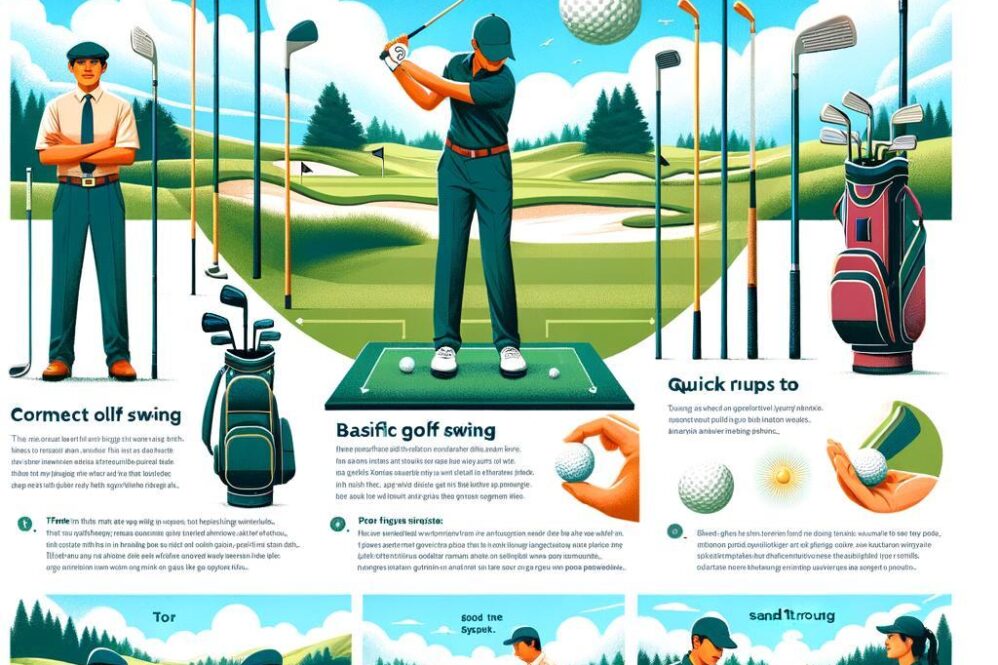
Understanding the Power of Random Target Practice to Sharpen Your Swing and Putting
Random target practice harnesses the unpredictability of actual golf play by training your brain and body to quickly adapt to varying distances and lies, refining both your swing and putting. Instead of repetitively hitting the ball to the same spot, golfers engage multiple targets arranged at different angles and distances, which better simulates on-course challenges. Such as, when practicing your swing, position targets between 75 to 150 yards apart to develop precise distance control and adjust your club selection dynamically. This method not only improves muscle memory for a range of shot trajectories but also enhances your ability to read wind and course slopes,which are vital for shot shaping and trajectory optimization. Beginners benefit considerably by learning ball-flight feedback and trajectory response, while advanced players sharpen fine motor control for controlled fades, drawsand punch shots.
When applying random target practice to putting, it’s crucial to incorporate varied slopes, green speeds, and break angles to replicate real green conditions. Set up targets at 3 to 20 feet with different sidehill, uphill, and downhill slopes, adjusting ball positions to practice stance and stroke consistency. This trains your proprioception and distance control under different stress levels,which translates to improved lag putting and confident tap-ins during competitive rounds. Integrating drills such as the “random circle drill,” where you place balls in a scattered circle around the hole and putt in random order,eliminates the comfort of repetition and forces focus on each individual stroke. Additionally, using a metronome to maintain a smooth tempo encourages consistency in your stroke rhythm, vital for maintaining pace across varied green speeds.
Beyond technical improvements, random target practice fosters strong course management strategies by teaching golfers to trust their shot-making decisions under pressure and diverse conditions. Incorporate this training within simulated round play, alternating between driver, ironsand wedges, letting you practice shot shaping for specific targets while considering hazards, wind directionand elevation changes. Use GPS rangefinder data or course maps to set realistic target zones and evaluate shot dispersion patterns. Key setup fundamentals, such as ball position relative to stance and clubface alignment, should be adjusted consciously for each target to minimize common errors like slicing or fat shots. By systematically challenging both your physical execution and mental adaptability, random target practice builds reliable shot confidence, leading to lower scores and greater consistency during tournament rounds and casual play alike.
How Mixing It Up Builds Real-World Golf Confidence and Precision
Developing real-world golf confidence and precision hinges on the deliberate integration of varied practice scenarios that mimic on-course challenges. One highly effective method is the Random Target Practice drill, where golfers select multiple targets at different distances and directions within a single practice session. This approach breaks away from the repetitive, linear hitting patterns often found on the range, encouraging players to cultivate adaptability and shot creativity. As an example,alternating between a 90-yard pitch shot to a narrow green and then a 150-yard fairway approach demands quick recalibration of club selection,swing tempo,and trajectory control. By regularly engaging in this drill, golfers solidify their ability to judge fluctuating conditions such as wind angle and turf firmness, which are crucial for precise shot execution in tournament or recreational play.
Incorporating this variety fosters improvements in essential swing mechanics as well. When targeting multiple spots, subtle changes in stance and alignment naturally occur, helping to reinforce critical setup checkpoints like shoulder alignment, ball positionand wrist hinge angles. Beginners benefit by gaining awareness of how grip pressure and swing path adjustments effect shot shape and distance control. Meanwhile, more advanced players refine their ability to shape shots intentionally, whether it’s executing a fade around a tree or a draw into a sloping green. To solidify these skills, practice sessions should include feedback loops such as video analysis or using launch monitors to measure launch angles and spin rates. Golfers should set measurable goals-for example, hitting at least 7 out of 10 shots within a 10-yard radius of the target-which reinforces progress and builds confidence incrementally.
Beyond technical execution, mixing shot selection also strengthens course management and mental resilience by simulating real play scenarios where decisions must be made swiftly under pressure. Players learn to assess lie conditions, wind speed, and hazards while deciding between aggressive or conservative strategies. For example, choosing a low punch shot to control ball flight against gusty winds versus a high flop shot to stop quickly on soft greens can meen the difference between saving par or incurring a penalty stroke. Emphasizing practice rounds with intentional shot variety teaches golfers to read greens more effectively and anticipate how different trajectories interact with slopes and grain. This holistic approach ensures that improvements in swing mechanics translate directly into smarter, more confident decision-making on course-ultimately leading to lower scores and greater enjoyment of the game.
Simple Drills to Incorporate Randomized Targets Into Your Daily Routine
Incorporating randomized targets into your daily practice routine cultivates adaptability, a crucial skill for effective swing control on unpredictable course conditions. To implement this, start by setting up multiple markers at varying distances-ranging from 20 to 100 yards-around your hitting area. Use objects like alignment sticks, cones, or even natural landmarks to create dynamic focal points. This approach trains your muscles and mind to adjust swing tempo and clubface alignment according to the intended shot, reinforcing proper weight transfer and hip rotation mechanics. For beginners, begin with shorter distances and gradually increase complexity, while advanced players can challenge their consistency by randomly selecting targets mid-routine, fostering quick decision-making akin to real-round scenarios.
When applying randomized targets to putting practice, focus on controlling velocity and line to master precise distance control and green reading. Position tees or coins at various angles and distances-between 3 and 15 feet-around the hole, and attempt putts without a predetermined sequence. This drill enhances feel and touch by encouraging subtle adjustments in stroke length and tempo, which are essential to avoid common pitfalls such as deceleration or inconsistent face angle at impact. Additionally, incorporate breaks and slopes into your setup when possible to simulate green undulations. For mid-to-low handicappers,use this exercise to calibrate their stroke cadence and train peripheral vision for improved target acquisition under pressure.
Driving accuracy and course management gain distinct benefits from randomized target drills by emphasizing alignment, ball positionand shot shaping awareness.Lay out markers at various fairway locations-differing in width and distance between 150 and 250 yards-and practice alternating shot shapes or trajectories like fades and draws toward these points.This practice develops proficiency in clubface control, swing path adjustmentsand optimal launch conditions, which can be monitored using launch monitors or video feedback. Moreover, it instills strategic thinking for tee shots by simulating different hole layouts and hazards, thereby enhancing course strategy integration. Key setup fundamentals include a slightly forward ball position and balanced posture to support repeatable swing mechanics, while mindful pre-shot routines help reduce anxiety and maintain focus during competitive play.




