
Harness Core strength to Boost Your Golf Swing and Driving Performance
Grasping the meaning of core strength is vital for refining your golf swing and driving skills. The core serves as the pivotal connection between your lower and upper body,enabling efficient energy transfer throughout your swing motion. Start by perfecting your stance: keep your pelvis stable with a slight forward tilt and activate your abdominal muscles to maintain posture control. Maintaining a consistent spine angle near 45 degrees is crucial for optimal torso rotation during both backswing and follow-through phases. To cultivate this, integrate the Dead Bug exercise into your fitness regimen, which promotes core stability through deliberate, anti-rotational muscle engagement-mimicking the dynamic balance essential in golf swings. Beginners should prioritize slow, deliberate movements, while seasoned players can increase speed and resistance to simulate real-game conditions.
Enhancing your swing mechanics by engaging your core directly influences your ability to generate greater clubhead speed and sustain balance during driving. A powerful swing originates from a coiled torso, achieved by rotating your upper body against a braced core, storing elastic energy that releases at impact. Incorporate drills that emphasize sequential body movement, such as the “X-factor Stretch,” which targets a torso-to-pelvis rotation differential of up to 45 degrees, maximizing torque without sacrificing stability.Using alignment sticks and weighted clubs during practice can reinforce the link between core activation and swing rhythm. Additionally, practicing short bursts under diverse course conditions-like sloped lies or firm turf-challenges your core engagement, fostering adaptability and improving shot consistency both off the tee and on the fairway.
Developing situational awareness and strategic course management further enhances how core strength translates into improved scoring. Efficient energy transfer not only boosts power but also sharpens control over shot shaping and ball trajectory. During practice, experiment with variations such as low punch drives and controlled fades by adjusting stance width and swing path, supported by a strong core to maintain stability. Utilize measurable tools like swing speed radars or launch monitors to set realistic targets-for instance, aiming to increase your average driving speed by 5 mph within six weeks. Across all skill levels, combining these technical drills with mental visualization techniques enhances focus under pressure, enabling you to apply core-driven mechanics during critical moments such as navigating tight fairways or windy conditions. This comprehensive approach elevates both your driving distance and scoring potential across varied playing environments.
How the Dead Bug Exercise Boosts Stability and Control on the Golf Course
Establishing a stable and controlled golf swing starts with a robust core, and the Dead Bug exercise is an excellent tool to develop this foundation.This movement targets the deep abdominal muscles and lumbar stabilizers by engaging them in a controlled setting,enhancing neuromuscular coordination essential for maintaining posture throughout the swing. Golfers should focus on gently pressing their lower back into the floor while extending the opposite arm and leg, typically achieving a precise 90-degree angle at the hip and knee on each side. This mirrors the rotational control required during the golf swing, helping players resist unneeded lateral sway or lower torso movement that can cause inconsistent ball striking or poor contact. Weather you’re a novice mastering setup basics or an experienced player refining your transition, incorporating Dead Bug drills builds resilient core stability that translates into a smoother, more repeatable swing.
Practicing stability drills based on the Dead Bug not only improves swing mechanics but also plays a crucial role in short game precision and course management.The neuromuscular control developed through this exercise aids in maintaining steady hands and a stable lower body during delicate chip shots or critical bunker escapes. Practically, this results in better alignment and address position, where the upper body remains centered over the ball without excessive sway or bounce, leading to more consistent spin and trajectory control. Try holding Dead Bug positions for 10-15 seconds with slow, deliberate limb movements, followed by brief pauses to reinforce muscle memory. This controlled motion is especially beneficial when dealing with uneven lies or windy conditions, where core stability prevents overcompensation, helping you maintain accuracy and distance control when it counts most on the greens.
To effectively incorporate these benefits into your training, combine the Dead Bug with dynamic stretching and rotational drills that replicate golf’s unique movement patterns. Set checkpoints during practice-such as maintaining a neutral spine angle of about 20 to 25 degrees of hip hinge at address and monitoring pelvic tilt during backswing-to evaluate how well the exercise translates to your game. For golfers struggling with common faults like excessive sway or early extension, using visual feedback tools such as mirrors or slow-motion video recordings during both Dead Bug exercises and swing practice can accelerate progress. Consistently focusing on core engagement both off and on the course builds a reliable swing foundation, boosting confidence in shot shaping and course management decisions that directly contribute to lowering scores and enhancing enjoyment at every skill level.
Effective Dead Bug variations to Strengthen Your Core and Enhance Consistency
Strengthening core stability through targeted Dead bug variations substantially improves a golfer’s ability to maintain a stable spine angle throughout the swing-a key factor for consistent ball striking. Begin by lying on your back with arms extended toward the ceiling and knees bent at a 90-degree angle. Initiate slow, controlled movements that challenge coordination and core activation.Such as, extending one leg straight while keeping your lower back pressed to the floor strengthens deep abdominal muscles that support pelvic alignment during rotation. Incorporating these variations into your warm-up routine helps minimize sway and unwanted lateral movement, enabling a more repeatable swing path and solid contact, especially on full shots and delicate pitch shots around the green.
to translate this core control into practical course performance, focus on drills that simulate golf-specific stability demands. Practice Dead Bug movements while maintaining a neutral spine, a critical concept when addressing uneven lies or tight fairway stances. Adding resistance bands to upper or lower limbs during motion can replicate the dynamic tension experienced during takeaway or follow-through phases. An effective drill involves coordinating opposite arm and leg movements in smooth, rhythmic patterns to develop neuromuscular timing, which directly influences your ability to shape shots like controlled fades or draws. This exercise cultivates not only physical strength but also proprioception, providing valuable feedback that enhances shot consistency under pressure.
Integrating these Dead Bug variations into your weekly training supports both beginners building foundational strength and advanced players seeking incremental gains. Beginners should prioritize form and control over speed, gradually progressing to 2-3 sets of 8-10 slow repetitions focusing on perfect alignment and breathing techniques. Low handicap golfers can leverage these exercises to fine-tune swing mechanics, especially in maintaining posture during aggressive pivoting and weight transfer. Ultimately, a strong and stable core developed through these targeted movements helps golfers better absorb impact forces, control clubface angles at address and release, and execute precise, repeatable swings across varying weather conditions and course challenges.

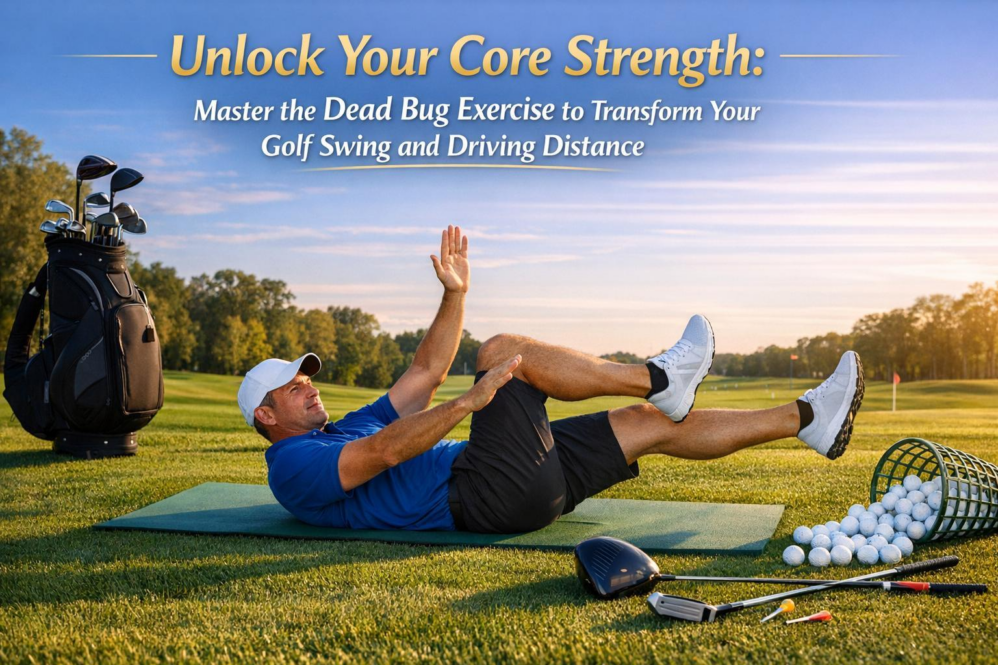
Unlock Your Core Strength: Master the Dead Bug Exercise to Transform Your Golf Swing and Driving Distance
Why Core Strength is Essential for Golfers
A powerful and stable core is the foundation of an effective golf swing and longer driving distance. The core muscles-including the abdominals, obliques, lower back, and hips-help generate rotational power and control. A strong core provides:
- Improved swing stability: Prevents wobbling and loss of balance during your swing
- Enhanced rotational power: Increases clubhead speed for longer drives
- Injury prevention: Supports the spine and reduces strain on lower back muscles
- Better swing mechanics: Allows for a smoother, more controlled motion
Introducing the Dead Bug Exercise for Golfers
The Dead bug exercise is a simple yet highly effective core-strengthening move that improves stability and control-both crucial for golfers. This exercise focuses on engaging your deep core muscles while keeping your spine neutral,preparing your body for the dynamic movements of your swing.
how to Perform the Dead Bug Exercise
- lie on your back on a flat surface or exercise mat.
- Raise both legs and bend your knees at a 90-degree angle, keeping your feet off the ground.
- Lift your arms so they are extended straight above you, aligned with your shoulders.
- Slowly lower your right arm and left leg towards the floor,keeping your lower back pressed into the ground.
- Return to the starting position and repeat on the opposite side (left arm and right leg).
- Complete 10-15 controlled repetitions for 3 sets.
benefits of the Dead Bug Exercise for Your Golf Game
| Benefit | How It Helps Your Golf Swing |
|---|---|
| Core Stability | maintains posture and balance during the swing |
| Controlled Movements | Encourages smooth rotation without over-twisting |
| Lower Back Support | Prevents common golfing injuries related to the lumbar region |
| Increased swing Power | Enables you to drive the ball farther with enhanced force |
Practical Tips to maximize the Dead Bug for Golf Performance
- Focus on form, not speed: Perform each repetition slowly to engage deep core muscles.
- Keep your lower back pressed down: Prevent arching of the spine to protect your back and maximize results.
- Integrate into your warm-up: Perform 1-2 sets before practice or rounds to activate your core.
- Combine with rotational drills: Pair the Dead Bug with medicine ball twists or cable rotations for enhanced golfing core strength.
- Increase reps gradually: As your strength improves, increase sets or hold the limbs longer for greater challenge.
how the Dead Bug Translates to Better Driving Distance
Driving distance depends heavily on generating power from the ground up, with your core acting as the key link transferring force from your legs up through your torso to your arms and club. Here’s how the Dead Bug helps:
- Efficient Force Transfer: A strong core ensures energy generated by your legs is efficiently transmitted to your shoulders and hands, boosting swing speed.
- Reduced Energy leakage: Weak or unstable core muscles allow energy to dissipate, causing weaker drives. Dead Bug training locks your torso firmly to prevent this loss.
- Improved Swing Timing: Better core control helps synchronize upper and lower body movements for a smoother and more powerful swing.
Case study: Golfers Who Improved Their Game with Dead Bug Training
Numerous golfers, from amateurs to pros, have reported significant improvements after incorporating the Dead Bug into their training routines. Here’s a typical success story:
- Golfer Profile: A 45-year-old amateur golfer struggling with inconsistency and a max driving distance of 210 yards.
- training Routine: Dead Bug exercises combined with rotational core drills, three times weekly for 8 weeks.
- Results: Increased swing stability, reduced swing faults, and a driving distance increase of 20-25 yards.
- Feedback: “I feel more powerful and balanced. My drives are longer and straighter.”
Combining Dead Bug with Other Core-Strengthening Exercises for Golf
To create a well-rounded golf fitness program, combine the Dead Bug with these highly effective exercises:
- Planks: Builds overall core endurance and stability
- Russian Twists: Engages obliques for better rotational strength
- Medicine Ball Rotational Throws: Develops explosive rotational power specific to the golf swing
- Bird Dog: Enhances lumbar spine stability and coordination
Sample Weekly Core workout for Golfers
| Exercise | Repetitions/Sets | Focus |
|---|---|---|
| Dead Bug | 3 sets of 15 reps | Core stability and control |
| Plank | 3 sets of 30-60 seconds | Core endurance |
| Russian Twists | 3 sets of 20 twists | Rotational strength |
| Medicine Ball Throws | 3 sets of 10 throws | Explosive power |
Common Mistakes to Avoid When Doing the Dead Bug
- Arching your lower back: Always keep your lower back flat on the ground to protect your spine.
- Rushing reps: Perform each movement slowly with control to maximize core engagement.
- Holding your breath: Maintain steady breathing to keep muscles oxygenated and prevent fatigue.
- Incomplete range of motion: Fully extend the limbs without compromising form for maximum benefit.
Unlock Your Full Golfing Potential Today
Mastering the Dead Bug exercise is a game-changer for golfers looking to improve their swing mechanics, achieve greater driving distance, and reduce injury risk. By incorporating this foundational core exercise into your regular training, you’ll build the essential strength and stability to elevate every aspect of your golf game.


