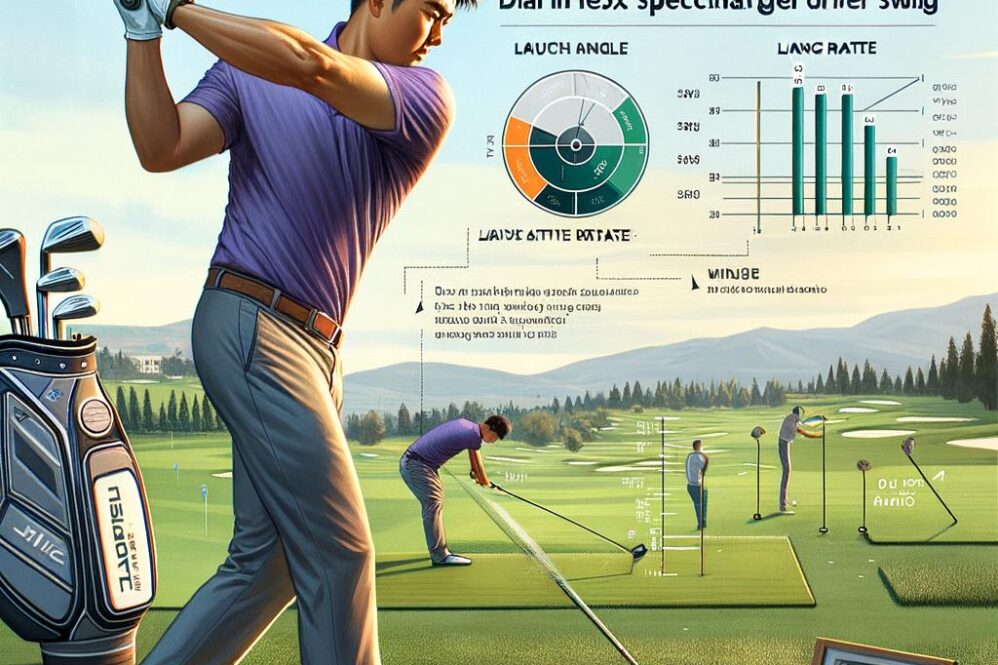
Maximizing driving distance is not simply about creating more clubhead speed; it results from a finely tuned relationship between the golfer, the shaft, and the swing motion. Among all the equipment variables open to players and fitters, shaft flex has one of the strongest effects on how efficiently energy is transferred, how the ball launches, and how tightly shots disperse. Despite this, many golfers still choose flex based on generic swing‑speed charts or what “feels right” instead of relying on measured data. This article reframes shaft flex as a central factor in driver swing power, explaining how it shapes dynamic loft, club delivery, impact conditions, and resulting ball flight. Using concepts from biomechanics and impact physics, it details how different flex and EI (bending) profiles alter timing, release, and the golfer’s ability to repeatedly return the face square at impact. Particular emphasis is placed on launch angle,spin rate,ball speed retention,and efficiency metrics like smash factor.
In parallel, we outline modern, evidence-based fitting approaches that merge launch-monitor data, motion analysis, and player feedback. By building clear, repeatable procedures for testing and confirming shaft flex, golfers and fitters gain a structured roadmap for dialing in driver setup. The end goal is to convert a more precise understanding of shaft behavior into longer carry, better accuracy, and more predictable performance from the tee box.
Understanding Shaft Flex Dynamics and Their Biomechanical Influence on Driver Performance
Grasping how shaft flex interacts with your body’s motion is fundamental to getting the most from your driver performance. From a biomechanical standpoint, the shaft is the link that channels energy from your swing into the golf ball, temporarily storing elastic energy as it bends and then releasing it as it straightens. If the shaft is too soft for your swing speed and tempo, it tends to over-bend, producing excessive lag and frequently enough a rapidly closing face at impact. this can create hooks or high-launch, high-spin drives that balloon and stall, especially into the wind. At the opposite extreme, a shaft that is too stiff may not load adequately, which can rob you of clubhead speed and leave the face open, producing weak fades or slices.As a broad reference, golfers swinging the driver under 85 mph typically do better with more flexible models (Regular or Senior/A-flex), while those above 100 mph often require Stiff or X-stiff shafts to maintain stability and timing. Just as crucial, though, are tempo, transition force, and release pattern: a smooth 105‑mph swinger can load a shaft in a very different way than a quick, abrupt 95‑mph player. For that reason, fitting and coaching should evaluate the entire kinematic chain-grip, posture, backswing, downswing sequencing, and release-rather than judging shaft flex in isolation.
to turn shaft flex behavior into more reliable tee shots, golfers should begin with setup and motion checkpoints that support efficient loading of the shaft. at address,use a neutral grip,maintain slight knee flex,and tilt your spine about 10-15° away from the target with the driver,positioning the ball just inside your lead heel to encourage an upward strike. This configuration provides room for the shaft to load on the way down. During the swing, prioritize a smooth transition from the top instead of a sudden, violent change of direction that can overpower a softer shaft or fail to load a stiffer one. To sharpen this feel, add focused drills such as:
- Tempo Swing Drill: hit drivers at 70-80% effort, counting “one” to the top and “two” to impact to maintain rhythm. This trains you to feel the shaft loading and unloading gradually, not snapping through impact.
- Pump Drill: From the top of the backswing, make two mini “pumps” down to waist height and back up, then swing through. This increases awareness of when the shaft is bending and encourages a repeatable release point.
- impact Tape or Spray Check: Apply face tape or foot spray to the driver and check strike pattern; consistent centre hits within a ½‑inch circle show that the shaft is being loaded and delivered effectively. A scattered pattern may signal a mismatch between flex profile and swing or a sequencing issue.
As timing improves through these drills, many players discover that shafts which previously felt “too soft” or “too stiff” become usable as their biomechanics now match the shaft’s intended bend behavior more closely.
out on the course, a deeper understanding of shaft flex directly shapes strategic shot selection and driver game plans. In stronger winds, for example, a more flexible shaft can highlight curvature if your timing breaks down, so adopting a conservative approach-aiming at wider zones, gripping down ½-1 inch to effectively stiffen the shaft, and calming the tempo-can reduce sidespin and tighten dispersion. When you need maximum carry to clear a hazard or reach a soft fairway, a well-fitted flex makes it easier to launch the ball in the optimal 10-14° window at controlled spin. Train this by pairing launch-monitor feedback (clubhead speed, launch angle, spin rate) with on-course cues (trajectory window, how the ball lands and rolls). Make flex awareness part of practice by rotating between driver-only sessions that emphasize start line and curvature and full-routine sessions that mirror on-course situations:
- Picture exact holes from your home course, choose a target line, and rehearse a pre-shot routine that includes a brief internal cue like “smooth load” or “hold posture” to coordinate body motion with shaft response.
- Lower-handicap golfers should practice shot-shaping-intended fades and draws-while tracking how their shaft flex responds to different face-to-path relationships. record dispersion over at least 10-15 balls per shape to build reliable patterns.
- Newer players and higher handicappers should prioritize one stock shot and use alignment and target selection to steer away from danger, trusting the shaft and swing pattern grooved on the range.
By deliberately combining proper equipment fit, sound biomechanics, and situation-specific strategy, golfers of all abilities can turn an understanding of shaft flex dynamics into lower scores, narrower dispersion, and more confident tee shots.
Quantifying the Relationship Between swing Speed, Tempo and Optimal Shaft Flex Profiles
The connection between swing speed, tempo, and shaft flex is best understood through measurement. Clubhead speed-usually monitored in mph on a launch monitor-is the starting point: driver speeds around 80-90 mph often line up with a regular flex, 90-105 mph with a stiff flex, and above 105 mph with an extra-stiff profile. However, tempo-the ratio of backswing time to downswing time-adjusts these general guidelines. A golfer with a 3:1 tempo and a smooth change of direction frequently enough handles a slightly softer flex than raw speed alone suggests, whereas a player with a sharper 2:1 tempo and a forceful transition frequently benefits from a stiffer tip section to control shaft deflection. To evaluate this in practice, schedule a launch-monitor session and measure clubhead speed, ball speed, launch angle, spin rate, and dispersion with at least three shaft flex options, noting how each feels during the first third of the downswing and at impact.
From a coaching point of view, the objective is to match the shaft bend profile to the player’s kinematics so that the club arrives at impact with a stable dynamic loft and face angle. A shaft that is overly soft for a player’s speed and tempo can allow the clubhead to outrun the hands, producing timing-sensitive hooks, excess spin, and ballooning ball flights. A shaft that is too stiff can cause low-launch blocks, weak fades, and inconsistent center contact because the player must work harder to square the face. On the course this shows up as missed fairways, inconsistent distance gapping with long clubs, and limited options on par 5s. To blend equipment insights with technical checkpoints, players should test shafts while monitoring fundamentals such as:
- Setup: ball off the lead heel, spine tilted 5-10° away from the target, and hands slightly behind the clubhead with the driver to encourage a positive angle of attack.
- Transition: Emphasize a smooth lower-body start so the shaft loads predictably; a “hit-from-the-top” move exaggerates any shaft mismatch.
- Impact: Track strike location with impact tape or spray; optimal shaft flex should tighten the contact pattern around the center, especially with the driver.
To make steady progress, golfers should use structured practice plans that tie together swing-speed progress, tempo control, and shaft evaluation. For newer players, start with a mid-flex, mid-weight shaft and prioritize tempo drills like:
- Metronome Swings: Set a metronome or tempo app (around 72-80 bpm) and synchronize backswing and downswing to a consistent beat, focusing on balance instead of raw speed.
- Three-Ball Progression: Hit three shots in a row-smooth, normal, then slightly faster-while keeping the same finish position and ball flight. Note at which effort level dispersion widens.
For better players, blend in speed training (overspeed systems, radar feedback) and then re-test shaft behavior in different environments-into the wind, on soft fairways, or on firm, fast courses where launch and spin must be dialed for ideal carry and rollout. Mentally,players should commit to process goals like “maintain 3:1 tempo and centered contact” rather of “swing harder,” and use on-course checkpoints such as choosing a slightly more lofted driver or a more stable shaft profile in high-pressure situations. Over time, this measured combination of shaft fitting, tempo regulation, and intelligent course management leads to more predictable yardages, reduced dispersion, and better scoring, especially on long par 4s and reachable par 5s.
Evaluating Launch Angle and Spin Rate Outcomes across Distinct Shaft Flex Categories
From a performance angle,driver launch angle and spin rate are the most visible ball-flight traits influenced by different shaft flex designations (L,A,R,S,X). In broad terms, a softer flex (more “whippy”) increases forward bend and dynamic loft at impact, usually yielding a higher launch and often more spin.A stiffer flex can reduce dynamic loft,promoting a lower launch and lower spin when correctly paired with a golfer’s speed and tempo. For many recreational golfers with driver speeds in the 85‑100 mph range, an effective window is typically 11°‑15° launch with 2200‑3200 rpm of spin, adjusted for angle of attack and course conditions. Stronger, low-handicap players or those swinging 105+ mph often maximize performance at launches of about 10°‑13° with 1800‑2600 rpm of spin, creating high carry and controlled roll. These values are not rigid rules but targets that must be interpreted alongside your typical pattern, misses, and strategy requirements.
To translate these numbers into better play, golfers should systematically test how different shaft flexes change their impact conditions and dispersion. You want to know not only whether a particular flex pushes launch and spin up or down, but also how it affects strike quality, face-to-path relationship, and consistency when the pressure rises. In a launch-monitor session, compare at least two neighboring flex categories (e.g.,Regular vs. Stiff) while keeping the head, loft, golf ball, and tee height constant. focus on three primary outputs: carry distance, peak height, and spin stability (shot-to-shot spin variation). Then connect this data to on-course decisions. If a softer shaft produces a slightly higher launch and spin but clearly tighter dispersion, that option might be better on tighter driving holes, even if you sacrifice a few yards of roll. On the othre hand, if a stiffer shaft cuts down spin and produces a more penetrating flight, it may be ideal on firm, downwind par 5s where extra rollout sets up more eagle chances. Reinforce these choices with practice patterns that blend equipment evaluation and swing mechanics, such as:
- Impact Pattern drill: Use impact tape or spray on the driver face. With each shaft flex, hit 10 shots aiming for center contact and track average strike location, launch angle, and spin rate. The best flex is usually the one that produces the most centered strikes with launch and spin closest to your target range.
- Trajectory Ladder drill: With one shaft flex, practice intentionally altering launch by adjusting ball position and tee height (slightly forward and higher for more launch, slightly back and lower for less). Note how these changes shift launch and spin via a monitor or by watching peak height and rollout. This develops awareness of how setup fundamentals interact with shaft behavior.
- Course-Simulation Drill: On the range,recreate three types of holes with different wind and turf conditions (headwind/soft,calm/normal,downwind/firm). With your preferred flex, choose targets and shot shapes tailored to each scenario, focusing on strategic club selection-for instance, smoother swings with a higher-spin setup into a headwind for control, versus a more assertive, lower-spin configuration downwind.
As you improve launch and spin through shaft selection,it is vital to relate these changes back to overall swing mechanics and scoring strategy. Many amateurs with very high driver spin (e.g., 3500‑4000+ rpm) assume they need an ultra-stiff shaft, while the underlying issue is frequently enough a steep angle of attack and an open clubface at impact. In those cases, start with basics: use a wider stance, place the ball just inside the lead heel, and feel a shallow, upward hit on the ball (angle of attack between +1° and +4°) rather than “hitting down.” For beginners, a regular-flex shaft combined with this upward strike can create a higher-launch, mid-spin flight that stays in play more consistently. For advanced players, fine-tuning may include pairing a stiffer tip profile with a neutral grip and a quieter lower body to produce low-spin, penetrating drives that hold tight fairways under tournament conditions. Track your progress with specific goals such as cutting average driver spin by 300‑500 rpm while keeping or increasing launch, or shrinking your typical dispersion by 10‑15 yards. By aligning shaft flex, launch-spin window, and course management choices, you convert driver setup from guesswork into a structured path toward lower scores and more predictable tee shots.
Integrating Player Kinematics and kinetics into Evidence-Based Shaft Flex Selection
Bringing together player kinematics (how the body and club move) and kinetics (the forces and torques that create that motion) allows coaches to move beyond generic labels like “regular” or ”stiff” and tailor the shaft’s bend profile to the golfer’s real swing. Instruction should start with a structured assessment of swing speed, tempo, transition force, and release timing. Using radar-based launch monitors and high-speed video, measure clubhead speed at impact (such as, 80 mph for a newer player, 95‑105 mph for a developing golfer, 110+ mph for a low handicapper), attack angle (e.g., around +3° with the driver for strong carry), and dynamic loft. At the same time, capture body motion: hip and shoulder rotation at the top, hand path, and the sequence of lower body, torso, and arms. When these patterns are compared with shaft deflection data-how much the shaft bends during the downswing-coaches can choose a flex that complements rather than fights the golfer’s natural movement. A player with a smooth tempo and late hand release may perform best with a slightly softer profile that adds dynamic loft and launch, while a golfer with a violent transition and early release often needs a stiffer butt and midsection to stabilize the face and control curve.
To turn this information into evidence-based shaft flex selection, instructors should link the numbers to clear ball-flight results, drawing on concepts from The Role of Shaft Flex in Golf Driver Performance. A driver that is too soft for a given kinetic pattern frequently enough yields excessive spin (3,200+ rpm), high launch, and a left-biased pattern for right-handed golfers as the shaft over-deflects and the face closes quickly. A shaft that is too stiff usually produces low launch (< 9°), diminished carry, and a soft fade or low block, especially in crosswinds or on firm fairways where extra roll hides lost carry distance. On-course, golfers can trial different shaft options with three-hole “A/B” comparisons under similar conditions, tracking:
- Average carry distance over at least 5 drives per shaft (using on-course GPS or a portable launch monitor)
- Fairways hit and typical miss (pull, push, hook, slice)
- Peak height and how the ball behaves into or with the wind
During these tests, keep address fundamentals steady-ball just inside the lead heel, spine tilted 5‑10° away from the target, and a balanced athletic stance-so that changes in ball flight primarily reflect the interaction between shaft and swing rather than inconsistent setup.
Kinematic and kinetic insights should influence not only equipment selection but also technique refinement and practice structure throughout the bag. When shaft flex syncs with a golfer’s sequencing, the player can direct more attention to improving swing mechanics, short game, and strategy instead of compensating for misfit gear. In practice, use integrated drills that combine body movement with ball-flight feedback, such as:
- Tempo and Transition Drill: Hit half-speed drivers with a metronome or internal count (such as, “one-two-three” to the top, “four” at impact) to smooth out transition forces.This is especially useful for golfers who overload a softer shaft and lose face control.
- Launch and Curve Control Drill: With a properly fit shaft, practice hitting low, medium, and high drives and intentional fades/draws by modifying tee height, ball position by 0.5‑1 inch, and face alignment. Track start line and curvature to verify that the shaft supports predictable shaping.
- course Strategy Simulation: on the range or in a simulator, recreate holes with narrow fairways, crosswinds, or forced carries. Choose targets and shot shapes that increase fairway percentage and ideal approach angles, noting how the chosen shaft flex influences confidence when the stakes feel higher.
For newer golfers, the main objective might potentially be developing a consistent launch window (for example, 11‑14° with moderate spin). Advanced players may focus on a specific dispersion model (a controlled 5‑10‑yard fade). By continuously comparing movement patterns, shot data, and scoring outcomes, golfers can refine both their equipment and their swing, resulting in lower scores, more fairways hit, and smarter, more aggressive course management.
Developing a Data-Driven Fitting Protocol for Maximizing Driver Distance and Accuracy
Creating a truly data-driven driver fitting process starts with establishing objective baseline metrics for both distance and accuracy, then methodically adjusting variables like loft, shaft flex, shaft length, lie angle, face angle, and head design. Using a launch monitor,the fitter should first capture 10‑15 shots with the golfer’s current driver,recording clubhead speed,ball speed,smash factor,launch angle,spin rate,peak height,carry distance,and dispersion. For most players, a good driver window is roughly 10‑15° of launch with 2,000‑3,000 rpm of backspin, modified according to swing speed and angle of attack. As a working baseline, golfers swinging 90‑100 mph typically benefit from a mid-launch, mid-spin setup, while slower speeds often require more loft and a more flexible shaft to raise launch and carry. Throughout testing, fitters must also watch setup fundamentals-ball position off the lead heel, spine tilt slightly away from the target, stance about shoulder width or a bit wider-since poor address can skew data and hide the true impact of equipment changes.
A key element of this protocol is understanding the role of shaft flex and profile in driver performance and how it interacts with a golfer’s motion. In general, a softer shaft flex (Regular vs. Stiff, such as) can help moderate-speed players load the shaft more easily, boosting launch and reducing the tendency to leave the face open, which often creates weak fades or slices. Higher-speed players may need a stiffer shaft to control face angle and avoid excessive spin. Instead of guessing, the fitter should compare at least two flexes and, when possible, contrasting shaft bend profiles (low, mid, and high kick points), watching for shifts in start line, curve, and spin axis. To embed this into skill development, golfers can use targeted practice such as:
- Center-Contact Drill: Place impact tape or spray on the face and hit 10‑12 drives, aiming to keep strikes within a 1‑1.5 cm radius of the sweet spot.Track carry and dispersion with each shaft option.
- Launch-Window Drill: Using a launch monitor, try to hold launch angle within a 2° band (as an example, 12‑14°) while alternating between shaft flexes, noting which configuration produces the most repeatable launch and curvature.
- Tempo and transition Drill: For players who “yank” from the top, rehearse three slow practice swings emphasizing a smooth change of direction, then one full-speed swing, and watch how each shaft flex reacts to both controlled and aggressive tempos.
By connecting these data points with video of grip, wrist angles at the top, and club path through impact, instructors tie fitting results to concrete technical cues that golfers can reproduce during play.
To ensure the fitting protocol optimizes not just raw yardage but also scoring-focused accuracy and course strategy, the final step is to embed the new setup into real-course scenarios and structured practice. Once the ideal driver and shaft flex are selected, the golfer should perform on-range simulations such as:
- Fairway Corridor Drill: Mark a virtual fairway 30‑40 yards wide with alignment sticks or flags, and hit sets of 10 drivers, counting how many finish inside the corridor. Aim for at least 7/10 fairways while keeping carry distance within 5‑10 yards of the fitted average.
- Wind and Lie Adaptation: On blustery days,practice trajectory control by altering ball position (slightly back for lower flight) and tee height with the same fitted driver. Track whether changing conditions considerably affect spin or start line and, if so, consider minor lie or face-angle tweaks.
- Strategy Mapping Drill: Using course maps or GPS, identify 3‑5 holes where driver is a borderline choice. Based on your updated dispersion, decide when to hit driver, when to lay back with 3‑wood or hybrid, and which side of the fairway is the safest “miss.”
For beginners,the focus should be consistent contact,basic alignment,and matching shaft flex to a agreeable tempo. Low-handicap players can refine face-to-path relationships, start-line bias, and shot-shaping capability with their fitted driver. Throughout, golfers should keep a simple journal of fairways hit, typical miss, and perceived swing feel under different weather and pressure conditions. This continuous feedback loop ties together equipment, technique, and pre-shot routines-such as committing to a specific target and visualization-so that gains in driver distance and accuracy translate directly into lower scores and more decisive tee shots.
implementing On Course Validation and Feedback Loops to Refine Shaft Flex Optimization
Validating shaft flex on the course starts with a plan that connects launch-monitor information to actual playing environments. After choosing a driver shaft based on initial clubhead speed (such as, 85‑95 mph for regular, 95‑105 mph for stiff) and tempo profile, golfers should test it over at least 3‑5 full rounds while tracking both dispersion and scoring effects. Use a simple log-on your scorecard or in a golf app-to record start line, curvature (fade/draw), landing position relative to target (in yards), and perceived feel at impact. For example,if a golfer with a 100‑mph driver speed and stiff shaft repeatedly sees the ball start right and keep fading,the shaft might potentially be too stiff for their loading pattern,leaving the face open. Conversely, a player who hits high, left-starting hooks when nervous may be using a shaft that is too soft, allowing the face to shut quickly. Adding this data to a post-round review creates a feedback loop that goes beyond simple visual observation and links shaft behavior to swing mechanics and decision-making.
To sharpen shaft-flex optimization, golfers should run focused on-course validation drills that spotlight driver performance under various conditions. Between tee markers, define a fairway corridor (for example, 25‑30 yards wide) and hit 3‑5 drives, committing to a particular shape such as a controlled 5‑10 yard fade or draw. Then evaluate the results using checkpoints like:
- Setup: Ball opposite the lead heel (for right-handers), spine tilted 5‑10° away from the target, and steady grip pressure around 4‑5/10 to avoid over-tensing the shaft.
- Swing Mechanics: Smooth transition at the top, avoiding abrupt, jerky moves that overload the shaft and disrupt timing.
- Contact: Centered strikes verified with impact spray or foot powder; more than two consecutive toe or heel hits suggest a disconnect between shaft feel and swing tempo.
- Trajectory: Keep launch within a consistent band (e.g., 10‑14° for many players) and maintain a stable spin profile; regular ballooning or extremely flat shots over multiple holes may signal that a different flex or weight is required.
Beginners can perform this drill from forward tees, emphasizing solid contact and basic directional control, while stronger players should check performance in the wind-testing the same shaft into a 10‑15 mph headwind to confirm that spin and curvature remain predictable.
Effective feedback loops also require golfers to weave technical insights into their course strategy and mental approach. After several rounds, categorize driver performance by scenario: wide versus narrow fairways, downwind versus into the wind, and high-pressure holes like scoring par 5s. Use these patterns to make deliberate choices, such as:
- If the optimized shaft flex still produces a consistent 8‑12 yard fade, aim 8‑10 yards left of center on tight driving holes rather than trying to force a draw.
- If a softer flex launches the ball higher, rely on this setup when you must carry a fairway bunker at 230‑240 yards, but switch to 3‑wood or hybrid on narrow par 4s where roll-out control matters more than distance.
- Include a pre-shot routine with a brief “shaft feel” check-two rehearsal swings focusing on tempo and load-to lock in the timing that suits your chosen flex.
By reflecting after each nine holes on fairways hit, average miss direction, and resulting approach distances, golfers create an ongoing feedback cycle in which shaft-flex choice, swing improvement, and strategy evolve together. This methodical approach not only sharpens driver dispersion but also improves approach positions, directly contributing to lower scores and more confident play with every club.
Translating Empirical Findings into Practical Guidelines for Sustainable Swing Power
Turning research on sustainable swing power into real-world coaching begins with understanding how to build speed efficiently instead of merely swinging harder. Biomechanical studies show that reliable power is created by a well-sequenced kinetic chain: ground reaction forces → lower-body rotation → torso and shoulder turn → arm and club release. In practice, this starts at setup with an athletic posture: soft knees, a hip hinge of roughly 25‑35°, and a spine tilt 5‑10° away from the target with the driver to support an upward strike. New golfers should first focus on a solid base and balanced finish, while better players refine temporal sequencing-when each segment reaches its peak speed. Build this under realistic conditions with drills that blend mechanics and feel, such as:
- Step-Through Drill (Power Sequencing): Take the club to the top, then step your lead foot toward the target as you begin the downswing, feeling the lower body start the motion. Hold your finish for at least 3 seconds to reinforce balance.
- Slow-Motion Rehearsals: Make swings at 30‑40% effort,pausing at takeaway,the top,and impact checkpoints to verify posture,spine angle,and weight shift without chasing speed.
- Launch Window Check (Monitor or Range Markers): Work toward a driver launch angle between 10‑15° with spin under 3,000 rpm for many players, adjusting ball position and tee height to sustain those numbers over multiple shots.
These drills convert technical guidance on launch,spin,and angle of attack into repeatable movements that build sustainable swing power without excessive strain.
Research on driver performance consistently underlines the role of shaft flex and bend profile in maintaining power throughout a full round, not just on a few swings. A shaft that is too stiff for a golfer’s clubhead speed tends to create low-launch, low-spin shots that feel harsh and invite ”over-swinging” to make up for lost distance; one that is too soft may generate high-spin, floating drives that offer little roll and require extra effort to control.As a rule of thumb, players swinging around 80‑95 mph with the driver commonly benefit from a regular flex, while speeds of 95‑110+ mph trend toward stiff or X-stiff flex, though individual tempo and release remain critical. On the course, golfers should track dispersion and strike quality-not just total distance. Use focused routines such as:
- Center-Contact Routine: Spray or tape the driver face and hit 10 balls, aiming for at least 7/10 strikes within a quarter-sized area near the center. If centered contact demands obvious “forcing” of the swing, revisit shaft flex and weight.
- trajectory Ladder Drill: With the same shaft, intentionally hit three low, three medium, and three high tee shots. A well-fitted shaft allows these changes mainly via ball position and tee height adjustments without sacrificing overall control.
- Fatigue and Weather Check: Late in the round or in gusty conditions, note whether the driver swing feels labored or overly sensitive to timing. Sustainable power means you can maintain rhythm on tight driving holes or in crosswinds with a smooth 80‑90% effort instead of all-out swings.
By pairing shaft flex and setup fundamentals with performance data, golfers create a system in which speed comes from efficient loading and unloading of the shaft, safeguarding both accuracy and endurance.
Sustainable power must also be integrated into course management, the short game, and mental routines to impact scoring. Evidence from professional and amateur play shows that slightly shorter but straighter drives frequently enough yield better scores than sporadic ”bombs” that bring penalty strokes into play.On demanding par 4s or into a strong headwind,choosing a more controllable club or a “fairway-finder” driver swing-gripping down 1‑2 cm and swinging at 70‑80% effort-can significantly reduce big numbers even if approach shots are a club longer. Build this into practice by pairing full-swing driver work with short game and putting drills that teach energy management:
- Two-ball Strategy Drill: On the range,hit one “stock” driver at your normal target,then one lower-trajectory,controlled driver imagining a narrow fairway. On the putting green, follow each pair of drives with 3‑5 putts from 10‑15 feet to train the shift from power to precision.
- Greenside Power Translation: Practice pitches and chips using a compact, accelerating motion that resembles your full-swing rhythm-short backswing, smooth acceleration, and stable lower body. Track your up-and-down percentage from 10‑30 yards to see how consistent swing fundamentals improve scoring.
- Mental Tempo Cueing: Use a simple count like “one” to the top and “two” through impact for all full swings, from driver to long irons. Consistent rhythm, supported by controlled breathing, reduces the urge to overswing on long par 5s or shots over hazards.
By repeatedly applying evidence-based swing mechanics, thoughtful equipment choices (including the right shaft flex), and situation-aware strategy, golfers from beginners to low handicaps can develop repeatable, sustainable swing power that lowers scores while preserving physical resilience across all 18 holes.
Q&A
**Q1. What is shaft flex, and why is it critical for maximizing driver distance?**
Shaft flex refers to how much a golf shaft bends during the swing and through impact. It depends on the shaft’s material properties (such as modulus of elasticity), geometry (length, wall thickness, taper), and the loading created by the golfer’s motion.
It matters for distance because it affects:
– **Dynamic loft** at impact (which shapes launch angle)
– **Face orientation and club path** (which influence curve and dispersion)
– **Clubhead speed** (through energy transfer and the timing of the shaft’s “unloading”)
When flex is properly matched, the shaft stores and releases energy in sync with the golfer’s tempo and release, optimizing ball speed, launch conditions, and directional control.
—
**Q2. how does shaft flex influence launch angle and spin rate from a biomechanical and ball-flight standpoint?**
Shaft flex alters **dynamic loft** and **dynamic lie/face angle**, which in turn dictate launch and spin. Key mechanisms include:
1. **Forward Bend (“Lead”) and Dynamic Loft**
– On the downswing, a more flexible shaft generally shows more forward bend at impact.
– This raises delivered loft and typically **increases launch angle**.
– Excessive forward bend with an overly soft shaft can over‑loft the head, causing high-launch, high-spin drives that “balloon.”
2. **Shaft Droop and Spin axis**
– Centripetal forces make the shaft bend downward (“droop”).
– Flex-related changes in droop can tweak dynamic lie and face-to-path, influencing **spin axis tilt** (fade/draw bias) and dispersion.
3. **Face Closure Rate and Gear Effect**
– Flex profile interacts with release timing to set how quickly the face closes.
– Changes in strike location (heel vs.toe) alter gear-effect contributions to spin and curve, which may be amplified or dampened depending on how the shaft bends and recovers.
in general:
– **Too soft a shaft** often yields **higher launch and higher spin**, reducing total distance via excessive carry with limited roll and larger curvature.
– **Too stiff a shaft** can lead to **lower launch and lower spin**, underutilizing carry and punishing mis-hits more severely.
—
**Q3. How does individualized shaft flex affect swing biomechanics and kinematics?**
Shaft flex interacts with the golfer’s movement in subtle but measurable ways:
– **Tempo and Transition**
– Golfers with a **fast transition** (quick change of direction) heavily load the shaft and usually need a stiffer profile that resists over-deflection.
– smooth-tempo players frequently enough benefit from slightly more flexible shafts that offer feedback and reinforce rhythm.
- **Release Timing**
– **Late releasers** (maintaining lag into the downswing) can load stiffer shafts effectively; too soft a shaft may over-deflect and mistime the release.
– **Early releasers** may struggle to load very stiff shafts, leading to low dynamic loft and reduced speed; a more flexible shaft can assist.
– **Motor Control and Feel**
– The golfer’s sense of weight, stability, and timing is mediated by shaft feel.
– A well-fit flex and profile reduce compensations like early extension or steep over-the-top moves by providing predictable cues about head location.
– **Consistency of Kinematic Sequence**
– A compatible shaft supports a repeatable pelvis-torso-arms-club sequence.
– A mismatch can cause a player to subconsciously “wait” for a soft shaft or “force” a stiff one, increasing variability in path, face angle, and attack angle.
—
**Q4. What measurable variables should be collected in a shaft-flex fitting for drivers?**
A solid, evidence-based fitting should include both **swing delivery** and **ball-flight** data:
1. **Swing Metrics**
– Clubhead speed
- Attack angle (AoA)
– Club path and face-to-path
– Dynamic loft
– Face angle at impact
– Shaft lead/lag and droop (where tech allows)
– Tempo and transition speed (frequently enough inferred from speed build-up, video, or motion sensors)
2. **ball-Flight Metrics**
– Ball speed
- Launch angle
– Backspin
– Sidespin/spin axis tilt
– Peak height
- Carry and total distance
– Lateral dispersion and left/right bias
– Impact pattern on the face
3. **Subjective & Qualitative Feedback**
– Player impressions of feel, stability, and required effort
– Confidence when “swinging hard”
- Any signs of fatigue or strain during extended testing
—
**Q5. how can a fitter systematically test shaft flex options to optimize distance, accuracy, and consistency?**
A structured process might look like this:
1. **Baseline Assessment**
– Use the golfer’s current driver for 10‑15 representative swings.
– Calculate averages and variability (standard deviations) for ball speed, launch, spin, dispersion, and carry.
2. **Candidate Shaft Selection**
– Based on **clubhead speed**, **transition**, and **release**, choose 3‑5 candidate flexes/profiles (R, S, X; different tip stiffness and weights).
– Keep **head model, loft, and lie** as constant as possible.3.**Controlled Comparison**
– For each shaft, gather 8‑12 valid shots, discarding extreme outliers.
– Track:
– Mean carry and total distance
– Mean launch and spin versus target windows
– Lateral dispersion (yards left/right of center)
– Standard deviation of face-to-path and dynamic loft
4. **Optimization Criteria**
- **Distance:** Maximize **carry + roll** within appropriate launch and spin windows for that player’s speed and AoA.
– **Accuracy:** Minimize average lateral error and reduce severe directional biases.
– **Consistency:** Reduce shot-to-shot variation in key impact and dispersion metrics.
5. **Iterative Refinement**
– If one shaft performs best but launch/spin are slightly off, tweak loft or head settings while keeping that flex.
– Re-test to separate shaft effects from head/loft adjustments.
—
**Q6. Are there general guidelines linking swing speed to shaft flex, and what are their limitations?**
Common driver speed guidelines include:
– < 85 mph: Senior (A) or softer Regular
– 85‑100 mph: Regular (R) to Stiff (S)
– 100‑110 mph: Stiff (S) to Extra Stiff (X)
– > 110 mph: X or stronger (Tour X, TX)
However, these are only **starting points**. Limitations:
- They ignore **transition force**, **tempo**, and **release timing**.
– There is no universal standard for R, S, or X; flex labels vary widely by brand.
– Shaft **weight**, **torque**, and **bend profile** interact with flex to determine performance and feel.
Thus, flex should never be chosen by speed alone; it must be validated with measured launch, spin, and dispersion.
—
**Q7. how does shaft flex interact with shaft weight and bend profile in determining performance?**
Flex is just one element in a three-dimensional system:
- **Weight**
– Heavier shafts can promote **control** and smoother tempo but may reduce speed for some players.- Lighter shafts can raise **clubhead speed**, but might decrease stability or change swing plane if too light.
- **Bend Profile (Butt-Mid-Tip Stiffness)**
- **Tip-stiff shafts** often lower launch and spin and give a “solid” feel through impact.
– **More active tips** raise launch and spin and can assist golfers who struggle to square the face.- **Butt stiffness** largely governs overall feel and tempo control, while **mid-section stiffness** influences the sensation of load/unload in transition.
effective fitting considers flex, weight, and profile together; as a notable example, a golfer may succeed with a relatively stiff flex if the shaft is light with a more responsive tip.
—
**Q8. What are common performance signs that a golfer is using the wrong shaft flex?**
**Indicators the shaft may be too soft:**
– Very **high launch and spin**; shots seem to float or “balloon.”
– Noticeable **left bias** for right-handers due to a fast-closing face, especially with aggressive transitions.
– A perception that the head is “whipping” or lagging excessively,making timing hard to control.
– large shot-to-shot variability, especially when swinging harder.
**Indicators the shaft may be too stiff:**
– **Low launch and low spin** with shots dropping from the sky.
– Struggling to generate normal clubhead speed; more effort for less distance.
– Persistent **right bias** (for right-handers) from difficulty squaring the face.
– Harsh,”boardy” feel,especially on off-center hits,reducing confidence to commit to the swing.
These cues should be confirmed with launch-monitor data rather than judged by feel alone.
—
**Q9. How can optimal shaft flex boost both distance and fairway-hit percentage simultaneously occurring?**
Distance and accuracy can improve together when **delivery becomes more stable**:
– **Better energy transfer:** A properly matched flex lets the golfer swing near their top speed while maintaining face and path control, raising **ball speed** without sacrificing strike quality.
– **Tighter dynamic parameters:** Optimized flex reduces variation in dynamic loft, face angle, and strike location, leading to **more uniform launch and spin** and a steadier flight.
– **Higher confidence:** When the club feels stable even at high speeds,players are more likely to swing freely,preserving sequence and reducing steering or deceleration.
In practice, many players see both **longer average distance** and **higher fairway percentage** after dialing in flex, thanks to more centered contact and reduced curvature.
—
**Q10. What is a concise, evidence-based process for a golfer to “master shaft flex” for driver swing power?**
1. **Measure Baseline**
– use a launch monitor with your current driver. Record 10‑15 shots: club speed, ball speed, launch, spin, carry, total, and dispersion.
2. **Define Targets**
– Based on your speed and AoA, set realistic **launch and spin windows** (using modern optimization charts or fitter guidance).3. **Test Systematically**
– With a qualified fitter, test multiple flexes and bend profiles while keeping head and loft consistent when possible.
– Gather 8‑12 quality strikes per setup.
4. **Analyze Quantitatively**
– Compare both **averages** (distance,spin,launch) and **variability** (dispersion,standard deviations).- Choose the configuration that hits or nears your ideal launch/spin while **increasing ball speed** and **reducing lateral spread**.
5. **Validate in Real Conditions**
– Play with the chosen setup over several rounds or extended sessions. Confirm that performance holds up under different lies, winds, and pressure.
By combining objective launch-monitor data, an understanding of shaft-swing biomechanics, and your own feel feedback, shaft flex can be individualized to unlock maximum driver swing power while maintaining-or even improving-accuracy and consistency.
Optimizing driver shaft flex is not a matter of preference alone but a measurable, biomechanically grounded step that can significantly influence launch angle, spin characteristics, and impact efficiency. When shaft properties are carefully aligned with a golfer’s swing speed, tempo, release pattern, and kinematic sequence, the clubhead can be delivered more reliably with optimal dynamic loft and face orientation at impact. The payoff is greater potential carry distance and total yardage alongside improved directional control and tighter shot patterns.
The evidence supports a fitting model that treats shaft flex as a core variable in a complete evaluation, rather than an isolated equipment choice. By blending launch-monitor data-ball speed, launch angle, spin rate, dispersion-with detailed swing analysis, golfers and fitters can select a shaft profile that truly matches the golfer’s unique movement signature. This approach moves beyond generic flex labels and instead uses quantitative benchmarks to confirm each decision. Ultimately,”mastering” shaft flex is less about chasing a specific label and more about harmonizing shaft mechanics with the documented realities of your swing. Golfers who commit to this data-driven, personalized fitting process are best positioned to gain distance off the tee while simultaneously enhancing accuracy, consistency, and long-term performance.
Unlock Explosive Distance: Dial In Shaft Flex to Supercharge Your driver Swing

Why Shaft Flex Is the Hidden Engine of Your Driver Distance
When golfers talk about hitting longer drives, they usually jump straight to driver loft, ball type, or swing technique. But the real engine behind your driver distance is frequently enough the shaft flex.
The way your driver shaft bends, unloads, and returns to square at impact has a massive influence on:
- clubhead speed and smash factor
- Launch angle and spin rate
- Shot dispersion and fairway hit percentage
- Consistency of contact (center-face vs. heel/toe strikes)
Dialing in the correct shaft flex for your swing speed turns your driver into a custom-fit power tool instead of a random stick you’re trying to time perfectly.
What Exactly Is Shaft Flex?
Shaft flex is the measure of how much a golf shaft bends during the swing. Every driver shaft deflects as you load it on the backswing and transition into the downswing. The amount and timing of this bend influences:
- Dynamic loft at impact (how much loft the club effectively shows at strike)
- Delivered face angle (open, square, or closed)
- Clubhead path and angle of attack
In most off-the-rack drivers, you’ll see the following common flex labels:
- L – Ladies
- A or M – Senior / Amateur
- R – Regular
- S – Stiff
- X – Extra stiff
Unluckily, ther is no industry-wide standard for flex ratings, so one brand’s stiff may feel like another brand’s regular. That’s why understanding how shaft flex interacts with your swing is far more critically important than simply reading the label.
How Shaft Flex Affects Launch, Spin, and Ball Flight
If your goal is to increase driver distance while keeping the ball in play, you need a launch window that combines:
- Optimal launch angle
- Controlled backspin
- Predictable shot shape
Shaft flex directly alters these elements by changing the timing of shaft deflection.
Too Soft a Shaft: Typical Ball Flight Patterns
- Clubhead arrives with too much dynamic loft → ball launches too high
- Added spin → ballooning flight, loss of roll-out
- Face may close too quickly → hooks or pull-hooks
- Feel of the head “lagging” and then ”whipping” through impact
Too Stiff a Shaft: Typical Ball Flight Patterns
- clubhead doesn’t have time to fully release → lower dynamic loft
- Low, spinny shots or weak fades that fall out of the air
- Face can be open at impact → blocks and slices
- Harsh, boardy feel and difficulty sensing the clubhead
The right flex for your driver swing finds a sweet spot where:
- The shaft loads smoothly on the way back
- It unloads on time through impact
- You see a penetrating launch with controlled spin and a consistent shot shape
Matching Shaft Flex to Swing Speed and tempo
While driver swing speed is a key indicator for fit, tempo and transition (how aggressively you start the downswing) are just as critically important. Two golfers with the same speed may need different flexes depending on how they load the shaft.
| Clubhead Speed (Driver) | Typical Carry Distance* | Suggested Flex | Swing Profile |
|---|---|---|---|
| < 80 mph | Under 180 yds | L / A (Senior) | Smooth, slower tempo |
| 80-94 mph | 180-220 yds | R (Regular) | Moderate tempo |
| 95-105 mph | 220-250 yds | S (Stiff) | Moderate to speedy |
| 106-115 mph | 250-275 yds | X (extra Stiff) | Quick, aggressive |
| 115+ mph | 275+ yds | TX / Tour X | Very aggressive |
*Approximate carry distances assuming solid contact and optimized launch conditions.
Tempo & Transition: The Missing Link
Two players at 100 mph driver speed:
- player A: Smooth, gradual transition → may fit Regular or soft Stiff
- Player B: Short backswing, violent transition → often needs firm Stiff or X
If you have a quick transition and tend to yank the club from the top, a shaft that’s too soft will feel wild and unpredictable. If you’re very smooth, an excessively stiff shaft never really loads, robbing you of distance and feel.
Key Launch Monitor Numbers for Shaft Flex Fitting
To truly dial in shaft flex and maximize driver performance, use a launch monitor (Trackman, GCQuad, FlightScope, or even a quality consumer launch monitor). track these core metrics:
- Clubhead Speed
- Ball Speed
- Smash Factor (ball speed ÷ club speed)
- Launch Angle
- Backspin
- Side Spin / Axis Tilt
- Carry Distance & Total Distance
- Offline Dispersion
| Handicap Range | Ideal Smash | Typical Launch | Typical Spin |
|---|---|---|---|
| 0-5 | 1.47-1.50 | 11-14° | 2000-2600 rpm |
| 6-15 | 1.43-1.47 | 12-15° | 2300-3000 rpm |
| 16+ | 1.38-1.43 | 13-17° | 2600-3400 rpm |
If changing only the shaft flex (same head, loft, and ball) yields:
- higher smash factor
- Launch angle in your target window
- Spin dropping from excessively high or rising from too low into the ideal range
- Tighter dispersion pattern
…you’ve likely found a better match for your swing.
Biomechanics: How Shaft Flex Interacts with Your Driver Swing
From a biomechanics perspective, shaft flex modifies how your body sequences the swing. A well-fit driver shaft helps you:
- Load the shaft naturally on the backswing without forcing it
- Maintain lag in transition instead of dumping it early
- Square the clubface with less hand manipulation
- Control the timing of release through impact
Common Swing Compensations with the Wrong flex
- Too soft: You start steering the club, slow down through impact, or hold off release to avoid hooks.
- Too stiff: you flip your hands, stand up out of posture, or over-swing trying to “make it flex.”
Both scenarios waste energy and reduce clubhead speed. The right shaft flex allows you to stay athletic and rotate hard without fear of where the ball will go.
A Simple Protocol to Test and Optimize Shaft Flex
Use this practical, step-by-step protocol when you visit a driver fitting or test shafts on a launch monitor.
Step 1 - Establish Your Baseline Driver
- Warm up with wedges and irons until you feel loose.
- Hit 8-10 drives with your current gamer.
- Record averages for club speed, ball speed, launch, spin, carry, total, and dispersion.
Step 2 – Test Softer and Stiffer Flex Options
- Keep the same driver head and loft to isolate shaft changes.
- Test one shaft that’s softer and one that’s stiffer than your current flex.
- Hit 6-8 drives minimum per shaft to build a meaningful data set.
Step 3 – Compare Feel and Performance
Pay attention to both numbers and sensations:
- Which shaft makes it easiest to find the center of the face?
- Which one gives you a predictable shot shape?
- How does your balance and tempo feel throughout the swing?
Your “winner” is the shaft that produces:
- Higher ball speed for your current club speed
- Launch and spin within your target window
- Tighter left-right dispersion, even if total distance is only slightly better
Real-World Case Studies: Distance Gains from Correct Shaft Flex
| Golfer | Issue | Change | Result |
|---|---|---|---|
| Player 1 (12 hcp) |
High spin, ballooning drives | R → S flex, mid-kick shaft | Spin down 600 rpm, +14 yds carry |
| Player 2 (8 hcp) |
Blocks & weak fades | S → R flex, slightly softer tip | Launch +2°, draw bias, fairways up 18% |
| player 3 (20 hcp) |
hook miss, inconsistent | A flex → properly fit R flex | Dispersion tightened, +9 yds total |
These are typical results during a modern driver fitting session. Even without changing heads, finding the right shaft profile and flex can quickly deliver 10-20 yards of distance and far better accuracy.
Practical Range Tests to Sense Your Ideal Flex
If you don’t have immediate access to a launch monitor, you can still learn a lot about shaft flex on the range.
Drill 1 – Eyes-Closed Contact Test
- address the ball with your driver and make a slow practice swing with your eyes closed.
- Hit 5 balls per shaft option with your eyes gently shut, focusing only on balance and feel.
- Notice which shaft makes it easier to track the clubhead and maintain rythm.
If a shaft feels like it is snapping uncontrollably or disappearing during the swing, the flex is likely a poor match.
drill 2 – Fairway Finder Challenge
- Pick a “fairway” on the range using two distant targets.
- Hit 10 balls with each shaft, scoring 1 point for every ball that finishes within your fairway window.
- Compare the scores and the typical miss (left, right, short, long).
The right flex will not only give you a better score but will usually remove your big miss from play.
Fine-Tuning Flex with Weight, Kick Point, and Torque
Shaft flex doesn’t work in isolation. To truly optimize driver performance, look at:
- Weight: Lighter shafts can increase swing speed but may reduce control; heavier shafts promote stability but can cost speed.
- Kick Point (Bend Point):
- Low kick → higher launch, more spin
- Mid kick → balanced launch
- High kick → lower launch, less spin
- Torque: Lower torque feels tighter and can reduce twisting; higher torque feels softer and can help players who struggle to square the face.
An experienced club fitter will combine these variables with flex to create a driver setup that matches both your physical capabilities and your shot preferences.
Benefits of Getting Your Shaft Flex Perfectly Dialed In
- Explosive distance from optimized launch and spin
- More fairways hit thanks to tighter dispersion
- Better consistency in center-face contact and shot height
- Improved feel and confidence on the tee box
- Less physical strain, especially on the wrists, elbows, and lower back
Instead of changing your swing every season, getting into the right shaft flex lets you swing naturally and trust that the club is built to support your motion.
First-Hand Experience: What Golfers Typically Report
Golfers who move into a properly fit driver shaft often describe:
- “It feels like the ball just jumps off the face now.”
- “I don’t have to swing out of my shoes to get distance anymore.”
- “my misses are playable instead of being two fairways over.”
these comments usually come with only modest changes to swing mechanics.The majority of the gain comes from letting the shaft’s flex pattern work with the golfer instead of against them.
Action Plan: Supercharge Your Driver Swing with the Right Flex
- Measure your driver swing speed with any reliable device.
- Use the speed ranges and tables above to identify a starting flex.
- Schedule a professional driver fitting to fine-tune flex, weight, and kick point.
- Validate on the course: track fairways hit, average driving distance, and your most common miss.
- Commit to your new setup and build your driver practice around rhythm and balance, not brute force.
When you align your shaft flex with your unique swing DNA, your driver stops being a mystery and becomes a reliable, explosive weapon off the tee.that’s how you unlock the true potential of your driver swing and start playing from positions on the course you’ve only imagined before.