Unlocking the Smooth Swing That Defines Ernie Els
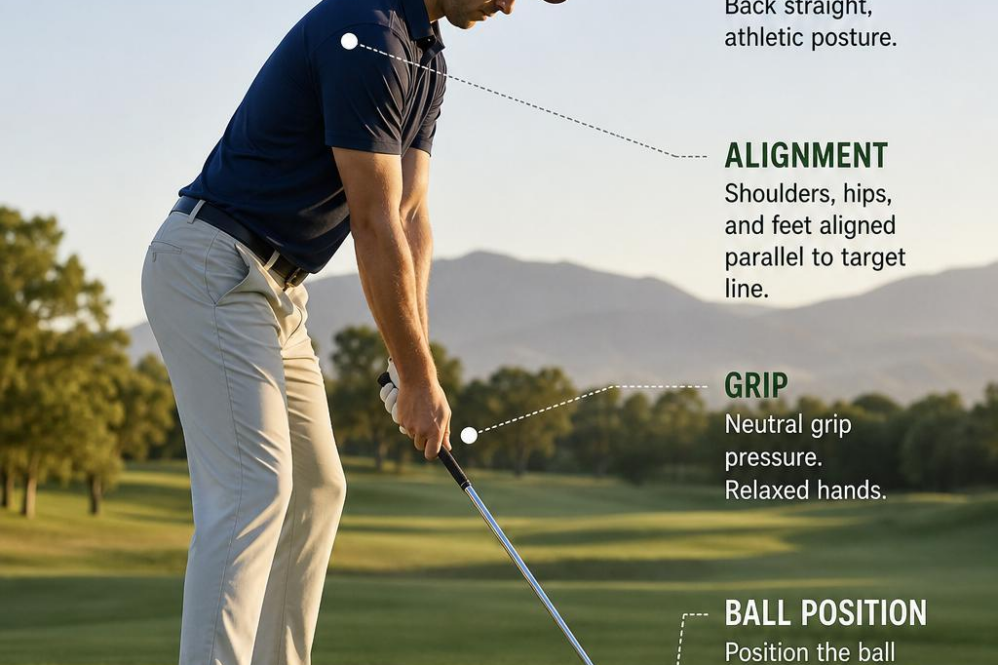
Mastering the smooth, fluid swing that defines Ernie Els begins with understanding his hallmark setup fundamentals, which provide the foundation for consistent ball striking. Els employs a slightly open stance combined with a neutral grip, allowing optimal shoulder rotation while maintaining balance throughout the swing arc. The spine angle is maintained at approximately 25-30 degrees forward tilt from address, which helps generate the effortless power and control characteristic of his swing. One critical element to focus on is Els’ iconic “Elsbow” – a subtle inward bend of the lead arm during the backswing that promotes a wider swing radius and preserves clubhead lag for maximum acceleration through impact. To integrate this into your practice, work on drills that emphasize maintaining arm connection, such as the Tee Drill: place a tee in the ground about six inches outside the lead foot and practice swinging without hitting it, encouraging a wide, on-plane takeaway. Transition smoothly into the downswing by initiating with the lower body, particularly a controlled hip rotation of about 45 degrees, which in turn pulls the torso down, delivering the club squarely to the ball with a slightly descending blow for irons and more sweeping motion for woods. This kinetic sequence-legs to hips to torso to arms-ensures efficient energy transfer crucial to replicating Els’ effortless power and accuracy.
Beyond swing mechanics, Els’ prowess is deeply embedded in his bright course management and adaptive strategy. He approaches each hole with a clear pre-shot routine that factors in wind conditions, lie, and green contours, prioritizing target-oriented shot placement over raw distance. Golfers seeking to emulate Els should cultivate a similar mindset by practicing targeted shot shapes and distances during range sessions-such as hitting controlled fades and draws to 100, 150, and 200-yard markers-to build confidence in trajectory control. Additionally, implementing a “percent play” strategy, where risks are minimized and shots, like layups or punch shots under tree limbs, are played conservatively when conditions demand, will improve scoring consistency. Els also emphasizes course temperature and turf conditions to decide on club selection-favoring softer grounds where spin can be exploited or opting for harder fairways to maximize rollout. Practical drills include scenario-based practice rounds where players simulate different weather and course types, reinforcing mental versatility alongside technical execution. By blending smooth swing mechanics with strategic thinking, golfers of all levels can enhance their short game precision, avoid common errors such as over-swinging or poor shot selection, and ultimately lower their scores through smarter play.
How Precision Driving Can Transform Your Game Like Els
Mastering precision driving is pivotal for transforming your game,much like Ernie Els has demonstrated on courses worldwide. To emulate Els’ approach, one must begin with a solid, repeatable setup that promotes consistency and control. Focus on aligning your feet, hips, and shoulders parallel to the target line, ensuring your weight is evenly distributed, with a slight favor towards the inside of your rear foot to stabilize the swing base. Els’ driving technique emphasizes a smooth tempo rather than brute force, allowing for repeatable contact in the sweet spot. Incorporate a controlled takeaway that keeps the clubhead low to the ground for the first few feet, preserving your swing arc and reducing the risk of an outside-in swing path that causes slices. As you reach the top of your backswing, maintain a wrist hinge angle close to 90 degrees, which facilitates maximum clubhead lag on the downswing-key to generating both distance and precision. Practice drills such as the “pause at the top” or “slow motion swing” will help develop muscle memory in thes fundamentals, while advanced players can fine-tune their release to optimize face angle at impact.
Beyond mechanics, precision driving requires a strategic mindset and adaptability, traits that Els exemplifies through his smart course management. Understanding your driving capability should dictate tee shot selection – whether to challenge a narrow fairway or aim for a safer landing zone.For instance, on windy days or demanding course layouts, Els frequently opts for a 3-wood or hybrid off the tee to maximize control, sacrificing some distance for accuracy. This strategic adjustment underscores the importance of equipment knowledge; properly fitted shafts, loft adjustments, and grip size can dramatically influence shot dispersion. To integrate this ideology into your game,practice situational tee shots under varying target constraints,thereby developing the confidence to select the right club and shot shape as conditions change. Mental focus is also critical-emulating Els’ calm, deliberate pre-shot routine helps maintain rhythm and reduces tension, fostering better contact and improved scoring opportunities.A practical exercise is to simulate pressure by setting strict fairway hit percentages for yourself during practice rounds, gradually raising the bar to improve your precision-driving arsenal.
Putting Secrets From Ernie Els That Lower Your Score
Ernie Els emphasizes that mastering putting starts with a repeatable setup and stroke, which are essential to building confidence on the greens. Begin by aligning your feet, hips, and shoulders square to the target line, ensuring your eyes are positioned slightly inside the ball to promote a consistent, downward stroke arc. Els’s technique highlights a smooth, pendulum-like motion driven by the shoulders, avoiding excessive wrist breakdown that can introduce inconsistency. He advises players to focus on a strong{balanced tempo}-a rhythm where the backswing and follow-through are of equal length and pace, typically around 1.5 to 2 seconds each. This tempo stabilizes the putter head,reducing face rotation and promoting a truer roll. To refine this, practice drills such as the “gate drill” – where tees are placed just wider than your putter head to encourage a square strike-can dramatically improve stroke precision and help golfers develop a feel for stroke length relative to distance.
Beyond mechanics, Els stresses the importance of green reading and situational awareness-an often overlooked component that directly lowers scores. He recommends starting by assessing the overall slope and grain direction from multiple vantage points around the hole, incorporating a key strategy of imagining the intended ball path, not just the target itself.This practice can be enhanced by using a pre-shot routine incorporating visualizing breaks and calculating pace with proven formulas such as knowing the ball will travel 2 times the distance of a tested 3-foot putt on similar slopes. Additionally, players should develop adaptive strategies for varying weather conditions or green speeds, such as adjusting stance width and grip pressure in windy settings to maintain control. Els encourages using shorter “clockface drills” on the practice green-putting to imaginary holes placed at the points of a clock around you-to instill confidence in speed control and alignment under pressure. By integrating this strategic green reading with the mechanical focus, golfers at all levels can translate fundamental improvements into meaningful, measurable score reductions.
Bringing It All Together: Tips to Master Swing, Drive, and Putt Like a Pro
Achieving mastery in swing, driving, and putting requires a holistic approach that begins with sound setup fundamentals.Start by aligning your body parallel to the target line, maintaining a relaxed yet athletic posture with a slight knee flex and balanced weight distribution-typically around 55% on the front foot at address for driving. According to Ernie Els’ instruction, focusing on a smooth takeaway with a one-piece motion preserves clubface alignment and promotes a consistent swing plane near 45 degrees. Practicing drills such as the “pause at the top” can help golfers develop better tempo and maintain control through impact, which is indispensable whether you’re teeing off or shaping approach shots. Address common faults like early casting or over-the-top swings by incorporating alignment rods during practice to provide immediate visual feedback, reinforcing proper hip rotation and enhancing launch conditions. Incorporate gradual shaft lean at impact for powerful driving, striving for an ideal attack angle around +2 to +4 degrees to optimize ball flight and distance.
Transitioning to short game prowess, integrating precise putting techniques with smart course strategy differentiates amateurs from professionals. Ernie Els emphasizes maintaining a stable lower body and a pendulum stroke from the shoulders, avoiding wrist breakdown that causes inconsistency. Practice drills such as the “gate drill” with tees placed just wider than your putter head sharpen your path control and promote a square strike. On the course, adapt your green-reading by accounting for subtle breaks and grain direction, adjusting your launch speed accordingly. To bridge distance wedges and putter use, develop a pleasant trajectory with consistent contact through practice chipping routines focusing on 5 to 10 feet landing spots. Strategically, always play the percentage shot – as a notable example, favor aiming at the safer side of the pin in adverse wind conditions or on hidden sloping greens. By synthesizing biomechanical refinement with evidence-based drills and situational awareness, golfers at every level can expect measurable improvements in shot consistency and overall scoring potential.