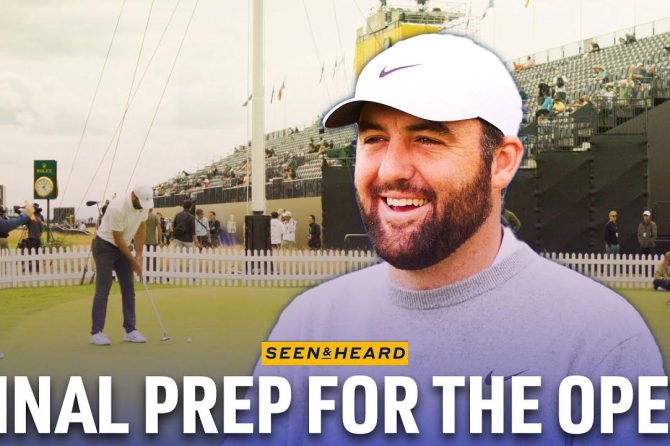
Jordan Spieth represents a blend of efficient movement mechanics and strong mental control that has driven his long-term success on the professional golf stage. This piece explores the technical and mental building blocks of Spieth’s game - notably his swing mechanics, putting approach, and tee-shot strategy – through the perspectives of applied biomechanics, motor learning, and sports psychology. By interpreting Spieth’s observable habits within established scientific frameworks, the goal is to extract repeatable principles that coaches and players can apply to instruction, practice design, and performance enhancement across development levels.
This review integrates kinematic observations of full swings and putting strokes, balance- and force-related indicators for driving, and qualitative evaluation of routine behaviors and in-competition choices. the emphasis is on linking specific movement tendencies to shot outcomes,separating strategic intent from personal quirks,and converting elite tendencies into practical,evidence-informed coaching cues. anticipated deliverables include a distilled model of Spieth-style motor strategies, usable progressions for skill acquisition, and guidance for adding cognitive training to boost reliability in pressure situations.
Note: web search results for the term “Unlock” primarily returned pages related to a fintech company and are not relevant to the golf-focused content developed here.
Biomechanical foundations of Jordan Spieth’s swing: setup,axis rotation,and sequencing for consistent ball striking
Reliable ball striking starts with a deliberately repeatable address that constrains the body in a way that makes the rest of the swing more predictable. Adopt a neutral grip (V shapes pointing toward the right shoulder/chin line for right-handers) and maintain a spine tilt roughly 20°-30° from vertical so the shoulders can rotate smoothly around the axis; for many players this produces a slight tilt toward the target at setup. weight distribution at address should favor the trail foot slightly-about 55/45 trail-to-lead for standard iron shots-and progress toward roughly ~85% pressure on the lead foot at impact for compressive contact; these tendencies can be trained with pressure mats or simple balance-awareness drills. Ball position varies by club: irons are usually centered to just forward of center,while woods/drivers sit 1-1.5 clubheads forward to promote an upward attack. Frequent setup mistakes include standing too upright (which limits shoulder turn) and collapsing the trail knee (which inhibits proper hip clearance); correct these via mirror checks and a short-rod spine-angle drill that preserves the buttock-to-shoulder line. make sure your clubs-shaft length and flex-support a natural posture: a shaft that’s too long or too stiff often forces compensatory setup and breaks the intended sequence.
Rotation and timing form the power-precision balance central to Spieth-style contact: a connected, purposeful turn that preserves lag and follows an efficient kinematic chain. Aim for a substantial shoulder turn (~85°-95°) with pelvic rotation near 40°-45° to create an X-factor that stores elastic energy without introducing tension.The preferred sequence for repeatable impact is pelvis → torso → arms → club, which encourages a slightly descending strike with irons and effective compression at the ball. At the top, a functional wrist hinge close to 90° (lead forearm to shaft) helps preserve lag; delaying the release into a controlled arc supports centered contact. Use high-frame-rate video (120-240 fps) to measure rotation and timing; concrete practice targets include a 3:1 backswing-to-downswing tempo and limiting lateral clubhead deviation at impact to under 1.5 clubhead widths on practice strikes. To develop sequencing and kinaesthetic feel, try these drills:
- Step drill (start with feet together, step into the lead foot as you begin the downswing) to promote early pelvic lead;
- Towel-under-arms drill to keep the arms connected to the torso and prevent decoupling;
- Impact-bag or half-swings with an alignment rod to rehearse forward shaft lean and compression.
If faults such as early arm release, hip over-rotation, or casting appear, slow the motion and re-establish timing using tempo sensors or a metronome app until the correct sequencing feels automatic.
To turn mechanical gains into better scoring, layer short-game practice, situational repetitions, and conservative shot selection that reflect Spieth’s precision-driven course management. For wedge and chip work, match loft and bounce to the turf (softer surfaces benefit from more bounce; firm turf needs less), and structure a routine such as: 50 full approaches from 100-125 yards with a 10-yard dispersion target, followed by 50 pitch/chip shots inside 40 yards aiming for 8-10 foot proximity-then reduce dispersion goals by 10% over four weeks. In windy or tight-fairway conditions, shorten the backswing, reduce wrist hinge, and use lower-lofted clubs to keep the ball flight penetrating-a punch shot generally uses less shoulder turn (60°-70°) and a ball position about half a club back of normal. The mental side matters: keep a concise pre-shot routine, visualize the landing zone, and favor conservative club choices when hazards punish misses (remember the Rules of Golf allow 14 clubs). Offer progressions for diverse learners-feel-based drills for newcomers and quantified video feedback for advanced players-and set weekly measurable practice aims (for example, three 45-60 minute sessions with 70% of time on the short game). These combined steps help convert improved posture,rotation,and sequencing into lower scores and steadier on-course performance.
Wrist and forearm actions that support dependable contact and predictable shot shape
Start with anatomy-informed setup: the wrist is the mechanical hinge between the hands and forearms and plays a major role in face control and strike quality. Establish grip pressure around 4-6/10, a neutral grip so the clubface sits square relative to the forearms at address, and a mild ulnar deviation (tilt toward the little finger) in the trail wrist to foster a stable hinge. At the top of a full backswing, many players benefit from a wrist set where the angle between the lead forearm and shaft approximates 90°; this provides a clear, measurable target and helps avoid excessive cupping or over-hinging. Use this fast checklist on the range:
- Grip & pressure: 4-6/10 with relaxed palms and firmer fingers.
- Wrist set: ~90° for full swings; 60°-80° for controlled wedge strikes.
- Forearm alignment: lead forearm tipped so the knuckles point broadly along the target line.
These setup steps limit compensatory wrist movements in the downswing and create the conditions for reliable center strikes.
Next, progress to dynamic wrist and forearm sequencing, emphasizing the distinction between a controlled hinge and an early release. Start the downswing with the lower body while preserving wrist angle (the sought-after lag) so the shaft-to-trail-forearm angle narrows progressively; aim to maintain roughly 30°-45° of lag into the early downswing to boost compression. To build that sensation, use these corrective drills that address casting, flipping, and inconsistent face control:
- Impact bag drill: short, focused swings into an impact bag targeting a flat lead wrist at contact.
- Toe-up / toe-down drill: slow swings to check smooth clubface rotation from toe-up at the top to toe-down in the finish.
- gate drill at impact: place tees to force a square face through the strike zone while keeping wrists quiet through contact.
Spieth’s on-course examples show how an assertive but controlled impact wrist produces low-running bump-and-runs and punch shots; replicate this by keeping the lead wrist relatively flat at impact for crisp turf engagement and by using a slightly rotated/weaker grip when a controlled fade is desired. Around the greens, shorten the arc and allow more forearm rotation with reduced wrist hinge to improve feel and decrease error margins.
Translate wrist work into measurable on-course outcomes by tying shot goals to practice metrics and equipment choices. Targets might include 75%-85% centered strikes in a 25-ball session or a consistent dispersion band of 10-15 yards for 150‑yard approaches while refining wrist control; monitor face angle and spin with a launch monitor as you adjust wrist actions. Equipment variables-shaft flex, grip size, and hosel settings-alter the sensory feedback at the hands, so consult a certified fitter rather than guessing. Use wrist-driven shaping intentionally: into strong wind, lower the ball by minimizing wrist flip and holding a firm lead wrist; on doglegs, pre-set the face via wrist set to block in a draw or fade to the intended landing corridor. Common faults and fixes:
- Early release (casting): fix with impact-bag and towel-under-arm drills to encourage body-led release.
- Excessive cupping or bowing: test swings at half speed and adjust grip rotation to restore a neutral impact wrist.
- Too tight grip pressure: reduce to ~4-6/10 and emphasize tempo; Spieth’s consistent routine highlights how repeatable tempo reduces wrist tension.
Combine these mechanical prescriptions with mental routines-visualize the shot shape, select conservative targets in penal conditions, and rehearse under simulated pressure-to move wrist control from practice into scoring situations. With anatomy-based setup, measurable practice goals, and course-aware strategy, golfers at every level can convert more swings into controlled shotmaking and better scores.
kinematic sequencing and lower‑body drive for efficient power transfer and reduced injury risk
Efficient force transfer relies on a predictable bottom-up sequence: feet → ankles → knees → hips → torso → shoulders → arms → clubhead. Practically, initiate the downswing with a lateral weight shift to the lead side and a hip rotation roughly 45° while the shoulders follow to generate an X‑factor when paired with a near‑90° shoulder coil in a full backswing. Maintain a consistent spine tilt (~12°-18°) through the motion to preserve the low point and avoid early extension; this both protects the lumbar spine and helps manage loft at impact. Spieth often describes a controlled “bump-and-rotate” sensation-an initial lateral bump followed by timely hip clearance that lets the torso and arms deliver the club with maintained lag. For feel, target about 55%-60% weight on the trail foot at the top and a shift to 60%-70% onto the lead foot at impact; track clubhead speed and center-face contact on a launch monitor to confirm improved sequencing.
Progressive training drills build sequencing ability and safe force production; design practice so technical intent links to measurable outcomes. Begin with foundational drills and work toward advanced power exercises:
- Step‑through drill: practice stepping the lead foot forward during the downswing to ingrain lateral transfer-10 reps per side, 3 sets.
- Pump/lag drill: from the top, pump the hands down to the pre-release point to feel hip clearance, then complete the swing-8-12 reps, focus on retaining wrist angle until the hips start to rotate.
- Medicine‑ball rotational throws: develop ground reaction force and sequencing-3 sets of 10 throws; use simple video to track increases in rotational speed.
- Impact bag or half‑swings into a net: train low-point control and avoid casting; feel a solid lead-side impact with slight shaft lean for irons.
Before and during practice, confirm: neutral spine angle, slight knee flex (~10°-20°), appropriate ball position, and relaxed grip pressure. Typical mistakes-early extension, upper-body over-rotation before hip clearance, or casting-are corrected with targeted mobility (hip internal/external drills) and strengthening (glute bridges, single-leg Romanian deadlifts), combined with reduced-swing-length repetitions until the sequence is clean.
Embed sequencing into on-course strategy, equipment decisions, and injury prevention for durable scoring improvements. use a well-timed lower-body drive to control trajectory into wind or to stop the ball on firm greens; for instance, Spieth often mentions moderating hip drive into firmer greens to control spin and descent angle. Equipment matters: choose a shaft flex that supports maintaining lag (if you observe early release, try a stiffer shaft or altered swingweight) and ensure lie angles favor center-face strikes. To reduce injury risk, prioritize hip mobility (e.g., aim to increase hip internal rotation by ~10° across 6-8 weeks if limited) and core stability routines-dead-bug progressions and resisted band rotations are good examples. mentally, rehearse the sequence via a concise pre-shot cue (for example, count “1-2” where “1” is the lateral bump and ”2″ is the rotation) and monitor progress with clubhead speed, dispersion, and proximity-to-hole on approaches. By combining kinematic sequencing, targeted conditioning, and smart course management, players can increase power, lower injury risk, and produce more consistent scoring.
Precision putting: stroke path, distance control, and green‑reading strategies inspired by Spieth
Start by building the mechanical platform for a repeatable, Spieth-like putting stroke: a compact, shoulder-led pendulum with minimal wrist action. Key setup checkpoints include placing the ball at center to no more than one ball-width forward of dead center for a blade-length stroke; use the manufacturer’s recommended putter loft (typically ~2°-4° effective loft) so the ball begins rolling quickly; position your eyes over or slightly inside the ball with neutral spine tilt and soft knee flex. Keep weight steady-about 50%-60% on the lead foot depending on comfort-to stabilize the lower body and produce a consistent low point. For stroke path, aim for a very small arc-roughly 3°-8° of face travel relative to a square finish-by driving the motion from the shoulders and keeping forearms and hands quiet. Verify fundamentals with these drills:
- gate drill: pass the putter head through a narrow channel to ensure a square face and clean path.
- Towel under the armpits: keep shoulder-driven motion and remove excessive wrist action.
- Putting mirror or level: check eye position, shaft lean, and face alignment at address.
These practices reduce face-rotation variability and promote a consistent starting direction-the foundation for dependable distance control and fewer putts.
After mechanics are stable, prioritize pace control as the chief determinant of effective putting. Adopt an approximately 1:1 tempo between back and through (a metronome between 55-70 BPM frequently enough works), so distance is controlled by pendulum length rather than wrist manipulation. A structured routine might be: practice from 3, 6, 9, and 12 feet, taking 20 putts to each distance; realistic targets include leaving 80% of lag putts within a 3-foot circle and making 60%-70% from 6 feet as proficiency grows. Useful drills include:
- Ladder drill: putt to successive concentric targets to calibrate backswing length to distance.
- One-handed roll drill: short strokes with the lead arm only to feel center-face contact and remove flipping.
- Distance funnel: place two tees three feet apart as an ideal finish zone to practice rollout consistency.
Address common faults-decelerating through impact, over-accelerating after contact, or changing face angle-by slowing the metronome, shortening the stroke until the proper feel returns, and using impact tape or a foam ball to confirm true-roll contact. Spieth’s emphasis on rehearsal and routine suggests rehearsing the same physical motions before each putt so pace control becomes automatic under stress.
Move mechanical and tempo proficiency into confident green reading and tactical choices. Always start a read from the hole (the fall line), then view from behind the ball to confirm how slope, grain, and moisture will influence break and speed; commit to a single line to avoid execution-robbing indecision. Heuristics: on firm, fast greens, play more pace and avoid attempting tiny breaks; on soft or grainy surfaces, allow for greater break and less rollout. Make aggressive birdie attempts or conservative lag choices depending on green speed, pin position, and wind. Course-simulation drills include:
- Uphill/downhill series: practice 10-, 20-, and 30-foot putts on slopes to tune pace and line.
- Pressure sets: make-or-break formats to cement routine under stress, modeled on Spieth’s pre-putt ritual.
- Variable-grass sessions: practice on bent, bermuda, and poa greens to learn grain and roll differences.
Tie in the mental component: use a short pre-shot checklist, visualize the line and speed, and commit-then execute without second-guessing. The combination of a stable setup, measured pace, and decisive reading reflects the high-performance routine that yields consistent putting results and is adaptable across ability levels.
Driving with purpose: launch management,face control,and strategic tee choices
To shape launch and keep face control,start with a reproducible setup and clear impact goals. Position the ball neutral to slightly forward-about inside the lead heel-and tee height so the driver crown sits roughly **0.5-0.75 inches** above the ball; this encourages a positive attack angle (+1° to +4°) and a launch angle in the typical target band of **10°-14°** for many players. Train the clubface-to-path relationship: keeping the face within **±2°** of square at impact produces tighter dispersion, while an open face beyond **>3°** tends to reduce distance and promote a slice. Use a compact pre-shot routine (address, small inhale, smooth takeaway) and these drills to quantify progress:
- Impact-tape drill: take 10 shots with impact tape and log centre-of-face dispersion-aim for a median impact within 1.5 in of the sweet spot.
- Launch monitor protocol: a 20-ball session tracking clubhead speed, ball speed, launch angle, and spin-target a 10%-20% spin reduction if spin is excessive for carry.
- Face-awareness drill: half-swings with an alignment rod across the shaft to feel a square face at impact, then move to full swings.
Translating attack angle, spin loft, and face angle into measurable feedback allows players from beginner to low handicap to systematically improve launch conditions.
Move from mechanics to tee-box strategy by coupling shot-shaping ability with course management. Pick a tee that matches your effective distance and preferred miss so the likely miss stays in play; even though rules allow playing from any tee the course offers, choose one that minimizes forced carries or severe trouble on tight holes. Plan club selection and an aim point to shape shots: close the body slightly for a controlled draw (path **+2° to +4°** relative to face) or open it a bit for a fade (path **−1° to −3°**). In practice, adopt Spieth’s angle-based thinking rather than trying to dominate by distance-on a narrow par‑4 with a fairway bunker at **250 yards**, opt to lay up to **200-230 yards** with a 3‑wood to leave a pleasant approach instead of forcing driver and raising penalty risk. Use these drills to hone decision-making:
- yardage control-hit 5 drives trying to land in a defined carry window (e.g., 220-240 yd) and record fairways hit;
- shape corridor-create a 10‑yard corridor with alignment sticks and hit 20 shots trying both draws and fades;
- risk/reward simulation-play practice holes alternating aggressive and conservative strategies and track the score difference over nine holes.
Linking physical control to situational strategy converts marginal tee shots into statistically better positions for the following stroke.
Optimize equipment and practice structure while addressing common faults and the psychological elements Spieth emphasizes: commitment, visualization, and routine.Verify driver loft and shaft specs match your swing-typical shaft lengths are around **45-46 inches**, and many golfers find an effective driver loft between **8°-12°** depending on clubhead speed (players with ~95-105 mph clubhead speed often benefit from roughly **9°-11°** loft). Use targeted practice blocks that merge mechanics and simulated pressure:
- tempo & balance drill: swing with a metronome (60-70 BPM) to normalize transitions and avoid early extension;
- weighted-handle drill: 15 swings with a heavier handle to improve low-point control and delayed release;
- pressure series: hit 10 balls with a tournament-style routine; if you miss, execute a corrective rep immediately.
Address recurring issues stepwise: for an open face, check grip and wrist hinge timing; for an overly steep attack, move the ball slightly forward and shallow the transition with a lower hip turn. Set measurable short-term goals-such as boosting fairway-hit percentage by **10%** in eight weeks or cutting driver spin by **15%**-and track these metrics. Combine Spieth-style visualization of shape,landing area,and the subsequent shot with disciplined execution to translate improved driving into lower scores.
Cognitive and pre‑shot protocols for competitive stability: visualization, routine timing, and pressure control
Begin each shot with a structured imagery sequence linking tactical choices to technical execution. First, evaluate lie, wind, and green speed, then pick a target zone rather than a single flagstick point-such as, on a firm green choose a landing area 10-20 yards short of the hole to allow for roll. Build a three-part visualization: (1) flight shape (draw/fade or high/low), (2) apex and descent angle, (3) expected rollout and first two bounces. Spieth’s routines show he mentally rehearses flight and uses a single short audible cue (like “commit”) to connect imagery with motion. To embed this cognitive step, practice drills that tie vision to feel:
- Alignment-stick target drill: place a stick at the chosen landing zone and hit 20 shots, tracking carry vs. roll distances.
- Three-part visualization repetition: before every practice shot, say aloud the club, landing distance, and desired spin (e.g., “8‑iron, 135 yd, stop”), repeating 30 times per session for neural encoding.
- Metronome visualization: use a 60 BPM metronome to rehearse visualization-to-swing timing (visualize on beats 1-2, start the swing on beat 3).
Scale these exercises: beginners concentrate on one clear landing zone; lower-handicap players add apex/roll predictions and spin-rate expectations (e.g., anticipating more backspin with a steeper wedge attack).
Convert visualization into a compact pre-shot routine that enforces consistent setup, tempo, and impact mechanics. A practical sequence: assess lie → choose target → two practice swings focused on feel and tempo → waggle → finalize setup → two deep breaths → commit and swing; aim to keep this under 20-30 seconds in competition to respect pace-of-play. Observe setup fundamentals: ball position (driver just inside left heel, mid-irons toward center, wedges slightly back ~one ball left of center); weight distribution (start ~50/50 and feel a transfer toward ~60/40 left at impact for right‑handers); and expected attack angles (irons ~‑4° to ‑6°, driver ~0° to +2°).Practice drills to reinforce these mechanics include:
- Impact-bag drill to train forward shaft lean and strong compression with irons.
- Gate drill to promote consistent swing path and face control through impact.
- Tempo ladder with a metronome (e.g., 1-2 count for backswing to downswing) to build reproducible timing under pressure.
Common errors-gripping too tightly, rushing the downswing, or shifting ball position-can be corrected by a grip-pressure check (aim ~4-5/10), rehearsal swings that mirror match tempo, and alignment-stick verification to ensure shoulders, hips, and feet are set to the chosen target line.
Build pressure-management skills and simple decision rules that align with your technical plan to produce consistent competitive outcomes. Use simulated pressure (point games,money balls,coached rounds) to habituate your routine so under stress you default to process-driven behavior. Add physiological tools-diaphragmatic breathing (inhale 3 seconds, exhale 4 seconds) and a single physical trigger such as a finger tap or ball-marker flip-to reset arousal between shots. Strategically prefer choices that reduce variance: on narrow fairways or into firm greens,pick a club that leaves a comfortable wedge distance (as a notable example,a 170-180 yd layup leaving 120-140 yd into the green rather than attempting a risky 200-210 yd approach). Pressure/positional drills include:
- Pressure putting: the 3‑spot drill from 6-10 ft where a miss means starting over.
- Course-management scenarios: play nine holes making only conservative-to-aggressive decisions based on lie, wind, and pin-record score variance across four rounds.
- Situational wedge practice: repeatedly hit to a 20‑yard landing zone with different clubs/trajectories to learn carry vs.rollout on varied stimp readings.
By marrying visualization, consistent routine timing, and stress inoculation with measurable on-course choices-much like Spieth’s intentional rehearsal and speed control-golfers can shrink dispersion, raise scoring consistency, and make better decisions when it counts.
Designing practice to mirror Spieth: focused repetition, variable contexts, and objective feedback
Open practice with emphasis on deliberate repetition of setup and impact fundamentals, as these form the motor patterns supporting consistency. Begin each block with a 5-10 minute static checklist: neutral grip pressure (~4/10), spine tilt 5°-10° away from the target, ball positions (driver: inside left heel; long irons: slightly forward of center; wedges: center to slightly back), and weight distribution ≈55/45 at address.Follow with 50-100 focused reps on a single objective (e.g., 50 half-swings to groove low-point or 50 strikes aimed at a reproducible impact spot) using alignment rods, impact bags, or mirrors for immediate feedback. Measurable goals make repetition purposeful: intermediates might aim for a 10-15 yard dispersion radius with a 7‑iron, while advanced players target 5-8 yards; track proximity percentages each session. Identify typical faults-early extension, casting, or hip slide-and correct them with short, precise corrective reps (such as, 5-8 second impact-bag holds to ingrain forward shaft lean), then progress from slow, feel-based swings to full-speed integration.
Advance sessions by adding variable practice so technical gains transfer into adaptable on-course decisions and touch-especially in short-game work, where Spieth’s distance control and creativity stand out. Rotate drills and surfaces to teach the nervous system flexibility: 30 pitches with a sand wedge to a 20‑yard target, then 30 with a 9‑iron to the same target, followed by 30 from tight lies and 30 from rough or sand. Useful practice drills:
- 3‑Target wedge drill: 10 shots to 30, 40, and 50 yards-record proximity and aim to reduce mean distance by 1-2 feet weekly.
- Clock-face chipping: place tees in a 10‑foot circle and chip from each “hour” with varied clubs to refine trajectory and bounce awareness.
- Speed-ladder putting: 10 putts from 10, 12, and 14 feet focused on rollout; aim for ~70% make/near-miss consistency for intermediates and 80%+ for better players.
Include equipment consistency in practice: use the same loft/bounce setups you carry on course and test groove/grind responses on wet or tight lies.In firm or windy conditions, explicitly rehearse punch shots and bump-and-runs to build practical shot options for saving par or converting birdie chances.
Measure progress with objective feedback metrics and tie technical work to course strategy and Spieth-style routines. Employ launch monitor outputs (carry, spin, launch angle), a rangefinder for precise yardages, and statistical tracking-proximity to hole, GIR percentage, scrambling, and putts per GIR-to translate practice into scoring projections. Example targets: improve approach proximity by 2-3 yards or boost scrambling from 40% to 55% over eight weeks; record results in a practice log and save short video clips (60 fps or higher) for swing-plane comparison. To reproduce tournament composure,include pressure simulations and course-situation exercises: alternate-shot games,penalties for missed targets,and rehearsing a concise pre-shot routine with breath control and two visual cues (alignment plus landing spot) to shorten decision time under stress. Troubleshooting checkpoints: check for excessive tempo (use a 3:1 backswing:downswing count initially),confirm the clubface returns square at impact,and verify energy transfer through a stable lower half-attack these issues with metronome tempo drills,face-control exercises,and lower-body stability work.These varied, measurable, feedback-driven sessions convert technical repetition into smarter course play and lower scores for golfers at any level.
Q&A
note on the provided web search results
– the supplied search results do not concern Jordan Spieth or golf technique. They reference other persons and unrelated news/forum posts. The Q&A below is therefore an independent, evidence-informed synthesis of Jordan Spieth’s observable practices and of general biomechanical and cognitive principles that underpin elite golf performance. Statements are presented as interpretation and best-practice guidance rather than verbatim citations from the search results.
Q&A: Unlock Jordan Spieth’s approach – master swing, putting & driving strategies
Q1: What characterizes Jordan Spieth’s overarching method across swing, putting, and driving?
A1: Spieth’s method centers on precision, repeatability, and a process-driven mindset. Mechanically, he leans toward a compact, efficient swing with strong face control and disciplined sequencing of the kinetic chain. Mentally, he relies on a consistent pre-shot routine, visualization, and an execution-focused mindset that minimizes outcome obsession. Training blends deliberate, high-quality practice with pressure simulations and continuous objective feedback (video, launch monitors).
Q2: Which biomechanical principles most support Spieth’s swing consistency?
A2: Core biomechanical principles include:
– Stable base and balance: minimal unneeded lateral sway and efficient center-of-mass shifts.
– Proximal‑to‑distal sequencing: pelvis leads the transition, followed by trunk, arms, and club to create lag and stored energy.
– Compact swing widths: moderate arc to reduce variability.
– Controlled wrist angles (lag): maintain hinge until late for better timing and compression.
– Precise face control: small, repeatable forearm/wrist adjustments to square the face at impact.
Together these reduce degrees of freedom and variability, boosting repeatability under competition stress.
Q3: How does Spieth’s setup contribute to his accuracy?
A3: Key address traits are balanced weight distribution,neutral spine tilt,measured grip pressure,and consistent alignment to the intended target. Stable ball position relative to stance and a posture that allows free torso and hip rotation facilitate predictable swing patterns and face control.
Q4: What stands out about Spieth’s backswing and transition?
A4: He tends to keep the backswing compact with a controlled shoulder rotation rather than excessive extension. In transition he minimizes lateral displacement by initiating movement with the lower body and a small torso coil, preserving angle and promoting a shallow entry into the downswing.
Q5: How does Spieth generate and release lag, and how can players emulate it?
A5: He preserves the wrist hinge through transition and delays forearm uncocking until late, then releases through impact. To emulate:
- Practice lag-promoting drills (pump drills, towel-under-arms).
– Emphasize body-led torque generation and allow the club to release naturally, instead of trying to force it with the hands.
Q6: What role does tempo play and what ratios work well?
A6: Tempo and rhythm are vital for timing.Elite ratios often sit between 2:1 and 3:1 (backswing:downswing). Find a tempo that produces consistent impact and keep it stable across conditions rather than constantly pushing for more speed.
Q7: how does Spieth approach the driver differently from irons?
A7: With driver the priority shifts to launch optimization and ball speed while preserving acceptable dispersion. Differences include:
– Wider stance and forward ball position.
– Emphasis on a positive attack angle and dynamic loft management.
– often a longer arc but still controlled width to retain accuracy.
– A conscious trade-off where slightly more dispersion may be acceptable for increased distance in tournament contexts.
Q8: What driver benchmarks should capable amateurs target?
A8: Benchmarks vary by athlete,but useful markers are:
– Smash factor (ball speed/clubhead speed): aim >1.45 with driver where possible.
– angle of attack: slightly positive (0°-4°) for many distance-focused players, as measured on a launch monitor.
– Spin rate: moderate-to-low,optimized to launch and speed for maximum carry.
– Launch angle: tuned to ball speed and spin to maximize carry; use launch monitor testing to individualize.Q9: What defines Spieth’s putting mechanics and why do they work?
A9: His putting features:
– A consistent setup and stroke geometry that limits extraneous motion.
– Excellent pace control, a hallmark of his short-game.
– decisive read-and-execute discipline-careful green reads, commitment to a line and speed, and concise execution.
the stroke relies on larger chest/shoulder muscles with minimal wrist flick to produce repeatable face orientation and roll.
Q10: Which drills most effectively refine distance and face control in putting?
A10: Helpful drills include:
– Ladder drill: calibrate backswing length for distance control.
– One-handed pendulum: promotes shoulder-driven motion and limits wrist influence.
– Gate drill: enforces a square face at impact.- Pressure-routine challenges (e.g., 10‑putt tests) to simulate competitive stakes. Track and replicate tournament green speeds in practice.
Q11: How does Spieth read greens and choose speed/line?
A11: He integrates visual inspection, feel, and learned cues (slope, grain, wind, green speed). He visualizes the ball path, uses intermediate aim points if helpful, and locks into a routine to avoid indecision. Commitment to the chosen plan is prioritized over ongoing re-evaluation.
Q12: What cognitive tools help Spieth perform under pressure?
A12: Cognitive strategies include:
- reliable pre-shot routines to stabilize arousal and focus.
– Process-oriented goals that emphasize execution over outcomes.
– Rehearsed visualization and sensory rehearsal.
– Simple emotional-regulation techniques (paced breathing, focus triggers).
– Contingency acceptance to prevent catastrophic thinking.
Q13: How should practice be organized to develop Spieth-like steadiness?
A13: Organize practice with:
– Deliberate sessions: focused goals, immediate feedback, purposeful repetition.- A mix of blocked (early learning) and random/contextual practice (transfer to competition).
– Pressure and situational simulations.
– Objective feedback (video, launch monitors).
– Periodized volume and intensity to peak for events.Q14: Which drills most directly build sequencing and torso/hip rotation?
A14: Effective drills:
– Step drill: promotes balance and rotation timing.
– hip bump/twist: isolates lower-body initiation.
– Impact bag/half-swings: ingrain correct impact positions and reduce lateral slide.
– Medicine-ball rotational throws: improve power and coordinated rotation.
Q15: How vital is equipment fitting to reproduce these techniques?
A15: Proper fitting is essential.Key variables: shaft length/flex, lie angle, grip size, loft, and head weighting. Empirical fitting with launch monitor data matches equipment to a player’s swing profile and complements-but does not replace-sound technique.
Q16: How can players translate these elite traits into smarter on-course decisions?
A16: Transfer depends on:
– Pre-shot planning that accounts for shot-shape probabilities and risk management.
– Course-management strategies that exploit personal strengths.- Simulation-based practice that mirrors course constraints.
– A feedback loop using post-round reflection to refine strategy and practice focus.
Q17: how does Spieth’s short-game philosophy integrate with his full swing and putting?
A17: The short-game emphasizes versatility and predictability: consistent setup, controlled loft/release, and shared face-control and speed-management principles. Landing-zone planning and trajectory control feed his putting strengths by producing predictable putts for distance and line.
Q18: How should progress be measured?
A18: Combine objective and subjective measures:
– Objective: launch monitor metrics, putting stroke data (face angle/start line), proximity, dispersion, GIR, scrambling, putts per GIR.
– Subjective: routine consistency, recovery time after errors, perceived ease executing target shots.
Use SMART goals and scheduled reviews.
Q19: What typical faults block Spieth-like repeatability and how to fix them?
A19: Common issues and corrections:
- Excessive lateral sway → balance/weight-transfer drills, narrower stance practice.
– Early release → lag drills and impact-bag exercises.
– Overactive putting wrists → one- or two-hand shoulder drills and mirror feedback.
– Outcome fixation under pressure → process rehearsal and pressure simulation.
Q20: What should intermediate-to-advanced players prioritize to approximate Spieth’s effectiveness?
A20: focus areas:
1. Stabilize setup and pre-shot routine to reduce variability.2. Build efficient body-led sequencing with a late release.
3. Hone putting for speed and face control through focused green time.
4.Use launch monitors and video to quantify changes and refine equipment.
5. Train cognitive routines, simulate pressure, and emphasize process goals.
6. Structure practice to blend deliberate repetition with contextual variability so skills transfer to competition.
recommended next steps for readers
– Perform a baseline assessment using video and/or launch-monitor data.
– Create a weekly plan balancing full-swing, short-game, putting, and mental training.
– Apply drills from the Q&A,log objective metrics,and gradually increase competitive simulations.If you’d like, I can: (a) convert selected Q&A entries into a 4-6 week practice plan, (b) provide step-by-step drill progressions, or (c) build a simple pre‑round checklist modeled on these principles.
Note: the provided web search results did not pertain to Jordan spieth; the following summary is drawn from the internal synthesis of Spieth’s swing, putting, and driving tendencies as presented above.
This synthesis condenses Jordan Spieth’s performance into a unified framework: precise biomechanics (consistent sequencing, stable spine and pelvic relationships, and controlled face orientation) combined with cognitive strategies (structured practice, situational routines, and on-course decision-making). Together these elements create repeatable motor patterns and resilient tournament behaviors that underpin much of spieth’s competitive consistency. Framing technical observations in motor-control and sports‑cognition terms helps bridge coaching cues with testable hypotheses.
For practitioners the main takeaway is translational: prioritize reproducible movement patterns that preserve crucial kinematic relationships (sequencing and axis stability) while embedding concise cognitive routines to manage attention and stress. Training programs that concurrently address biomechanics (video feedback, segmental drills) and mental skills (pre‑shot routines, pressure simulation) are most likely to transfer to competition.
Methodological caveats: this synthesis is largely inferential, based on observation, interviews, and performance outcomes, and may not capture all individual or contextual variability (equipment differences, course factors, or detailed practice histories). Causal statements should be evaluated with controlled, longitudinal research and quantitative biomechanical measurement to determine what generalizes across skill levels. Future work should combine motion‑capture, electromyography, and neurocognitive measures in ecologically valid practice and competition settings to isolate which technical and psychological components most strongly predict performance and to refine optimal training doses for skill consolidation.
Spieth’s model offers principles rather than prescriptions: emphasize efficient mechanics,cultivate consistent cognitive routines,and measure outcomes empirically. Adapting these ideas to individual body types, learning histories, and goals provides the most reliable route to improving swing, putting, and driving performance.

Jordan Spieth’s Winning Formula: Transform Your Swing, Putting, and Driving Like a Pro
Why study Jordan Spieth’s approach?
Jordan Spieth is recognized for relentless accuracy, elite short-game creativity, and a calm competitive routine. You don’t need PGA Tour speed to apply the core principles that make his game repeatable: reliable swing mechanics, confident putting, and strategic driving. This article breaks those elements down into biomechanics, measurable drills, course-management tips, and a practice plan you can use promptly.
Swing Mechanics: Build a Consistent, High-Percentage Motion
Keywords: golf swing, consistent swing, ball striking, alignment, tempo
Core biomechanical principles
- Posture & balance: Neutral spine, slight knee flex, weight centered over the mid-foot. Stable base reduces lateral sway and improves impact consistency.
- Width & extension: A wide takeaway and extended lead arm create radius – more consistent arc and timing.
- Clear hips & stable upper body: Proper hip turn creates torque while the upper body stays connected. This sequence produces power and consistent strike.
- Clubface control: Face orientation at impact determines direction; prioritize square impact over “overswinging.”
- Tempo & rhythm: Maintain a steady tempo (e.g., a 3:1 backswing-to-downswing count) to synchronize body and club.
Signature swing habits to emulate
- short, simple takeaway focused on feel rather than forcing positions.
- Soft wrist hinge that creates lag without tension.
- Reliable transition: a slight pause or feeling of compression at the top before a decisive downswing.
- Strong, shallow impact position with hands slightly ahead of the clubhead for crisp ball-first contact.
Pro tip: Record your swing from down-the-line and face-on angles. compare to your drills every 2 weeks to track improvements in extension, rotation, and release.
Drills for a more consistent swing (with measurable goals)
- Gate Drill (impact): Place two tees/sticks just wider than clubhead to train square face at impact. goal: 9/10 clean passes.
- Slow-Motion 3:1 Tempo Drill: Count a 3-beat takeaway,1-beat through the ball. Goal: maintain tempo for 50 swings per session.
- Alignment Stick Rotation Drill: place a stick along target line and one pointing at mid-chest-feel hip turn on backswing and follow-through. Goal: full shoulder turn with minimal lateral movement for 8/10 reps.
Putting: From Green Reading to Pressure Putting
Keywords: putting,green reading,distance control,clutch putting,stroke mechanics
What makes elite putting repeatable?
- Pick a target,start the ball rolling: Speedy,decisive read reduces doubt. Spieth-style players pick a line and focus on starting speed as much as line.
- Contact and launch: Clean, slightly forward impact reduces skidding and improves distance control.
- Routine & visualization: A two- or three-step routine builds confidence under pressure.
Putting drills to master alignment, pace, and nerves
- Clock Drill (short putts): Put from 1-4 feet around the hole in 12 positions. Goal: 48/60 made putts per session.
- Ladder Drill (distance control): 6, 12, 18, 24 feet – putts should stop inside a 3-foot ring. Track % inside ring; aim for 70%+.
- Pressure Simulation - “Make 3” Drill: From 6-8 feet,make 3 in a row to move on. This trains clutch putting and replicates tournament pressure.
- Gate Path Drill: Use two tees to create a narrow path for your putter head to pass through to encourage a straight back-straight-through or slight arc stroke.
Driving: Optimize Distance with Control
Keywords: driving, tee shots, fairways hit, driver swing, launch angle, clubhead speed
Drive for precision first, distance second
High performing players balance distance with accuracy. Prioritize hitting preferred landing zones and maximizing your scoring opportunities with a smart tee shot strategy.
Driver mechanics & launch basics
- Ball position: Just inside the lead heel for most players to promote an upward strike.
- Wider stance: Creates stability and allows a fuller turn.
- Shoulder turn & weight shift: Coiled shoulders and a controlled hip bump through impact generate power without losing control.
- Attack angle: Slightly upward (positive attack) reduces spin and increases carry.
Driver drills
- line Drill: place a towel under trail foot and practice shifting weight onto lead side without dropping the head. Goal: Increase fairway hit %.
- Half-Swing Speed Pump: Take 50 half-swings focusing on explosive hips to build sequencing (10-12 reps). Measure clubhead speed if you have a monitor-track improvements.
- Targeted Flight Drill: Pick a narrow landing zone; hit 10 drivers and count prosperous landings. Goal: 7/10+ for intermediate players.
Course Management & Competitive Strategy
Keywords: course management,strategy,scoring,risk/reward,smart tee shots
Think like a champion - strategy over heroics
- Know your strengths: If your iron approach percentages are strong,play to greens you can hit. If your scrambling is elite, you can take more conservative lines into hazards.
- Play percentages: On risk-reward holes,calculate the real benefit of aggressive lines. Often safe plays reduce big numbers and improve scoring average.
- Pre-shot routine: Build a consistent 30-45 second routine that includes visualization, alignment, and a single swing thought.
12-Week Practice Plan – Transform Your Game
Keywords: practice plan, golf drills, skill progression, golf training
| Week | focus | Key Drills |
|---|---|---|
| 1-2 | Fundamentals (posture, alignment) | Gate Drill, Alignment Stick Drill |
| 3-4 | Ball striking & tempo | Tempo 3:1, Slow-motion full swings |
| 5-6 | Putting & short game | Clock Drill, Ladder Drill, Bump-and-run |
| 7-8 | Driving consistency | Half-swing speed pumps, Targeted Flight Drill |
| 9-10 | Course management & pressure | “Make 3” pressure drills, simulated holes |
| 11-12 | Tournament prep | Full rounds, pre-shot routine practice |
Weekly session breakdown
- 2 range sessions (60-90 minutes): Swing mechanics, ball striking, driver work.
- 2 short-game sessions (45-60 minutes): Putting and chipping with measurable targets.
- 1 simulated round or 9 holes: Focused on course management and routine.
Trackable KPIs to Measure Progress
Keywords: golf stats, GIR, fairways hit, putts per round, scoring average
- Greens in regulation (GIR) – target +5% in 12 weeks.
- Fairways Hit – aim to improve driving accuracy by measurable % (e.g., 10% improvement).
- Putts per Round – reduce short putt misses with clock and pressure drills.
- Scrambling – track up-and-downs from around the green; improve conversion rate.
Case Studies & Practical Examples
Keywords: Jordan Spieth, clutch putting, tournament strategy
Example 1 – Short-game rescue: A player with inconsistent mid-irons focused 3 weeks on ladder putting and 50 chipping reps per session. Result: putts per round dropped by 0.8 and scrambling improved 12%.
Example 2 – Driving control: Another golfer replaced driver practice with targeted flight drills and half-speed sequencing. After 8 weeks, fairways hit increased and scoring improved on par-4s under 420 yards.
Equipment & Tech: Use Data to Guide Change
Keywords: launch monitor, club fitting, shaft, loft, ball speed
- Get a professional club fitting: loft, lie, shaft flex and length affect launch, spin and dispersion.
- Use a launch monitor occasionally to validate changes: track clubhead speed, ball speed, launch angle and spin.
- Choose a putter that fits your stroke type (face-balanced for straight, toe-hang for arc).
Practical Tips & Mindset for Long-Term Gains
Keywords: practice routine, mental game, pre-shot routine, confidence
- Keep practice purposeful: aimless range time reinforces bad habits. Use drills with measurable goals.
- Routine > Reaction: Develop a pre-shot routine you can deploy under pressure.
- Record & review: Video and stat tracking accelerate corrections and build confidence.
- Small gains compound: Focus on improving putting by half a stroke, fairways by 5%, and scramble rate by a few percent – this will lower scores faster than chasing dramatic swing speed gains.
Notes on Sources
The web search results provided with this request did not contain relevant articles about Jordan Spieth or technical golf instruction. The guidance above synthesizes common, evidence-based coaching principles, biomechanical fundamentals, and proven drills used by elite instructors and touring players. For deeper technical study, consult PGA coaches, swing analysts, and club-fitters who can provide personalized feedback.