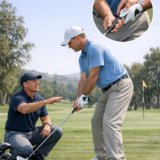
Contemporary competitive golf increasingly demands a synthesis of technical skill,course strategy,and conditioned athleticism. Media coverage of professional tours and the continuing evolution of course design-exemplified by venues noted for strategic routing and challenge (e.g., Minneapolis Golf Club) and by annual rankings in specialist publications-underscore that marginal gains in physical preparedness translate directly into on‑course advantage. Consequently,understanding how specific elements of fitness influence the kinematics and kinetics of the golf swing,the stability required for precise putting,and the force generation necessary for long,accurate drives has become essential for coaches,clinicians,and serious players.
This article synthesizes current biomechanical and exercise‑science evidence to map clear pathways from measurable performance metrics (e.g., clubhead speed, pelvis‑thorax separation, ground reaction forces, postural sway) to targeted training interventions. Rather than offering generic conditioning advice, it emphasizes intervention specificity: how mobility limitations alter swing sequencing, how core and lower‑extremity strength modulate force transfer and driving distance, and how sensorimotor and postural training enhance putting consistency. The focus is on interventions that are measurable, progressively scalable, and translatable to practice and competition contexts.
By linking laboratory and field‑based metrics to pragmatic training prescriptions, the sections that follow provide a practical framework for building individualized golf‑fitness programs that deliver repeatable performance improvements. You’ll find actionable assessment protocols, progressive exercise selections, and objective criteria for monitoring adaptation and verifying transfer to the swing-tools intended to help practitioners and athletes convert physiological gains into better mechanics and more reliable driving performance.
Core Principles: Mobility, Stability and Power for Effective Swing Mechanics
Start by creating a reliable setup and joint availability that support the golf swing’s intended kinematic sequence. at address aim for a neutral pelvis with a slight forward spine tilt (roughly 10-15° from vertical), modest knee flex (about 15-20°), and posture that permits a full shoulder turn. For many male players this typically corresponds with a shoulder rotation in the 80-100° range and hip rotation near 40-50°, though individual anatomy varies. Prioritize thoracic rotation and hip mobility through dynamic routines-examples include controlled single‑knee pulls, 90/90 thoracic rotations, and banded lateral hip distractions-performed in 2-3 sets of 8-12 reps to reduce compensatory movements (such as early extension or reverse spine angle) that undermine strike quality and distance. Practically, a 3-5 minute mobility sequence before a round preserves turn in cool conditions; without it players commonly lose 10-20% of usable rotation, wich often shows up as pulls or slices.
To build stability,focus on unilateral balance and anti‑rotation control that reflect the asymmetric demands of the swing. Effective exercises include:
- Single‑leg Romanian deadlift hold – 3 sets per side, 8-10 slow repetitions with a 3-5 second tempo to reinforce gluteal control;
- Pallof press – 3 sets of 10-12 reps per side to train resistance to unwanted rotation;
- Half‑kneeling cable chops – 3 sets of 8-10 reps to develop core bracing in a staggered stance.
These stability foundations help maintain shaft plane through impact and reduce swing variability.
Once mobility and stability are established, layer targeted strength and power work to convert control into measurable clubhead speed and repeatable impact. Emphasize rotational power and force transmission through the ground with a mix of plyometrics, loaded rotational exercises, and triple‑extension movements: medicine‑ball rotational throws (3-4 sets of 6-8 reps), trap‑bar deadlifts or kettlebell swings (3 sets of 5-8 reps) to train hip drive, and sequencing drills (e.g.,step‑through patterns) that encourage lower‑body initiation before upper‑body rotation. Track progress with objective targets-for many intermediate players a realistic aim is a 3-7 mph clubhead speed increase over 8-12 weeks, while single‑leg balance might improve from 5 seconds to 15+ seconds with consistent work.
On the practice ground use tempo cues (roughly a 3:1 backswing:downswing ratio) during power sessions to protect timing as speed increases, and include half‑to‑full swing sequences with a brief top‑pause to retain wrist lag and avoid casting. Practical drills that facilitate transfer include:
- Towel‑under‑arm drill to preserve connection through the downswing;
- fast medicine‑ball turns to develop explosive transverse‑plane speed with hips initiating;
- Impact bag or alignment‑stick strikes to feel forward shaft lean and weight shift (aim for ~60-70% of weight on the lead foot at impact during drills).
Translate physical improvements into better short‑game play and course strategy by tying movement quality to shot selection and club choice. Improved ankle mobility and lower‑body stability refine chipping and bunker technique-maintain a relatively quiet lower body and a lead:trail weight distribution around 60:40 to 70:30 for most chips to ensure clean contact. Match wedge bounce to turf: higher bounce for soft, pluggy lies and lower bounce for tight turf. Set measurable practice targets such as hitting 8 out of 10 greens from 50 yards within two months or reducing three‑putts by 25% in six weeks via deliberate practice and situational simulation. When adjusting for wind,a practical rule is to change loft or club by one full club for every 10-15 mph of headwind/tailwind. Common swing errors and corrective drills include: early extension corrected with wall or hip‑hinge drills, overactive hands in the short game addressed with gate chipping, and inconsistent face angle checked with alignment sticks and impact tape.
layer mental readiness into routines: a concise pre‑shot checklist and controlled breathing (such as, inhale 3 counts, exhale 4 counts) help preserve motor patterns under pressure. Integrate mobility, stability, and power work with disciplined technical practice and strategic decision‑making to create measurable gains in ball striking, short‑game scoring, and course management.
Assessment and Metrics: Screens, ROM Checks and Strength/Power Testing
Begin with a standardized screening sequence to establish an objective baseline that informs coaching priorities and on‑course strategy. Use a Functional movement Screen (FMS) alongside targeted range‑of‑motion assessments with a goniometer or inclinometer: aim for thoracic rotation ≥45° each side (seated with arms crossed), hip internal rotation around ~30° as a practical minimum, and weight‑bearing ankle dorsiflexion of ≥10 cm from toes to wall. Log side‑to‑side asymmetries and flag FMS totals below 14 as potential movement‑limitation risks; bilateral differences greater than 10% are typically clinically meaningful. In applied settings, reduced thoracic rotation commonly appears as early extension or a blocked backswing, limited hip internal rotation can impede hip clearance and downswing sequencing, and restricted dorsiflexion can alter posture and short‑game contact-capture these deficits in a golfer profile to connect physical limitations with swing faults and course situations.
Advance to strength and power testing that maps to performance outcomes. Use a countermovement jump (CMJ) on a contact mat or force plate to estimate lower‑body power-benchmarks vary by sex and age,but many male low‑handicap players exceed ~30 cm CMJ. Measure single‑leg hop distance and aim for ≤10% asymmetry. Assess rotational power with seated and standing medicine‑ball throws (2-3 kg), and quantify driver speed with a launch monitor-typical targets range from ~75 mph for beginners, 85-95 mph for mid‑handicaps, to 100+ mph for advanced players; smash factor commonly approaches ~1.45-1.50 in efficient strikes. Isometric tests (e.g., mid‑thigh pull) can quantify maximal force and reveal asymmetries over 10% that merit correction.
Prescribe remediation and power progressions guided by testing outcomes:
- Thoracic mobility sequence: quadruped rib mobilizations into banded T‑spine rotations,3 × 8-12 reps daily.
- Hip internal rotation drill: 90/90 loaded stretches with bands, 3 × 30 s each side.
- Rotational power progression: medicine‑ball throws → cable rotational chops → three‑step rotational throws, 2-3 sessions/week emphasizing intent and controlled tempo.
- Plyometric strength: CMJ and lateral bounds twice weekly to increase rate of force development and impact compression.
Re‑test every 6-8 weeks to document improvements and adjust technical coaching based on measured gains.
Use assessment results to guide equipment choices and on‑course tactics so that physiological gains convert into lower scores. For example, if thoracic rotation improves by ~10° over eight weeks, progress technical work from half‑swing tempo drills to full‑swing path training that prioritizes shoulder‑turn‑to‑hip‑clearance sequencing. If CMJ increases but clubhead speed stalls,investigate shaft flex or loft (within conforming limits) and refine release timing using impact‑bag or weighted‑club drills. Reinforce transfer with setup checkpoints: place driver off the left heel with a slight spine tilt away from the target, aim for ~55:45 weight at address shifting toward ~60:40 at impact for forward shaft lean, and use an alignment stick to train an inside‑out path when rotational power is available.
Don’t neglect short‑game mechanics: ankle and hip ROM directly affect chip trajectory and bunker technique-select a 3‑wood or hybrid from a tight fairway when limited mobility prevents a full driver attack angle. Embed mental routines (pre‑shot checklist, breath control) into fitness sessions so technical improvements are reproducible under pressure. Set measurable outcome goals (for example, reduce average score by 2 strokes in 12 weeks driven by a 3-5 mph clubhead speed gain and higher GIR percentage) and validate interventions with on‑course statistics.
Periodized programming: Phases for strength, Power and Recovery
A structured baseline assessment should inform phase‑specific objectives. Use launch monitors and radar systems (e.g., TrackMan, GCQuad) to capture clubhead speed, ball speed, launch angle and spin rate for driver and 5‑iron-collect at least 10 swings and use median values to minimize outlier effects. Profile shoulder turn (typical male range 85°-100°, female 75°-95°), pelvic rotation (30°-45°), and compute the X‑factor (shoulder minus hip rotation, often 20°-45°). Include simple functional tests: single‑leg balance (goal 20+ seconds), single‑leg squat depth (~60° knee flexion), thoracic rotation measures, and a submaximal strength screen (3-5 rep trap‑bar deadlift as a hip‑hinge proxy). From these data set quantifiable targets (for example, +1-3 mph driver speed in 8-12 weeks, where 1 mph ≈ 2.3 yards carry) and prioritize mobility before power and unilateral stability before maximal bilateral loading.
Convert baseline findings into a periodized plan with distinct blocks: begin with a 6-12 week preparatory phase focused on technique,hypertrophy and movement quality (tempo control,thoracic mobility,glute activation). Typical programming here is 3-4 sessions/week with 3-4 sets of 8-12 reps for compound lifts and mobility circuits. Move into a 4-8 week strength phase emphasizing force production with heavier loads (3-6 reps, 3-5 sets, 2-3 min rest) using trap‑bar deadlifts, Bulgarian split squats and loaded carries to enhance ground reaction forces. Follow with a 3-6 week power/transfer phase that prioritizes velocity (1-5 reps, 3-6 sets, long rest) via medicine‑ball rotational throws, kettlebell swings and golf‑specific plyometrics (rotational box jumps, short sprints). Schedule a 7-14 day taper before key events to reduce CNS fatigue and consolidate technical work.
Practical drills and checkpoints include:
- Drills: med‑ball side throws (3 × 6 each side), SuperSpeed overspeed sets (3 × 8 per weight), impact‑bag strikes for compression (4 × 10), and metronome‑paced half‑swings to refine transition timing.
- Setup checkpoints: driver ball position inside lead heel, slight spine tilt away from the target, and an optimal driver attack angle commonly between +2° and +5° depending on loft and speed.
- Troubleshooting: for early extension, reinforce hip hinge with a towel under the trail glute and banded deadlifts to restore posture.
Emphasize on‑course transfer with integrated sessions that link physical gains to shotmaking and decision‑making. Use environmental simulations (hills, wind) and structured driver blocks (e.g., 30 drives: 10 shape left, 10 shape right, 10 max carry) to rehearse choices under variability. In recovery weeks prioritize putting and chipping drills such as the 3‑Circle Putting Drill and landing‑zone chip practice (land the ball inside a 10-15 ft zone) to preserve scoring touch while limiting fatigue. Correct common technical faults concisely: casting addressed by lag‑pump drills (pause at hip rotation to feel lag), and sequencing faults fixed with slow‑motion 3/4 swings and impact bag work to reinforce pelvis → torso → arms timing. Maintain a consistent pre‑shot process and breathing routine across phases. For all decisions on equipment (shaft flex, loft, grip) confirm changes using launch monitor data and on‑course validation to ensure scoring benefit.
Mobility & Motor Control: Optimizing Thoracic Rotation, Hip IR and Pelvic Stability
Efficient sequencing depends on restoring rotational ranges through the thoracic spine and hips while training neural control of the pelvis.Useful clinical targets include roughly 40-50° of thoracic rotation in the backswing and about 20-35° of lead‑hip internal rotation to support a stable, powerful transition-expect individual variation with age and anatomy. Establish consistent setup fundamentals: neutral spine with ~25-30° forward spine angle, shoulder‑width stances for irons (~1-1.5× shoulder width), and club‑specific ball positions (center for mid‑irons, forward for driver).
Identify compensations-excessive lateral slide, premature pelvic clearing, or over‑rotation of the thorax that reduces the X‑factor-and address them with precise cues such as “rotate around your thoracic axis” and “create a solid hip platform.” For novices explain the X‑factor as the separation between shoulder and hip lines and use slow‑motion video to track progress; for advanced players target a 5-10° increase in torso‑pelvis separation over 8-12 weeks while preserving clubhead lag and impact dynamics.
Sequence motor control work from passive range to loaded, sport‑specific control. Start with mobility drills:
- seated thoracic rotations (dowel across shoulders): 2 × 10 controlled reps each side with 2-3 s end‑range holds;
- 90/90 hip mobility: 3 × 30 s each side to enhance hip internal rotation;
- Half‑kneeling hip‑IR with band: 3 × 10 controlled reps to reinforce lead‑hip motion under load.
Progress to integrated control drills that mirror golf forces:
- Pallof press (anti‑rotation): 3 × 8-12 reps per side;
- Single‑leg RDL with club as balance cue: 3 × 6-8 slow reps to reduce lateral pelvic drop;
- Impact‑bag half‑swings: 3 × 10 focusing on chest rotation while keeping the pelvis stable to ingrain correct downswing sequencing.
Equipment notes: slightly firmer golf shoes help stability drills, verify shaft flex as an overly stiff shaft can obscure sequencing faults, and a shorter practice club can isolate rotational mechanics. On course,prioritize pelvic stability and limited lateral slide in tight or firm lies; in strong wind favor controlled shoulder rotation with restrained hip clearance to keep trajectory lower and dispersion narrower.
Integrate these biomechanical gains into a practical microcycle: 10-15 minutes of dynamic mobility and motor control before range sessions, 30-45 minutes of targeted swing work (progressing from half to full swings with alignment sticks and video feedback), and 15-20 minutes of short‑game practice emphasizing lower‑body control.Set testable goals-for example,reduce lateral pelvic translation at impact to ≤2-3 cm on video or narrow carry dispersion by 10-20 yards standard deviation within 6-8 weeks.Use troubleshooting checkpoints-keep grip pressure about 4-5/10 to avoid tension in the thoracic region, maintain slight knee flex to absorb rotation without early extension, and ensure weight shift to the lead side through impact rather than trunk sway.
Supplement technical practice with mental imagery (visualize a stable ”tabletop” pelvis while the shoulders turn) and adopt conservative course choices when stability is compromised (e.g.,wet turf or tight lies). Combined, these interventions improve repeatable kinematic sequencing, clubhead speed, contact quality, short‑game consistency, and scoring under real‑world pressures.
Strength & Power: Evidence‑Based Methods to Boost clubhead Speed
To turn physical capacity into distance, align training with the swing’s power demands: efficient proximal‑to‑distal sequencing (pelvis → thorax → arms → club) and preserving an effective X‑factor (approximately 20-40° at the top of the backswing) maximize elastic recoil. Ground reaction forces and a well‑braced lead leg create the platform for torque-train rapid weight shift and a stable, braced front leg at impact while maintaining spine angle.For trajectory control coordinate force production with clubface and attack‑angle targets: drivers typically benefit from a slightly positive attack angle (+2° to +4°) for higher launch and lower spin in favorable conditions, whereas long irons frequently enough need a more negative attack angle (about −4° to −6°) and forward shaft lean to compress the ball. Set measurable performance goals (e.g., +3-6 mph driver speed in 8-12 weeks) and monitor with a launch monitor or radar.
Choose evidence‑based exercises and prescribe loads precisely. Prioritize ballistic and reactive movements that mirror rotational and triple‑extension demands: medicine‑ball rotational throws, kettlebell swings, loaded jump squats and Olympic derivatives (hang/power cleans) to develop rate of force development. Power‑range loads generally fall between 30-60% 1RM for ballistic lifts with 3-6 reps and 3-5 sets and 2-4 minutes rest to preserve velocity; strength phases use heavier loads (75-90% 1RM, 3-6 reps) to raise the force ceiling prior to power work.Where available, implement velocity‑based training (VBT) with linear encoders or radars to keep concentric velocity within target bands-if velocity drops >10% within a set, reduce load or increase rest. Progressions should follow mobility/stability → maximal strength → power/velocity, and include unilateral lower‑body work (single‑leg RDLs, split squats) to strengthen stance stability and transfer to reliable launches.
Bridge gym gains to the course with targeted drills and measured overspeed/contrast work:
- Med‑ball side throws into a net (3 × 6-8 explosive reps) to ingrain hip‑to‑shoulder separation;
- Overspeed blocks with slightly lighter clubs or speed sticks (short sets of 10-15 swings) to enhance neuromuscular firing, followed by full‑weight swings to consolidate feel;
- Towel‑lag and impact‑bag drills to prevent casting and preserve wrist lag through transition.
For beginners emphasize hip‑hinge, thoracic rotation and low‑load power (bodyweight jumps, band chops). Advanced players can use VBT, contrast training and supervised overspeed blocks. Monitor for common faults-early hip clearance, reverse sequencing and excessive lateral sway-and correct with video feedback, alignment‑stick cues and tempo work. In windy or firm conditions teach players to prioritize launch and spin control over maximal speed by adjusting shaft lean and attack angle; maintain a consistent pre‑shot routine to protect accuracy as speed increases. Combining accurate strength prescriptions, velocity‑focused training, and on‑course application helps golfers increase clubhead speed without sacrificing shot‑shaping or scoring consistency.
Conditioning & Energy systems: Sustained Performance and Fatigue Management
Golf fitness should address the three primary energy systems in ways that mirror on‑course demands: the ATP‑PC system for explosive single efforts (max drives), the anaerobic glycolytic system for repeated high‑intensity clusters (scrambles over multiple holes), and the aerobic system for recovery between shots and maintaining performance across 4-5 hour rounds.Effective conditioning mixes very short, maximal efforts (5-15 s), repeated power intervals (30-90 s), and aerobic endurance (30-45 minutes at ~60-75% HRmax, where HRmax ≈ 220 − age). Progress conservatively-limit weekly increases in volume/intensity to about 10%-and avoid relying solely on steady‑state cardio which doesn’t enhance rotational power or rapid recovery.
Design golf‑specific conditioning by combining power bursts with short recovery to mimic shot clusters-for example, perform medicine‑ball rotational sprints followed by 60-90 s of light walking. Monitor recovery improvement via heart‑rate drop 60 seconds after maximal effort; an initial target improvement is a 10-15 bpm reduction. Translate fitness into technique by enforcing kinematic sequencing (hips → torso → arms → club), maintaining consistent spine angle (~20-25° from vertical at address) and shoulder turn (around 90° for a full swing) even under fatigue.
Key drills and checkpoints for fatigue resilience include:
- Balance and unilateral stability: single‑leg RDLs, 3 × 8-10 per side; target single‑leg balance improvement from 10 s to 30 s.
- Rotational power: half‑kneeling cable woodchops or med‑ball throws, 3 × 8-12, progressing to standing throws.
- Tempo under fatigue: metronome drill (3:1 backswing:downswing) on every 10th swing within a 50‑swing set to preserve timing when tired.
Tailor progression by ability: beginners focus on balance and rhythm; intermediates add rotational power and interval conditioning; low‑handicappers practice sequencing under simulated fatigue (e.g., 36‑station circuits with 45-60 s active recovery) while tracking clubhead speed improvements (typical target +2-5 mph for many players).
Address fatigue on course with pacing, nutrition and equipment choices. Pre‑round warm‑ups of 12-15 minutes should include thoracic mobility, progressive half‑swings, several full‑driver swings and 20 short‑game reps to prime power and touch. During play follow a simple energy checklist:
- Hydration & fueling: small carbohydrate + protein snacks (150-200 kcal) every 4-5 holes, 200-300 ml fluids between clusters of holes, and electrolytes in heat.
- Shot selection when tired: reduce cognitive load by aiming to safer zones, consider laying up or choosing a lower‑risk club when dispersion grows.
- Equipment/setup: confirm grip size and shoe traction pre‑round and consider shaft flex that maintains control at lower speeds to avoid compensatory timing errors.
Use breathing or mental routines (e.g., a 4‑4 breath cycle) before shots and keep a simplified yardage book to lower in‑round decision fatigue.With targeted conditioning, fatigue‑resilient technical drills, and pragmatic on‑course strategy, golfers at all levels can preserve mechanics, reduce fatigue errors, and improve scoring consistency.
Bridging fitness and Play: Transferable Drills, Monitoring and Injury Prevention
Integration means making sure mobility, strength and endurance gains manifest as dependable ball‑striking. Start with setup basics-knee flex ≈15°,spine tilt 20-30°,and ball positions that vary by club (centered for mid‑irons,slightly forward for short irons,and off the left heel for driver).Establish measurable swing targets (for many men a shoulder turn ≈90°, hip rotation ≈45°) and use drills that combine fitness and technique:
- Wall rotation drill – stand 6-12 inches from a wall, hands at chest height; rotate shoulders while hips maintain contact to reinforce thoracic mobility and separation;
- Single‑leg balance swing – hit half shots off a tee standing on the lead leg to train stability and weight transfer;
- Downhill‑to‑flat impact drill – place a 1-2 inch mat under the heel to feel forward shaft lean and a shallow attack angle (−2° to −4°) for irons, and practice slight positive attack (+1° to +3°) for driver on a tee.
For each drill set objective goals (e.g., shoulder‑turn variance within ±5° or a 50% reduction in lateral sway over 8 weeks) and capture baselines with video or launch monitor data to track technical change.
Implement a structured monitoring and injury‑risk plan so gains are durable and safe. Track objective metrics weekly-clubhead speed,ball speed,smash factor,and tempo ratios (approx. 3:1 back:through)-and include a dynamic warm‑up before sessions: 2-3 minutes light cardio,6-8 hip airplane and lateral band walk reps,thoracic windmills,and 3-4 sets of 8-12 Pallof presses. Manage load with a schedule such as 2-3 focused technical sessions plus 2 strength/mobility sessions per week, limiting full‑effort range work to once weekly for most amateurs to reduce overuse. Watch for red flags-sharp SI pain, persistent lateral elbow soreness, or loss of shoulder external rotation-and modify training with tempo reductions, limited range, or rehabilitation (e.g., eccentric forearm work for tendinopathy). Troubleshooting steps include reducing swing length by 10-20% while emphasizing tempo, increasing thoracic mobility frequency with short daily routines, and consulting sports medicine when pain persists beyond 7-10 days or changes swing mechanics.
Convert improved fitness and monitored metrics into smarter course strategy and consistent scoring. If peak clubhead speed drops >3-5 mph due to fatigue, favor a lower‑loft, controlled 3/4 swing to keep dispersion tight rather than forcing full power into hazards. Integrate short‑game scenario drills-clockface chipping around the green and bunker footprint practice (strike 1-2 inches behind the ball consistently)-and match shaft flex to observed swing speed (e.g.,85-95 mph = Regular,95-105 mph = Stiff,>105 mph = X‑stiff) verified with a fitting. Pair tactical coaching with a concise pre‑shot routine, breathing cues to regulate arousal and a decision tree (consider lie, hazards, wind and preferred miss) to make conservative choices under pressure. By aligning fitness objectives with on‑course drills, performance metrics and risk‑aware tactics, golfers from beginners to low handicappers can achieve measurable improvements in technique, consistency and scoring.
Q&A
Note on search results: the provided web links did not reference the requested article; they pertained to golf courses and media coverage. The Q&A below summarizes practical, evidence‑informed guidance under the title “Unlock Peak Performance: Golf Fitness for Superior Swing & driving.”
Q1: What is “golf fitness” and why does it matter for swing and driving?
A1: Golf fitness applies sport‑specific conditioning-mobility, stability, strength, power, endurance and neuromuscular control-to improve the efficiency, repeatability and force production of the golf swing. Because the swing is a high‑velocity, multi‑segment rotational action, enhanced physical capacities typically increase clubhead speed, improve sequencing, reduce variability and lower injury risk. Applied studies and performance monitoring consistently link rotational power, strength and mobility to greater driving distance and consistency.
Q2: Which physical attributes most affect driving distance and consistency?
A2: The primary attributes are rotational mobility (thoracic spine and hips), hip and core stability (anti‑rotation control), posterior chain strength (glutes, hamstrings), explosive transverse‑plane power (rate of force development), single‑leg balance and stability, and aerobic/anaerobic capacity for recovery during practice and rounds. Together these shape clubhead speed, tempo and sequencing.
Q3: How should athletes be screened before starting a golf‑fitness program?
A3: Conduct medical and injury history screening,movement assessments (single‑leg balance,hinge pattern or overhead squat,loaded carry),thoracic rotation and hip IR checks,strength/power tests (vertical jump,med‑ball throw) and swing metrics (clubhead and ball speed,dispersion via launch monitor). This identifies deficits,asymmetries,and contraindications to specific exercises.
Q4: what objective metrics should be used to monitor progress?
A4: Use performance metrics (clubhead/ball speed, smash factor, launch angle, spin), dispersion and distance data, functional tests (med‑ball throw distance, single‑leg balance time), strength measures (1-3RM or normalized values), power tests (vertical jump, peak force) and mobility measures (degrees thoracic rotation, hip IR). Include subjective measures (RPE, pain) and set clear targets (e.g., +4-6 mph clubhead speed over 12 weeks) with periodic retesting.
Q5: How does biomechanics shape training priorities?
A5: Biomechanics highlights proximal‑to‑distal sequencing (pelvis → trunk → arms → club). Training should promote pelvis initiation with controlled trunk rotation, develop eccentric control in deceleration phases and concentric power in propulsion, and train ground reaction force generation through a stable core to minimize compensations that limit speed or elevate injury risk.
Q6: What warm‑up and pre‑shot routines are recommended?
A6: Use an 8-12 minute dynamic warm‑up: light aerobic work (2-3 min),dynamic thoracic and hip mobility (walking T‑spine rotations,90/90 switches),activation (glute bridges,lateral band walks),power priming (submax med‑ball throws or half‑swings) and progressive drivers at increasing intensity (50%,75%,95%). Pre‑shot routines should combine breath control, alignment checks and a consistent rhythm to lower motor noise.
Q7: How should training differ by level?
A7: Beginners prioritize mobility, hip‑hinge mechanics, unilateral balance and low‑load strength. Intermediates add progressive resistance, single‑leg strength and moderate‑load rotational power. Advanced players use high‑intent strength/power work,individualized periodization,force‑plate or VBT monitoring and targeted correction for asymmetries.
Q8: Which exercises transfer most directly to driver performance?
A8: Rotational medicine‑ball throws (standing/step‑through), single‑leg RDLs and split squats, hip thrusts and deadlifts, Pallof presses and anti‑rotation chops, loaded rotational lifts and plyometrics focused on rotational speed. integrate these with technical practice to ensure motor transfer.
Q9: Sample 8-12 week progression to increase driver speed?
A9: A 12‑week macro with three mesocycles: Weeks 1-4 (foundation: mobility, unilateral strength, posterior chain; 2-3 strength sessions/week, 1 swing speed session), Weeks 5-8 (strength/power: heavy compound lifts + power sessions; strength sets 3-5 reps, power 3-6 reps), Weeks 9-12 (peak/transfer: maintain strength, emphasize high‑intent power, increase on‑course transfer). Test at week 12 with launch monitor and power assessments. Individualize volume and include adequate recovery; expect incremental speed gains when technical mechanics permit transfer.
Q10: What are overspeed and underspeed training?
A10: overspeed uses lighter implements or assisted acceleration to exceed normal swing speeds and stimulate CNS adaptations; underspeed uses heavier implements to build force capacity.Both are useful if integrated safely and without compromising technique-employ short,supervised sets and gradual progression.
Q11: how to structure mobility and versatility work?
A11: Prioritize thoracic rotation, hip IR/ER, ankle dorsiflexion and shoulder girdle mobility. Combine daily dynamic mobility (pre‑practice), 2-3 dedicated mobility sessions/week with longer holds (20-60 s) for restricted areas, and integrate end‑range loading into strength work. Increase range, then stabilize before adding heavy or ballistic loads.
Q12: What biomechanical faults cause loss of distance or inconsistency?
A12: Limited thoracic rotation, weak posterior chain, poor core anti‑rotation, asymmetrical single‑leg stability, and inadequate ankle/foot force application. Addressing these reduces compensatory patterns and improves repeatability.
Q13: How to synchronize technical coaching with fitness training?
A13: Coordinate goals with swing coaches,periodize fitness to match technical phases,validate transfer with on‑course or simulator metrics,and keep feedback loops open sence technical tweaks may require temporary adjustments in strength or mobility work.
Q14: How to measure and interpret clubhead speed improvements?
A14: Use reliable launch monitors, test consistently (same balls, warm‑up and fatigue state). Small gains (1-2 mph) yield meaningful carry benefits for amateurs (~3-6 yards), moderate gains (3-5 mph) offer competitive advantage-always evaluate accuracy and dispersion alongside speed.
Q15: Evidence‑based drills for rotational power and sequencing?
A15: step‑and‑throw med‑ball chest passes (progress to single‑leg), band‑resisted rapid rotations with release, cable or barbell rotational lifts emphasizing proximal initiation, kinematic‑sequence drills progressing pelvis initiation into full speed, and short lateral bounds to drive into rotation.
Q16: How should older golfers or those with injuries adapt programs?
A16: Emphasize pain‑free range, progressive loading, conservative power work, asymmetry remediation, low‑impact posterior chain strengthening, balance, and longer recovery windows. Consult medical professionals for individualized constraints.
Q17: What role do recovery and nutrition play?
A17: Recovery underpins neuromuscular adaptation-prioritize quality sleep (7-9 hours), adequate protein (≈1.2-1.8 g/kg depending on load), carbohydrate fueling around high‑intensity sessions, hydration and targeted anti‑inflammatory strategies. Monitor training load and subjective recovery to avoid overtraining.
Q18: How often to re‑assess progress?
A18: Reassess every 6-12 weeks with launch monitor testing, functional power tests, and strength measures (1-3RM or VBT). Adjust programs based on objective improvement plus preserved or improved accuracy.
Q19: Realistic timelines and expected gains?
A19: Typical timelines: 4-8 weeks for mobility and movement quality gains; 8-16 weeks for measurable strength and power increases and modest clubhead speed changes (1-4 mph); 3-6+ months for larger gains where technical transfer occurs (5+ mph possible for many recreational players). Results depend on baseline fitness, adherence and biomechanical efficiency.
Q20: Best practices for coaches and practitioners?
A20: Use objective baseline testing, individualize programming, coordinate with swing and medical professionals, prioritize movement quality and safety over rapid load increases, integrate progressive overload with sport‑specific transfer drills, monitor both performance metrics and athlete‑reported measures, and educate players on long‑term development and injury prevention.
Closing note: Effective golf fitness is interdisciplinary-combining biomechanics, strength and conditioning, technical coaching and performance monitoring. When systematically applied, these approaches produce measurable improvements in clubhead speed, driving distance and on‑course consistency while reducing injury risk. Practitioners can request tailored resources such as (a) a printable 12‑week program by ability level, (b) a concise screening checklist for coaches, or (c) a short daily warm‑up and mobility routine.
The evidence summarized here supports the conclusion that targeted, golf‑specific fitness interventions-rooted in biomechanics, motor control theory and sport‑specific conditioning-produce measurable improvements in swing mechanics, driving distance and shot consistency when integrated with deliberate practice. Key elements include mobility and stability work to preserve optimal kinematics, strength and power training to raise clubhead and ball speed, and precision drills to reduce variability. Use level‑specific protocols and objective metrics (clubhead speed,ball speed,launch conditions,dispersion and putting consistency) to individualize programming,monitor adaptation,and manage injury risk through progressive overload and periodization.
Future research priorities include randomized controlled trials with sport‑relevant outcomes,longer follow‑ups to confirm transfer to on‑course scoring,and studies clarifying optimal sequencing between technical coaching and physical conditioning. For coaches and players the practical message is clear: embedding scientifically informed fitness routines into the broader coaching plan increases the likelihood of sustainable performance gains. Routine assessment and iterative adjustment provide the most reliable path to unlocking peak swing and driving performance.

Drive Farther, Swing Stronger: The Ultimate Golf Fitness Blueprint for Explosive Power
Why Golf Fitness Matters for Distance and Consistency
Golf fitness isn’t about looking the part – it’s about producing repeatable power, improving swing mechanics, and staying healthy across a long season. If your goal is to drive farther and swing stronger, you must train specifically for rotational power, speed, and mobility rather than generic cardio or endless range practice alone. This blueprint focuses on the performance pillars that most directly impact distance and consistency: strength, power, flexibility, balance, conditioning, and recovery.
Performance Pillars: What to Prioritize
1. Strength (Foundation for Power)
- Focus on compound lifts: deadlifts, squats, hip hinges, and single-leg movements to build ground force transfer.
- Key keyword tie-ins: golf strength training, core strength for golf.
- Why it helps: stronger lower body and posterior chain allow more efficient energy transfer through the legs into the torso and club, increasing clubhead speed.
2. Rotational Power & Speed
- Plyometrics, medicine ball throws, and rotational cable chops are essential for producing explosive clubhead speed.
- Work on rate-of-force development to convert strength into speed – this is how you truly drive farther.
3.Mobility & Flexibility
- Thoracic rotation, hip internal/external rotation, and ankle mobility are golf-specific priorities.
- daily mobility drills preserve swing width and allow a fuller turn, which translates into longer drives.
4.Balance & Stability
- Single-leg RDLs, balance board work, and anti-rotation drills help stabilize through impact.
- Good balance reduces swing compensation, improving accuracy and distance control.
5. Conditioning & Work Capacity
- Moderate aerobic conditioning (cycling,brisk walking) improves recovery between rounds and during practice sessions.
- High-intensity interval sessions twice a week support explosive power without adding excess bulk.
6. Nutrition, Recovery & Sleep
- Protein for muscle repair, carbs for training fuel, and adequate hydration support performance.
- Prioritize 7-9 hours sleep; many gains in strength,power,and motor learning happen during sleep cycles.
Assessments: Start with Baseline Tests
Before implementing a program, run a few simple assessments to measure progress:
- 10-rep bodyweight squat (movement quality)
- Single-leg balance for 30 seconds (stability)
- Seated or standing medicine ball rotational throw distance (rotational power)
- 30-meter sprint or vertical jump (rate-of-force development)
- Range of motion: hip internal/external rotation & thoracic rotation (mobility)
12-Week Training Blueprint (Progressive & Golf-Specific)
Below is a compact sample weekly layout you can scale to 12 weeks by increasing load, reps, complexity, or speed every 2-3 weeks.
| Day | Focus | Key Exercises |
|---|---|---|
| Monday | Strength (Lower Body) | Squats,Romanian deadlifts,Lateral lunges |
| Tuesday | Power + Rotational | Med ball chops,woodchoppers,jump squats |
| Wednesday | Active Recovery | Mobility flow,light bike,foam rolling |
| Thursday | Strength (Upper Body & Core) | Pulls,presses,anti-rotation planks |
| Friday | Speed & Conditioning | Short sprints,kettlebell swings,HIIT |
| Saturday | Golf Session | Range work with 75-90% swings,on-course play |
| Sunday | Rest / Recovery | Stretch,mobility,sleep optimization |
Sample Workouts & Exercise Details
Strength Session (lower Body)
- Barbell back Squat: 4 sets x 6-8 reps (focus on tempo 2-1-1)
- Romanian Deadlift: 3 sets x 8-10 reps
- Split Squats (single-leg emphasis): 3 sets x 8 each leg
- Farmer Carry (heavy): 3 x 30-40 meters (improves grip and core)
Power & Rotational Session
- Med Ball Rotational Throw (against wall or partner): 4 sets x 6-8 each side
- Rotational Cable Chop: 3 sets x 10 each side
- Broad Jumps or Jump Squats: 5 sets x 3-5 reps (max effort)
- Speed Swings with 7-9 irons (on a mat): 3 sets x 10 – focus on acceleration
Mobility & Warm-Up flow (10-15 minutes)
- Thoracic rotations (open book): 2 x 10 each side
- Hip CARs (controlled articular rotations): 1 x 6 each direction
- Dynamic lunges with rotation: 10 reps
- Band pull-aparts & scapular activation: 2 x 15
Warm-Up & Pre-Shot Routine: Turn prep into Performance
Before a practice session or round,implement a dynamic warm-up that primes mobility,nerve activation,and speed:
- 5 minutes light cardio (rowing or biking) to raise core temperature
- Dynamic mobility routine (hip and thoracic mobility drills)
- Activation: glute bridges,banded lateral walks,scapular band work
- Speed swings with shorter clubs gradually building to driver
Consistently using a targeted warm-up improves swing mechanics and reduces injury risk while helping you swing stronger from the first tee.
Golf Nutrition & Recovery Strategies
- Pre-round: carbs + moderate protein (oatmeal, banana, Greek yogurt) for fuel.
- During play: stay hydrated, use electrolyte drinks if it’s hot, and snack every 2-3 hours (nuts, fruit).
- Post-training: 20-30g protein within 60 minutes plus carbohydrates to refill glycogen.
- Supplements: vitamin D, omega-3s, and a quality protein powder can support recovery; always consult a health pro.
Tracking progress: Metrics That Matter
Measure these to quantify gains and adjust training:
- Smash factor & clubhead speed (launch monitor)
- Ball speed & carry distance
- Rotational medicine ball throw distance
- Vertical jump or sprint time for rate-of-force development
- Mobility scores for thoracic rotation and hip rotation
Common Mistakes & How to Avoid Them
- Overemphasizing cardio: long slow cardio has a place, but too much can blunt strength/power gains.
- Ignoring unilateral work: golf is single-leg dominant; neglecting this creates asymmetries.
- Poor mobility training: strength without mobility can default to restricted, inefficient swings.
- One-size-fits-all programs: customize for age, injury history, and time availability.
Progressions, Deloads & Safety
Progress gradually: increase load, speed, or volume every 2-3 weeks, then take a lighter week. Include regular deloads to avoid overuse injuries and plateauing. For golfers with prior injuries, start with low-impact strength and mobility work and consult a physiotherapist when necessary.
Case Study: Amateur Golfer Gained 18 Yards in 10 Weeks
Client profile: 45-year-old male, average driving distance 240 yards, limited thoracic rotation, weak glutes.
- Intervention: 10-week program emphasizing unilateral strength, med-ball rotational throws, thoracic mobility, and targeted nutrition.
- Results: clubhead speed increased 4-5 mph, carry distance up 12-18 yards, reduced low-back soreness, and improved consistency off the tee.
- Key takeaway: prioritized quality movement patterns, specific power work, and recovery – not endless range balls.
Practical Tips for Busy Golfers
- Two focused strength sessions and one power session per week can produce measurable gains.
- Perform a 6-10 minute mobility routine daily - consistency beats occasional long sessions.
- Use tempo and intent on practice swings to train speed without fatigue.
- Prioritize sleep and hydration; both have outsized effects on swing speed and focus.
Equipment & Tools to Support Training
- Medicine balls (4-12 lb depending on strength)
- Resistance bands for activation and anti-rotation work
- Kettlebells for hip hinge power
- Launch monitor (even basic models) to track clubhead speed & ball speed
Putting It All Together: A Weekly Mini-Checklist
- 3 resistance sessions (2 strength-focused, 1 power-focused)
- Daily 10-minute mobility and activation routine
- weekly on-course play or high-intent range session
- 2 sessions of interval conditioning or brisk aerobic work
- Sleep 7-9 hours, balanced nutrition, and active recovery
Next Steps: Personalized Implementation
To get the most from this blueprint, perform the baseline assessments, select appropriate exercises from the sample workouts, and scale volume/intensity to your fitness level. Track clubhead speed and carry distance with a launch monitor to tie gym progress to on-course results. Consult a certified golf fitness professional if you have a history of injury or need individualized programming.
Pro tip: Add one speed-focused swing session per week (10-15 swings at 90-95% intent with full recovery) to teach the nervous system to handle higher clubhead speeds without breaking technique.