

Optimal play in golf depends on a intentional fusion of human movement science, focused practice, and correctly specified equipment. recent performance work shows that club attributes-shaft flex, loft, centre of gravity, MOI and face geometry-interact with a player’s kinematic profile to set launch parameters, spin behavior and lateral dispersion. Putter variables (length, balance, face material and toe‑hang) similarly influence stroke repeatability and how the ball transitions from skid to roll. Using objective measurement alongside individualized gear choices creates a reproducible path to more consistent results and lower scores for players at every level.
This piece distills key biomechanical concepts, measurable performance indicators, and tiered interventions so coaches and players can make informed decisions about clubs for full swings, putting and tee shots. It focuses on quantifiable metrics-clubhead speed, smash factor, launch angle, spin, strokes‑gained and putt rollout-and shows how to use launch‑monitor and stroke‑analysis feedback to guide fittings, technique tweaks and practice plans. By connecting lab data to practical drills and course strategy, the aim is to make equipment decisions evidence‑based and performance‑driven.
What follows: (1) a clear look at how body mechanics and hardware interact, (2) an explanation of diagnostic metrics and their meaning, (3) selection guidelines keyed to player ability and objectives, and (4) concrete drills and tactical frameworks to turn equipment advantages into repeatable scoring gains. The end goal is a data‑backed roadmap to elevate swing, putting and driving performance.
Principles of Equipment‑Player Interaction: Biomechanics for Efficient, reliable Swings
Excellent outcomes start with an appreciation for how the human body and a club work together. Applying basic biomechanical logic explains why small technical changes alter ball flight. Begin by locking in a reproducible address position: maintain light, neutral grip pressure (roughly 4-5/10), adopt a gentle spine tilt-about 5-8° away from the target for driver setups and closer to 0-3° with short irons-and keep knee flex in the 10-15° range. Train a dependable sequencing pattern: shift weight toward the trail side during the backswing while rotating the shoulders ~80-90° on a full driver swing and hips about 45°,then initiate the downswing by leading with the hips to preserve lag and avoid casting.
Turn these targets into on‑range checks and drills:
- Video/mirror backswing check: verify shoulder rotation near 90° and that the led arm approaches parallel at the top on full swings.
- Delayed release exercise: hit half swings holding wrist hinge (near 90° at the top) until the hips begin the downswing.
- Impact bag or slow‑motion impact reps: practice 2-4° of forward shaft lean at impact with irons to compress the ball and stabilize spin.
Typical swing faults are early extension (hips thrusting toward the ball, which shortens shoulder rotation) and casting (premature release of wrist hinge). Use graduated constraints-wrap a light resistance band around the hips to limit forward travel, perform towel‑under‑arm swings to keep the upper body connected-to retrain proper sequencing.These biomechanical checkpoints should inform equipment choices-shaft stiffness, club length and lie angle-so the hardware complements an individual’s movement patterns and produces predictable launch and spin outcomes.
The short game depends on subtle interactions between setup, turf, and wedge design. Start with consistent fundamentals: for low bump‑and‑run shots, place the ball just off the back foot by roughly one ball width; for full sand or flop shots, move to mid‑stance. Keep hands soft (about 3-4/10) to preserve feel. Match wedges to the conditions-use bounce in the 8°-12° range for firmer turf and 10°-14° or more for soft, wet bunkers-and choose sole grinds that suit the shots you play regularly. Make practice measurable:
- Distance ladder: hit five shots to 10, 20 and 30 yards with the same wedge; aim to tighten dispersion to ±3 yards for each distance within two weeks.
- Bunker routine: take 30 practice bunker shots focused on entering 1-2 inches behind the ball and track the percentage of clean, exploding contacts (target ~70%).
- Short‑putt elimination: make 50 putts from 6 ft concentrating on pace; record accuracy and progress toward an ≥80% make rate.
When correcting errors-over‑rotating the shoulders on chips or digging the leading edge in sand-use progressive constraints (narrow stance, lower hands) and sensory cues (listen for the crisp contact, observe divot shape) until the desired motion becomes automatic. Then simulate realistic course conditions-tight lies, plugged shots, uphill and downhill lies, varying wind-to learn how minor setup or equipment choices change trajectory and roll.
To convert technical improvements into lower scores, merge finely tuned equipment fit with structured shot planning and mental routines. Start with club‑by‑club performance metrics (average carry, dispersion) and set concrete targets-as a notable example, narrow 7‑iron carry variance to ±5 yards and increase GIR by 5% in six weeks. Use this course‑management checklist to make execution count:
- Pre‑shot routine: picture the landing and roll, confirm yardage with GPS or rangefinder, and pick a club that leaves an acceptable margin for error (prefer to avoid short‑side lies near hazards).
- Weather adjustments: add or subtract ~10-15% of carry for meaningful head/tail winds; on wet greens,plan for 30-50% less roll and opt for lower‑bounce wedge options.
- Risk‑reward drill: on practice rounds, deliberately lay up on one par‑5 per round to a planned yardage and log scoring differences versus going for the green.
Cultivate a process‑oriented mindset: judge shots on execution and adherence to routine rather of results alone. For players with physical limits, adapt technique-shorter arcs, more lofted clubs or hybrids-to preserve efficiency. In short, combining movement‑informed technique, properly specified gear and disciplined strategy yields measurable gains in shot quality and scoring over time.
Shafts & Clubheads: Pairing Flex, Torque and MOI with your Swing
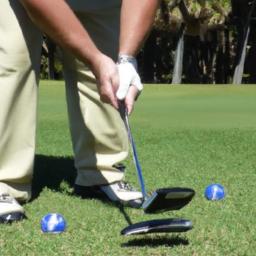
Matching shaft behavior and head design to a player’s motion starts with an accurate assessment of swing speed, tempo and release timing. Record driver speed with a launch monitor: as a practical guideline, driver speeds under ~85 mph often do better with senior or softer regular flex; 85-95 mph typically matches regular flex; 95-105 mph often fits stiff; and >105 mph usually requires extra‑stiff. Flex influences how the shaft loads and unloads, which affects dynamic loft and impact spin. Torque (commonly 2.5°-6°) influences feel and off‑center control: lower torque reduces head twist for late‑releasing,high‑speed deliveries and tightens dispersion; higher torque gives a rounder feel and can help players with smoother,earlier releases. The shaft’s kick point (high/mid/low) also tunes launch-faster transitions and early releases usually benefit from a higher kick point to lower spin and launch, while slower swingers often gain from lower kick points to raise trajectory.
A practical fitting sequence: measure driver speed, carry and spin, note attack angle (typical driver AoA +1° to +4°; irons −3° to −6°), then iterate shaft flex/kick point and clubhead loft until launch and spin fall into your target windows for the greens you play.
Next, match head attributes-MOI, CG location and adjustability-to on‑course objectives and shot‑shaping needs.High‑MOI heads shore up forgiveness and reduce sidespin on mishits-useful on narrow fairways or in windy conditions. Many modern drivers advertise MOI in the thousands; choose higher MOI when stability is the priority. Conversely, lower‑MOI, work‑able heads with movable CG suit better players who need flatter trajectories and easier shape control. For short‑game clubs, prioritize bounce (4°-12°) and grind choices that fit turf interaction-more bounce for soft turf and bunkers, less for firm or tight lies.
Use these testing routines to quantify changes:
- Impact tape or face‑spray sessions to chart strike location and how it shifts after a shaft or head change;
- Tempo metronome drills (3:1 backswing:downswing) to sync shaft unloading with the chosen flex;
- Attack‑angle sessions at 7-10 yards to establish the iron low‑point and driver upward strike using launch‑monitor feedback.
Reasonable, measurable targets from these routines include shrinking the 95% dispersion radius by 10-20 yards or centering the average strike within 10-15 mm of the sweet spot over 30 shots.
Provide tailor‑made recommendations that factor in physical ability, learning preference and playing habitat. Beginners should start with forgiving long‑game gear-mid/high‑MOI driver, regular flex shaft and 10.5°-12° loft-and progressive drills that prioritize centered contact (impact bag, short swath work) and tempo. Advanced players can refine settings with small swing‑weight tweaks (±2 points) and slightly shorter shafts (−0.25 to −0.5 in) to gain control without a significant loss of speed; alternate technical blocks (impact position,shaft loading) with scenario practice (windy par‑4 simulations,narrow tee shots).
Troubleshooting rules of thumb: if a fast swinger sees high, left misses, try stiffer flex and a lower kick point; if a slow swinger’s shots are weak and low, soften the flex, lower the kick point or add 1°-1.5° of loft. Also, confidence in equipment reduces decision friction-use a short pre‑shot checklist (target, club, single swing thought) and a six‑week practice plan with measurable aims (such as, +3 mph clubhead speed, 10% tighter dispersion, carries consistent to ±5 yards). When combined, these steps let equipment choices become a reliable competitive advantage across conditions and skill tiers.
Driver Optimization: Controlling Launch and Spin with Head, Loft and Tempo
Begin by selecting heads and lofts to produce the intended launch/spin pairing.Most modern adjustable drivers cover roughly 8°-12° of static loft with ±1-2° hosel adjustment. If your average launch is under ~10°, raise static loft by 1-2°; if launch exceeds ~14° and spin is above ~3,000 rpm, consider reducing loft. CG placement and head shape matter: back‑biased, high‑MOI designs promote forgiveness and higher peak launch-good for mid‑ to high‑handicappers-while shallow, low‑CG “low‑spin” heads are aimed at better players seeking penetrating trajectories and spin in the ~1,500-2,500 rpm band. Always validate changes with a launch monitor: record carry, total distance, spin and attack angle for each loft setting and check conformity to USGA/R&A rules (maximum 460 cc head volume and conforming face/shaft).
On firm, windy courses prioritize low‑spin configurations to keep trajectories piercing; on soft, downwind days, slightly more launch and spin can increase carry and stopping power.
Then refine setup and swing mechanics to produce a repeatable upward attack and appropriate dynamic loft. Use these setup checkpoints to encourage a positive angle of attack: position the ball just inside the left heel for right‑handed players, tee so about half the ball sits above the driver topline (roughly 1-1.5 in above the sole), tilt the spine slightly away from the target and load about 60% weight on the trail foot at address before moving forward through impact.Adopt a controlled tempo-many coaches recommend a 3:1 backswing:downswing rhythm (count “one‑two‑three” back, “one‑two” down) or a metronome between 60-70 bpm-to stabilize timing and avoid a steep, spin‑producing attack.
Practice progressions:
- Step drill: start with feet together on the takeaway, then step into stance on the downswing to encourage an upward AoA.
- Tee‑height launch exercise: hit three balls at increasing tee heights to feel launch changes and log aoa and dynamic loft on a monitor.
- Slow‑motion impact drill: pause at the top and rehearse a shallow downswing with chest rotation to prevent casting and excessive spin.
Common faults-steep downswing, early release, or an overly closed face-show up as high spin and low carry. Address them by shallowing the arc,preserving lag and checking face‑to‑path relationships with video or monitor feedback.
use a structured training block that links technical work to course decisions. Example four‑week plan: weeks 1-2 focus on setup and tempo drills (two 30-45 minute sessions weekly); week 3 tests adjustable lofts on a launch monitor (1° increments); week 4 transfers findings to simulated course scenarios (windy tee shots, narrow fairways). Set measurable outcomes-target a mean driver attack angle of +1° to +4°, reduce spin 200-500 rpm while keeping or increasing carry by ≥5 yards. On course, favour accuracy when required (choose a higher‑lofted driver or 3‑wood and aim center) and reduce loft to promote roll when the hole suits a penetrating tee shot. Use a mix of visual (slow‑motion video), kinesthetic (impact bag/step drill) and auditory (metronome) tools, and reinforce a pre‑shot routine that links tempo and equipment choice to reduce indecision and make gains sustainable under pressure.
Irons & Wedges: Trajectory Management, Bounce and Grind Guidance by Turf and Swing
Start by evaluating the turf you play and your personal swing tendencies, then match sole geometry and bounce to those variables. Bounce is the angle from the leading edge to the lowest point of the sole; wedges generally span about 4° (low) up to 12°-14° (high). On firm, tight turf or links‑style courses pick a low‑bounce, narrower sole (≈4°-6°) so the leading edge can engage cleanly without the club bouncing.For soft, wet turf, deep rough or steep bunker faces, pick higher bounce (≈10°+) so the sole skims the surface rather than digging. Assess your wedge attack angle-either with a launch monitor or by divot patterns: steep negative attacks (~−6° or steeper) usually benefit from more bounce to avoid plunging; shallow or sweeping attacks (≈−2° to +2°) do better with lower bounce to prevent bouncing and thin shots. If you frequently enough open the face for flops, choose grinds with heel and toe relief (C‑style grinds) so the sole still clears turf when the face is opened.
Once the gear matches turf and swing, refine technique to exploit bounce and grind. Setup for full, descending wedge strikes usually places the ball slightly back of center with 3°-6° of forward shaft lean at impact to compress the ball and generate consistent spin. Note that more forward shaft lean tends to increase spin and may require a slightly lower bounce to avoid digging.
Practice drills:
- Towel/divot drill: place a towel 1-2″ behind the ball and strike-an ideal descending blow will clip the towel after contact; aim for the divot to begin 1-2″ beyond the ball on full wedges.
- Sweeper drill: put a headcover 2-3″ in front of the ball to promote a shallower angle and test low‑bounce performance on tight lies.
- Open‑face grind check: open the face 10°-20° and hit short flop shots to verify the sole clears turf; if the club still digs,close the face slightly or select more heel relief.
Frequent mistakes include misjudging effective bounce when the face is opened (opening reduces effective bounce), flipping with the hands through impact (causing inconsistent spin) and not adjusting ball position for different grinds. Correct these with a consistent pre‑shot routine, monitor carry and spin with a launch device, and set concrete targets-such as carry consistency within ±5 yards and divot start 1-2 inches past the ball for full wedges.
Integrate equipment and technique decisions into on‑course strategy to lower scores and manage risk. As an example,after rain on soft greens,favor a higher‑bounce gap or sand wedge inside ~75 yards to use a skidding contact that still holds the green without deep digging; on dry,firm greens or narrow fairways,use lower‑bounce wedges for truer,lower launches and more run‑out.Build a personal wedge chart during practice-document loft, bounce, grind, typical carry, landing angle and spin for each wedge across conditions-and consult it under pressure. Practice plans should include:
- 50‑ball sessions on tight turf focused on low‑bounce mechanics (shallow attack, slightly forward ball position)
- 50‑ball sessions from soft turf and bunker focused on high‑bounce technique (steeper swing, relaxed hands to let the sole work)
- short‑game simulations: play nine holes using only three wedges to force creative trajectory and grind choices under course conditions
Mentally, use a pre‑shot tag to remind yourself of turf and grind decisions (for example, “open? soft = high bounce”) so that practice transfer to scoring is automatic.Small equipment changes-even 2° of bounce-can produce measurable differences in launch and spin; if uncertain, consult a fitter to dial in the optimal sole geometry for your game and greens.
Putter Design & Fitting: Face Construction, Head Geometry, Length and Grip for Consistent Putting
Modern face constructions-milled surfaces, variable‑face‑thickness patterns and polymer/elastomer inserts-dictate initial ball launch and how quickly the ball transitions from skid to pure roll. select a face that produces predictable ball speeds across the face to reduce distance variance on off‑center hits. A well‑matched putter often establishes true, forward roll within the first 1-4 ft; use a launch monitor or roll mat to confirm this on your greens. Putter loft should match green speed: about 3° is typical for medium‑speed surfaces,slightly more loft for slow,grainy or dewy greens,and closer to 2° for very fast,tight putting surfaces.Practice and test with drills and tools:
- Roll‑to‑3‑ft ladder: from 10, 20 and 30 ft, try to leave the ball within 3 ft on 8/10 attempts to quantify pace control.
- Face‑alignment gate: set two tees just outside the head width to ensure a square face through impact and cut down face rotation.
- Impact‑tape checks: confirm sweet‑spot contact and observe how the face pattern affects ball reaction.
These exercises help golfers at every level translate face technology into reliable on‑green performance.
Putter head shape, toe‑hang and MOI must suit your natural stroke. Players with an arcing stroke usually benefit from toe‑hang in the ~15°-30° range; straight back‑through strokes typically pair with face‑balanced models near 0° toe‑hang. blade, mid‑mallet and full‑mallet heads offer different alignment cues and MOI-larger mallets generally increase forgiveness and can exceed 3000 g·cm² in some designs, helping lag putting on undulating or windy greens.Check shaft length and lie during the fit: typical putter lengths run 32-36 in and factory lie angles (around 70°-74°) should be verified so the sole sits flat at address.Follow this fitting checklist:
- Plumb‑bob test: ensure your eyes are over or slightly inside the ball and set shaft length so the arms hang naturally.
- Confirm the sole is flat at address; if toe or heel lifts, adjust lie or try an alternative hosel.
- Compare head weights (generally 300-360 g) and match them to your tempo and common green speeds-heavier heads stabilize slower tempos on slow greens.
A systematic fit aligns hardware geometry with stroke tendencies, reducing face rotation errors and improving distance control under pressure.
Grip selection and stroke mechanics complete the fit. Grip diameter, shape and hold (conventional, reverse‑overlap, claw, arm‑lock) change wrist behavior and consistency. Standard grips measure ~58-60 mm circumference; midsize 62-66 mm; jumbo ~68-72 mm. A larger grip generally reduces wrist hinge and favors a shoulder‑driven pendulum stroke. Note: anchoring the putter to the body is banned by the Rules of Golf, but non‑anchored arm‑lock methods remain legal when not anchored to the body.
Use progressive routines with quantifiable targets:
- Tempo metronome: practice a 1:2 backswing:downswing rhythm and aim for 80% tempo adherence over a 50‑stroke set.
- Distance ladder (40 → 30 → 20 ft): target leaving 60% of long attempts within a 3‑ft circle over eight weeks to reduce three‑putts substantially.
- Mental routine checklist: visualization, alignment, and a single physical trigger to maintain focus.
typical faults-too much wrist action, poor eye/ball alignment or inconsistent forward shaft lean-are corrected by increasing grip size, using a shoulder‑rock stroke, and practicing with alignment aids. pairing putter face technology, head shape, length and grip with disciplined practice and course awareness lowers stroke averages and builds confidence on greens.
Golf Ball Choice: Compression, Cover, Spin and the Trade‑Offs by Skill
Cover material and core compression affect spin, feel and launch and should be matched to swing speed and priorities.Surlyn/ionomer covers are harder, produce less wedge and iron spin, but offer durability and more rollout on firm turf. Urethane covers are softer, increase face friction and therefore boost wedge spin and greenside feel. Compression ratings span roughly 30-120: lower compression compresses more at impact and can help slower swings generate ball speed; higher compression resists deformation and better transfers energy for faster swings.
A practical selection rule: softer balls (compression ≤70) tend to suit driver speeds under ~85 mph; mid‑compression (70-90) for 85-100 mph; and firmer (≥90) for >100 mph. Also consider weather: cold air and wet conditions reduce rebound and cover tack-on chilly days or when greens are receptive choose a slightly softer, urethane ball to preserve stopping power.
Convert cover and compression choices into effective short‑game technique. For high‑spin wedge shots with urethane balls, prioritize clean contact and a steep, descending blow: ball center to slightly back for full wedges, 2°-4° forward shaft lean at address and a negative attack angle to engage the leading edge. For surlyn two‑piece balls or tight lies where rollout matters, shallow the attack angle and allow a touch more dynamic loft to lower spin.
Use launch‑monitor targets to guide practice: amateur wedge spin commonly falls between 3,000-8,000 rpm; low handicaps frequently enough see 8,000-12,000 rpm on full swings. For drivers, aim for roughly 1,800-2,600 rpm to balance carry and roll for many players. Helpful drills:
- Impact‑tape series: take 10 full wedge shots to verify consistent center‑face strikes;
- 60° landing‑zone drill: play to a 20‑yard target and tweak attack angle to make landing and roll repeatable;
- Launch‑monitor tempo sets: record three‑shot strings with the same ball model to evaluate spin consistency across compression types.
these drills clarify whether your swing or the ball model is driving unwanted variance.
On course, treat ball selection as a tactical choice. Into small, fast greens or firm uphill pins, opt for a urethane, lower‑compression ball to maximize stopping power.on long par‑5s, exposed links holes, or when durability is vital, pick a Surlyn/higher‑compression construction for greater rollout and toughness.Keep in mind that cover friction affects the clubface’s ability to impart sidespin-low‑handicappers using urethane balls can more readily shape mid‑irons, while higher‑handicappers often benefit from two‑piece, lower‑spin balls to tighten dispersion.
Avoid over‑relying on feel alone; validate on course by playing small loops-three holes-using one ball model from tee‑to‑green and log stopping tendencies and dispersion, then repeat with a second model. Set measurable goals-reduce approach spin variance by 20% or improve green‑stopping inside 100 yards by 10% over a six‑week block-and use results to refine both technique and equipment choices for tangible scoring improvement.
integrating Gear into Course Strategy: Data‑Driven Club Choice, Pre‑Shot routines and Maintenance
Start with a consistent, data‑driven pre‑shot process that merges your measured performance with on‑course variables to make repeatable club decisions. Pull club averages from your database (range sessions, launch‑monitor logs or tracked rounds) for carry, total distance and dispersion; use a 5‑shot rolling average and track the standard deviation to anticipate miss patterns. Then apply environmental modifiers: wind (estimate ±10-15% of carry per 10 mph head/tail component),elevation (≈2 yards per 10 ft change),and ground firmness (expect more roll on firm fairways and less on soft turf). Follow a brief pre‑shot routine-check yardage, confirm the club, visualize the flight, take one committed practice swing and set alignment-so each selection is both objective and committed. Note rules constraints (e.g., do not ground the club in a bunker per Rule 12.2b) and build them into your decision process rather than into prohibited practice swings.
Translate equipment choices into measurable swing and short‑game adjustments to shape trajectory. Shaft flex,loft and lie all change launch conditions: stiffer shafts and lower lofts generally lower launch and spin and favor roll; softer flex and higher loft increase carry and peak height. Face‑to‑path adjustments in small degrees produce intended shapes-for many players a face about 2° closed to path creates a gentle draw, while 2°-4° open creates a controlled fade. Practical setup checkpoints:
- Ball position: move it back 1-2 ball diameters for lower trajectory, forward 1-2 diameters for higher;
- Weight at impact: 55-60% on the front foot for compressed iron strikes, 50/50 for full fairway woods;
- Face control: practice incremental face closes/opens with half‑swing drills and alignment stick feedback.
Reinforce these mechanics with gate drills, towel‑under‑arm connection work and trajectory control sets (vary tee height and ball position). Aim to reduce mid‑iron carry variance to ≤10 yards within eight weeks.
Keep performance stable through routine maintenance and course habits that preserve gear consistency and decision confidence. Maintenance checklist:
- Clean grooves after rounds to sustain spin;
- Re‑grip every 40-60 rounds or annually;
- Inspect shafts for dents or looseness before events and have loft/lie checked if directional misses appear (factory tolerance typically ±1°).
Carry a simplified yardage card listing average carry and preferred clubs for common yardages, play conservative when recovery is limited, and pre‑adjust club choice for weather (add loft and club in soft conditions; anticipate extra roll on firm, links‑style turf). Convert maintenance into scoring gains with targeted practice:
- 50 up‑and‑down attempts from 20 yards with a 70% conversion goal;
- 30 fairway bunker shots focusing on open‑face contact and landing‑spot control;
- weekly 45‑minute short‑game sessions emphasizing spin control with wedge loft and bounce variations.
When issues appear-excessive hooking after a grip swap or loss of spin from worn grooves-address them quickly (grip adjustment, groove restoration or wedge replacement) and re‑test so equipment and technique remain aligned and improvements translate to lower scores.
Q&A
Below are two Q&A series. The first is a focused, evidence‑framed Q&A for ”unlock Peak Performance: Master Golf Equipment for Swing, Putting & Driving.” The second briefly notes unrelated items that share the term “Unlock” in the supplied search results (device unlocking and home‑equity products) to avoid conflation.
A.Q&A – Unlock Peak Performance: Master Golf Equipment for Swing, Putting & Driving
1. Q: What is the main aim when optimizing golf equipment across swing, putting and driving?
A: The objective is to pair club attributes (head, shaft, grip, putter geometry and ball) with an individual’s biomechanics and stroke characteristics to maximize measurable performance (clubhead and ball speed, smash factor, launch angle, spin, carry/total distance, dispersion, and putting repeatability) while preserving consistency and reducing injury risk.2. Q: Which metrics should guide assessment when changing equipment?
A: Track clubhead speed, ball speed, smash factor, launch angle, spin (backspin and sidespin), launch direction, carry and total distance, lateral dispersion, impact location, and putting indicators (launch direction, initial skid, roll decay). Use standard statistics (means, sds, confidence intervals) to evaluate reliability and ensure decisions aren’t based on random variation.
3. Q: What is a robust, evidence‑based fitting protocol?
A: Follow a staged approach: (1) baseline capture-20-30 swings with current clubs under controlled conditions; (2) instrumented measures-calibrated launch monitor and high‑speed video or impact tape; (3) isolate variables-change one factor at a time; (4) repeated measures-10-20 reps per configuration for statistical confidence; (5) on‑course validation-confirm lab gains transfer to real play; and (6) select gear that meets your performance window for distance, dispersion and spin while maintaining player confidence.
4. Q: How should shaft choice reflect biomechanics and swing style?
A: consider swing speed, tempo, transition and release timing. Key shaft properties are flex, torque, kick point and weight. Use frequency matching or pro fitting tools to align stiffness with tempo: slower tempos usually pair with softer flex; aggressive transitions frequently enough require stiffer profiles to stabilize face control and spin.
5.Q: How do shaft mass and length change outcomes?
A: Heavier shafts can reduce peak speed but enhance stability and feel; shorter lengths typically tighten dispersion but can cost distance.Quantify tradeoffs by measuring clubhead speed, ball speed and dispersion and prioritize the metrics most important to the player.
6. Q: What are grip ergonomics best practices and their biomechanical impact?
A: Grip size, shape and texture affect wrist hinge and forearm rotation. Too small a grip promotes excess wrist motion; too large restricts wrist action and diminishes touch. Measure hand dimensions to choose size and validate with on‑ball testing; keep grip pressure light and consistent to improve proprioception and release.
7. Q: How do you match a putter to stroke type?
A: Identify stroke path (straight vs arcing). face‑balanced putters suit straight strokes; toe‑hang models better fit arcing strokes. Key putter metrics include MOI for stability, loft (adjust for green speed), lie, length and alignment aids. Evaluate using launch‑monitor or standardized drills and choose the putter that maximizes make percentage on representative surfaces.
8.Q: How does ball choice interact with club and swing?
A: Ball construction-core compression, mantle layers, cover type and dimple pattern-affects speed, launch, spin and feel. Multi‑layer, low‑compression urethane balls provide more greenside spin and softer feel; Surlyn two‑piece balls reduce spin and frequently enough deliver more roll and durability. Pick a ball that balances distance and control for your swing speed and priorities.
9. Q: What are general driver launch/spin windows for distance optimization?
A: Optimal windows depend on speed: for players in the ~85-95 mph driver speed band, higher launch (12-15°) with moderate spin (2,200-3,000 rpm) frequently enough maximizes carry; for 100-110+ mph, slightly lower launch (9-13°) with lower spin (1,800-2,400 rpm) can maximize total distance. Individual testing is essential to refine these targets.
10. Q: How should fitters weigh dispersion versus distance?
A: Use objective stats and player goals. Compute a performance index that weights distance and dispersion according to the player’s error tolerance. Competitive players may prefer accuracy with modest distance loss; distance‑oriented players might accept wider dispersion. Use paired statistical comparisons to ensure changes are meaningful.
11. Q: Which measurement tools are appropriate and what are their limits?
A: Doppler/radar launch monitors (e.g., TrackMan/FlightScope), camera‑based systems, high‑speed video, clubface sensors and pressure plates are all useful. Limitations include environmental impacts, calibration drift and device‑specific algorithms for spin/axis estimates. Cross‑validate where possible and always confirm on‑course transferability.
12.Q: How do you quantify consistency gains after equipment swaps?
A: Compare dispersion SDs,impact‑location variance and CV of ball speeds pre‑ and post‑change. Use paired t‑tests or nonparametric equivalents and report affect sizes and confidence intervals to verify improvements exceed random chance.13. Q: What role does injury prevention play in selections?
A: Equipment that supports neutral joint positions (correct flex, grip size, lie angle) reduces compensatory movements that can cause overuse injury. consider a biomechanical screen and consult health professionals for players with preexisting issues.
14. Q: How should on‑course validation be structured after a fitting?
A: Play at least 9-18 holes with the new setup in typical conditions, track outcomes (fairways, GIR, putting, score) and compare to a baseline sample.Use multiple rounds to account for environmental variability.
15. Q: What should a final fitting checklist include?
A: Confirm objective metrics are within target windows; verify subjective confidence; plan an on‑course trial; document serial numbers and setup (loft, lie, length, shaft, grip); schedule a 4-6 week reassessment; and record baseline biomechanical notes for future comparison.
B. Q&A – Other “Unlock” Topics (not golf related)
1. Q: Is the ”Unlock” device/unlock search result relevant to this article?
A: No. The search result about device unlocking refers to phone or network unlocking procedures and is unrelated to golf equipment. It was included in the supplied search results but not applicable here.2. Q: What about the “Unlock” home‑equity references?
A: Those items concern financial products that let homeowners access equity. They are separate topics and not connected to golf equipment or performance.
3. Q: Why are the non‑golf “Unlock” results cited?
A: They appeared in the supplied results and are acknowledged to avoid confusion with the golf subject matter.
Concluding note
For implementation, adopt an iterative, empirical process: set clear performance targets, run controlled trials, quantify outcomes and refine equipment and practice plans accordingly. Blend lab instrumentation with on‑course validation and treat each equipment parameter as a controllable variable. Collaboration among biomechanists,club fitters and instructors speeds progress. By making equipment mastery an evidence‑based part of performance optimization, players and coaches can systematically reduce variability, increase repeatability and convert technical gains into lasting competitive advantage.

Elevate Your Game: The Ultimate Guide to Golf Equipment for Flawless Swings, Precision Putting & Powerful Drives
Why the right golf equipment transforms your performance
Choosing the right golf equipment-clubs, shaft flex, putter design, golf ball and accessories-directly impacts swing consistency, ball flight, putting accuracy and driving distance. Modern players improve faster when gear is matched to biomechanics and goals.
Key outcomes to measure:
- Average driving distance (yards)
- Driver and iron shot dispersion (accuracy)
- Greens in regulation (GIR) percentage
- putts per hole and three-putt frequency
- Consistency of launch angle and spin (via launch monitor)
Core categories: What to buy and why
Drivers & fairway woods
- Driver loft: Higher loft for slower swing speeds increases launch and reduces spin. Typical ranges: 8-12° for faster players, 10-14° for mid-swing speeds, 12-16° for beginners or slower speeds.
- Shaft flex: Match shaft flex to your swing speed-L (Ladies), A (Senior), R (Regular), S (Stiff), X (Extra-Stiff).Shaft flex affects accuracy, launch angle and feel.
- head design: Forgiveness vs. workability. Larger MOI drivers resist twisting on off-center hits; adjustable weights help tune ball flight.
- Practical tip: use a launch monitor to pair shaft flex and loft to your optimal combo for peak carry and low dispersion.
Irons & hybrids
- Game-betterment irons-wider soles, perimeter weighting, and more cavity back-help with launch and forgiveness.
- Player’s irons-muscle back or thinner cavity-offer feel and workability but need consistent contact.
- Hybrids replace long irons for higher launch,more forgiveness and easier turf interaction.
Wedges and short game tools
- Loft setup: Typical wedge setup includes pitching wedge (44-48°),gap wedge (50-54°),sand wedge (54-58°) and lob wedge (58-62°). Maintain 4-6° gaps between clubs.
- Bounce influences turf interaction-higher bounce for soft turf/steep swings, lower bounce for firm turf/shallow swings.
Putters
- Blade vs mallet: Blades suit precise feel and straighter strokes; mallets help alignment, stability and forgiveness.
- Face technology: Inserts, face milling and grooves alter sound, roll and feel.
- Length and lie: Putter length and lie angle must match your posture-use a fitting to reduce wrist movement and improve consistency.
Golf balls, tees & grips
- Ball selection: Two-piece low-spin balls maximize distance for beginners; multi-layer urethane covers give more spin and control around the greens for better players.
- Grips: Size affects release and accuracy. Oversize grips can reduce wrist action and putter yips for some players; consider material and tackiness.
Custom fitting: The game-changer
A proper club fitting usually delivers bigger performance gains than buying the latest model off-the-rack. Fitting aligns lie angle, shaft flex, grip size, loft and club length with biomechanics and swing speed.
What happens during a fitting?
- Measure swing speed, attack angle, spin rate and launch angle (launch monitor).
- Try shafts of varying flex and weight to test ball flight and dispersion.
- Assess grip size,lie angle and club length for posture and path.
- Set a recommended loft/shaft/head configuration for driver, irons and wedges.
Fitting metrics to track
| Metric | Why it matters | Target |
|---|---|---|
| swing speed | Determines shaft flex and driver loft | Example: 95-105 mph = Regular/Stiff |
| Launch angle | Affects carry distance | Driver launch 10-16° (varies by player) |
| Spin rate | Too much spin reduces overall drive distance | Driver spin 1800-3000 rpm |
Biomechanics & equipment synergy
Align your body mechanics with club characteristics. For example: a player with an upright swing and high attack angle benefits from slightly flatter lie and lower-lofted irons to control trajectory.
Simple biomechanical rules
- Stability first: Good lower-body stability improves contact consistency-stiffer shafts can add control for strong lower-body players.
- Tempo & shaft flex: Faster, aggressive tempos often need stiffer shafts to avoid over-bending that creates a hook.
- Grip pressure: Aim for a 4-6/10 grip pressure. Too tight restricts wrist hinge and feel; too loose increases dispersion.
putting equipment & green management
Choosing the right putter
- match putter shape to stroke: arc strokes frequently enough suit blade putters; straight-back-straight-through strokes often pair with mallets and face-balanced designs.
- Test multiple head weights.Heavier heads help in windy conditions and on slow greens; lighter heads improve feel on fast greens.
Putting accessories and aids
- Use alignment aids, putting mirrors and gate drills to groove a consistent path.
- Read greens with a consistent routine: read fall from behind the ball, walk the line, commit to a speed first then line.
Putting drill: 3-3-3 Routine
- Place three balls at 3 feet,6 feet,and 9 feet.
- Make three consecutive putts at each distance before moving on.
- Track success rate and aim to improve weekly. This improves short-range feel and reduces three-putts.
Driving for distance and accuracy: equipment + drills
Driver setup checklist
- loft aligned to swing speed and desired launch.
- Shaft length balanced between distance and control-longer shafts can add distance but increase dispersion.
- Grip size that allows a natural release without excessive hand action.
Driving drill: Launch & target routine
- Warm up with half swings focusing on center contact for 10 balls.
- Use launch monitor or a phone app to record swing speed and carry distance for five swings.
- Pick a realistic target and hit 20 drives, logging left/right dispersion and distance. Aim to reduce dispersion by 25% over four weeks.
Practical equipment buying guide
- Test multiple models in real conditions-range and short game area.
- Bring current clubs to a fitting to compare performance.
- Balance technology with fundamentals: equipment amplifies skills; it doesn’t replace practice.
- Budget priority: 1) Fitting session, 2) Driver, 3) putter, 4) A quality wedge, 5) Proper golf shoes and glove.
Case studies & first-hand experience
Case study: Mid-handicap player (12-18)
Problem: Inconsistent drives, frequent 3-putts.
- Fitting revealed regular swing speed (95 mph) but high spin and weak launch due to fitted shaft being too soft.
- Change: Move to a slightly stiffer shaft and increase driver loft from 9° to 11°. Add a mallet putter with mid-weight head and a grip change to reduce wrist movement.
- Result: +12 yards average carry, 30% reduction in dispersion, putts per round decreased by 1.5.
First-hand tips from instructors
- “Spend on fitting before blades.” Most players get more score-improvement from properly fit forgiving irons and driver than the latest iron head model.
- “Ball selection matters.” Use a lower-spin ball off the tee if you struggle with side spin; switch to a urethane ball when approach control becomes a priority.
Maintenance, upgrades & tech trends
- Rotate grips annually or every 40-60 rounds to maintain tack and feel.
- Reshaft older clubs if swing speed or tempo has changed-lightweight graphite can help seniors regain distance.
- Launch monitors and portable radar devices are now affordable and bring pro-level feedback to amateur practice.
Actionable 30-day plan to see results
- Week 1: Get a short, focused club fitting (driver + 7-iron baseline). Track swing speed and launch metrics.
- Week 2: Implement two drills-3-3-3 putting and 20-drive dispersion drill. Record results.
- Week 3: Review ball and grip choice. Make one equipment change (new grip or ball) and continue drills.
- Week 4: Re-test on a launch monitor; compare metrics and adjust loft/shaf t if needed. Play a round focusing on course management to convert GIR and lower score.
SEO keywords woven naturally into the article
Examples included across the guide: golf equipment, golf clubs, driver loft, shaft flex, club fitting, launch monitor, golf ball selection, putting stroke, green reading, golf grips, driver distance, iron forgiveness, hybrids, wedge bounce, putting drills, swing consistency, driving accuracy.
Fast reference table: Driver suggestions by swing speed
| Swing Speed (mph) | Suggested Loft | Shaft flex |
|---|---|---|
| Under 85 | 12-16° | L / A |
| 85-95 | 10-13° | R |
| 95-105 | 9-11° | S |
| 105+ | 8-10° | X |
Final actionable tips (no fluff)
- Prioritize a professional club fitting before big purchases.
- Measure results-use a launch monitor or rangefinder to quantify improvement.
- match ball and grip to skill level: start simple, upgrade as control improves.
- Practice with purpose-short targeted drills beat random range time.
If you want, I can create a personalized 30-day equipment and practice plan based on your current clubs, swing speed and scoring goals. Tell me your swing speed, handicap or pain points and I’ll tailor the plan.