
Equipment choice is a decisive link between a golfer’s physical attributes and reliable performance on the course. Carefully pairing clubhead design, shaft profile, grip dimensions and ball construction affects movement efficiency, the timing of the kinematic chain and the transfer of energy that creates clubhead speed, launch characteristics and spin. When those variables are deliberately matched to a player’s build,swing pattern and putting motion,measurable gains in accuracy,distance and consistency follow; mismatches,however,can conceal talent and increase shot-to-shot variability.
This piece condenses contemporary biomechanical insights, data-led fitting procedures and equipment developments into a usable playbook for coaches and committed players.It emphasizes objective performance indicators-clubhead speed, ball speed, launch angle, spin rate, smash factor, dispersion and putting consistency-and reproducible testing protocols that separate gear effects from technique. Sections cover driver and iron shaft prescription,loft & lie setup,grip ergonomics,putter fitting and ball selection,with a focus on how each item changes the golfer’s kinetic sequence and movement economy.
Recognizing the wide diversity of practitioner viewpoints and marketplace options-including community debates over shaft lines and consumer questions about footwear and ball packaging-this guide privileges evidence and repeatable testing over hearsay.The aim is to turn lab-derived metrics and fitting best-practices into clear,implementable steps that improve swing mechanics,sharpen putting,and optimize driving performance in ways that respect individual physiology and playing preferences.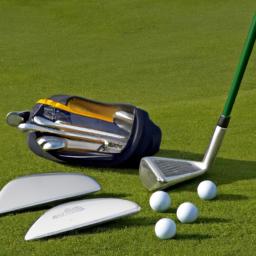
Marrying Biomechanics and Equipment to Produce Efficient, Repeatable Swings
Bringing biomechanics into equipment selection starts with a repeatable address and sequence that prioritizes efficient energy transfer and minimizes compensations. Begin by establishing a stable neutral posture-approximately 15° spine tilt, 10-15° knee flex, and a shoulder rotation near 80-100° on full swings while the hips rotate roughly 30-45°, producing an X‑factor (shoulder minus hip separation) in the 20-40° range that balances power with control.From a technical perspective, guard against early extension and casting by retaining width through impact-use a towel‑under‑arm connection drill and a wall-posture check to preserve spine angle. Concurrently, align shaft flex, kick point and clubhead loft to the player’s measured clubhead speed and targeted launch profile: for instance, many fitters look for a driver launch in the neighborhood of 12-14° with spin between 1,800-3,000 rpm depending on swing speed and attack angle; a launch monitor trial will reveal whether a softer, higher-kick shaft or a stronger static loft produces the best carry. Practice checkpoints and drills for this section:
- Setup checkpoints: ball position relative to torso (driver: inside lead shoulder; irons: center to slightly back), and hands slightly ahead at address for iron shots.
- Drills: towel‑under‑arm connection, impact‑bag compression holds, and a slow‑motion three‑step coil to lock in correct sequencing.
- Troubleshooting: for weak, low contact check dynamic loft and static loft; for persistent hooks or slices evaluate face‑to‑path relationships and shaft torque.
Applied consistently, these methods synchronize technique and equipment so players produce repeatable launch, spin and dispersion patterns that convert into better scoring.
When shifting focus to the short game, club specifications-especially wedge loft, bounce and sole grind-directly shape technique and shot selection on various turf and bunker conditions. For full wedge strikes and pitches, prioritize hands ahead at impact, a shallow attack angle and firm shaft lean to compress the ball; for chips and bump‑and‑runs, pick a lower‑lofted option (for example, a 7‑ to 9‑iron) and play with weight forward to encourage roll. For high‑spin lobs or flop shots, open the face to add dynamic loft but beware that excessive bounce on a sand wedge will cause fat shots on tight lies; in soft bunker sand choose higher bounce or a more open face and enter the sand about 1-2 inches behind the ball to splash rather than dig. A useful measurable routine is a wedge ladder drill-50 shots to targets at 10‑yard intervals-logging proximity to aim for within 10-15 feet on longer pitches and 3-6 feet on approach‑length wedges. Short‑game checkpoints and practice drills:
- Setup checkpoints: ball position (back of stance for chips; center for full wedge shots), grip pressure light-to-moderate (~4/10), and weight roughly 60/40 forward for full wedges.
- Drills: half‑to‑full swing ladder, one‑handed chip strokes to develop feel, and a bunker splash drill using a drawn line in the sand to control the entry point.
- Common errors & fixes: wrist flipping → hinge‑and‑hold practice; decelerating through impact → metronome tempo work at ~60 bpm.
Use these techniques in course scenarios-choose less loft when it’s windy or firm to reduce spin; choose open,higher‑lofted shots when greens slope toward hazards-to translate practice into better scoring.
Embed biomechanical efficiency and properly fitted clubs into deliberate course strategy and mental habits to convert technical gains into lower scores. Build a bag that preserves consistent loft gaps (aim for 4-6° between irons) and respects the 14‑club limit; swap hybrids in for long irons if your tempo or plane makes reliable long‑iron contact difficult. On the course,base club choice on lie,wind and elevation-add roughly 10-15 yards for uphill lies when the ball is below you,or subtract 5-10 yards for a strong headwind-and favor a low‑loft bump‑and‑run when greens are firm and slopes dominate. To refine trajectory and shot shape, apply targeted practice such as gate drills for face control, alignment boards for path management and weighted‑club sequencing for transition timing; set measurable goals like trimming fairway dispersion to within a 20‑yard radius and raising up‑and‑down conversion to over 50% from 30-50 yards. Mental and tactical checkpoints:
- Pre‑shot routine: visualise the shape, pick a landing area and commit to the plan.
- Risk management: play to your preferred miss and factor wind and green firmness into the club selection.
- Practice for variability: simulate wind and awkward lies on the range to develop adaptability.
Combining precise biomechanical cues with a deliberately fitted bag and disciplined on‑course strategy helps golfers at all levels produce measurable improvements in swing economy,scoring consistency and decision‑making.
Shaft Flex, Length and Torque: Matching Profiles to Swing Signatures
Shaft attributes-flex, length and torque-are principal drivers of how energy flows from body to ball and should be matched to a player’s build and timing. As a starting guideline, use driver swing speed bands to narrow flex choices: approximate ranges are <75 mph = Ladies (L), 75-85 mph = Senior/A (A), 85-95 mph = Regular (R), 95-105 mph = Stiff (S), and >105 mph = Extra stiff (X), with refinement via launch‑monitor data. tip flexibility and torque are critically important: a softer tip and higher torque typically raise launch and increase sensitivity to side spin; a firmer tip and lower torque resist twisting and tighten dispersion. Regarding length, be mindful that each extra inch in driver length commonly adds about 1-2 mph to clubhead speed but may reduce control-set concrete goals (such as, gain 5-10 yards of carry while maintaining directional dispersion under 15 yards).during any shaft evaluation, keep setup variables consistent (ball position, spine tilt, shaft lean) so that observed changes stem from the shaft and not from inconsistent setup.
Then personalise shaft choice to mechanical tendencies and shot‑shaping aims by examining swing plane, release pattern and attack angle. Quantitative measures help: many drivers present an AoA between -1° and +3°, while long irons often show -4° to -6°; players with steep, downward strikes usually benefit from lower‑launch, stiffer‑tip shafts to curb spin, while sweepers often gain from mid/high‑kick profiles that aid launch.A practical diagnostic routine:
- Capture swings with a launch monitor and high‑speed video; track launch angle, spin and dispersion.
- run shaft frequency/flex tests and tip‑stiffness comparisons to link feel to metric outcomes.
- Use weighted‑swing practice (add 50-100 g to the butt) and short‑to‑long progressions to test consistency across clubs.
frequent pitfalls include picking a stiffer shaft solely as it “feels” powerful (which can induce hooks and distance loss) or lengthening the driver beyond controllable limits; correct these through measurable targets-e.g., keep lateral dispersion ≤10 yards and lift smash factor by 0.02-and iterate equipment and technique within controlled testing blocks.
Put shaft choices into play by considering wind, turf and scoring priorities. On exposed, links‑style holes opt for lower‑launch, lower‑torque shafts to keep ball flight penetrating and minimize sidespin; on receptive turf choose slightly higher‑launch profiles to maximize carry and stopping power. Around the greens, shorter or heavier shafts and reduced swing weights frequently enough improve feel and control-internalize these differences with drills such as:
- on‑course constraint challenge: play nine holes with only two clubs (for example, a 7‑iron and a mid‑iron) to force trajectory management and smarter club selection.
- Launch‑monitor comparison: take 30 swings per shaft option, track spin and carry, and pick the shaft that meets dispersion and launch goals.
- Alignment‑stick and impact‑bag work to remedy face‑angle issues introduced by unsuitable kick behavior.
Also remember equipment conformity under USGA/R&A rules (e.g., maximum club length limit of 48 inches) when making permanent modifications. Reinforce shaft changes with mental planning-short visualization steps, splitting targets into segments and a one‑minute review after each hole-to cement the link between shaft profiles, swing tweaks and lower scores. These combined technical, equipment and strategic practices produce measurable advancement from beginners building contact to low handicaps refining workability.
Clubhead Design & Loft: Shaping Flight and Consistency
Understanding how clubhead geometry and loft interact with your motion is central to predictable ball flight. Loft establishes the baseline for launch and initial spin (typical reference lofts: driver 8-12°, 5‑iron ~27-30°, pitching wedge 44-48°, sand wedge 54-58°), but the operative figure at impact is dynamic loft-the effective loft after shaft lean and rotation.Clubhead characteristics such as CG (center of gravity), MOI, face curvature and bounce also shape spin and launch: a low‑back CG tends to raise launch and lower spin, while a forward CG (common in player’s irons) reduces both. Set launch‑monitor target windows-e.g., driver launch 10-14° with spin in roughly 1,500-3,000 rpm; 7‑iron launch 15-20° with spin 5,000-7,500 rpm-and use those windows to decide whether geometry or loft changes are needed. Always ensure equipment remains conforming under the Rules of Golf when competition use is intended.
From a skills perspective, golfers must control both clubface angle and clubhead path to achieve desired trajectory and shape. Reduce variability by managing shaft lean and face rotation at impact: a forward shaft lean of 1-3 inches at address lowers dynamic loft and yields a more penetrating flight for long irons; a neutral or slightly open face increases launch for shots into firm,fast greens. Small changes in face‑to‑path alignment-just a few degrees-can transform straight shots into pronounced fades or draws. Drills that increase repeatability and aid diagnosis:
- Impact tape + alignment stick: put tape on the face and an alignment stick on the ground to verify face orientation and strike bias.
- Half‑swing dynamic‑loft drill: take controlled 50% swings focusing on wrist set to sense dynamic loft and monitor carry.
- Face‑to‑path awareness: keep the path consistent while altering the face (closed, neutral, open) to see curvature per degree of face change.
Typical faults include overusing the hands to manufacture shape-correct this by re‑engaging core rotation and a neutral wrist set-and misreading dynamic loft-fix by checking setup shaft lean and ball position.Set measurable practice milestones, such as cutting driver spin by 10-20% across four sessions or producing three stable landing zones with a single club inside a 10‑yard window.
Apply gear knowledge and refined technique to on‑course play were loft and head geometry most affect scoring. Into the wind or on firm turf, intentionally reduce dynamic loft and set up a lower‑launch/low‑spin profile-grip down on fairway woods or choose hybrids instead of long irons when appropriate; when greens are soft and you need the ball to hold, open the face and/or opt for a higher‑loft wedge (for example, a 58-62° lob for delicate landings). Consider bounce and grind in wedge selection-a higher bounce helps in soft sand or turf, while low bounce is better for tight lies.transfer range practice to course conditions with:
- Targeted launch window work: use a launch monitor to lock in a one‑club distance and an choice trajectory for reliable course choices.
- Situation simulation: rehearse sets of 30 shots (10 into wind, 10 downwind, 10 on tight turf) using the same two clubs to learn trajectory adjustments.
- Pre‑shot checklist: confirm pin location, green firmness, landing zone and intended spin, then select loft/face and commit to a dynamic‑loft target.
Adapt instruction to physical ability-swap a hybrid or high‑lofted fairway wood for long irons when speed is limited-and use mental routines to back commitment to shot shape and loft choice. These equipment‑informed, measurable strategies lead to more consistent ball flight, better course management and lower scores.
Putter Head Design, Grip Choices and Stroke Mechanics for Better Putting
Start by matching putter specifications to the natural stroke: head shape, shaft length, loft and balance determine how the club interacts with the hands and the green. Choose a head that complements your arc-face‑balanced or high‑MOI mallets suit strokes with minimal arc (straight‑back/straight‑through), while toe‑hang blades suit moderate arcs. Aim for putter loft around 3-4° to encourage forward roll and minimize skid, and select a shaft length that produces a cozy posture (most players gravitate to 32″-35″); adjust by 0.5-1″ if your eye position or wrist action compensates. Check lie angle and grip size-changing lie by about 2°-4° can materially affect face aim. Pre‑putt checkpoints:
- Align shoulders and putter face to the intended target line; position the ball slightly forward of center for typically flat putts.
- Keep wrists neutral and grip pressure soft (~3-4/10) to preserve a pendulum motion.
- Confirm eye position over or just inside the ball-seeing the ball inside the toe usually indicates a closed face.
These checks reduce variability and link equipment choices to consistent technique and improved green performance.
Putter grip and stroke mechanics should be taught as a unified system where shoulders, hands and the club act as a pendulum. Prioritise a stable lower body,a shoulder‑driven stroke and minimal wrist action-the chest/shoulder girdle provides primary motion while wrists act as shock absorbers,not power sources.offer a progression of grips: conventional reverse‑overlap for general use, cross‑hand or claw options to limit wrist collapse for higher handicaps or inconsistent face rotation. Train measurable tempo and path cues-use a metronome at 60-70 bpm to establish a 1:1 backswing‑to‑follow‑through rhythm for short putts; match arc to head type (slight arc for toe‑hang, straight path for face‑balanced). Common errors and fixes:
- To much wrist hinge: correct by placing an index finger along the shaft or performing a short drill with forearms braced against the chest to feel shoulder rotation.
- Decelerating through the ball: practice “roll past” drills-try to hole a putt by rolling it 3-4 ft past a six‑foot target to build acceleration.
- Misaligned face: use a mirror or a gate aligned to the putter face to enforce a square impact position.
Set progressive objectives, such as halving three‑putts within six weeks and hitting lag putts to within 3 ft from 25-40 ft at least 75% of the time with dedicated drills.
Combine stroke mechanics with green reading and strategy to lower scores: speed control determines most putt outcomes,so practise on greens of varying stimp (for example,8-12 ft) and under different conditions-dew,wind and grain change roll. Teach a repeatable pre‑shot routine that includes checking slope from low and high eye lines, rehearsing pace with a practice stroke and committing to a target point on the green; this supports decision‑making under pressure and reduces doubt. Recommended drills and routines:
- Two‑cup drill: place two tees 3 ft apart and practise holing from 6-15 ft to build aim and confidence.
- Lag ladder: from 20, 30 and 40 ft stop within 3, 6 and 9 ft respectively-track percentages to quantify progress.
- Pressure simulation: play alternate‑shot or putt‑for‑score games that mimic competitive tension.
Tailor instruction to learning preference and physical capability-visual aids (lines),kinesthetic cues (tempo feel) and analytical feedback (video with face‑angle metrics)-so players of all levels can combine correct equipment with disciplined setup and repeatable mechanics for measurable improvements on the greens and across the scorecard.
Driver Aerodynamics, Launch Profile and Spin Management to Maximise Carry and Accuracy
A clear understanding of aerodynamic interaction between ball and club is necessary to optimise distance and accuracy. The principal factors are clubhead speed, angle of attack (AoA), dynamic loft and spin rate; together they dictate launch, carry and rollout. Practical targets vary with speed-smash factor goals hover around 1.45-1.50-and spin typically falls as speed rises (for example, players around 80 mph may sit near the higher end of spin bands while >115 mph swings often show the lowest driver spin). A moderate positive AoA (+2° to +5°) paired with a forward ball position and slight spine tilt away from the target tends to yield higher launch with controlled spin; steep negative AoA produces higher spin loft, more spin and less roll.From an equipment standpoint, driver loft and adjustable settings (hosel, movable CG) should be dialled to the player’s dynamic loft and desired spin curve-raising static loft or shifting CG forward can flatten trajectory and lower spin, while moving CG back raises launch and spin. Note aerodynamic trade‑offs: very low spin reduces lift and side drift up to a point, but excessively low spin can produce a low, penetrating ball that underperforms on soft landing surfaces. Use launch‑monitor sessions to determine the individualized loft/AoA/speed combination that maximises carry for your swing profile.
Technique advancement combines mechanical refinement with drills that map to on‑course outcomes.Start with setup rules: place the ball about 1-1.5 ball widths inside the left heel (for right‑handers), tilt the spine slightly away from the target and weight around 55/45 (front/back) at address to encourage a positive AoA. Progression drills that work for all abilities include:
- Tee‑height ladder: test incremental tee heights to find the contact zone that raises smash factor-aim to compress the ball consistently on the face’s sweet spot.
- Headcover‑under‑arm: hold a headcover under the trail armpit to keep connection through the takeaway and promote an on‑plane path.
- Two‑to‑one tempo: rehearse a “one‑two” back and “one” through rhythm to lock in timing for less skilled players and to maintain feel for advanced ones.
For common misses, fix an out‑to‑in slice by shallowing transition, increasing hip rotation and squaring the face earlier; alignment sticks and mirror work are effective. Advanced players can fine‑tune spin loft (dynamic loft minus AoA) with slight tweaks-reducing dynamic loft by 1-2° or increasing AoA by 1° often trims a few hundred rpm of spin-then confirm on the monitor. Set measurable practice targets such as improving smash factor by 0.02 every 4-6 weeks or trimming 10 yards of lateral dispersion over three months, and record progress objectively.
To convert technical gains into smart strategy integrate trajectory control, wind assessment and club choice. In heavy headwinds or on firm fairways employ a slightly lower‑launch setup (move the ball a half‑ball width back, reduce dynamic loft by ~1-2°) to keep the flight penetrating; in tailwind or soft landing scenarios prioritise higher launch with a touch more spin to maximise carry and hold. Apply situational decision rules: prefer distance only when landing zones are generous and hazards are distant; otherwise select a controlled tee option (lower‑loft driver or 3‑wood) to hit a bailout area. Practice both blocked repetition for feel and randomized scenarios for course decision‑making-e.g., alternate ten driver shots to a narrow fairway target with ten shots to varied yardages to simulate variability. Reinforce a concise pre‑shot routine that includes target choice, trajectory plan and a single timing‑based swing thought to reduce last‑second mechanical tinkering under pressure. The combined strategic and psychological approach helps aerodynamic and mechanical improvements manifest as fewer strokes and improved scoring on the course.
Objective Metrics and On‑Course Protocols to Validate Equipment Changes
For rigorous equipment validation, quantify outcomes with calibrated launch‑monitor data and repeatable lab procedures: measure ball speed, clubhead speed, smash factor, launch angle, spin rate (backspin and sidespin), spin axis, carry and total distance, and lateral dispersion (shot‑to‑shot variance).Example target windows: driver launch between 10-16° with spin roughly 1,800-3,500 rpm depending on speed; iron AoA near -4° to -6° for clean turf contact; wedge spin in the 6,000-12,000 rpm band for stopping power on firm greens. To achieve statistical reliability gather a minimum of 30 shots per club/configuration, randomize club order to limit fatigue bias, use identical ball models and tee heights, and report mean, standard deviation and a 95% confidence ellipse for dispersion so observed differences exceed measurement noise. Validate your launch monitor calibration and record environmental data (temperature,barometric pressure,humidity) so distances and spin can be contextualized for actual course play.
When data reveal performance gaps convert metrics into stepwise coaching actions that tie technique to measurable gains. If data show excessive closed face/pull tendencies prioritise face‑control and path work-alignment‑stick gate drills to square the face and wall‑to‑wall half‑swing patterns to groove an inside‑out path; if irons are striking too steep, use a toe‑up takeaway and a forward low‑point drill (place a tee 1-2 inches ahead of the ball) to promote forward contact. For the short game, quantify landing angle and spin then practise targeted contact drills to increase friction-slightly firmer, ball‑first contact, narrower stance and 60-70% swing length-and aim to reduce three‑putts by goals such as decreasing three‑putt rate by 30% across eight sessions. Practical checkpoints and troubleshooting:
- Setup checks: ball position in stance, shaft lean at address (2-4° forward for irons), shoulder tilt and hip clearance.
- Impact indicators: divot placement starting just after the ball for irons; strike‑tape patterns for center‑face contact.
- Common corrections: overactive hands → stabilise forearms with a towel drill; outside‑in path → inside‑path gate with tees.
Link these drills to measured metrics so coaches and players can see objective improvements (for example, raising smash factor by +0.05-0.10 or compressing lateral dispersion into a defined yardage band).
On‑course testing is the ultimate arbiter of whether lab gains yield scoring benefits. Design controlled field experiments using representative holes (narrow tee shot, mid‑length par‑4 approach and a short, two‑tier par‑3) and capture shot‑level data: club used, lie, wind vector, pin position, result (landing and rollout) and subsequent strokes to hole. Collect at least 20-40 on‑course shots per club/condition across multiple days to factor in turf firmness and weather variability. During sessions maintain consistent pre‑shot routines and log subjective states (confidence, perceived control) to relate mental state to objective results. Include static equipment checks-verify loft and lie with a loft/lie machine, perform shaft frequency measures and confirm USGA conformity for competition use. Translate on‑course outcomes into tactical thresholds-e.g., if a driver setup produces lateral dispersion wider than a defined bailout zone, prioritise a fairway wood off the tee; set measurable course goals such as raising greens‑in‑regulation by 5-10% or improving strokes‑gained: approach by 0.1-0.3 through targeted practice.By combining lab metrics, coach‑led drills and disciplined on‑course testing, instructors can provide robust equipment recommendations, technique corrections and strategy changes that demonstrably lower scores.
Level‑Specific Drills and Implementation Plans to Turn Equipment Gains into Lower Scores
Begin by syncing equipment‑derived advantages with dependable setup fundamentals so loft, shaft or ball gains produce reproducible contact. Maintain a consistent address: set ball position about one clubhead inside the front heel for long irons and mid‑stance for wedges, keep spine tilt roughly 3°-6° toward the target for irons and a weight balance near 55% front / 45% back to improve compression. Track attack angle with a launch monitor-target -1° to -3° on short/mid irons and +2° to +4° with the driver when using a low‑spin, higher‑launch head and compliant shaft to convert clubhead speed into optimal carry. Drills with measurable outcomes:
- Impact bag: hold the finish 1-2 seconds to feel compression; measure ball‑speed changes on a launch monitor across 50 swings.
- Gate drill: place alignment rods to create a face‑to‑path corridor; target left/right dispersion within 15 yards at 150 yards with a 7‑iron.
- Attack‑angle ladder: use mats or monitor targets to practice incremental attack‑angle changes-aim for a consistent ±0.5° window.
These progressions move from basic setup cues to data‑driven swing tuning so novices learn reliable feel while advanced players hone launch‑window numbers for tighter carry variance and dispersion.
Next, convert equipment improvements into lower scores by sharpening short‑game touch and shot‑shaping. For greenside play emphasise loft awareness (such as, choosing a 54° gap wedge instead of a 60° lob when appropriate) and precise face control: when opening the face for soft, high shots add an extra 10°-20° of face loft and narrow stance by ~10-15% to steady the lower body. Use level‑appropriate drills:
- Clock drill (chipping): place balls at the 12, 3, 6 and 9 o’clock positions and aim to get 8 of 12 inside a 6‑ft circle; beginners can start with a 10‑ft target.
- Bunker splash: practise 30 bunker escapes to a target line focusing on an entry point 1-2 inches behind the ball and an open face; target an escape rate over 85%.
- 3‑putt reduction routine: from 25-50 ft commit to two‑putt strategies until three‑putts per round drop below 1.0.
Work on shot‑shaping via progressive path drills to produce reliable draws and fades within a face‑to‑path tolerance of ±3°. For advanced golfers integrate shaft and ball fitting data-spin loft,peak height and descent angle-into practice so wedge choices produce predictable stopping power on firm greens (aim for descent angles > 38° when bite is needed) and putter roll behaviour suits stimp speed.
Implement a course‑based plan that converts practice metrics into lower scores through smart management and situational choices. Track core KPIs for four weeks-average carry by club, shot dispersion, GIR% and scrambling%-and set measurable goals such as reducing driver dispersion by 10 yards or increasing GIR by 5%. A progressive on‑course protocol:
- Pre‑round checklist: review wind, elevation and hole shape; mark lay‑up distances and bailout zones per hole.
- Risk/Reward framework: on reachable par‑5s quantify the penalty for a miss and choose the club that minimises expected score, not simply the longest club.
- Practice‑to‑play transfer: simulate course scenarios (e.g., a 40‑yard punch in a 15 mph wind with a 7‑iron) and log outcomes; if wind alters carry > 10%, adjust club selection.
watch for common errors-overconfidence after an equipment gain, aggressive lines into firm greens, or abandoning the pre‑shot routine-and counter them with a concise pre‑shot sequence and visualization.Provide multi‑modal feedback (tactile, visual and data) so every golfer, from beginner to low handicap, can methodically turn equipment and technique improvements into measurable scoring gains.
Q&A
note on search results
– The web search snippets supplied were unrelated to golf equipment; they referenced a fintech company named “unlock.” The Q&A that follows is thus focused on the subject of evidence‑based golf equipment selection and performance optimization described in this article.
Q&A: Unlock Peak performance - Selecting Golf Equipment to Optimize Swing, putting & Driving
1. Q: What is the core idea behind fitting equipment to improve swing, putting and driving?
A: The core idea is to choose equipment that complements a player’s biomechanics and skill level so measured performance indicators (clubhead speed, ball speed, launch angle, spin, carry/total distance, dispersion, stroke consistency and strokes‑gained) improve.Properly matched gear reduces compensatory movements, increases kinematic efficiency and stabilises contact and launch across swings.
2. Q: Which objective measurements should be used during a fitting?
A: Primary metrics include clubhead speed, ball speed, smash factor (ball speed ÷ clubhead speed), launch angle, spin rate (rpm), carry and total distance, launch direction, descent angle, shot dispersion and shot‑to‑shot variability (standard deviation).For putting: face angle at impact, initial ball direction, launch speed, roll efficiency and putt dispersion. Use high‑quality launch monitors (radar or camera‑based) and automated capture when possible.
3. Q: How does shaft selection affect biomechanics and measurable results?
A: Shaft properties (flex, weight, torque, kick point and length) change timing, load/unload dynamics and feel. The right flex and weight improve energy transfer and release timing, boosting smash factor and repeatability. Torque affects perceived feel and face control-too soft can raise dispersion; too stiff can reduce speed. Kick point influences launch: higher kick lowers launch, lower kick raises it. Objective fitting tunes these traits to hit target launch and spin while stabilising variability.
4. Q: What targets are practical for driver launch conditions?
A: Targets depend on clubhead speed and player goals, but commonly used ranges include:
– Driver launch: roughly 9-14° (lower for higher speeds).
– Driver spin: about 1,800-3,000 rpm (lower for high speeds to limit spin losses; higher for slower players to gain carry).
– Smash factor: ideally ≥ 1.45 (solid modern impacts often approach 1.48-1.50).
Fitting should maximise carry while keeping dispersion manageable for each player.5. Q: How should loft and lie be tweaked for mechanics and trajectory control?
A: Loft should produce the launch and spin that maximise carry and total distance for the player’s speed and AoA-more loft raises both launch and spin, less loft reduces them. Lie angle must ensure the clubhead sits square at impact given the player’s dynamic posture-too upright (toe‑down) tends to pull left; too flat (heel‑down) tends to fade right (for right‑handers). Dynamic lie checks with impact tape or launch‑monitor feedback are essential.
6. Q: What matters most in putter fitting?
A: Focus on length, lie, loft, head shape/weight (MOI), face properties and grip. Key points:
– Length should match posture and eye line-wrong length causes wrist compensation.
– Lie must let the sole sit flat for consistent face aim.
– Loft (~3-4°) should promote forward roll without excessive skid.
– Head type and weighting should suit the stroke arc-mallets for straighter strokes, toe‑hang heads for arced strokes.
– Grip choices (larger, counterbalanced or thin tapered) influence wrist action.
Measure initial direction, face rotation and consistency during trials.
7. Q: how do grip ergonomics change swing mechanics and repeatability?
A: Grip size, shape and surface affect wrist motion, forearm activation and tactile feedback. Correct size prevents excessive wrist torque and helps a stable hinge and consistent face control.Oversized grips reduce wrist hinge and face rotation; undersized grips can increase unwanted wrist action. Grip materials influence slip resistance and tension; ideal grips allow minimal excess pressure while maintaining control. Quantify effects via face‑angle variability, dispersion and grip‑pressure measures where possible.8. Q: How important is ball selection across clubs?
A: Ball construction (core compression, cover material, dimple pattern) changes launch, spin and feel:
– Off the tee: low‑spin, fast balls often maximise distance.
– Irons/wedges: higher‑spin constructions enhance stopping power and control.
– Putting: ball firmness changes feel but has limited impact on pure line; alignment aids and roll may affect confidence.Ball fitting should capture ball speed, spin by club type, dispersion and greenside stopping distance to match ball model to swing.
9. Q: how can biomechanical assessment be integrated with fitting?
A: Combine motion capture or high‑speed video (kinematic sequences, joint angles, X‑factor) and force‑plate analysis (ground reaction forces) with launch‑monitor outputs.Identify sequencing weaknesses (e.g., insufficient pelvis‑shoulder separation, late wrist release) that equipment can alleviate (shaft, grip) versus issues needing coaching. Use before/after comparisons to show efficiency gains (e.g., higher clubhead speed while maintaining smash factor; reduced face‑orientation variability).
10. Q: What protocol produces reliable equipment comparisons?
A: Standardise tests:
- Warm up and calibrate equipment.
– Record a baseline (30-50 swings for long game; 20-40 putts for putting).
– Test each configuration for the same number of swings in randomized order with the same ball model.
– Capture all metrics and compute means, standard deviations and confidence intervals.
– Evaluate average performance and variability; prioritise objectively meaningful gains over impressions.11. Q: How should fitters trade off performance vs forgiveness?
A: pick the configuration that delivers the best net scoring benefit-balancing extra distance against any rise in variability. A lower‑spin option might add yards but widen dispersion; if dispersion grows enough to hurt scoring, a more forgiving choice is preferable. Use strokes‑gained simulations or on‑course validation to quantify net impact rather than chasing raw yardage.
12. Q: What are frequent misconceptions about equipment?
A: Common myths include:
– “Latest/most expensive gear automatically improves scores.” Not true-technology only helps when matched to the player.
– “Softer shafts always produce more distance.” Softer shafts may feel better but can reduce energy transfer and accuracy for stronger swingers.
– “Ball choice only matters for professionals.” Ball model affects spin, launch and stopping power across handicaps.Evidence‑based fitting replaces myths with objective testing.
13. Q: How often should players re‑evaluate equipment?
A: Re‑fit after major swing changes, every 12-24 months, or when notable equipment advances appear. Younger players or those with fluctuating speeds may need more frequent checks.
14. Q: How do coaches translate metrics into equipment targets?
A: Convert goals into measurable criteria-e.g., increase average driver carry by X yards, tighten dispersion to Y yards, reduce putts by Z strokes. Use launch‑monitor outputs to identify needed changes (to gain 10 yards of carry you might need more launch and less spin). Simulate on‑course effects (strokes‑gained) to prioritise practical improvements.15. Q: What practical next steps should a player take to unlock peak performance via equipment?
A: Steps:
- Baseline assessment with a launch monitor and biomechanical screening.
– Work with a qualified fitter to run controlled trials (clubs, shafts, grips, balls).
– Prioritise setups that improve mean metrics and reduce variability.
– Validate selections on course and iterate with coaching where necessary.
– Reassess annually or after notable swing changes.
16. Q: How should putter alignment aids and head shapes be evaluated scientifically?
A: Test initial direction accuracy, face rotation at impact and lateral dispersion for each head/aid. Match head geometry to stroke type-mallets/high‑MOI for stability and alignment surface; blades for arced strokes needing precise toe‑hang. Choose based on putt‑to‑putt consistency (standard deviation of initial direction and terminal distance).17. Q: Are there ethical or practical issues with high‑tech fitting for amateurs?
A: Consider transparency about costs and realistic benefits, avoid overfitting to lab conditions that don’t transfer to course play, and distinguish gear‑driven gains from those that require coaching. Fitters should provide clear evidence and insist on on‑course validation.Concluding note
– Effective equipment selection is a disciplined,data‑driven process that combines biomechanical assessment,launch‑monitor metrics and controlled A/B testing. The objective is to improve distance, accuracy, consistency and scoring while respecting a player’s movement patterns and priorities. If desired, this Q&A can be converted into a formatted FAQ for publication, or I can provide suggested metric thresholds tailored to specific handicap bands or outline a step‑by‑step testing protocol for a fitting session.
Selecting golf equipment to enhance swing, putting and driving is most effective when treated as an iterative, evidence‑based intervention. Choices-from shaft profile, club length, lie and loft to grip dimensions, putter geometry and ball construction-should be guided by objective metrics (ball speed, launch angle, spin, dispersion, putt launch and roll) gathered in both controlled (launch‑monitor/biomechanics lab) and applied (on‑course) contexts.Level‑specific priorities must guide decisions: maximum forgiveness and repeatability for novices, balanced adjustability for intermediates, and refined feel/workability for advanced players.
Successful integration aligns an athlete’s kinematic sequence with equipment mechanics. Biomechanical assessment and guided fitting identify compensations, ideal swing plane and tempo, and the equipment attributes that reduce variability while preserving intended shot shape. Measurement‑driven drills and structured practice must accompany any equipment change so neuromuscular patterns adapt and range improvements translate into on‑course scoring gains.Practitioners and players should treat equipment selection as cyclical and data‑centric: engage accredited fitters and coaches, collect baseline and follow‑up metrics, verify gains with on‑course tests and stay current with research and technology. By combining biomechanical insight, objective measurement and tactical application, equipment selection becomes a repeatable lever for improving consistency and lowering scores across ability levels.

Master Your Game: How the Right Golf Equipment Transforms Your Swing, Putting, and Driving Distance
Why the right equipment matters for swing, putting, and driving
Golf performance is the product of biomechanics, club design, and consistent practice. Optimized golf equipment reduces variability in your swing, improves launch conditions, and produces more predictable putting results.Whether you want longer driving distance, tighter approach shots, or a more confident putting stroke, club choice, shaft characteristics, grip size, and ball selection all interact with your technique to determine outcomes.
Driver: maximize launch, spin, and driving distance
Key driver elements that change distance
- Loft – Matching loft to swing speed optimizes launch angle and peak height. Too little loft under-launches; too much loft increases spin and reduces roll.
- Shaft flex and weight – Proper flex controls launch and dispersion; shaft weight changes feel and tempo.
- Head design and CG (center of gravity) – Low/back CG encourages higher launch and more forgiveness (MOI), while forward CG increases ball speed for better players.
- Club length – longer shafts can add distance but usually lower accuracy; balance length with control.
Practical driver setup by swing speed
| Swing Speed (mph) | Suggested Loft | Shaft flex |
|---|---|---|
| Under 85 | 12°-14° | Senior or Regular |
| 85-100 | 10°-12° | Regular or stiff |
| 100+ | 8°-10° | Stiff or X-Stiff |
Irons and wedges: how equipment refines your swing and approach control
Irons and wedges are about precision. Small changes to loft, lie, and shaft length influence how the club interacts with turf and the ball, which in turn affects spin rates and shot shape.
What to consider for better iron play
- Clubhead design: Game-improvement irons increase forgiveness and help with contact consistency. Player irons emphasize workability and feedback.
- Shaft choice: Steel tends to offer better control and consistency; graphite reduces weight and can increase swing speed for slower players.
- Lie angle: Correct lie helps the ball start on your intended line and improves turf interaction.
- Wedge grind and bounce: Choose bounce based on turf type and swing-low bounce for tight lies, higher bounce for fluffy turf and steeper attacks.
Putter: feel, face, and alignment that lower scores
Putting is a precision skill where subtle equipment differences matter. Consistent toe-to-heel weighting,face design,and alignment aids change how the putter feels in the stroke and how the ball rolls off the face.
Putter features that improve consistency
- Head shape: Blade for feel and feedback; mallet for stability and alignment.
- Face technology: Inserts or milled faces control roll and reduce skidding.
- Length and lie: Shorter putters can provide more control for arc strokes; longer for upright posture and belly/long strokes.
- Grip: Oversize grips minimize wrist action and can steady the putting stroke.
Shafts & grips: the invisible performance upgrades
Shafts and grips directly affect how your hands, arms, and the clubhead interact.Small adjustments produce big changes:
- Shaft flex: Controls launch and accuracy. flex mismatch leads to directional variance.
- Shaft torque and kick point: influence feel and dynamic loft at impact.
- Grip size: Too small increases wrist action and hooks; too large reduces wrist hinge and can cause pushes.
- Grip texture: Wet-weather grips or tacky materials help consistency in damp conditions.
Golf ball selection: spin, compression, and distance trade-offs
Your golf ball is the last piece of equipment that determines spin rates and feel. Choosing the right ball can transform both driving distance and short game control.
Ball characteristics explained
- compression: Lower compression helps slower swing speeds compress the ball fully for better distance; higher compression benefits high-speed players.
- Spin: High-spin balls provide more stopping power on greens but can reduce roll on drives. Low-spin distance balls maximize roll.
- Cover material: Urethane covers give softer feel and more spin around the green; surlyn covers are more durable and lower spin.
Launch monitors and club fitting: the evidence-based path to improvement
Modern launch monitors (TrackMan, FlightScope, GCQuad) remove guesswork. A professional club fitting uses launch data-spin rate, launch angle, smash factor, attack angle-to match clubs to your swing and maximize driving distance and accuracy.
Key fitting metrics to track
- Ball speed - indicates energy transfer; higher is better when paired with good launch and spin.
- Launch angle – optimal range depends on club and swing speed.
- Spin rate – too much reduces distance; too little lowers stopping power.
- Smash factor – ball speed divided by clubhead speed; higher values show better efficiency.
Practical tips: quickly improve swing, putting, and driving with equipment
- Start with a professional fitting for driver, irons, and putter. One session often yields immediate gains in distance and accuracy.
- Match golf ball compression to your driver swing speed for better launch and feel.
- Test grip size outdoors: play a few holes after changing grip size to confirm reduced wrist breakdown or improved release.
- Use a putter with alignment aids that match your stroke style.record your putting stroke and compare how alignment features influence setup.
- When changing shafts, test at least two flex/weight options on a launch monitor-small differences can produce measurable improvements in carry and dispersion.
Case studies: real gains from the right equipment
Case study 1 – Amateur golfer: +18 yards off the tee
A 42-year-old amateur with 92-95 mph swing speed went to a club fitter.The fitter changed the driver loft from 9° to 11.5° and installed a lighter graphite shaft with a softer tip section.Launch angle rose from 9° to 12.5°, spin dropped slightly, and carry increased by 18 yards. Accuracy improved due to better launch windows and a slight reduction in side spin.
Case study 2 – Mid-handicap: reducing three-putts
A mid-handicapper struggled with distance control on long putts.After testing, they switched to a blade-style putter with a slightly larger grip and a milled face insert. The new putter created a more consistent roll and reduced skid. Three-putts dropped from 12/month to 6/month after six weeks of focused drills and equipment change.
Drills that pair equipment with technique
Driver tempo drill
- Use a metronome app set to 60 bpm.
- Count back from impact on the backswing (1-2) and accelerate through the downswing (3-4).
- Practice with the fitted shaft to internalize feel; monitor ball speed and spin with a launch monitor weekly.
Putting drill for roll and alignment
- Place a string 6-8 feet in front of the hole as a visual target line.
- Use your match-fit putter and take 20 putts, focusing on hitting the string squarely on impact.
- Record how many start on the string vs. drift.Adjust setup or putter alignment until 70%+ start on line.
Equipment checklist by skill level (quick guide)
| Skill level | Driver | Irons/Wedges | Putter |
|---|---|---|---|
| Beginner | High-loft,forgiving driver | Game-improvement irons,cavity back | Stable mallet,simple alignment |
| Intermediate | Adjustable loft,mid-spin head | Combo set: cavity + blade scoring irons | Weighted putter to suit stroke |
| Advanced | Low-spin,workable head,custom shaft | Muscle/back blades or players irons | Blade or precision milled mallet |
First-hand experience: what to expect after a fitting
Most players report instant improvements in confidence and measurable changes on the course. expect:
- immediate changes in feel and ball flight during the session.
- Short-term adjustment period-give new clubs 3-6 rounds.
- Small tweaks after initial rounds (grip size, lie angle, slight shaft change) for fine-tuning.
SEO and practice-minded closing tips (no conclusion section)
When optimizing this topic for search engines, use primary keywords such as “golf equipment,” “swing,” “putting,” “driving distance,” “club fitting,” “driver loft,” and “golf ball” naturally throughout headings and body copy. Include long-tail phrases like “best driver for swing speed 95 mph” or “how grip size affects putting” within subsections. Offer downloadable checklists or short videos to increase time-on-page and engagement – both strong SEO signals.
Change equipment deliberately, test with a launch monitor or a knowledgeable fitter, and pair gear choices with targeted drills. The right equipment can transform your swing, sharpen your putting, and add meaningful yards to your driving distance.