—
The Faldo Focus: How to Channel His Legendary Precision in Every Swing
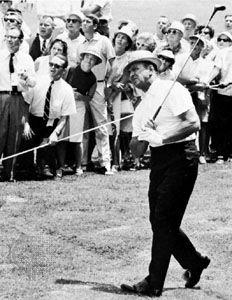
Mastering the precision that defined Sir Nick Faldo’s swing involves perfecting your setup and movement for every shot.One of the key elements is your grip. Faldo recommends placing your dominant hand lower on the club, with the thumb pointing towards your shoulderand the other hand slightly above it in a traditional overlap. This grip helps maintain control and consistency. Proper alignment is equally crucial. Your feet, hipsand shoulders should all be parallel to the target line, ensuring a straighter path for the club head and reducing unwanted sidespin.
To build on this foundational setup, focus on developing a repeatable backswing. Keep your left arm straight and your wrist hinge consistent, around 90 degrees between your forearm and upper arm at the top of your backswing. This consistent hinge is crucial for generating power and precision. As you transition into the downswing, concentrate on shifting your weight smoothly into your left side, allowing your hips to rotate first before your arms follow through. Beginners can start by practicing this move with shorter shots to build muscle memory, while more advanced players might focus on accelerating through the ball with increased force. Both groups can benefit from using alignment sticks to ensure their swing path stays straight and true. Incorporating these precise movements into your routine can significantly improve your accuracy and lower your scores on the course.
Mastering the Art of Distance and Control: Faldo’s Secrets to Consistent Driving
Mastering distance and control in the driving game involves a delicate balance of power and precision.Sir Nick Faldo’s approach emphasizes the efficient use of the body’s core and legs to generate speed while maintaining accuracy. Beginners frequently enough struggle with transitioning too quickly from their lower to upper body,leading to a loss of control and direction. Faldo recommends letting your lower body initiate the turn, allowing the club to catch up naturally. This process ensures a proper sequence for power generation without compromising the arc of the swing. Start by standing 8-10 feet back from the ball and make half swings while focusing solely on the rotation of your hips and shoulders, maintaining the order of movement. This drill helps beginners establish the correct rhythm and timing necessary to increase distance while retaining accuracy.
As golfers progress,maintaining consistency under pressure becomes crucial. Advanced techniques, such as grip pressure and follow-through, play a vital role. Faldo emphasizes the importance of a relaxed grip and a smooth transition to keep the clubface square at impact,which is crucial for maintaining straightness and distance. Many golfers tighten up as they step to the ball, leading to tension in the hands and wrists that can distort the swing arc. To counter this, Faldo recommends holding the club loosely, about as hard as you would shake hands with someoneand focusing on a firm but relaxed grip throughout the swing. visualizing your follow-through as a continuation of the downswing can definitely help maintain balance and control, ensuring that your finish is directed towards the target. Remember, the better you feel after your swing, the more likely you were in the right position and posture during the swing. This level of awareness and physical ease can be honed through practice and repetition, allowing you to execute drives that are consistent and effective on the course.
Reading the Green Like a Pro: Faldo’s Putting Philosophy and Techniques
Reading the contours of the green accurately is more than half the battle won in putting. Sir Nick Faldo emphasizes the importance of a comprehensive evaluation of the surroundings before setting up your stance. Start by observing the overall slope of the green from different angles, moving around the hole to get a complete picture. This helps you understand how the ball will roll and where the subtle changes in elevation might cause the ball to deviate from your intended line.
When you are ready to take your stance, Faldo suggests visualizing the path the ball will take before you even think about the mechanics of the putt. Align your body and club face parallel to this line, which you might draw in your mindand adjust your grip and posture to ensure a stable, consistent stroke. As you practice, Faldo recommends setting up mini-greens at home or on the course to experiment with different putting scenarios. You can do this by using a marker to simulate the hole and placing various balls around it to mimic arduous read situations. For instance, try putting from uphill, downhilland sidehill positions to understand how each gradient affects your ball’s roll. Through repetition, you’ll develop an intuitive understanding of green speed, breakand pace, essential skills that can dramatically lower your scores at any level.