Unlocking the Secrets Behind Gene Sarazen’s Smooth Swing
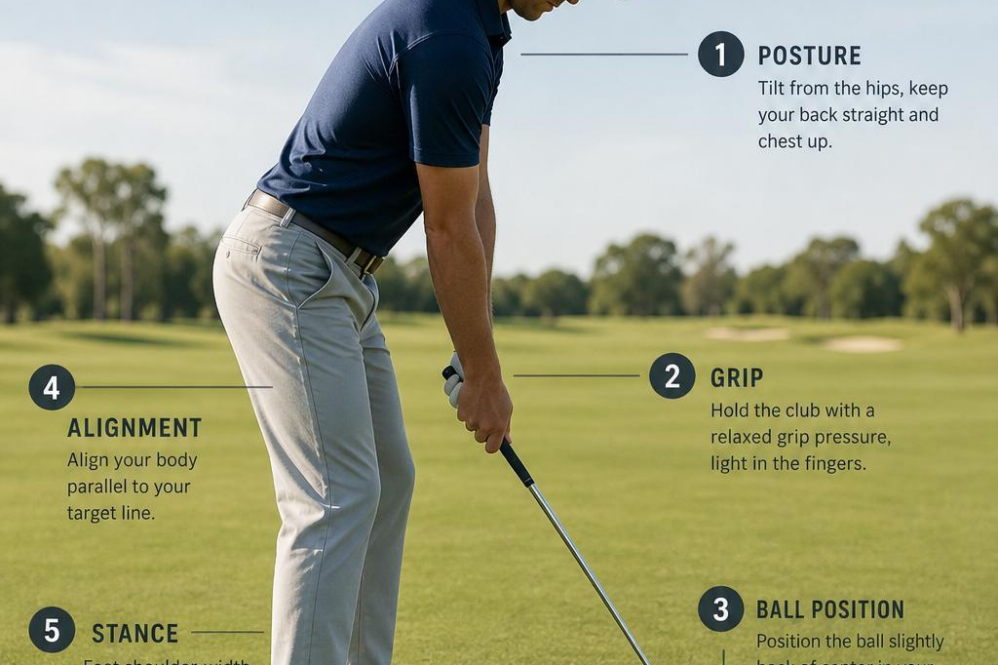
Understanding the Foundations of Sarazen’s Swing Mechanics is essential for golfers aiming to replicate the fluidity and power synonymous with Gene Sarazen’s style. At the core of his swing lies a harmonious balance between rotation and weight transfer. Begin by focusing on your setup fundamentals: position your feet shoulder-width apart with a slight knee flex, ensuring your spine angle tilts forward at about 15 degrees to enable a natural shoulder turn. Sarazen’s swing emphasized a smooth takeaway, initiating the backswing with a shoulder rotation rather than just moving the arms. This promotes a wide arc and consistent swing radius,wich you can practice by placing an alignment rod along your toe line and ensuring your clubhead moves straight back before turning. To develop this feel, incorporate drills such as the “slow-motion takeaway,” where you rehearse the first six inches of the backswing in exaggerated slow motion to build muscle memory. As you coil, focus on shifting your weight subtly to your right side, targeting about 60% of your weight backed onto the rear foot, setting up an efficient coiling mechanism that maximizes torque for the downswing.
Building upon the swing’s foundation, Sarazen’s short game mastery offers invaluable lessons in precision and touch, crucial for lowering scores on any course. His famed ability to “get up and down” made him a threat even when he missed greens. emulate his approach by refining your putting setup: adopt a posture where your eyes are directly over the ball, with your hands hanging naturally below your shoulders to encourage a pendulum stroke. For chipping and pitching, Sarazen maintained a slightly open stance with a forward ball position to promote clean contact and controlled trajectory. Practice drills like the “ladder chipping drill,” where you place tees at incremental distances to develop accuracy and consistent ball flight. Additionally, focus on scoring-range wedges to master distances from 30 to 60 yards by controlling wrist hinge and maintaining a smooth tempo, mirroring Sarazen’s approach. Recognize common pitfalls such as decelerating through impact or slicing chips, and correct these by ensuring a full follow-through, emphasizing acceleration and strike consistency.
translating technical skill into strategic course management was a hallmark of Sarazen’s legacy, an often overlooked but vital component of golf mastery.His approach to decision-making relied heavily on playing to his strengths rather than taking unnecessary risks.when facing challenging pin placements or adverse weather, Sarazen would opt for conservative targets, aiming for the widest part of the green and leaving himself manageable putts. Beginners and low handicappers alike can benefit from this mindset by incorporating pre-shot routines that evaluate hazards, wind direction, and lie conditions before selecting clubs. A practical application is to adopt the “target zone” mindset: rather of zeroing in on the flag, focus on a safe landing area that offers a higher margin for error.This not only reduces pressure but improves consistency. consider also Sarazen’s use of versatile equipment, preferring clubs that allowed for shot shaping-such as a slightly closed-faced iron for draws-giving him adaptability in tight situations. embrace these principles by practicing directional control drills with your irons and hybrids, and develop a playbook for different course scenarios, linking technical execution with smart strategy to fully unlock the secrets behind a smooth, effective golf swing.
How to Harness Sarazen’s Driving Techniques for Greater Distance and Control
Establishing a solid setup is the cornerstone of harnessing Sarazen’s driving techniques for both greater distance and precise control. Begin by positioning your feet shoulder-width apart, which offers a stable base to smoothly transfer energy throughout your swing. Align the ball just inside your left heel for a right-handed golfer,allowing the upward strike essential to Sarazen’s trademark power generation. Pay close attention to your spine angle-maintain a slight tilt away from the target, around 10-15 degrees, to promote the sweeping arc that maximizes launch angle and minimizes spin. Incorporating his advice, ensure your grip is neither too tight nor too loose; a moderate grip pressure encourages fluid wrist hinge and clubhead speed, which are vital for achieving those longer, controlled drives.
Building upon this readiness, Sarazen’s driving strategies emphasize the importance of a smooth, rhythmic swing that blends technical precision with natural tempo.One key mechanic to focus on is the full shoulder turn, reaching approximately 90 degrees to create coil and stored energy in the torso while keeping the lower body stable. This separation between upper and lower body initiates an efficient kinetic chain. Transitioning into the downswing, maintain a gradual weight shift towards your left side, allowing the clubhead to travel on an inside-out path. This technique reduces slices and promotes a powerful draw shape, a shot shape Sarazen often favored for its distance and control advantages. to practice this motion, use drills such as swinging with a headcover under your right armpit to prevent early arm separation and promote connected movement.these refinements not only improve ball striking but also prepare golfers to respond effectively to varying wind and course conditions, aiding shot selection and risk management on long par-4s and par-5s.
integrating sarazen’s driving principles into course strategy requires a holistic mindset where mental focus matches technical skill. one practical approach is to set measurable goals during practice, such as consistently hitting drives within a 10-yard dispersion range and increasing carry distance by at least 15 yards over a month. Practicing with targets and visualizing shot shapes under simulated pressure conditions sharpens both physical execution and mental resilience. For beginners, focusing on tempo and rhythm builds a reliable foundation, while low handicappers might experiment with minor swing plane adjustments or modern driver technology to fine-tune launch conditions. Remember, Sarazen advocated for adaptability and patience, especially when facing adverse weather; lower trajectory drives might potentially be preferred in high winds, requiring slight setup and swing plan modifications. By embedding these strategies within your regular practice routine-incorporating drills like the “pause at the top” swing to enhance timing and balance-you can systematically transform raw power into consistent, course-winning control that epitomizes Sarazen’s enduring legacy.
Putting Like a Pro The Subtle Adjustments That Made Sarazen a Legend
Mastering putting like Gene Sarazen begins with a steadfast focus on setup fundamentals, which lay the groundwork for consistent stroke execution. Sarazen emphasized a slightly narrower stance, with feet approximately shoulder-width apart, allowing for a balanced and stable posture that promotes smooth pendulum motion. Position the ball just forward of center in your stance to encourage a gentle upward strike, minimizing skidding and promoting true roll. His grip was relaxed yet firm, often utilizing a reverse overlap grip to minimize wrist breakdown during the stroke. To replicate Sarazen’s precision, aim to maintain your eyes directly over the ball or slightly inside the target line, ensuring proper sightlines for accurate reading of breaks. Incorporating these setup principles into your routine establishes a repeatable foundation, crucial for making subtle adjustments based on green speed and slope.
Understanding and applying short game biomechanics responsible for Sarazen’s legendary touch can dramatically improve distance control and accuracy. His stroke was characterized by a smooth, pendulum-like motion where the shoulders primarily powered the swing, reducing excessive hand and wrist action. This technique allows for better tempo consistency, crucial when reading putts under pressure. To enhance this,practice the “clock drill,” which encourages controlled backswing lengths; imagine the putter moving between 9 o’clock and 3 o’clock positions to hone stroke rhythm. Additionally, Sarazen’s ability to read subtle breaks and grain changes showcases the importance of course management. When faced with grain running against the hole or strong hillside slopes, adjusting your aim one to two ball widths uphill or downhill and controlling speed to prevent 3-putts keeps scores in check. By integrating biomechanical efficiency with strategic green-reading tactics, golfers develop a holistic approach to putting.
Incorporating Sarazen-inspired practice drills and mental discipline can bridge the gap between technical proficiency and course performance. Start with short putts inside 6 feet,where Sarazen’s focus on stroke consistency can be mirrored by setting a goal to make 20 consecutive putts,building confidence and muscle memory. Progressively integrate distance control drills such as ladder putting, which trains feel and pace from 10 to 30 feet by placing targets at incremental distances. When practicing,simulate various course conditions by varying grass length and incorporating slope into your routine to prepare for on-course variables. Moreover, Sarazen’s relentless mental toughness reminds us to approach each putt with unwavering focus and a positive mindset, treating missed putts as learning opportunities rather than setbacks. These deliberate drills and mental strategies help transform putting into one of the most reliable scoring weapons in your arsenal.