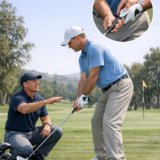
Discover the secrets Behind Choosing the Right Driver for Maximum Distance and Control
Choosing the right driver starts with understanding how its specifications affect both distance and control. One of the most critical factors is the loft angle,which typically ranges between 8° and 12°. Beginners often benefit from a higher loft, which helps launch the ball higher with more carry, while advanced players might prefer a lower loft to reduce spin and maximize roll after landing. Additionally, the driver’s shaft length and flex significantly influence swing mechanics. A shaft that is too long can decrease control, whereas a shaft that is too stiff or too flexible can disrupt timing, causing inconsistent ball striking.To fine-tune your setup, focus on ball position-placing the ball just inside your lead heel encourages an upward strike on the ball, promoting optimal launch conditions. Practicing with varied loft settings and shaft flexes in a controlled environment, such as a launch monitor session, can provide measurable data to guide your equipment choice.
Beyond equipment specs, mastering setup fundamentals and swing technique complements your driver selection for maximum efficiency. Start by maintaining a balanced posture with a slight knee bend and a relaxed grip pressure around 4 to 5 out of 10, which promotes fluid wrist hinge and release through impact. Alignment is key: ensure your shoulders, hips, and feet are square to the target line or slightly open to suit shot shape preferences. During your swing, focus on an inside-to-out path that facilitates a desirable fade or draw, depending on course strategy and obstacles. Incorporate drills such as the “gate drill,” placing tees outside the clubhead path to help groove a consistent swing arc, or the “step-through drill” to improve balance and weight transfer. Note common pitfalls like casting (early release) or flipping the wrists at impact, which reduce distance and accuracy - video analysis can help identify and correct these flaws systematically.
In course play, understanding how the selected driver performs under varying conditions informs smarter shot-making decisions. Such as, on a firm, windy day, a driver with a lower loft and a stiffer shaft can help keep the ball flight penetrating through the wind, while on softer turf, a higher lofted driver generates more carry to avoid rough and hazards. Combining your equipment knowledge with sound course management, such as aiming for wider fairway areas and factoring in elevation changes, reduces risks and sets up easier approach shots. Practice routines tailored to specific scenarios-like hitting drives to targets at incremental distances with varying ball positions and swing speeds-develop versatility and confidence. integrating mental focus techniques like visualization before each tee shot harnesses consistency and control, making your driver a reliable asset in lowering scores.
How the Perfect Putter Can Transform Your Game on the Greens
Mastering your putting begins with selecting a putter that complements your stroke style and enhances your ability to read greens effectively. A putter with a well-balanced head and a loft between 3° and 4° helps achieve a smooth roll and reduces skidding, critical for maintaining control on varying surfaces. When setting up, ensure your hands are slightly ahead of the ball to promote a forward stroke, which results in a more consistent impact. Pay attention to alignment aids on the putter head-they guide your aim and help you visualize the intended line. To build confidence in your setup, practice with mirrors or alignment rods, reinforcing the habit of square face contact. Remember, even subtle differences in grip pressure and stance width can impact distance control and direction, so experiment during practice sessions to find the combination that feels natural but repeatable.
Once the physical attributes and setup fundamentals are established, focus on refining your stroke mechanics through targeted drills that build both consistency and feel. The “gate drill,” were two tees are positioned just wider than your putter head to prevent arcing of the face, encourages a straighter backstroke and follow-through. Additionally, practicing putts from incremental distances-3, 6, 9, and 12 feet-develops touch and distance judgment essential for lag putting. Integrate varied green speeds by practicing at different courses or changing the hole location daily to mimic diverse course conditions.For advanced players, incorporating slight face rotation for deliberate shot shaping can be useful when navigating subtle breaks; though, do so cautiously to avoid compromising square contact. Always record or video your stroke periodically to self-analyze and identify any tendencies toward common errors like deceleration or inconsistent tempo, which directly affect your proximity-to-hole statistics and overall scoring.
In real-course scenarios, the perfect putter becomes a strategic weapon when combined with savvy green reading and mental fortitude. Assess slope, grain direction, and sun angle carefully-this analysis dictates the line and pace necesary for success. When faced with breaking putts, start by visualizing the ball’s path in relation to the hole as if you were reading a map, then commit to that line with a smooth, confident stroke. Incorporating pre-putt routines that include deep breathing and focused visualization helps reduce tension and aligns the mind with the mechanical task. For players struggling with pressure situations, practicing simulated pressure putts-placing tees for target zones or competing with practice partners-builds resilience under stress. Ultimately, the synergy between a well-chosen putter, refined technique, and strategic course management elevates your performance on the greens, turning seemingly mundane strokes into powerful scoring opportunities.
Expert Tips for Customizing Your Golf Clubs to Match Your Unique Swing Style
To effectively customize your golf clubs to match your unique swing style, begin by understanding the critical role of club specifications in optimizing performance.Lie angle,loft,shaft flex,and clubhead design shoudl be tailored based on your swing speed,attack angle,and typical ball flight. For example, golfers with a steeper attack angle frequently enough benefit from a slightly more upright lie angle to promote square clubface contact at impact, preventing the ball from veering offline. Utilizing a launch monitor during fitting sessions provides precise data on swing dynamics including swing speed (measured in mph or km/h), attack angle (degrees), and ball spin rates, allowing for informed adjustments. Make sure to test clubs under real-course conditions to assess how gear responds to prevailing weather and turf variations, ensuring consistency and reliable feedback once on the course.
After establishing baseline specifications, focus on integrating club customization into your practice routine through targeted drills and setup refinements. As a notable example, players who struggle with consistency in distance control can experiment with different shaft flexes and grips to improve feel and feedback during the downswing. A useful drill involves hitting shots with incremental changes in grip pressure and stance width while monitoring shot dispersion and trajectory changes. Set up checkpoints such as ensuring your hands align correctly at address, your spine tilt supports your swing plane, and your weight distribution favors a smooth transition can instill better mechanics that complement your customized clubs. Incorporate short game practice that emphasizes varied shot shaping-such as fades and draws-using clubs fitted with versatile lie and loft adjustments, thereby improving shot versatility and situational response around the greens.
customize your equipment choices considering overall course management and mental strategy improvements. When navigating diverse hole layouts or challenging weather conditions like wind or rain, having clubs aligned with your natural swing tendencies allows you to execute strategic shot selections with confidence, reducing risk and optimizing scoring opportunities. For golfers aiming to lower handicaps, integrating mental visualization with club-specific practice – such as rehearsing trajectory shapes with chosen clubs before shots – can reinforce neural pathways for better muscle memory. Remember,ongoing assessment and minor club tweaks aligned with seasonal change in course conditions or physical adjustments in your swing ensure that your equipment remains an active contributor to long-term performance gains rather than a static variable. Engage with a qualified club fitter periodically to maintain precision, and complement equipment tuning with purposeful drills like tempo pacing or impact position checks to bridge technical instruction to measurable betterment.