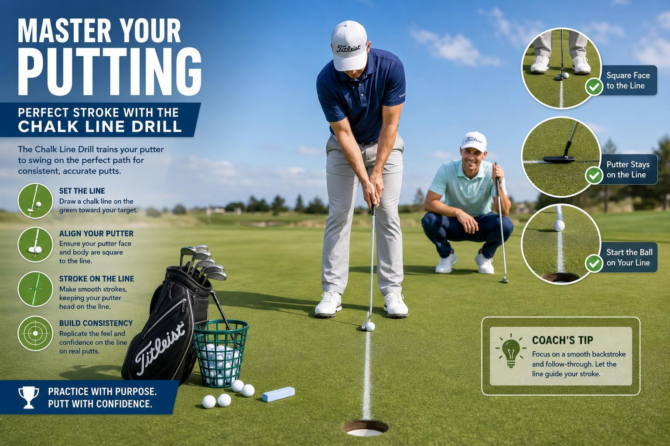
Unlock Your Best Swing with the Wrist Unhinge Drill
Developing a powerful and consistent golf swing begins with understanding the critical role of wrist mechanicsand the Wrist Unhinge Drill offers an excellent entry point. this drill emphasizes the correct timing and release of the wrist hinge, which typically peaks at a 90-degree angle during the backswing. By practicing the unhinging of the wrists on the downswing in a controlled manner,golfers can generate more clubhead speed and maintain better swing plane integrity. For beginners, focus on smooth, deliberate movements, ensuring the wrists begin to release just before the arms reach hip height on the downswing. Advanced players can use a training aid or mirror feedback to fine-tune the unhinge angle, ideally keeping the release between 35 and 50 degrees to maximize power without sacrificing control.
Integrating the Wrist Unhinge Drill into short game routines helps refine putting stroke stability and driving accuracy. When transitioning from chipping or pitching to full swings, the muscle memory developed through this drill stabilizes wrist action, preventing early uncocking that leads to hooks, slices, or inconsistent contact. On the course, this controlled wrist release allows players to better adapt to varying turf conditions and wind, as the cleaner release imparts optimal spin and trajectory. To solidify this skill, incorporate drills such as slow-motion swings with pause points at wrist release, along with impact bag exercises to simulate real strike feedback. These drills not only improve immediate swing mechanics but also enhance feel, which is essential when selecting club types and shot shapes against course hazards or tight pin placements.
to maximize the benefits of the wrist unhinge technique,attention to setup and equipment is crucial. Begin with a relaxed grip pressure-too tight can restrict wrist movement and cause tension through the swing. Pay particular attention to the lead wrist’s flat position at address to ensure a consistent hinge and release path. Modern graphite shafts with a mid-to-high flex can complement the drill by promoting smoother energy transfer and reducing the risk of premature wrist flipping. Additionally, golfers should monitor measurable improvements such as increased carry distance or tighter shot dispersion over week-long practice intervals.By regularly combining the Wrist Unhinge Drill with strategic course management-like favoring shot shapes that exploit the controlled release-players can translate improved mechanics into lower scores and increased confidence on every tee and green.
Discover How Proper Wrist Release Adds Explosive Power
Understanding the proper wrist release is essential for generating explosive power in your golf swing, especially when focusing on the transition from the backswing to the downswing. The wrist unhinge should occur naturally through the kinematic sequence, starting with the hips and torso initiating rotation, allowing the wrists to release at the precise moment of clubhead acceleration. Executing this release at approximately 45 to 60 degrees of wrist **** during the downswing maximizes stored elastic energy and transfers it efficiently to the ball. Beginners should practice this by incorporating the Wrist Unhinge Drill: set up with a mid-hand grip, take the club back slowly to full wrist ****and then complete a smooth, aggressive release just before impact while maintaining balance and tempo.
Incorporating proper wrist release techniques into your practice not only amplifies driving distance but also enhances control in your swing and putting stroke. For mid- to low-handicap players, refining this element can drastically improve shot consistency and trajectory management across various course conditions, including windy or firm turf.Critical to this is maintaining lead wrist stability post-release, which ensures a square clubface at impact and optimizes ball flight.Troubleshooting common mistakes such as early wrist release (casting) or late release (holding on too long) can be corrected by focusing on key setup checkpoints:
- Keep wrists hinged through the top of the backswing
- Initiate the downswing with body rotation, not just arm movement
- Feel the release pulse as a snap of the wrists through impact
These targeted cues help players adjust irrespective of physical ability, encouraging muscle memory development for on-course execution.
The wrist release also plays a vital role in short game strategies, notably in distance control and spin management during chipping and pitching. By adopting a consistent, controlled unhinge in the wrists, golfers can apply precise loft adjustments and create the desired ball trajectory, which is crucial on fast or undulating greens. Practicing drills that emphasize wrist hinge flexibility, such as slow-motion swings emphasizing wrist anglesor impact bag exercises that provide tactile feedback, can build tactile awareness and confidence. Additionally, combining these technical improvements with mental focus strategies-like visualization and pre-shot routines-helps integrate biomechanical efficiency with course management skills, ultimately boosting scoring potential and consistency across all phases of the game.
Simple Tips to Perfect the Drill and Transform Your Game
Begin by mastering the Wrist Unhinge drill, a fundamental exercise that enhances tee-to-green consistency by training the precise timing of wrist hinge and release during the swing. Start with a slow, controlled backswing maintaining a 45-degree wrist hinge at the top; this angle optimizes stored potential energy without forcing tension. As you transition to the downswing, focus on a smooth, delayed unhinging of the wrists just prior to impact, ensuring the clubface squares naturally.This drill reinforces proper sequencing, helping mitigate common faults such as early release (“casting”) or late wrist snap, both of which negatively impact driving distance and putting accuracy. Incorporate this drill into your routine by performing sets of 10 slow-motion swings with a mid-iron, gradually increasing speed while maintaining form. This method benefits all skill levels by improving muscle memory and promoting a powerful, yet controlled, release.
Transitioning from drill mechanics to short game finesse, the Wrist Unhinge drill also translates effectively to putting and chipping strokes by cultivating a stable, rhythmic wrist motion. When chipping, maintain a firm but relaxed grip to avoid excessive wrist breakdown, allowing subtle unhinging to control loft and rollout. On the putting green, apply the drill’s principles by limiting wrist movement during the stroke, focusing instead on a pendulum-like motion from the shoulders, where minimal wrist action ensures consistency in distance control and direction. To troubleshoot, consider these setup checkpoints:
- Posture: Ensure a slight knee flex and a straight spine angle for optimal balance.
- Grip Pressure: Use a one-to-three grip pressure scale to maintain control without tension.
- Ball Position: Place the ball slightly forward for chips and centered for putts to influence launch and roll.
These adjustments reduce skulled chips and tugged putts, which commonly result from premature wrist uncocking.
integrate biomechanical awareness with strategic course management to fully transform your game. Understanding when to deploy your newly honed swing and short game skills is critical; for instance, on a firm, fast green, prioritize a putting stroke with minimal wrist hinge to prevent skidding.Conversely,in soft conditions,a controlled wrist hinge during chipping can increase trajectory and spin control,helping the ball hold the green. Additionally, evaluate driving decisions with specific measurable goals-such as achieving a consistent 10-yard fairway target radius-to optimize risk-reward scenarios. Practice situational drills like hitting shots from uneven lies or windy conditions while consciously applying the Wrist Unhinge timing to adapt effectively. By combining technical refinement with real-course situational awareness, golfers at every level will see improved shot selection, reduced penalty strokesand ultimately, better scoring outcomes.