Unlocking the Secrets to a Smooth Swing on Royal Lytham’s Challenging Fairways
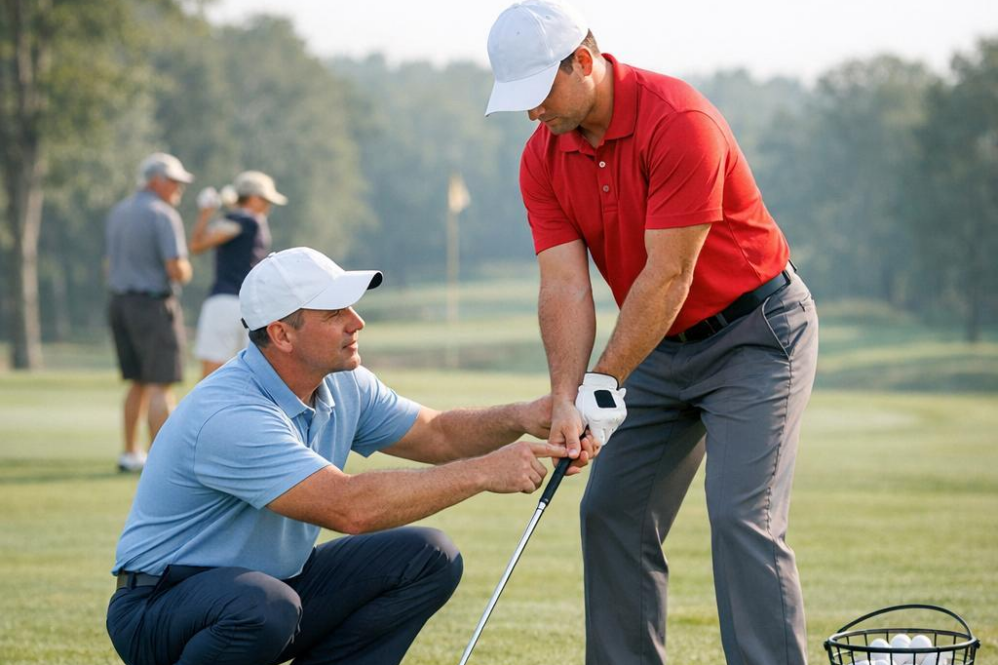
Mastering a smooth swing on Royal Lytham & St Annes’ notoriously challenging fairways begins with a solid foundation in setup fundamentals. Due to the course’s firm, undulating terrain and frequently brisk coastal winds, golfers should emphasize a slightly narrower stance and a more controlled tempo to maintain balance throughout their swing. Position the ball just ahead of center for iron shots, aligning your feet parallel to the target line, and maintain a soft grip pressure around a 4 to 5 on a 10-point scale to allow fluid wrist hinge without tension. To refine swing mechanics, incorporate a intentional pause at the top of your backswing, enabling better control over clubface angle and promoting a consistent downswing path. Practicing with mirror drills focusing on shoulder turn and hip rotation can help golfers visualize proper sequencing crucial for striking the ball cleanly on Royal Lytham’s firm fairways.
Integrating shot shaping techniques is essential when navigating Royal Lytham’s strategic bunkering and tree-lined corridors. Golfers should develop the ability to execute both fades and draws with controlled trajectory, especially to avoid the deep pot bunkers guarding many fairways. As a notable exmaple,adjust your clubface slightly open for a fade or closed for a draw while aligning your feet accordingly,and maintain a smooth tempo to prevent mishits. Practice drills such as hitting shots with feet together or using alignment rods help ingrain the muscle memory needed for reliable ball flight control. These skills are invaluable when playing second shots into tight,sloping greens where precision and shot shape dramatically impact scoring opportunities.
Short game proficiency cannot be overstated on Royal Lytham’s fast, severely sloped putting surfaces.Focusing on green reading techniques enables golfers to anticipate breaks and grain influences effectively. Begin by carefully analyzing the overall slope direction and the local terrain within three yards of the ball, using your feet to feel subtle changes in elevation. Implement the “clock method” for read adjustment by visualizing how the ball would move on a clock face-shifting your aim from 12 o’clock for straight putts to 2 or 10 o’clock for notable breaks-to help target the ideal spot for smooth roll. Supplement this with regular practice of lag putting drills to develop distance control, striving to consistently leave three-footers for easy par saves.
Lastly, course management and mental resilience form the backbone of success at Royal Lytham & St Annes. Adopting an aggressive yet thoughtful approach tailored to your skill level can prevent costly errors. This means opting for safer shot placements when conditions-like crosswinds or fast greens-are challenging, and confidently attacking pins when the setup favors birdie chances. Equipment choices such as using a driver with less loft or stiffer shafts may improve control off the tee in windy weather. Work on pre-shot routines that incorporate deep breathing and visualization to maintain focus throughout the round. By combining technical swing improvements, strategic shot selection, and mental discipline, golfers unlock not only a smooth swing but a more consistent scoring performance on one of England’s most demanding links courses.

navigating the unique Terrain for Better ball Control and Accuracy
Successfully navigating the unique terrain of a golf course requires more than just solid swing mechanics; it demands a strategic approach to ball control and shot accuracy tailored to diverse ground conditions. At Royal Lytham & St Annes, where firm fairways, deep bunkers, and undulating greens present a thrilling challenge, golfers must first master their setup fundamentals. Focus on a slightly narrower stance for stability,aligning your feet parallel to the intended target line with your weight favoring the lead foot by about 60%. This position supports a controlled, descending strike – essential for keeping the ball low and piercing through windy or hard turf conditions frequently enough experienced at links-style courses. Additionally, adjusting your clubface to a few degrees closed or open allows precision shot shaping around natural hazards. For beginners, a simple drill is to place tees along a line indicating your foot alignment and swing path, helping develop consistency in your setup relative to the terrain’s demands.
Once your setup is dialed in, mastering the interaction between club and ground becomes critical, notably when managing firm or uneven lies. At courses like royal Lytham & St Annes, the tight fairways leave little margin for error, making divot control and impact precision essential. Aim to hit the ball slightly before the turf, engaging a sharp angle of attack between 4° to 6° downward, depending on your club choice. This allows you to compress the ball for maximum control and predictable trajectory. A great practice routine includes hitting shots from various lies – tight grass, rough, and slopes – to build adaptability. When dealing with sloped terrain, align your body to accommodate the ball’s position relative to your feet; for example, with a ball below your feet, open your shoulders slightly to prevent slices and promote straighter ball flight. These small adjustments translate into significant accuracy gains and frustrations avoided during competition rounds.
Shot shaping plays a pivotal role in harnessing the course’s layout to your advantage. Understanding how to manipulate ball flight – drawing or fading – enables golfers to navigate doglegs, avoid bunkers, and set up easier approach shots. For advanced players, practicing the subtle differences in grip pressure and wrist hinge allows sharper control over curvature. Beginners should start with simple path and face angle drills involving alignment rods or impact tape to see how clubface orientation influences direction. On the course, leverage wind direction at Royal Lytham by choosing a ball flight that cuts through crosswinds; a low punch shot can be exceptionally effective here. Strengthening your visual assessment skills through repeated play and course mapping helps develop intuition for when and how to deploy these techniques confidently.
The mental and physical approaches to managing varied terrain are equally crucial. Developing a pre-shot routine that incorporates visualization and strategic consideration primes your mind to execute shots under pressure.Such as, prior to teeing off on a challenging par-4 at Royal Lytham, imagine the ideal landing area that links your drive to the best angle for the green approach. Physical planning includes warming up with short chip and pitch shots on uneven lies to build feel and trust in your swing, reducing tension and allowing smoother execution. Incorporate practice exercises like alternating stance width or practicing slow-motion swings to gain awareness of body positioning and timing. emphasize patience and adaptability: terrain-induced challenges require flexibility in shot selection rather than forcing aggressive plays. This mindset, combined with technical proficiency, forms the foundation for improved ball control, accuracy, and ultimately, lower scores.
Putting with Confidence Amidst Royal Lytham’s Ever-Changing Greens
Mastering putting on Royal Lytham & St Annes’ famously undulating and ever-changing greens begins with a keen understanding of green reading fundamentals. Golfers must account for subtle breaks caused by the course’s sandy subsoil and frequent coastal winds, which add layers of complexity to each putt. Start by practicing your eye-line alignment using a simple chalk line or alignment stick during practice sessions to develop a consistent setup.Focus on stooping low behind the ball to visualize the intended line toward the hole, taking note of slopes that may be barely perceptible but carry significant impact over distance. By developing this skill, you can improve your ability to anticipate breaks and speeds, both crucial for accomplished putting under diverse green conditions.
Setting up correctly is the cornerstone of putting confidence, particularly on tricky surfaces like those at Royal Lytham. Ensure your stance is stable with feet shoulder-width apart and weight evenly balanced to around 55% on the lead foot, promoting a smooth pendulum stroke. Your eyes should be positioned directly over the ball to facilitate accurate aim, and the putter face must be square to the intended target line.Incorporate a metronome or drill focusing on a steady tempo – a 1:2 ratio of backswing to follow-through is recommended to maintain rhythm and distance control. Beginners should practice putting from short range to build touch,while advanced players can work on lag putting techniques to minimize three-putt occurrences by improving distance judgment on long putts.
Course strategy plays a vital role when navigating Royal Lytham’s challenging greens. Understanding pin positions and how daily weather fluctuations affect green speed will help you tailor your approach. For example, on windy days, the greens may dry out faster, making the surfaces faster and more responsive to touch. use a scoring card or course guide to note safer target areas rather than aggressively attacking tricky pins, especially when long-range accuracy is uncertain. Effective practice includes drills for varying putt lengths-from short, aggressive putts to delicate, high-speed lagging-allowing golfers to adjust in real-time to changing course conditions and maintain scoring consistency.
Mental focus and routine are just as important as physical technique when putting under pressure, especially in competitive rounds at Royal Lytham. Develop a pre-putt routine that emphasizes visualization and commitment: read the green, choose your line, practice several stroke rehearsals without striking the ball, then commit fully to your putt. Incorporate breathing exercises to manage nerves and maintain calm. Technical improvements, combined with such mental strategies, reduce indecision and overthinking, which often lead to costly missed putts. Whether you are a beginner or a low handicapper, cultivating this blend of physical and psychological preparedness will enhance confidence, yielding lower scores and a more enjoyable round overall.
Mastering the Art of Distance and Precision for Long Drives
Achieving both distance and precision in long drives begins with a foundation in solid swing mechanics and a consistent setup. start by ensuring your stance offers stability without tension: position your feet shoulder-width apart, with weight evenly distributed around 52% on the front foot at address to promote a downward strike into the ball. The clubface must be square at impact-any open or closed alignment can result in slices or hooks, respectively. A subtle tee height increase, placing the ball so the top half is visible above the driver’s crown, allows for sweeping contact that optimizes launch angle, generally around 12-15 degrees for most players. Practice drills like slow-motion swings focusing on maintaining a stable head position and a wide takeaway can ingrained muscle memory, which is crucial when faced with the challenging wide fairways and undulating terrain at venues like Royal lytham & St Annes, where a precise tee shot can make all the difference.
Once the setup and swing fundamentals are dialed in, incorporating advanced ball-striking techniques enhances both distance and control. The key lies in mastering lag within your downswing-the angle between the club shaft and your lead arm-which, when preserved longest, stores elastic energy that translates into greater clubhead speed at release. Begin with drills such as the “pump drill” to feel this lag: start your downswing slightly and pause at the point where your wrists remain hinged, then complete the swing. Additionally,focus on a high-to-low impact angle close to 3-5 degrees negative attack angle for better launch conditions and reduced spin,imperative for keeping drives straighter and farther. When playing at Royal Lytham, where wind conditions vary and penal rough waits, this control helps you navigate narrow fairways and avoid costly recovery shots. Regular video analysis coupled with launch monitor feedback will offer measurable data, guiding your tweaks from novice-kind adjustments to professional-level refinements.
Equipment selection and course strategy play a critical role in maximizing distance and accuracy off the tee. Not every driver fits every swing style; for example, players with slower swing speeds benefit from lightweight shafts with a higher kick point, while low-handicap golfers often prefer stiffer shafts for better feedback and control.Adjusting loft based on weather and course topography at Royal Lytham & St Annes is also vital-on windier days, consider a slight increase in loft to improve trajectory stability versus a lower loft setting for dry, soft fairways that favor roll-out distance. Strategically, familiarize yourself with hole layouts where precision from the tee pays dividends: holes with narrow landing zones or punishing bunkers demand a more conservative shot shape, like a subtle draw or fade, rather than raw power. Mastering shot shaping drills, such as hitting controlled fades using grip and swing path adjustments, empowers you to adapt dynamically in tournament conditions.
integrating mental discipline and consistent practice routines cements these physical skills into dependable performance. Create structured practice sessions that blend technical drills, such as the alignment stick drill to refine swing path, with situational exercises-including simulating tee shots under pressure and varying target sizes for accuracy training. Set measurable goals, for instance, increasing driver carry distance by 10 yards within three months or hitting at least 70% fairways during practice rounds. Emphasize the mental aspect by employing pre-shot routines that focus attention, controlling breathing to reduce tension, especially when faced with challenging winds at seaside courses like Royal Lytham & St Annes. This balanced, progressive approach nurtures confidence and ensures that improved distance and precision on long drives translate directly into lowered scores and greater course management prowess.
Adapting Your Strategy to Tackle Royal Lytham’s Variable Wind Conditions
Adapting your game to the shifting and often unpredictable winds at Royal Lytham & St Annes demands a keen understanding of how environmental variables influence ball flight and course strategy. Start with your setup: align your feet slightly narrower than usual and position the ball just off the inside of your lead heel to promote a controlled, lower ball flight.This adjustment combats lift from gusty winds, reducing ballooning shots that can be easily caught by swirling air. When selecting clubs, consider using one club stronger than normal to compensate for wind resistance, especially on long approaches where Royal Lytham’s exposed fairways offer little protection. practicing swing drills focusing on a shorter, more compact backswing with a smooth tempo can help you maintain balance and consistency despite blustery conditions.
Reading the wind effectively is equally critical. Incorporate the use of flags, treetops, and even your own clothing movement to assess wind direction and velocity before every shot. Observe directional changes at multiple points along each hole,as this can inform whether you’ll need to curve your ball left-to-right or vice versa. royal Lytham’s intricate bunkering and narrow fairways reward precision over power, so course management here involves planning for favorable landing zones. Such as, a well-placed tee shot on holes like the 6th or 13th that avoids crosswinds can open up a straighter, more manageable approach. Establish pre-shot routines that involve taking a couple of practice swings facing the breeze to feel the resistance and adjust your swing effort accordingly.
Short game techniques must also be adapted under windy conditions prevalent at Royal Lytham. When chipping or pitching, utilize the low, bump-and-run shot rather than a high lob to keep the ball’s trajectory below the gusts. This requires crisp contact and a firm yet relaxed grip pressure to avoid excessive spin which the wind can exaggerate. Practice drills such as landing the ball within a 5-foot radius of a target from 20 yards out can build confidence and consistency for these shots. Additionally, polishing your bunker play with a focus on high-lofted, low-spin shots will prepare you to tackle the course’s famously deep and penal sand traps, especially when wind may interfere with your stance and timing.
Lastly, mindset and adaptability play vital roles in mastering Royal Lytham’s variable wind environment. Rather than fighting the elements, embrace a flexible strategy that prioritizes patience and calculated risk-taking. For beginners, this might mean aiming for safer parts of the fairway and accepting conservative scores. More advanced players should refine their shot-shaping skills-such as fades, draws, and controlled punch shots-to exploit wind angles and gain scoring advantages. Incorporate mental rehearsal techniques like visualization and breathing exercises to stay composed during gusty moments. By merging technical adjustments with strategic foresight and mental resilience, you’ll convert Royal Lytham’s challenging winds from an obstacle into an chance for scoring excellence.
Practical tips to Elevate Your Game from Tee to Green at Royal Lytham
Mastering your tee shots at Royal lytham requires both power and precision, especially given the course’s notorious bunkering and narrow fairways. Focus on a balanced, athletic stance with your feet shoulder-width apart and maintain a slight knee flex to allow for a smooth, controlled swing. Begin your takeaway with a one-piece motion to ensure the club follows the correct path,avoiding slices and hooks that can send the ball into penalizing rough or deep bunkers. Pay particular attention to your alignment-use intermediate targets along the fairway to train your eye in matching your stance and clubface to intended lines. For distance control, especially with the often blustery seaside winds, practice hitting at incremental swing speeds on the range to gain better feel. A helpful drill is to alternate between full swings and three-quarter swings, aiming for consistent ball striking and trajectory control to match Royal Lytham’s varying hole lengths.
Transitioning to the approach shots, solid course management becomes critical as the green complexes at Royal Lytham are contoured and surrounded by tight hazards.Assess the pin position carefully before choosing your club; pinpointing whether the flag is on the front, middle, or back of the green can drastically influence your landing zone and shot trajectory. For longer irons or hybrids into the wind, emphasize maintaining a smooth tempo and a higher ball flight by adjusting your tee height on the range and practicing hitting draws or fades to navigate around obstacles. Incorporate partial swing drills that focus on a controlled low follow-through to improve distance consistency. Beginners can simplify decision-making by visualizing safe target zones rather than attacking tight pins, thus minimizing risk and maximizing greens in regulation. Low handicappers, meanwhile, can refine shot-shaping techniques to exploit the course’s natural contours, using draws to avoid bunkers on dogleg holes or fades to navigate narrow landing areas efficiently.
On the greens,green reading is essential to save strokes and capitalize on putting opportunities. Given Royal Lytham’s undulating and fast greens, take time to assess slope direction, severity, and grain before executing your putt. Start by standing behind the ball and aiming line to get your primary read, then walk around the hole from behind to observe break shifts caused by subtle dips or ridges. Develop a consistent pre-putt routine that includes a precise practice stroke mimicking your intended speed. For enhancement, practice distance control drills such as lag putting between two tees placed at 20 and 40 feet, aiming to stop within three feet of the hole. Be mindful of common mistakes such as decelerating at impact or relaxing your grip too early; rather, maintain a steady tempo and firm wrist hinge through the stroke.By mastering green speed variance and break interpretation, you can substantially lower your average putt count per round at Royal Lytham.
Beyond technique, the strategic aspect of playing Royal Lytham cannot be understated. As strong winds and deep bunkers frequently influence shot selection, adopt an adaptive mindset and prepare multiple shot options during your practice rounds.Beginners should emphasize solid contact and high-percentage plays to avoid costly penalty strokes, while advanced golfers might work on trajectory control and shaping shots through practice shots simulating course wind angles. Integrate mental rehearsal techniques, imagining challenging situations such as recovering from a fairway bunker or navigating tight lies near rough, to build confidence under pressure. Equipment choices,like using a ball with higher spin control on approach shots or experimenting with wedge bounce angles,can also aid shot execution around the greens. By combining sound fundamentals, targeted drills, and insightful course strategy, your performance from tee to green at Royal Lytham will steadily improve, leading to more consistent scoring and greater enjoyment of this iconic links course.