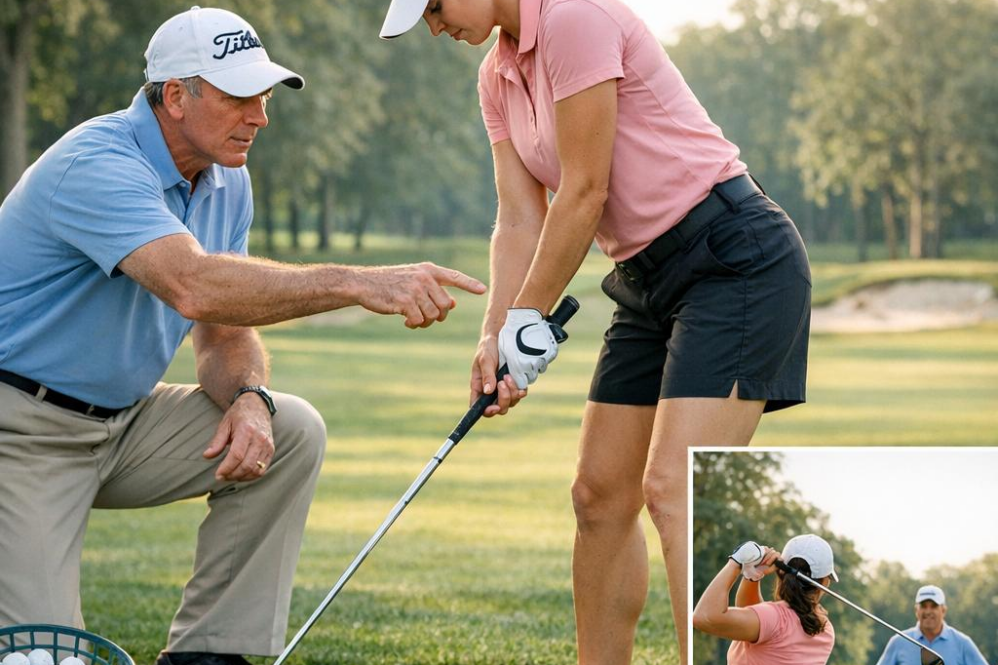
Mastering the golf Swing for Haikou West Coast Fairways
Achieving a powerful golf swing starts with establishing a strong foundation in basic setup techniques. On the Haikou west Coast fairways, where gentle coastal winds often affect ball trajectory, it’s essential to align your stance parallel to the target line and position the ball just inside your lead heel when using a driver. Maintaining a spine tilt of about 5 to 7 degrees away from the target encourages an upward angle of attack, which is key to maximizing carry distance. To enhance swing consistency, incorporate the “pause at the top” drill, which involves briefly halting at the swing’s apex to ensure proper sequencing during the downswing. This technique emphasizes engaging your core muscles and maintaining a connected swing, rather than relying solely on arm strength.
Refining your short game, especially putting and approach shots, demands focused attention on stroke mechanics and green reading-both crucial on Haikou’s diverse course surfaces. Begin with a tempo drill that promotes a smooth takeaway and follow-through, matching the backswing length to the forward stroke to improve distance control. Using a metronome set around 60 beats per minute can help establish a consistent rhythm. additionally, develop your ability to read subtle breaks by walking around the hole and assessing slopes from various angles, while considering coastal humidity’s effect on green speeds. This awareness allows for more confident and decisive strokes during play.
Strategic course management tailored to Haikou’s terrain is vital. When facing holes with elevated fairways or narrow landing areas, opt for forgiving clubs like a 5-wood or hybrid to balance distance and accuracy. Control your shot trajectory to counteract gusty winds by using controlled, three-quarter swings that keep the ball flight lower. A useful practice is the “club selection drill”, where you hit shots at varying distances with different irons, noting which clubs you consistently control under changing wind conditions. This approach builds adaptability and minimizes errors from forced aggressive shots, ultimately improving your scoring potential.
Mental toughness is equally crucial for unlocking both power and precision in your swing. Develop a pre-shot routine incorporating visualization and focused breathing to calm nerves and sharpen concentration, especially in challenging coastal conditions. Beginners benefit from breaking down complex swings into smaller segments, rehearsing key positions like address, midway backswing, and impact separately before combining them. Advanced players should emphasize maintaining tempo and balance throughout longer rounds, using wearable technology or launch monitors to track metrics such as clubhead speed, attack angle, and face angle. Consistent practice and strategic application of these insights can help golfers of all levels translate training into success on Haikou west Coast’s stunning fairways.

Putting Strategies to Lower Scores on Haikou Greens
Excelling at putting on Haikou West Coast’s rolling greens requires a refined sense of pace and break. Begin with a solid setup: position your eyes directly over the ball for optimal sightlines and keep your shoulders square to the target line to encourage a straighter stroke path.Focus on controlling the length of your backswing and follow-through, practicing a smooth, pendulum-like motion to maintain consistent speed. Given the coastal winds that often influence ball behavior, adjust your stroke length subtly to compensate for wind speed and direction, especially on longer putts. Integrating these fundamentals into your routine builds confidence across all distances.
Reading greens at Haikou demands careful attention to elevation changes and subtle slope variations. Walk around your putt’s line to detect breaks and grain direction, which can significantly affect ball roll. for example, downhill putts near the 9th green tend to pick up speed, while ridges around the 12th may cause sharper curves than expected.use the “clock method” to visualize breaks by imagining your putt as points on a clock face, adjusting your aim to compensate for breaks of 3-6 inches over 20 feet. During practice, placing a coin or ball marker behind the ball helps observe how slopes influence initial direction and speed, sharpening your ability to read haikou’s unique greens under varying light and weather conditions.
Smart course management on Haikou’s greens extends beyond technique to include mental focus. When faced with challenging downhill or double-breaking putts,aim for a safer margin of error by targeting a wider part of the cup rather than attempting to sink every putt. This strategy reduces three-putts and lowers your score. Beginners should adopt a “lag putting” approach, prioritizing distance control to leave easy tap-ins and avoid costly mistakes.Advanced players can develop pre-shot visualization routines and practice drills like “3-putt prevention,” setting up multiple 15-20 foot putts from different angles. Consistent routines build confidence, ensuring pressure doesn’t disrupt stroke mechanics on critical greens.
Equipment and practice tailored to Haikou’s conditions also play a significant role in putting success. Choose putters with balanced weighting and a high moment of inertia (MOI) to enhance stroke stability against coastal breezes and variable green speeds. Test different ball types to find one with predictable roll and minimal deviation on greens affected by sea air grain. Practice drills simulating course conditions-such as putting on slightly damp surfaces or low-mowed greens-help prepare for early morning rounds. Simple exercises like “gate drills” using alignment sticks reinforce proper face angle through impact, while speed drills focusing on 6- and 12-foot putts improve touch and distance control. Together, these efforts build a thorough skill set for lowering scores on Haikou’s challenging greens.
Boost Driving Distance with Haikou Course-Specific Tactics
Maximizing driving distance requires both technical skill and strategic adaptation to course conditions, especially on Haikou West coast where coastal winds and rolling fairways present unique challenges. Start with a balanced stance, feet shoulder-width apart, and weight slightly favoring the lead foot at 55% to 60%. This setup promotes efficient energy transfer through the swing, essential for distance. Initiate the downswing with your hips rather than your arms to generate clubhead speed; a smooth hip turn combined with a strong wrist hinge can increase swing speed by up to 10 mph. Drills like the “step-through,” where you step toward the target during the swing, help develop rhythm and power while maintaining control.
Optimizing launch angle and spin rate is another key factor for Haikou’s breezy conditions. Ideal driving distance is achieved with a launch angle between 12 to 15 degrees and a moderate backspin of 2500 to 3000 RPM. Positioning the ball slightly forward in your stance-about an inch inside your lead heel-encourages an upward strike, improving launch conditions. Drivers with lofts between 9 to 12 degrees allow customization based on swing speed and weather; higher lofts help keep ball flight lower and more controlled on windy days. Use launch monitor feedback during practice to fine-tune these metrics and adjust your setup accordingly.
Strategic course management is crucial for maximizing driving distance. On Haikou West Coast, understanding prevailing wind directions and selecting tee boxes that leverage the wind can add significant effective yardage. Such as, on holes exposed to crosswinds, shape your shots intentionally-favoring controlled fades or draws-to maintain accuracy and gain extra roll after landing. Align your drives to set up optimal angles for approach shots rather than always aiming for maximum distance. This thoughtful management reduces risk and enhances scoring opportunities.
Address common swing faults like over-the-top moves or early casting, which reduce power and consistency. Use slow-motion video analysis to identify flaws and apply corrective drills such as the “baseball swing,” focusing on wide arm extension and delayed wrist release to maximize clubhead speed at impact.Beginners should maintain steady head position and tempo, while advanced players can work on sequencing drills to coordinate lower and upper body movements. Pairing swing improvements with a pre-shot routine that includes visualization and deep breathing boosts confidence and execution under pressure. Combining refined mechanics with strategic course play leads to measurable gains in driving distance and lower scores.
Overcoming Wind and Terrain Challenges at Haikou West Coast
Golfing at Haikou West Coast requires a strategic approach to its distinctive wind patterns and rolling terrain. Understanding wind direction and speed is essential for adjusting swing technique and club selection. beginners should observe flags and tree movements to gauge gusts and practice partial swings to see how ball flight changes under different wind conditions. Advanced players can apply wind-adjusted ball flight principles, such as accounting for lateral ball movement of approximately one club length per 10 mph crosswind, to enhance shot shaping precision. Experiment with ball positioning by moving it slightly back in your stance to lower loft, producing a lower ball flight that minimizes wind impact and improves control.
Short game setup fundamentals are critical on Haikou’s sloping greens and uneven lies. Balance your weight more on the lead foot to improve stability on downhill or sidehill lies. Practice a compact,purposeful putting stroke to maintain face control when navigating breaks caused by wind and terrain undulations. Use alignment rods to visualize ideal putting lines adjusted for slope and wind.Experiment with grip pressure and tempo to avoid deceleration, which often leads to short or offline putts. Lower handicap golfers can enhance their green reading by walking putt paths to identify subtle contours and speed variations.
Approach shots and drives require thoughtful course management to optimize scoring. Select clubs based on elevation changes and wind; for instance, add half a club length when hitting into an uphill green with a headwind. Use launch monitors or smartphone apps to quantify these adjustments during practice.Beginners should adopt conservative strategies, aiming for center-of-the-green targets to avoid hazards and unpredictable wind zones. Experienced players can incorporate shot shaping techniques like controlled fades or draws to navigate dogleg fairways and position the ball advantageously for the next shot. practice hitting partial swings under simulated wind conditions to build confidence in shot control.
Mental adaptability is vital for mastering Haikou’s unique conditions. Pre-shot routines tailored to environmental factors help maintain focus and reduce anxiety in challenging winds. Visualization techniques that imagine ball flight trajectories adjusted for terrain undulations improve execution consistency. Incorporate breathing exercises between shots to manage nervous energy and reinforce positive self-talk, essential for handling variable weather throughout the round. Track performance metrics such as fairways hit, greens in regulation, and three-putt counts to link technical improvements with measurable results. This comprehensive approach elevates performance at Haikou West Coast and develops versatile skills applicable to diverse golf environments worldwide.
Custom Practice Drills for Haikou Signature Holes
Conquering Haikou West Coast’s signature holes requires mastering swing mechanics for both accuracy and distance control. Start with a consistent setup aligning feet, hips, and shoulders parallel to the target line-crucial for navigating narrow fairways and elevated tees typical of Haikou’s design. Use alignment sticks during practice to reinforce this habit visually. Improve swing plane and tempo by swinging with a metronome set between 60-70 beats per minute to develop a smooth, repeatable rhythm. To refine ball flight, experiment with grip pressure and tee height adjustments to produce desired shot shapes like draws or fades, essential for handling coastal breezes and curving fairways.
Approaching Haikou’s challenging greens demands specialized short game techniques tailored to uneven contours and variable green speeds. Perfect your lag putting stroke to control distance on longer downhill putts common throughout the course. Use drills like the “clock drill,” placing balls in a circle around the hole at distances between 3 to 10 feet, focusing on stroke consistency and pace control. Practice chip shots with various clubs-from wedges to short irons-to adapt trajectory and spin based on grass types and green firmness. Incorporate green reading strategies such as assessing slope, grain direction, and prevailing winds to place putts within the ideal speed window, reducing three-putts and improving scoring.
Strategic course management is key to lowering scores on Haikou’s diverse layout. Identify key landing zones on signature holes, noting hazards like bunkers and water features within typical shot ranges of 150 to 220 yards. Use this knowlege to plan shots deliberately, choosing safer targets that offer better approach angles rather than always aiming for maximum distance. Simulate on-course decisions during practice rounds by alternating between aggressive and conservative play to evaluate outcomes.Carry a GPS device or rangefinder to develop reliable yardage estimation skills, enabling confident club selection and minimizing penalty strokes from misjudged distances.
Enhance adaptive shot shaping-critical on Haikou where sea breezes affect ball trajectory-by practicing fades and draws within a 10-yard target corridor at the driving range, focusing on swing path and clubface alignment. Advanced players can fine-tune shot shape by experimenting with ball positioning and wrist hinge variations under windy conditions. Beginners should start by understanding how ball position influences trajectory and practicing consistent release through impact. Together,develop mental resilience and course awareness by visualizing shot outcomes and managing club selection pressure,converting technical improvements into tangible score reductions on Haikou’s signature holes.
Leveraging Course Knowledge to Boost Your Game
Gaining a deep understanding of course layout is essential for improving your competitive edge, especially on a challenging course like Haikou West Coast. Study hole blueprints and aerial views to identify strategically placed hazards such as bunkers, water features, and uneven terrain. Incorporate this knowledge into your pre-shot routine by visualizing ideal ball flight and landing zones before teeing off. For example,on windy coastal days,adjust your stance and club selection to counteract crosswinds,opting for lower trajectory shots to maintain control.Practice shot selection using reliable GPS data or laser rangefinders to execute tailored strategies that reduce risk and maximize scoring opportunities.
Integrate precise yardage management with shot shaping techniques to fully leverage course knowledge. On Haikou’s signature dogleg holes, mastering fades and draws within a 5 to 15-yard radius of curvature significantly improves positioning for subsequent shots. Work on swing path and clubface angles at the range using alignment sticks to groove in-to-out or out-to-in swing planes, adjusting face angles to control spin and curvature. Beginners can practice hitting balls aimed slightly left and right to observe how minor adjustments affect ball flight. advanced players should vary tee height and ball position to maneuver around obstacles, enhancing versatility during tournaments or casual rounds.
Effective course management also requires disciplined risk-reward decision-making. Adopt a conservative mindset when facing challenging pin placements or unpredictable weather,opting for safer shots to avoid penalty strokes. For instance, instead of attacking a green guarded by a deep bunker, consider laying up to a cozy distance within the 90 to 120-yard range, where your wedge play is most reliable. Develop your short game by practicing varied chip and pitch shots,focusing on spin control and landing angles to stop the ball close to the hole. Use drills like the “ladder drill,” progressively increasing distance from the target to hone distance control and confidence. This strategy minimizes high-pressure shots while maintaining scoring potential through high-percentage plays.
incorporate routine and mental preparation into your comprehensive course strategy. Establish a pre-shot routine that includes visualization of shot shape, wind checks, and club selection confirmation-especially important on holes with subtle elevation changes common at Haikou West Coast. Maintain focus through breathing exercises and positive self-talk to manage pressure and avoid rushed decisions. Combining technical skills with mental resilience leads to measurable improvements; for example, aim to reduce three-putts by 20% or maintain greens-in-regulation above 65%. As your course knowledge deepens, your ability to perform under varying conditions will elevate your overall game and help lower scores sustainably.
Master Your Swing and Putting Skills at Haikou West Coast Golf Course – Elevate Your Game Today!
Haikou West Coast Golf Course offers a premier destination for golfers aiming to improve their swing, putting, and driving skills.Combining expert coaching, cutting-edge facilities, and a lush coastal habitat, it is indeed the ideal place for golfers of all levels to elevate their game. whether you’re looking to perfect your technique or refine your course strategy, this golf course caters to all aspects of training.
Exceptional Coaching for Swing Mastery
At Haikou West Coast Golf Course, expert golf instructors specialize in biomechanical analysis to fine-tune your golf swing. Personalized coaching sessions focus on the fundamentals while integrating advanced technology to deliver precise feedback on:
- Clubhead speed and control
- Body alignment and posture
- Timing and rhythm in the swing
- Shot accuracy and trajectory
Benefit from video swing analysis and data-driven coaching metrics that help you track progress in real time. This targeted approach ensures lasting swing improvement and consistency under pressure.
Putting Performance – The Art of Precision
Putting is often the decisive factor in lowering your score – Haikou’s dedicated putting greens are designed to simulate various course conditions:
- Contoured slopes requiring enhanced green reading abilities
- Different grass types to test ball roll and speed
- Short and long-range putts for comprehensive skill-building
Professional putting instructors provide drills and practice routines tailored to your level:
- Alignment and stance optimization
- Consistent stroke mechanics
- Distance control and green reading techniques
Driving Range and Power Development
Driving at Haikou West Coast Golf Course isn’t just about power; it’s about control, accuracy, and consistency.The expansive driving range offers:
- Wide teeing areas to practice varied shot types
- High-tech launch monitors to analyze ball flight and spin
- Strategic coaching to improve club selection and swing efficiency
Specific drills focus on increasing your driving distance while maintaining tight fairway accuracy.
Course Strategy Integration for Real-World Conditions
Understanding course management is vital for every golfer. Haikou West Coast Golf Course enhances your tactical skills by offering:
- On-course coaching that simulates tournament pressure
- Shot planning based on hazards and elevation changes
- Decision-making drills for selecting optimal clubs in varying conditions
Benefits of Training at Haikou West Coast Golf Course
| Benefit | Explanation |
|---|---|
| Personalized Instruction | Tailored coaching plans based on your skill level and goals |
| Advanced Technology | Use of video analysis, launch monitors, and biomechanical tools |
| Optimal Training Environment | Maintenance of premium greens and ranges that simulate tournament play |
| Holistic Approach | Combining technique building wiht mental and strategic coaching |
| Course Accessibility | Practice and play in a lovely, coastal golf setting with diverse challenges |
Practical Tips to Maximize Your Training
- Analyze Your Swing Regularly: Use video tools and feedback to identify weaknesses and track improvements.
- Focus on Short Game Drills: Allocate consistent practice time to putting and chipping to reduce strokes.
- Practice Under Different conditions: Train in varying weather and course setups to build adaptability.
- Incorporate Rest and Recovery: Allow your muscles and mind to rejuvenate to avoid burnout.
- Set Measurable Goals: Use data and scoring metrics to create clear objectives for each session.
Firsthand Experience: Elevate Your Game
Golfers who have undergone training at Haikou West Coast Golf Course consistently report enhanced confidence and improved execution across their swing, putting, and driving capabilities. John M., a local amateur, shared:
“The instructors’ detailed swing analysis transformed my approach and added yards to my drive. The putting drills helped me shave strokes off my game.Training here gave me a competitive edge I hadn’t experienced before.”
Such testimonials underscore the comprehensive benefits of the course’s training programs designed to develop a well-rounded and strategically sound golf game.
Book Your Training Session Today
Ready to master your swing and putting skills? Haikou West Coast Golf Course offers flexible training packages suitable for beginners, intermediate players, and pros. Embrace state-of-the-art coaching combined with a world-class golf environment to transform your game. Visit the official website or contact the golf course front desk to learn more about lesson schedules and membership options.