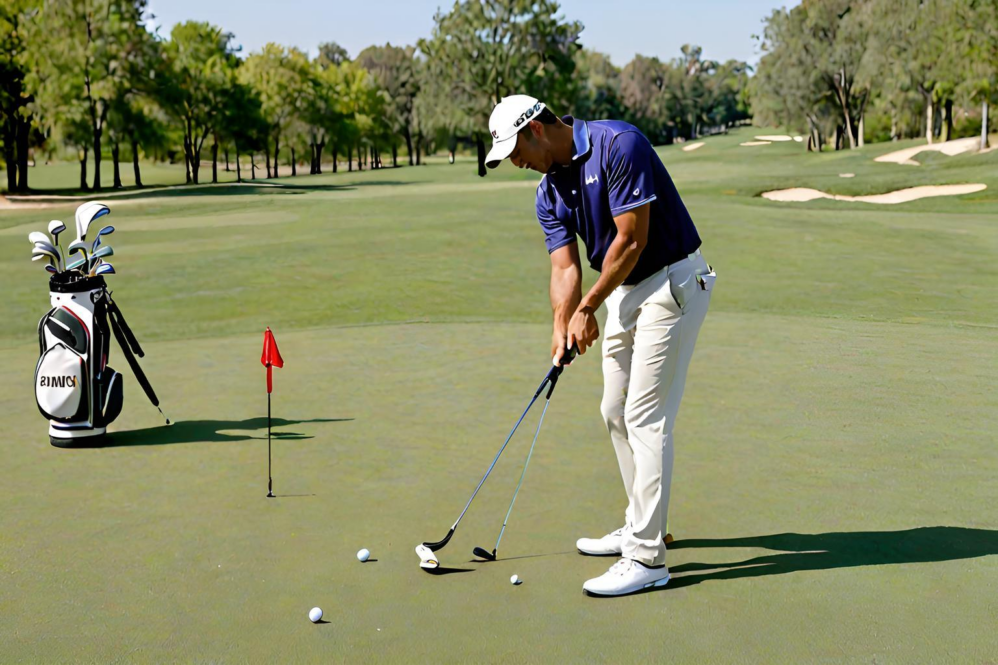
Finding Your Sweet Spot: How Alignment Stick Stations Improve Your Swing
Golfers often seek that elusive perfect swing that leads to consistent scoring and lower handicaps. One effective tool to achieve this is the alignment stick station, a simple setup that can dramatically improve swing mechanics through focused training. Alignment sticks provide visual cues, enabling golfers to understand the importance of proper setup, face angle, and swing path, which are critical components of a successful golf shot.
Start with a basic understanding of the fundamental setup using an alignment stick. Place the stick on the ground parallel to your target line, which should ideally be straight through your ball-to-target aiming point. Stand with your feet, hips, and shoulders all square to the target line, ensuring that your setup is balanced and your body is aligned correctly. Beginners often struggle with alignment, so this station serves as an invaluable guide to proper posture and stance.
Once you have the setup right, focus on the alignment stick to help fix your clubface angle at address. The clubface’s position at impact directly affects shot direction, and an off-square face can cause unwanted curvature in your ball flight. By placing the stick just in front of the ball and addressing the ball with the stick parallel to your clubface, you can visually check the face orientation and make necessary adjustments. Keeping the clubface square to your alignment stick will help maintain straighter shots and reduce the need for compensatory moves.
The alignment stick also aids in understanding swing path. A common mistake among golfers is swinging too far from the inside, which can lead to slices or pushes. To train your swing path, position two alignment sticks at a 45-degree angle away from your target line, one on the outer edge of your backswing arc and one at the forward swing point. Swinging along these sticks helps ingrain the importance of maintaining a slightly inside-to-inside swing path for a more consistent strike. Advanced players can use this setup to fine-tune their approach, focusing on a slight draw or fade ball flight by altering the stick positions slightly.
Finally, incorporating the alignment stick into your practice routine can lead to measurable improvements in your on-course performance. Set up a mini course using multiple sticks to represent various swing alignments and shots. Use this to practice drills that focus on specific areas like maintaining an open stance for a draw shot or aligning slightly left for a fade. By integrating these exercises into your regular practice, you’ll build muscle memory and confidence in your ability to execute shots during actual rounds. For optimal results, dedicate 15-20 minutes a day to alignment stick drills, focusing on consistency and accuracy rather than simply hitting balls. Golfers often find that these targeted sessions translate directly into improved scores and better play on the course.
The Putting Puzzle: Aligning Body and Mind for Striking Putts
The putting stroke is the cornerstone of a golfer’s game, requiring a delicate balance between touch, accuracy, and confidence. To master this challenging aspect of golf, it’s crucial to align both your body and your mind in a way that allows for consistent and effective performance. Imagine standing over a putt on the 18th green; the pressure is on, and you need to be prepared not just physically but mentally to sink the winning putt.
To begin improving your alignment, start with the basic setup. Hold your alignment stick in your non-dominant hand and place it along your target line, ensuring it points straight towards your intended hole location. From here, position the golf ball slightly inside the stick based on your preferred ball position, typically just inside your feet. This initial step helps create a clear visual of your alignment, which is key to putting effectively from the first foot of the putting green.
Moving on from setup, focus on the body mechanics that facilitate a solid putting stroke. Begin by aligning your feet to the target line with your hips and shoulders parallel. The stance should be about shoulder-width apart or slightly narrower for most putts. A common mistake many golfers make is opening up their stance slightly away from the target, which can cause inconsistent strokes and poor aim. Maintaining this alignment keeps your ball-stick path straight or slightly arc-shaped, enhancing your ability to control distance and direction accurately.
Incorporating the mental aspect into your putting routine is just as important as the physical. Mental preparation involves focusing on breathing techniques and imagery exercises before each putt. Take a moment to breathe deeply and visualize the ball rolling smoothly into the cup. This mental rehearsal not only calms the nerves but also reinforces the motor skills used in your stroke. Imagine standing over the ball with a clear mind picture of the ball rolling into the hole. This visualization can help you stay calm under pressure and maintain the confidence you need to execute the putt accurately.
To drill these alignment and mental aspects, create a practice session that alternates between physical exercises and mental pre-putt routines. Set up three to five different putts of varying lengths and pay attention to each stage of your routine: alignment, stance, stroke path, and follow-through. After each putt, take time to reflect and visualize the next one. This combination of techniques will enhance both your physical execution and mental focus, leading to improved performance on the green. Remember, mastering putting is about consistency and precision, so practice these skills diligently and regularly to see a significant improvement in your scores.