Unlock the Flow of Your Swing with Ernie Els’ Smooth and natural Technique
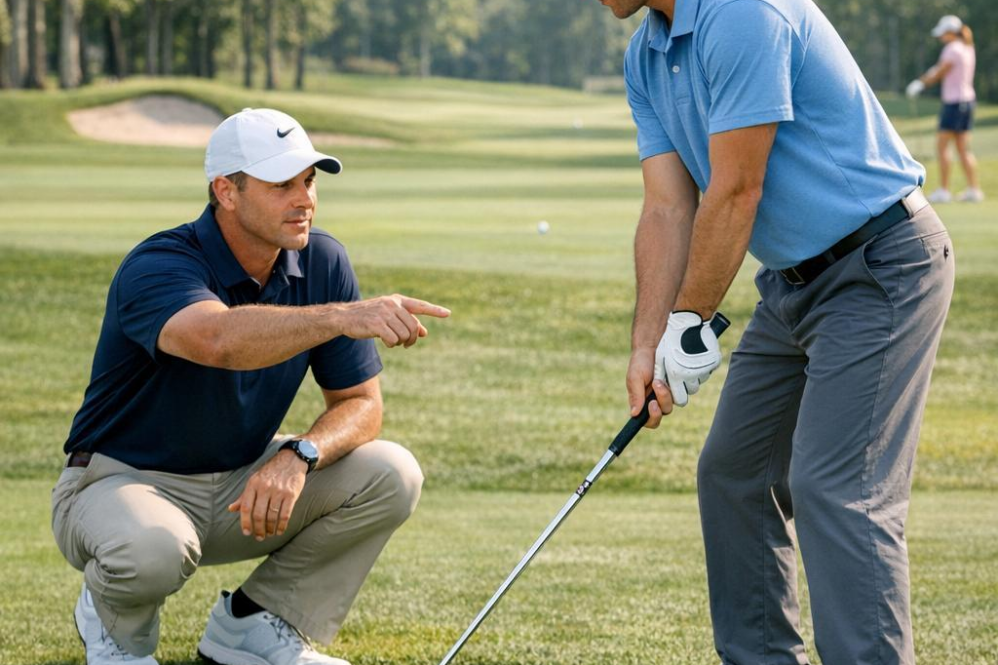
Achieving a smooth and natural golf swing like Ernie Els starts with mastering a rhythm that seamlessly integrates timing and fluidity. Els emphasizes the importance of initiating the takeaway with a low and slow motion, maintaining a consistent tempo around 3 to 4 seconds for the full backswing. This controlled pace helps prevent tension and promotes a wide,sweeping arc,essential for generating clubhead speed without sacrificing balance. To embody this in your own swing, focus on starting the clubhead just outside the target line and flowing the hips and shoulders together, avoiding any abrupt movements. A useful drill is the “pause and go” swing, where you deliberately halt at the halfway point of the backswing for a count of two before completing the motion, training your muscle memory to sustain smooth acceleration through impact. This approach encourages a connected swing sequence, minimizing common faults like casting or early extension.
beyond the mechanics,Els’ technique shines through his emphasis on setup fundamentals that support consistency and control. He advocates for a slightly open stance aligned about 2 to 3 degrees left of the target for right-handed players, promoting an inside-to-out swing path and facilitating his signature controlled fade. Equally critical is the “Elsbow” position, where a subtle bend in the led arm promotes retention of lag and optimizes clubface control during the downswing. Incorporate practice drills that focus on maintaining this arm position-such as placing a headcover under the lead armpit during swings to prevent disconnection-and encourage a full weight transfer to the front foot. For all skill levels, integrating thes setup and positional cues supports more repeatable ball striking and enhanced accuracy, which are crucial when navigating complex course layouts or tight fairways.
ernie Els’ mastery is deeply rooted in exceptional course management, which complements his mechanical precision with strategic thinking. He meticulously assesses factors such as wind direction, green firmness, and hazard placement before selecting clubs and shot shapes-a process that every golfer can emulate.Such as, on firm and fast greens, Els might choose shots landing short and rolling toward the pin, while in windy conditions, he prefers lower ball flights with controlled spin to maintain accuracy. To develop this strategic mindset, practice visualizing each shot’s trajectory and landing zone during rounds, refining your pre-shot routine to include environmental evaluation.Additionally,simulate course scenarios during practice sessions,such as playing different tee shots to various targets,to build confidence in adaptive shot-making. This blend of polished swing technique and astute strategy fosters not only lower scores but also greater enjoyment and control over your golf game.
Discover How Ernie masters the Green with Simple Putting Adjustments
To master putting like Ernie Els, the foundation begins with your setup and alignment. Els emphasizes maintaining a relaxed posture with a slight forward tilt from the hips, allowing the eyes to comfortably sit directly over the ball for enhanced visual line accuracy. Placing your feet shoulder-width apart and establishing a square alignment between your shoulders, hips, and feet ensures a consistent stroke path. Positioning the ball just ahead of center in your stance encourages a gentle upward strike on the ball, promoting a smooth roll with minimal skid. practicing this fundamental stance while focusing on a pendulum-like stroke rhythm helps golfers of all levels create crisp contact and develop a true line, especially on subtle breaks where precision is paramount.
Ernie’s putting stroke is characterized by its simplicity and repeatability, underpinned by a controlled tempo and minimal wrist action. To replicate this, focus on initiating the stroke primarily with your shoulders, maintaining a steady head position throughout the movement. This reduces the risk of deceleration and wrist breakdowns, which often lead to inconsistent distance control and mishits. Incorporate drills like the “tee gate,” where a tee is placed on either side of the putter head to promote a square path and solid impact. Additionally, practicing varying stroke lengths – from short, controlled three-footers up to 30-foot lag putts – enables golfers to fine-tune their feel for pace, a key factor in reducing three-putts. Els often adjusts his stroke length and tempo slightly depending on green speed and slope severity, demonstrating the importance of adapting technique to course conditions.
On the strategic side, els’ meticulous approach to green reading and pace control reveals the importance of integrating mental discipline with technical skill. He advises golfers to always assess the grain direction, moisture levels, and slope angles before committing to a putt, combining objective observation with a trusted pre-putt routine to build confidence. Incorporating multiple reading methods – such as walk-ins to gauge break and the use of intermediate aiming points – allows for better visualization of the intended line. Furthermore, Els encourages practicing intentional lag putting drills aimed at stopping the ball within a 3-foot radius of the hole, which statistically lowers scoring averages by minimizing pressure on shorter stumpers.This blend of measured technique, intentional practice, and course management empowers golfers not only to improve their stroke mechanics but also to master the nuanced art of green strategy, ultimately resulting in lower scores and greater consistency under pressure.
drive Like a Pro: Ernie Els’ Tips for Power and Precision from the Tee
Ernie Els’ approach to driving off the tee begins with a fundamentally sound and repeatable setup that encourages both power and precision. A critical starting point is his stance width,which he keeps slightly wider than shoulder width to maximize stability and leverage during the swing. The ball position plays a pivotal role in striking clean drives; Els places the ball just inside his left heel, enabling a sweeping motion that optimizes launch angle and spin rate. Maintaining a balanced posture with a slight knee flex and spine tilt away from the target promotes an efficient transfer of energy through impact. Golfers should focus on achieving an 8-12 degree wrist hinge during the takeaway, which Els uses to build clubhead speed without sacrificing control. To incorporate this setup into practice, players can use alignment sticks to ensure feet, hips, and shoulders are square, and implement a drill where they pause at the top of the backswing to check wrist hinge, helping develop muscle memory for consistent tee shots.
Transitioning into the swing mechanics,Els emphasizes a smooth tempo combined with a powerful hip rotation to generate clubhead speed while maintaining accuracy. Key to this is the sequence of body movements-starting with the lower body initiating the downswing followed by the arms and hands-to deliver square contact. Els’ “Elsbow” technique, where his left arm remains extended but relaxed through impact, promotes a wide swing arc that enhances both distance and directional control. Golfers can practice this by placing a headcover or small towel under their left armpit during tempo drills to encourage connection without tension. Additionally, focusing on a slightly inside-out swing path-approximately 5 to 7 degrees-helps reduce slices and fosters a controlled draw, a shot shape Els often employs to navigate tight fairways. Beginners should start by slow-swing drills to ingrain sequencing, while advanced players can use launch monitors to measure ball speed and spin rate betterment.
Beyond raw power, Els demonstrates an exceptional understanding of course management that turns long drives into scoring opportunities. His strategic mindset involves analyzing wind conditions, tee box placement, and fairway width to decide when to swing aggressively or play conservatively. For example, in windy conditions, he might opt for a 3-wood or long iron off the tee, prioritizing precision over distance, which minimizes the risk of errant shots and preserves scoring potential. Incorporating this strategic thinking, golfers can use a practice routine that simulates varying wind and lie conditions, learning to adjust ball position, club selection, and swing tempo accordingly. Recognizing when to favor trajectory control or risk an aggressive drive directly impacts scoring consistency. By blending technical skill with smart course strategy-hallmarks of Els’ game-players improve not just their driving stats, but also overall resilience and adaptability on any golf course.