Unlock the Secrets Behind Tiger Woods’ Smooth and Powerful Swing
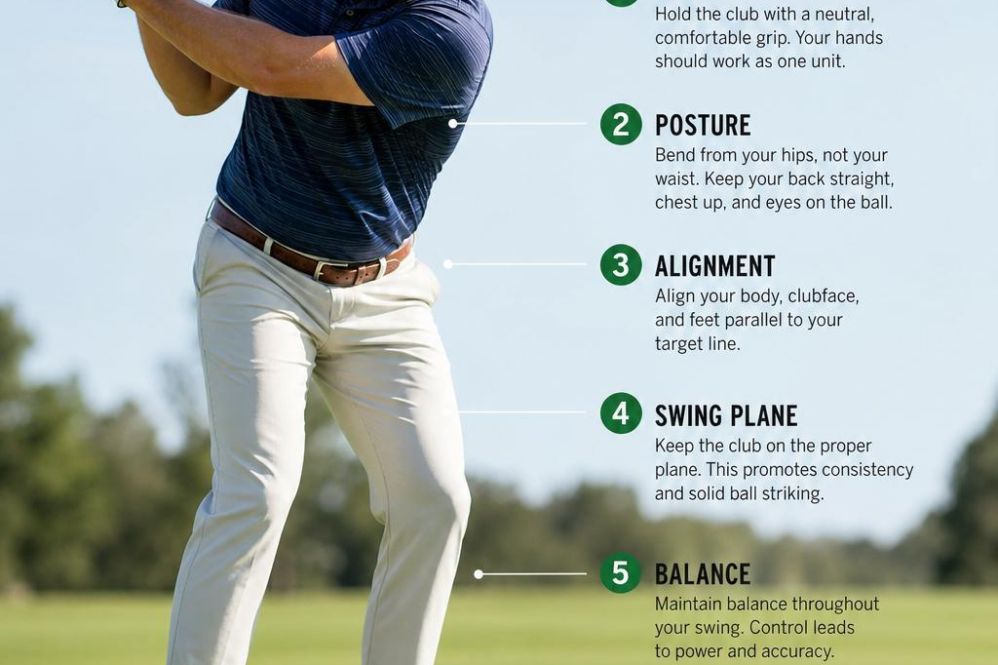
Mastering Tiger Woods’ swing begins with understanding the critical role of a balanced and repeatable setup. A essential to his smooth and powerful swing is maintaining a consistent stance width, typically shoulder-width apart, which promotes stability and fluid weight transfer. Golfers should focus on establishing a posture where the spine angle is slightly tilted forward-around 20 degrees-with flexed knees for athletic readiness. From here, the takeaway should initiate with the clubhead moving low and slow, maintaining the clubhead on plane while keeping the wrists soft, ensuring a wide, controlled swing arc. woods emphasizes hinging the wrists naturally at the top of the backswing to create built-up potential energy-commonly referred to as the “lag angle,” ideally between 75 to 90 degrees. This lag allows for greater clubhead speed during the downswing, resulting in powerful ball striking. To replicate this, try the “pump drill,” which involves pausing at the halfway point of the backswing repeatedly before completing the swing, training proper wrist hinge and sequencing. For beginners, using alignment sticks during practice can reinforce square clubface position and body alignment, while advanced players should focus on engaging core rotation and lower-body ground force during the transition to maximize power without sacrificing control.
Beyond mechanical precision, Tiger’s swing is a masterclass in integrating short game finesse and strategic course management to lower scores. His approach from 100 yards and in prioritizes a soft wrist hinge and forward lean during chipping, promoting crisp contact and optimal spin. One practical drill is the “clock drill,” placing balls in a circle around the target to practice varying trajectory and spin control using the same setup but adjusting wrist pressure and clubface angle. Additionally, Woods’ on-course strategy involves evaluating wind conditions, hazard positioning, and pin locations to select the safest landing zones, minimizing risk and avoiding costly penalties. Incorporate this mindset by routinely practicing visualization techniques on the practice range-imagining shot shapes and desired ball flights-and also developing a reliable pre-shot routine that controls tempo and reduces mental pressure. Equipment selection also plays a role; ensure your wedges have the appropriate loft and bounce for your typical turf conditions to improve turf interaction and consistency in scoring shots. Delivering on these combined technical and mental aspects empowers golfers at every skill level to transition from inconsistent strokes to confident,repeatable swings that dramatically improve scoring potential and on-course resilience.
How to Perfect Your Putting Game Using Tiger’s proven Techniques
Mastering the intricacies of putting begins with establishing a consistent setup, a foundational step emphasized in Tiger Woods’ instruction that suits golfers across all skill levels. Start by aligning your eyes directly over the ball and positioning your putter face square to the intended target line. Tiger advocates for a slight forward press with the hands, promoting a pendulum-like stroke that minimizes wrist breakdown and fosters a smooth tempo.Pay careful attention to the shoulder turn angle,which should initiate the stroke rather than the arms alone-a method that enhances control and preserves energy through the putt. Integrating these fundamentals, golfers benefit from the practice drill of placing two tees just outside the putter head and swinging without touching them, reinforcing stroke path and face control. Additionally, Woods’ coaching frequently enough stresses reading green conditions: observe grain direction, slope, and moisture to predict ball break, adjusting your aim point accordingly to harness the green’s natural contours.
Building on solid mechanics, Tiger’s approach to refining the putting stroke involves both physical precision and mental acuity. For length control, he recommends the “clock drill,” a timed practice that challenges golfers to make putts of increasing distance-such as 3, 6, and 9 feet-in succession to develop a reliable feel for speed. When approaching complex breaks or pressured situations, he counsels adopting a deliberate pre-shot routine that includes visualizing the ball’s path and committing fully to the stroke, mitigating hesitation. A common pitfall addressed in Tiger’s lessons is the tendency to decelerate through the ball, leading to poor distance control; to correct this, maintain a balanced, accelerated follow-through and keep your lower body stable during the stroke. Equipment also plays a crucial role, as Tiger often highlights the benefit of using a putter with an appropriate head weight and grip size that complements your natural stroke tempo. applying these techniques on-course-in varied weather or green speeds-ensures adaptability, better positioning golfers to convert crucial scoring opportunities and ultimately lower their scores through effective, confident putting.
Drive Like a Pro Understanding Tiger’s Approach to Distance and Accuracy
Mastering the balance between distance and accuracy requires a thorough understanding of Tiger Woods’ swing dynamics and setup principles.At the foundation, a golfer must establish a consistent address position with proper alignment and posture-feet shoulder-width apart, weight balanced evenly, and the ball positioned slightly forward of center for the driver.This setup promotes an upward angle of attack, typically around +3° to +5°, essential for maximizing launch angle and carry distance. Tiger’s approach emphasizes a smooth, powerful takeaway that maintains the clubhead on plane, allowing for a full shoulder turn near 90° to generate ample coil and stored energy. As the downswing commences, initiating hip rotation while maintaining a stable lower body helps create lag-an extended wrist-**** angle-that stores kinetic energy released only at the impact zone. Practicing drills such as the “pause at the top” swing or swinging with an impact bag can reinforce this timing and improve clubhead speed without sacrificing control. These fundamentals, when combined with optimal equipment fitting-like selecting a driver head with a loft of 10.5° to 12° and shaft flex tailored to swing speed-enable golfers to emulate Tiger’s ability to drive the ball both long and straight.
Beyond mechanics, strategic course management plays a crucial role in Tiger’s approach to driving. Rather than solely focusing on raw distance, he advocates for tactical placement to set up the next shot and minimize risk. This means identifying fairway targets aligned with hazards,wind direction,and pin locations,which requires a pre-shot routine that includes visualizing shot shape and trajectory. golfers of all levels can develop this skill by incorporating simulated scenarios into practice sessions-using markers or visual aids to represent fairway bunkers or water hazards. For example, aiming 10-15 yards away from a fairway bunker margin deliberately reduces pressure and increases the likelihood of hitting a high-percentage target area. Additionally, controlling launch conditions through grip pressure and tempo adjustments helps fine-tune shot dispersion under varied weather conditions, such as damp turf or gusty winds. By integrating Tiger Woods’ blend of precise setup, efficient energy transfer, and situational awareness, players can optimize their drives to consistently maximize distance while maintaining pinpoint accuracy, leading to improved scoring opportunities and greater confidence on the course.
Smart Course Strategy Tips inspired by Tiger Woods’ Winning Mindset
Mastering course strategy begins with understanding how to adapt your shot selection and risk management to the layout and conditions you encounter. Drawing from Tiger Woods’ approach, one essential tip is to always conduct a thorough pre-shot routine focused on identifying optimal angles and preferred target lines. For example, when facing a dogleg fairway, instead of instinctively hitting driver, consider playing a controlled 3-wood or hybrid off the tee to position the ball accurately for your next shot. This echoes Tiger’s beliefs of “playing smart,not just hard,” ensuring you avoid trouble like bunkers or out-of-bounds areas that can balloon your score. Incorporate a practice drill where you visualize each hole, then choose multiple tee shot options based on different wind speeds or pin placements. This mental exercise enhances your decision-making, helping you develop a versatile shot arsenal that can be executed confidently under pressure. Additionally, focus on setting up with a square clubface and maintaining a consistent ball position-generally just inside your left heel for longer clubs-to optimize launch angle and maximize control.
Course management extends deeply into your short game, where Tiger’s instruction emphasizes precise distance control and versatility around the greens. one practical technique involves mastering the “bounce-amiable” chipping method by slightly opening the clubface of a sand wedge or lob wedge to create a softer interaction with the turf, encouraging the club to glide beneath the ball rather than dig in. This adjustment helps golfers of all skill levels reduce chunked or bladed chips, improving shot consistency. To practice, set up landing zones on the practice green at varying distances and use progressive chipping drills that focus on controlling trajectory and rollout. Incorporate a routine that includes deliberate practice of bump-and-run shots alongside higher lofted flop shots, refining your ability to judge different lies and green speeds. From a strategic standpoint, Tiger often emphasizes playing toward the “safe side” of the pin, especially when flag locations present more risk, to avoid three-putt scenarios.Using this mindset,adjust your target to a wider margin consistently,which ultimately lowers scoring averages by minimizing high-risk shots. Remember, integrating both technical enhancement and smart course tactics cultivates a confident, adaptable mindset-a hallmark of Tiger Woods’ winning approach.