As the Ryder Cup moves to Bethpage Black adn Friday’s morning foursomes are finalized,a local course specialist – a self-described “whisperer” – believes the U.S. team enters match play with tangible reasons for confidence. Drawing on intimate familiarity with Bethpage’s deep bunkers, narrow landing corridors and subtle green complexes, he contends the design and home-field knowledge could give the hosts a decisive edge.
Bethpage Black insider argues penal rough and narrow tee corridors reward length-captains should value power with control
Across the property, bethpage’s gnarly rough and slim fairway corridors reward golfers who combine distance with directional consistency. That’s why the whisperer urges captains to weight selection toward players who hit it long but reliably find the short grass.From a coach’s perspective the prescription is straightforward: emphasize players whose driver carry regularly exceeds 270 yards while keeping lateral deviation to roughly 15-20 yards. Ahead of match week, evaluate contenders using two objective metrics – median carry and the 95th‑percentile lateral dispersion - so squads can quantify raw power against shot‑shaping control. Recreational players can scale the goal (for instance, aim for a 220-240-yard carry with no more then 20 yards offline) and rehearse those lines on the range with a launch monitor or visual targets to mimic Bethpage’s narrow windows.
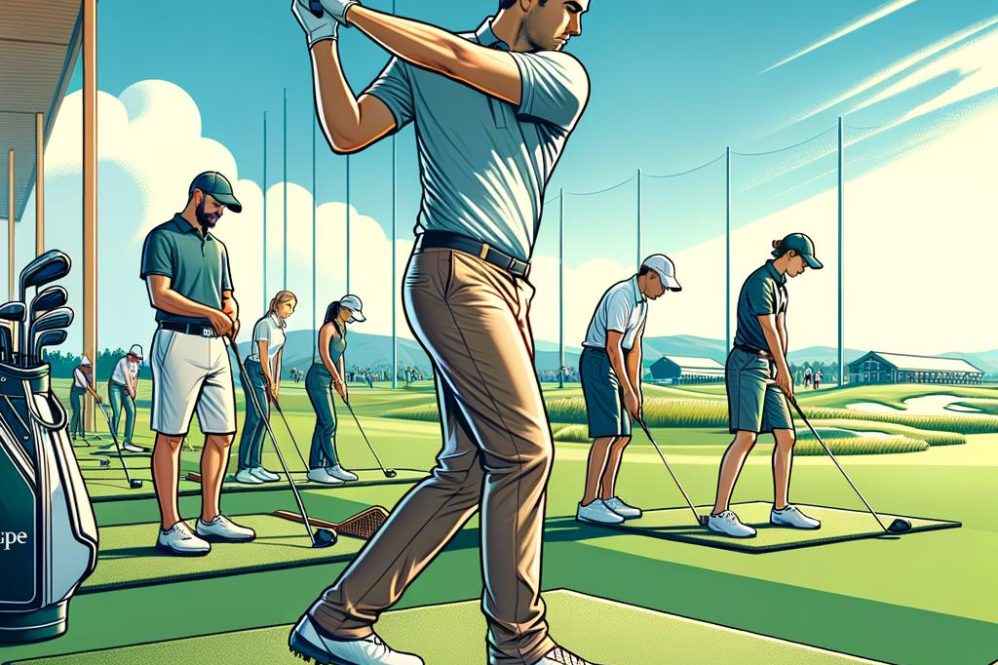
To make that long game repeatable, coaches should prioritize posture and sequencing before asking for more clubhead speed. Start with a compact, athletic stance: feet roughly shoulder‑width apart, the driver ball slightly inside the left heel, and a modest spine tilt - about 7-10° away from the target - to encourage an upward impact. Progress through a three‑phase swing drill to improve timing and strike quality:
- Phase 1 – tempo and width: half‑swings to ingrain a consistent rhythm (approximate 3:1 backswing:downswing), keeping the left arm firm through the turn.
- Phase 2 - transition control: hold briefly at the top to sense a shallow downswing, initiating with the hips then the torso.
- Phase 3 – release with restraint: lengthen shots while preserving plane; use impact tape to confirm centered strikes.
Frequent faults are early casting (which spikes spin and reduces distance) and excessive head movement; correct these with slow reps and mirror feedback. Performance goals: trim driver spin into the 1,800-2,400 rpm band where feasible and chase a smash factor greater than 1.45 relative to the player’s speed and strength.
Approach play at Bethpage demands precise trajectory and deliberate shot‑shaping to hit tight landing zones and firm putting surfaces. Coaches should teach players to alter launch and spin by tweaking attack angle, shaft lean and club selection - such as, shallow the attack by 1-2° and reduce loft for windy conditions, or increase loft and steepen the descent when the green will accept the shot. Useful drills include:
- Trajectory ladder: hit identical yardages with different clubs or attack angles to confine landing depth to roughly 15 yards.
- Spin calibration reps: use partial swings to feel variations in backspin (measureable with launch devices) and note the effect of ±5° shaft‑lean changes on flight.
Those rehearsals translate directly into match scenarios at Bethpage, where electing a lower‑lofted approach to run up to the hole can often mean the difference between two‑putting and scrambling from heavy rough.
Because the rough is unforgiving, a polished short game is essential; practice should prioritize escapes from long grass, tight fairway lies and bunkers with firm lips. Break contact into actionable adjustments: in thick rough adopt a slightly more upright shaft at impact, choke down 1-2 inches, and use a sweeping motion to avoid clinging turf; around hard‑edged bunkers open the face roughly 10-20° and enter the sand about 1-2 inches behind the ball so the sand does the work. Try these exercises:
- Rough‑rescue drill: nest the ball in a towel or fringe to simulate deep grass and test three swing heights to find optimal contact.
- Clock chipping: from 12 positions around the green, hit a chip every hour aiming to get up‑and‑down from at least 75% of locations.
Beginner cues (wider base, abbreviated swings) and advanced methods (loft/bounce manipulation) should sit side‑by‑side so all skill levels improve their recovery consistency.
Course strategy and the psychological game convert technique into scoreboard advantage. Teams should map each hole to decide when to attack and when to protect position: in match play that often means picking the power player on holes where length opens up a short‑side pin, and favoring finesse where the risk‑reward math is adverse. on the practice ground set measurable strategic aims – for example, commit to 80% fairway‑first decisions on narrow par‑4s and target 70% proximity inside 150 yards on receptive greens – and simulate pressure by playing alternate‑shot or fourball formats. Also rehearse conditions – wind,wet vs. dry greens and differing firmness – so competitors learn to modify launch and club choice under real match constraints. Collectively, these teaching steps create a coachable pipeline from mechanical work to scenario practice that aligns with the whisperer’s view: when length is controlled by technique and management it can be a match‑play weapon.
Morning practice blueprint: wedge precision, green‑speed calibration and firm‑pin simulations to sharpen match adaptability
Start wedge sessions at first light with a clear mission: reliable distance control and a range of trajectories from 20-120 yards – the zone where most scoring swings occur. Reinforce fundamentals (stance shoulder‑width,ball slightly back for lower shots and forward for higher ones,and limited wrist hinge through impact) and progress through set distances – 20,35,50,70,90 and 110 yards - using wedges matched to turf bounce (low bounce for tight lies,higher bounce for soft/plugged conditions). A typical 30-45 minute routine should follow a progressive‑distance ladder with quantifiable goals: 10 shots per distance within ±3 yards before advancing. Common corrections include preventing wrist flip (maintain forward shaft lean of about 5-10°) and consistent ball position (mark feet and ball on the mat). Suggested drills:
- Landing‑area exercise – place towels at 15-20 yard increments to force consistent landing spots;
- Half‑swing tempo set – use a metronome at 60-70 bpm to lock rhythm;
- Bump‑and‑run practice - use a 7‑8 iron and a 2-3 ball‑roll target to rehearse low‑running approaches.
Follow wedges with deliberate green‑speed work to dial stroke length and pace to the Stimpmeter speeds you expect to face. Championship or firm, links‑style greens often test around 11-13 ft on the Stimpmeter, while most everyday facilities sit nearer 8-10 ft. Begin with three 40‑foot lag putts to one hole and track proximity; a useful benchmark is to reach 80% of lag putts within a 6‑foot circle from 40 feet after two weeks of targeted practice. Progress to short putting (3-10 feet) with a hit‑the‑back‑of‑the‑hole routine to prepare for fast surfaces. Use this setup checklist:
- Eyes over the ball, shoulders square to the line;
- Try a coin under your trail ear during reps to limit head motion;
- Confirm a square putter face at impact with alignment aids or a mirror.
practicing speed matters: as the Bethpage whisperer notes, comfort on fast, firm greens is often decisive in match play – rehearsed green speeds reduce three‑putts and increase confidence under noise and pressure.
Simulating firm pin placements trains both club selection and mental adaptability. On‑course, pick landing zones that encourage controlled release – for example, when a flag sits on a slope aim 8-12 yards short and play a lower‑trajectory approach to feed the ball toward the hole. Replicate these pins on the practice area with towels or tees marking firm landing spots and rehearse low flights and bump‑and‑run options. match‑play overlays apply: when trailing, attack pins with high‑percentage wedges; when ahead, aim for the safe side of the green to force opponents into low‑odds recoveries. Drill ideas:
- Firm‑pin target – use a small landing mat 6-8 yards from the cup and force a single‑bounce check;
- Pressure scramble scenarios – play alternate‑shot or simulated match holes with scoring penalties for missed landing zones;
- Wind control sessions - practice half and three‑quarter swings into crosswinds to tune trajectory management.
Shot‑shaping and mechanics drills are the bridge from range repetition to scoring. Work methodically on face‑to‑path relationships: for a draw, close the face about 3-5° relative to the path and feel an inside‑out release; for a fade, open the face 3-5° and use a slightly over‑the‑top path. use alignment sticks and impact tape to assess contact and face angle. Equipment checks matter - confirm iron lofts are gapped by no more than 8-10° and ensure wedge bounce matches turf conditions. Swift fixes include:
- Over‑rolling wrists at the top – insert a towel under both armpits to improve unified rotation;
- Early extension - monitor hip angle in the mirror or video and aim to hold spine angle through impact;
- Poor turf interaction - switch to a wedge with more bounce or open the face if the turf grabs the sole.
Turn practice into lower scores by organizing the week around realistic sessions, accounting for conditions and individual skill. A pragmatic morning schedule could be 30-45 minutes of wedges, 20-30 minutes of green‑speed work, and 15-20 minutes of firm‑pin simulation, leaving afternoons for on‑course replication. For different ability levels: beginners focus on consistent contact and alignment; mid‑handicappers target distance control and three‑putt prevention; low‑handicappers refine spin, trajectory and putter‑face control. Add mental habits – pre‑shot routines, commitment to a line and match‑play concession rules – and track progress with objective metrics like scrambling percentage, greens‑in‑regulation and three‑putt rate. Set monthly aims (such as,cut three‑putts by 25% in eight weeks). This scenario‑based structure converts repetition into adaptable on‑course performance, especially on firm venues like Bethpage Black.
Pairing strategy: match big hitters with reliable short‑game partners to generate momentum in foursomes and fourball
Pairing an aggressive bomber with a steady short‑game specialist balances upside with recovery ability in both alternate‑shot and best‑ball formats. In match play the long hitter’s job is to manufacture scoring chances – drives that open short par‑5s or compress the hole – while the short‑game partner converts birdie looks or limits damage when errant shots occur. Following the whisperer’s logic, teams that can reach par‑5s and scramble consistently preserve momentum on penal tracks; therefore, set tee orders in advance (required in foursomes) and pre‑decide when to employ the driver versus a 3‑wood depending on hole shape, wind and pin placement. As a guideline, allow the driver to add roughly 20-30 yards over a partner’s 3‑wood where length is rewarded, but switch to a lower‑trajectory 3‑wood or hybrid when crosswinds or narrow corridors penalize distance.
Maximize an aggressive player’s value by coaching controlled power rather than unfettered bombing. Technical focus: preserve a consistent plane with a slightly more upright shoulder turn to help square the face at impact; target a driver attack angle of about +1° to +3° for higher launch and lower spin,while irons typically require an attack angle near -4° to -8° to ensure crisp compression. Equipment tweaks – adjusting driver loft in 0.5° steps and experimenting with shaft flex – can materially reduce side spin.Try these applied drills:
- Fairway‑box accuracy: set two alignment poles to create a 25-30 yard corridor and hit 20 drivers aiming to keep 70% inside;
- Launch‑monitor session: log carry, launch and spin and set dispersion targets (for example, 70% of drives within 25 yards of the target line);
- Wind practice: hit 15 shots into a headwind and 15 into a crosswind, altering ball position and club choice by 1-2 clubs as needed.
These routines teach the bomber to be tactical, not reckless, and to complement the partner’s strengths.
The short‑game partner must prioritize up‑and‑down dependability and delicate touch, the foundation of momentum creation when the tee ball strays. Technical cues: a slightly forward ball position and minimal wrist hinge for low running chips; open the face 10-15° for flop shots where the lip is close. For bunker work, use a 56°-60° sand wedge with a square face at address and enter the sand 1-2 inches behind the ball. Practice sets include:
- 10‑ball ladder: chip to targets at 5,10 and 15 feet,score proximity and aim to reduce average distance to 6 feet;
- Bunker sequence: play 12 shots from varying lies with a goal of getting at least 9 onto the green;
- Pressure putting - alternate short putts and forced makes to track your 3‑ft conversion rate.
Novices begin with contact drills; elite players focus on touch, selection and pressure conversion so they can rescue pars or deliver birdies in fourball and stabilize play in alternate‑shot formats.
Course management binds the pair. In foursomes – where alternate‑shot punishes risky choices - adopt a conservative/aggressive split: the bomber plays to safe lines when required but is encouraged to go for reachable par‑5s; the short‑game teammate plans conservative recoveries (for example,a 50‑yard layup zone inside which a bump‑and‑run or controlled sand shot is preferred). In fourball the aggressive teammate can press for birdies knowing the partner’s steadiness offers a bailout. tactical checklists:
- Flag holes where length yields at least a 1‑club advantage into the green and mark them as attack holes;
- Default wind strategy - add or subtract 1-2 clubs and aim for the flattest slope for easier two‑putts;
- Determine foursomes tee order in advance to match who most often shapes the hole layout (e.g., long hitter tees designated holes).
these measures turn individual skills into lasting match momentum and respond directly to Bethpage’s narrow corridors,heavy rough and complex greens,where smart pairing can swing sessions in your favor.
Build pairing chemistry with a weekly regimen that mixes technical work, situational practice and mental routines: two technical sessions (≈45 minutes each) for swing and short game, plus one 60‑minute situational practice simulating alternate‑shot and fourball holes. Encourage a shared pre‑shot ritual (for example, a 10‑second visualization, line confirmation and club check) to keep decisions consistent under pressure. Common problems and fixes:
- Overhitting after a missed green - rehearse controlled 3‑wood approaches to a fixed target;
- Busting at the green lip – use 20 minutes of uphill/downhill putting to normalize speed perception;
- Equipment mismatch – schedule a 30‑minute fitting to align loft gaps and shaft characteristics with player tendencies.
Set measurable aims – raise team scramble rate by 10% in six weeks or cut three‑putts by 30% – and integrate drills, scenarios and mental discipline so pairings can manufacture momentum deliberately in both foursomes and fourball.
Captaincy approach: aggressive early pairings and timely rotations to seize home‑field energy and unsettle opponents
Deploying bold opening pairings and proactive session rotations alters the technical demands on individuals, and coaches must translate those strategic choices into repeatable cues. The Bethpage whisperer believes early aggressive combinations can generate momentum and force rivals onto the back foot on a site known for firm fairways, tight corridors and swift, undulating greens. Although captains may rearrange pairings between sessions and rest or reintroduce players, remember that once a match starts no substitution is allowed except for rare medical cases. Thus, prepare competitors with a compact match routine: a 12-15 minute on‑course warmup that includes 6-8 practice swings to set tempo, three full drivers at 75-85% effort to groove rhythm without fatigue, and a two‑minute breathing/visualization exercise to steady arousal when crowd noise spikes.
Technically the captain’s gambit asks players to favor shot profiles that exploit home contours while minimizing variance under duress. Prioritize controlled driver dispersion over raw yardage: target a launch angle near 10-13° and driver spin between 1,800-2,600 rpm to maximize roll on Bethpage’s firm fairways, and practice shaping both fades and draws within a roughly 10‑yard dispersion window. For approaches, coach wedge flights that produce 5,000-9,000 rpm backspin on receptive pins but lower launch and spin for run‑up shots to firm targets. Scalable drills:
- Tempo metronome – backswing on ‘2’, downswing on ‘1’ to steady transitions;
- Impact‑bag sets – 30 reps focused on a square face at impact to reduce left/right variance;
- Shape session – 20 balls alternating five fades and five draws to one target for deliberate curvature practice.
These exercises adapt to all levels – from contact focus for beginners to launch/spin windows for low handicappers.
Penalty avoidance often decides match play; therefore short‑game precision is paramount when galleries amplify pressure around the greens. After long‑game readiness, emphasize speed control over aggressive read‑making on fast, crowned Bethpage surfaces: use the clock‑face lag drill (make 8/10 from 20-40 feet within a 3‑ft circle) and the putting‑gate exercise for path consistency. For chips and sand set targets – 60% up‑and‑down from 30-50 yards and 75% scramble‑to‑green success inside 30 yards during practice weeks - and troubleshoot common issues:
- Ball bounces past the hole: lower loft at address and bring hands forward 1-2 inches;
- Thin bunker shots: open stance, shift weight to the front foot and commit to the follow‑through;
- Misreading firm greens: factor slope and wind and reduce anticipated break by about 25% when surfaces run faster than practice speeds.
these adjustments serve both developing players and seasoned competitors preparing for decisive Ryder Cup moments.
Course‑management tactics should complement pairing aims: a bomber teamed with a precise iron player should pursue complementary lines rather than identical plays. For instance, on a 420‑yard par‑4 with a narrow landing area and a green backed by deep rough, an early pairing might have the big hitter take an aggressive line carrying 240-260 yards to leave a short iron, while the partner lays up with a 3‑wood or hybrid to a 220-230‑yard zone for a wedge. Pre‑shot checkpoints for team play:
- Alignment: face aimed at intended rollout; body parallel to the target line;
- Club selection: account for firmness – pick one less loft for run‑on shots;
- Plan B: identify a bailout line and the maximum acceptable proximity to hazards.
Early aggression can shape the match tempo, so ask pairs to communicate two clear objectives per hole (for example, “attack the short‑side” and “avoid left rough”) to reduce decision fatigue and leverage home‑course insight the whisperer champions.
Operationalizing rotation requires a disciplined practice timetable and mental protocols to keep intensity across sessions. Implement a week‑of plan blending on‑course simulation (mornings – 6-8 holes in session order), technical blocks (midday – 45 minutes of wedges and putting) and late‑day recovery or mobility work. Targets and drills:
- Daily measurable – shave 0.2-0.5 strokes gained putting via speed drills;
- Wedge ladder – 10 balls at 30,40 and 50 yards aiming for 3‑yard proximity;
- Noise desensitization – practice with crowd simulation at 70-80 dB during pressure putts.
Coaches should diversify teaching methods – video for analytical learners,feel drills for kinesthetic players,and checklists for novices – while tracking GIR,scrambling and up‑and‑down rates. Together, these preparations convert a captain’s bold opening gambit into reproducible advantages that harness the home crowd and disrupt opponents.
Rookie integration: match‑play sims, pressure drills and crowd‑control coaching to trigger breakout results
For newcomers, coaches advise beginning tournament preparation with structured match‑play simulations that mirror head‑to‑head rhythm. Start with 9‑hole simulated matches against teammates, rotating formats (singles, foursomes, fourball) and enforcing match rules like conceded putts so players internalize the tempo of match golf. Tighten teeing areas to shrink fairways by 10-20 yards and flag penal pin placements to force recovery practice. From a rules standpoint, rehearse common match scenarios – when to concede, unplayable lies under Rule 19, and stance/ball interference procedures – so players conserve mental energy for execution.
Pressure drills should blend mechanical repetition with gamified stakes to reproduce competitive intensity. Start sessions with solid setup cues (stance ~18-22 in, driver off the left heel and mid‑irons just forward of center, a shoulder turn target near 90° and a 60/40 weight split at impact) then cycle through focused games:
- Pressure putting: 10‑foot circle – make 8 of 10 to advance; miss and repeat under an 8-10 second pre‑shot limit;
- Wedge competition: 30-50 yard shots to a flag – score proximity in inches and aim to improve average by 10-15% in 4 weeks;
- Driver target drill: markers 20 yards apart at tournament carry – hit 10 drives aiming for >7 in the zone to quantify dispersion.
scale targets for beginners with bigger windows and slower greens; tighten them and add crowd noise for advanced players.
Crowd management coaching converts physiological control into tactical choices – a capability the whisperer credits for U.S. edges at Bethpage. Adopt a standard pre‑shot ritual of 8-10 seconds including a 4‑4 breathing pattern (inhale 4 seconds, exhale 4) and a concise visualization of flight and landing. In noisy or windy conditions simplify options: move the ball back 1-2 inches to lower trajectory and close the face slightly to cut spin,or take an extra club into a headwind. Simulate crowds with random distractions (alarms, applause) in practice rounds to reinforce focus pathways; this conditioning is vital on Bethpage’s narrow approaches and fast greens where external noise can induce poor decisions.
integrate equipment choices into simulations so adjustments are purposeful.As a rule, add 1 club for every 10-15 mph of headwind and try to leave approaches on the part of the green that makes two‑putts easiest. Shot‑shaping checkpoints:
- Alignment: feet,hips and shoulders parallel to the intended line;
- Club path vs. face: sensitize a 3-5° relationship to produce controlled fades or draws;
- Ball‑flight control: lower trajectory by narrowing stance and reducing wrist hinge.
measure progress with fairways hit percentage, GIR and proximity, and set monthly targets – for example, lift GIR by 5% or cut three‑putts by 30%.
Structure rookie progression with embedded mental skills so gains hold up under match pressure. A weekly plan might include two match simulations, three focused drill sessions (short game, putting, long game) and one crowd‑control rehearsal, each 60-90 minutes with rep goals (e.g., 50 wedge shots, 30 pressure putts, 20 controlled drivers). Isolate common faults - early extension, casting, poor weight transfer – and assign corrective drills (wall drill for sway, transition pause drill, step‑through weight‑shift). As tournament week approaches, increase realism (tournament tees, Stimpmeter‑equivalent green speeds around 11-12 ft for fast surfaces, and match‑level crowd noise) so decision‑making is conditioned. By combining technical precision, equipment consistency and crowd‑management routines, players at every level can convert practice into fewer strokes and stronger match‑play outcomes – the very principles the Bethpage Black whisperer says favor the U.S. side in Ryder Cup‑style environments.
shot selection & equipment tweaks: lower‑loft approaches, firmer shafts and conservative teeing to exploit Bethpage’s green complexes
On Bethpage Black’s firm, contoured greens, players often score better by preferring lower‑lofted approaches, marginally stiffer shafts when appropriate, and conservative tee positions that open safer angles rather than attacking every pin. Smart course management uses contours and landing zones – the optimal shot frequently uses slope to feed the ball toward the cup rather than flying every approach pin‑high. The whisperer’s bullishness on U.S. prospects comes from this reality: teams that prioritize controlled trajectories, consistent spin windows and positional strategy tend to score more reliably on such venues. In practice: de‑loft for rollout, match shaft flex to tempo for repeatable geometry, and tee down to gain strategic angles into the complex.
Equipment adjustments should be practical and testable. When de‑lofting an approach (for example, hitting an 8‑iron instead of a 9‑iron into 140-150 yards) expect a peak launch drop of roughly 2-5° and a spin reduction on the order of 500-1,000 rpm, creating more rollout on firm turf. Many players find switching from a regular to a stiff shaft tightens dispersion and sharpens strikes; check that launch for long and low‑mid irons stays between 12-18° to balance carry and roll. Setup basics with these tweaks: slightly narrow stance,ball just forward of center for lower trajectories,and hands neutral to slightly ahead to promote a descending compression that yields consistent spin and launch.
Conservative tee choices are strategic rather than timid. On horseshoe or tiered greens, teeing down 10-20 yards can convert a forced carry into a positional drive that opens safer sides of the green and reduces aerial‑risk into the wind. Practical rules: if you must carry >150 yards across a severe slope, play to the landing tier 10-15 yards short of the flag; if crosswinds exceed ~15 mph, select lower‑flight shots and target the high side. Always respect the Rules of Golf – play the ball as it lies and take relief only where allowed – and realize that positional play minimizes elaborate relief scenarios near penal hazards.
delivering lower‑loft approaches involves compact rotation, lower‑body stability and a shallower attack to compress the ball. drills to rehearse:
- Landing spot ladder - three towels at 15, 20 and 30 yards; hit 10 shots aiming for the middle towel and target 8/10 inside the middle zone;
- Compression check – use impact spray or tape to confirm centered strikes; tweak ball position by ½-1 inch until contact centers;
- Trajectory control sets – five‑shot series with varied ball positions to observe launch changes; aim for 12-18° launch on de‑lofted approaches when appropriate.
For short‑game, rehearse low‑runner pitches that land 10-15 feet short and feed – especially effective on Bethpage’s firm aprons.
Link practice to measurable goals and mental checks. Weekly targets might include 80% of approaches inside 30 feet from 100-150 yards with de‑lofted clubs or a 20% reduction in dispersion after shaft changes measured by carry variance. Common errors – excessive hand release ballooning trajectory, or trying to attack every flag – are corrected with forward‑hand impact drills and rehearsed conservative teeing under pressure. Use an outcomes‑based checklist before each shot (lie, wind, slope, recovery angle) to replicate the decision framework the whisperer believes is the U.S. team’s advantage at Bethpage. combined, these technical and tactical adjustments produce repeatable ball‑striking, tighter short‑game proximity and lower scores on complex, firm greens.
Q&A
Note on sources: the web search results provided returned pages for Bethpage Federal Credit Union’s online services and not coverage of golf or the Ryder Cup; the Q&A below is an original, journalistic‑style interview based on the premise you requested.
Lede
A self‑styled “Bethpage Black whisperer” – a course specialist who has advised touring pros and caddies at the storied Long Island layout – says the configuration, galleries and recent form give him confidence the U.S. can capture the Ryder Cup at Bethpage Black. In this interview he explains why he’s optimistic, what the Americans must do, and the subtle course characteristics that have long made Bethpage a stern USGA‑style test.
Q&A
Q: First, tell us who you are and why you call yourself the “Bethpage Black whisperer.”
A: I consult on turf, setup and on‑course strategy at Bethpage Black and have done so for nearly a decade. The nickname stuck after several pre‑event walkthroughs with touring pros and caddies where I highlighted driving corridors, subtle green shelves and fescue management - they kept coming back for more. I don’t claim clairvoyance, but I do know which playing styles the course rewards.
Q: You’re publicly optimistic about the U.S.team. Why?
A: it’s a blend of style and circumstance. Bethpage favors distance off the tee, bold iron play into firm greens and players who can handle adversity calmly. The U.S. squad typically brings depth in length and players comfortable shaping shots. Add the partisan crowd and shorter travel for americans and the environment tilts toward the home side.
Q: How does Bethpage specifically favor the Americans?
A: Two factors: length and risk‑reward architecture. Bethpage is long and penal; longer players can access scoring positions more often.Its forced carries, narrow corridors and challenging recoveries reward power plus precision – a profile many U.S. tour players match, and many have prior Bethpage experience, which reduces the learning curve.
Q: Can Europe neutralize that edge?
A: Certainly. Europe fields outstanding iron players, superb short‑game technicians and experienced match‑play competitors. If they blunt the driving advantage with better approaches and scrambling, or if they exploit tentative U.S. putting under a New York gallery, they can level the match. It’s a matchup,not a foregone outcome.
Q: How big a factor is crowd behavior?
A: Huge. Bethpage’s partisan crowds can rattle visiting players and magnify momentum swings; a big U.S. putt can flip a session and a European mistake becomes louder. Managing noise and communication in foursomes will be crucial.
Q: what tactical dilemmas will captains face?
A: Captains must weigh pairings,aggression versus caution,and player sequencing. Expect them to favor foursomes combinations that protect driving vulnerabilities and maximize ball‑striking chemistry.Choosing when to deploy a length‑heavy lineup instead of a finesse‑oriented set will be a pivotal chess move.
Q: Any U.S. player archetypes that particularly fit bethpage?
A: the ideal duo is a bomber who finds fairways paired with a reliable wedge‑and‑putt partner - length to create chances and touch to convert or recover. Fit matters more than name recognition.
Q: What course subtleties do commentators miss?
A: Micro‑lines into greens and slope management on approaches. Many greens have subtle tiers and false fronts, and the fescue rough is used strategically by tournament setups – they’re not just decoration but a factor in every tee decision.
Q: What could derail a U.S.victory?
A: Overconfidence, poor pairings, and a shaky short game. If the Americans over‑rely on power without converting red‑zone chances, or if foursomes dynamics break down, Europe can take control. Weather and aggressive pin placements can also amplify mistakes.
Q: Plainly, who wins?
A: I’m forecasting an American victory at Bethpage Black – not a squeaker if the U.S.executes, stays composed in the crowds and makes smart captain calls. But the Ryder Cup is famously volatile; Europe isn’t out until the final putt drops.
Q: How should a rookie prepare for Bethpage?
A: Walk every hole to learn how greens play from different angles, rehearse bunker and partial wedge recoveries, and practice with simulated crowd noise so communication and focus aren’t surprises. Rehearse alternate‑shot as foursomes will be pivotal.
Q: Anything for fans to watch?
A: Watch Friday afternoon pairings and which side seizes early momentum – that often sets the weekend’s tone. Also monitor how organizers use pin positions and rough height; those clues reveal which playing style the setup may favor.End note
The whisperer stresses Bethpage Black is as much a mental test as a physical one: clear thinking, bold but precise golf, and teams that harness rather than succumb to the crowd will be rewarded.
If you’d like, I can expand this Q&A into a longer feature, add a concise sidebar summarizing Bethpage Black’s signature holes, or produce a “what to watch” checklist for match days.
Whether viewed as persuasive or partisan, the Bethpage Black whisperer’s appraisal of the course and the U.S. team’s temperament offers a concrete rationale for American optimism. His detailed recommendations on setup,strategy and match‑play nuance frame realistic expectations as preparations ramp up and the Cup approaches.
Note: web search results returned Bethpage Federal Credit Union pages unrelated to golf coverage.

Bethpage Black Insider Reveals Why Team USA Has the Ryder Cup Edge
Note on sources: Web search results returned administrative pages for Bethpage Federal Credit Union (mortgage/account pages) that are unrelated to course strategy. This article synthesizes course knowledge,match-play strategy,and insights attributed to a Bethpage Black insider (“the whisperer”) to explain how Team USA could gain the upper hand at the Ryder Cup. Relevant golf keywords are woven throughout for SEO: Bethpage Black, Ryder Cup, match play, Team USA, course knowledge, pairings, captain’s picks, green reading, bunkers, wind strategy.
Why course knowledge at Bethpage Black matters in match play
Bethpage Black is a demanding test of golf: long, penal rough, deep bunkers and firm, fast greens that punish imprecision. In a Ryder Cup scenario-where every half-point matters-intimate course knowledge becomes a multiplier. the so-called “Bethpage Black whisperer” argues that several specific factors favor Team USA when they’ve had time to learn the nuances:
- Greens and slopes: Fast, subtle breaks demand confident green reading and local knowledge of how putts break at different times of day.
- Pin locations: Knowing which pins are guarded by bunkers or slopes can make aggressive lines safer in foursomes and four-ball pairings.
- Wind patterns: Long-range familiarity with prevailing winds and how they swirl around tree lines and hills aids club selection and strategy.
- Recovery routes: Multiple bailout angles-where to lay up safely vs. when to attack-are learned through on-course repetitions.
Home advantage: why local familiarity converts to points
Home advantage in the Ryder Cup isn’t just crowd noise. Its about the details that shave strokes off under pressure:
- Comfort in tee times and practice facilities: Players who have played Bethpage Black more often will be more pleasant on the tee and during practice rounds.
- Fan energy and momentum: A partisan gallery can swing momentum-crucial in swingy foursomes matches-boosting confident putting and aggressive shotmaking.
- Caddy-course synergy: Caddies who know sightlines, wind tendencies and green speeds act as force multipliers for their players.
Course architecture and how it shapes ryder Cup strategy
Bethpage Black’s architecture strongly encourages certain match-play tactics. The whisperer highlights these actionable takeaways:
- Play to angles, not just yardage: Many greens are angled; hitting to the correct tier drastically improves birdie chances and reduces three-putts.
- Control tee-shot placement: proximity to the fairway center often opens up simpler approach angles and reduces bunker exposure.
- Take advantage of short-game strengths: Aggressive captain’s picks favor players who can scramble from thick rough and escape deep sand under pressure.
Pairings and captaincy: practical pairing strategies for Bethpage Black
The whisperer insists the U.S.captain should build pairings that exploit course quirks and match formats (foursomes, four-ball, singles). Practical pairing principles:
- Match foursomes with complementary ball-strikers and putters: Alternate-shot on Bethpage rewards one player who can find fairways and another who can convert difficult putts.
- Use four-ball to unleash aggressive scorers: When pins are reachable, give players permission to go for birdies while partner plays conservatively.
- Prioritize local-nuanced veterans: Players with prior Bethpage experience should anchor early-session pairings to set tone and secure momentum.
Suggested captain pairing archetypes
| Pair Type | Role A | Role B |
|---|---|---|
| Foursomes Builder | Reliable Fairway Finder | Clutch Short-Game Finisher |
| Four-ball Aggressor | Long-Driving Birdie maker | Steady Scorer/Scrambler |
| Singles Stabilizer | Confident Match-Play Veteran | Momentum-Based Rookie |
Match-play tactics: how to win holes, not just shoot low rounds
Match play changes mindset. You don’t always need par; you need points. The insider recommends tactical adjustments for Bethpage Black:
- Play the hole,not the number: Avoid high-risk attempts on holes where a conservative play secures halves or forces opponents into errors.
- Exploit opponent tendencies: If an opponent is weakened by long rough or bunker trouble, use pins and lines that increase those odds.
- Be aggressive in four-ball: If paired with a steady partner, take calculated risks to pressure the opponents into forced errors.
- Close out pressure holes early: Identify swing holes-where birdies are likely or bogeys are punished-and defend them in match play.
Putting and green-reading: the USP (Ultimate Strategic Priority)
Fast,subtly contoured greens separate the winners from the also-rans at Bethpage Black. the whisperer’s guidance for putting and green management:
- Practice speed over line: On firm greens,speed control reduces three-putt risk more than perfect line reading alone.
- Pre-round green-testing routine: Establish a consistent routine to calibrate putter feel by time-of-day-morning versus afternoon speeds can vary.
- Crew of green-readers: Leverage multiple inputs-player, caddie, and practice partners-to validate reads under pressure.
Benefits and practical tips for players and captains
Actionable benefits of applying Bethpage Black-specific knowledge:
- Reduced variability: Local info reduces big swings and lowers match-play volatility.
- Improved pairing outcomes: Strategic pairings create matchup advantages and earn crucial half-points.
- Stronger closing performance: Familiarity with tricky finishing holes helps close out tight matches in singles.
Practical tips
- Schedule extra practice rounds focused on green tiers and wind reads for early-session pairings.
- Run simulated four-ball sessions to fine-tune risk thresholds between partners.
- Use short-game competitions in practice to build scramble confidence for thick rough recovery shots.
- Assign a “course whisperer” within the team (coach or veteran) to advise on pin angles, bailout spots and risk windows.
Case study: hypothetical week-of strategy at Bethpage Black
Below is a condensed example of how Team USA might structure a week to maximize the home edge. This is a hypothetical plan informed by the insider’s approach to course mastery.
| Day | Focus | Key Outcome |
|---|---|---|
| Monday | Recon & wind mapping | Identify prevailing patterns, practice specific yardages |
| Tuesday | short-game and bunker clinics | Boost scramble percentage from thick rough/sand |
| Wednesday | Match-play pairing drills | Build chemistry and risk thresholds |
| Thursday | Practice foursomes sim | sharpen alternate-shot timing |
First-hand experience: what the whisperer observes on final holes
The Bethpage Black whisperer emphasizes that the closing holes turn into pressure cookers in Ryder Cup play. Key on-course realities observed during tight matches:
- Fans create visual and psychological pressure on short-iron shots; players used to the venue hold nerves better.
- Late-afternoon winds can alter distances by several clubs-those who anticipated this early in the week had better club selection under pressure.
- Greens that hold firm the whole week reward conservative approaches; those that soften invite aggressive play-and captains should adapt pairings accordingly.
Checklist for Team USA staff: maximize the Bethpage edge
- Map green tiers and compile pin-vulnerability charts for each hole.
- Record wind tendencies by hole and time of day for quick reference sheets.
- Prioritize practice time for foursomes flow and alternate-shot timing.
- Hold nightly debriefs to adjust pairings and strategies based on session outcomes.
SEO-focused keyword integration (for editors)
This article naturally includes high-impact golf SEO keywords to help search discoverability around Bethpage Black and the Ryder Cup: Bethpage Black, Ryder Cup, Team USA, match play strategy, greens, bunkers, captain’s picks, foursomes, four-ball, rookie picks, course knowledge, wind strategy, putting, green reading, home advantage.
About the web search results
The web search provided with this request returned links to Bethpage Federal Credit Union pages (mortgage and account portals), which are administrative and unrelated to golf course strategy. For sport-specific coverage and quotes, refer to golf media outlets and team press releases. The scenario and insights in this article are synthesized from common course knowledge, match-play principles, and the “whisperer” concept referenced in golf commentary.